Chindia Alert: You’ll be Living in their World Very Soon
aims to alert you to the threats and opportunities that China and India present. China and India require serious attention; case of ‘hidden dragon and crouching tiger’.
Without this attention, governments, businesses and, indeed, individuals may find themselves at a great disadvantage sooner rather than later.
The POSTs (front webpages) are mainly 'cuttings' from reliable sources, updated continuously.
The PAGEs (see Tabs, above) attempt to make the information more meaningful by putting some structure to the information we have researched and assembled since 2006.
NEW YORK, Dec. 8 (Xinhua) — The value of China’s core Artificial Intelligence (AI) industries could exceed 1 trillion yuan (145.47 billion U.S. dollars) by 2030, with that of AI-enabled industries more than 10 trillion yuan, a latest report by Bloomberg Intelligence (BI) said.
Titled “China’s great tech leap forward”, the report said that China’s push to commercialize AI technologies, supported by the rollout of the world’s biggest 5G network, could position the country as a global leader for technology and innovation.
“Based on the growth trajectory in the past decade, China may overtake the U.S. in global technology-patents share by 2025,” said the report.
AI-related industries may exceed 6 percent of China’s GDP by 2030, according to the report.
In the report, BI analysts said the country’s abundance of data may fuel the acceleration of the industry.
China’s breakneck pace of consumer-lifestyle digitization potentially gives researchers unique access to Chinese-language data generated by its 1.4 billion people as they go about their daily activities both online and offline.
Vey-Sern Ling, senior industry analyst at Bloomberg intelligence, said China may overtake global peers in the commercialization of AI technologies, as large amount of capital is likely to continue pouring into the industry.
According to Tsinghua University, private funding for Chinese AI-related companies in 2017 totaled 27.7 billion dollars, equivalent to 70 percent of global investments in the industry.
Data showed China’s cumulative venture-capital investments in AI startups had already caught up with the United States by 2016.
Ling, also the lead analyst of the report, said the top-down support is an important factor apart from the multi-faceted user data and the funding available in China to the industry’s fast development.
“I don’t think anywhere else in the world you have the government so strongly behind, identifying the technology pillar and bearing full weight,” said Ling.
He added that China’s potential dominance in AI by 2030 may be led by developments in transportation, corporate services, health care and finance.
Though Dr P K Gupta was debarred by the Delhi Medical Council (DMC), he was still indulging in this bizarre practice
A doctor, who terms homosexuality as “genetic mental disorder” and uses electric shock to treat gay and lesbian people, has been summoned by a Delhi court as an accused for violating norms.
Though Dr P K Gupta was debarred by the Delhi Medical Council (DMC), he was still indulging in this bizarre practice.
The court took note of a complaint against Gupta by the DMC, which claimed that he was using hormonal and shock therapy to provide treatment. The complaint said the DMC had debarred Gupta in 2016 from practising in Delhi and as he was still projecting himself as a doctor, he was liable for prosecution.
Metropolitan magistrate Abhilash Malhotra said treatment given by doctors as a part of “conversion therapy” was not recognised either by medical science or by legislature.
Conversion therapy is an attempt to change a person’s sexual orientation using psychological or spiritual interventions.
The court summoned the doctor as accused saying he was prima facie found to be contravening a provision of the Indian Medical Council Act which entails a maximum of one year jail term.
“It is amply clear that the legislature in its prudence and vision did not thought sexual orientation to be part of mental illness. Accordingly, it is clear that the treatment given by the doctors as a part of ‘conversion therapy’ is not recognised either by the medicine or by the legislation,” the magistrate said.
The court said from the complaint, it was prima facie clear that Gupta was practising as a doctor in Delhi despite being debarred by the DMC.
A person found practising without registration, even qualified, shall be liable for action specified by the council, it said.
The court, in its summons, also referred to the judgement on homosexuality delivered by the Supreme Court which had decriminalised consensual sexual acts between two adults in private.
Initially, the council received a letter from Anjali Gopalan, executive director of Naz Foundation (India) Trust, informing it about a news report in 2015 where some doctors advocated for ‘conversion therapy’ claiming to convert “homosexuals into heterosexuals”.
According to the news report, some doctors including Gupta were using hormonal therapy, shock treatment and medications to treat homosexuals as if they are suffering from some disease.
The letter also referred to another news article which said the dubious procedure included talk therapy which could lead to depression, anxiety, seizures and suicidal tendencies.
Referring to the articles, the complaint had said Gupta had described homosexuality as a genetic mental disorder and believed in exploring evidence of childhood psychological damage before starting the treatment.
The court said that Gupta, running a super speciality clinic at Karol Bagh area here, was charging Rs 4,500 for 15 minutes counselling, after which he decides to go for hormonal therapy or psychological therapy.
When the DMC a issued notice to the doctor regarding alleged professional misconduct, Gupta had said he was not registered with the council and was not liable to respond.
A doctor, who terms homosexuality as “genetic mental disorder” and uses electric shock to treat gay and lesbian people, has been summoned by a Delhi court as an accused for violating norms.
Though Dr P K Gupta was debarred by the Delhi Medical Council (DMC), he was still indulging in this bizarre practice.
The court took note of a complaint against Gupta by the DMC, which claimed that he was using hormonal and shock therapy to provide treatment. The complaint said the DMC had debarred Gupta in 2016 from practising in Delhi and as he was still projecting himself as a doctor, he was liable for prosecution.
Metropolitan magistrate Abhilash Malhotra said treatment given by doctors as a part of “conversion therapy” was not recognised either by medical science or by legislature.
Conversion therapy is an attempt to change a person’s sexual orientation using psychological or spiritual interventions.
The court summoned the doctor as accused saying he was prima facie found to be contravening a provision of the Indian Medical Council Act which entails a maximum of one year jail term.
“It is amply clear that the legislature in its prudence and vision did not thought sexual orientation to be part of mental illness. Accordingly, it is clear that the treatment given by the doctors as a part of ‘conversion therapy’ is not recognised either by the medicine or by the legislation,” the magistrate said.
The court said from the complaint, it was prima facie clear that Gupta was practising as a doctor in Delhi despite being debarred by the DMC.
A person found practising without registration, even qualified, shall be liable for action specified by the council, it said.
The court, in its summons, also referred to the judgement on homosexuality delivered by the Supreme Court which had decriminalised consensual sexual acts between two adults in private.
Initially, the council received a letter from Anjali Gopalan, executive director of Naz Foundation (India) Trust, informing it about a news report in 2015 where some doctors advocated for ‘conversion therapy’ claiming to convert “homosexuals into heterosexuals”.
According to the news report, some doctors including Gupta were using hormonal therapy, shock treatment and medications to treat homosexuals as if they are suffering from some disease.
The letter also referred to another news article which said the dubious procedure included talk therapy which could lead to depression, anxiety, seizures and suicidal tendencies.
Referring to the articles, the complaint had said Gupta had described homosexuality as a genetic mental disorder and believed in exploring evidence of childhood psychological damage before starting the treatment.
The court said that Gupta, running a super speciality clinic at Karol Bagh area here, was charging Rs 4,500 for 15 minutes counselling, after which he decides to go for hormonal therapy or psychological therapy.
When the DMC a issued notice to the doctor regarding alleged professional misconduct, Gupta had said he was not registered with the council and was not liable to respond.
A doctor, who terms homosexuality as “genetic mental disorder” and uses electric shock to treat gay and lesbian people, has been summoned by a Delhi court as an accused for violating norms.
Though Dr P K Gupta was debarred by the Delhi Medical Council (DMC), he was still indulging in this bizarre practice.
The court took note of a complaint against Gupta by the DMC, which claimed that he was using hormonal and shock therapy to provide treatment. The complaint said the DMC had debarred Gupta in 2016 from practising in Delhi and as he was still projecting himself as a doctor, he was liable for prosecution.
Metropolitan magistrate Abhilash Malhotra said treatment given by doctors as a part of “conversion therapy” was not recognised either by medical science or by legislature.
Conversion therapy is an attempt to change a person’s sexual orientation using psychological or spiritual interventions.
The court summoned the doctor as accused saying he was prima facie found to be contravening a provision of the Indian Medical Council Act which entails a maximum of one year jail term.
Inspector Subodh Kumar Singh (right, top) and another person was killed in a mob violence in Bulandshahr district on Monday allegedly over cow slaughter. (Photos: SNS)
Six days after an inspector and a civilian were killed in mob violence after cattle carcasses were found in Uttar Pradesh’s Bulandshahr, top police officer Krishna Bahadur Singh has been transferred to DGP Headquarters, Lucknow.
Sitapur Superintendent of Police, Prabhakar Chaudhary has replaced Singh and has been appointed as the Senior Superintendent of Police of Bulandshahr.
Two other police officials were also transferred in connection with the mob violence earlier this week.
Acting on a report submitted by the Additional Director General of Police SB Shiradkar, Circle Officer (CO) Satya Prakash Sharma and Suresh Kumar, the in-charge of Chingravathi police chowki, have been transferred “for their failure in responding in time to the situation arising on Monday in that area”.
A senior home department official said they have been taken to task for not being fast enough in reacting to the situation that arose after some Hindu right-wing activists found some animal carcasses in the field and took them on tractor trolleys to block a road.
Police inspector Subodh Kumar Singh and the civilian from Chingravathi village, Sumit Singh, were killed in the mob violence thereafter.
The action was taken after a high-level meeting was presided over by the Director General of Police (DGP) OP Singh, who had handed over the report to Chief Minister Yogi Adityanath on his arrival from New Delhi.
Meanwhile, Yogi Adityanath has termed the Bulandshahr incident an “accident”. He had earlier said the incident was result of a “big conspiracy” but at a media event in Delhi on Friday, he said that the incident was actually an accident.
The police have so far arrested nine accused but the main conspirator Yogesh Raj, the district convener of the Bajrang Dal, remains at large.
Meanwhile, a soldier allegedly involved in the Bulandshahr firing was detained by his unit in Jammu and Kashmir on Saturday, Army sources said.
Jitendra Malik alias Jeetu Fauji was detained by the 22 Rashtriya Rifles in Sopore town.
A special investigation team (SIT) of the Uttar Pradesh Police is expected to reach Srinagar later to take him into custody. Earlier, a UP police team was sent to Jammu to arrest him.
Sedition is one of the 17 charges in the FIR in which 27 people have been named besides 50-60 unidentified people. They were allegedly involved in the violence that led to the killing of Inspector Subodh Singh and Sumit Kumar.
Lt Gen (retd) DS Hooda’s strong comment against the “constant hype” around military operations prompted a sharp attack on the government from the Congress. Rahul Gandhi complimented the retired army officer in a tweet but packed in a stinging jab at PM Modi as well.
In his tweet, Rahul Gandhi lauded Lt Gen Hooda’s comments. “Spoken like a true soldier General. India is so proud of you,” he tweeted.(HT File Photo)
A former Army commander’s strong comment against the “constant hype” around military operations prompted a sharp attack on the government from the Congress. Party president Rahul Gandhi complimented the retired army officer for his stand in a tweet but packed in a stinging jab at Prime Minister Narendra Modi as well.
Lt Gen (retd) DS Hooda, the retired officer who disapproved the hype, was the Northern Army Commander in September 2016 when commandos crossed the line of control to destroy terror camps in Pakistan.
“Mr 36 [sic] has absolutely no shame in using our military as a personal asset. He used the surgical strikes for political capital and the Rafale deal to increase Anil Ambani’s real capital by 30,000 Cr,” Referring to Lt Gen Hooda’s comments, Rahul Gandhi on Saturday tweeted.
While moderating a discussion on “Role of cross-border operations and surgical strikes” on Day 1 of the Military Literature Festival, Lt Gen Hooda had said, “The military leadership must guard against becoming a tool in the hands of politicians. We can’t take military action to suit someone politically,” he said. The excess hype, he admitted, didn’t help. “There were selective leaks to the media, and too much political banter around it.”
In his tweet, Rahul Gandhi lauded Lt Gen Hooda’s comments. “Spoken like a true soldier General. India is so proud of you,” he tweeted.
Speaking about Lt Gen Hooda’s comments, Army chief Bipin Rawat said, “These are an individual person’s perceptions, so let’s not comment on them. He was one of the main persons involved in conduct of these operations, so I respect his words very much.”
GOC Northern Command, Lt Gen Ranbir Singh, said, “Surgical strike is one of the options available to Army. It had a positive effect on country, we’ve been able to curb terrorism to a great extent.”
The army’s surgical strikes in the early hours of September 29, 2016 was a response to an attack on an army base in Kashmir’s Uri on September 18 in which 19 soldiers were killed. India blames the attack on militants who crossed over from Pakistani territory.
Image copyrightMANSI THAPLIYALImage captionAtmabodhanand, 26, stopped taking food on 24 October
Over the past two decades, holy men in India have gone on dozens of fasts demanding governments honour their promise to revive the polluted Ganges, a river revered by Hindus. The recent death of one of the most prominent hunger strikers made headlines. Soutik Biswas went to find out more.
In a quiet ashram (retreat) near the pilgrim town of Haridwar, a young seer says he would die to save the Ganges.
Atmabodhanand is on the 40th day of a fast begun after the ashram’s most prominent resident starved himself to death two months ago.
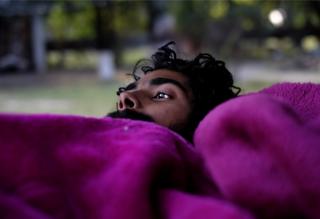
The 26-year-old computer science dropout from Kerala state spends his days lying under a blanket on a bed beneath a mango tree. When night falls and the air gets chillier, he moves inside the spartan quarters and sleeps.
“I am ready to die,” he told me. “Our ashram has a history of sacrifice.”
Matri Sadan is a leafy, three-acre ashram that sits on the edge of the river. Atmabodhanand stopped taking food on 24 October and now survives on water, salt and honey – his is the 60th such fast by residents since it was founded in 1997.
Using a mix of folksy activism and hunger strikes, residents have put pressure on successive governments to scrap big dams, ban sand mining, clean up the river and pass laws to protect it. Many governments have acceded to their demands in the past.
Image captionThe Ganges is the longest river in India
Seven years ago Swami Nigamanand, 36, fell into a coma and died after refusing food for 115 days – the longest hunger strike in the ashram’s history. He had demanded the government halt all stone quarrying near the river.
A 39-year-old local seer and ashram resident, Sant Gopal Das, is currently being force fed in hospital to keep him alive.
But it was the death in October of GD Agarwal, an 86-year-old former environmental engineer, that grabbed international headlines. Agarwal, also known as Swami Gyan Swaroop Sanand, died after fasting for 111 days at the ashram.
Agarwal was an alumnus of University of California, Berkeley, and taught at the elite Indian Institute of Technology. He worked as an engineer with the federal pollution control authority and was a vocal critic of the government’s half-hearted efforts at cleaning up the river. In 2011, he renounced the material world and became a seer. Before his death he wrote three letters to Prime Minister Narendra Modi with his demands . He didn’t receive an answer.
“He was an inspiration to us all to do the best, and be our best, in all that we do,” Mary Stacey of the University of California wrote to the ashram after his death.
Two days after Agarwal began refusing water, his condition deteriorated and he died after being forcibly moved to the hospital. Within two weeks, Atmabodhanand took up the cudgels and began his hunger strike, inspired by his famous predecessor. He also believes that one man’s hunger can “bring back the river from the dead”.
Image captionEnvironmentalist GD Agarwal died in October after a 111-day-long hunger strike
The longest Indian river, Ganges flows from the Himalayas to the Bay of Bengal. Concerns over the declining water levels and waning health of the 2,500km (1,553-mile)-long river, which supports a quarter of India’s 1.3 billion people, have been mounting for years.
Hindus revere the river as a god, and believe that bathing in her waters can wash away a person’s sins.
But the Ganges has been choked by more than 1,000 irrigation dams, the water table in its basin shrunk by reckless extraction of groundwater and its own water poisoned by toxic industrial effluent and household sewage. The river in Haridwar itself caught fire in 1984 when someone put a lit match on the water. “Indians are killing the Ganges with pollution and the polluted Ganges, in turn, is killing Indians,” says Victor Mallet, author of River of Life, River of Death, a new book on the river.
Now, say the seers at the ashram, Narendra Modi’s Hindu nationalist BJP government, which rode to power in 2014 promising to clean up the Ganges, is “arrogant and isn’t interested in saving the river”.
They find it ironical that despite Agarwal being close to a Hindu nationalist organisation, he actually appeared to be listened to more by the previous Congress government. He fasted eight times while it was in power, and extracted some major concessions, including scrapping a dam and declaring a key 100km stretch of the river as sensitive.
“We will die for the river. If the government wants blood, we will give them blood,” says Swami Shivanand, the 72-year-old head of the ashram, who has also fasted in the past.
Image captionThe Ganges is one of the world’s most polluted rivers
Five years ago, Atmabodhanand quit college and travelled from Kerala in the south to Haridwar in northern Uttarakhand state by train, bus and foot. Seeking a life of renunciation, he says he was disillusioned by the way most holy men lived, and decided to end his life by disappearing into the Himalayas.
That is when he met Swami Shivanand who took him in. At the ashram he immersed himself in prayers and other activities and ran its social media accounts.
Atmabodhanand has gone on eight hunger strikes since 2014. During his longest fast, which lasted 47 days, he had hypothermia – when the body loses heat faster than it can produce it – and had to be taken to hospital. He has protested against sand mining on the river and stone crushing on its banks, and ended his strikes, he says, after authorities listened to the demands and took steps.
“This time, it is a fight to the finish. It’s going to be a long haul,” he says.
On the day I visited the ashram, rattled authorities, panicky at the prospect of another hunger death on the premises, sent doctors with an ambulance to check Atmabodhanand and take blood and urine samples to test for blood sugar, malaria and dengue. His blood pressure was normal, and he had no fever.
They updated his medical records in a government log book called Medical Examination of Hunger Strikers. All this while, residents chided the officials and accused them of trying to take away the hunger striker to “poison” him in hospital. The officials wondered aloud what they would gain by “killing a hunger striker”.
Hunger as a form of political protest is not new to India – Gandhi is arguably the most famous hunger striker in history, having resorted to more than a dozen fasts, the longest one lasting 21 days.
Image captionAtmabodhanand lies on a bed under a tree in the ashram during the day
Much later, in 2011, anti-corruption campaigner Anna Hazare undertook a high-profile 12-day hunger strike to press for anti-corruption laws. But what makes the fasts at the ashram in Haridwar stand out are their frequency and the two deaths. “Hunger strikers believe that the voice of hunger has a power disproportionate to its source,” says Prof Sharman Apt Russell, author of Hunger: An Unnatural History. “Hunger can strengthen the weak, inspire the timid, bully the powerful.”
But the lack of widespread public support for the fasting residents of Matri Sadan is sometimes glaring. “People have become selfish. They don’t care about their own good any more,” says Atmabodhanand feebly.
Himanshu Thakkar, a water expert with the advocacy group South Asian Network on Dams, says the hunger strikes by the seers at Matri Sadan have had “some impact” all right. Sand mining on the river has been stopped from time to time, and stone crushing factories removed from near the river. “But my impression is fasting must be a part of a larger strategy in which people from different sections of society must be mobilised.”
Image captionSwami Punyanand is on a fruits only diet to prepare for a future hunger strike
The BJP’s water resources minister Nitin Gadkari says a $3bn plan involving 254 projects to clean up the river and its surroundings is in progress, and most of the cleaning work of the river will be completed by next year. “The people’s dream of a rejuvenated Ganges will soon be fulfilled,” he told a meeting in Delhi recently.
But the seers insist the government is not doing enough. So hunger remains a constant companion of the residents at the retreat.
“I am next in the queue. This time, we will not stop,” says Swami Punyanand, a 61-year-old former automobile workshop owner from Delhi who became a seer years ago. He has gone on a simple fruit diet to “prepare for fasting to death”.
In the hermitage of hunger, this is how they prepare to give up their lives for the river.
YANGON, Dec. 7 (Xinhua) — China will continue its support for Myanmar government’s process of restoring peace and stability as well as promoting development in western Rakhine state, Chinese Ambassador Hong Liang said on Friday.
Hong made the remarks at a donation ceremony to Myanmar’s Union Enterprise for Humanitarian Assistance, Resettlement and Development (UEHRD).
China encourages the Myanmar government’s efforts on the repatriation process of displaced persons, he said.
Myanmar Minister of Social Welfare, Relief and Resettlement Dr Win Myat Aye thanked the Chinese Embassy for the prompt donation, saying that it will help build houses for the returnees and will also take the lead to bring about more donation from others.
Myanmar formed the UEHRD in Oct. last year for the effective performance of a long-term project of freedom from conflict in Rakhine state.
It also established nine private sector task forces to join the mechanism of UEHRD.
Yang Jiechi (R), a member of the Political Bureau of the Communist Party of China (CPC) Central Committee and also director of the Office of the Foreign Affairs Commission of the CPC Central Committee, meets with former Australian Prime Minister John Howard in Beijing, capital of China, Dec. 7, 2018. (Xinhua/Pang Xinglei)
BEIJING, Dec. 7 (Xinhua) — Yang Jiechi, a member of the Political Bureau of the Communist Party of China (CPC) Central Committee, on Friday met with former Australian Prime Minister John Howard, who was leading an Australian delegation to the fifth session of the China-Australia High-Level Dialogue in Beijing.
Yang, also director of the Office of the Foreign Affairs Commission of the CPC Central Committee, said that China-Australia ties were improving.
“As long as the two sides adhere to mutual respect, equality and mutual benefit, they can push bilateral ties to maintain a stable development,” Yang said.
China is ready to work with the Australian side to boost political mutual trust, expand pragmatic cooperation, promote people-to-people exchanges, strengthen communication and coordination on international and regional issues so as to realize mutual benefit and win-win results, Yang said.
The session has achieved positive outcomes, Howard said, adding that all social circles of Australia were willing to play an active role in promoting new progress in bilateral ties.
China launches Chang’e-4 lunar probe in the Xichang Satellite Launch Center in southwest China’s Sichuan Province, Dec. 8, 2018. (Xinhua/Jiang Hongjing)
XICHANG, Dec. 8 (Xinhua) — China’s Chang’e-4 lunar probe was launched in the early hours of Saturday, and it is expected to make the first-ever soft landing on the far side of the moon.
A Long March-3B rocket, carrying the probe including a lander and a rover, blasted off from the Xichang Satellite Launch Center in southwest China’s Sichuan Province at 2:23 a.m., opening a new chapter in lunar exploration.
The scientific tasks of the Chang’e-4 mission include low-frequency radio astronomical observation, surveying the terrain and landforms, detecting the mineral composition and shallow lunar surface structure, and measuring the neutron radiation and neutral atoms to study the environment on the far side of the moon, the China National Space Administration announced.
China has promoted international cooperation in its lunar exploration program, with four scientific payloads in the Chang’e-4 mission developed by scientists from the Netherlands, Germany, Sweden and Saudi Arabia.
Saturday’s launch was the 294th mission of the Long March rocket series.
Chinese President Xi Jinping (R) meets with Foreign Minister Ri Yong Ho of the Democratic People’s Republic of Korea (DPRK) in Beijing, capital of China, Dec. 7, 2018. (Xinhua/Yao Dawei)
BEIJING, Dec. 7 (Xinhua) — Chinese President Xi Jinping met with Foreign Minister Ri Yong Ho of the Democratic People’s Republic of Korea (DPRK) in Beijing on Friday, calling for more efforts to advance the long-term, healthy and steady development of bilateral relations.
Xi asked Ri to convey his cordial greetings to Kim Jong Un, chairman of the Workers’ Party of Korea (WPK) and chairman of the State Affairs Commission of DPRK.
Xi said that during Kim’s three visits to China this year, the two leaders had a thorough and in-depth exchange of views over major issues including deepening China-DPRK friendly cooperation as well as promoting regional peace, stability and development.
“I’m happy to witness the effective implementation of the important consensus reached by the two sides,” Xi added.
The year of 2019 marks the 70th anniversary of the establishment of the diplomatic ties between China and the DPRK. “The Communist Party of China (CPC) and the Chinese government highly value China-DPRK relations, and this is a principle that China unswervingly adheres to,” Xi said.
“Currently, the relations between the two countries have ushered in a new chapter,” he said.
Talking about celebration activities for the 70th anniversary of the establishment of diplomatic ties between the two countries, he called on the two sides to take the occasion to promote the long-term, healthy and steady development of bilateral relations.
The Chinese side supports the DPRK people to explore a development path suited to its national conditions under the leadership of Kim, and hopes that the DPRK will have a promising future in all its endeavors, the president said.
Xi pointed out that since the beginning of the year, the situation on the Korean Peninsula has taken on positive changes, as evidenced by the fact that the Korean Peninsula issue has come back to the right track of political settlement.
He expressed the hope that the DPRK and the United States meet each other halfway, and accommodate legitimate concerns of the other side, so as to ensure continuous and positive progress in the peace talks over the peninsula issue.
“China will, as always, support the amelioration of inter-Korean relations and facilitate reconciliation and cooperation between the two sides,” Xi said.
The president urged diplomatic services of China and the DPRK to strengthen communication and make concerted efforts to advance China-DPRK relations and the political settlement of the Korean Peninsula issue.
For his part, Ri conveyed Kim’s cordial greetings and best wishes to Xi.
A series of important consensus reached between the two countries’ leaders during Kim’s visits to China this year serves as guidance for elevating the traditional friendly relations to a new level, Ri said.
Ri said the DPRK is willing to work with China to hold well celebration activities marking the 70th anniversary of DPRK-China diplomatic relations next year, consolidate the traditional friendship with China and enhance bilateral cooperation.
He also said the DPRK is committed to denuclearization on the Peninsula, and is ready to keep close communication and coordination with China over peace and stability on the Peninsula and in the region.
Anne-Marie Brady, a professor at the University of Canterbury in Christchurch, New Zealand, said she had been harassed and intimidated for publishing research critical of the Chinese Communist Party.CreditCreditUniversity of Canterbury
WELLINGTON, New Zealand — More than 160 China experts from around the world have signed a letter urging New Zealand’s government to protect an academic who said she was the subject of harassment and intimidation for publishing research critical of the Chinese Communist Party.
The letter, published Thursday on the Czech website Sinopsis and signed by 169 scholars, researchers, journalists, commentators and human rights advocates, is the latest effort by scholars to ramp up pressure on Western governments to confront China’s political interference beyond its borders.
The New Zealand police and the country’s intelligence agency, along with Interpol, are investigating the case of Anne-Marie Brady, a professor at the University of Canterbury in the city of Christchurch. She said she had been subjected to a yearlong harassment campaign in which her home was burglarized, her office broken into twice and her car sabotaged.
Ms. Brady said the only items stolen from her home were electronic devices linked to her China scholarship, with the thief or thieves ignoring cash and newer electronics used by other family members.





 China launches Chang’e-4 lunar probe in the Xichang Satellite Launch Center in southwest China’s Sichuan Province, Dec. 8, 2018. (Xinhua/Jiang Hongjing)


