03/06/2016

India May Have Won the Battle With Food Inflation Before the First Drop of Monsoon Rain – India Real Time – WSJ

Around this time every year, farmers and economists look to India’s skies, hoping for the arrival of the monsoon rains.

Late and less rain hurts crops and triggers inflation, goes the traditional worry, so every day of delay or deficit in downpours threatens to derail the country’s fragile growth.

The problem with this annual, rational worry, however, is that it’s just, plain wrong.

Good and bad monsoons in recent years have had limited effect on growth or even on food inflation, according to a report this week from Nomura. What is much more important in determining how fast food prices rise, the report says, is the minimum support prices New Delhi sets for certain crucial commodities.

So instead of looking to the skies, central bankers and other inflation fighters should be looking to New Delhi.

This year the monsoon is predicted to be above normal but much more importantly, the weather over the capital is looking promising. On Thursday, India’s weather department upheld its monsoon forecast and said it expects rainfall to be 106% of the long-term average.

On Wednesday the government announced the minimum support prices for the most basic Indian staples–dal and rice—and capped the increases at less than 10%. In some years when the government looked to help farmers it has ratcheted up the prices more than 15%, triggering inflation.

Source: India May Have Won the Battle With Food Inflation Before the First Drop of Monsoon Rain – India Real Time – WSJ

02/06/2016

Bureaucrats at the till | The Economist

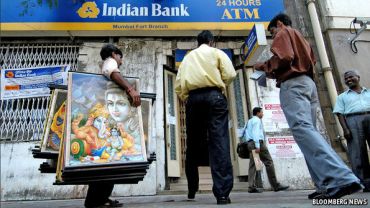
INDIA’S biggest banks tend to have official-sounding names, worthy of a central bank. There is State Bank of India, Union Bank of India, Bank of India and even Central Bank of India (the actual central bank is called the Reserve Bank of India, or RBI). That is because, starting in 1969, the entire financial system was nationalised. Although the government has grudgingly permitted private-sector banks over the past 20 years, the 27 public-sector banks (PSBs), which are listed but majority-owned by the government, still account for 70% of lending. That is a worry, because the PSBs are in terrible shape, having lent freely to companies that cannot pay them back. In response, both the government and the RBI are imposing various reforms—but not the most obvious one.

Indian banks dodged the global financial meltdown in 2008. But they promptly embarked on a frenzy of lending to big companies, sowing the seeds of a home-made crisis. The PSBs gleefully funded infrastructure projects that never got the required permits, mines with an output made much less valuable by slumping commodity prices, and tycoons whose main qualification was friendship with government ministers. PSBs have tried to gloss over the problem for years, but the RBI is now forcing them to admit the true extent of the damage.

The reckoning has been brutal: 3 trillion rupees ($44 billion) of loans have been recognised as “non-performing” by banks in the past two quarters, the vast bulk of them at PSBs; 17% of all loans there have either been written off, provisioned for or categorised as impaired, according to Credit Suisse, a bank. More losses are in the pipeline. The revelations have driven the combined market capitalisation of the 27 PSBs down to that of a single well-run private lender, HDFC Bank, founded in 1994.

Tidying up a mess on this scale is never easy, but it is proving particularly tricky in India. The absence of a bankruptcy law (one was enacted in May but it will take months, if not years, to become operational) leaves bankers powerless in the face of defaults. Indian lenders recover just 25% of their money from delinquent borrowers on average, and only after four years of haggling, compared with 80% in America in half the time. A creaky judicial system piles delays upon delays.

Worse, as quasi-bureaucrats, Indian bankers are loth to do the one thing that would help a recovery, which is to sell iffy loans to outside investors and move on. Such investors exist, albeit in limited numbers, but doing business with them can be treacherous: if the borrower’s fortunes recover after a sale and it pays back the new owner of the loans in full, bankers fear government auditors will accuse them of selling the distressed loans on the cheap. Best for the bankers to do nothing, and hope that the situation somehow improves.

The government wants to change this dynamic. A new “bank board bureau”, headed by an unimpeachable former government auditor, has been created to insulate bankers from government meddling, and so give them cover to sell assets at less than face value. Much of what it suggests is sensible: giving longer terms to PSBs’ bosses, for example, and ensuring they are not judged merely on how quickly they increase the bank’s loan book—part of the reason the PSBs ran into trouble before. The government also wants to halve the number of PSBs through mergers.

Source: Bureaucrats at the till | The Economist

31/05/2016

ONGC Videsh, Azerbaijan’s SOCAR look to jointly sell oil | Reuters

ONGC Videsh has signed a preliminary agreement with the trading arm of Azerbaijan’s state energy company SOCAR to look at jointly marketing crude oil, the company said in a statement on Tuesday.

OVL, the overseas assets acquisition arm of the country’s biggest explorer, Oil and Natural Gas Corp (ONGC), wants to leverage the experience of SOCAR Trading SA in oil marketing, it said.

Reuters had reported about the deal on Monday.

Source: ONGC Videsh, Azerbaijan’s SOCAR look to jointly sell oil | Reuters

31/05/2016

China releases new action plan to tackle soil pollution | Reuters

China aims to curb worsening soil pollution by 2020 and stabilize and improve soil quality by 2030, the cabinet said in an action plan published on Tuesday.

The central government will set up a special fund to tackle soil pollution, as well as a separate fund to help upgrade technology and equipment in the heavy metal sector, the cabinet said in a statement on its website (www.gov.cn).

The government will also continue to eliminate outdated heavy metal capacity, the cabinet said.

Last year, the environment minister said 16 percent of China’s soil exceeded state pollution limits. Treatment costs for heavy metal or chemical contamination are high, and China has struggled to attract private funds for soil remediation.

According to Reuters calculations, the cost of making all of China’s contaminated land fit for crops or livestock would be around 5 trillion yuan ($760 billion), based on average industry estimates of the cost of treating one hectare.

Analysts have estimated the soil remediation market could be worth as much as 1 trillion yuan, but authorities have struggled to determine who should pay for rehabilitating contaminated land. Much of the responsibility for the costs now lies with impoverished local governments.

Researchers with Guohai Securities said earlier this year that there are currently 100 key soil remediation projects under way in China with an estimated total cost of 500 billion yuan. With no natural profit motive to encourage private companies to get involved, the clean-up programs have relied mostly on government funding.

China’s five-year plan published in March said the country would give priority to cleaning up contaminated soil used in agriculture. It promised also to strengthen soil pollution monitoring systems and promote new clean-up technologies.

Lawmakers said during the annual session of parliament in March that the country would introduce legislation to help tackle soil pollution by next year.

Companies involved in the sector include Beijing Orient Landscape and Ecology, Tus-Sound Environmental Resources, Beijing Originwater Technology and Guangxi Bossco Environmental Protection Technology.

($1 = 6.5836 Chinese yuan)

Source: China releases new action plan to tackle soil pollution | Reuters

27/05/2016

Southern comfort | The Economist

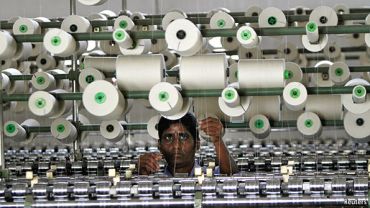
MAHATMA GANDHI would not have enjoyed Texfair 2016 in Coimbatore in the southern state of Tamil Nadu. The man hated machines and factories, and promoted Indian independence by urging every household to spin its own cotton yarn. But on display at the textile fair were bobbins, rollers, waste balers, quality-control sensors and much, much more.

Indeed, India is vying with China to be the world’s biggest producer of yarn, with over 45m spindles twirling around the clock. But what is striking about the trade fair is how so much of the modern wizardry on show is made not in better-known industrial centres around the world but in Coimbatore itself, a city of just 1.6m some 500 kilometres (310 miles) south-west of Chennai, the Tamil Nadu capital. In this section Pull the other one Taliban reshuffled Southern comfort Reprints Related topics Bharatiya Janata Party Tamil Nadu Kerala India

The fast-growing city is an inelegant sprawl stretching into groves of coconut palms. It teems with technical institutes, bustling factories and civic spirit. Earnest and ambitious, Coimbatore evokes the American Midwest of a century ago. A regional manufacturers’ group that was founded in 1933 during Gandhi’s homespun campaign has now designed, built and marketed a hand-held, battery-operated cotton picker that it claims is six times more efficient than human fingers.

Gandhi would have been appalled. But the gadget says something about the quiet success of parts of India’s deep south. Mill owners worry that with day wages in Tamil Nadu and neighbouring Kerala to the west now far higher than those in northern India, local cotton may grow uncompetitive. Tea planters in the hills west of Coimbatore are already squeezed. One landowner, in Kerala’s Wayanad region, where silver oaks shade trim ranks of tea bushes, says that his pickers get 300 rupees (about $4.50) a day, nearly three times the wage in Darjeeling in India’s north.

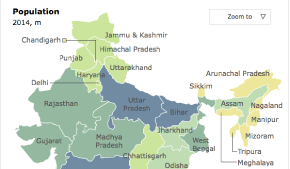
It may not sound like much, but it is also more than the average Indian earns. And as a whole, GDP per person in Tamil Nadu and Kerala is 68% and 41% higher respectively than the national average of $1,390 a year. With the south’s booming new industries, better education and higher wages contrasted with declining industries in the north and east, India is undergoing a shift a bit like the American one from the rustbelt to the sunbelt in the 1980s. Kerala shares in this new industrialisation less than Tamil Nadu, but that is balanced by another source of prosperity: remittances from abroad. As many as one in ten of Kerala’s 35m people work in the rich Arab countries of the Persian Gulf. Their remittances boost local incomes, property prices and demand for better schools. Kerala, under leftist governments for the past six decades, already has India’s best state education and its highest literacy rate. Its school district has again topped nationwide exams for 17-year-olds, followed by Chennai region, covering the rest of southern India.

Yet India’s deep south has not transmuted growing prosperity into greater political clout. It remains largely aloof from broader political trends, including a slugging match between the Bharatiya Janata Party (BJP), in office nationally under Narendra Modi, the prime minister, and Congress, the once-dominant centre-left party that worships Gandhi. In elections across four Indian states that wrapped up on May 19th, attention elsewhere focused largely on the fortunes of those two parties. The BJP’s capture from Congress of Assam in the north-east was seen as a big boost for Mr Modi. Congress’s failure to take any state was seen as a sign of decay.

Source: Southern comfort | The Economist

27/05/2016

India Inc shows growth spreading by end of Modi’s sophomore year | Reuters

Indian companies are posting their best earnings results since Prime Minister Narendra Modi swept to power two years ago, giving the clearest sign yet that India’s fast, but patchy, economic growth is becoming more broad-based.

Though headline growth figures make India one of the world’s fastest growing economies, weak private investment and low capacity utilization rates have painted a less rosy picture.

Going by India Inc’s surge in profit growth in the first three months of the year, however, the outlook really does seem to be brightening, as benefits feed through from lower interest rates and government spending in infrastructure and defense.

On Tuesday, India will release gross domestic product data for the January-March quarter. Year-on-year growth of 7.5 percent is forecast by a Reuters survey economists, slightly faster than the previous quarter’s 7.3 percent.

“Macro indicators are suggesting that at the ground level the economy is gaining momentum,” said Dhiraj Sachdev, a fund manager at HSBC Asset Management in Mumbai.

“That has also been validated in terms of better corporate earnings in many of the sectors.”

Operating profits for 289 companies that have reported results so far leapt 25.5 percent year-on-year in the March quarter, compared with 1.7 percent growth in the previous quarter, according to Thomson Reuters data.

It is Indian firms’ best showing since the April-June quarter in 2014.

Put alongside the 6.8 percent decline in earnings that data provider Factset reckons companies in the S&P 500 suffered during the same quarter, India’s corporates have some things going in their favor.

India’s broader National Stock Exchange share index .NSEI has surged around 17 percent from a near 2-year low on Feb. 29, outperforming a 7 percent gain by the Asia-Pacific MSCI index excluding Japan .MIAPJ0000PUS.

This week, Morgan Stanley upgraded Indian equities to “overweight” from “equalweight” citing rising dividends, and prospects of a simpler country-wide sales tax, lower interest rates and benign monsoon among its reasons.

Source: India Inc shows growth spreading by end of Modi’s sophomore year | Reuters

27/05/2016

Why It Could Be a While Before Apple Can Open Stores in India – India Real Time – WSJ

India’s finance ministry has rejected a government-panel recommendation to exempt Apple Inc. from local sourcing requirements, two government officials said, in a decision that could effectively block the technology company’s plan to open its own retail stores in the country.

“We are sticking to the old policy,“ said one of the officials. “We want local sourcing for job creation. You can’t have a situation where people view India only as a market. Let them start doing some manufacturing here.”

An Apple spokeswoman didn’t immediately respond to a request for comment.

India is a crucial market for Apple as it holds huge sales potential. Like China, which for years fueled the Cupertino, Calif., company’s growth, India is a large, developing economy in which more people can afford its high-end gadgets every year.

India wants to use the company’s interest in its market to attract investment and create the manufacturing facilities and jobs the country needs to sustain long-term growth.

Source: Why It Could Be a While Before Apple Can Open Stores in India – India Real Time – WSJ

27/05/2016

What Can Be Learned From China’s Monetary Past – China Real Time Report – WSJ

China’s decline as a great power in the 19th century wasn’t the fault of imperialism and opium. It was bad monetary policy, after all.

English: Qing emperor Jiaqing

English: Qing emperor Jiaqing (Photo credit: Wikipedia)

So says Werner Burger, a numismatic historian and Sinologist who has published a detailed history of money in the Qing Dynasty, entitled “Ch’ing Cash.” Mr. Burger has spent his professional life tracking down details of nearly every coin minted in China over three centuries. After three decades of making official requests, it wasn’t until 1996 that Beijing granted him access to the previous century’s imperial mint reports, the modern equivalent to central bank money supply statistics.

His conclusion: The Jiaqing Emperor, By letting the fakes infiltrate the economy, the Jiaqing emperor and his successors allowed the effective exchange rate for standard brass Chinese coins to swell from the official rate of 1000 per unit of silver to as high as 2500. Soldiers wages were effectively halved, giving them little incentive to fight the various battles against Western colonizers.

Mr. Burger refutes the notion that China’s trade with the United Kingdom, which for a time involved China sending silver to the U.K. in exchange for opium, was responsible for the debasement. He said the amount of silver sent abroad didn’t affect the exchange rate, noting a mid-century period of three decades when China actually experienced silver inflows.

Amid such currency instability, “all attempts at economic reforms and progress were bound to fail. China had no chance to catch up with the rest of the world and so lost a whole century to corruption and greedy officials,” says Mr. Burger.

For investors who want to learn from China’s past mistakes, the two volume history will cost a pretty penny: $800.

Source: What Can Be Learned From China’s Monetary Past – China Real Time Report – WSJ

27/05/2016

Foxconn replaces ‘60,000 factory workers with robots’ – BBC News

If manufacturers like Foxconn and high street companies like McDonald’s and, no doubt soon, offices too start replacing humans with robots, where will it all end? Where will all the ‘surplus’ people find jobs and pay.  And, eventually, who will be able to afford the iPhones, the hamburgers and so forth?  Won’t it be self-defeating in the long run for the employers with no customers or, at best, not enough customers to keep all the robots occupied and earning their keep.

“One factory has “reduced employee strength from 110,000 to 50,000 thanks to the introduction of robots”, a government official told the South China Morning Post.

Xu Yulian, head of publicity for the Kunshan region, added: “More companies are likely to follow suit.”

China is investing heavily in a robot workforce.

In a statement to the BBC, Foxconn Technology Group confirmed that it was automating “many of the manufacturing tasks associated with our operations” but denied that it meant long-term job losses.

“We are applying robotics engineering and other innovative manufacturing technologies to replace repetitive tasks previously done by employees, and through training, also enable our employees to focus on higher value-added elements in the manufacturing process, such as research and development, process control and quality control.

“We will continue to harness automation and manpower in our manufacturing operations, and we expect to maintain our significant workforce in China.”

Since September 2014, 505 factories across Dongguan, in the Guangdong province, have invested 4.2bn yuan (£430m) in robots, aiming to replace thousands of workers.

Kunshan, Jiangsu province, is a manufacturing hub for the electronics industry.

Economists have issued dire warnings about how automation will affect the job market, with one report, from consultants Deloitte in partnership with Oxford University, suggesting that 35% of jobs were at risk over the next 20 years.

Former McDonald’s chief executive Ed Rensi recently told the US’s Fox Business programme a minimum-wage increase to $15 an hour would make companies consider robot workers.

“It’s cheaper to buy a $35,000 robotic arm than it is to hire an employee who is inefficient, making $15 an hour bagging French fries,” he said.”

Source: Foxconn replaces ‘60,000 factory workers with robots’ – BBC News

25/05/2016

China to replace direct coal combustion with electricity in new plan | Reuters

China will reduce the amount of coal burned directly in industrial furnaces and residential heating systems in order to tackle a major source of smog, the country’s energy regulator said on Wednesday.

The National Energy Administration (NEA) said in a joint announcement with other government bodies that around 700 million to 800 million tonnes of coal is burned directly in China every year, much of it in the countryside, where access to electricity is limited.

Directly burned coal amounts to about 20 percent of China’s total coal consumption volume, much higher than the 5 percent rate in Europe and the United States.

China will aim to replace direct burning with electricity, including renewable power as well as ultra-low emission coal-fired generators, the NEA said.

China currently relies on coal for around 64 percent of its total primary energy needs and for three-quarters of its total power generation. Emissions from the direct combustion of coal are around five times higher than those from coal-fired power plants, which are subject to strict anti-pollution regulations.

During the 2016-2020 period, China plans to raise electricity’s share of the country’s overall energy mix to 27 percent, up about 1.5 percentage points from now and raising total power consumption by around 450 billion kilowatt-hours a year, the NEA said.

Experts have estimated that China will need an additional 600 GW of coal-fired power capacity over the 2015-2030 period in order to replace direct coal combustion.

Source: China to replace direct coal combustion with electricity in new plan | Reuters

Law of Unintended Consequences

continuously updated blog about China & India

ChiaHou's Book Reviews

continuously updated blog about China & India

What's wrong with the world; and its economy

continuously updated blog about China & India