15/03/2012

* Indian census: Half of homes have phones but no toilets

extracted from BBC News: “Nearly half of India’s 1.2 billion people have no toilet at home, but more people own a mobile phone, according to the latest census data. Only 46.9% of the 246.6 million households have lavatories while 49.8% defecate in the open. The remaining 3.2% use public toilets.

Census 2011 data on houses, household amenities and assets reveal that 63.2% of homes have a telephone.

Analysts say the data show the complex contradictions of the Indian system. They say the census reveals a country where millions have access to cutting-edge technology and consumer goods but a larger number of poor who lack access to even basic facilities. …

“Cultural and traditional reasons and a lack of education are the prime reasons for this unhygienic practice. We have to do a lot in these fronts,” Registrar General and Census Commissioner C Chandramouli said while releasing the latest data.

The data also reveal that Indians now largely live in nuclear families with 70% of homes consisting of only one couple – a dramatic change in a country where joint families were always the norm.

The census figures also show changes in how people access information and entertainment. More than half the population – 53.2% – have a mobile phone. There has been a 16% rise in the number of homes with television sets, while the use of radios has declined by 15%. The data show that 47.2% of households have a television while only 19.9% have a radio.

And the reach of computers with internet access is still minuscule, with only 3.1% of the population connected.”

via BBC News – India census: Half of homes have phones but no toilets.

India has made some progress in 10 years. But nothing like China in the same period.

Related page: Indian economic & social tensions?
15/03/2012

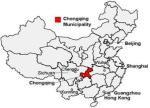
* Bo Xilai replaced by Zhang Dejiang as Chongqing Party chief

China Daily: “Zhang Dejiang has been appointed Party chief of Chongqing, replacing Bo Xilai, according to a decision of the Communist Party of China (CPC) Central Committee announced Thursday. Bo will no longer serve as secretary, standing committee member or member of the CPC Chongqing municipal committee.

The decision was announced by Li Yuanchao, head of the Organization Department of the CPC Central Committee, at a meeting of officials in Chongqing on Thursday. Li said the CPC Central Committee made the decision after discreet consideration and based on current circumstances and the overall situation.

Zhang delivered a speech at the meeting of Chongqing officials, according to xinhuanet.com.

Zhang, born in November 1946, is a native of Tai’an, Liaoning province. He became a member of the Political Bureau of the CPC Central Committee in 2002 and began serving as vice premier of the State Council, China’s Cabinet, from 2008. Zhang had previously served as Party chief in Jilin, Zhejiang and Guangdong provinces, respectively, between 1995 and 2007.

via Zhang Dejiang replaces Bo as Chongqing Party chief|Politics|chinadaily.com.cn.

Bo was seen to be a strong contenders for one of the seven places on the Standing Committee of the Political Bureau of the Communist Party (total 9 members), equivalent to the inner cabinet, when the incumbents will retire this autumn due to mandatory retirement age. He was extremely successful in bringing Chongqing on from a secondary inner city into a thriving first city (one of four) in China. However, his views were seen by many of his colleagues as veering back to the left in recent times. This demotion means that he is no longer a candidate for the SC of the Politburo.

14/03/2012

* Stephen Roach on the consumer opportunity in China

McKinsey: “Focusing on exports to the world’s second-largest economy will help the United States generate growth and jobs, says Morgan Stanley Asia’s former non-executive chairman.

A year ago, the National People’s Congress enacted China’s 12th five-year plan, which included three main building blocks: a greater focus on jobs, urbanization to boost wages, and financing a social safety net that encourages families to spend rather than save. Stephen Roach, a professor at Yale University and former nonexecutive chairman of Morgan Stanley Asia, says that this document’s implementation is marking a major shift in China’s model, away from exports and investment and toward internal, private consumption. Therein lies a huge opportunity for other nations to benefit from the emergence of the world’s largest consumer population.

China, currently the biggest and most rapidly growing US export market, is well on its way to “create a consumption dynamic that will outstrip the growth of any consumer market in the world,” Roach asserts—“and shame on us if we’re not a part of that.” In this video, Roach explains how China must turn to internal demand to drive economic development and prosperity and why improving the testy China–US bilateral relationship is so critical for the economic future of both countries. McKinsey Publishing’s Rik Kirkland conducted the interview at the World Economic Forum, in Davos, in January 2012.”

via Stephen Roach on the consumer opportunity in China – McKinsey Quarterly – Retail & Consumer Goods – Sectors & Regions.

Related page: https://chindia-alert.org/economic-factors/consumerism-blossoms/

14/03/2012

* 40 years on: senior US diplomat recalls China trip as “single most dramatic, important event” in career

Extract from Xinhua: “For 74-year-old Winston Lord, former U.S. assistant secretary of state, his trip to China with former U.S.

English: US President Richard Nixon and Chines...

President Richard Nixon 40 years ago was “the single most dramatic and most important event” in his decades-long career. …

Years of hostility between China and the United States dispersed after Nixon’s world-stunning visit to China on Feb. 21, 1972, allowing the most powerful country and most populous one in the world to join hands in carving out a new future.

Lord, then a top aide to U.S. National Security Adviser Henry Kissinger and the first U.S. official to visit China after 22 years of mutual hostility and isolation, was proud of first secret trip to China in 1971.

“We were flying secretively from Pakistan to Beijing on a Pakistani plane, and as the plane got close to the Chinese air space, border, I was in the front of the plane, and Dr. Kissinger was in the back of the plane, so as we went into Chinese territory, I was the first. I always told everyone, and Kissinger agrees, that I was the first American official to visit China in 22 years,” said a beaming Lord.”

via Senior U.S. diplomat recalls China trip as “single most dramatic, important event” in career – Xinhua | English.news.cn.

Just over 40 years ago, President Nixon visited China, started ‘ping pong’ diplomacy and giant panda diplomacy. The rest, dear friends, as they say, is history. Nixon may have been dishonoured for the Watergate affair. But history, hopefully, will remember him well for inviting China to rejoin the modern world.

14/03/2012

* Premier Wen says China needs political reform, warns of another Cultural Revolution if without

Extract from Xinhua: “Premier Wen Jiabao said Wednesday that China needs not only economic reform but also political structural reform, especially the reform of the leadership system of the Party and the government.

Wen warned at a press conference after the conclusion of the annual parliamentary session that historical tragedies like the Cultural Revolution may happen in China again should the country fail to push forward political reform to uproot problems occurring in the society. …

He noted although after the crackdown on the Gang of Four, the Party adopted resolutions on many historical matters, and decided to conduct reforms and opening-up, the mistake of the Cultural Revolution and feudalism have yet to be fully eliminated. …

As the economy continues to develop, Wen said, such problems as income disparity, lack of credibility and corruption, have occurred.

“I’m fully aware that to resolve these problems, we must press ahead with both economic structural reforms and political structural reforms , in particular reforms on the leadership system of the Party and the country,” he said. …”

via Wen says China needs political reform, warns of another Cultural Revolution if without – Xinhua | English.news.cn.

Over the past year or two Premier Wen has become very outspoken (for a senior Chinese politician) about issues normally not aired in public. For instance, the Cultural Revolution seldom features in speeches and if it does, it is not usually put in clearly negative terms.

In some ways this reminds me of the (in-)famous speech by Chairman Mao when he launched the ‘let the 100 flowers bloom‘ campaign in 1957. This was soon followed by the dreadful ‘anti-right’ campaign when too many intellectuals and party members took Mao’s ‘let 1000 thoughts contend’ exhortation at face value. 

But, this time, the whole circumstances and environment are very different. So, hopefully, the next step will not be another anti-right campaign, but genuine discourse and debate with a (relatively) open mind.

Related page: https://chindia-alert.org/prognosis/chinese-challenges/

14/03/2012

* (Indian) Rail Budget directionless, anti-people: BJ Party

The Hindu: “The Bharatiya Janata Party on Wednesday termed the Railway Budget as “directionless” and “anti-people”, saying it will add to the woes of the common man already facing the brunt of spiralling prices.

“It is a directionless and anti-people budget,” BJP’s vice-president Mukhtar Abbas Naqvi said, adding that without taking effective steps for ensuring security, facility and time, “announcements have been made for an expensive journey”.

He said at a time when the common man was already under attack from the burden of price rise and inflation, “the railway budget has given another bigger blow”.

Mr. Naqvi said, “While the Railway Minister has announced a five-year plan for taking care of security, facility and time, the burden of increased fare has been slapped on the common man in five minutes.”

BJP general secretary Ananth Kumar said the Rail Budget was “anti-aam aadmi” and there was no vision in the budget. “There is no vision. There is no action and passenger has been raised… prices will shoot up,” he said.”

via The Hindu : News / National : Rail Budget directionless, anti-people: BJP.

See also other (supportive) post today on the Railway Budget.

14/03/2012

* Indian PM Manmohan terms Rail Budget forward-looking

The Hindu: “Prime Minister Manmohan Singh on Wednesday hailed as “forward-looking” the Rail Budget which has proposed hike in passenger fares in various ranges in different categories.

“The Railway Minister has presented a forward-looking budget with emphasis on safety and modernisation of the Indian Railways,” Dr.

indian railways

indian railways (Photo credit: peevee@ds)

Singh said in a statement. He said the budget has been formulated against the background of the Railways’ responsibilities in meeting the demands of the 12th Five Year Plan.

Presenting his first budget, Railway Minister Dinesh Trivedi announced hike in passenger fares ranging from 2 paisa per kilometre to 30 paisa per kilometre in various categories of trains while noting that the Railways was passing through a “difficult phase”. He also announced introduction of 75 express trains, 21 passenger trains and extension of 39 trains besides increase in the frequency of 23 trains.”

via The Hindu : News / National : Manmohan terms Rail Budget forward-looking.

See also other (opposing) post today on Indian railway budget.

13/03/2012

* China’s Q1 foreign trade with other BRICS nations surges

BRICS summit participants: Prime Minister of I...

Image via Wikipedia

Xinhua: “China’s top customs authority announced Friday that the country’s foreign trade with the other four BRICS nations surged by 45.8 percent to reach 59.9 billion U.S. dollars in the first quarter of this year.

The first-quarter foreign trade growth between China and the other four nations of BRICS (an acronym for Brazil, Russia, India, China and South Africa), was 16.3 percentage points higher than China’s average foreign trade growth during the period, China’s General Administration of Customs said in a statement on its website.

During the first three months, China’s imports from the other BRICS countries reached 33.05 billion U.S. dollars, up 57.2 percent year on year. Exports to those countries hit 26.85 billion yuan, up 33.8 percent. …

Q1 bilateral trade between China and India rose 25.2 percent to 17.63 billion U.S. dollars. Trade with Brazil surged 58.9 percent to 16.11 billion U.S dollars, while that with Russia rose 33.5 percent to 15.99 billion U.S. dollars. Bilateral trade between China and South Africa increased more than one fold to 10.16 billion U.S. dollars.”

via China’s Q1 foreign trade with other BRICS nations surges.

It used to be BRIC, since 2010 it has become BRICS to include South Africa. http://en.wikipedia.org/wiki/BRICS

Related Page: https://chindia-alert.org/economic-factors/

13/03/2012

* Japan to buy $10b Chinese govt bond

China Daily: “Japan got the permission from China to purchase 65 billion yuan (about $10.3 billion) worth of Chinese government bond, Japanese Finance Minister Jun Azumi said Tuesday.

It was the first time the Japanese government announced the specific figure of its permitted allotment of Chinese government bond.

Azumi told reporters that the size was “appropriate” in view of strengthening the economic ties between the two countries.”

via Japan to buy $10b Chinese govt bond|Economy|chinadaily.com.cn.

Another small but sure step towards establishing the Yuan as an international currency.

Related Page: https://chindia-alert.org/political-factors/geopolitics-chinese/

12/03/2012

# China Revealed – The Concept of Face

The concept of Face refers to 2 separate but related beliefs in Chinese social relations for judging conduct — lian and mianzi.

Lian represents the confidence of society in the integrity of a person’s moral character. Mianzi represents social perceptions of a person’s prestige; a reputation achieved through getting on in life, through success and orientation.

It’s imperative for a person to maintain face, as it translates into power and influence, and affects goodwill. A loss of lian could verily result in a loss of trust within a social group, while a loss of mianzi could verily result in a loss of authority. To gossip about a person stealing would cause a loss of lian but not mianzi. Continually interrupting your boss while they’re speaking could cause them a loss of mianzi but not lian.

This is a true story of one man’s journey in China as he experiences some of the little-known cultures within.

read on … China Revealed – The Concept of Face.

———————————————————————————————————————————————————-

Also: “FACE” – A CULTURAL THING

For those of you not well-versed in Chinese culture, there is something you should know about the concept of face or having face. Stemming from this, there are also the related concepts of losing face, of saving face, and even of lending face.

Face is a concept not hard to understand because, even as Westerners, everyone has face. When equated to Western values, face is very similar to the notion of reputation. Face is a dynamic which applies to both personal and business relationships in China.

Corollary to face is the inseparable concept of guanxi or “relations”. Face and guanxi work hand-in-hand. One without the other renders useless the dynamic these two concepts collectively work together. I will write about guanxi in a separate article.

So, now we will see how face works curiously as a commodity in the business and personal realms…

read on … The Concept of “Face” in Chinese Culture – Yahoo! Voices – voices.yahoo.com.

Law of Unintended Consequences

continuously updated blog about China & India

ChiaHou's Book Reviews

continuously updated blog about China & India

What's wrong with the world; and its economy

continuously updated blog about China & India