28/02/2020

Coronavirus may make German economy miss growth forecasts, Bundesbank says

FRANKFURT (Reuters) – The German economy may miss growth forecasts this year as the coronavirus epidemic hits demand as well as supply in China, the country’s central bank governor, Jens Weidmann, said on Friday.

Weidmann joined a number of European Central Bank policymakers in saying it was too early to gauge the economic fallout of coronavirus, but he acknowledged the Bundesbank’s prediction of a 0.6% GDP expansion this year, which had already been halved from the previous forecast, may be out of date.

“All in all, economic growth this year could come in slightly lower than our experts estimated in December,” Weidmann said.

China is Germany’s top source of imports and its third-largest export market.

Investors were ramping up expectations for an ECB rate cut as soon as June on fears that coronavirus, now spreading to a number of European countries, could tip the world economy into recession.

Speaking in Brussels, Lithuania’s central bank governor, Vitas Vasiliauskas, said he did not expect ECB policymakers to take any action when they met on March 12, but that they could call an emergency meeting if needed.

Weidmann merely acknowledged that the latest events were lengthening the odds on a rate increase, previously expected for 2022. But he said the ECB should “not lose sight of the exit” from its ultra-easy policy of massive bond purchases and negative rates.

“The Governing Council must not lose sight of the exit from loose monetary policy,” he said. “For the very loose monetary policy is also associated with risks and side effects.”

He also criticised the notion of raising the ECB’s inflation target, saying its current formulation as a rate of price growth “below but close to 2%” was “understandable, forward-looking and realistic”.

Source: Reuters

28/02/2020

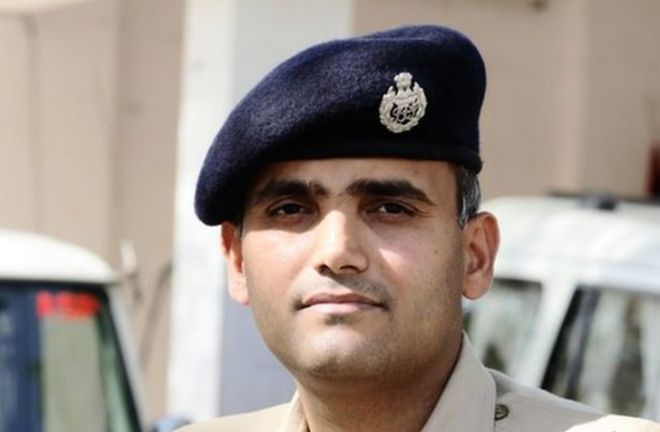
Delhi riots: ‘Hero cop’ who braved a mob to save lives

Mr Jadaun wants the police force to become more professional to implement progressive ideasImage copyright ANKIT SRINIVAS
Image caption Neeraj Jadaun said he was only doing his duty

An Indian policeman is being hailed as a hero after he braved rioting mobs to save families during days of religious violence in the capital Delhi.

Riots in the city broke out on Sunday, killing 39 people and injuring more than 200.

Neeraj Jadaun, a superintendent of police in neighbouring Uttar Pradesh state, told the BBC’s Vikas Pandey that he was patrolling a border checkpoint on 25 February when he heard sounds of gunfire coming from Karawal Nagar in Delhi – just 200m (650ft) away from him.

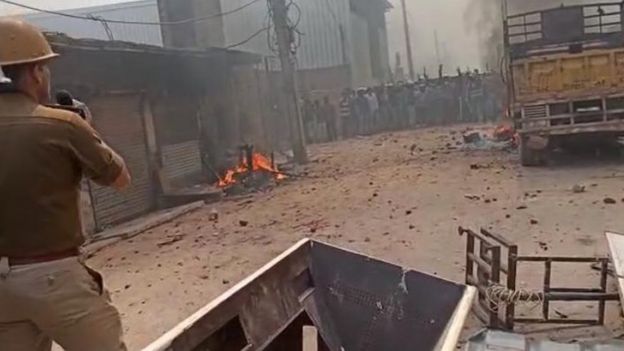
He saw a mob of 40-50 people setting vehicles on fire when one of them jumped into a house with a petrol bomb. At that point, Mr Jadaun decided to break with traditional police protocol and made a split-second decision to cross the state border into Delhi.

In India, police officers need explicit permission to cross state borders.

“I chose to cross. I was willing to go alone despite being aware of the danger and the fact that it was beyond my jurisdiction. Those were the most terrifying 15 seconds of my life. Thankfully, the team followed me, and my seniors also supported me when I informed them later,” he said.

“It was dangerous as we were outnumbered and the rioters were armed. We first tried to negotiate with them and when that failed, we told them that police would open fire. They retreated but seconds later, they threw stones at us and we also heard gunshots,” he added.

However, Mr Jadaun and his team held their positions and kept pushing back until the rioters finally left.

Richi Kumar, a reporter with the Hindi daily Amar Ujala, described Mr Jadaun’s decision as the “bravest act” he had ever seen.

“The situation was very dangerous. The rioters were fully armed and they were not ready to listen anybody. I can describe them as bloodthirsty. They were throwing stones at the police but Mr Jadaun did not back down. There was real danger of policemen being shot at by rioters,” he told the BBC.

Mr Jadaun facing a violent mob
Image caption Mr Jadaun took a split-second decision to cross state borders and stop a mob

The violence first broke out in north-east Delhi between protesters for and against a controversial citizenship law.

But they have since taken on communal overtones.

Mr Jadaun said the rioters he saw had come prepared for arson.

“The area had many shops with stocks of bamboo. A fire would have engulfed the whole area and had that been allowed to happen, the death toll in Delhi would have been much higher.”

But, Mr Jadaun is uncomfortable about being hailed as a hero.

“I am not a hero. I have taken oath to protect any Indian in danger. I was just doing my duty because I wasn’t willing to let people die under my watch. We were in a position to intervene and we did that,” he added.

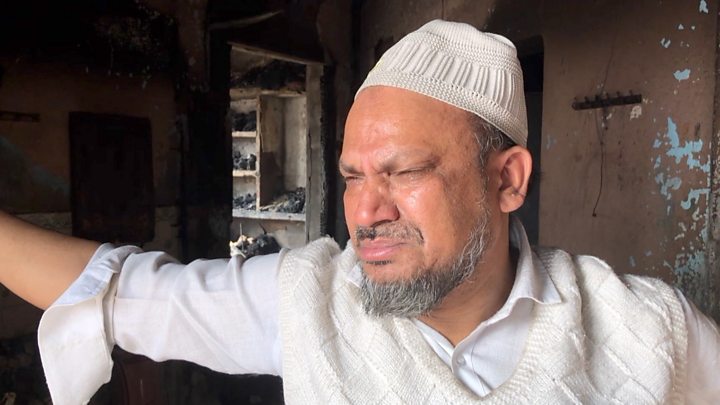
Media caption Delhi religious riots: ‘Mobs set fire to my house and shop’

Similar small acts of heroism – of Hindus and Muslims standing together – have also begun to emerge.

Subhash Sharma, from Ashok Nagar, one of the worst-affected areas, described how he ran to help after mobs set a mosque on fire.

“There were thousands of people in the mob and there were only a handful in the mosque. As soon as I saw it set on fire, I switched on the water pump in my house and ran there with a hose,” Mr Sharma told BBC Hindi.

Murtaza, a man from the same neighbourhood, said that he wanted to flee the area, but his Hindu neighbours told him not to leave.

“They assured us they would not let anybody harm us,” he said.

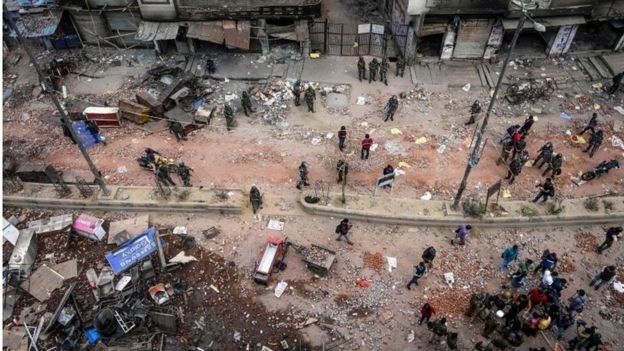
A general view of the riot-hit area following clashes between people supporting and opposing a cententious amendment to Indias citizenship law, in New Delhi on February 27, 2020Image copyright AFP
Image caption The religious violence has killed 38 people and injured more than 200

BBC Hindi’s Faisal Mohammed also spoke to two neighbours – a Hindu and a Muslim – from the Vijay park area in Maujpur, one of the areas worst-affected by the violence.

The two described how they rallied their neighbours to chase away a mob that had been burning vehicles and shattering windows in the vicinity.

“The next day we shut the main road and people from the neighbourhood gathered together and sat outside,” one of the men, Jamaluddin Saifi, said.

Residents there also set up a “peace committee” – made up of both Hindus and Muslims – who went from house to house telling people not to believe rumours and to keep children inside.

As the Indian capital struggles to pick up the pieces, it is these stories that are giving residents some hope that life can eventually go back to normal.

Source: The BBC

28/02/2020

Amid Delhi’s blood-letting, a Hindu bride weds in a Muslim neighbourhood

NEW DELHI (Reuters) – As deadly clashes between Hindu and Muslim groups rocked parts of the Indian capital Delhi this week, the family of a young Hindu woman living in a Muslim-majority area was forced to cancel her wedding.

Dressed in her wedding finery, her hands laced maroon with henna and her skin cleansed with turmeric, 23-year-old Savitri Prasad said she was weeping in her home as violent mobs battled outside on Tuesday, which was to have been her wedding day.

But Savitri’s father then organised the wedding for the following day, saying his Muslim neighbours were family and he was comforted by their presence.

“My Muslim brothers are protecting me today,” Savitri told a Reuters team that visited the house on the day of the ceremony, breaking down again as her family and neighbours comforted her.

The rituals took place at Savitri’s home, a small brick building in a narrow alley in the Chand Bagh district. Steps away, the main street looked like a war zone, with cars and shops vandalised, a Muslim shrine torched and the area littered with rocks used in pitched battles between mobs on both sides.

At least 32 people have been killed in the fighting in Chand Bagh and nearby areas of the capital this week, and hundreds of Hindus and Muslims have been injured in the worst sectarian riots in the Indian capital in decades.

“We went to the terrace and just saw smoke and more smoke,” Bhoday Prasad, Savitri’s father, said of the scene on Monday and Tuesday. “It is terrifying. We just want peace.”

Bhoday Prasad said he has lived in the area for years alongside Muslims without any trouble.

“We don’t know who the people behind the violence are, but they are not my neighbours. There is no enmity between Hindus and Muslims here.”

On Monday evening, the day Savitri was to have henna applied on her hands in a pre-wedding ritual, violence had already spiralled out of control.

“We could hear a lot of commotion outside, but I had the henna applied, hoping things would be better next day,” she said. Instead, they got worse.

Her father told the groom and his family it was too dangerous to come to the house.

“Our heart pains for her, who would want their daughter to be sitting home crying when she is supposed to be happy?” said Sameena Begum, one of the Muslim neighbours.

Violence ebbed on Wednesday, but markets remained shut and residents stayed indoors, fearful of further clashes. Savitri’s father said he decided to organise a scaled-down ceremony.

“Hindu or Muslim, we are all humans and we are all terrified of the violence,” said Savitri’s cousin Pooja, as she helped the bride dress for the ceremony. “This fight was not about religion, but it has been made so.”

Muslim neighbours gathered to offer blessings as the groom arrived and the wedding rituals took place, with a Hindu priest reciting holy verses and the groom and bride taking the rounds of a small pyre set up inside the house.

“We live peacefully with our Hindu brothers,” said Aamir Malik, who was standing guard with several other men outside the home. “We are everything for them. It’s been like that. We are here for them.”

Following an exchange of garlands, Savitri, her husband and his family were escorted out of the alleys by her family and neighbours.

“Today, none of our relatives could attend my daughter’s wedding,” said Bhoday Prasad. “But our Muslim neighbours are here. They are our family.”

Source: Reuters

27/02/2020

Tim Cook says Apple’s first Indian store to open 2021

Apple CEO Tim CookImage copyright GETTY IMAGES

Apple’s chief executive Tim Cook said the company would open its first physical stores in India in 2021 and a online outlet later this year.

Apple had to seek special approval from the Indian government to open a store without a local partner.

The announcement was made at the company’s annual shareholders’ meeting.

Investors at the meeting also voted on a proposal that the firm should alter how it responds when governments ask it to remove apps from its marketplace.

Though the measure wasn’t approved, it failed by a slimmer margin then similar proposals in the past.

Apple’s move into India, the second largest smartphone market in the world, has been expected for some time, but the announcement of a date was new.

In 2018 India changed the laws that prevented foreign brands from opening single-brand stores in the country. Nevertheless Mr Cook said India had wanted Apple to open its store with a local partner.

Mr Cook told investors he didn’t think Apple would be a “good partner”.

“We like to do things our way,” he said.

Apple sells its products through third-party stores in India at the moment. But its sales lag competitors Samsung and Huawei.

With demand for Apple products slowing in China – even before the outbreak of Coronavirus – the firm is hoping it can spur growth in other developing markets like India.

Human rights vote

Apple investors also voted on a proposal meant to change the way the company handles requests by governments to remove applications from its App Store.

The proposal would have forced Apple to publicly commit to respecting “freedom of expression as a human right.”

The measure was tied to Apple’s removal of apps by the Chinese government, including an app that allowed protestors in Hong Kong get around China’s internet restrictions.

Supporters of the measure said Apple was complicit in Chinese human right abuses when it gave in to requests to remove these types of apps.

The measure was voted down but received nearly 40% of the vote.

Similar measures have been proposed in the past but have never received as much support.

Two shareholder advisory groups, Glass Lewis and Institutional Shareholder Services recommended voting in favour of the proposal.

Coronavirus concerns

Mr Cook also addressed the impact that coronavirus is having on Apple’s operations.

The tech giant warned investors early this month that it expected to miss its quarterly earnings estimate because of the outbreak. Many of the Chinese plants that make components for Apple products – like its iPhones and MacBook laptops- have been closed or operating at with limited capacity to reduce the spread of the disease.

The shareholders meeting also allowed investors to ask Apple executives questions about the company’s other development.

One investor asked why the company had not bought the rights to the upcoming reunion of the TV show Friends – which is slated for HBO Max.

Mr Cook said a spinoff would not be keeping with the brand of Apple TV Plus – which is focused on original content.

Source: The BBC

26/02/2020

Chinese state councilor holds talks with Serbian first deputy PM

CHINA-BEIJING-WANG YI-SERBIAN-IVICA DACIC-TALKS (CN)

Chinese State Councilor and Foreign Minister Wang Yi holds talks with Serbian First Deputy Prime Minister and Foreign Minister Ivica Dacic at the Diaoyutai State Guesthouse in Beijing, capital of China, Feb. 26, 2020. (Xinhua/Huang Jingwen)

BEIJING, Feb. 26 (Xinhua) — Chinese State Councilor and Foreign Minister Wang Yi held talks with Serbian First Deputy Prime Minister and Foreign Minister Ivica Dacic Wednesday in Beijing.

Wang said that China and Serbia are like-minded brothers who stick with each other through thick and thin, good partners in jointly promoting the Belt and Road Initiative and good friends in advancing China-Europe cooperation.

He called on both sides to uphold the open and inclusive multilateralism, oppose any kind of bullying, and work together with the international society to build a community of shared future for mankind.

Noting that the comprehensive strategic partnership between the two countries has been operating at a high level, Dacic said the novel coronavirus epidemic has not affected bilateral pragmatic cooperation in all fields.

The Serbian side openly and firmly supports the one-China principle, as well as China’s core interests and major concerns on Taiwan, Xinjiang and Hong Kong issues, he said.

Source: Xinhua

26/02/2020

Coronavirus: China’s airlines offer domestic flights for as little as US$4 as industry struggles amid outbreak

  • Around two thirds of the total number of flights scheduled every day in February were cancelled, placing huge financial pressure on airlines and airports
  • China’s aviation industry has also been affected by a series of restrictions by other countries and airlines, with British Airways extending its suspension until mid-April
The cancellation of around 10,000 flights a day, or around two thirds of the total number of flights scheduled every day in February, has placed huge financial pressure on airlines and airports. Photo: Kyodo

A one-way air ticket from the coastal economic hub of Shanghai to the inland municipality of Chongqing, a journey of over 1,400km (870 miles), now costs less than a cup of coffee, with Chinese airlines slashing prices in a bid to boost weak domestic demand amid the coronavirus outbreak.

The cancellation of around 10,000 flights a day, or around two thirds of the total number of flights scheduled every day in February, has placed huge financial pressure on airlines and airports.

The Civil Aviation Administration of China said in a notice on Tuesday that flights should resume gradually as part of the country’s efforts to return economic and social life back to normal, but passengers are still reluctant to fly with the deadly outbreak still not fully under control.

The one-way flight from Shanghai to Chongqing is being offered for just 29 yuan (US$4.10) by China’s biggest low-cost carrier, Spring Airlines, as a special offer for its frequent flyer club members, while a tall caffe latte at Starbucks in China costs 32 yuan (US$4.5).

Many Chinese carriers do receive subsidies for operating key domestic routes, so this also skews the economics as well Luya You

A one-way ticket from Shanghai to Harbin, the capital of the northern Heilongjiang province, a distance of over 1,600km (994 miles), costs just 69 yuan (US$9.80).

Shenzhen Airlines, a division of state-owned carrier Air China, is also running special offers to Chongqing, with a one-way ticket for the 1000km (621 miles) journey from Shenzhen costing just 100 yuan (US$14), around 5 per cent of the standard price of 1,940 yuan (US$276).
Chengdu Airlines, a unit of Sichuan Airlines, which counts China Southern Airlines as a shareholder, is also offering cheap one-way flights from Shenzhen to Chengdu, a distance of over 1,300km (808 miles), for just 100 yuan.
“Considering lower average costs of operating in mainland China, carriers could potentially offer deeper discounts while making slim profits or just breaking even,” said Luya You, an aviation analyst with Bank of Communication International. “As outbreak numbers stabilise or even decline, carriers will likely adjust their fares as well, so these low fares will not last if the situation quickly turns for the better.

“Many Chinese carriers do receive subsidies for operating key domestic routes, so this also skews the economics as well. If it is a key route, for example, the carrier may choose to continue operating regardless of fares or loads as the route constitutes a major link in the domestic network infrastructure.”

China’s aviation authority confirmed earlier this month that between January 25 and February 14, which included the Lunar New Year holiday, the average daily passenger traffic in China was just 470,000, representing a 75 per cent drop from the same period last year.

China’s aviation industry has also been affected by a series of restrictions by other countries and airlines, with British Airways last week extending its suspension of flights to China until after the Easter holiday in mid-April following travel advice from the British government.

The novel coronavirus, which causes the disease officially named Covid-19, has infected more than 78,000 people and killed 2,700 in China. In recent days, South Korea, Italy and Iran have all reported a surge in new cases, raising fears over the spread of the coronavirus.
“The flight suspensions will track the outbreaks, but not likely lead them. If there are more outbreaks, expect more flight suspensions,” said Andrew Charlton, managing director of Aviation Advocacy.
Source: SCMP
26/02/2020

Hong Kong to give cash gift of $1,200 to residents

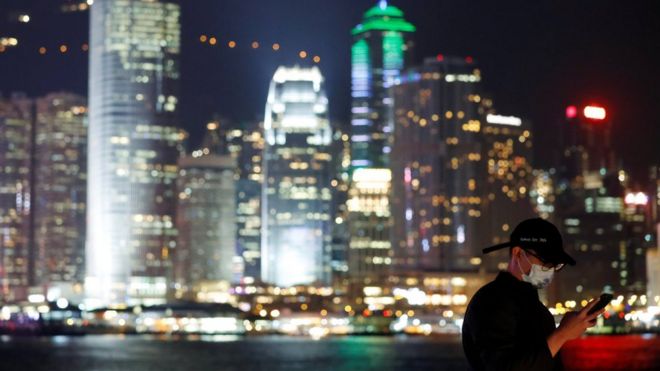
Man wearing a face mask in Hong KongImage copyright REUTERS
Image caption Virus fears are only the latest in a string of troubles for Hong Kong

Hong Kong will hand out cash to adult permanent residents, to help boost spending and ease financial burden.

As part of the annual budget, $10,000 Hong Kong dollars ($1,280; £985) was announced for about seven million people over the age of 18.

The territory’s economy has been battered by months of violent political unrest, and more recently suffered from the impact of the coronavirus.

The city has had 81 confirmed cases of the virus and two deaths.

“Hong Kong’s economy is facing enormous challenges this year,” Financial Secretary Paul Chan said on Wednesday.

“After careful consideration, I have decided to disburse HK$10,000 to Hong Kong permanent residents aged 18 or above, with a view to encouraging and boosting local consumption on the one hand, and relieving people’s financial burden on the other,” Mr Chan said.

The individual handouts are part of a HK$120bn relief package to ease the impact of the protests and virus on the economy.

Authorities will also lower public housing rent and there will be rebates in salary and property taxes.

The budget deficit is projected to rise to nearly $18bn by 2021 – a record for the territory.

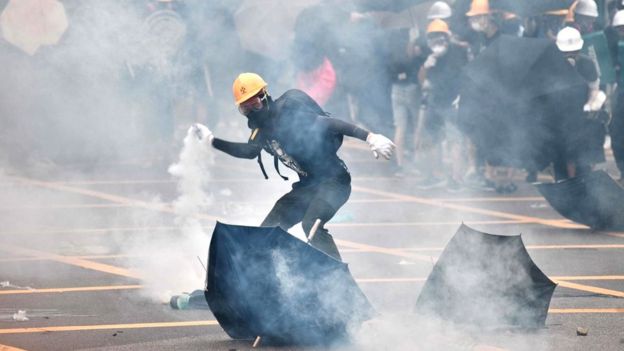
Protester throwing a tear gas can back at the policeImage copyright AFP
Image caption Hong Kong has seen months of violent protests against the government

Hong Kong had previously announced a relief fund for sectors that have suffered because of the outbreak, including cash handouts for businesses like restaurants and travel operations.

The territory’s economy is suffering from months of political unrest which has seen pro-democracy activists in often violent clashes with the police.

In the last weeks, the threat of the coronavirus spilling over from the mainland has slowed down much of public life and dealt a serious blow to the tourism sector.

The financial hub is also reeling from the ongoing US-China trade war, slowing down trade between the world’s two largest economies.

Source: The BBC

26/02/2020

Coronavirus pandemic a question of ‘when’ not ‘if’, warns U.S.

SHANGHAI/SEOUL (Reuters) – Asia reported hundreds of new coronavirus cases on Wednesday, including a U.S. soldier stationed in South Korea, as the United States warned of an inevitable pandemic and outbreaks in Italy and Iran spread to other countries.

World stocks tumbled for the fifth day on fears of prolonged disruption to global supply chains, while safe-haven gold rose back toward seven-year highs and U.S. bond yields held near record lows.

Stock markets globally have wiped out $3.3 trillion of value in the past four trading sessions, as measured by the MSCI all-country index.

The disease is believed to have originated in a market selling wildlife in the central Chinese city of Wuhan late last year and has infected about 80,000 people and killed more than 2,700, the vast majority in China.

The U.S. Centers for Disease Control and Prevention urged Americans to prepare, saying that while the immediate risk there was low the global situation suggested a pandemic was likely.

“It’s not a question of if. It’s a question of when and how many people will be infected,” the CDC’s principal deputy director, Anne Schuchat, said on Tuesday.

World Health Organization (WHO) chief Tedros Adhanom Ghebreyesus, however, advised against referring to a pandemic.

“We should not be too eager to declare a pandemic without a careful and clear-minded analysis of the facts,” Tedros said in remarks to Geneva-based diplomats.

“Using the word pandemic carelessly has no tangible benefit, but it does have significant risk in terms of amplifying unnecessary and unjustified fear and stigma, and paralyzing systems. It may also signal that we can no longer contain the virus, which is not true.”

‘DON’T WAIT’

The United States has reported 57 cases of the virus. U.S. President Donald Trump, back in Washington after a visit to India, said on Twitter that he would meet U.S. officials for a briefing on the coronavirus on Wednesday.

Dr Bruce Aylward, head of a joint WHO-Chinese mission on the outbreak, told reporters on his return to Geneva that countries’ preparations should not wait.

“Think the virus is going to show up tomorrow. If you don’t think that way, you’re not going to be ready,” he said. “This a rapidly escalating epidemic in different places that we have got to tackle super-fast to prevent a pandemic.”

Aylward said China’s “extraordinary mobilization” showed how an aggressive public health policy could curb its spread.

The WHO says the outbreak peaked in China around Feb. 2, after authorities isolated Hubei province and imposed other containment measures.

China’s National Health Commission reported another 406 new infections on Wednesday, down from 508 a day earlier and bringing the total number of confirmed cases in mainland China to 78,064. Its death toll rose by 52 to 2,715.

The WHO said only 10 new cases were reported in China on Tuesday outside Hubei.

South Korea, which with 1,261 cases has the most outside China, reported 284 new ones including a U.S. soldier, as authorities readied an ambitious plan to test more than 200,000 members of a church at the center of the outbreak.

Of the new cases, 134 were from Daegu city, where the virus is believed to have been passed among members of the Shincheonji Church of Jesus, the Korea Centers for Disease Control and Prevention said.

The U.S. military said a 23-year-old soldier based in Camp Carroll, about 20 km (12 miles) from Daegu, had been infected and was in self-quarantine at home.

OLYMPIC WORRIES

In Japan, Prime Minister Shinzo Abe called for sports and cultural events to be scrapped or curtailed for two weeks to stem the virus as concern mounted for the 2020 Tokyo Olympics.

Japan’s professional baseball teams would play matches without spectators until March 15 due to virus concerns, Kyodo news agency reported.

Japan has nearly 170 virus cases, besides the 691 linked to a cruise ship that was quarantined of its coast this month. Six people have died in Japan, including four from the ship.

There have been nearly 50 deaths outside China, including 11 in Italy and 19 in Iran, the most outside China, according to a Reuters tally.

Iran’s deputy health minister – seen mopping his brow at a televised news conference – was among its 139 coronavirus infections. Cases linked to Iran have been reported across the region.

Kuwait said six new coronavirus cases, all linked to travel to Iran, took its tally to 18, while Bahrain said its infections had risen to 26 after three new ones on a flight from Iran.

The United Arab Emirates, which has reported 13 coronavirus cases, is prepared for “worst case scenarios” as it spreads in the Middle East, a government official said.

In Europe, Italy has become a front line in the global outbreak with 322 cases. Italians or people who had recently visited the country, have tested positive in Algeria, Austria, Croatia, Romania, Spain and Switzerland.

Two hotels, one in Austria and one in Spain’s Canary Islands, were also locked down after cases emerged linked to Italy. Spain also reported its first three cases on the mainland.

France, with 17 cases, reported its second death.

Source: Reuters

26/02/2020

Why Delhi violence has echoes of the Gujarat riots

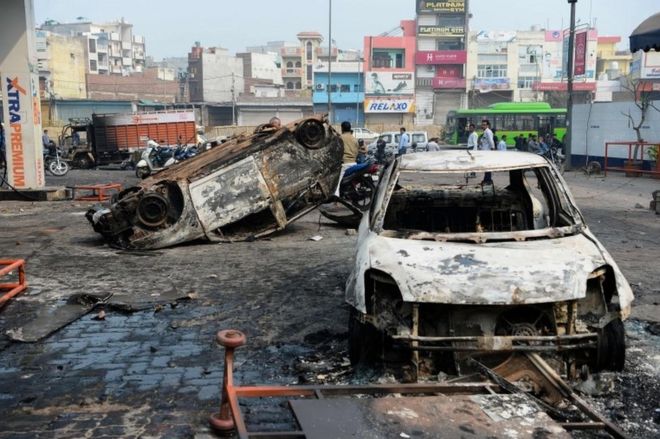
Local residents look at burnt-out vehicles following clashes between people supporting and opposing a contentious amendment to India"s citizenship law, in New Delhi on February 26, 2020Image copyright AFP
Image caption Delhi remains on edge after three days of rioting

The religious violence which has roiled Delhi since the weekend is the deadliest in decades.

What began as small clashes between supporters and opponents of a controversial citizenship law quickly escalated into full-blown religious riots between Hindus and Muslims, in congested working class neighbourhoods on the fringes of the sprawling capital.

Armed Hindu mobs rioted with impunity as the police appeared to look the other way. Mosques and homes and shops of Muslims were attacked, sometimes allegedly with the police in tow. Journalists covering the violence were stopped by the Hindu rioters and asked about their religion. Videos and pictures emerged of the mob forcing wounded Muslim men to recite the national anthem, and mercilessly beating up a young Muslim man. Panicky Muslims began leaving mixed neighbourhoods.

On the other side, Muslim rioters have also been violent – some of them also armed – and a number of Hindus, including security personnel, are among the dead and injured.

Media caption Delhi religious riots: ‘Mobs set fire to my house and shop’

Three days and 20 deaths later, Prime Minister Narendra Modi tweeted his first appeal for peace. There were no commiserations for the victims. Delhi’s governing Aam Aadmi Party was criticised for not doing much either. Many pointed to the egregious failure of Delhi’s police – the most well-resourced in India – and the inability of opposition parties to rally together, hit the streets and calm tensions. In the end, the rioters operated with impunity, and the victims were left to their fate.

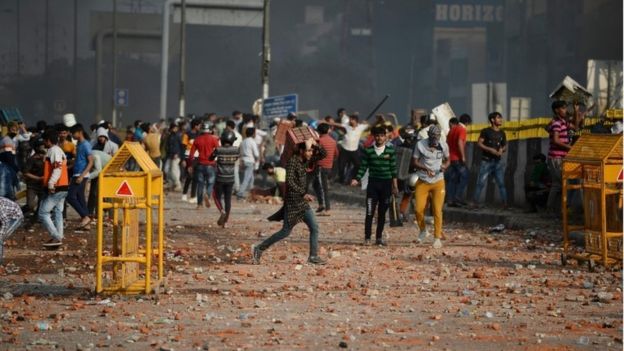
Demonstrators gather along a road scattered with stones following clashes between supporters and opponents of a new citizenship law, at Bhajanpura area of New Delhi on February 24, 2020Image copyright AFP
Image caption More than 20 people have been killed in the rioting

Not surprisingly, the ethnic violence in Delhi has drawn comparisons with two of India’s worst sectarian riots in living memory. Nearly 3,000 people were killed in anti-Sikh riots in the capital in 1984 after the then prime minister Indira Gandhi was assassinated by her Sikh bodyguards. And in 2002, more than 1,000 people, mostly Muslims, died after a train fire killed 60 Hindu pilgrims in Gujarat – Mr Modi was then the chief minister of the state. The police were accused of complicity in both riots. The Delhi High Court, which is hearing petitions about the current violence, has said it cannot let “another 1984” happen on its “watch”.

Ashutosh Varshney, a professor of political science at Brown University who has extensively researched religious violence in India, believes that the Delhi riots are beginning to “look like a pogrom” – much like the ones in 1984 and 2002.

Pogroms happen, according to Prof Varshney, when the police do not act neutrally to stop riots, look on when mobs go on the rampage and sometimes “explicitly” help the perpetrators. Evidence of police apathy in Delhi has surfaced over the past three days. “Of course, the violence thus far has not reached the scale of Gujarat or Delhi. Our energies should now focus on preventing further escalation,” he says.

Political scientist Bhanu Joshi and a team of researchers visited constituencies in Delhi ahead of February’s state elections. They found the BJP’s “perfectly oiled party machinery constantly giving out the message about suspicion, stereotypes and paranoia”. In one neighbourhood, they found a party councillor telling people: “You and your kids have stable jobs, money. So stop thinking of free, free. [She was alluding to free water and electricity being given to people by the incumbent government.] If this nation doesn’t remain, all the free will also vanish.” Such paranoia about the security of the nation at a time when India has been at its most secure has “widened” existing ethnic divisions and “made people suspicious”, Mr Joshi said.

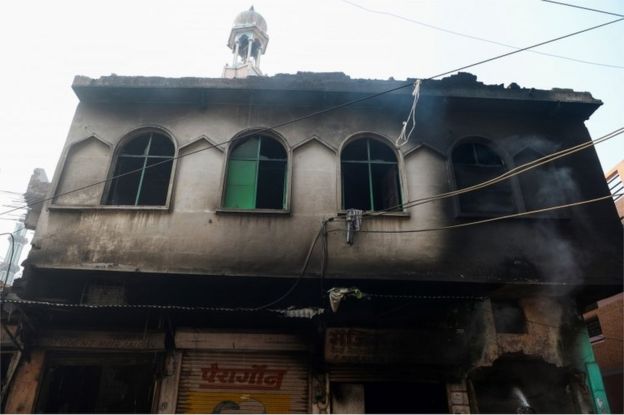
burnt-out mosque and shops are seen following clashes between people supporting and opposing a contentious amendment to India"s citizenship law, in New Delhi on February 26, 2020.Image copyright AFP
Image caption Mosques have been vandalised in the clashes

In the run-up to the Delhi elections Mr Modi’s party embarked on a polarising campaign around a controversial new citizenship law, the stripping of Kashmir’s autonomy and building a grand new Hindu temple on a disputed holy site. Party leaders freely indulged in hate speech, and were censured by poll authorities. A widely reported protest against the citizenship law by women in Shaheen Bagh, a Muslim-dominated neighbourhood in Delhi, was especially targeted by the BJP’s campaign, which sought to show the protesters as “traitors”.

“The repercussion of this campaign machine is the normalisation of suspicion and hate reflected in WhatsApp groups, Facebook pages, and conversations families have among themselves,” says Mr Joshi.

It was only a matter of time before Delhi’s fragile stability would be shaken. On Sunday a BJP leader issued a threat, telling the Delhi police they had three days to clear the sites where people had been protesting against the citizenship law and warned of consequences if they failed to do so. The first reports of clashes emerged later that day. The ethnic violence that followed was a tragedy foretold.

Source: The BBC

25/02/2020

Breakthrough in 28-year-old Chinese murder case as DNA test leads police to suspect

  • Female medical student’s body was found in a Nanjing sewer in 1992
  • Officers had investigated in vain until a tip-off from police in another city last week
Nanjing police had released a sketch of a male “with a squarish face and big eyes” after the 1992 killing. Photo: Weibo
Police

in the eastern Chinese city of Nanjing say they have cracked a 28-year-old murder case in which a young medical school student was brutally killed.

“For 28 years, a special task force had persistently investigated the case, and it made major developments on February 23. The police caught the killer, surnamed Ma, the same morning,” the police said in a statement published on Weibo on Sunday night.

At a press conference on Monday afternoon, Nanjing police said they had used DNA testing to confirm the suspect’s identity and had detained him. The prosecutor had yet to make a formal arrest.

Last Wednesday, the force received a lead from police in Xuzhou, about 280km (175 miles) north, who said that there was suspicion over a local family, one of whom they said had a possible motive for the crime. Nanjing police sent a team to Xuzhou to investigate.

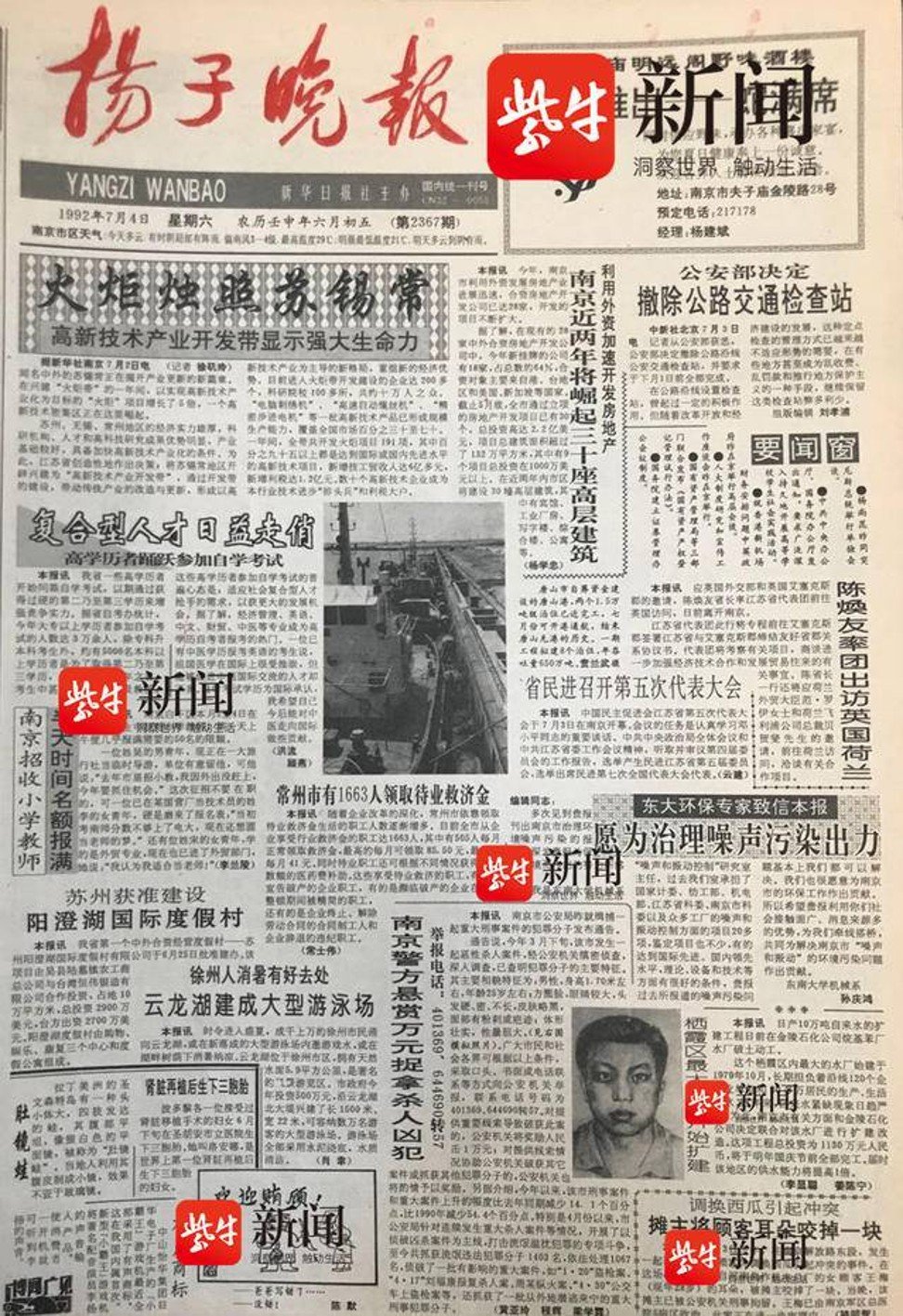
The 1992 newspaper notice by Nanjing police had offered a 10,000 yuan reward for information. Photo: Weibo
On Sunday, they found that the DNA of Ma, who lives in Nanjing, matched preserved DNA evidence that was collected following the death.
The victim, surnamed Lin, was a student at the former Nanjing Medical School. Her bludgeoned body was found in a sewer on March 24, 1992, but – possibly due to limited resources and technologies at the time – there was no clear lead on who the killer was.

Nanjing police had in 1992 offered a 10,000 yuan reward for leads – then worth US$1,818, or equivalent to five years’ salary for the average Chinese citizen – in a notice in the local Yangtze Evening News.

The notice also gave a sketch and description of the possible offender, described as a “male about 1.7 metres [5ft 7in] in height, about 25 years old, with a squarish face, big eyes, short hair, darker skin, scars or acne on his face, and a sturdy, muscular physique”.

Chinese man cleared of schoolgirl’s rape and murder after 13 years in jail

17 Feb 2020

For years, the unsolved case haunted the police force. In a collection of police stories produced by the Nanjing Publishing House in 2012, former officer Ye Ning wrote that every year on March 24, Lin’s parents visited the medical school’s campus in memory of their daughter.

One year, Ye saw Lin’s parents at the police bureau. “They left in calmness, although sadness and disappointment were written over their faces,” he wrote. “The couple held on to each other, and the umbrella could not shelter them from the rain.”

He was reminded that Lin and her parents still needed justice for her to rest in peace, he wrote.

Lin came from Wuxi, a city less than 200km southeast of Nanjing, one of her former classmates told Legal Daily. Another was quoted as recalling that they had reported to their teacher that Lin had not arrived for their class. The teacher found Lin’s umbrella in a faculty building, and then her body in a sewer.

The classmates said they had immediately informed Lin’s mother after learning that the killer may have been identified. “Lin’s father had died of lung cancer, her younger brother works in Shenzhen and her mother lives by herself in Wuxi,” one of the classmates was quoted as saying.

Ma is now 54 years old and had been running a dog trade business, according to a man quoted by Modern Express who said he had met Ma a few times in the early 2000s.

Revealed: the quiet, ‘dutiful’ son named one of China’s most notorious serial killers
29 Aug 2016

The breakthrough in the case raised hopes among the Chinese public that another decades-old Nanjing murder, a notorious dismemberment case, could be solved.

In January 1996, body parts of a student were found boiled, shredded and wrapped in different bags all over the city, nine days after she went missing.

The victim, Diao Aiqing, was a first-year student at Nanjing University. Local police conducted large-scale searches around the city but never found the killer. The case has given rise to urban myths and been analysed in novels and posts on social media.

“I wonder when the Nanjing University case will be cracked, I hope it will be soon,” one person said on Weibo after the news about the Lin case.

The public has compared these Nanjing cases to a high-profile case in Baiyin, central China, in which a serial killer nicknamed “China’s Jack the Ripper” mutilated several of his 11 victims between 1998 and 2002, the youngest of whom was eight years old.

The killer, 54-year-old Gao Chengyong, had created panic during the killing spree. Said to have targeted young women who lived alone, Gao was caught in 2016 after a tip-off and was executed in January.

Source: SCMP

Law of Unintended Consequences

continuously updated blog about China & India

ChiaHou's Book Reviews

continuously updated blog about China & India

What's wrong with the world; and its economy

continuously updated blog about China & India