Chindia Alert: You’ll be Living in their World Very Soon
aims to alert you to the threats and opportunities that China and India present. China and India require serious attention; case of ‘hidden dragon and crouching tiger’.
Without this attention, governments, businesses and, indeed, individuals may find themselves at a great disadvantage sooner rather than later.
The POSTs (front webpages) are mainly 'cuttings' from reliable sources, updated continuously.
The PAGEs (see Tabs, above) attempt to make the information more meaningful by putting some structure to the information we have researched and assembled since 2006.
“The Chinese people do not welcome media that publish racist statements and maliciously attacks China,” Mr Geng said, without naming the journalists being expelled.
The Wall Street Journal identified the reporters as two US citizens – Josh Chin, who is the deputy bureau chief, and Chao Deng – as well as Australian citizen Philip Wen. The newspaper has not yet commented.
It is the first time in more than two decades that journalists holding valid credentials have been ordered to leave China, the BBC’s John Sudworth in Beijing reports.
The Foreign Correspondents Club of China called the decision “an extreme and obvious attempt by the Chinese authorities to intimidate foreign news organizations”.
The measure comes a day after the US said it would begin treating five Chinese state-run media outlets that operate in the country in the same way as foreign embassies, requiring them to register their employees and properties with the US government.
The decision affects the Xinhua News Agency, China Global Television Network and China Daily Distribution Corp.
Press freedom in China
China is consistently rated poorly for press freedom and can be a difficult place for foreign journalists to work
Nine journalists have been either expelled or effectively expelled through non-renewal of visas since 2013, according to the Foreign Correspondents Club of China
Last year, the government declined to renew the credentials – necessary for the work of foreign journalists in the country – of another Wall Street Journal reporter.
The journalist, a Singaporean national, had co-written a story that authorities in Australia were looking into activities of one of China’s President Xi Jinping’s cousins suspected of involvement in organised crime and money laundering.
And in 2018, the Beijing bureau chief for BuzzFeed News Megha Rajagopalan was unable to renew her visa after reporting on the detention of Muslim minority Uighurs and others in China’s Xinjiang region.
Meanwhile, two Chinese citizen journalists who disappeared last week after covering the coronavirus in Wuhan, the epicentre of the outbreak in Hubei province, remain missing.
Fang Bin and Chen Qiushi had been sharing videos and pictures online from inside the quarantined city.
Media caption Footage appearing to show people held in quarantine in a makeshift facility in Wuhan, has been shared across social media
(Reuters) – Beijing threatened to retaliate against Czech companies with operations in China if a senior Czech lawmaker went ahead with a planned visit to Taiwan, according to a diplomatic letter seen by Reuters.
The Jan. 10 letter, which was sent by China’s embassy in Prague to the Czech president’s office, suggested that Czech companies operating in mainland China, such as Volkswagen (VOWG_p.DE) subsidiary Skoda Auto or lender Home Credit Group, would suffer if Senate speaker Jaroslav Kubera visited the self-ruled island.
Kubera died unexpectedly on Jan. 20, before his trip had been due to take place, but the letter, written in Czech, reveals how explicit Beijing was about the possible consequences if the visit had gone ahead.
“Czech companies whose representatives visit Taiwan with Chairman Kubera will not be welcome in China or with the Chinese people,” the letter said.
“Czech companies who have economic interests in China will have to pay for the visit to Taiwan by Chairman Kubera,” the letter added, noting that “China is the largest foreign market for many Czech companies like Skoda Auto, Home Credit Group, Klaviry Petrof and others”.
Chinese officials in Beijing did not immediately respond to a request for comment. The Czech president’s spokesman confirmed the office had received the letter but did not comment on its content.
The Foreign Ministry in Taiwan, which Beijing considers a breakaway province, criticised China’s warning to Prague.
“China’s business pressure on the Czech Republic proves that ‘one belt one road’ is a predatory policy tool, bringing only counter-effects to the global business order,” Foreign Ministry spokeswoman Joanne Ou said.
‘SERIOUS BREACH’
As speaker of the Czech Republic’s Senate, Kubera was the country’s second-most senior official after President Milos Zeman.
Zeman and Prime Minister Andrej Babis had expressed concern that Kubera’s plans to visit Taiwan would lead China to retaliate against the Central European country’s business community.
The Senate’s office said Kubera had been aware of the letter and its content after receiving a copy at a regular meeting of top Czech foreign policy officials.
The Chinese letter warns that Kubera’s trip would be seen as a “serious breach” of the so-called one China policy on Taiwan, under which Beijing insists it is the sole representative of China.
Babis’s government, which has the main say on foreign policy, has said repeatedly it adheres to the one China policy.
However, diplomatic ties cooled last year when city authorities in Prague showed support for Tibet and demanded changes to an intercity partnership agreement with Beijing over a reference to China’s policy on Taiwan.
The agreement was eventually cancelled, and Prague instead signed a cooperation deal with Taiwan’s Taipei, further infuriating Beijing.
Another upset to bilateral relations took place in December 2018 when the Czech cyber-security watchdog warned about the risks of using network technology provided by Chinese telecoms equipment makers Huawei and ZTE.
A Home Credit spokesman said he had not been aware of the letter, while Skoda could not be reached immediately for comment.
Czech senators elected a replacement for Kubera as speaker on Wednesday.
China was widely expected to announce a gross domestic product (GDP) growth target for 2020 of ‘around 6 per cent’ following 6.1 per cent growth in 2019
Zhang Yansheng, who is an adviser to China’s economic policymakers, says ‘there will definitely be adjustments’
(190305) — BEIJING, March 5, 2019 (Xinhua) — Xi Jinping (C, front), Li Keqiang (3rd R, front), Wang Yang (3rd L, front), Wang Huning (2nd R, front), Zhao Leji (2nd L, front), Han Zheng (1st R, front) and Wang Qishan (1st L, front) attend the opening meeting of the second session of the 13th National People’s Congress at the Great Hall of the People in Beijing, capital of China, March 5, 2019. (Xinhua/Li Xueren)
China may revise down its annual economic growth target for 2020 in response to the impact of the coronavirus outbreak, but will still not give up the overall target of maintaining economic growth “in a reasonable range”, according to a Chinese government researcher.
The Chinese government has never officially published its goal for 2020, but it is widely expected that the specific gross domestic product (GDP) growth target for 2020
would be “around 6 per cent”, marking a potential slight slowdown from 6.1 per cent growth in 2019 but enough to achieve Beijing’s grand goal of doubling the size of its economy in 2020 from 2010.
China’s 2020 growth target was originally to be released during Premier Li Keqiang’s government work report at the National People’s Congress, but the March 5 annual parliamentary meeting is set to be postponed due to the coronavirus outbreak.
“There will definitely be adjustments. For the central government, it hasn’t defined what the ‘reasonable range’ should be after the outbreak of coronavirus. People are still watching how the outbreak will develop and influence the economy,” Zhang Yansheng, the chief research fellow at the Beijing-based think tank, the China Centre for
International Economic Exchanges, told the South China Morning Post on Tuesday.
As for the final GDP target figure, we have to be true to facts. The GDP target was not a compulsory requirement but a soft forecast figureZhang Yansheng
“As for the final GDP target figure, we have to be true to facts. The GDP target was not a compulsory requirement but a soft forecast figure – strictly speaking, a forecast figure could be revised three or four times in a year.”
Zhang, though, referenced the fact that 29 of China provincial-level regions, out of a total of 31, had published their 2020 economic growth targets at the Central Economic Work Conference in December.
“The direction and the goals are clear. It’s not the case that people have not known what they should do this year,” added Zhang, who is an adviser to China’s economic policymakers.
has repeatedly said over the last two weeks that China will still strive to achieve its economic and social development goals for 2020 despite the outbreak, which has claimed over 1,800 lives and infected over 70,000 people, and remain on course to build the country into a “comprehensively well-off society”.
China to postpone the year’s biggest political gathering amid coronavirus outbreak
One key aspect of that vision is that China will double the size of its GDP in 2020 from 2010, which would require a minimum 5.6 per cent growth rate in 2020, although Beijing has never clearly defined the full details of the goal.
On Tuesday, Ren Hongbin, vice-chairman of the State-owned Assets Supervision and Administration Commission of the State Council, said that the annual production goals and reform tasks set earlier in the year for state-owned enterprises would also not change despite the outbreak.
“The impact of the epidemic is temporary and phased, will not change the long-term positive fundamentals of the Chinese economy,” he said.
We should neither view 6 per cent as a red line nor take doubling the GDP size as a bottom line Song Xiaowu
Before the country fell into an economic standstill around the extended Lunar New Year holiday as the virus spread from the city of Wuhan, economists and analysts have been engaged in a heated debate over whether China needs to keep its growth rate above 6 per cent in 2020.
Song Xiaowu, former president of the China Society of Economic Reform, a state-backed think tank, said at a forum on Saturday that China’s GDP growth rate could drop to 3 per cent in the first quarter and 5 per cent for the whole of 2020.
“We should neither view 6 per cent as a red line nor take doubling the GDP size as a bottom line,” said Song, in a speech published by the China Development Research Foundation, who organised the forum.
A document that appears to give the most powerful insight yet into how China determined the fate of hundreds of thousands of Muslims held in a network of internment camps has been seen by the BBC.
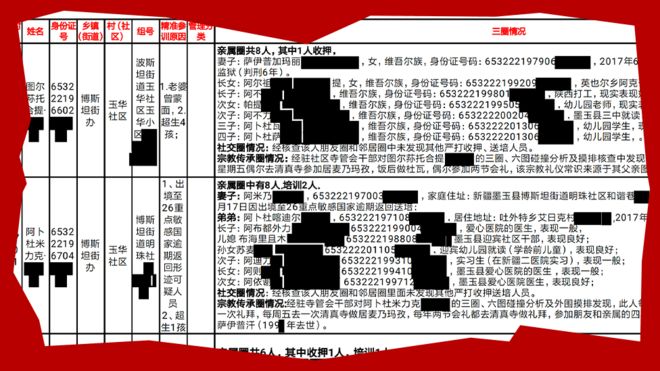
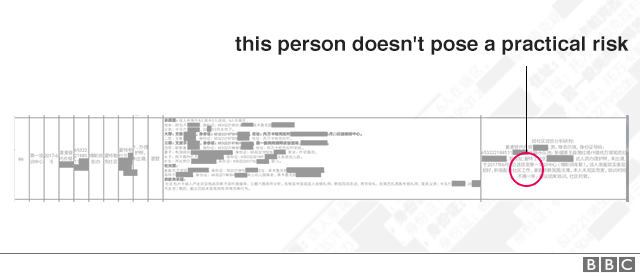
Listing the personal details of more than 3,000 individuals from the far western region of Xinjiang, it sets out in intricate detail the most intimate aspects of their daily lives.
The painstaking records – made up of 137 pages of columns and rows – include how often people pray, how they dress, whom they contact and how their family members behave.
China denies any wrongdoing, saying it is combating terrorism and religious extremism.
One of the world’s leading experts on China’s policies in Xinjiang, Dr Adrian Zenz, a senior fellow at the Victims of Communism Memorial Foundation in Washington, believes the latest leak is genuine.
“This remarkable document presents the strongest evidence I’ve seen to date that Beijing is actively persecuting and punishing normal practices of traditional religious beliefs,” he says.
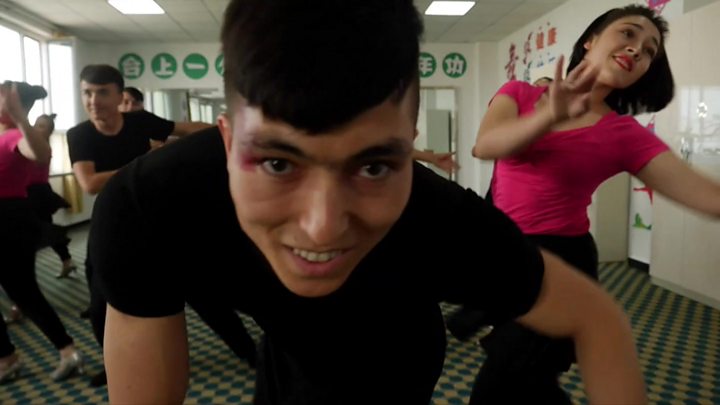
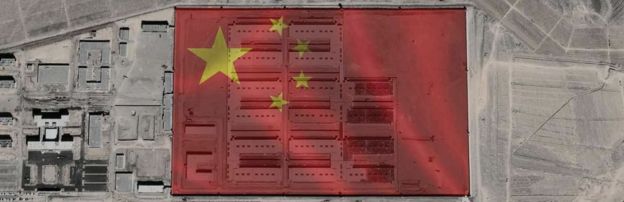
One of the camps mentioned in it, the “Number Four Training Centre” has been identified by Dr Zenz as among those visited by the BBC as part of a tour organised by the Chinese authorities in May last year.
Media caption The BBC previously visited one of the camps identified by scholars using the Karakax List
Much of the evidence uncovered by the BBC team appears to be corroborated by the new document, redacted for publication to protect the privacy of those included in it.
It contains details of the investigations into 311 main individuals, listing their backgrounds, religious habits, and relationships with many hundreds of relatives, neighbours and friends.
Verdicts written in a final column decide whether those already in internment should remain or be released, and whether some of those previously released need to return.
It allows a glimpse inside the minds of those making the decisions, he says, laying bare the “ideological and administrative micromechanics” of the camps.
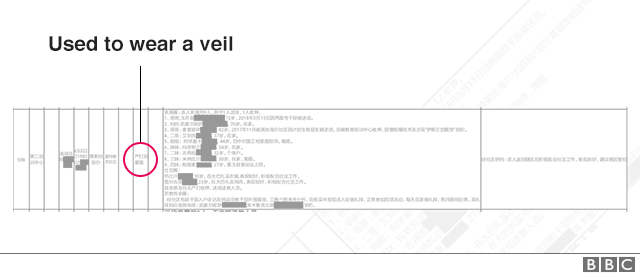
Row 598 contains the case of a 38-year-old woman with the first name Helchem, sent to a re-education camp for one main reason: she was known to have worn a veil some years ago.
It is just one of a number of cases of arbitrary, retrospective punishment.
Others were interned simply for applying for a passport – proof that even the intention to travel abroad is now seen as a sign of radicalisation in Xinjiang.
In row 66, a 34-year-old man with the first name Memettohti was interned for precisely this reason, despite being described as posing “no practical risk”.
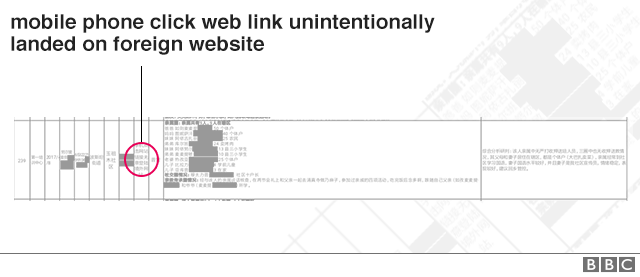
And then there’s the 28-year-old man Nurmemet in row 239, put into re-education for “clicking on a web-link and unintentionally landing on a foreign website”.
Again, his case notes describe no other issues with his behaviour.
The 311 main individuals listed are all from Karakax County, close to the city of Hotan in southern Xinjiang, an area where more than 90% of the population is Uighur.
Predominantly Muslim, the Uighurs are closer in appearance, language and culture to the peoples of Central Asia than to China’s majority ethnicity, the Han Chinese.
In recent decades the influx of millions of Han settlers into Xinjiang has led to rising ethnic tensions and a growing sense of economic exclusion among Uighurs.
Those grievances have sometimes found expression in sporadic outbreaks of violence, fuelling a cycle of increasingly harsh security responses from Beijing.
It is for this reason that the Uighurs have become the target – along with Xinjiang’s other Muslim minorities, like the Kazakhs and Kyrgyz – of the campaign of internment
The “Karakax List”, as Dr Zenz calls the document, encapsulates the way the Chinese state now views almost any expression of religious belief as a signal of disloyalty.
To root out that perceived disloyalty, he says, the state has had to find ways to penetrate deep into Uighur homes and hearts.
In early 2017, when the internment campaign began in earnest, groups of loyal Communist Party workers, known as “village-based work teams”, began to rake through Uighur society with a massive dragnet.
With each member assigned a number of households, they visited, befriended and took detailed notes about the “religious atmosphere” in the homes; for example, how many Korans they had or whether religious rites were observed.
The Karakax List appears to be the most substantial evidence of the way this detailed information gathering has been used to sweep people into the camps.
It reveals, for example, how China has used the concept of “guilt by association” to incriminate and detain whole extended family networks in Xinjiang.
For every main individual, the 11th column of the spreadsheet is used to record their family relationships and their social circle.
Alongside each relative or friend listed is a note of their own background; how often they pray, whether they’ve been interned, whether they’ve been abroad.
In fact, the title of the document makes clear that the main individuals listed all have a relative currently living overseas – a category long seen as a key indicator of potential disloyalty, leading to almost certain internment.
Rows 179, 315 and 345 contain a series of assessments for a 65-year-old man, Yusup.
His record shows two daughters who “wore veils and burkas in 2014 and 2015”, a son with Islamic political leanings and a family that displays “obvious anti-Han sentiment”.
His verdict is “continued training” – one of a number of examples of someone interned not just for their own actions and beliefs, but for those of their family.
The information collected by the village teams is also fed into Xinjiang’s big data system, called the Integrated Joint Operations Platform (IJOP).
The IJOP contains the region’s surveillance and policing records, culled from a vast network of cameras and the intrusive mobile spyware every citizen is forced to download.
The IJOP, Dr Zenz suggests, can in turn use its AI brain to cross-reference these layers of data and send “push notifications” to the village teams to investigate a particular individual.
Image caption Adrian Zenz has analysed the leaked document
The man found “unintentionally landing on a foreign website” may well have been interned thanks to the IJOP.
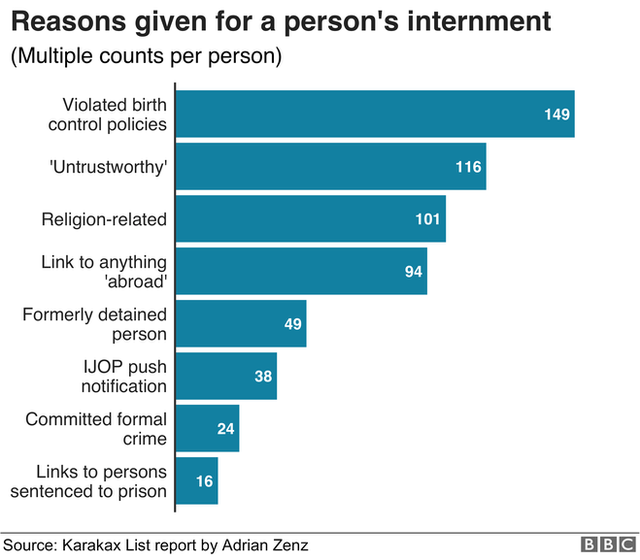
In many cases though, there is little need for advanced technology, with the vast and vague catch-all term “untrustworthy” appearing multiple times in the document.
It is listed as the sole reason for the internment of a total of 88 individuals.
The concept, Dr Zenz argues, is proof that the system is designed not for those who have committed a crime, but for an entire demographic viewed as potentially suspicious.
China says Xinjiang has policies that “respect and ensure people’s freedom of religious belief”. It also insists that what it calls a “vocational training programme in Xinjiang” is “for the purposes of combating terrorism and religious extremism”, adding only people who have been convicted of crimes involving terrorism or religious extremism are being “educated” in these centres.
However, many of the cases in the Karakax List give multiple reasons for internment; various combinations of religion, passport, family, contacts overseas or simply being untrustworthy.
The most frequently listed is for violating China’s strict family planning laws.
In the eyes of the Chinese authorities it seems, having too many children is the clearest sign that Uighurs put their loyalty to culture and tradition above obedience to the secular state.
China has long defended its actions in Xinjiang as part of an urgent response to the threat of extremism and terrorism.
The Karakax List does contain some references to those kinds of crimes, with at least six entries for preparing, practicing or instigating terrorism and two cases of watching illegal videos.
But the broader focus of those compiling the document appears to be faith itself, with more than 100 entries describing the “religious atmosphere” at home.
The Karakax List has no stamps or other authenticating marks so, at face value, it is difficult to verify.
It is thought to have been passed out of Xinjiang sometime before late June last year, along with a number of other sensitive papers.
They ended up in the hands of an anonymous Uighur exile who passed all of them on, except for this one document.
Only after the first batch was published last year was the Karakax List then forwarded to his conduit, another Uighur living in Amsterdam, Asiye Abdulaheb.
She told the BBC that she is certain it is genuine.
Image caption Asiye Abdulaheb decided to speak out, despite the danger
“Regardless of whether there are official stamps on the document or not, this is information about real, live people,” she says. “It is private information about people that wouldn’t be made public. So there is no way for the Chinese government to claim it is fake.”
Like all Uighurs living overseas, Ms Abdulaheb lost contact with her family in Xinjiang when the internment campaign began, and she’s been unable to contact them since.
But she says she had no choice but to release the document, passing it to a group of international media organisations, including the BBC.
“Of course I am worried about the safety of my relatives and friends,” she says. “But if everyone keeps silent because they want to protect themselves and their families, then we will never prevent these crimes being committed.”
Almost 90% of the 311 main individuals in the Karakax List are shown as having already been released or as being due for release on completion of a full year in the camps.
But Dr Zenz points out that the re-education camps are just one part of a bigger system of internment, much of which remains hidden from the outside world.
Image caption The outside of one of the camps in Xinjiang
More than two dozen individuals are listed as “recommended” for release into “industrial park employment” – career “advice” that they may have little choice but to obey. There are well documented concerns that China is now building a system of coerced labour as the next phase of its plan to align Uighur life with its own vision of a modern society.
In two cases, the re-education ends in the detainees being sent to “strike hard detention”, a reminder that the formal prison system has been cranked into overdrive in recent years.
Many of the family relationships listed in the document show long prison terms for parents or siblings, sometimes for entirely normal religious observances and practices.
One man’s father is shown to have been sentenced to five years for “having a double-coloured thick beard and organising a religious studies group”.
A neighbour is reported to have been given 15 years for “online contact with people overseas”, and another man’s younger brother given 10 years for “storing treasonable pictures on his phone”.
Whether or not China has closed its re-education camps in Xinjiang, Dr Zenz says the Karakax List tells us something important about the psychology of a system that prevails.
“It reveals the witch-hunt-like mindset that has been and continues to dominate social life in the region,” he said.
MANILA (Reuters) – The Philippines on Tuesday allowed Filipino workers to travel to Hong Kong and Macau, relaxing the travel ban it imposed on China and its special administrative regions to control the spread of the coronavirus.
The Philippines announced its decision before Hong Kong reported that a Filipina domestic helper became its 61st case of coronavirus in the country.
There are more than 180,000 Filipinos in Hong Kong, many working as helpers, according to the Philippines Labour Ministry.
The Philippines had imposed a travel ban on China and its special administrative regions Hong Kong and Macau. It later included Taiwan in the ban, but lifted it a few days after.
There was no immediate comment from Philippine officials on how the latest development in Hong Kong will affect its decision to relax its travel restriction.
The Philippines also said it would allow foreign spouses or children of Filipinos and holders of diplomatic visas travelling from China, Macau and Hong Kong to enter the country but they will be subjected to a 14-day quarantine.
Initially, only Filipinos and holders of permanent resident visas travelling from these areas were allowed entry.
Recruiters have appealed to the government to exempt Filipino workers from the travel ban because many of them are breadwinners. They could also lose their visas if they failed to report for work on time, the Society of Hong Kong Accredited Recruiters of the Philippines has said.
In 2019, Filipino workers in Hong Kong sent home $801 million in foreign exchange remittances, central bank data showed.
Filipinos leaving for Hong Kong and Macau for study and employment will be required to sign a declaration that they know the risks of going there, health officials said.
The Philippine government also said it will repatriate Filipino crew and passengers from the quarantined cruise ship Diamond Princess who wish to come home.
The cruise ship, owned by Carnival Corp and carrying some 3,700 passengers and crew, has been quarantined in Yokohama since Feb. 3, after a man who disembarked in Hong Kong before it travelled to Japan was diagnosed with the virus.
The Philippine Foreign Ministry said 35 of the 538 Filipinos onboard had tested positive for the coronavirus, including the eight new cases, who are all crew members.
In the Philippines, there have been three confirmed cases of coronavirus, including one death.
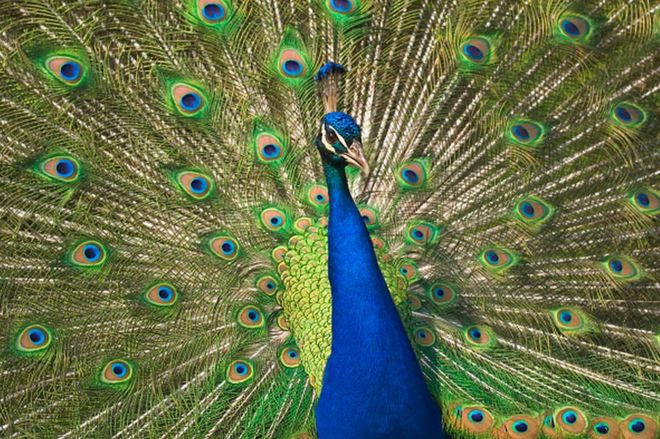
Image copyright GETTY IMAGESImage caption The population of peafowl, the national bird, has increased significantly
Much of India’s bird population has sharply declined in the past few decades, according to a major study.
The State of India’s Birds report relied on the observations of more than 15,000 birdwatchers who helped assess the status of 867 birds.
It found the greatest decline in the numbers of eagles, vultures, warblers and migrating shorebirds.
But the population of peafowl, the national bird, has increased significantly.
Hunting and habitat loss are the two main reasons behind the decline. “Collision” with electricity lines, according to the study, is a “prime current threat” to birds.
The report, the first comprehensive study of its kind, made two assessments: the drop in bird population over the last 25 years, and over the last five years.
“In the long-term trend assessment, there was appropriate data available only for 261 species, of which 52% had declined [in numbers]. For current trends, there was data only for 146 species, of which [numbers of] nearly 80% were declining,” said MD Madhusudan, co-founder of Nature Conservation Foundation.
It’s based on more than 10 million observations, drawn from sightings and meticulous notes made by professional birdwatchers.
The data was then collated on eBird, a global crowdsourced database that has real-time data on the distribution and abundance of birds.
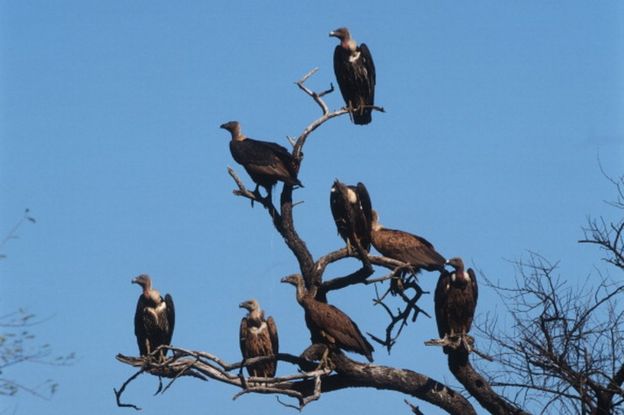
Image copyright GETTY IMAGESImage caption The population of the white-rumped vulture has gone down
Species that have suffered the highest declines
White-rumped Vulture
Richard’s Pipit
Indian Vulture
Large-billed Leaf Warbler
Pacific Golden Plover
Curlew Sandpiper
Species whose numbers have increased
Rosy Starling
Feral Pigeon
Glossy Ibis
Plain Prinia
Ashy Prinia
Indian Peafowl
(Source: State of India’s Birds report)
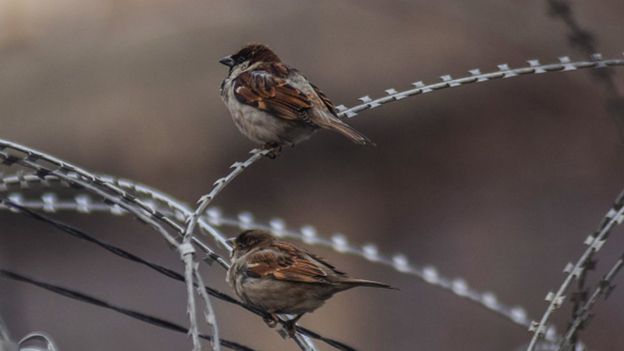
The local sparrow population was found to be roughly stable across the country as a whole, although it has fallen in the major cities.
The population of migratory birds – both long distance and within the subcontinent – also showed a “steep decline”.
The report says that since the 1990s, the numbers of several species of vultures, bustards and other specialist grassland birds have also drastically dropped.
Image copyright AFPImage caption The local sparrow population has declined in the major cities
Some species popular in the bird trade, such as the Green Munia, are at “dangerously low” numbers, the report says.
Meanwhile, the Jerdon’s Courser, an endangered bird with “mysterious” breeding habits which was rediscovered in 1986 after a gap of 138 years, has not been seen since 2008.
But there’s some good news as well: the Forest Owlet, another endangered bird that was rediscovered in 1997, is being reported from many more locations.
Image copyright AFPImage caption The study assessed the status of 867 birds in India
But the study cautions that its research is also a chronicle of “individual species”, and not a report on the “overall health of India’s birds, including those considered common and hence of little conservation concern”.
It says that “abundance trends” are available only for “a handful of bird species” – and mostly for those that tend to be “larger, more obviously threatened and relatively charismatic”.
“For the vast majority of Indian birds, lack of data has hindered a clear understanding of how they are faring. Such an understanding is vital for conservation science, management and policy.”
KONNEY/NEW DELHI, India (Reuters) – Bussa Krishna first began worshipping Donald Trump four years ago when the U.S. president appeared to him a dream.
Since then, after a run of good fortune, the Indian real estate broker has transformed his modest home into a shrine to the U.S. leader, who is due in India on Monday for a two-day visit.
“My love for him has transformed into reverence. That has given me immense happiness. Hence instead of praying to other gods, I started praying to him,” Krishna told Reuters.
Krishna, who lives alone in a village in the southern state of Telangana, has erected a life-size statue to Trump in his yard, while his walls are scrawled with the leader’s name – to the annoyance of his extended family.
“I am facing difficulties because of my relatives,” Krishna said. “They tell me that I am disgracing them in society. I told them that just like you believe and worship Shiva, I believe and worship Trump. Neither of us can stop the other from doing so.”
Krishna is not the only Indian who reveres Trump.
In New Delhi, members of the Hindu Sena, a right-wing fringe group, have begun rehearsing a welcome song in his honour.
Its members say Trump shares their hatred of Islamic extremism, and it has drawn attention for boisterous celebrations of his birthday, including pretending to feed cake to photos of his face.
“We like Donald Trump because he openly spoke about India’s feelings,” Hindu Sena leader Vishnu Gupta told Reuters. “…He openly said that he would eliminate Islamic terrorism from its roots, that is why I am his fan.”
Trump, who like Indian Prime Minister Narendra Modi has a reputation as an unabashed populist who shows his enemies no mercy, is making his first visit to India.
Trump’s itinerary starts on Feb. 24 in the western city of Ahmedabad, where he will visit the former home of independence hero Mahatma and address an estimated 125,000 people at a rally. He is due in the capital the following day.
WUHAN/SHANGHAI, Feb. 16 (Xinhua) — Twenty recovered coronavirus patients donated their plasma to those in severe condition in Wuhan, capital of the hard-hit province of the novel coronavirus disease (COVID-19), said the province’s COVID-19 scientific research team Sunday.
The donors are doctors and nurses who have recovered from the disease for 10 days at the Jiangxia District’s No. 1 people’s hospital and traditional Chinese medicine hospital.
Twelve patients in severe condition have received the plasma treatment. An expert with Jiangxia District’s No. 1 people’s hospital said that the patients have shown improved clinical symptoms about 12 to 24 hours after they received the treatment.
“We are observing the therapeutic results and improving our treatment plans,” the expert said, adding that plasma donation won’t hurt the donor once he or she has been cured for 10 days.
Zhang Dingyu, head of Wuhan Jinyintan Hospital, a major designated hospital to admit confirmed cases in Wuhan, called upon cured patients who were infected with COVID-19 to donate plasma as initial results had indicated the effectiveness of convalescent plasma-derived therapeutic products in curing infected patients in severe and critical conditions.
In Shanghai, official data showed 124 patients have recovered from COVID-19 and discharged from hospitals by Saturday afternoon, of whom 14 have shown willingness to donate their plasma to assist coronavirus research and treatment.
Some recovered patients regard the donation as a way to pay back to the society after they received timely and effective treatment.
“Before being discharged from the hospital, I learned from the nurses that I can donate plasma, which I think is very helpful,” said a recovered patient surnamed Liu who is willing to become a donor.
“We were helped by others and we want to help other patients as well,” Liu said.
Chinese State Councilor and Foreign Minister Wang Yi (R) meets with Japanese Foreign Minister Toshimitsu Motegi on the sidelines of the 56th Munich Security Conference in Munich, Germany, Feb. 15, 2020. (Xinhua/Shan Yuqi)
MUNICH, Germany, Feb. 16 (Xinhua) — Chinese State Councilor and Foreign Minister Wang Yi on Saturday met Japanese Foreign Minister Toshimitsu Motegi on the sidelines of the 56th Munich Security Conference, with both pledging mutual support in the fight against the novel coronavirus epidemic (COVID-19).
Wang thanked Japan for its understanding and support for China’s fight against COVID-19, noting that stories of many Japanese people extending a helping hand to China have been spreading on the Chinese Internet, from which the Chinese people have felt the friendship and warmth from Japan as a neighbor.
The mutual support between China and Japan in this fight against the epidemic fully reflects the tradition of mutual help among Eastern countries, Wang said, adding that he believes the friendship between the two peoples will be further deepened.
Wang said that with the joint efforts of China and all parties, he believes the epidemic will end soon. The Chinese economy has been affected by the epidemic, but efforts can be made to make up for the losses. China’s goals of building a moderately prosperous society in an all-round way and winning the battle against poverty this year will certainly be achieved.
China is willing to continue to strengthen mutually beneficial cooperation with Japan in economy, trade, personnel exchanges and other aspects to jointly push bilateral strategic relations of mutual benefit to a new level, and bring more benefits to the two countries and peoples, Wang said.
For his part, Motegi said that China has made great efforts to control the spread of the virus, which Japan highly appreciates, and that he believes China will be able to overcome the epidemic at an early date.
Japan is willing to continue to fully support and help China, work closely with China to further deepen cooperation in various fields, and jointly prepare for important high-level exchanges between the two countries this year, so as to score new developments in Japan-China relations, said Motegi.


 Image copyright GETTY IMAGES







 CHINDIA ALERT: You'll be living in their world, very soon