Chindia Alert: You’ll be Living in their World Very Soon
aims to alert you to the threats and opportunities that China and India present. China and India require serious attention; case of ‘hidden dragon and crouching tiger’.
Without this attention, governments, businesses and, indeed, individuals may find themselves at a great disadvantage sooner rather than later.
The POSTs (front webpages) are mainly 'cuttings' from reliable sources, updated continuously.
The PAGEs (see Tabs, above) attempt to make the information more meaningful by putting some structure to the information we have researched and assembled since 2006.
BEIJING, Feb. 13 (Xinhua) — Chinese Vice Premier Hu Chunhua has called for all-out efforts to ensure stable employment amid the novel coronavirus outbreak.
Hu, also a member of the Political Bureau of the Communist Party of China Central Committee, made the remarks Thursday at a teleconference on employment work amid the epidemic.
Stable employment is significant to resuming production, guaranteeing and improving people’s livelihood, and maintaining sound market expectations, Hu said.
He encouraged enterprises to resume production in a well-organized and safe manner while carrying out epidemic prevention and control work.
Massive layoffs must be prevented via efforts to help businesses keep their payrolls stable, while aid should be offered in a timely manner to those in need, he said.
Hu said the development of the employment market should be closely watched, and specific efforts should be made to take care of key groups such as college graduates and migrant workers.
GUANGZHOU, Feb. 13 (Xinhua) — Two separate research groups led by China’s top scientists said they had isolated novel coronavirus strains from samples of infected patients’ feces, but further study is needed to prove the existence of fecal-oral transmission.
Researchers from multiple organizations, including the State Key Laboratory of Respiratory Disease under Guangzhou Medical University, have successfully isolated a strain of virus from swab sample of an infected patient’s feces, said Zhao Jincun, a member of Chinese respiratory expert Zhong Nanshan’s research group, at a press conference Thursday.
The swab sample was provided by the Fifth Affiliated Hospital of Sun Yat-Sen University, said Zhao, also a professor with the laboratory.
Meanwhile, a research team led by Li Lanjuan, a renowned Chinese epidemiologist, also isolated novel coronavirus strains from stool specimens of infected patients. Three of the five feces samples tested positive, according to Wu Nanping, deputy director of the State Key Laboratory for Diagnosis and Treatment of Infectious Diseases, Zhejiang University.
“We made the discoveries in the laboratory, which still need further confirmation by epidemiologists. More scientific researches are also entailed concerning the level of infectivity and whether the virus in feces was swallowed by patients or from intestinal cell proliferation, as well as its relationship with blood, sputum and the occurrence and development of diseases,” Wu said.
According to Zhao, the discovery confirmed that the patients’ feces contained the live virus, but it still lacks sufficient evidence for the existence of fecal-oral transmission.
Transmission through means of respiratory and contact remain the major routes of the novel coronavirus spreading, said Mi Feng, an official with the National Health Commission, at a press conference Thursday.
Despite digestive tract problems of some patients, either as incipient symptoms or complications, the main clinical symptoms of the disease are fever, general weakness and dry cough, Mi said, adding that the coronavirus isolated from patients’ feces is not yet illustrative to prove the change of the transmission route.
Mi said that stomach and intestine symptoms, such as diarrhea, of some patients in the early stages, the positive test for the coronavirus nucleic acid in feces samples of patients and the isolated virus from patients’ feces samples indicate the proliferation of the virus can happen in the digestive tract after infection.
Wearing masks and keeping hands clean are the most important and effective ways to avoid infections, Mi said, adding that washing hands more frequently, in the right way and disinfection of hands can reduce the risk of infection fundamentally.
Further observation and research would be needed to identify the effect and significance of transmission via the digestive tract, including fecal-oral transmission, Mi said.
Military medics arrive at Tianhe International Airport in Wuhan, central China’s Hubei Province, Feb. 13, 2020. Ordered by the Central Military Commission, 11 transport aircraft of the People’s Liberation Army Air Force Thursday sent medics and supplies provided by the armed forces to virus-hit Wuhan, capital of Hubei Province. This was the first time for China’s domestically developed large transport aircraft Y-20 to take part in non-military action. It was also the first time for the Air Force to send large and medium transport aircraft on active service to carry out urgent air transport tasks on a large scale. (Xinhua/Li Yun)
WUHAN, Feb. 13 (Xinhua) — Ordered by the Central Military Commission, 11 transport aircraft of the People’s Liberation Army Air Force Thursday sent medics and supplies provided by the armed forces to virus-hit Wuhan, capital of Hubei Province.
This was the first time for China’s domestically developed large transport aircraft Y-20 to take part in non-military action. It was also the first time for the Air Force to send large and medium transport aircraft on active service to carry out urgent air transport tasks on a large scale.
The participation of the Y-20 in this task is an actual test to the strategic delivery capabilities of the Air Force, said Du Baolin, commander of a division in the Air Force that was equipped with the Y-20.
The Y-20 can carry out long-distance air transport tasks under complex meteorological conditions.
Since the outbreak of the COVID-19, the Air Force has sent several batches of medics and supplies to virus-hit areas. Its troops stationed in Hubei, the epicenter of the outbreak, have also taken part in transporting medical equipment and daily necessities.
WHO scientists co-write letter saying December 26 data indicating Sars-like coronavirus was not passed to global health community for 17 days
Hundreds of Chinese sign petition asking legislature to protect freedom of speech, amid discontent over outbreak’s handling and anger over Dr Li Wenliang’ death
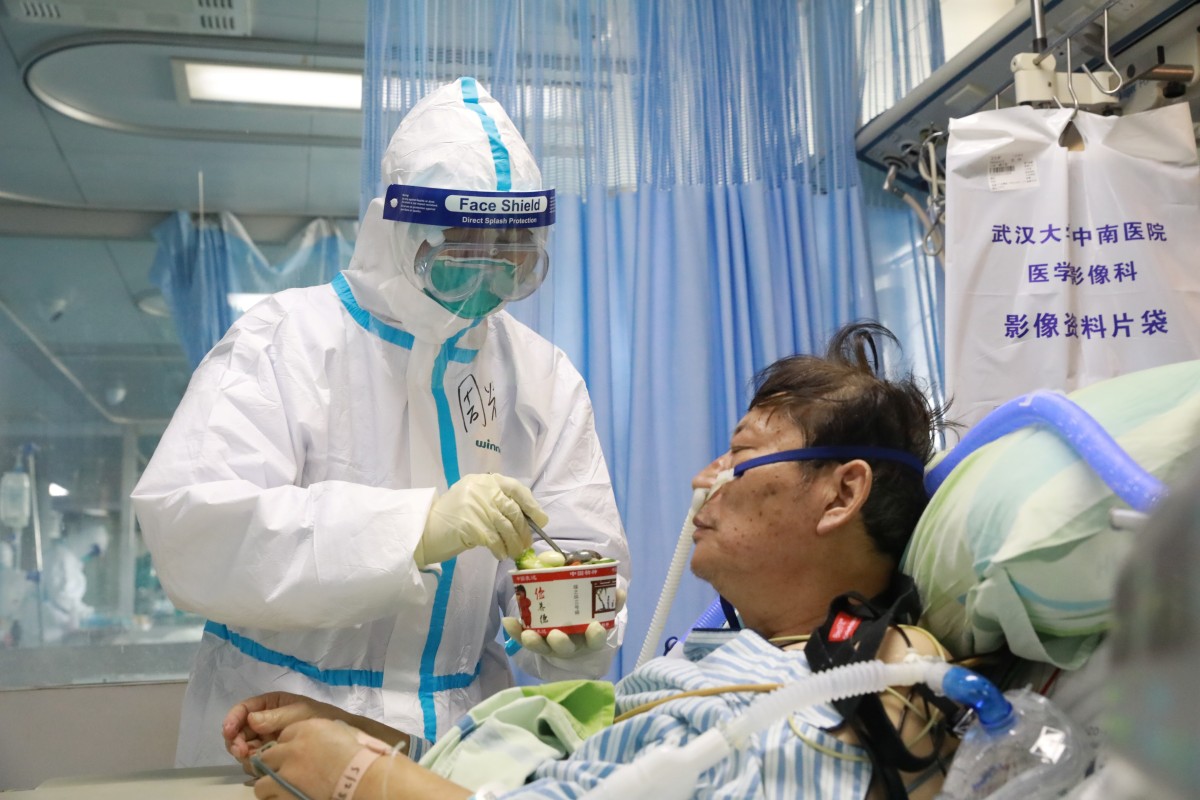
A nurse in a protective suit feeds a coronavirus patient in an isolated ward in Wuhan. Photo: Reuters
China’s health authority reported 97 new deaths caused by the coronavirus and 2,015 newly confirmed cases of infection, taking its totals to 1,113 and 44,653 respectively.
As of Tuesday, 744 recovered patients had been discharged and the total number of recovery cases stood at 4,740.
Outside Hubei province, the epicentre of the coronavirus, the rise in new infections reported by China slowed for an eighth consecutive day.
Apology for slow treatment
A district leader in Hubei’s capital of Wuhan apologised on Tuesday to critically ill patients who had not been treated in a timely manner, state media reported.
Staff in the Wuchang district who were in charge of a chaotic bus transfer of people to hospital on Sunday were ordered to apologise to patients and their families one by one by telephone.
Wuchang officials told state media that mistakes had been made and the district’s most urgent priority was to admit all patients to hospitals or other medical facilities as soon as possible.
As coronavirus cases get priority in Wuhan, other patients are losing hope
13 Feb 2020
The district leader, who visited hospitals to apologise in person, was mocked online for wasting protective suits when the city faces a shortage of medical supplies.
“Health care workers don’t have enough protective gear, why are you wearing it to apologise?” one person wrote on China’s Twitter-like Weibo. “These people are suspected cases, not confirmed ones. It’s a pity to waste the protective gear – it protects the lives of health care workers!”
“I really don’t think it’s necessary to apologise one by one, just apologise in the newspaper! Don’t waste time and protective clothing on formalities,” another person wrote.
Reporting system ‘needs update’
A group of scientists have called for changes in the way new viruses are reported, after a delay of more than two weeks between the first indication of a coronavirus strain in Hubei and the release of critical information to the global health community.
The group said in a letter to The Lancet that data indicating a Sars-related coronavirus was obtained by researchers on December 26.
Life inside China’s rapidly built hospitals in Wuhan, the epicentre of the coronavirus outbreak
“The Chinese authorities ruled out Sars and Mers, as well as a few other non-coronaviruses, on January 5, and confirmed a novel coronavirus as a potential cause on January 9. However, the genome sequence – crucial for rapid development of diagnostics needed in an outbreak response – was not released until January 12, 17 days after the preliminary sequence data were obtained,” they wrote.
The letter mentioned the “crucial role” of doctors in detecting the outbreak in China, including “eight doctors who were wrongly accused of spreading ‘fake news’” – a reference to a group that included Li Wenliang, the doctor hailed as a whistle-blower who later succumbed to the disease.
WHO head warns ‘time is of the essence’ in limiting coronavirus spread
13 Feb 2020
“There are lessons the global health community can and should learn and act on so that we can better respond to the next EZV (emerging zoonotic virus) event, which is almost certain to happen again. These lessons are definitely not unique to China,” they wrote.
Two of the letter’s authors sit on the committee that provides the World Health Organisation (WHO) advice about when to declare a public health emergency of international concern – a status given to the coronavirus on January 30.
Hubei reports 94 new deaths
Health authorities in Hubei reported 94 new deaths attributable to the contagion on Tuesday and 1,638 newly confirmed cases, taking the province’s totals to 1,068 and 33,366 respectively. They had reported 103 fatalities and 2,097 newly confirmed cases a day earlier.
Coronavirus illness is named Covid-19 as hopes rise that cases may peak soon
13 Feb 2020
Some 1,104 of the new cases announced were confirmed in Wuhan, where the virus is believed to have originated at a seafood and meat market.
The figures from Hubei on Tuesday showed the province’s lowest number of new cases in a day since the beginning of February, and the first time it had reported fewer than 2,000 new cases in a day since February 2.
China disinfects entire cities to fight coronavirus outbreak, some twice a day
Disease can spread faster than Sars: WHO
Michael Ryan, the WHO’s head of emergency programmes, said on Tuesday in Geneva that the disease caused by the coronavirus – now officially named Covid-19 by the WHO – had the potential to spread faster than either the Ebola or Sars viruses. Earlier this week, Covid-19 exceeded the Sars outbreak of 2002-03 in terms of deaths attributed to it.
Transmission methods have been shown to include human-to-human contact, and the incubation period is believed to be up to 14 days.
In recent days, epidemiologists have said that the contagion may also spread through “aerosol transmission” – when tiny particles or droplets of the virus suspended in the air are inhaled.
At least 500 Wuhan medical staff infected with coronavirus
13 Feb 2020
Others indicated that transmissions were possible from patients who showed mild or no symptoms.
WHO officials said on Tuesday that the agency had also activated a UN crisis management team to better assess and mitigate the outbreak’s economic implications.
Petition calls for freedom of speech
Hundreds of Chinese, led by academics, have signed an online petition calling on the national legislature to protect citizens’ right to freedom of speech, amid growing public discontent over the handling of the coronavirus outbreak.
It also follows a massive outpouring of grief and anger over the death of Wuhan-based Dr Li Wenliang.
Coronavirus: hundreds in China sign petition calling for free speech
13 Feb 2020
The petition is gaining momentum online, but some of the signatories and other rights activists have already come under pressure. Addressed to the National People’s Congress (NPC), it lists five demands for Beijing.
The demands are: to protect people’s right to freedom of expression; to discuss the issue at NPC meetings; to make February 6, the day Li died, a national day for free speech; to ensure no one is punished, threatened, interrogated, censored or locked up for their speech, civil assembly, letters or communication; and to give equitable treatment, such as medical care, to people from Wuhan and Hubei province. Many have reported experiencing discrimination elsewhere in the country.
“I am so proud of him,” China’s top medical expert Zhong Nanshan mourns whistle-blower doctor’s dea
US repeats concern over China’s purchases
The outbreak could have an impact on China’s commitment to buy more US agricultural products this year under the US-China phase one trade deal, White House national security adviser Robert O’Brien said on Tuesday.
“We expect the phase one deal will allow China to import more food and open those markets to American farmers, but certainly, as we watch this coronavirus outbreak unfold in China, it could have an impact on how big – at least in this current year – the purchases are,” O’Brien told an event at the Atlantic Council, a Washington think tank.
‘No US doctors in China’
O’Brien said there were no American doctors on the ground in China so far, despite US offers to help fight the outbreak.
“We’ve offered the Chinese the opportunity to have American doctors … and other experts come to China to help them. That offer has not been accepted at this point but that is an outstanding offer,” he said.
Coronavirus outbreak exposes fallacy of the phase-one trade deal
11 Feb 2020
But US officials said on Monday that China had agreed to allow American health experts into the country.
“China has accepted the United States’ offer to incorporate a group of experts into a WHO mission to China to learn more about and combat the virus,” White House spokesman Judd Deere said.
In a tweet on Monday, WHO director general Tedros Adhanom Ghebreyesus said an advance team of WHO experts had arrived in China to “lay the groundwork for the larger international team”.
Tibet’s only patient cured
The only Covid-19 patient in Tibet was cured and discharged from hospital on Wednesday afternoon, People’s Daily reported, citing the patient’s doctor at the Third People’s Hospital of Tibet.
The patient, a 34-year-old man from Suizhou, Hubei province, spent three days on a train before reaching Lhasa on January 24. He sought medical treatment a day later and was isolated for treatment, before being confirmed as being infected on January 29.
US to test antiviral drugs in hopes of combating coronavirus
13 Feb 2020
The man tested negative for the virus on Sunday and Tuesday, and CAT scans and clinical symptoms showed he had been cured. He left Tibet by train on Wednesday afternoon, according to thePeople’s Daily report.
Iran denies report of Covid-19 death
Iran’s health ministry has denied a report that an Iranian woman has died of a suspected coronavirus infection.
The state daily newspaper Iran reported on Wednesday that a 63-year-old woman had died in a Tehran hospital on Monday and that an investigation had been ordered into the cause of her death. No sources were cited in the report.
A spokesman for Iran’s health ministry denied the report. “There have been no cases of coronavirus in Iran,” he said.
Iranian health authorities have repeatedly said there were no confirmed cases of coronavirus in the country.
Exams under threat
Chinese authorities are considering whether to postpone the country’s college entrance exams, due to take place in June.
“Those responsible for arranging college entrance exams need to put the lives and health of candidates and testing staff first,” Wang Hui, a Ministry of Education official, said at a press briefing on Wednesday. “We will closely monitor the development of the outbreak, evaluate the possible impact on the exams and carefully formulate a plan.”
The Eyes of Darkness features a Chinese military lab in Wuhan that creates a virus as a bioweapon; civilians soon become sick after accidentally contracting it
In fact, the one lab in China able to handle the deadliest viruses is in Wuhan and helped sequence the novel coronavirus the world is currently battling
The Eyes of Darkness, a 1981 thriller by bestselling suspense author Dean Koontz, tells of a Chinese military lab that creates a virus as part of its biological weapons programme. The lab is located in Wuhan, which lends the virus its name, Wuhan-400. A chilling literary coincidence or a case of writer as unwitting prophet?
In The Eyes of Darkness, a grieving mother, Christina Evans, sets out to discover whether her son Danny died on a camping trip or if – as suspicious messages suggest – he is still alive. She eventually tracks him down to a military facility where he is being held after being accidentally contaminated with man-made microorganisms created at the research centre in Wuhan.
If that made the hair on the back of your neck stand up, read this passage from the book: “It was around that time that a Chinese scientist named Li Chen moved to the United States while carrying a floppy disk of data from China’s most important and dangerous new biological weapon of the past decade. They call it Wuhan-400 because it was developed in their RDNA laboratory just outside the city of Wuhan.”
In another strange coincidence, the Wuhan Institute of Virology, which houses China’s only level four biosafety laboratory, the highest-level classification of labs that study the deadliest viruses, is just 32km from the epicentre of the current coronavirus outbreak.
The opening of the maximum-security lab was covered in a 2017 story in the journal Nature, which warned of safety risks in a culture where hierarchy trumps an open culture.
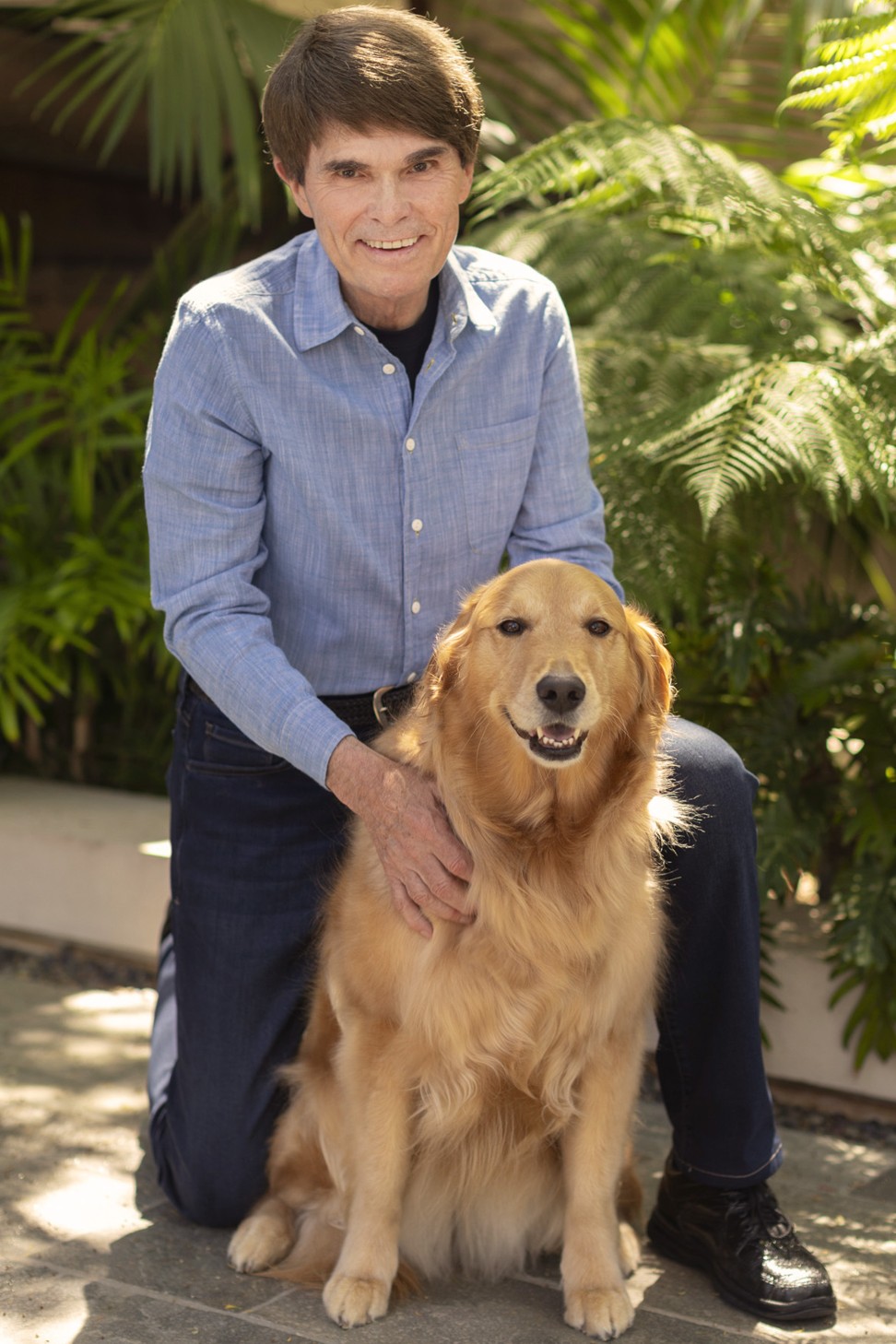
Koontz has written more than 80 novels and 74 works of short fiction. Photo: Douglas Sonders
Fringe conspiracy theories that the coronavirus involved in the current outbreak appears to be man-made and likely escaped from the Wuhan virology lab have been circulated, but have been widely debunked. In fact the lab was one of the first to sequence the coronavirus.
In Koontz’s thriller, the virus is considered the “perfect weapon” because it only affects humans and, since it cannot survive outside the human body for longer than a minute, it does not demand expensive decontamination once a population is wiped out, allowing the victors to roll in and claim a conquered territory.
It’s no exaggeration to call Koontz a prolific writer. His first book, Star Quest, was published in 1968 and he has been churning out suspense fiction at a phenomenal rate since with more than 80 novels and 74 works of short fiction under his belt. The 74-year-old, a devout Catholic, lives in California with his wife. But what are the odds of him so closely predicting the future?
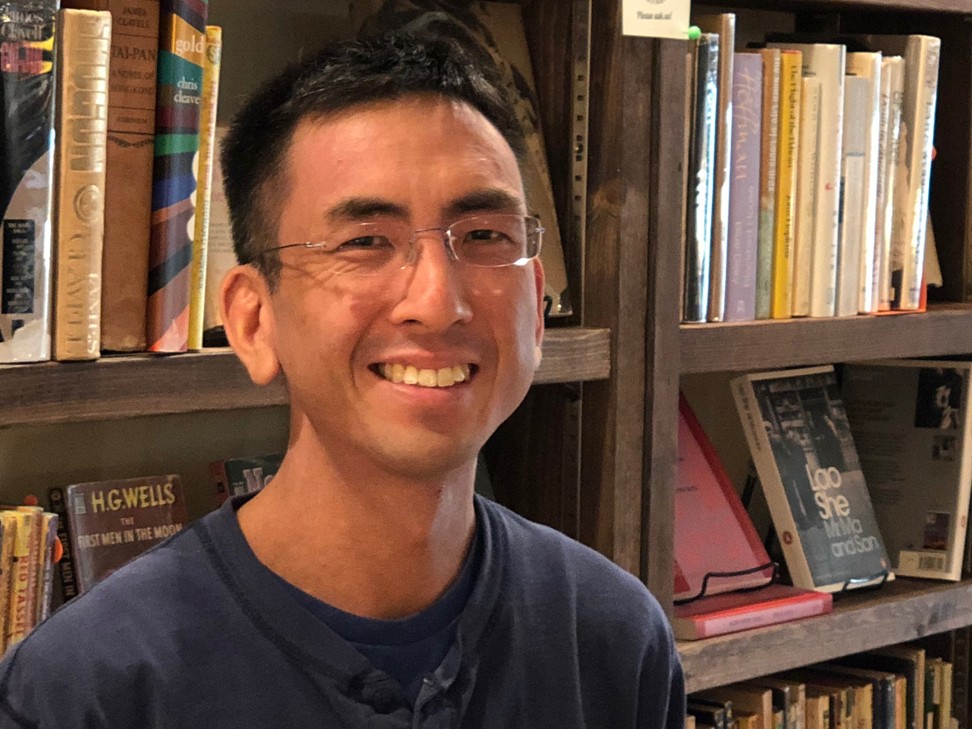
Albert Wan, who runs the Bleak House Books store in San Po Kong, says Wuhan has historically been the site of numerous scientific research facilities, including ones dealing with microbiology and virology. “Smart, savvy writers like Koontz would have known all this and used this bit of factual information to craft a story that is both convincing and unsettling. Hence the Wuhan-400,” says Wan.
British writer Paul French, who specialises in books about China, says many of the elements around viruses in China relate back to the second world war, which may have been a factor in Koontz’s thinking.
The Eyes of Darkness, by Koontz.
“The Japanese definitely did do chemical weapons research in China, which we mostly associate with Unit 731 in Harbin and northern China. But they also stored chemical weapons in Wuhan – which Japan admitted,” says French.
Publisher Pete Spurrier, who runs Hong Kong publishing house Blacksmith Books, muses that for a fiction writer mapping out a thriller about a virus outbreak set in China, Wuhan is a good choice.
“It’s on the Yangtze River that goes east-west; it’s on the high-speed rail [line] that goes north-south; it’s right at the crossroads of transport networks in the centre of the country. Where better to start a fictional epidemic, or indeed a real one?” says Spurrier. (Spurrier works part-time as a subeditor for the Post.)
Albert Wan runs the Bleak House Books store in San Po Kong, Hong Kong.
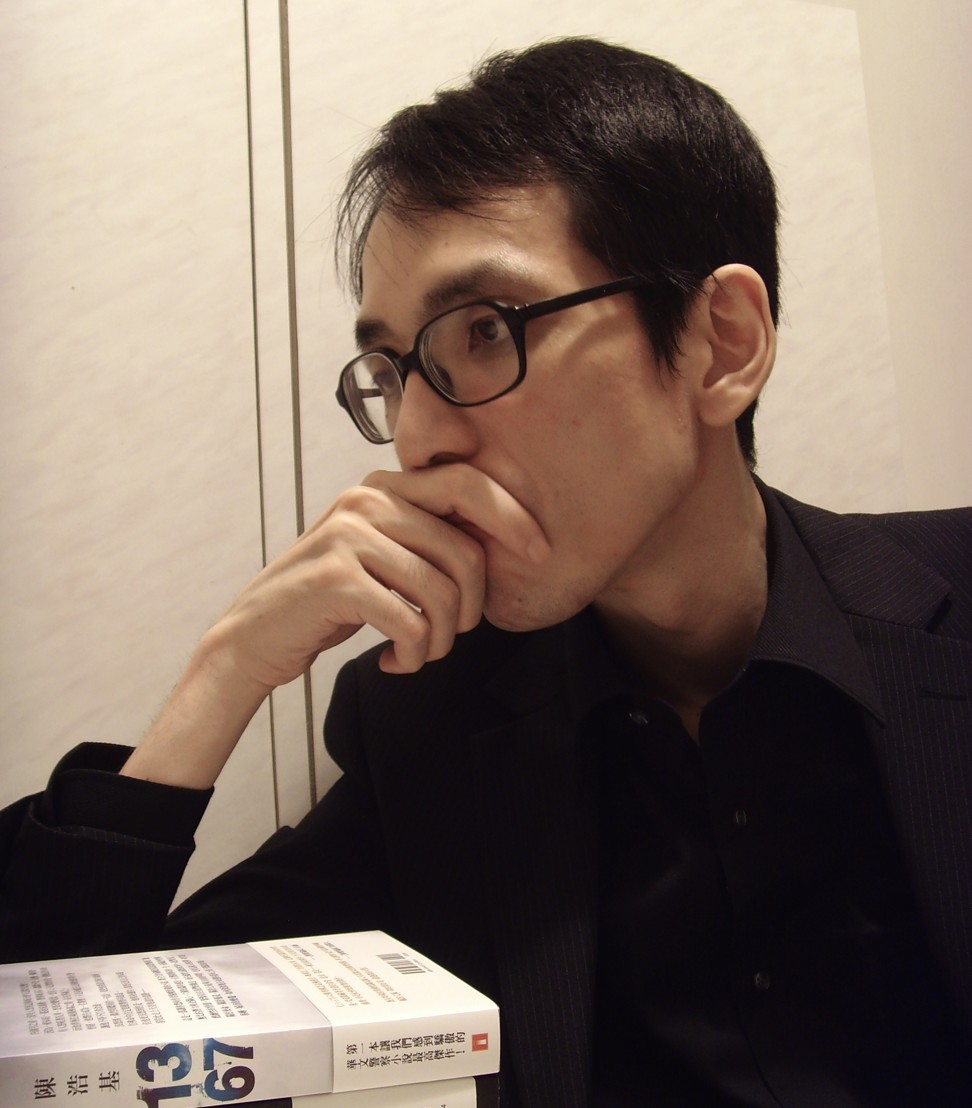
Hong Kong crime author Chan Ho-kei believes that this kind of “fiction-prophecy” is not uncommon.
“If you look really hard, I bet you can spot prophecies for almost all events. It makes me think about the ‘infinite monkey’ theorem,” he says, referring to the theory that a monkey hitting keys at random on a typewriter keyboard for an infinite amount of time will almost surely type any given text.
“The probability is low, but not impossible.”
British writer Paul French.
Chan points to the 1898 novella Futility, which told the story of a huge ocean liner that sank in the North Atlantic after striking an iceberg. Many uncanny similarities were noted between the fictional ship – called Titan – and the real-life passenger ship RMS Titanic, which sank 14 years later. Following the sinking of the Titanic, the book was reissued with some changes, particularly in the ship’s gross tonnage.
“Fiction writers always try to imagine what the reality would be, so it’s very likely to write something like a prediction. Of course, it’s bizarre when the details collide, but I think it’s just a matter of mathematics,” says Chan.
Many of Koontz’s books have been adapted for television or the big screen, but The Eyes of Darkness never achieved such glory. This bizarre coincidence will thrust it into the spotlight and may see sales of this otherwise forgotten thriller jump.
Hong Kong crime author Chan Ho-kei.
Amazon is currently offering it on Kindle for just US$1. Perhaps, like Futility, it will also be reissued with some updates to make it really echo the current outbreak.
Elderly resident says he can’t recall this happening in his city before, not even during the Cultural Revolution
Outbreak is expected to deal a heavy blow to businesses, especially smaller eateries, with some already forced to close
Like many elderly Chinese in Guangzhou, He Zhijian was shocked when he heard there was a ban on eating in restaurants, as authorities try to curb the spread of the coronavirus.
The 73-year-old has spent his entire life in the southern city, where gathering for dim sum is an important weekly family ritual.
“My wife and I … are used to having dim sum, tea and Cantonese dishes at the local restaurants every week. From memory, this [type of ban] has never happened in Guangzhou before – not even during the Cultural Revolution,” He said, referring to the decade of social and political upheaval from 1966, when food was in short supply.
The ban took effect at 9pm on Wednesday and is part of measures to contain the outbreak of the virus, which causes a disease officially known as Covid-19, and is believed to have started in Wuhan in December. The pneumonia-like illness has so far
Residents can still get takeaway meals in Guangzhou, but they have been encouraged to order online and have them delivered. Photo: He Huifeng
Guangzhou is home to more than 15 million people and a busy trading port, and has been known as China’s most open city since the 1600s. For locals, going to restaurants for yum cha, or “drinking tea”, and dining on dim sum is an important part of the city’s history and culture – a tradition that has been carried through many generations.
“Even in the ‘three years of natural disasters’ [from 1959 to 1961, when China was in the grip of a famine] I remember there were still restaurants open,” He said. “I was really shocked [by the ban]. I guess the epidemic situation must be severe, otherwise Guangzhou definitely wouldn’t introduce this measure.”
China’s Hubei province reports huge spike in coronavirus cases, rising 10-fold from previous day
Many people in Guangzhou and across the country went back to work on Monday after an extended Lunar New Year break – another measure to try to stop the virus from spreading – with the government keen for businesses to return to normal operations.
The ban on dining in applies to restaurants, but employees can continue to have meals at their company canteens. And while residents can still get takeaways from restaurants, they have been encouraged to do this online, and have their meals delivered, rather than collecting their orders.
Group gatherings have also been banned in the city, and according to Nanfang Daily, some 126 banquets that would have involved more than 90,000 people have been cancelled by authorities already. The authorities did not say how long the measures would be in place.
Guangzhou is not the only city in Guangdong province to bring in a ban on dining in restaurants – Futian district in Shenzhen, Xiangzhou in Zhuhai, Foshan and Zhongshan have all taken the same step.
Beijingers gradually return to work as China’s fight against deadly coronavirus continues
In Guangzhou, while residents try to adapt, businesses are expecting to take a hit. One of the city’s top hotels said the virus outbreak could have a severe impact on the industry.
“Now we will focus on promoting takeaways for local customers. They can order our meals through apps providing online takeaway ordering services,” said Fion Liang, director of sales and marketing at The Garden Hotel. “As for guests staying in the hotel we will deliver meals to their rooms.”
To work or not to work: the difficult coronavirus question facing China
13 Feb 2020
She said the outbreak did not have a big impact on the hotel’s business in January, because the situation only became severe at the end of the month.
“The impact was definitely much bigger in February. If the epidemic continues to be severe throughout February, the occupancy rate of our rooms will be in the single digits this month,” Liang said. “[Most] hotels in Guangzhou are in the same situation.”
The outbreak is expected to deal a heavy blow to restaurants in the city, especially smaller eateries, and some have already been forced to close. June Zhao, the owner of dumpling restaurant Xi Xi, decided to shut down on Wednesday – the day the eat-in ban was announced.
Prospects had been good for the restaurant – it also sold books and alcohol in the evenings, and its trendy decor drew a young crowd.
“We had just started making money last winter and we were looking forward to earning more over the Lunar New Year holiday. But then the coronavirus came, our turnover fell to several hundred yuan a day, and we lost hope,” she said. “The new ban makes this situation worse – takeaway is not a good choice for dumplings, especially in winter. The losses will continue if we stay open.”
Coronavirus: major cities given power to seize private property
13 Feb 2020
The ban has also interrupted daily routines. Freelance cameraman Cony Yu, 28, usually spends some of his working day at cafes, but that is no longer possible. “[Now] I don’t have a comfortable place to sit aside from my home – even the parks have all been closed,” Yu said.
China disinfects entire cities to fight coronavirus outbreak, some twice a day
In the southern tech hub of Shenzhen, dining in has also been banned in central Futian district. Zhu Hao, a financial analyst based in the district, has been working from home for a week and ordering takeaway food every day. But he has to collect it from the gate at his residential compound, where security staff check the temperature of anyone entering or leaving.
He is losing patience with the restrictions. “I want to eat out. I want beef hotpot, coconut chicken, Korean barbecue and seafood,” he said.
In other Shenzhen districts, many restaurants and shopping centres have been temporarily closed or can only provide takeaway meals – including fast food chains such as McDonald’s and Starbucks.
Other places have strict rules for customers. At a bread shop, customers must register their ID and phone numbers and have their temperatures checked before they can enter. And for now, all hotpot restaurants have been closed.
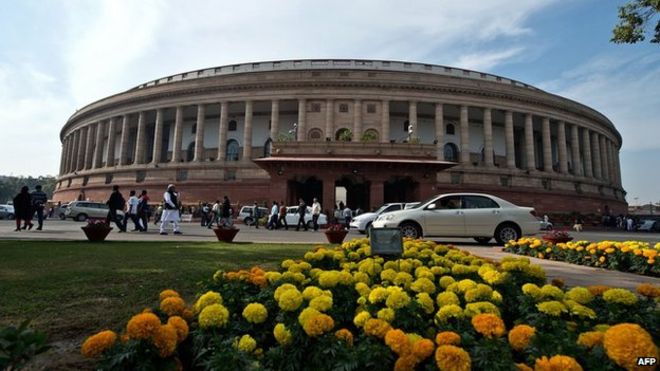
Image copyright AFPImage caption A third of the current members of parliament have criminal cases pending against them
“We need to build a consensus on how to prevent individuals with a criminal record from contesting elections.”
A necessary, even obvious fundamental you would think of building the world’s largest democracy.
And when Sonia Gandhi, India’s most powerful politician, uttered those words three years ago, even her main opponent, the leader of the BJP agreed.
Yet since then, things have gone in the opposite direction – with more alleged lawbreakers among India’s lawmakers than ever, a third of the current parliament according to a watchdog called the Association for Democratic Reforms.
By some calculations, politicians with a criminal record are more likely to be elected than those with a clean slate – because, says the ADR, they have more illicit funds with which to buy votes.
And on Tuesday night, India’s cabinet sought to ensure there was even less chance of criminal politicians facing their own laws.
It issued an order overturning a Supreme Court ruling demanding the disqualification of any politician convicted for crimes punishable with more than two years in jail.
This was “to ensure that governance is not adversely impacted“, the government had argued, with no apparent irony intended.
Unusual speed
Arguably, of course, the government is right. Losing tainted local or national politicians – among them many accused murderers, rapists and fraudsters – could upset delicate political alliances and make it even harder to get laws passed.
So often derided for doing nothing, this time round the cabinet acted with unusual speed.
The urgency it appears is the impending conclusion of two cases involving key politicians, due before Prime Minister Manmohan Singh gets back to India from a trip to the US.
Image copyright AFPImage caption There’s been some criticism of criminal politicians
One concerns Lalu Prasad Yadav, a former railways minister and Congress party ally, charged with pocketing millions of dollars in subsidies for non-existent livestock.
Another concerns Congress MP Rashid Masood, already convicted of corruption and due to be sentenced next week. When the BBC asked his office for a comment, his assistant told us “he is unwell”.
“Don’t know whether to laugh or cry” tweeted MP Baijayant Panda in response to the government’s protective move.
He is a rare voice though inside the chamber campaigning against criminals sitting alongside him.
There’s been some other criticism outside, but not much. Indians have become very used to these kinds of shenanigans.
Almost forgotten already are calls in the Verma commission report into the December 16 Delhi gang rape case for all politicians accused of sexual crimes to be barred from office. Instead, six politicians charged with rape remain in office.
The opposition BJP has said it will oppose the cabinet order. But its record is just as murky, with even more accused criminals among its elected members in parliament and state assemblies than the Congress.
And with elections round the corner, none of the parties want to risk real reform right now, whatever they have signed up to in the past.
AHMEDABAD, India (Reuters) – U.S. President Donald Trump will be shielded from the sight of slums by a newly built wall when he visits the city of Ahmedabad during a visit to India this month.
A senior government said the wall was being built for security reasons, not to conceal the slum district.
But the contractor building it told Reuters the government “did not want the slum to be seen” when Trump passes by on the ride in from Ahmedabad’s airport.
“I’ve been ordered to build a wall as soon as possible, over 150 masons are working round-the-clock to finish the project,” the contractor said, speaking on condition of anonymity.
The government official conceded that the wall was part of a “beautification and cleanliness” drive.
Whatever the reason, the 400-meter-long and seven-feet-high wall will prevent the U.S. leader from getting a glimpse of a slum district that houses an estimated 800 families.
Trump, who has made his pledge to build a wall along the United States’ border with Mexico a feature of his presidency, will visit India on Feb. 24-25 to reaffirm strategic ties that have been buffeted by trade disputes.
He is expected to attend an event dubbed “Kem Chho Trump” (“How are you, Trump”) at a stadium in Ahmedabad along the lines of the “Howdy Modi” extravaganza he hosted for Indian Prime Minister Narendra Modi in Houston last September.
Speaking at the White House on Tuesday, Trump quoted Modi as saying “millions and millions of people” would attend the rally.
The event provides Trump, who was impeached in December, with the opportunity to woo the support of hundreds of thousands of Indian-American voters ahead of the U.S. presidential election in November.
But some slum dwellers whose homes will be cordoned off by the wall in Ahmedabad – the largest city in Modi’s home state of Gujarat – said the government was wasting tax-payer money to hide the poor.
“Poverty and slums are the reality of our life, but Modi’s government wants to hide the poor,” said Parvatbhai Mafabhai, a day worker who has lived there with his family for more than three decades.
MUMBAI (Reuters) – India’s rural inflation rate surged faster than urban inflation for the first time in 19 months in January, and economists are optimistic that signals something the country desperately needs – a revival in demand in the rural economy.
Around two-thirds of India’s population depends on the rural sector with agriculture accounting for near 15% of India’s $2.8 trillion economy, and rising inflation suggests pricing power is returning to the hands of the farmers, say economists.
“This augurs well for farmers’ cash flows in the coming months. I expect early signs of demand revival to emerge from the rural belts, going ahead,” said Rupa Rege Nitsure, chief economist at L&T Financial Holdings.
Rural inflation rose to 7.73% in January, higher than the urban inflation rate – which was 7.39% – for the first time since June 2018. The latest data, released on Wednesday, also showed that overall inflation was 7.59% – its highest level in more than six years.
While the higher inflation readout, which comes at a time when India’s growth has likely slumped to 11-year lows, has fanned some concerns around stagflation, economists say the inflation numbers could also signal some momentum returning to rural growth.
The central bank is mandated to keep the retail inflation rate between 2-6% and it targets a medium-term inflation rate of 4%.
Rural inflation has been falling over the last year and half as a lack of proper infrastructure for storage and transport had left rural India with a glut of grains and the floods in several states in 2019 made matters worse for goods transportation.
“Better returns on food prices could improve the prolonged period of unfavourable terms of trade faced by the rural sector,” said Radhika Rao, economist with DBS Bank.
This could bring a glimmer of good news for the government, which has been trying to revive growth and boost consumption.
In its budget earlier this month, the government allocated 5.6% higher spends on agriculture and allied activities for the fiscal year 2020/21, as it seeks to kick-start demand.
While higher rural inflation could help kickstart economic growth, economists caution that urban demand revival remains a concern.
“To that extent that high inflation hurts urban spending, the overall demand dynamics stay unchanged,” Rao said.
BEIJING, Feb. 12 (Xinhua) — A Chinese Foreign Ministry spokesperson on Wednesday said epidemic prevention and control goes beyond borders and stronger communication, coordination and cooperation is needed to win the fight against the novel coronavirus outbreak.
Spokesperson Geng Shuang made the remarks when commenting on reports that health ministers of the 27 European Union (EU) member states will hold a special meeting on the epidemic on Feb. 13 to coordinate action, and the EU will continue to offer assistance to China in combating the epidemic.
“We have noted relevant reports. The EU crisis management commissioner also stressed the importance for the entire international community to maintain solidarity and jointly respond to the virus,” said Geng.
He thanked the international community including the EU for their support and assistance to China in combating the epidemic.
Geng also stressed that China hoped relevant countries would remain cool-headed, make science-based assessments and rational responses, and heed recommendations of the World Health Organization (WHO).
“To defeat the virus as early as possible, China will continue to enhance communication and cooperation with the WHO and the world in an open, transparent and responsible manner,” he added.
on Wednesday said epidemic prevention and control goes beyond borders and stronger communication, coordination and cooperation is needed to win the fight against the novel coronavirus outbreak.
Spokesperson Geng Shuang made the remarks when commenting on reports that health ministers of the 27 European Union (EU) member states will hold a special meeting on the epidemic on Feb. 13 to coordinate action, and the EU will continue to offer assistance to China in combating the epidemic.
“We have noted relevant reports. The EU crisis management commissioner also stressed the importance for the entire international community to maintain solidarity and jointly respond to the virus,” said Geng.
He thanked the international community including the EU for their support and assistance to China in combating the epidemic.
Geng also stressed that China hoped relevant countries would remain cool-headed, make science-based assessments and rational responses, and heed recommendations of the World Health Organization (WHO).
“To defeat the virus as early as possible, China will continue to enhance communication and cooperation with the WHO and the world in an open, transparent and responsible manner,” he added.











 CHINDIA ALERT: You'll be living in their world, very soon