Posts tagged ‘air pollution’

16/02/2016

India and China Have Most Deaths From Pollution – China Real Time Report – WSJ

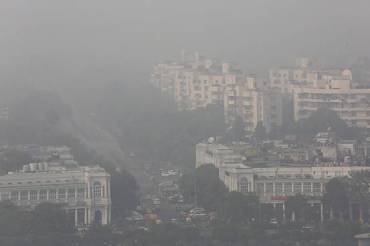
More than half of the 5.5 million deaths related to air pollution in 2013 happened in India and China, according to a new study.

About 1.4 million people in the South Asian nation and 1.6 million in its northern neighbor died of illnesses related to air pollution in 2013, researchers at the University of British Columbia in Canada said.

The Indian and Chinese fatalities accounted for 55% of such deaths worldwide, the study said.

Researchers studied risk factors for death and disease around the world and found that air pollution, both indoors and outdoors, was one of the leading contributors to global fatalities.

The inhalation of emissions from power plants, vehicles, the burning of crop stubble before replanting, and wood or open fires in homes are some of the leading causes of deaths from air pollution, the report said.

The number of premature deaths linked to air pollution worldwide will increase over the next two decades unless more aggressive targets are set to curb it, researchers studying India and China’s air said at a meeting Friday in Washington D.C.

A major contributor of poor air quality in India is linked to the burning of wood and cow dung for cooking and keeping warm, particularly in the winter months. These methods are popular among India’s rural and urban poor, who don’t have access to electricity or cleaner fuels.

Household air pollution from cooking with wood “is primarily a problem in rural areas of developing countries of the world,” said Michael Brauer, a professor at the University of British Columbia’s School of Population and Public Health, in Canada.

Over the past few months, levels of tiny insidious particles, known as PM 2.5, in the Indian capital New Delhi have often exceeded amounts deemed safe by the United Nations World Health Organization.

Taking their lead from Beijing, Indian authorities in January experimented with restricting cars on roads for two weeks in New Delhi to reduce emission levels. Delhi Chief Minister Arvind Kejriwal said Thursday the city would revive the restrictions for 15 days, starting April 15.

Scientists said vehicle emissions contribute only 20% to 40% of pollution in Delhi, saying other sources of the particulate matter include the burning of dung, rubbish and leaves and the use of diesel backup generators, which kick in when Delhi’s patchy electricity supply cuts out, as well as emissions from small-scale industries such as brick kilns.

A federal environmental court in New Delhi said Feb. 4 it wanted officials to improve air quality by asking authorities to reduce the number of traditional cremations that use wood to burn bodies, a widespread practice in majority Hindu India.

In China, outdoor air pollution from burning coal was found to be the biggest contributor to poor air quality, causing an estimated 366,000 deaths in the country in 2013. Scientists predict 1.3 million premature deaths will take place in China by 2030 if coal combustion remains unchecked.

“One of the unique things about air pollution is you cannot run, you cannot hide from it. We know that if you improve air quality everybody benefits, so from a health perspective reducing levels of air pollution is actually an incredibly efficient way to improve the health of the entire population,” Mr. Brauer said.

Source: India and China Have Most Deaths From Pollution – China Real Time Report – WSJ
03/02/2016

China’s new wind power capacity hits record high – Xinhua | English.news.cn

China‘s newly installed wind power capacity reached a record high in 2015 amid increasing efforts from the government to boost clean energy.

The new wind power capacity jumped to 32.97 gigawatts last year, more than 60 percent higher than 2014, the National Energy Administration (NEA) said on Tuesday.

Wind power generated 186.3 terawatt hour of electricity in 2015, or 3.3 percent of the country’s total electric energy production, data showed.  (Editor’s note: worldwide average is 4% – https://en.wikipedia.org/wiki/Wind_power)

Promoting non-fossil energy including wind power, China is in the middle of an energy revolution to power its economy in a cleaner and sustainable manner. The government aims to lift the proportion of non-fossil fuels in energy consumption to 20 percent by 2030 from present around 11 percent.

China’s energy mix is currently dominated by coal.

However, the NEA warned of the suspension of wind farms in Inner Mongolia, Xinjiang and Jilin. The phenomenon occurs in the early stage of wind power capacity construction due to the mismatching of new installation and local power grid.

Source: China’s new wind power capacity hits record high – Xinhua | English.news.cn

22/01/2016

Beijing shut down over 1,000 factories over past 5 years|Society|chinadaily.com.cn

Very good news, indeed.

Beijing has closed 1,006 manufacturing and polluting enterprises over the past five years, the municipal government revealed Friday.

In addition, 228 markets were also closed over the period, Beijing Mayor Wang Anshun said in a government work report presented during the city’s annual parliamentary session, which opened Friday.

More than 13,000 applications for new businesses have also been rejected because they were on the list of prohibited or restricted operations, Wang said.

Beijing had closed or relocated nearly 400 polluting factories in 2014 and another 300 in 2015, previous figures show.”

Source: Beijing shut down over 1,000 factories over past 5 years|Society|chinadaily.com.cn

10/12/2015

Why Delhi Doesn’t Have a Beijing-Style Response to Pollution – China Real Time Report – WSJ
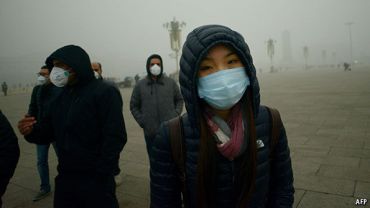
The cities of Delhi and Beijing share a dubious honor as the world’s most-polluted capitals. But their response to dangerous levels of air pollution separates them.

Earlier this week, Beijing for the first time issued a red-alert for pollution, triggered when authorities forecast air-quality levels above 300 for at least three consecutive days.

On China’s government index, a measure of overall air quality, the maximum reading of 500, is described by the government as “severely polluted.” The Chinese administration immediately sent cars off the roads, shut factories and urged schools to close.

In Delhi, where air was similarly dirty, life went on as normal. The starkly different responses prompted some in the Indian capital to question why their government wasn’t taking Beijing-style measures to combat the smog. For sure, plans are underway in India to tackle the capital’s filthy air.

On Friday, Delhi’s government announced it would impose restrictions on the number of cars on its roads from Jan.1. Residents in the Indian city can look up air-pollution data on the website of The System of Air Quality and Weather Forecasting and Research, known as Safar, which uses data collected at 10 locations in the city. On that index, air quality in the city regularly hits “very poor” conditions when levels of PM 2.5 — insidious particles in the air including dirt, soot, smoke and liquid droplets — spike.

These tiny particles are thought to be particularly dangerous because they can lodge deeply in the lungs and cause inflammation, infection and lead to diseases including cancer. Readings on the Safar monitor are calibrated from “good” to “severe.” The Delhi Pollution Control Committee also publishes raw pollution data but doesn’t give qualitative readings alongside.

The U.S. Embassy, which measures pollution on monitors at its compound in the capital and around the country, warns the very young and elderly to remain indoors whenever air quality becomes what it calls hazardous. But none of the readings currently trigger alerts, or responsive action, by Delhi’s government. That’s because India is a democracy, said Ashwani Kumar, chairman of the Delhi Pollution Control Committee, an arm of the state government.

China, of course, is a one-party state. The idea that alerts should tell people to stay indoors when smog hits was  “absurd,” Mr. Kumar added, and people “should decide for themselves what to do with the pollution information.” However, he said the Delhi Pollution Control Committee does plan to introduce an app so that information is available to residents with smartphones. Less than 10% of Indians own a smartphone. It also proposes to install around 70 big screens in strategic locations around the city advising residents what they can do to reduce pollution, Mr. Kumar added. The idea of an environmental alert system is not alien to India.

Source: Why Delhi Doesn’t Have a Beijing-Style Response to Pollution – China Real Time Report – WSJ

10/12/2015

Raise the green lanterns | The Economist

WHEN world leaders gathered in Paris to discuss cutting planet-heating emissions, a pall of smog hung over Beijing. In parts of the capital levels of fine particulate matter reached 30 times the limit deemed safe.

Though air pollution and climate change are different things, Chinese citydwellers think of them in the same, poisoned breath. The murky skies seemed irreconcilable with the bright intentions promised in France.

Yet a marked change has taken place in China’s official thinking. Where once China viewed international climate talks as a conspiracy to constrain its economy, it now sees a global agreement as helpful to its own development.

China accounts for two-thirds of the world’s increase in the carbon dioxide emitted since 2000. It has come a long way in recognising the problem. When China first joined international climate talks, the environment was just a minor branch of foreign policy. The ministry for environmental protection had no policymaking powers until 2008. Only in 2012 did public pressure force cities to publish air-pollution data.

Yet today China pledges to cap carbon emissions by 2030 (reversing its former position that, as a developing power, it should not be bound to an absolute reduction); and it says it will cut its carbon intensity (that is, emissions per unit of GDP) by a fifth, as well as increase by the same amount the electricity generated from sources other than fossil fuels. The latest five-year plan, a blueprint for the Communist Party’s intentions that was unveiled last month, contains clear policy prescriptions for making economic development more environmentally friendly.

There’s more

Right after the Paris summit, however it ends, China is expected to make more promises in a new document, co-written by international experts, that presents a far-reaching programme of how China should clean up its act. It is based on models that account for both economic and political viability. On top of existing plans, such as launching a national emissions-trading scheme in 2017, the government may even outline proposals for a carbon tax, something that has eluded many prosperous countries in the West.

The big question is why China is now so serious about climate change. The answer is not that Communist leaders are newly converted econuts. Rather, they want to use environmental concerns to rally domestic support for difficult reforms that would sustain growth in the coming decades. Since a global slowdown in 2008 it has become clear that to continue growing, China must move its economy away from construction and energy-intensive industry towards services. At the same time, China faces an energy crunch. For instance, in recent years China has been a net importer of coal, which generates two-thirds of China’s electricity. It all argues for growth plans that involve less carbon.

This is where signing international accords, such as the one hoped for in Paris, come in, for they will help the government fight entrenched interests at home. Observers see a parallel with China’s joining the World Trade Organisation in 2001. It allowed leaders to push through internal economic reform against fierce domestic opposition. In the same way, a global climate treaty should help it take tough measures for restructuring the economy.

It will not be easy. Provincial party bosses and state-owned enterprises hate to shut factories, particularly in those parts of the country, such as Shanxi and Inner Mongolia in the north, where coal is a big employer. Cutting demand for energy is even harder. Even if the amount of electricity used by state industry falls, that used by private firms and households is bound to increase. What is more, environmental regulations and laws laid down by the centre are routinely flouted.

But cleaning up China’s act has, for the central government, become a political necessity too. Environmental issues have been major public concerns for over a decade, says Anthony Saich of Harvard University, which has conducted polls. True, rural people fret most (and with good reason) about water pollution. But those in the cities gripe about their toxic air. Both represent a reproach to the government over its neglect of people’s lives and health.

That is why national economic goals, political goals, public opinion and international pressure all point towards trying to cut emissions, pollutants included. In particular, says Zhang Zhongxiang of Tianjin University, now that dealing with climate change is a pillar of China’s diplomacy, the government must show it can keep its promises. It has some tools at its disposal. Across the country, the environmental record of government officials has become a crucial part of their evaluation by the Communist Party; and cadres will be held account

Source: Raise the green lanterns | The Economist

02/12/2015

China Road Rage Cases Top 17 Million So Far in 2015 – China Real Time Report – WSJ

Chinese police attributed 80,200 traffic accidents in 2013 to road rage, and the number rose by 2.4% in 2014. Men account for 97% of road rage incidents, official data show.

No Caption Available.

China is a notoriously dangerous place for driving in general. The World Health Organization has estimated that 261,000 people died on China’s roads in 2013. Chinese government data show that last year 1,895 people died in traffic accidents when crossing roads, and 4,180 people died between 2011 and 2014 on public buses that were speeding or overloaded.

Yet when it comes to the surge in road rage, experts point to a range of possible explanations. One is that the rapid development of China’s car market has led the country’s roads to become increasingly crowded, creating frustration and anger on the streets. Sociologists also link road rage to general anxiety and fickleness, one of the side products of China’s rapid economic growth — and its accompanying social pressure — over the past three decades.

In China, the total number of vehicles has increased by more than 18 million cars for each of the past five years. As of the end of October, China had 169 million autos, according to Ministry of Public Security statistics, next only to the U.S.’s 240 million. The number of license-holders has risen even more quickly; since 2010, China has added more than 20 million new drivers each year. Now one in five Chinese has a license.

The country’s infrastructure has struggled to keep up. Data from the Ministry of Public Security show that 35 Chinese cities now have more than one million automobiles. Ten of those cities — including Beijing, Chengdu and Shenzhen – each have more than two million cars on the road. But while the number of China’s motor vehicles and drivers has each risen more than 20-fold since 1987, the country’s road capacity has increased only 3.4 times over the same period.

The rash of new drivers is also posing safety hazards. The official Xinhua News Agency cited a spokesman from the Ministry of Public Security as saying that drivers with less than one year of experience play a large role in traffic accidents. To be sure, China has some safety regulations in place. For example, drivers and front-seat passengers are required to wear seatbelts, and the use of mobile phones while driving is prohibited. But these laws are often ignored in practice. Distracted driving – operating a vehicle while texting, talking on the phone, watching videos, eating or reading – contributed to more than a third of fatal traffic accidents in 2014, causing 21,570 deaths, the Ministry of Public Security said.

Chinese authorities are working to counter the trend. In the past month, the Ministry of Public Security launched a public education campaign on road etiquette after several high-profile cases of road rage violence this year. It advocated against dangerous driving behaviors including street racing, drunk driving, aggressive driving and blocking emergency lanes.

Source: China Road Rage Cases Top 17 Million So Far in 2015 – China Real Time Report – WSJ

27/08/2015

India’s Hard-Working Expat Army – The Numbers – WSJ

Compared with expatriates from other countries, expats from India are younger, better-educated, harder-working and much more likely to be male. A new survey of people working far from home by the expat social group InterNations also suggests Indian expats are much more likely to pick a partner from home and less likely to settle in the country in which they currently work. While there is debate about exactly how expats differ from other migrant workers, any definition would have to include many of the millions of Indians who help run companies, build software and erect buildings across the globe. Indians have proven to be the highest ranked group of migrants to the U.S., in terms of education and pay. Indian-born leaders now run everything from Microsoft Corp. to Google Inc.

The InterNations survey of 14,400  self-declared expats living in 64 countries  offers some interesting insights into what India’s world-wide web of non-resident road warriors looks like. Here are a few numbers from the survey.

80% Around 80%, or four out of five, Indian expatriates who responded to the InterNations survey are male. That’s really lopsided. The average for all countries combined in the survey was about 47% male.

36.5 years Indians that took part in the survey were 36.5 years old on average. That is younger to the broader expat populace, which had an average age of 40.9 years. 45.2 hours Indian expats said they worked an average of

45.2 hours a week. While that is probably not enough overtime to get you to the top of Google like Sunder Pichai, it’s 3.2 hours more than the average expat.

92% More than 90% of those surveyed had a college degree or higher. On average only 83% of the world’s expats graduated from university. Data on Indians enrolled in U.S. schools show they are often more likely to go for advanced degrees. The education of globe-trotting Indians is also seen in their language abilities.

Close to half (48%) of the people surveyed said they could speak four or more languages. 9 out of 10 Compared with other expatriates,

Indians were much more likely to pick a partner from home. Around 89% of Indians in the survey said they were with someone from their home country. On average, expatriates around the world are usually more likely not to choose someone from home. Only 43% of those surveyed said they had a partner from their countries of origin.

12% Nearly a quarter of expats say they would consider settling in the country where they are currently working. For Indian expatriate workers, however, the number is just around one in eight.

Source: India’s Hard-Working Expat Army – The Numbers – WSJ

22/07/2015

Kind of Blue: China’s Air Pollution Not as Terrible as Before – China Real Time Report – WSJ

If you’re living in China and have the vague impression that the skies have been bluer than usual this year, it’s not just wishful thinking.

According to an analysis released Wednesday by Greenpeace East Asia, China’s air is not as awful as it used to be. Among 189 cities examined by the environmental nonprofit, PM2.5 levels in the first half of 2015 were down an average of 16% compared to the same period last year. Only 18 cities saw their levels of PM2.5 increase.

Health experts say that small particles such as PM2.5 are particularly worrisome for human health, given their ability to creep deep into the lungs and aggravate heart or lung disease.

“I think this is the first time I’ve seen a massive reduction on PM2.5 concentrations at a national level,” said Dong Liansai, Greenpeace East Asia energy and climate campaigner. In recent years, the frequent grey pall and onset of periodic “airpocalyses” have helped discourage tourism to Beijing and have spurred expats and locals alike to leave for more oxygen-rich environments.

In the country’s notoriously smoggy capital, residents have seen PM2.5 levels drop by 15.5%, with levels of sulfur dioxide – which can contribute to respiratory problems — experiencing a still more precipitous drop of 42.6%, the group said. The capital has been making a concerted push to clean up its skies, closing or relocating 185 firms in the first half of this year, according to the Beijing government. Since last July, the city has also shuttered three of its four coal-fired power plants.

Mr. Dong said the bump in clean air doesn’t appear to be just a blip. He credited more aggressive government standards on emissions and efforts to shutter its dirtiest factories. He also cited the government’s 2013 air pollution control plan, which mandates that by 2017, certain regions must reduce their PM2.5 levels by as much as 25% compared to 2012 levels.

Compared with the rest of the world, the Middle Kingdom’s air still ranks as wretched: the average PM2.5 level in the 385 cities ranked by the group was 53.8 µg/m3, more than five times the World Health Organization’s recommended annual mean.

To keep skies blue-hued for events such as last November’s APEC summit, the city periodically shuts down nearby factories and orders cars off the streets. Such a strategy has in the past paid health dividends for residents. A recent study found that women pregnant during the 2008 Beijing Olympics—when the Chinese government worked aggressively to keep air pollution down for a seven-week period—gave birth to heavier, and presumably healthier, babies.

via Kind of Blue: China’s Air Pollution Not as Terrible as Before – China Real Time Report – WSJ.

13/07/2015

China says 75 percent of cities failed to meet air standards in June | Reuters

Nearly 75 percent of China’s big cities failed to meet air quality standards in June, the environment ministry said on Monday, an improvement over the same month last year, as the country continues to wage “war on pollution.”

General view of downtown Shanghai on a hazy night January 25, 2015. REUTERS/Aly Song

Nineteen cities met air quality standards every day, the Ministry of Environmental Protection said in a statement on its website (www.mep.gov.cn), compared to five at the same time last year.

Air quality in the capital Beijing was subpar on almost 60 percent of the days in June and saw levels of PM2.5 – particulate matter with a diameter of 2.5 micrometers that can penetrate deep into the lungs – rise 11 percent compared to the same period last year.

Amid growing public disquiet about smog and other environmental risks, China said last year it would “declare war on pollution” and it has started to eliminate substandard industrial capacity and reduce coal consumption.

Last year, nearly 90 percent of China’s 74 big cities failed to meet air quality standards.

The state standard is 35 micrograms of PM2.5 per cubic meter, but the government does not expect to bring the national average down to that level before 2030.

In April, the vice minister for environmental protection announced a two-year inspection campaign to root out fake air quality data and accused some local governments of manipulating the data to meet national standards.

via China says 75 percent of cities failed to meet air standards in June | Reuters.

23/06/2015

China’s Air is Much Worse Than India’s, World Bank Report Shows – China Real Time Report – WSJ

India’s capital may have the worst air quality in the world on some days, but a new report shows that nationally, the air in the world’s second-most-populous country is far less polluted than in China.

In fact, China’s air is more than twice as dirty as India’s, according to recently released estimates by the World Bank.

The bank’s “Little Green Data Book” of environmental indicators, unveiled last week, included a new gauge of air pollution. To the standard measures of environmental health–including forest cover and carbon emissions–it added PM 2.5 levels, which measure airborne particles smaller than 2.5 microns.

These tiny pollutants are microscopic and can enter the lungs and even pollute a person’s blood stream. They are linked to severe health problems including lung cancer.

“These data show that in many parts of the world exposure to air pollution is increasing at an alarming rate and has become the main environmental threat to health,” the forward of the World Bank book said. “Exposure to ambient PM 2.5 pollution in 2010 resulted in more than 3.2 million premature deaths globally.”

Using this measure, India’s air is far from clean. The World Bank data put the South Asian nation’s annual mean PM 2.5 at 32 micrograms per cubic meter. That’s three times the bank’s recommended level of 10 or less, but in line with the global average. It is also well below China’s mean annual exposure of 73 micrograms per cubic meter. .

Of the 200 countries in the book, only the United Arab Emirates did worse than China.

India’s environmental rankings fared better than China’s in other categories as well. India’s energy use and carbon emissions per capita were less than one third of those in China.

India’s PM 2.5 air pollution average is on par with other fast-growing Asian countries, but will likely rise as its economy expands.

The World Bank data showed that air quality deteriorates as countries evolve from lower income levels and become more affluent. Air only starts to improve once countries attain high-income status, which the World Bank defines as having gross national income per capita of $12,746 or more.

via China’s Air is Much Worse Than India’s, World Bank Report Shows – China Real Time Report – WSJ.

Law of Unintended Consequences

continuously updated blog about China & India

ChiaHou's Book Reviews

continuously updated blog about China & India

What's wrong with the world; and its economy

continuously updated blog about China & India