Posts tagged ‘Asia-Pacific’

06/10/2016

Why HSBC Says India is Better Than China or the U.S. for Expats – India Real Time – WSJ

While India may be known for its oppressive pollution, poverty and bureaucracy, it’s a better place to be sent to work than China or even the United States according to a recent survey.
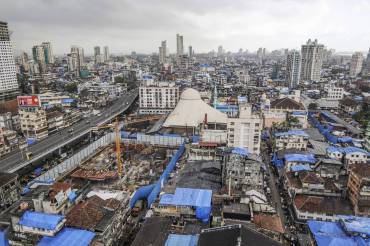
An HSBC report that tried to break down what it’s like to be an expatriate in different countries this week surprisingly ranked India ahead of the world’s two biggest economies.

In its HSBC Expat Explorer 2016 report based on an online survey of 27,000 expats this year, the bank ranked India 26th out of 45 countries. While that is on the bottom half of the rankings, the U.S. did worse at 30th as did China at 34th.

How is that possible?

One factor was the Indian economy. Even though it is decades behind China and the U.S. it is still the fastest growing major economy in the world right now. That means globe-trotting executives and entrepreneurs don’t feel like they have been relegated to the backwaters when they work in India.

“More than half (51%) of expats in India believe the country is a good place for them to progress their career, compared with 42% across Asia-Pacific,” said the report, which ranked India 10th for “entrepreneurship,” better than China which got the 16th rank. India was also rated by expats as “a good place to start a business,” about 7% more than China in the region.

“Expats in India are also able to save more, with 44% saying that living there has accelerated their progress towards making longterm savings and investments, compared with 39% across the region,” said the report.

More important for the rankings this year though was family and friends.

The expats who responded to the HSBC survey gave India much higher marks in terms of ease of integrating with the locals as well as cost of raising children.

Of course the report also showed how India continues to underperform in many areas including quality of life and safety.India’s overall ranking slipped this year. Last year it was 17th out of 39 countries just below the U.S. but still better than China.

“The slight drop in India’s ranking is due to a range of factors, for example, expat parents in India have reported that the country is more expensive to bring up a child than last year,” said the bank when asked about India’s lower ranking this year.

Why did India, China and the U.S. perform worse than last year? That’s because they faced new competition from 6 other countries which were not a part of last year’s survey, including Norway and Austria which were ranked 6th and 7th in 2016.

On the top of the rankings this year was Singapore, New Zealand and Canada.

Source: Why HSBC Says India is Better Than China or the U.S. for Expats – India Real Time – WSJ

02/03/2016

Indians Are Among the Most Satisfied at Work, Says a Study. Here’s Why – India Real Time – WSJ

Indians are among the most highly stimulated and satisfied at work, a new report claims.

Some 28% of workers in the South Asian nation reported being highly engaged and fulfilled in the office, a full 15% above the global average, in a survey of workers in 17 countries conducted by Ipsos for furniture and workspace systems company Steelcase Inc.

Other nations with the largest proportions of satisfied workers were Mexico, at 22%, the UAE and South Africa, where around one in five people described themselves in that way and Saudi Arabia, with 18%.

American offices came sixth. About 14% of those surveyed there reported being highly engaged and satisfied at work.

Only 4% of Indian workers were highly dissatisfied and disengaged, compared with 11% on average globally.

Indians also provided the second-highest average score, of 7.4, when they rated their quality of life at work out of 10. Only Mexico scored higher with 7.5.

The authors of the report said the secret to the happiness of Indian workers could be to do with the fact the country’s employers haven’t yet embraced open-plan work spaces and also a result of  the hectic pace of life outside the office walls.

Only 14% of the offices the employees worked in were open plan. Meanwhile, 70% of the workers surveyed sat in a private or shared private office at work.

“Culturally, having a workspace of one’s own, even if it is compact and modest, is a signal of belonging and importance, which may explain the overall high degree of workplace satisfaction,” the report said.

In densely populated countries like India, the workplace can be a haven, the report said.

Indians are much more likely to say, for instance, that their work environment allows them to feel relaxed and calm. A total of 73% agreed with that in the survey, much higher than most other countries, the report said.

Workers in Indian offices are also likely to have access to shared spaces like meeting rooms, cafeterias and canteens. They also have the most access to sport or exercise facilities.

Indians’ enthusiasm about their office spaces might be relative. The most highly engaged employees came from emerging economies, the report said.

“Many Indian employees’ expectations may be shaped by their comparatively modest living conditions,” the report said.

And they are more likely to say that they work remotely–55% said they sometimes work away from the office, and 20% said they did so every day.

They also believed that their employer took a genuine interest in employees, with 79% agreeing with the statement.

All of this might reflect employers’ efforts to keep their workers happy, the report said. “In India’s highly competitive and fluid job market, providing a desirable workplace can be a powerful strategy for attracting, retaining and engaging the talent that can help an organization thrive,” the report said.

Source: Indians Are Among the Most Satisfied at Work, Says a Study. Here’s Why – India Real Time – WSJ

17/09/2015

How Modi’s Win Helped Boost India’s Ranks of Millionaires – India Real Time – WSJ

The ranks of the millionaires grew at a faster rate in India than anywhere else around the globe in 2014 thanks to the election of Prime Minister Narendra Modi and falling oil prices, according to a report on worldwide wealth.

After only marginal growth in 2013, India’s tally of high-net-worth individuals increased by 26.3% in 2014 compared with the previous year and with 17.5% in China and 8.2% in the U.S. over the same period, the data from consultants Capgemini and RBC Wealth Management, said.

High-net-worth individuals are defined as those with investible assets of more than $1 million.

The report says that the election of “a popular reform-minded prime minister” in May 2014 “had a positive effect on the economy and equity markets, boosting [high-net-worth-individual] gains.” More In Narendra-Modi

Mr. Modi’s win “helped to boost investor confidence and contributed to strong performance in the stock market,” the report’s authors said.

“Lower oil prices helped reduce the country’s budget deficit and retail inflation fell considerably,” they added. Still, in absolute numbers of very wealthy, India continues to lag behind. It had 1,975,000 people with $1 million to invest in 2014, compared with 4,682,000 in the U.S. and Canada and 8,901,000 in China.

The Asia Pacific region as a whole though, including India and China, had a higher number of millionaires than North America in 2014.

Source: How Modi’s Win Helped Boost India’s Ranks of Millionaires – India Real Time – WSJ

28/01/2015

BBC News – The village that just got its first fridge

Three-quarters of the world’s homes have a fridge – an appliance that can revolutionise a family’s life. A tailor in one Indian village has just become the first person in his community to own one – something he has dreamed of for 10 years.

Santosh choosing a fridge

Santosh Chowdhury is pacing up and down speaking into his mobile phone.

“How much longer? It’s left past the auto-rickshaw stand, yes that’s right,” he shouts, and then continues his nervous pacing.

It’s a big day for him and indeed for the village of Rameshwarpur, just outside Calcutta in north-east India.

Santosh has bought a new fridge – not just his first but also the first in the entire community of 200 people. “Owning a fridge is quite rare in a village like ours,” he says.

The lack of fridges in Rameshwarpur reflects the situation across the whole of India. Only one in four of the country’s homes has one. That compares to an average of 99% of households in developed countries.

But change can be rapid when linked to an emerging middle class. In 2004, 24% of households in China owned a fridge. Ten years later this had shot up to 88%.

“Ours is the first generation to own a fridge in my family,” says Santosh. “No one in my father’s and grandfather’s time had ever seen one.”

Rameshwarpur has a distinctly rural feel. People bathe in a pond in the middle of the village, children fly kites in the dusty lanes. The homes are little more than simple huts, made of mud and brick. But the village has electricity and many houses have televisions.

Santosh works as a tailor. He lives in a modest, two-room hut which doubles as his home and workplace. “I don’t have a regular job as such,” he says. “Sometimes I also work part-time in a factory. I make about three to four dollars a day.”

Life is quite hard, especially for his wife Sushoma.

She cooks lunch, stirring a pot of rice on a wood fire outside their hut. It’s something she does every day because they have no way of storing leftovers. So Santosh has to go the market early each morning to shop for groceries.

He’s always wanted to make life easier for his wife and has been dreaming of buying a fridge for 10 years. “Owning one will be so convenient,” he says. “You don’t have to buy vegetables every day, you can store food – especially in the summer.”

So he’s been saving hard, putting away a bit of money every month for a purchase that costs more than a month’s salary. “I don’t make that much money, that’s why it’s taken me so long. But now I have enough,” he says, smiling.

At one of Calcutta’s high street stores, about 15km from his home, Santosh had several models to choose from. Peering inside, he ran his fingers along the side of a bright red model.

“It was quite confusing. It was my first time you know. I couldn’t figure out which one to get,” he says shyly. “My wife wanted a red one. I wanted one that will consume the least power. We need to keep our bills down.”

Finally, the deal was struck. Santosh got a discount because it was the final week of the winter sales. The price was 11,000 rupees (£120) – but more importantly, he was able to pay in instalments, having paid just under half the money up front.

“No one pays cash any more like they used to,” says store manager Pintoo Mazumdar. “Everyone can get a loan from the bank or the store – all you need is a bank statement and ID. That’s why so many lower income people can afford to buy a fridge these days.”


FRIDGEONOMICS

Fridge ownership around the world

76% Global average

65% Asia Pacific

99% Europe and North America

87% Latin America

63% Middle East and Africa

Source: Euromonitor


Santosh’s fridge finally arrives on the back of a cycle rickshaw. He walks along next to it with a broad smile. Many of the villagers come out on to the lane as well, craning their necks to get a better look.

“Careful, careful,” he cries out as a couple of them help carry the fridge into his house.

Then it’s time for a religious ceremony.

His wife applies a dab of vermillion to the fridge, to keep away evil spirits, and then blows on a conch shell to seek divine blessings and welcome the fridge into their home. The fridge has pride of place – next to Santosh’s sewing machine and their tiny television set.

They simply cannot stop smiling.

“We’ve dreamt of this moment for so long,” says his wife Sushoma. “Some of our neighbours have already asked us if they, too, can store some food in our fridge. “And I can’t wait to drink cold water in the summer.”

As Santosh shows off his fridge everyone crowds around, excited. “Imagine, they won’t have to shop for fresh vegetables every day,” says one woman. “I’m thinking of getting one too,” another man says.

It’s a special moment for the Chowdhurys. This acquisition could potentially transform their lives. “I can focus on finding more work and not worry about buying food for the family,” Santosh says. “My wife will get more free time and perhaps she can give me a hand as well.”

With those words, he opens his fridge and places the first contents inside – tomatoes, an aubergine, eggs and some milk.

via BBC News – The village that just got its first fridge.

12/12/2014

China, Vietnam clash again over South China Sea claims | Reuters

China and Vietnam have clashed again over competing claims in the South China Sea, after Vietnam submitted its position to an arbitration tribunal initiated by the Philippines over the festering dispute that involves several countries.

A crewman from the Vietnamese coastguard ship 8003 looks out at sea as Chinese coastguard vessels give chase to Vietnamese ships that came close to the Haiyang Shiyou 981, known in Vietnam as HD-981, oil rig in the South China Sea July 15, 2014. REUTERS/Martin Petty

China has said repeatedly it will not participate in the case at the Permanent Court of Arbitration at The Hague, branding it an underhand attempt to exert political pressure over territory which is inherently Chinese.

China’s foreign ministry, in a statement released late on Thursday, called on Vietnam to respect China’s sovereignty, which it said had historical basis.

China will not change its position of not taking part in the arbitration, the ministry said.

Vietnam’s foreign ministry said it had submitted its point of view to the court to ensure it pays attention to “our legal rights and interests”.

Vietnam has historical proof and the legal basis to support its claims, and rejects China’s “unilateral” claims, it added.

China has warned Vietnam before against getting involved in the arbitration case, the first time China has been subjected to international legal scrutiny over the waters.

Anti-Chinese violence flared in Vietnam in May after a $1 billion (£635.8 million) deepwater rig owned by China’s state-run CNOOC oil company was parked 240 km (150 miles) off the coast of Vietnam.

Since then, though, China has sought to make amends with Vietnam.

via China, Vietnam clash again over South China Sea claims | Reuters.

07/12/2014

Transparency International Socks China for Corruption – Businessweek

Given all the emphasis Chinese President Xi Jinping has put on fighting corruption over the past two years, you might think China was getting a lot cleaner. More than 80,000 officials have already been punished for breaking party rules, the graft-fighting Central Commission for Discipline Inspection announced earlier this week.

China's President Xi Jinping

But in reality, corruption may be getting worse, according to a survey by Transparency International released today. In its annual Corruption Perceptions Index, the Berlin-based watchdog found that China dropped four points, to 36, on a scale from zero, or highly corrupt, to 100, or very clean, over last year.

That put it alongside Turkey, Rwanda, Malawi, and Angola as the countries where conditions deteriorated most. Meanwhile, China fell from 80th least-clean country to the 100th worst place amongst the 175 countries rated, the report shows. Cleanest was Denmark, while North Korea and Somalia were tied for worst.

“We have heard a lot about government efforts to prosecute corruption and corruption scandals in China. Its commitment to catch ‘tigers and flies’—public officials big and small—indicates the government is serious,” wrote Transparency’s Srirak Plipat in a blog post on the organization’s website today.

Still, the worsening situation poses “a hugely challenging question: how effective is a top-down approach when you don’t have transparency, accountable government and free media and civil society?” Plipat wrote.

The larger picture across Asia was hardly more encouraging. All told, 18 of the 28 Asian countries ranked fell below 40 on the index. The “scores of countries from Asia Pacific, the world’s fastest growing region, are a resounding message to leaders that, despite many public declarations and commitments, not enough is being done to fight corruption,” Plipat wrote.

via Transparency International Socks China for Corruption – Businessweek.

21/11/2014

Four regions to scrap urban-rural ‘hukou’ distinction – China – Chinadaily.com.cn

In a long-awaited reform, four Chinese provincial regions have removed the rural/urban distinction in the household registration system, or “hukou“, making things fairer for residents, chinanews.com reported.

Four regions to scrap urban-rural '<EM>hukou</EM>' distinction

The four regions are Henan, Heilongjiang and Hebei provinces and Xinjiang Ugyur autonomous region, said the report.

The regions stipulated there will be no more rural hukou and urban hukou, with both rural and urban dwellers registered as “residents”.

They are the first provinces to put into action a State Council document on reform of China’s household registration system, which was released on July 30, urging officials to scrap the urban-rural distinction.

Northeast China’s Heilongjiang province said the distinction was removed since Nov 1 this year, and people can now change their hukou at local public security stations. For example, dwellers with a “rural hukou” can change it for one that just reads “resident”.

Southwest China’s Guizhou province and East China’s Jiangxi province also introduced drafts of reform plans, and the public’s feedback is being solicited on the drafts.

Guizhou’s draft schemes propose that from Jan 1 next year, households will no longer be labeled as “urban or rural” but as “collective households or family households”. The collective households refer to those who register under an organization, such as a workplace.

Set up in 1958 in order to control mass urbanization, China’s hukou system effectively divided the population in two – urban households and rural households.

Under the system, rural citizens have limited access to social welfare in cities and are restricted from receiving public services such as education, medical care, housing and employment, regardless of how long they may have lived or worked in the city.

via Four regions to scrap urban-rural ‘hukou’ distinction – China – Chinadaily.com.cn.

19/11/2014

Summitry: The Chinese order | The Economist

FOR the past week China’s state media have conveyed an almost imperial choreography playing out in the Great Hall of the People, in Zhongnanhai, the Chinese leaders’ compound next to the Forbidden City in Beijing, and at Yanqi Lake just outside the capital. Every day, on television and in newspapers, President Xi Jinping (above, right) is portrayed receiving lines of grateful world leaders. And every day he is seen arranging prosperity, ordering peace or, in an agreement with Barack Obama, America’s president, (above, left) on carbon emissions, even saving the planet. It escaped no visitor that not since Mao Zedong has a Chinese leader conducted foreign affairs with such eye-catching aplomb. Yet this was not only Mr Xi’s moment, but also China’s—a diplomatic coming-out party of sorts.

On several fronts, a country known for a somewhat reactive diplomacy has made the running. China was host this week to the Asia-Pacific Economic Co-operation—APEC, a regional trade gathering that rarely makes waves. Yet in quick succession China declared free-trade agreements with South Korea and Australia, two sizeable Asian economies, all but signed. It announced a breakthrough with America by promising at last to eliminate tariffs on information-technology products. And to the delight of Asian leaders and of Vladimir Putin, president of Russia (reviled in the West but made welcome in Beijing), Mr Xi announced $40 billion in investments to cement a new commercial “Silk Road” that will run overland through Central Asia and Russia eventually to Europe and by sea through South-East Asia to the Middle East and Africa.

Most strikingly, on November 11th Mr Xi urged APEC’s 21 members to move towards a Free Trade Area of the Asia-Pacific (FTAAP). The commitment to “study” the idea over the next two years is in effect to launch it, and for all that an eventual FTAAP is unlikely to be notable for its high standards, the announcement was intended to stand in contrast to the predicament of the 12-nation Trans-Pacific Partnership, sponsored by America, which remains bogged down in negotiations between America and Japan despite earlier hopes of a breakthrough announcement at APEC.

On security matters, Mr Xi appeared to be making the running, too. There had been a “meeting of minds”, according to Benigno Aquino, president of the Philippines, over disputed reefs in the South China Sea. Most striking, though, was an agreement for China to resume high-level contacts with Japan. China has rationed these, and in 2012 began actively challenging Japan’s control of the Senkaku islands (known as the Diaoyu islands to China) in the East China Sea; ties had been frozen entirely since Japan’s prime minister, Shinzo Abe, visited Tokyo’s Yasukuni shrine last December. The shrine, honouring Japan’s war dead, has militarist overtones.

Yet on November 7th China and Japan announced a four-point agreement to reduce tensions (see article). The signal agreement was later sealed when Mr Xi met Mr Abe for the first time as president. Admittedly, the withering handshake and puckery expression he offered Mr Abe lent the impression of a dog owner obliged to pick up another pooch’s turd.

That breakthrough was downplayed in state media, perhaps because Chinese ultranationalists might perceive in it a climbdown from China’s hard line over the islands, and towards Japan in general. But given much more prominence was the summit between the Chinese and American presidents, their second full one after that at Sunnylands in California in 2013. Again, there were welcome breakthroughs in co-operation. One was the agreement on information technology, which should now clear the way for a World Trade Organisation pact on IT products. Another was that both sides agreed to find common confidence-building and other measures to help avoid misunderstandings or accidental military confrontations on or above the East China Sea and South China Sea, where the United States shadows China’s increasingly assertive military presence.

But the biggest surprise was the agreement on greenhouse gases. China and America are the two biggest polluters, together accounting for 44% of global carbon emissions. Without their commitment to cut emissions, any global target is meaningless. On November 12th Mr Obama announced a “historic” agreement in which America will cut emissions by 26-28% by 2025, compared with 2005 levels, while China promises its emissions will peak around 2030. It gives a big boost to getting a global deal on carbon emissions at a crucial gathering in Paris next year. For China, a huge guzzler of coal, setting a date for emissions to peak is a first, even though it is five years later than the Americans would have liked. To bring down emissions after 2030, it aims for a big growth in nuclear power and for a fifth of its electricity to come from non-fossil fuels.

via Summitry: The Chinese order | The Economist.

19/11/2014

Narendra Modi Is in Fiji. This Shows Why – India Real Time – WSJ

Pristine beaches, blue skies,  it’s not hard to imagine why Indian Prime Minister Narendra Modi would want to stop by the island nation of Fiji after a hectic few days at the G-20 summit in Australia.

But there’s another reason Mr. Modi has made the newly-minted South Pacific democracy his final port of call during a three-nation tour that concludes Thursday: China.

In 2012, there was an influx of Chinese investors and companies expressing and registering their interest in setting up businesses in Fiji, according to Investment Fiji’s annual report for the year.

Chinese investors accounted for 20% of the projects registered by foreign companies in Fiji in 2012, while Indian investment accounted for 10%, the report said.

China has tried to raise its profile across the South Pacific over the past decade. The 12 South Pacific island nations that make up the region are much less populous than other parts of Asia, but have vast fishing grounds and potentially large deep-sea mineral deposits.

Chinese companies have bought stakes in Fiji’s largest gold mine and invested in its bauxite industry. Foreign direct investment by Chinese companies in Fiji accounted for around 37% of the value of projects registered this year, compared with just 2.9% in 2009.

Trade figures from Fiji’s Bureau of Statistics show that India lags far behind. In 2013, China exported $27.29 million in goods to Fiji, compared to $4.76 million imported to the island from India.

via Narendra Modi Is in Fiji. This Map Shows Why – India Real Time – WSJ.

10/11/2014

Xi Jinping’s Ice-Cold Handshake With Japan’s Shinzo Abe – China Real Time Report – WSJ

Well, it’s a start.

Photo

After years of tensions over disputed territory, disputed history and visits to a certain shrine, China and Japan drew closer to establishing a more functional diplomatic relationship with a handshake on Monday between Chinese President Xi Jinping and Japanese Prime Minister Shinzo Abe at the Asia-Pacific Economic Cooperation summit in Beijing.

As the video above suggests, the encounter was a tad on the chilly side, with Mr. Xi apparently refusing to return his counterpart’s greeting and looking throughout the photo op as if he’d rather be shaking hands with one of the goats that are said to be stripping the aforementioned disputed Diaoyu/Senkaku islands of their scant vegetation.

As WSJ’s Yuka Hayashi reports, however, a subsequent sit-down between the two leaders appears to have been somewhat more productive:

Speaking to reporters shortly after the meeting, Mr. Abe said, “I believe Japan and China took the first step toward improving our relationship as we go back to the principle of mutually beneficial strategic relations.”

The meeting, in Beijing’s Great Hall of the People, lasted just short of 30 minutes. It followed weeks of intense, behind-the-scenes negotiations, as officials from Asia’s two biggest economies sought to arrange for Messrs. Abe and Xi to get together on the sidelines of the Asia Pacific Economic Cooperation forum.

…“I am aware that our neighbors in Asia and many countries beyond had been hoping to see dialogue between Japanese and Chinese leaders,” Mr. Abe said. “We were able to respond to such wishes and begin taking steps toward repairing our ties.”

China and Japan had earlier issued a surprise announcement that they planned a gradual resumption of diplomatic and security dialogues, though each side translated the text of the agreement in ways that made it look like the other had folded. That subtle sniping continued on Monday, when China’s official Xinhua news agency emphasized that the meeting between Messrs. Xi and Abe came “at the request of the Japanese side” — a message Mr. Xi’s expression during Monday’s handshake helped reinforce.

It wasn’t the first time onlookers have felt a chilly blast when the prime minister of Japan met China’s president. In November 2010, for example. then-Prime Minister Naoto Kan met then-Chinese President Hu Jintao. The meeting saw a few arms-length handshakes exchanged. Mr. Kan read out his greetings to Mr. Hu from a memo. A Chinese fishing trawler had collided with a Japan coast guard boat that September near disputed islands, known as Senkaku in Japan and Diaoyu in China.

via Watch: Xi Jinping’s Ice-Cold Handshake With Japan’s Shinzo Abe – China Real Time Report – WSJ.

Law of Unintended Consequences

continuously updated blog about China & India

ChiaHou's Book Reviews

continuously updated blog about China & India

What's wrong with the world; and its economy

continuously updated blog about China & India