Posts tagged ‘Beijing’

20/08/2016

The Chinese admiral who spread Islam across Southeast Asia | South China Morning Post

Near my childhood home in Kunming (昆明), Yunnan (雲南) province, is a park dedicated to its most famous son: Admiral Zheng He.

Our teacher would take us to pay tribute to the great eunuch of the Ming dynasty, recounting his legendary seven expeditions that brought glory to the motherland.

The marble bust of Zheng He shows the face of a typical Chinese, with a square chin, brushy eyebrows and a flat nose. My father joked it more resembled comrade Lei Feng than the admiral. Not until years later did I realise how true this was.

A statue of Zheng He in Nanjing, where his armada was built. File photo

The statue was erected in 1979 – a year after Deng Xiaoping (鄧小平) launched his open-door policy. Zheng, barely mentioned during the Cultural Revolution, was plucked from obscurity and hailed as a national hero who embodied China’s open spirit. A park near his ancestral home was dedicated to him. The same craftsmen who churned out revolutionary statues were employed to build his.

In real life, Zheng probably looked very different. My school textbook mentioned only that he was a Hui minority (Muslim Chinese). In fact, the admiral was a descendent of a powerful Persian family. Records discovered in 1913 trace his lineage to Sayyid Ajall, who was sent by Kublai Khan to conquer Yunnan and became its first governor. In 2014, Chinese scientists at Fudan University in Shanghai put the theory to test. They examined DNA samples collected from descendents of the admiral’s close kin and found they originated from Persia, modern-day Iran. In addition to Zheng He, most senior officers of the storied Ming armada were also Muslims.

Beijing follows the route well travelled by Admiral Zheng He in its belt and road initiative

Over the past decades, researchers have concluded Zhang and his armada were the key force behind Islam’s spread in Southeast Asia. The Arabs established settlements in Southeast Asia from the eighth century. But Islam did not become dominant there until the 15th century – around the time Admiral Zheng began to sail in the South China Sea. Historians found evidence of Zheng’s missionary work in documents discovered in Semarang, Indonesia, by Dutch officials in 1925. This prompted Indonesian religious leader Hamka to write in 1961: “The development of Islam in Indonesia and Malaysia is intimately related to a Chinese Muslim, Admiral Zheng He.

”A crowning moment of Zheng’s expedition was converting the King of Malacca, Parameswara, to Islam shortly after he paid homage to the Yongle Emperor in Beijing in 1411. The conversion played a crucial role in the spread of Islam in Southeast Asia, according to Professor Xiao Xian of Yunnan University.

A replica of a ship used by Ming Dynasty eunuch explorer Zheng He, in Nanjing. Photo: Reuters

Xiao was one of the scholars who presented research work on Zheng He at an international symposium in 2005. They painted a vivid picture of the Ming armada, which had all the elements of a multinational enterprise.

The 300 ships – many twice as big as the largest European vessels of the time – were constructed in dry docks in Nanjing ( 南京 ), Jiangsu ( 江蘇 ) province. Building materials were sourced from across the Ming Empire. The 27,000-strong crew included Han Chinese, Muslim Hui, Arabs, Persians, and peoples from Central and East Asia. The lingua franca was Persian or Sogdian – a language used for centuries by merchants of the ancient Silk Road, according to Professor Liu Yingsheng of Nanjing University.

Size was not the only difference between Zheng’s fleet and that of Christopher Columbus 70 years later. The Europeans aboard the Santa Maria were exclusively Catholic – the Ming fleet was culturally and religiously diverse. Zheng was a Muslim but he was fluent in the teachings of Confucius, Buddhism and classic Chinese philosophy. The fleet included many Buddhist missionaries. Many regard his expeditions as the high-water mark of Chinese civilization. The Ming armada’s true greatness lay not in its size or sophistication but in its diversity and tolerance.

A statue of famed Chinese navigator Zheng He overlooks the city of Nanjing, Jiangsu province. Photo: AFP

After the Yongle Emperor’s death, the Ming court lost its global vision. Power was in the hands of the Confucius gentry-class, who jealously guarded against other schools of thoughts. China became increasingly introspective and insulated. The court stopped further expeditions and banned seafaring. The Chinese civilization gradually lost its vigour and started a long decline.

Today as the new “Silk Road” and “soft power” become China’s new catchphrases, it is important to remember what makes the Chinese civilization unique in the first place. Its greatest strength lies in its people’s amazing ability to absorb, adopt and assimilate different cultures.

Buddhism, which originated in India, flourished in China. The Zen school – a hybrid of Indian Buddhism and Chinese Taoism – spread to East Asia by monks in the Tang dynasty and became mainstream. Islam arrived from Central Asia and the Middle East during the Yuan and Ming dynasties. It took root in western China before spreading to Southeast Asia with Zhang’s fleet. We should remember that until 100 years ago, China was not a nation state in the Westphalian sense. Narrow-minded nationalism and xenophobia are the exception rather than the norm of the world’s oldest surviving civilization.

Source: The Chinese admiral who spread Islam across Southeast Asia | South China Morning Post

19/08/2016

The return of the Xia | The Economist

CHINA’S leaders are immensely proud of their country’s ancient origins. President Xi Jinping peppers his speeches with references to China’s “5,000 years of history”. The problem is that archaeological evidence of a political entity in China going back that far is scant.

There is some, including engravings on animal bones, that shows the second dynasty, the Shang, really did control an area in the Yellow river basin about 3,500 years ago. But no such confirmation exists for the legendary first ruling house, the Xia. Even inside China, some historians have long suspected that the country’s founding story—in which Emperor Yu tames flooding on the Yellow river (with the help of a magic black-shelled turtle, pictured), earns for himself the “mandate of heaven” and establishes the first dynasty—was either a Noah’s-Ark flood-myth or perhaps propaganda invented later to justify centralised state power. This month, however, state-controlled media have been crowing over newly published evidence in Science, an American journal, that at least the flooding was real. This, they say, has made it more credible that the Xia was, too. Not everyone is so convinced.

Catastrophic floods leave their mark on soil and rocks. Qinglong Wu of Peking University and others have examined the geology of the upper reaches of the Yellow river. In the journal, they conclude that a vast flood did take place in the right area and not long after the right time for the supposed founding of the Xia. Although their evidence does not prove the existence of an Emperor Yu or of the dynasty he founded, it does provide a historical context in which someone might have gained power with the help of flood-taming exploits.

According to Mr Wu, a vast landslide, probably caused by an earthquake, blocked the course of the Yellow river as it flowed through the Jishi gorge on the edge of the Tibetan plateau. For six to nine months as much as 16 cubic kilometres (3.8 cubic miles) of water built up behind the accidental dam, which, when it finally burst, produced one of the biggest floods ever. At its peak, the authors calculate, the flow was 500 times the normal discharge at Jishi Gorge. Mr Wu reckons the ancient flood could easily have been felt 2,000km downstream in the area of the Yellow river said by Chinese historians to have been the realm of the Xia.

At about this time, either coincidentally or (more probably) because of the flood, the river changed its course, carving out its vast loop across the north China plain. The significance is that, while the river was finding its new course, it would have flooded repeatedly. This is consistent with old folk tales about Emperor Yu taming the river not through one dramatic action, but by decades of dredging.

The ancient flood can be dated because the earthquake that set the catastrophic events in motion also destroyed a settlement in the Jishi gorge. Radiocarbon dating of inhabitants’ bones puts the earthquake at about 1920BC—not 5,000 years ago but close-ish. Xinhua, a state news agency, lauded the study as “important support” for the Xia’s existence. Xu Hong of the Chinese Academy of Social Sciences challenged this, saying the scholars’ findings had not proved their conclusions. The first dynasty has gone from myth to controversy.

Source: The return of the Xia | The Economist

04/08/2016

Poland in talks with Chinese buyers over LOT airline stake | Reuters

Poland is in talks with potential investors from China over selling a stake in the state airline LOT [LOT.UL], Deputy Prime Minister Mateusz Morawiecki said on Wednesday.

Poland’s euroskeptic, conservative government has been looking to tighten its relations with China since coming to power last year. The two countries pledged deeper co-operation during the visit of China’s leader Xi Jinping to Warsaw in June.”LOT is our national carrier, which we are trying to save no matter the cost. It is deeply in debt,” Morawiecki told state news agency PAP on Wednesday, adding that without a national carrier Poland would become a more peripheral country.

LOT, one of the world’s oldest airlines, has for years struggled to compete against low-cost competitors like Ryanair (RYA.I) and bigger rivals. The state-owned airline was saved from bankruptcy in 2012 thanks to public aid of more than 500 million zlotys ($130 million).

“The previous government has already granted public support for LOT, we cannot grant another and we are looking for an investor,” Morawiecki said.

“According to EU law a carrier from outside the EU cannot take over more than 49 percent of a carrier from the EU, hence we are in talks with potential investors, among others, from China,” he said.Morawiecki also said that usually it is a very long road to finalize such a transaction.

Earlier on Wednesday, a Polish local newspaper reported that Chinese carrier Air China (601111.SS) is interested in buying a 49-percent stake in LOT with a delegation from the Chinese firm expected to arrive in Warsaw over the coming days.

However, a LOT spokesman said he had no knowledge of any plans for a capital tie-up between LOT and Air China.

“I have no knowledge regarding any planned capital co-operation between LOT and Air China,” Adrian Kubicki, LOT spokesman said. “We have commercial co-operation with Air China, which we want to develop, regarding the Warsaw-Beijing route.”

Air China was not immediately available for comment.

Source: Poland in talks with Chinese buyers over LOT airline stake | Reuters

03/08/2016

Road test for homegrown transit elevated bus| Innovation

The transit elevated bus TEB-1 is on road test in Qinhuangdao, North China’s Hebei Province, Aug 2, 2016. China’s home-made transit elevated bus, TEB-1, conducted a road test running Tuesday.

The 22-meter-long, 7.8-meter-wide and 4.8-meter-high TEB-1 can carry up to 300 passengers. The passenger compartment of this futuristic public bus rises far above other vehicles on the road, allowing cars to pass underneath. [

Source: Road test for homegrown transit elevated bus[1]| Innovation

01/08/2016

Didi, Uber said to merge in China in $35 billion deal | Reuters

Ride-hailing firm Uber is to merge its China operations with bigger rival Didi Chuxing, and hold a one-fifth stake in the new business, in a $35 billion deal to end bruising competition between the two, according to a source familiar with the matter.

A deal between the two – which have been spending heavily to gain market share and battling fiercely for passengers – could be announced as early as Monday, said the source, who declined to be identified because the deal is not yet public.

The new entity combines Didi’s most recent valuation of $28 billion and Uber China’s $7 billion valuation for the $35 billion market capitalization. Uber China investors will have a 20 percent stake in the new company, the source said.Uber did not offer any immediate comment. Didi could not be reached for comment.

“It makes huge sense, Uber faces an uphill task in China especially since Didi is multiple times larger by transaction value and city coverage,” said Hong Kong-based Richard Ji, co-founder of All-Stars Investment Ltd, which manages about $900 million and owns Didi stock.

“This will lead to favorable outcomes for both companies. The biggest benefit is cost savings, they no longer have to give out subsidies to drivers and passengers. It will give pricing power as the new entity will become the dominant player. That means profitability will come sooner than later,” he added.

Source: Didi, Uber said to merge in China in $35 billion deal | Reuters

29/07/2016

China Steels Its Resolve, But ‘Zombies’ Abound – China Real Time Report – WSJ

China’s steel industry is a test case for the nation’s ability to restructure overbuilt parts of the economy, and so far it’s not going very well.

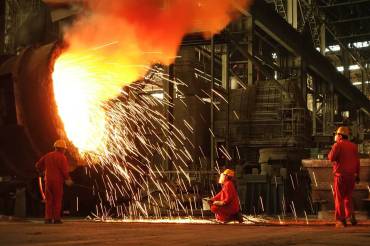
Seven months into 2016, China has cut just 30% of the 45 million tons of steel capacity it has pledged to pare this year. And a Renmin University study found that more than half of China’s steel companies are “zombies.

”They define zombie firms as companies that have received below-market interest rates for two years running — a sign that they are being artificially propped up by their local governments or other government financing. Essentially, they are dependent on cheap financing to stay alive.Steel firms led the list, with 51.4% zombies in the sector, followed by the property sector, with 44.5% zombies and construction with 31.2%.

Renmin economists said local governments long nurtured sectors such as steel with the central government’s blessing. Now that the pressure is on to scale back, they tend to resist central government calls for cuts, given the impact on jobs, local economic growth and officials’ promotions, economists say.

An indication of that resistance is seen in recent data. Despite calls from Prime Minister Li Keqiang on down to turn off blast furnaces and shutter steel production lines, the industry posted record daily crude steel production in June, driven by easy money policies and a speculation-fueled upturn in the property market — which is itself suffering from overcapacity. Industry Vice Minister Fei Feng told reporters this week he didn’t expect a recent rebound in steel prices to last.

“For the purpose of political performance and maintaining stability, local governments continued to give blood to those zombie firms in various forms that were on the brink of bankruptcy,” the Renmin report said, adding that governments should interfere less in how companies operate and accelerate reform of state companies.

Officials have blamed this year’s slow progress on capacity trim on the lengthy negotiations required to allocate those cuts among China’s 28 provincial governments.

China, which accounts for half of global steel production, remains confident it will fulfill capacity cut targets for 2016, industry Vice Minister Feng told reporters, adding that the reductions so far this year are in line with expectations.

In all, China has vowed to cut up to 150 million tons of extraneous steel production over the next five years. Even that goal targets only 10% of the nation’s excess steel capacity, which is currently around 30%, according to industry analysts. This comes as rising exports fuel tension with overseas companies and labor groups alleging that China is selling steel at prices below its cost of production.

Beijing’s counter argument is a bit of a circular one: The problem isn’t that China is making too much steel, but that global demand is inadequate.

A disproportionate number of steelmakers are state-owned enterprises, a group that accounts for some 55% of China’s corporate debt but only produces 22% of economic output, according to International Monetary Fund data. China’s corporate debt hit approximately 145% of gross domestic product in 2015, up from less than 100% in 2007, according to the International Monetary Fund, a level it characterized as “high by any measure.

”Across all sectors, zombie firms make up 7.5% of the 800,000 industrial companies between 2005 and 2013 that Renmin studied, down from a peak of about 30% in 2000 shortly before China embarked on its last serious reform of the state sector. President Xi Jinping has called for state companies to remain a core part of China’s economy.

As companies age, they are increasingly likely to become zombies. About 30% of firms founded more than three decades ago qualify as zombie firms, according to Renmin’s research, compared with just 3% among firms with less than five years’ history.

Source: China Steels Its Resolve, But ‘Zombies’ Abound – China Real Time Report – WSJ

25/07/2016

ASEAN breaks deadlock on South China Sea, Beijing thanks Cambodia for support | Reuters

Southeast Asian nations overcame days of deadlock on Monday when the Philippines dropped a request for their joint statement to mention a landmark legal ruling on the South China Sea, officials said, after objections from Cambodia.

China publicly thanked Cambodia for supporting its stance on maritime disputes, a position which threw the regional block’s weekend meeting in the Laos capital of Vientiane into disarray.

Competing claims with China in the vital shipping lane are among the most contentious issues for the Association of Southeast Asian Nations, with its 10 members pulled between their desire to assert their sovereignty while finding common ground and fostering ties with Beijing.

In a ruling by the U.N.-backed Permanent Court of Arbitration on July 12, the Philippines won an emphatic legal victory over China on the dispute.

The Philippines and Vietnam both wanted the ruling, which denied China’s sweeping claims in the strategic seaway that channels more than $5 trillion in global trade each year, and a call to respect international maritime law to feature in the communique.

Backing China’s call for bilateral discussions, Cambodia opposed the wording on the ruling, diplomats said.

Manila agreed to drop the reference to the ruling in the communique, one ASEAN diplomat said on Monday, in an effort to prevent the disagreement leading to the group failing to issue a statement.

The communique referred instead to the need to find peaceful resolutions to disputes in the South China Sea in accordance with international law, including the United Nations’ law of the sea, to which the court ruling referred.

Source: ASEAN breaks deadlock on South China Sea, Beijing thanks Cambodia for support | Reuters

28/06/2016

Pfizer to invest $350 million in China biotech hub, first in Asia | Reuters

Pfizer Inc (PFE.N) will invest $350 million to build a biotech center in China, the latest in a series of moves by pharma industry giants to set up shop in the world’s no. 2 drugs market with the aim of securing faster approvals for their products.

The facility in eastern Hangzhou region – Pfizer’s first biotech center in Asia – is expected to be completed by 2018, the firm said in a statement on Tuesday.

Global “Big Pharma” is increasingly looking for smart ways to tap China’s healthcare market, estimated by consultancy IMS Health to be worth around $185 billion by 2018. From investing in China facilities to acquisitions, licensing deals and joint ventures, the aim is to seek an edge in dealings with domestic regulators and government.

John Young, group president for Pfizer’s essential health division, said in the statement that the Hangzhou facility should “help support China’s aim to increase the complexity and value of its manufacturing sector by 2025”.

Pfizer said it would “work closely” with local regulators to bring the drugs “to market as soon as possible”. The center will mostly on biologic drugs – made from living micro-organisms rather than chemically synthesized – and lower-cost ‘biosimilars’, of generic versions of biologics.

Pharmaceutical executives have long complained about the slow process of getting drugs to market in China, while others have run up against regulatory roadblocks. Pfizer had to close its vaccine business in the country last year after a license for its top-selling vaccine Prevenar was not renewed.

China’s overall healthcare spending is set to hit $1.3 trillion by 2020, but drug market growth has slowed to a low single-digit percentage pace from over 20 percent just four years ago as branded generics have lost their shine and Beijing has looked to drive down prices to keep a lid on costs.

Source: Pfizer to invest $350 million in China biotech hub, first in Asia | Reuters

24/06/2016

Unwanted model | The Economist

MARCHING by the thousands this week in stifling heat through their small coastal village, residents of Wukan carried Chinese flags and shouted out slogans in support of the Communist Party. That was just to protect themselves from retribution by the riot police, who watched them closely but did not intervene. Their real message was in other chants: “Give us back our land!” and “Free Secretary Lin!”

The secretary in question was their village chief, Lin Zulian, whom they elected in 2012 in what was widely hailed at the time as a breakthrough for grassroots democracy. Mr Lin had led Wukan in a months-long rebellion against local authorities. Villagers kicked out party officials and police from their offices in protest against the alleged seizure of some of Wukan’s land by corrupt officials who had lined their pockets with the proceeds of selling it. Police responded by blockading the village, turning it into a cause célèbre—including in some of the feistier of China’s heavily censored media. In the end the government backed down: it allowed Wukan to hold unusually free elections and it promised to sort out the land dispute. The “Wukan model” became Chinese reformists’ shorthand for what they hoped would be a new way of defusing unrest.

They have been disappointed. Villagers did not get their land back, or the money some wanted in lieu of it. Mr Lin, who won another landslide victory in elections two years ago, announced plans on June 18th to launch a new campaign for the return of the land. That was clearly too much for the local government: Mr Lin was promptly arrested on charges of corruption. Angry residents took to the streets again.

Villagers in China often stage protests over land rights; local authorities usually deal with them either with force, or by promising concessions and then rounding up the ringleaders. Restoring calm to Wukan will be tougher. Because of its fame, journalists have poured in, especially from nearby Hong Kong. Local officials may be reluctant to resort to the usual thuggish tactics in front of such an audience.

In an effort to undermine support for Mr Lin, the government has tried blackening his name. On June 21st officials released a video showing him confessing to bribe-taking. But that merely stoked the villagers’ anger. His wife, Yang Zhen, says she is certain the confession was coerced. His halting delivery in substandard Mandarin, she believes, was his way of letting villagers know this. “They are trying to deceive everyone, but no one believes it,” she says. Dozens of furious villagers went to a local school where nervous officials had barricaded themselves behind metal doors and barred windows; they kicked the doors and shouted abuse. As The Economist went to press, Wukan was preparing to embark on its sixth consecutive day of protest.

Many residents say they have lost all faith in the local government, and that only the central authorities in Beijing will be able to find a fair solution. “They took our land. My father and grandfather farmed it, and now I have nothing. No work and no other path forward,” says a 39-year-old villager. “We have a black government, all corrupt. They cannot trick us again with more talk of the ‘Wukan model’. We need our land back,” he fumes.

But the central government will be reluctant to cave in to the protesters’ demands. “Handling the Wukan problem well means much to the rest of China,” said Global Times, a pro-party paper in Beijing. But it warned that if the “drastic actions” of Wukan’s villagers were copied by others, China would “see mess and disturbance” at the grassroots. In a country where many seethe with grievances similar to Wukan’s, officials do not want the village to become a model for revolt.

Source: Unwanted model | The Economist

24/06/2016

Are fears of mass unemployment in China overblown? | Reuters

Despite its sputtering economy – or perhaps because of it – China’s labor market may be able to provide more jobs for laid off workers than many think.

The working age population is shrinking by several million each year and the number of workers willing to migrate beyond their home province is falling, leaving jobs available for those willing to travel.

This suggests concerns about mass unemployment as China cuts down its industrial capacity and the risk that this could lead to social unrest may be overdone.

Take Li Xi, 34, for instance.After losing his job of 15 years at Highsee Iron and Steel in the slow-growing northern province of Shanxi, Li was not out of work for long.

Encouraged by friends to join them at an electronics factory 1,000 km (620 miles) to the south, he made the journey to Suzhou near Shanghai. The rest was easy.”On the first day I did a health check, and on the second day I was working,” Li said.

China’s economic growth slowed to a 25-year-low in 2015 of less than 7 percent and Beijing has flagged layoffs as it reduces massive surplus industrial capacity and gears the economy more to services and consumption.

Sources said in March that China was expecting to lay off 5-6 million state workers in the next two to three years as it curbs production capacity and pollution in rust-belt provinces.

While there is scant official data to build an accurate picture of Chinese unemployment, Chang Chun Hua, China economist at Nomura, said the jobs market can handle the unemployment pressures for now.

The working age population has been shrinking since 2012. Last year, the number of people between the ages of 16 and 59 shrank by 4.87 million, government statistics show. In 2014, the age group contracted by 3.71 million.

At the same time, the government says a higher-than-expected 5.77 million jobs were created between January and May this year.

“In general, the current unemployment pressure is still manageable for the Chinese government,” Hua said.

Source: Are fears of mass unemployment in China overblown? | Reuters

Law of Unintended Consequences

continuously updated blog about China & India

ChiaHou's Book Reviews

continuously updated blog about China & India

What's wrong with the world; and its economy

continuously updated blog about China & India