Posts tagged ‘Beijing’

28/01/2016

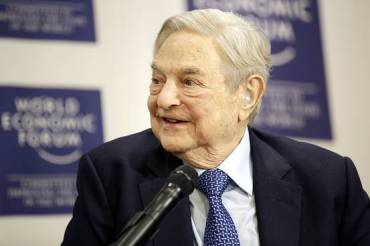
George Soros in China’s Crosshairs After Predicting Tough Economic Times Ahead – China Real Time Report – WSJ

China is putting a face on the economic pessimism it accuses of helping weaken the yuan and the economy: billionaire investor George Soros.

A front-page commentary published in some editions of People’s Daily on Tuesday appeared to warn Mr. Soros would lose any bets he made based on a recent prediction that hard economic times for China are “unavoidable.”

Other state media followed suit. Denouncing “radical speculators,” China’s official Xinhua News Agency dismissed the famed currency trader’s view as “the same prediction several times.” The Global Times, in its English edition, asked, “So why are so many Western pundits and media outlets so intent on talking China down?”

The rhetorical shots come as China is making broader efforts with market interventions and rule adjustments to offset the impact of its slowest growth rate in a quarter century, shore up grinding stock markets and stem surging capital outflows. China’s state-run media regularly note concerns the economy is cooling, but they tend to highlight positive aspects of what the government describes as a broad economic restructuring.

The uniformity and prominent placement in government-run media of the challenges to foreign critics, including economists quoted by Western newspapers, appear to suggest growing concern in Beijing that negative sentiment is spreading.

State media warnings directed at private individuals like Mr. Soros are rare. But his legend as an investor stems from a career making profitable currency bets – both real and rumored – that are widely studied in China. It comes just as China’s central bank is taking steps to limit flight from the Chinese yuan by its huge middle class.

Suspicion in China that Mr. Soros is now placing bets against the yuan follow comments he made last week at the World Economic Forum in Switzerland. “A hard-landing is practically unavoidable,” Mr. Soros told Bloomberg Television. “I’m not expecting it, I’m observing it.”

“Declaring war on China’s currency? Ha,” said the People’s Daily commentary, which appeared in the overseas edition, a newspaper aimed at Chinese living outside China. The paper serves as the official purveyor of Communist Party views, and the commentary was authored by a researcher at China’s Commerce Ministry. It wasn’t published in the domestic editions, though it did appear online.

Source: George Soros in China’s Crosshairs After Predicting Tough Economic Times Ahead – China Real Time Report – WSJ

27/01/2016

With China weakening, Apple turns to India | Reuters

As China sales show signs of cooling, Apple Inc (AAPL.O) is touting India’s appetite for iPhones, betting that rising wages and an expanding middle class will pull consumers away from the cheap alternatives that currently dominate the market.

In an earnings call in which the company reported meager iPhone growth and forecast its first revenue drop in 13 years, the Indian market stood out as a rare bright spot for Apple.

Sales of the company’s flagship smartphone climbed 76 percent in India from the year-ago quarter, Apple Chief Financial Officer Luca Maestri said.

According to data compiled by Counterpoint Technology Research, Apple sold an estimated 800,000 iPhones in India in the fourth-quarter, its highest ever amount but one that is a fraction of the 28 million smartphones sold during that period.

Growth in India is a tantalizing prospect as Apple grapples with the economic downturn in China, its second largest market. While revenue in Greater China rose 14 percent in the last quarter, Apple is beginning to see a shift in the economy, particularly in Hong Kong, Maestri told Reuters in an interview.

But with nearly 70 percent of smartphones selling for less than $150 in India, Apple’s high-end phones remain out of reach of most consumers. The basic iPhone 6S sells at just under $700 in India, or nearly half the average annual wage.

“In many ways India is very similar to what China was a few years ago, but the middle class here is still very small and it can be two to three years before Apple gets a similar level of success in India,” said Counterpoint Technology Research analyst Tarun Pathak.

Apple CEO Tim Cook struck a more optimistic note, saying the company was “increasingly putting more energy” into India, citing a largely youthful population with rising disposable income as more people join the workforce.

With faster 4G coverage expanding, Apple has already asked Indian government for a license to set up its own retail stores just as the market seems to be turning in its favor.

As in China, Apple products are a coveted status symbol in India, a market that analysts say is likely to overtake the United States next year to become the world’s second largest smartphone market. “The love for the iPhone is there,” said Carolina Milanesi, chief of research and head of U.S. business at Kantar Worldpanel ComTech, a consumer research firm.

Source: With China weakening, Apple turns to India | Reuters

22/01/2016

Beijing shut down over 1,000 factories over past 5 years|Society|chinadaily.com.cn

Very good news, indeed.

Beijing has closed 1,006 manufacturing and polluting enterprises over the past five years, the municipal government revealed Friday.

In addition, 228 markets were also closed over the period, Beijing Mayor Wang Anshun said in a government work report presented during the city’s annual parliamentary session, which opened Friday.

More than 13,000 applications for new businesses have also been rejected because they were on the list of prohibited or restricted operations, Wang said.

Beijing had closed or relocated nearly 400 polluting factories in 2014 and another 300 in 2015, previous figures show.”

Source: Beijing shut down over 1,000 factories over past 5 years|Society|chinadaily.com.cn

08/01/2016

Three political questions looming over China’s leadership in 2016 – WSJ China Real Time

From: http://blogs.wsj.com/chinarealtime/2016/01/08/three-political-questions-looming-over-chinas-leadership-in-2016/?mod=djemChinaRTR_h

Last year saw more attention to Chinese President Xi Jinping as China’s paramount leader, including what many observers have seen as a cult of personality. The economy may eclipse politics as a concern for Beijing in 2016, but in China the two are always closely intertwined. Here are the three major political questions that will loom over the Xi leadership in the months to come.

  1. Is it time for thelong-running anticorruption campaignto shift its focus?

In laying out a vision for his anti-corruption drive in 2013, Xi Jinping vowed to go after both high-ranking “tigers” and low-level “flies.” So far the campaign has been fueled by the takedowns of a procession of big cats – but there are signs that a change is in the offing.

There’s upside to an increased focus on local cadres and others at the insect level. For one, it would send a signal to doubters that the anti-graft campaign is genuine, not just a way to purge Xi’s political enemies. It would also help Xi score points with regular citizens and reform-minded officials outraged at the pervasiveness of corruption in China.

But there’s also a political risk. Already, the current crusade has compelled many officials to hunker down and sit on their hands to avoid attracting attention – a phenomenon that has slowed policymaking. Likewise, many developers remain wary of starting new projects that might aid an ailing economy because they’re still not sure what’s permissible in the new environment.

Broadening the anti-graft campaign could handcuff policymaking even further, because cadres will spend time looking over their shoulders, and entrepreneurs, wondering about political support, will wait until the dust settles before embarking on new commercial initiatives.

  1. What sort of politics does China want to practice?

Xi Jinping and Chinese Premier Li Keqiang agree on a great deal, but they have distinctive notions about how to build a better China.

Xi believes that China’s political future rests on a reassertion of the party’s rule, preventing potential challenges from social groups, and convincing citizens and cadres alike that the government stands for something more than just nationalism — that socialism is still relevant but needs to be recast in ways that appeal to society.

Li appears to see his political mission differently. In his eyes, ideological renovation is far less crucial to the country than administrative restructuring and being a more efficient and approachable government. It’s innovation, not rectification, Li argues, that will secure the Party’s legitimacy. From experimenting with new ways to measure China’s actual economic performance to making bureaucratic requirements easier for citizens to meet, Li has created a profile for himself that challenges the prevailing political course being set by Xi.

While Xi wants more control over society, Li argues for less oversight and regulation in China’s economy and bureaucracy–making it easier for businesses to start up and succeed as a way of preventing social pressure from becoming a political threat.

Thus far, the policy divide between Xi and Li hasn’t resulted in political warfare. But some lower-level cadres are increasingly perplexed about which template to follow: They’ve been quietly pressing for clarification about whether they should be focusing on being better Communists, or on building a more efficient and responsive government. It’s not clear how they can accomplish both, especially when they’re under the anticorruption microscope.

The economy could catalyze conflict here. If slower growth turns into a tailspin, Li and his allies will surely press to have their agenda for change adopted more widely, and argue that the current strategy of “politics before economics” championed by Xi isn’t working. Xi and his comrades won’t concede the political high-ground they currently occupy without a fight.

Xi and Li have been doing a fine job of sharing responsibility up to now, but the divide in their approaches is getting wider, and the challenges China faces will very likely compel one model to be adopted at the expense of the other.

  1. What happens if resistance to Xi’s reforms becomes active political opposition?

Xi’s efforts to centralize party control over the economy and society have been ruthless. Even the hint of organized opposition to party policies has brought out the truncheon swingers, with censorship or jail awaiting those who propose an alternative political path for China.

Observers who see Xi’s main opposition as coming from the Chinese street are looking down a now-empty avenue. They should be paying attention to disquiet within the ranks of officialdom.

The boldness and breadth of Xi’s reforms have led some in the party ranks to wonder privately about—and even openly question—whether his handling of China’s challenges has always been correct. For example, there are some who contend that the anticorruption campaign has placed too much power in the hands of discipline inspectors and unnecessarily disrupted the status quo (in Chinese).

Some of that scrutiny concerns Xi’s efforts to reinsert the Party more fully into economic and social life, a move that risks stoking discontent in a populace that has grown used to a certain level of leeway in recent decades. There are also those within the political apparatus who see Xi’s recent restructuring of China’s military as courageous but more aimed at quelling dissent from the armed forces than rejuvenating strategy and doctrine. Even Xi himself has noted in a recently released collection of internal speeches (in Chinese) that not everything he has been doing has been met with universal acclaim within the Communist party. Murmurs of discord have reached a level in recent months where a number of officials have been punished for “improper discussion” of Party policies.

Thus far, the angst, anxiety and antagonism within the government to Xi’s reforms remain unorganized. That’s because no one has proposed an alternative strategy for dealing with the nation’s many challenges that would unify the disaffected to act against Beijing. Social activists have little political support from above; annoyed cadres are afraid that any move to form a coalition could plunge the country into civil unrest.

Xi and his allies have been as determined as they’ve been daring in following their own reform path—and their success in getting their way politically has been remarkable thus far. The most pressing question for this new year is whether what has worked thus far will continue to do so—or whether the disaffected in China start believing that their leadership may have begun to run out of answers.


06/01/2016

What might happen in China in 2016? – McKinsey

Abbreviated from McKinsey: http://www.mckinsey.com/Insights/Strategy/What_might_happen_in_China_in_2016?cid=other-eml-alt-mip-mck-oth-1601

What’s in store for China in 2016?

The reality is that China’s economy is today made up of multiple subeconomies, each more than a trillion dollars in size. Some are booming, some declining. Some are globally competitive, others fit for the scrap heap. How you feel about China depends more than ever on the parts of the economy where you compete. In 2015, selling kit to movie theaters has been great business, selling kit to steel mills less so. In your China, are you dealing with a tiger or a tortoise? Your performance in 2016 will depend on knowing the answer to this question and shaping your plans accordingly.

Many well-established secular trends in China will continue in 2016. The service economy’s expansion is perhaps most prominent among them. In this piece, as usual, I won’t spend much time on the most familiar things. Instead, I will highlight what I believe will become the more important and more visible trends in 2016, either because they are now accelerating to scale or a discontinuity may become a tipping point. (For a quick summary, see sidebar, “The China Orr-acle: Gordon’s predictions for 2016.”) I hope you find my ideas valuable.

The 13th five-year plan—few surprises

Much of China’s 13th five-year plan will seem pretty familiar, as it has been flagged in advance at the Fifth Plenum and elsewhere. Perhaps the only challenge will be to interpret the plan’s intent clearly through the new “party speak” now coming to dominate government pronouncements.

The GDP growth target will still be 6 percent–plus, which will be softened a bit but not eliminated by parallel quality-of-life goals: the environment, health, income, and the like. Achieving the growth target will remain the core objective of fiscal and monetary policies, so expect lower interest rates and pressure on the exchange rate versus the US dollar in 2016. Financial reforms aimed at moving more of the economy toward a market-based allocation of capital will continue.

Meanwhile, there will be more progress on interest-rate deregulation, on the IPO process (registration rather than approval), on permitting new entrants (especially from the tech sector and from abroad) into financial services, and on reimplementing laws suspended in the summer of 2015. The plan will promote decentralization, but the reality is likely to be greater centralization. More infrastructure will be built, mainly to enhance intraregional development—for example, around Greater Beijing.

Green initiatives, reinforced by December 2015 commitments made in Paris and the “red alert” in Beijing that same month, will take center stage. The central government will make such big and visible commitments to its citizens that local authorities will have to mount a serious effort to deliver. There will be tougher emissions standards and more spending to support the development of nonfossil fuels. Green finance will be available. Both private-sector and state-owned companies will rebrand their ongoing initiatives as green. China will explicitly build new export engines from its emerging global leadership in green products; for example, expect to see lots of Chinese-made air-filtration products in Delhi and the rest of India in 2016. Beyond green initiatives, going global will remain a key theme, as detailed in the One Belt, One Road program.1


Finally, the plan will recognize China’s success in raising labor productivity over the past decade and prioritize the acceleration of productivity growth, for both capital and labor, from 2016 to 2020. The plan will raise the implications of higher productivity for workers: the disappearance of many traditional well-paying jobs and the need for increased labor mobility and for the lifetime renewal and development of skills. But I am concerned that implementation will be left to local administrators and that the regions requiring the most help will have the lowest amounts of money to invest in reskilling the workforce and the least impressive actual skills to deliver.

Fewer jobs, flatter incomes—and, potentially, less confidence

The workplace in China is already changing dramatically in ways that will create many individual losers—for example, workers in industry sectors in secular decline (such as steel or textiles) or in industries where technology is rapidly displacing people even as output grows (like financial services or retailing). The government must help these workers reskill themselves to deliver on its commitment that all parts of society will benefit from economic growth and to keep people actively engaged in the economy. It will not be enough for officials to visit major local employers, as they did during the global financial crisis, and press them to retain all their current workers.

The maturing of investing: More options for Chinese investors and foreign investment managers

Chinese investors today remain dependent on bank deposits and property. Yet after the volatility of the property and stock markets in 2015, investors want to diversify into more stable vehicles. The number of wealth managers seeking to address this need has increased massively. Often, their main challenge is not finding clients but rather credible products to sell. The main challenge for investors is to find advisers they can trust; most simply push the products that give them the largest commission.

Manufacturing in China is changing, not disappearing

The closely watched manufacturing purchasing manager’s index (PMI) remains below 50, which indicates deterioration, leading to talk that the country may be nearing the end of its time as a manufacturer for the world. Let’s be clear: manufacturing is not about to become irrelevant in China. However, the country is evolving toward extremes of performance: the truly awful and the genuinely competitive.


Agricultural imports are rising and rising

In 2016, China’s growing food needs will drive agricultural imports to record highs in both volume and value. A wider range of countries than ever before will find agricultural-export opportunities there.

More centralization

The Chinese media, especially during President Xi’s increasingly frequent trips abroad, made it clear that economic decision making has been centralized over the past two years. China will become still more centralized in 2016, rolling back decentralization where it had unintended outcomes. For example, after local governments received authority to approve new power plants, more than 150 new coal-fired ones were green-lit in the first nine months of 2015—more than three times the number approved in 2013, under the old centralized decision-making process. Unsurprisingly, coal-producing areas granted the largest number of approvals for plants that weren’t required under any realistic demand projection, even setting aside the question of whether any new plants at all should be coal fired. State-owned enterprises are behind most of these projects and would expect to be bailed out if they fail. Thus, for multiple reasons, such decisions will be recentralized.

Moving people at scale—the middle class, not peasants

Despite prodigious investment, many Chinese cities cannot build enough quality infrastructure to avoid massive day-to-day congestion. Even though the new five-year plan will commit the country to build more of it, that will not solve these problems; growth has simply outstripped potential solutions. For example, Beijing’s population officially grew by 60 percent, to 21 million, in just the past 14 years—and unofficially by significantly more.

Movies in China: $$$

A Chinese movie will gross $500 million domestically in 2016. As a benchmark, the highest-grossing movie of all time on US domestic screens is Avatar, at $760 million. This year’s leading domestic productions in China were Monster Hunt (which has grossed $380 million as of September) and Lost in Hong Kong (more than $200 million). The leading international movie, Furious 7, grossed almost $400 million in China. The country’s box office has been set to grow by almost 50 percent in 2015, and new screen additions alone should deliver 20 percent–plus growth in 2016. More than half of the top-ten movies for 2015 (as of late November) are domestic productions, and 60 percent of the box office comes from Chinese movies. The country’s producers and directors have clearly tapped into what excites local moviegoers (and what censors permit).

China continues to go global, with the United Kingdom as a new focal point

China’s outbound investment will accelerate in 2016, with One Belt, One Road–related initiatives driving much of it. A second driver will be distressed-asset acquisitions in basic materials and related sectors: Chinese acquirers may plan not to extract the assets in the near term but simply to stockpile them as long-term insurance. Finally, a growing share of the acquisitions will come from private-sector companies that aspire to global leadership. These companies are increasingly sophisticated buyers, conducting quality due diligence, working with traditional advisers, and focusing on countries where they think that warm political relations will make it easier to do deals.

And finally . . .

My enduring prediction that big business would embrace soccer in China has finally been realized, even if that happened more slowly than I expected. Footballer Sergio Agüero, of Manchester City Football Club, took what became one of the world’s most shared selfies, with President Xi and British Prime Minister David Cameron. It seemed only a matter of time before Chinese capital (specifically, China Media Capital and CITIC Capital Holdings) invested in Manchester City and its global network of teams, which includes the New York City Football Club. Other leading teams are exploring how to participate in China. Arsenal Football Club has a multiyear grassroots program in place, as does Real Madrid. And outbound investment in soccer is growing, highlighted when Wanda Group bought into Atlético de Madrid in 2015.

As always, don’t overfocus on short-term noise about Chinese GDP growth. Try to identify the medium-term direction of the parts of the economy relevant to your business. Enjoy China in 2016!

Gordon Orr is a director emeritus of McKinsey and senior external adviser.

31/12/2015

It’s official: China building second aircraft carrier as concern mounts over claims to South China Sea | South China Morning Post

China on Thursday confirmed it is building a second aircraft carrier, as its neighbours worry about Beijing’s new assertiveness to claims in the South China Sea.

Chinese aircraft carrier Liaoning cruises for a test on the sea. Photo: AP

Defence Ministry spokesman Yang Yujun said the carrier had been designed in China and was being built in the port of Dalian in Liaoning province. The construction drew on experiences from the country’s first aircraft carrier, the Liaoning, bought from Ukraine in 1998 and refitted in China.

Source: It’s official: China building second aircraft carrier as concern mounts over claims to South China Sea | South China Morning Post

30/12/2015

Top 10 policy changes in China in 2015

  1. Two children for all couples

China will allow all couples to have two children, abandoning its decades-long one-child policy, the Communist Party of China announced in late October. The change is intended to balance population development and address the challenge of an ageing population.

Under the new policy, couples who have two children can enjoy longer maternity leave and they could have more than two children if eligible. Current longer marriage and maternity leaves enjoyed by citizens who marry late and delay having children will be removed, and so will the rewards for couples who volunteer to have only one child.

The two-child policy will come into force on Jan 1.

2. Raising the retirement age

The 13th Five-Year Plan (2016-20) proposes progressively raising the retirement age to help address the country’s pension pressure and labor shortage.

On Nov 20, the Ministry of Human Resource and Social Security said raising the retirement age will be done progressively in small steps. The authority will raise the retirement age by several months every year, and the policy adjustment will be made public in advance. The Ministry of Human Resources and Social Security is drawing up the policy and will solicit public opinions on the completed draft.

In 2017, China should complete the integration of its two pension systems. From 2018, the retirement age for women should be raised one year every three years, and the retirement age for men should be raised one year every six years. This means in 2045, the retirement age for both men and women will be 65.

3. Household permits on the way for all

China will provide unregistered citizens with household registration permits, a crucial document entitling them to social welfare, according to a high–level reform meeting held in early December.

“It is a basic legal right for Chinese citizens to lawfully register for hukou. It’s also a premise for citizens to participate in social affairs, enjoy rights and fulfill duties,” said a statement released on Dec 9 after a meeting of the central leading group for comprehensively deepening reform.

The meeting was told that registration should take place regardless of family planning and other policy limits, and that those without hukou who face difficulties in applying should have their problems solved.

4. Unified pension system

The landmark pension reform plan, announced by the State Council on Jan 14, aims to eliminate the dual-track pension system in China.

New measures on old-age insurance were unveiled for the nearly 40 million workers in government agencies and public institutions, most of whom are civil servants, doctors, teachers and researchers. Insurance will now be paid by both workers and organizations, instead of just by organizations or central finance as in the past.

Before the measures were introduced, corporate employees had to pay for their own old-age insurance, while government staff enjoyed pensions without making any contribution at all. The reform helps to bring fairness and quench long-term public outcry.

5. Rural residents encouraged to buy properties in cities

China will roll out measures to reduce its property inventory and stabilize its ailing housing market, said a statement released on Dec 21 after a key policy meeting.

Rural residents relocating to urban areas should be allowed to register as city residents, which would enable them to buy or rent property, according to the conference.

In addition, a low-rent public housing program will cover those without household registration.

6. Harsher environmental protection law

China’s revised Environmental Protection Law came into effect on Jan 1, bringing with it heavier punishments.

According to the revised law, extra fines accumulating on a daily basis will be imposed on enterprises that fail to rectify violations.

Local officials may be demoted or sacked for misconduct, including the concealment of offenses, falsifying data, failing to publicize environmental data, and not giving closure orders to enterprises that illegally discharge pollutants.

7. Entrepreneurship encouraged among college students

The Ministry of Education announced in May that more than 30 measures would be introduced to support students starting their own businesses, and for innovation in scientific and academic research.

The measures are outlined in a series of guidelines released by the State Council, including developing and opening compulsory and selective courses for students, and awarding them credits for taking the courses.

Establishing innovation and entrepreneurship records, with transcripts for students, encouraging teachers to guide students in innovation and starting up businesses, and providing them with funds and supporting them to take part in entrepreneurship contests are also on the list.

8. New plan targets water pollution

China released the Action Plan for Water Pollution Prevention and Control on April 16 to tackle serious water pollution, aiming to intensify government efforts to reduce emissions of pollutants and to protect supplies.

The plan calls for 70 percent of the water in the country’s seven major river basins, including the Yangtze and Yellow rivers, to be in good condition by 2020, and for a continued improvement to 75 percent by 2030.

The amount of “black and smelly water” in urban areas will be reduced to 10 percent by 2020 and will largely disappear by 2030.

9. Toughest smoking ban in Beijing

A new regulation on tobacco use took effect in Beijing on June 1. The regulation extends existing smoking bans to include all indoor public areas and workplaces, plus a number of outdoor areas, including schools, seating areas in sports stadiums and hospitals where women or children are treated.

Violators will face fines of up to 200 yuan ($32), a twentyfold increase from the previous 10-yuan penalty stipulated by the previous regulation adopted in 1996. Owners of buildings classified as public places, such as restaurants, that fail to stop smokers lighting up face fines of up to 10,000 yuan.

Members of the public can report violations to the authorities by dialing a health hotline (12320) or via social media.

10. Price control on most medicines lifted

China has lifted price controls on most medicines since June 1 with the intention of creating a more market-driven pricing system that will help keep medical costs in check.

Only narcotics and some listed psychotropic drugs continue to be controlled by the government, with ceiling retail prices.

Public health departments must boost supervision on medical institutions and check improper medicine and medical equipment use, as well as excessive checkups and treatment, according to a notice issued in May.

From: http://usa.chinadaily.com.cn/china/2015-12/28/content_22835045.htm

10/12/2015

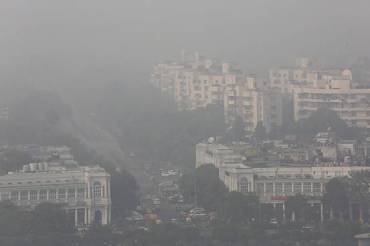
Why Delhi Doesn’t Have a Beijing-Style Response to Pollution – China Real Time Report – WSJ

The cities of Delhi and Beijing share a dubious honor as the world’s most-polluted capitals. But their response to dangerous levels of air pollution separates them.

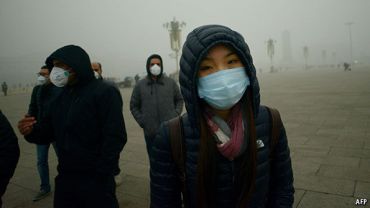
Earlier this week, Beijing for the first time issued a red-alert for pollution, triggered when authorities forecast air-quality levels above 300 for at least three consecutive days.

On China’s government index, a measure of overall air quality, the maximum reading of 500, is described by the government as “severely polluted.” The Chinese administration immediately sent cars off the roads, shut factories and urged schools to close.

In Delhi, where air was similarly dirty, life went on as normal. The starkly different responses prompted some in the Indian capital to question why their government wasn’t taking Beijing-style measures to combat the smog. For sure, plans are underway in India to tackle the capital’s filthy air.

On Friday, Delhi’s government announced it would impose restrictions on the number of cars on its roads from Jan.1. Residents in the Indian city can look up air-pollution data on the website of The System of Air Quality and Weather Forecasting and Research, known as Safar, which uses data collected at 10 locations in the city. On that index, air quality in the city regularly hits “very poor” conditions when levels of PM 2.5 — insidious particles in the air including dirt, soot, smoke and liquid droplets — spike.

These tiny particles are thought to be particularly dangerous because they can lodge deeply in the lungs and cause inflammation, infection and lead to diseases including cancer. Readings on the Safar monitor are calibrated from “good” to “severe.” The Delhi Pollution Control Committee also publishes raw pollution data but doesn’t give qualitative readings alongside.

The U.S. Embassy, which measures pollution on monitors at its compound in the capital and around the country, warns the very young and elderly to remain indoors whenever air quality becomes what it calls hazardous. But none of the readings currently trigger alerts, or responsive action, by Delhi’s government. That’s because India is a democracy, said Ashwani Kumar, chairman of the Delhi Pollution Control Committee, an arm of the state government.

China, of course, is a one-party state. The idea that alerts should tell people to stay indoors when smog hits was  “absurd,” Mr. Kumar added, and people “should decide for themselves what to do with the pollution information.” However, he said the Delhi Pollution Control Committee does plan to introduce an app so that information is available to residents with smartphones. Less than 10% of Indians own a smartphone. It also proposes to install around 70 big screens in strategic locations around the city advising residents what they can do to reduce pollution, Mr. Kumar added. The idea of an environmental alert system is not alien to India.

Source: Why Delhi Doesn’t Have a Beijing-Style Response to Pollution – China Real Time Report – WSJ

10/12/2015

Raise the green lanterns | The Economist

WHEN world leaders gathered in Paris to discuss cutting planet-heating emissions, a pall of smog hung over Beijing. In parts of the capital levels of fine particulate matter reached 30 times the limit deemed safe.

Though air pollution and climate change are different things, Chinese citydwellers think of them in the same, poisoned breath. The murky skies seemed irreconcilable with the bright intentions promised in France.

Yet a marked change has taken place in China’s official thinking. Where once China viewed international climate talks as a conspiracy to constrain its economy, it now sees a global agreement as helpful to its own development.

China accounts for two-thirds of the world’s increase in the carbon dioxide emitted since 2000. It has come a long way in recognising the problem. When China first joined international climate talks, the environment was just a minor branch of foreign policy. The ministry for environmental protection had no policymaking powers until 2008. Only in 2012 did public pressure force cities to publish air-pollution data.

Yet today China pledges to cap carbon emissions by 2030 (reversing its former position that, as a developing power, it should not be bound to an absolute reduction); and it says it will cut its carbon intensity (that is, emissions per unit of GDP) by a fifth, as well as increase by the same amount the electricity generated from sources other than fossil fuels. The latest five-year plan, a blueprint for the Communist Party’s intentions that was unveiled last month, contains clear policy prescriptions for making economic development more environmentally friendly.

There’s more

Right after the Paris summit, however it ends, China is expected to make more promises in a new document, co-written by international experts, that presents a far-reaching programme of how China should clean up its act. It is based on models that account for both economic and political viability. On top of existing plans, such as launching a national emissions-trading scheme in 2017, the government may even outline proposals for a carbon tax, something that has eluded many prosperous countries in the West.

The big question is why China is now so serious about climate change. The answer is not that Communist leaders are newly converted econuts. Rather, they want to use environmental concerns to rally domestic support for difficult reforms that would sustain growth in the coming decades. Since a global slowdown in 2008 it has become clear that to continue growing, China must move its economy away from construction and energy-intensive industry towards services. At the same time, China faces an energy crunch. For instance, in recent years China has been a net importer of coal, which generates two-thirds of China’s electricity. It all argues for growth plans that involve less carbon.

This is where signing international accords, such as the one hoped for in Paris, come in, for they will help the government fight entrenched interests at home. Observers see a parallel with China’s joining the World Trade Organisation in 2001. It allowed leaders to push through internal economic reform against fierce domestic opposition. In the same way, a global climate treaty should help it take tough measures for restructuring the economy.

It will not be easy. Provincial party bosses and state-owned enterprises hate to shut factories, particularly in those parts of the country, such as Shanxi and Inner Mongolia in the north, where coal is a big employer. Cutting demand for energy is even harder. Even if the amount of electricity used by state industry falls, that used by private firms and households is bound to increase. What is more, environmental regulations and laws laid down by the centre are routinely flouted.

But cleaning up China’s act has, for the central government, become a political necessity too. Environmental issues have been major public concerns for over a decade, says Anthony Saich of Harvard University, which has conducted polls. True, rural people fret most (and with good reason) about water pollution. But those in the cities gripe about their toxic air. Both represent a reproach to the government over its neglect of people’s lives and health.

That is why national economic goals, political goals, public opinion and international pressure all point towards trying to cut emissions, pollutants included. In particular, says Zhang Zhongxiang of Tianjin University, now that dealing with climate change is a pillar of China’s diplomacy, the government must show it can keep its promises. It has some tools at its disposal. Across the country, the environmental record of government officials has become a crucial part of their evaluation by the Communist Party; and cadres will be held account

Source: Raise the green lanterns | The Economist

02/12/2015

Hacking of U.S. government was criminal, not state-sponsored: China | Reuters

China’s official Xinhua news agency said on Wednesday that an investigation into a massive U.S. computer breach last year that affected more than 22 million federal workers found the hacking attack was criminal, not state-sponsored.

An illustration picture shows a projection of binary code on a man holding a laptop computer, in an office in Warsaw June 24, 2013. REUTERS/Kacper Pempel

In an article about a meeting between top U.S. and Chinese officials on cyber security issues held in Washington, Xinhua said the breach at the United States Office of Personnel Management (OPM) was among the cases discussed.

The report did not give details of who conducted the investigation, or whether U.S. and Chinese officials both agreed with the conclusion.

The U.S. Embassy in Beijing referred Reuters to the Department of Justice and Department of Homeland Security in Washington for comment on the talks.

The Cyberspace Administration of China, the country’s Internet regulator, did not immediately reply to a Reuters request for comment.

OPM has been under scrutiny from lawmakers and the public ever since it disclosed earlier this year that it had fallen victim to two cyber attacks, which officials have privately linked to Chinese hackers.

The intrusions exposed sensitive personal information, including names, Social Security numbers and addresses of more than 22 million current and former federal employees and contractors, in addition to 5.6 million fingerprints.

Top U.S. and Chinese officials convened this week in Washington for the first round of cyber security talks following the signing of a bilateral anti-hacking accord in September.

The talks on Tuesday and Wednesday are seen as potentially significant in establishing acceptable norms for cyber espionage.

China and the U.S. reached a broad agreement on the joint fight against cyber crimes, and will set up a hotline for these issues, according to Xinhua and CCTV, China’s state-operated national broadcaster.

CCTV said a spokesperson for the Department of Homeland Security declined to comment on any agreement. The next meeting is scheduled for next June, Xinhua said.

Source: Hacking of U.S. government was criminal, not state-sponsored: China | Reuters

Law of Unintended Consequences

continuously updated blog about China & India

ChiaHou's Book Reviews

continuously updated blog about China & India

What's wrong with the world; and its economy

continuously updated blog about China & India