Posts tagged ‘Bharatiya Janata Party’

28/07/2016

With eye on China, India doubles down on container hub ports | Reuters

Indian conglomerate Adani Group has started building the country’s first transshipment port, conceived 25 years ago, and the government will construct another $4-billion facility nearby to create a shipping hub rivalling Chinese facilities in the region.

New Delhi will grant billionaire Gautam Adani 16 billion rupees ($240 million) in so-called “viability gap” funding to help the new port at Vizhinjam in Kerala win business from established hubs elsewhere in Asia.

Once Vizhinjam is operational the central government will start building the port of Enayam in neighbouring Tamil Nadu, said a senior shipping ministry official. Enayam alone will save more than $200 million in costs for Indian companies every year, he said.India’s 7,500-km (4,700-mile) coastline juts into one of the world’s main shipping routes and Prime Minister Narendra Modi wants to capitalise on that proximity by developing ports that can shift freight on to huge vessels capable of carrying up to 18,000 20-foot containers.

By bringing onshore cargo handling now done at entrepots in Sri Lanka, Dubai and Singapore, Modi’s government expects cargo traffic at its ports to jump by two-thirds by 2021 as India ramps up exports of goods including cars and other machinery.

The lack of an Indian domestic transshipment port forces inbound and outbound containers to take a detour to one of those regional hubs before heading to their final destination.

New Delhi expects the new ports to save Indian companies hundreds of millions of dollars in transport costs, as well as ease concerns over the growing strategic clout in South Asia of rival China, which has invested hundreds of millions of dollars in Sri Lankan ports at Colombo and Hambantota.

Adani wants the Vizhinjam port, which an arm of his Adani Group is building at a cost of around $1 billion, to be operational in 2018. The port lies hard by the Gulf-to-Malacca shipping lane that carries almost a third of world sea freight.

“The port can attract a large share of the container transshipment traffic destined for, or originating from, India which is now being diverted primarily through Colombo, Singapore and Dubai,” said an Adani Group executive who declined to be named.

But officials acknowledge that it would be difficult for the new ports to win international clients unless they offered discounts.”A major part of transshipment is happening at nearby ports. We can win some of that business,” said A.S. Suresh Babu, who heads a government agency set up by Kerala to facilitate the construction of Vizhinjam.

“There’s a viability issue in the first few years. Already the Chinese are operating there. So unless you give some discount you can’t attract these ships. So that’s why the government of India has approved the viability gap funding.”

Source: With eye on China, India doubles down on container hub ports | Reuters
27/07/2016

India’s farmers seize offer of free registration of land sold on ‘plain paper’ | Reuters

When Telangana announced a three-week window for free registration of land that had exchanged hands via handwritten notes on plain paper, the offer triggered more than a million applications.

All over the state the sale of land on notes known as “sada bainamas” has been customary because of widespread inability to pay the registration fees, illiteracy or ignorance of the law.

Around a million farmers in Telangana lack secure title to land bought this way, according to a 2014 survey carried out in the state by Landesa, a U.S. based charity .

Guram Muttaya is a beneficiary of the registration drive and one of many farmers who occupy land they have been cultivating for 30 to 40 years on the strength of informal documents.

“Registering the land will bring me government agriculture loans, compensation for crop damages and crop insurance too,” Muttaya told the Thomson Reuters Foundation, holding up a torn piece of paper bearing a signature.

The piece of paper is his only proof of ownership of a fifth of a hectare of land he bought in Kannayapally village 27 years ago for $67 and whose market value has risen to $3,000.

Studies have shown that broadly distributed secure land rights for farmers can help to pull families out of poverty and boost sustainable economic development.

Source: India’s farmers seize offer of free registration of land sold on ‘plain paper’ | Reuters

27/07/2016

Parliament passes controversial child labour bill | Reuters

Parliament on Tuesday approved a controversial law that would allow children to work for family businesses, despite widespread concern by the United Nations and other rights advocates that it will push more children into labour.

A week after the bill was passed by the Rajya Sabha, the Lok Sabha approved the measure that brings a raft of changes to a three-decade-old child labour prohibition law. The bill now goes for the President’s assent before becoming law.

The U.N. Children’s Agency (UNICEF) as well as many others have raised alarm over two particular amendments – permitting children to work for their families and reducing the number of banned professions for adolescents.

A 2015 report by the International Labour Organization (ILO) put the number of child workers in India ages 5 to 17 at 5.7 million, out of 168 million globally.

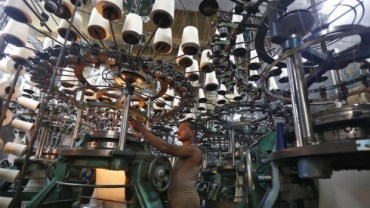
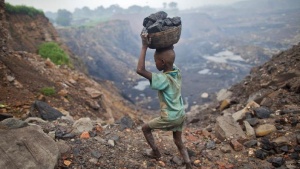
More than half of India’s child workers are employed in agriculture and more than a quarter in manufacturing – embroidering clothes, weaving carpets or making match sticks. Children also work in restaurants, shops and hotels and as domestic workers.The new legislation extends a ban on child labour under 14 to all sectors. Previously, only 18 hazardous occupations and 65 processes such as mining, gem cutting and cement manufacturing were outlawed.

It also stiffens penalties for those employing children, doubling jail terms to two years and increasing fines to 50,000 rupees ($740) from 20,000 rupees ($300).

While child rights groups have welcomed such changes, there has been concern over other amendments proposed by Prime Minister Narendra Modi‘s government.

For example, children will be allowed to work in family businesses, outside of school hours and during holidays, and in entertainment and sports if it does not affect their education.

Also, children 15 to 18 will be permitted to work, except in mines and industries where they would be exposed to inflammable substances and hazardous processes.

The government says the exemptions aim to strike a balance between education and India’s economic reality, in which parents rely on children to help with farming or artisanal work to fight poverty or pass on a family trade.

“The purpose of this very act is that we should be able to practically implement it,” Labour and Employment Minister Bandaru Dattatreya told parliament. “That’s why we are giving some exemptions.”UNICEF had urged India to exclude family work from the proposed law and include an “exhaustive list” of hazardous occupations.

“To strengthen the Bill and provide a protective legal framework for children, UNICEF India strongly recommends the removal of ‘children helping in family enterprises’,” it said in a statement on Monday.

“This will protect children from being exploited in invisible forms of work, from trafficking and from boys and girls dropping out of school due to long hours of work,” it said.

Source: Parliament passes controversial child labour bill | Reuters

24/06/2016

Two stumbles forward, one back | The Economist

LAST November, two days after India’s ruling party suffered a drubbing at local polls in the state of Bihar, the government unexpectedly opened a dozen new industries to foreign direct investment (FDI). A gushing official called it “the biggest path-breaking and the most radical changes in the FDI regime ever undertaken”.

On June 20th, two days after Raghuram Rajan, the respected governor of India’s central bank, abruptly announced that he would soon step down, the government covered its embarrassment with another impromptu salute to FDI. The slim package of enticements, amounting to a slight lowering of barriers in some of the same industries, has made India “the most open economy in the world for FDI,” said the office of Narendra Modi, the prime minister.

Hyperbole is not unexpected from a government keen to burnish its liberalising credentials. But it has not lived up to its cheery slogans (“Startup India”, “We Unobstacle”, “Minimum Government, Maximum Governance”). Two years after clinching a sweeping electoral mandate, and with the opposition in disarray, Mr Modi’s reform agenda should be in full swing. Instead, as with previous governments, his ill-focused initiatives have run up against India’s statist bureaucracy.

To be fair, much of what has been done is useful. Corruption has been stemmed, at least at ministerial level. A vital bankruptcy law has been approved. Yet for all the evidence that Mr Modi’s team is doing a better job running the existing economic machinery, it has shown limited appetite for overhauling it.

Pessimists see Mr Rajan’s departure as evidence of a further wilting of ambition. After all, as a former chief economist of the IMF, he is an enthusiastic advocate of structural reform. Then again, at the central bank he has focused chiefly on bringing down inflation. Optimists hope he is being eased out because of his habit of speaking his mind, thereby occasionally contradicting the government line, rather than to pave the way for retrograde policies.

Thanks to a mix of lower oil prices and prudent fiscal policies (and perhaps also flawed statistics) the economy grew by 7.9% in the first quarter, compared with the same period the year before, the fastest pace among big economies. Ministers think further acceleration is possible.

That may prove difficult. India’s public-sector banks, which hold 70% of the industry’s assets, are stuffed with bad loans; the central bank reckons that some 17.7% are “stressed”. That Mr Rajan forced them to disclose this fact will not have endeared him to politically connected tycoons now being badgered to repay the banks. Bank shares rose after he said he was leaving, presumably in the hope that his successor will go easy on them. Rating agencies fret that they will still need recapitalising, blowing a hole in the government’s finances. In the meantime, credit to industry has all but ground to a halt.

India’s overweening bureaucracy is another drag on growth. Copious red-tape and poor infrastructure put India 130th out of 189 countries in the World Bank’s “Ease of doing business” rankings. Getting permits to build a warehouse in Mumbai involves 40 steps and costs more than 25% of its value, compared with less than 2% in rich countries. It takes 1,420 days, on average, to enforce a contract.

A slew of liberalising reforms in 1991, when India was in far worse shape than now, were left unfinished as the economy gradually recovered. Whereas product markets were freed from the “licence Raj”, which no longer dictates how much of what each factory can produce, inputs such as land, labour and capital are still heavily regulated. Having once sought to prise those open, the Modi government now encourages state governments to take the lead with their own reforms.

One result is that there is no proper market for land: businesses that want to set up shop are best off wooing state governments to provide some. Chief ministers with a presidential approach (a model Mr Modi espoused in his previous job running Gujarat) scurry around scouting for plots on behalf of the private sector in a manner that would have seemed familiar to the central planners of yore.

That India is pro-business but not necessarily pro-market is a frequent refrain. “The government wants to create jobs, not the environment in which job-creation flourishes,” says one investor. Special economic zones are set up as sops, sometimes to entice single companies. Even big foreign investors are essentially told what to do: Walmart can only open cash-and-carry stores closed to the general public, Amazon must sell mostly other merchants’ goods rather than its own, and so on.If businesses cannot get things done themselves, even the most energetic politician will struggle to set up enough factories to general public, Amazon must sell mostly other merchants’ goods rather than its own, and so on.

Source: Two stumbles forward, one back | The Economist

16/06/2016

Why an Indian Hindu Group Wants a Ministry of Cows – India Real Time – WSJ

Cows have long held a sacred place in India’s society, revered as holy by the country’s predominantly Hindu population. If one group gets its way they might soon have a government department devoted to their interests too.

The cow-protection unit of the right-wing Hindu group Vishva Hindu Parishad (World Hindu Council) is urging Prime Minister Narendra Modi to form a dedicated ministry for the preservation and protection of cows.

“Gou mata (mother cow) is the symbol of life, soul of our culture. She is not being given enough importance,” an official at the Bharatiya Govansh Rakshan Samvardhan Parishad (Indian Cattle Protection and Promotion Council), who didn’t wish to be named, said.

He said the “whole idea is to save the cows from getting killed.” Rearing cows will also increase milk production in the country, he added.

Slaughter of bovines has long been a fraught issue in India, but a renewed push to protect the animals came after a Hindu mob killed a Muslim man in the town of Dadri, 31 miles from New Delhi last September over rumors that he butchered a cow. The murder unleashed a wave of violence and sparked a debate over religious intolerance in the country.

There is no central law on cattle slaughter in India, though various states have introduced their own rules since Mr. Modi took power. A number of states have also tightened restrictions on the consumption of beef.

Minority groups, including around 170 million Muslims, have expressed concern over the clampdown.

The official from the Indian Cattle Protection and Promotion Council said members of his organization plan to meet ministers and members of Mr. Modi’s ruling Bharatiya Janata Party to ask them to take up the issue of a separate cow ministry in the upcoming monsoon session of Parliament, which begins in July.

“Our goal is to restore cows of bharatiya (Hindu) breed back to the country’s economy,” he added.Despite the various bans, India is the world’s largest exporter of beef, according to the U.S. Department of Agriculture. India exported 2.4 million tons of beef last year, compared with 2 million tons by Brazil. India alone accounts for nearly 24% of global beef exports.

India has also ranked first among the world’s milk-producing nations since 1998, according to India’s department of animal husbandry, dairying and fisheries. Milk production in India during the period has gone up from 17 million tons in 1950 to 146.3 million tons till last year, it said.

Source: Why an Indian Hindu Group Wants a Ministry of Cows – India Real Time – WSJ

08/06/2016

This Is How Many Years Air Pollution Will Cut From Your Life Expectancy in India – India Real Time – WSJ

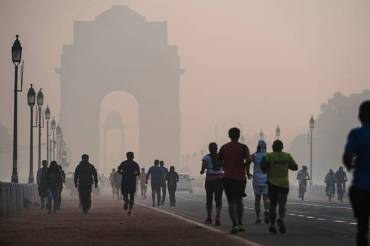
Living in India’s capital city New Delhi could shorten your life by six years because of the intensity of the air pollution there, a new report says.

Inhaling tiny air pollutants reduces the life expectancy of Indians by an average of 3.4 years, with Delhi residents losing 6.3 years, the most of all states, according to a new study by the Indian Institute of Tropical Meteorology.

Those living in West Bengal and Bihar, which have high levels of air pollution, face a reduction in life expectancy of 6.1 years and 5.7 years respectively.

The study, which used data from the latest population census of 2011, found that exposure to particulate matter 2.5 results in 570,000 premature deaths each year with an additional 12,000 caused by exposure to ozone.PM 2.5 is tiny particulate matter that is smaller than 2.5 micrometers in diameter. The air pollutants, originating from dust, soot and smoke, can penetrate deep into the lungs, increasing the risk of heart and lung diseases.

Source: This Is How Many Years Air Pollution Will Cut From Your Life Expectancy in India – India Real Time – WSJ

18/03/2016

We’re not gonna take it | The Economist

DELHI found itself under siege last month. Young men blocked roads and canals that feed people and water into the city. They looted, set fires and dragged women out of cars to rape them. The protesters, from a relatively privileged group of land-owning peasants called Jats, were agitating to be included in India’s list of “other backward classes”, which guarantees university places and government jobs.

Faced with dry taps, Narendra Modi’s government was eventually forced to concede to the demand.

This is the fury to which Somini Sengupta refers in the subtitle of her sharply observed study of India’s young, “The End of Karma: Hope and Fury Among India’s Young”. The median age in India is 27. Every month between 2011 and 2030, nearly 1m Indians will turn 18. Those coming of age this month were born well after the country started opening up its markets in 1991; they have spent their formative years in a world of optimism and rapid economic growth. But Ms Sengupta calls India “a democracy that makes promises it has no intention of keeping”. Advertisement

By 2030 the majority of Indians will be of working age. This could be what economists call a “demographic dividend”, creating a high worker-to-dependent ratio—or it could be a time bomb. India is producing nowhere near enough jobs for the tens of millions of young people joining the workforce every year.

The argument running through Ms Sengupta’s book, made of seven richly detailed portraits of young Indians, is both simple and beguiling. For centuries Indians born into wretched circumstances have accepted their lot as karma—punishment for misdeeds in past lives. This belief explains the persistence of the caste system, and the remarkable fact that a country that is home to one in three of the world’s poor has not come apart at the seams. But young people no longer accept karma, argues Ms Sengupta. Ideas of aspiration and free will have entered the Indian consciousness. Young Indians today demand the right to shape their own futures. If fury is in ample supply, so is hope.

Yet at every step the young are thwarted. It starts in the womb. A traditional preference for boys means that India has one of the most skewed sex ratios in the world: 1.13 boys for every girl, second only to China. (The ratio in America is 1.05.) One in three children under five is underweight. Nearly two-thirds of food meant for early-childhood feeding programmes is pilfered. A rare bright spot is education: in 2013, 96% of primary-school-age children were enrolled. But here, too, India fails its young. By the age of ten, only 60% of students can complete work at the level of a five-year-old. More than half cannot subtract.

Source: We’re not gonna take it | The Economist

29/02/2016

India unveils fire-fighting budget to placate voters, sustain growth | Reuters

The government unveiled a fire-fighting budget on Monday that seeks to win back support among rural voters for Prime Minister Narendra Modi‘s government and sustain growth against a grim global backdrop – all without borrowing more.

Finance Minister Arun Jaitley‘s third budget marked a strategic shift by addressing rural distress in a country of 1.3 billion, where two-fifths of families rely on farming and are reeling from two years of drought.

At the same time it hiked public investment in India’s woeful infrastructure by 22.5 percent, while taking further steps to revive corporate investment that Modi needs to create new jobs for India’s burgeoning workforce.

“We have a shared responsibility to spend prudently and wisely for the people, especially for the poor and downtrodden,” the 63-year-old finance minister told lawmakers in his 100-minute address.

India holds several state elections this year, including in the farming state of West Bengal, with the country’s most populous state, Uttar Pradesh, going to the polls in 2017. A strong showing will be vital to Modi’s chances of a second term.

Despite commanding a large majority in parliament’s lower house, Modi’s government has failed to pass several key measures since sweeping to power almost two years ago, raising doubts over the impact of its reform agenda.

Jaitley called Asia’s third-largest economy a bright spot in a gloomy global landscape, and reiterated a forecast that it would grow by 7.6 percent in the fiscal year that is drawing to a close.

Source: India unveils fire-fighting budget to placate voters, sustain growth | Reuters

28/02/2016

Delhi Chief Minister Arvind Kejriwal’s visit to Punjab — Kejriwal vows to curb mining mafia in Punjab – The Hindu

Alleging that a “mining mafia” in Punjab was extorting money from owners of stone crushing units, Aam Aadmi Party chief Arvind Kejriwal on Sunday vowed to put an end to the menace “within 24 hours” if his party comes to power in the 2017 Assembly election.

Delhi Chief Minister Arvind Kejriwal addresses the people at Dhilwan in Punjab on Sunday.

“I am shocked to know that legal crusher owners have to pay ‘goonda tax or jizya’ to the mining mafia in Punjab. I vow that within 24 hours of AAP’s coming into power, this will be curbed in the state,” Mr. Kejriwal, who is on a five-day tour of Punjab to reach out to voters ahead of the Assembly elections, said at a rally here.

Members of the business community, including owners of crushing units, on Sunday met Mr. Kejriwal and alleged that no action was being taken against the extortionists. They also claimed that false cases were being registered against them.

Mr. Kejriwal said once voted to power, AAP would set up a commission to review such cases and take action against officials who had lodged them.

Reacting to reports of a large number of posters which had sprung up in Jalandhar questioning his governance record, the Delhi Chief Minister hit out at the Akali Dal saying they had ruined the state during their 10-year rule.

“People know who has ruined his state for about 10 years and who is a failed CM,” he said.

Mr. Kejriwal also claimed that no government could have achieved in 65 years what his government had accomplished in one year in Delhi.

“What we have done in our one year rule in Delhi, I challenge that no state government could have done in the last 65 years. I am confident if Delhi goes to polls today, other parties will not be able to win even a single seat,” he said.

He also met people from different walks of life, including industrialists, advocates, shopkeepers and members of the Christian community.

Earlier, BJP workers led by district president Suresh Bhatia and Municipal Council president Naresh Mahajan, tried to gherao Mr. Kejriwal at Gandhi Chowk, but were stopped by police who resorted to mild lathi-charge, in which one person was injured.

Around 80 protesters were detained later released after the Delhi Chief Minister left, police said.

Earlier in the day, Mr. Kejriwal visited the Golden Temple and Durgiana Mandir in Amritsar.

Talking to media in Amritsar on Saturday night, he said he met various associations of traders who were not “happy” with the ruling government in Punjab because of “rampant corruption” in government departments. Moreover the state government had failed to “support” traders, he alleged.

Source: Delhi Chief Minister Arvind Kejriwal’s visit to Punjab — Kejriwal vows to curb mining mafia in Punjab – The Hindu

23/02/2016

Angry victims heckle Haryana CM after Jat riots kill 19 | Reuters

A political ally of Prime Minister Narendra Modi was shouted down on Tuesday by a crowd angered by rioting in Haryana that destroyed businesses, paralysed transport and cut water supplies to metropolitan Delhi.

Photo

The chief minister of Haryana, Manohar Lal Khattar was heckled by local people in the town of Rohtak after they objected to his comments promising that they would receive compensation.

More than a week of unrest involving the Jat rural caste has challenged the authority of Modi, who was elected in 2014 with the largest majority in three decades but has publicly ignored the outburst of anger over a lack of jobs.

Although Jat leaders reached a deal late on Monday to end more than a week of protests that killed 19 people and injured 170, anger was still boiling among the victims whose livelihoods had been ruined.

Live TV pictures showed Khattar giving up his attempt to address angry people on the street. After retreating indoors to give an impromptu news conference, he repeated his promise of compensation only to be shouted down again.

Soon after Modi won national power, Khattar led his nationalist Bharatiya Janata Party to power in Haryana, a state of 25 million people, for the first time.

TRAIL OF DESTRUCTION

There was a trail of destruction through the town, one of several to be hit by Jat agitation to demand more government jobs and college places, with one Hyundai dealership gutted. Traders who staged an earlier sit-down protest said they had lost everything.

“I had two showrooms on the road; both were first looted and then set on fire. I have nothing left now,” Anil Kumar told Reuters Television.

Kumar appealed to Modi and to chief minister Khattar for compensation: “Are we not humans? Don’t our votes count? Why did they not have any mercy on us? Don’t we pay our taxes?”

Modi has remained silent through the worst social unrest of his 20 months in office. A senior government official said he would give a statement in due course to parliament, which convened for its budget session on Tuesday.

Finance Minister Arun Jaitley next week presents his annual budget. He is expected to announce big hikes in public sector pay that would make it hard to free up funds for investment without borrowing more money.

Thousands of troops were deployed to quell the protests, which flared on Monday near Sonipat when a freight train was torched and, according to reports, police shot dead three protesters. Jats also attacked buses in neighbouring Rajasthan.

Disruption has been huge, with at least 850 trains cancelled, 500 factories closed and business losses estimated at as much as $5 billion by one regional lobby group. India’s largest car maker, Maruti Suzuki, shut two factories at the weekend because its supply of components was disrupted.

The army on Monday retook control of a canal that supplies three-fifths of the water to Delhi, a metropolis with a population of over 20 million. A key sluice gate was reopened, but protesters sought to cut the water supply at another place.

“The canal was damaged by protesters and repair work will have to be done,” Delhi’s Water Resources Minister Kapil Mishra said. “The water crisis will continue for a few more days.”

Source: Angry victims heckle Haryana CM after Jat riots kill 19 | Reuters

Law of Unintended Consequences

continuously updated blog about China & India

ChiaHou's Book Reviews

continuously updated blog about China & India

What's wrong with the world; and its economy

continuously updated blog about China & India