Posts tagged ‘Bharatiya Janata Party’

06/08/2014

Scramble for Dalit votes is sparking increased communal violence in UP

The key force driving the increasing communal polarisation in Uttar Pradesh is the scramble for Dalit votes in an attempt to weaken the Bahujan Samaj Party and deter Muslims from rallying behind it.

This strategy was evolved, and implemented, during the last Lok Sabha elections. But the competition to woo Dalits has gathered momentum ahead of bypolls to 12 assembly seats, five of which are in the western section of the state, which is often billed as the “wild west” of the Hindi heartland.

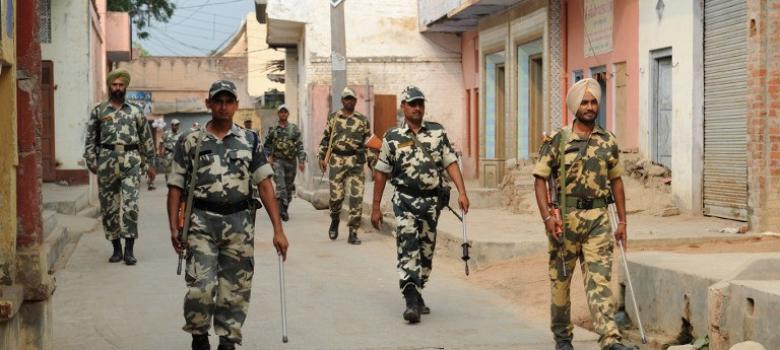
As the Indian Express reported, more than 600 incidents of communal violence have taken place in the state since May.

The Bharatiya Janata Party’s stake in the bypolls, which have yet to be scheduled, is enormous. Eleven of the 12 constituencies here had BJP MLAs, all of whom were elected to the Lok Sabha, as was the party’s ally, Apna Dal leader Anupriya Patel. The results will help measure the durability of the Modi wave, and its possible impact on the UP assembly elections in early 2017.  The verdict from UP could well determine the chances of Prime Minister Narendra Modi winning a second successive term in the 2019 polls.

The need to cobble together an electoral majority is driving political parties to resort to communal mobilisation. Local disputes over land, civic amenities, and exploitative gender relations have been given a communal hue and magnified to portray a monolith Hindu community arrayed against the Muslims.

via Scroll.in – News. Politics. Culture..

08/07/2014

Congress to Parliament: Please Don’t Oppose Our Opposition – India Real Time – WSJ

India’s new session of Parliament has begun, and the Congress Party has a request: Make us the official “leader of the opposition.”

It turns out, that may be asking too much.

The Congress Party — which has governed India for most of the country’s modern history — lost so badly this time, it might not qualify for the right to name the official opposition leader, according to the parliamentary rulebook.

This isn’t a surprise: It’s well known that Congress’s drubbing in the election this year left it with less than 10% of the seats in the lower house of Parliament, the Lok Sabha. So, even though it’s the second-largest party in Parliament, behind the triumphant Bharatiya Janata Party, its share of seats is too small to qualify as official opposition leader.

Nevertheless, Congress has started pressing the issue. “We are the single largest party and we have a pre-poll alliance,” Congress party president Sonia Gandhi said during a televised press conference Monday, as Parliament’s budget session commenced. “We are entitled to get the post.”

Congress spokesman Randeep Surjewala said the post of the leader of opposition is a “constitutional right” of the Congress party. “The Lok Sabha cannot function without the opposition leader.”

Under Indian parliamentary procedural rules, the post of the leader of opposition has the rank of a cabinet minister. It goes to the second-largest party in the Lok Sabha, unless that party fails to win 10% of the seats, or 55, in the 545-member Lok Sabha. Congress has 44 members.

The job comes with some significant responsibilities. The leader of the opposition is part of a panel that selects members of the Central Vigilance Commission; members of the anti-graft national ombudsman, known as the Lokpal; and head of the Central Bureau of Investigation, the country’s federal investigative agency.

Subhash C. Kashyap, historian and former secretary-general of the Lok Sabha, said the Congress party should “stop hankering” for the post. “All its claims are unnecessary, unfounded and without any legal basis.”

via Congress to Parliament: Please Don’t Oppose Our Opposition – India Real Time – WSJ.

03/07/2014

Keys to Successful Reform in India – India Real Time – WSJ

India’s new Prime Minister, Narendra Modi, won a decisive mandate from an electorate yearning for effective leadership. His government’s first budget due out next week will be an important indicator of how forcefully Mr. Modi intends to translate this mandate into actions to put India’s economy back on track.

Of course, despite his clear mandate, Mr. Modi will not have a free hand to impose reforms by decree. He is constrained by a democratic system of government and accountability to the electorate. Hence, both the strategy and the specifics of reform will be crucial to making the program a success.

A key priority is to signal greater fiscal discipline. High levels of public deficits and debt, exacerbated by wasteful subsidies and an inefficient tax system, have created many market distortions and contributed to high inflation. Populist sops have also reduced resources available for expenditure on infrastructure, education and other areas that could boost long-term productivity.


The government needs to commit to long-term fiscal discipline. It should move aggressively to reduce fuel subsidies, implement a goods and services tax, and step up the pace of privatization of state enterprises. These measures would not only improve the fiscal position of the government but also enhance overall economic efficiency by shifting the focus away from purely redistributive policies.

It will also be helpful to signal that the government will not look for easy targets, such as foreign firms, to raise revenues by changing the rules whenever convenient. Policy certainty is as important for domestic investors as it is for foreign ones.

via Keys to Successful Reform in India – India Real Time – WSJ.

11/06/2014

Nawaz hopes to resolve unsettled matters with Modi – Pakistan – DAWN.COM

In a letter written to Indian premier Narendra Modi on Wednesday, Prime Minister Nawaz Sharif said he looked forward to working him in harmony to resolve all unsettled matters in the interest of the two nations.

Prime Minister Nawaz Sharif (L) and Indian premier Narendra Modi (R). — File photo

The premier also expressed satisfaction over his visit to India.

“I have returned satisfied with meaningful exchange of thoughts over regional issues and matters of mutual interest,” Sharif said.

“Million of people living in poverty in both countries deserve our foremost attention and their future is integrated with our common economic destiny,” Sharif said.

The premier further said that prosperity could be brought to both nations with concerted efforts.

He also said that he hoped that mutual endeavours by both countries would brighten their futures.

Sharif was invited to Prime Minister Modi’s swearing-in ceremony after the Bharatiya Janata Party (BJP) emerged victorious in the general elections held in the world’s largest democracy during the course of two months. The invitation was accepted after a series of consultations that the premier held with his close aides.

Sharif had also phoned Modi to congratulate him on his party’s win in the elections.

via Nawaz hopes to resolve unsettled matters with Modi – Pakistan – DAWN.COM.

25/05/2014

BBC News – Pakistan PM Sharif to go to Modi inauguration in India

Pakistan’s Prime Minister Nawaz Sharif is to attend the inauguration of Narendra Modi as Prime Minister of India on Monday. Narendra Modi (L), Nawaz Sharif (R)

It is the first time since the two countries won independence in 1947 that a prime minister from one state will attend such a ceremony in the other. The two nuclear-armed rivals have fought three wars in the past 60 years. Mr Modi is seen as a hardliner on national security issues. His BJP party advocates a tough stance on Pakistan. But correspondents say his huge election victory gives him a mandate to reach out to Pakistan in a way the previous administration could not.

Bilateral ties suffered badly in the wake of the 2008 attacks in the Indian city of Mumbai, when 166 people were killed by Pakistani gunmen. Relations improved slightly under outgoing PM Manmohan Singh, but there are still regular skirmishes on the disputed border in Kashmir.

Mr Singh was invited to Mr Sharif’s inauguration last year but did not attend.

via BBC News – Pakistan PM Sharif to go to Modi inauguration in India.

Enhanced by Zemanta
24/05/2014

Modi’s Big Chance to Fix India – Businessweek

After five weeks of staggered voting, more than 550 million ballots cast, and almost $5 billion spent, the world’s largest democracy finally has a new leader. Yet the question that has loomed over India’s long campaign remains: What kind of leader is Narendra Modi going to be?

Narendra Modi speaks to supporters in Vadodara, India, on May 16

Modi fought an impressive campaign focused mostly on the right issues. He successfully cast the election as a referendum on who could better deliver jobs, government services, and economic growth: himself or Rahul Gandhi, the ruling Congress party’s heir apparent. The landslide victory of Modi and his Bharatiya Janata Party—the biggest for any party since 1984—testifies to Indians’ hunger for decisiveness and efficiency after years of policy drift and corruption scandals.

Yet voters have little idea how Modi will govern. He has given no sign of how far he’ll challenge his own supporters on economic and social policies. Investors expecting miracles are in for a letdown, because India’s political system is bound to intervene. According to JPMorgan Chase (JPM), about 70 percent to 80 percent of regulatory and other roadblocks impeding big industrial projects aren’t within Modi’s power to remove. Even so, he needs to make progress where he can.

A good place to start would be to keep an election promise to introduce a combined goods and services tax—something Modi’s own party has long opposed, because it would force revenue losses on state governments. (Modi could offset some of the losses using central revenues.) He should move to phase out petroleum subsidies. He should give state and local governments greater flexibility in regulating labor markets, land sales, and more. Economic competition among the states is key.

Above all, India’s new leader must also reach out to the country’s Muslims—assuring them that he recognizes they are full and valued citizens entitled to an equal measure of security, trust, and respect. Modi’s campaign was based in part on a simple point: India can no longer afford to muddle through, endlessly avoiding difficult decisions. Now it’s time to deliver.

via Modi’s Big Chance to Fix India – Businessweek.

Enhanced by Zemanta
22/05/2014

Modi’s Challenges on the World Stage – India Real Time – WSJ

India is back. Last week’s election tally shows that an allegedly divisive leader has united the country as no politician has in decades. India is now in the hands of a prime minister who has managed the economy of its most industrialized and globalized state—one that has grown faster than China for two decades—and the consequences will extend far beyond India. The U.S., China and Japan all have high stakes in an Indian resurgence that could tilt Asia’s power balance in a democratic direction.

As the first Indian prime minister born after independence, Narendra Modi could now declare Indian independence from the old shibboleths of state socialism and non-alignment that have kept the country poor and geopolitically marginalized. To fulfill his people’s aspirations—tackle chronic underdevelopment at home, close the gap with Chinese power abroad—Mr. Modi will need all the western and Japanese capital, technology and military support he can get.

The last prime minister from Mr. Modi’s Bharatiya Janata Party, Atal Bihari Vajpayee (in office 1998-2004), declared India and America “natural allies” after decades of alienation. He also conducted nuclear tests to deter Chinese adventurism, visited Lahore to sketch out a vision for peace with Pakistan and opened the door to U.S.-India defense cooperation. Yet Indo-U.S. ties weakened in recent years, part of what Mr. Modi calls the general “stagnancy” afflicting his country.

The best way to restore Indo-U.S. momentum is to get India growing again. “A strong economy is the driver of an effective foreign policy,” Mr. Modi has said. “We have to put our own house in order so that the world is attracted to us.”

via Modi’s Challenges on the World Stage – India Real Time – WSJ.

Enhanced by Zemanta
21/05/2014

India Invites Pakistan to Narendra Modi’s Swearing-In – India Real Time – WSJ

Interestingly, China, another close neighbour has NOT been invited!

“In a surprise gesture, India has invited the leader of Pakistan—its neighbor and arch-enemy—to attend the swearing-in ceremony of a new prime minister.

The leaders of other South Asian nations are being invited, too, including Afghanistan, Sri Lanka, Nepal, Bhutan, Maldives and Bangladesh, according to a spokeswoman for the Bharatiya Janata Party, which dominated India’s recent parliamentary election. But all eyes will be on Pakistan, which has fought three wars with India since the two nations gained independence from the colonial British in 1947.

As of Tuesday afternoon, Pakistan hadn’t yet received its invitation, according to Pakistan’s foreign ministry.

Traditionally, swearings-in have been attended mainly by family members and Indian government figures. India’s next prime minister, Narendra Modi of the BJP, is scheduled to be sworn in at a ceremony on May 26. The invitations have been sent by India’s Ministry of External Affairs.

According to the BJP spokeswoman, Nirmala Sitharaman, invitations have been sent to all members of the South Asian Association for Regional Cooperation, or SAARC. The organization’s purpose is to work toward peace and strengthened economic ties in the region.

“We are looking forward to having a good relationship in our neighborhood and we want to build goodwill,” Ms. Sitharaman told The Wall Street Journal.

Mr. Modi, a Hindu nationalist leader, is expected to pursue a muscular foreign policy. In the past, he has criticized the rival Congress party’s stance on territorial disputes with China and on border skirmishes with Pakistan.  His party, the BJP, won 282 of the 543 elected seats in Parliament this month. The Congress party, which previously led the national government, won only 44 seats—its worst tally in party history.

After winning the elections, Mr. Modi, who has served as the chief minister of Gujarat for more than a decade, was congratulated by Pakistan Prime Minister Nawaz Sharif. Mr. Sharif came to power in Pakistan in the elections held last year.

India and Pakistan have a tense and fragile relationship. The invitation to attend the swearing-in comes only two days after Indian security forces said they were in pursuit of alleged militants in the state of Jammu and Kashmir, where India and Pakistan regularly skirmish.”

via India Invites Pakistan to Narendra Modi’s Swearing-In – India Real Time – WSJ.

Enhanced by Zemanta
19/05/2014

Modi’s Next Move – India Real Time – WSJ

The simplest way to understand the enormity of the Bharatiya Janata Party’s victory Friday in India’s election is to place it in historical context.

For the first time since 1984, India’s voters have given a single party rather than a ragtag coalition a majority in Parliament. The BJP won 282 seats, 10 more than the 272 needed to reach the halfway mark in the 543-seat lower house of Parliament. The BJP-led National Democratic Alliance coalition snagged 336 seats.

For the first time ever, India’s traditionally left-leaning politics has moved decisively to the right. Even when it won more seats than the left-of-center Congress Party in three elections in the late 1990s, the BJP always lagged its rival in share of the popular vote. This time the BJP snagged nearly one third of the national vote, while Congress claimed less than a fifth. The BJP also made inroads into southern and eastern India, outside its traditional strongholds in the north and west.

The rightward swing is all the more notable because incoming Prime Minister Narendra Modi belongs to the conservative wing of India’s conservative party. Unlike the last BJP prime minister, Atal Bihari Vajpayee (1998-2004), Mr. Modi cut his teeth in politics battling Congress when it briefly suspended democracy in the mid-1970s, not admiring Jawaharlal Nehru’s parliamentary eloquence in defense of socialist policies in the 1950s.

Congress itself has been reduced to a rump. The 44 seats it won is less than half of its previous low of 114 seats in 1999. Congress has proved naysayers wrong before by bouncing back. Still, for the first time talk of the possible extinction of a party that has ruled India for all but 13 years since independence in 1947 seems plausible. And the two main communist parties, which have traditionally wielded influence both inside and outside Parliament and helped set the tone for much anti-capitalist and anti-Western discourse, have been reduced to a footnote. Together they hold a meager 10 seats.

via Modi’s Next Move – India Real Time – WSJ.

Enhanced by Zemanta
17/05/2014

India’s Modi gets hero’s welcome as he brings new era to New Delhi | Reuters

Hundreds of Indians thronged the leafy streets of New Delhi on Saturday to greet Narendra Modi‘s triumphant march into the capital after he decimated the Nehru-Gandhi dynasty and the ruling Congress party in the biggest election victory the country has seen in 30 years.

Hindu nationalist Narendra Modi, the prime ministerial candidate for India's Bharatiya Janata Party (BJP), gestures towards his supporters from his car during a road show upon his arrival at the airport in New Delhi May 17, 2014. REUTERS/Adnan Abidi

Modi leaned far out of his car, waving a victory sign to jubilant supporters, in a drive from the airport to the headquarters of his Bharatiya Janata Party (BJP) in the center of town.

A Hindu nationalist who critics fear will be divisive and autocratic, Modi toned down religious issues in his pitch to India’s 815 million voters and won the world’s biggest ever election with promises of economic development for all.

The three-times chief minister of the western state of Gujarat is an outsider to Delhi’s power circle. The low-caste son of a tea stall-owner, his rise to power signals the end of an era dominated by the descendants of India’s first prime minister, independence hero Jawaharlal Nehru.

“Four to five generations have been wasted since 1952, this victory has been achieved after that,” Modi said, in a jibe at the Nehru-Gandhi family and the Congress it dominates.

Describing himself as a “worker”, he hailed grass-roots campaigners who showered him with pink rose petals as he arrived at party headquarters. There he met other party leaders and was expected to start discussions about forming a cabinet. Modi will not formally take office until after Tuesday, the party said.

Modi has given India its first parliamentary majority after 25 years of coalition governments, with his party winning more than six times the seats garnered by Congress.

With almost all 543 seats declared by Saturday morning, Modi’s BJP looked set to win 282 seats, 10 more than the majority required to rule. With its allied parties, it was heading for a comfortable tally of around 337 – the clearest result since the 1984 assassination of prime minister Indira Gandhi propelled her son Rajiv to office.

During the campaign Modi was explicit about wanting to end the dominance of the Nehru-Gandhi family on Indian politics. He may have achieved the goal, with Congress reduced to just 44 seats, less than half of its previous worst showing.

Modi’s landslide win gives him ample room to advance reforms started 23 years ago by current Prime Minister Manmohan Singh but which have stalled in recent years.

Despite his party’s pasting, 81-year-old Singh was magnanimous in his final address to the nation on Saturday, wishing the incoming government success. Later, he tendered his resignation.

“I am confident about the future of India,” he said in his televised message. “I firmly believe that the emergence of India as a major powerhouse of the evolving global economy is an idea whose time has come.”

Unlike Singh and his predecessors, Modi will not have to deal with unruly partners to implement reform. That could usher in profound economic changes, with some supporters imagining him as India’s answer to former British leader Margaret Thatcher.

via India’s Modi gets hero’s welcome as he brings new era to New Delhi | Reuters.

Enhanced by Zemanta
Law of Unintended Consequences

continuously updated blog about China & India

ChiaHou's Book Reviews

continuously updated blog about China & India

What's wrong with the world; and its economy

continuously updated blog about China & India