

“Actions speak louder than words”. So, the Chinese public is waiting to see what actions are going top be taken to support the leadership’s statements regarding the need to reduce if not end corruption at all levels of government and the Party.
06/11/2012
* Neil Heywood: Briton killed in China ‘had spy links’
No smoke without a fire?
BBC: “A British businessman killed in China had been providing information to the British secret service, the Wall Street Journal newspaper claims.

Neil Heywood had been communicating with an MI6 officer about top politician Bo Xilai for at least a year before he died, the paper said.
The UK Foreign Office said it would not comment “on intelligence matters”.
In April, Foreign Secretary William Hague said Mr Heywood was not a government employee “in any capacity”.
The case is at the heart of China’s biggest political scandal in decades.
The November 2011 death of Mr Heywood brought down Mr Bo, the former Communist Party chief of Chongqing and a high-flier who was once tipped for top office.
Mr Bo’s wife, Gu Kailai, was jailed in August for the murder of Mr Heywood at a Chongqing hotel. His former police chief, Wang Lijun, has also been jailed in connection with the scandal.
Mr Bo himself was expelled from parliament in September, stripping him of immunity from prosecution. He is accused of abuse of power, bribe-taking and violating party discipline, Chinese state media say, and is expected to go on trial in the future.
via BBC News – Neil Heywood: Briton killed in China ‘had spy links’.
See also: https://chindia-alert.org/2012/08/12/bo-xilai-scandal-gu-admits-neil-heywood-murder/
05/11/2012
* China authorities pushing happiness amid rising discontent
It was the tiny mountain kingdom of Bhutan that started the notion of a Gross Happiness Index. UK’s Premier Cameron had a brief stab at tit. And now the world’s most populous country is having ago. Maybe it will be taken seriously in due course!
SCMP: “With dissatisfaction growing over corruption, inequality, food safety and numerous other social problems, mainland authorities are shifting their focus from economics to emotions.
Simply put, they want everyone to be happy.

From Beijing to Ningxia, local, provincial and regional leaders have been setting up “happiness indexes” or otherwise tailoring programmes, projects and policies to increase people’s satisfaction with their lives, as well as, of course, with the government.
Eighteen provinces and more than 100 cities have jumped on the happiness bandwagon in recent years, according to a report in Beijing News last week.
The campaign has helped the Communist Party set the stage for its 18th national congress, which opens this week amid increased incidents of social unrest.
While most analysts welcome the increased focus on people’s welfare, some caution that happiness is hard to measure and suggest the party would be better off advancing concrete policies for social change.
The public has been less forgiving, mercilessly ridiculing the policy on the internet.
“Without a constitutional government and democracy, a ‘Happy China’ will only be a fable,” said Professor Hu Xingdou, who is a commentator at the Beijing University of Technology.
“There are so many things that the authorities could do to improve the public’s satisfaction, such as protecting civil rights, building a democratic country, fighting corruption, stopping illegal land grabs and cutting taxes.”
Reform-minded Guangdong party secretary Wang Yang became perhaps the most prominent – and widely mocked – proponent of the public satisfaction drive last year when he outlined his proposal for a “Happy Guangdong” province.
As part of the plan, Wang allocated 423 billion yuan (HK$521 billion) for projects to improve people’s livelihood. He said he would attempt to reduce the province’s gross domestic product growth from a breakneck 12.5 per cent to a more manageable level of 8 per cent.
To measure his success, Wang set up an index of individual economic indicators, including employment, income, education, health care, crime, housing, infrastructure, social security and the environment.
But Wang was hardly the first to try out such a scheme. His now-disgraced rival, former Chongqing boss Bo Xilai, also pledged to slow the local growth rate after his city was named the mainland’s happiest in 2010.
In Beijing, local propaganda authorities even aired a seven-episode television series in August offering advice to those who are unhappy.
In it, a professor with a psychology degree from Harvard University instructed people on how to find their inner peace, rather than find fault with the government.
Jiangyin city, Jiangsu province, had one of the earliest satisfaction drives. The local government set up its happiness index in 2007, promising to improve the city’s employment, income, public safety and heath care, as well as reducing pollution.
The programme has been a rousing success, if you believe the government’s survey. Within three years, Jiangyin found that 95.87 per cent of its residents felt happy.
Professor Xu Guangjian, of Renmin University’s School of Public Administration and Policy, said he had not seen a single regional government that had been able to convincingly survey the public’s level of happiness. “The factors behind unhappiness are obvious,” he said.
Surveys conducted by Guangdong’s newspapers and government think tanks suggest the main source of most people’s gripes is the government, with many pointing to failures in job creation, social welfare, medical services, housing, pollution, food safety and soaring prices.
And there may be a new source of public dissatisfaction: satisfaction drives.
“It’s very difficult to measure happiness and there’s a subtle growing dislike of the authorities’ overwhelming happiness campaigns,” said Professor Xing Zhanjun, of the Centre for Quality of Life and Public Policy at Shandong University. “The public is starting to mock the word these days.”
Nonetheless, central government authorities have been eager to extend the policy. Many local governments picked up the satisfaction agenda after Premier Wen Jiabao made happiness and human dignity central elements of his 2010 work report.
In the run-up to the party congress, China Central Television (CCTV) has been running a series of segments for it which it conducted 3,500 man-on-the-street interviews in an attempt to measure the mainland’s “gross national happiness”.
Many have dismissed the series as superficial. CCTV reporters simply ask people whether they are happy and an overwhelming majority answer “yes”.
But the segments have not been without their enlightening moments, such as when a reporter pulled one interviewee out of a queue. “I am unhappy because when I answered your question, I lost my place in the queue,” the person said.
Professor Steve Tsang Yui-sang, director of the University of Nottingham’s China Policy Institute, said Beijing, if it were truly serious about reform, would appoint independent research institutes to survey main obstacles to happiness.
“It can cost as little as several hundred thousand yuan and would be much cheaper than CCTV’s street survey with some 70 camera crews,” Tsang said.”
via China authorities pushing happiness amid rising discontent | South China Morning Post.
22/10/2012
* China leftists urge parliament not to expel Bo Xilai
Reuters: “A group of Chinese leftists has issued a public letter calling on the country’s largely rubber stamp parliament not to expel disgraced former top leader Bo Xilai from its ranks, saying the move is legally questionable and politically motivated.
Stripping membership from Bo – the one-time Communist Party chief of Chongqing who is accused of abusing power, taking huge bribes and other crimes – also removes his immunity from prosecution, and paves the way for formal charges against him.
Bo’s ouster has exposed deep rifts in the party between his leftist backers, who are nostalgic for the revolutionary era of Mao Zedong, and reformers, who advocate for faster political and economic reforms.
The letter, carried on the far-left Chinese-language website “Red China” and addressed to the parliament’s standing committee, says the party is fuelling doubts about the accusations against Bo by refusing to discuss them publicly.
“What is the reason provided for expelling Bo Xilai? Please investigate the facts and the evidence,” says the letter. “Please announce to the people evidence that Bo Xilai will be able to defend himself in accordance with the law.”
Parliament and its members are there to provide oversight and make laws, not to “act as a rubber stamp” for attacks on people for personal reasons by political factions, it added.”
via China leftists urge parliament not to expel Bo Xilai | Reuters.
29/09/2012
* Bo Xilai expelled from CPC, public office
China Daily: “Bo Xilai has been expelled from the Communist Party of China (CPC) and removed from public office, according to a decision made at a meeting of the Political Bureau of the CPC Central Committee on Friday.
The meeting also yielded the decision to transfer Bo’s suspected law violations and relevant evidence to judicial organs for handling.
The decisions were made after attendees at the meeting deliberated over and adopted an investigation report on Bo’s severe disciplinary violations, which had been submitted by the CPC Central Commission for Discipline Inspection (CCDI).
At a meeting held on April 10, members of the Political Bureau of the CPC Central Committee were briefed on the investigation into the incident in which former Chongqing Vice Mayor Wang Lijun entered the US Consulate General in Chengdu without permission as well as the reinvestigation into the suspected murder of British citizen Neil Heywood by Bogu Kailai, Bo’s wife.
Based on Bo’s mistakes and responsibilities in the two cases, as well as evidence of his other discipline violations uncovered during the investigations into the two cases, the CPC Central Committee decided to suspend Bo’s membership in the CPC Central Committee Political Bureau and the CPC Central Committee and the CCDI filed the case for investigation.
Investigations have found that Bo seriously violated Party disciplines while heading the city of Dalian, Liaoning Province, and the Ministry of Commerce and while serving as a member of the Political Bureau of the CPC Central Committee and as Party chief of Chongqing Municipality.
Bo abused his power, made severe mistakes and bore major responsibility in the Wang Lijun incident and the intentional homicide case of Bogu Kailai.
He took advantage of his office to seek profits for others and received huge bribes personally and through his family.
His position was also abused by his wife Bogu Kailai to seek profits for others, and the Bo family accepted a huge amount of money and property from others.
Bo had or maintained improper sexual relationships with a number of women.
He was also found to have violated organizational and personnel disciplines and made erroneous decisions in the promotion of personnel, resulting in serious consequences.
The investigation also uncovered evidence that suggests his involvement in other crimes.”
via Bo Xilai expelled from CPC, public office[1]|chinadaily.com.cn.
See also:
17/09/2012
* China past and present: review
UK Telegraph: “China past and present: review
By Rana Mitter7:00AM BST 10 Sep 2012Comment
Two books on China explain why the country’s rise to superpower status is still far from inevitable
 A vision of the Chinese future in a 1982 propaganda poster Photo: Alamy
Some time this autumn, the Chinese Communist Party will announce the date of the 18th Party Congress. Among the Party’s priorities will be two major issues: the need to project Chinese power more widely in the world, and the consolidation of a system of welfare that will prevent the country’s social discontent from spilling over into outright rebellion. These themes are at the centre of these two important books which, taken together, illustrate why the rise of China is far from inexorable.
Odd Arne Westad’s Restless Empire has two main purposes. The first is to provide an overview of China’s engagement with the world over the past three centuries. Westad starts with an important piece of myth-busting, arguing strongly against the idea that China has been an inward-looking society closed to the rest of the world. Whether it was the trade in silks and porcelains that made China part of a global trading network during the Ming and Qing dynasties that lasted from the 14th century to the 20th, or the forced engagement with the West that came with imperialism, China has always been connected with the wider world. Westad is particularly acute on the Cold War period, using impressive documentation to argue that China’s relationship to the rest of East Asia was not just communist, but Confucian in the ties that Mao nurtured with his ideological “younger brothers” such as Kim Il-sung and Ho Chi Minh (even if the family quickly became dysfunctional).
The second aim emerges in the last two chapters, which concern the foreign policy crises facing China today. Westad firmly rejects the received wisdom that China is set to become a global superpower, dominating policy on everything from international intervention to energy resources. Despite its rhetoric, China has in practice been almost entirely passive or reactive in the past few decades. China shows pleasure in being treated as a global player, but shows little sign of knowing what to do with that power other than criticising the United States. “China has to learn,” he says drily, “that sticking it in the eye of the world’s hyperpower may bring short-term gratification, but it does not amount to a grand strategy in international politics.”
Some of the reasons that China’s leadership may be distracted from visions of world domination are made clear in Gerard Lemos’s The End of the Chinese Dream. Lemos spent four years working in Chongqing, the city that has become notorious for the Bo Xilai murder scandal, but his account is of a less lurid but equally troubling failing in Chinese government. He examines the model of welfarist authoritarianism with which the Chinese Communist Party is attempting to gain the “performance legitimacy” that might keep it in power, and finds it seriously wanting. When the Maoist “iron rice bowl” of guaranteed employment, pensions and health care broke down as China privatised its economy in the Nineties, millions of urban and rural Chinese found themselves left behind as others got rich. Figures tell part of the story: food inflation ran at over 18 per cent in 2008, and some analysts expect that health care costs will rise by 11 per cent annually into the middle of the next decade. But the participants in the surveys that Lemos organised add human voices to the statistics: one among the hundreds he records is the 39-year-old woman who declares “Losing my job [changed my life]. I have no money to see the doctor.” She tells Lemos that she fears she’ll be unable to find “the education fee for my children’s education”. The “Chinese dream” of a middle-class existence with a flat, car, and high-quality education for the next generation has only become a reality in the last decade or two. Now it looks as if it may be slipping out of the grasp of millions even before they have had a chance to aspire to it.
Both writers make poignantly clear the obstacles to China becoming a global leader. At bottom, China does not have a vision of what a Chinese-led world would look like. Nor does its domestic political model of party-led authoritarianism export well to the rest of the world. African and Latin American nations may welcome Chinese investment and on occasion find it expedient to use the threat of Beijing to squeeze concessions from Washington. But however shaky these countries’ engagement with democratisation, they do not seriously tout the “Chinese model” as an alternative, because it is clear that China has not solved its most pressing problems: a demographic crisis exacerbated by the one-child policy, a creaking welfare system, and slowing growth.”
via China past and present: review – Telegraph.
See also:
04/09/2012
* China’s next leader buoyed by fresh setback for Hu
Reuters: “China’s next leader, Xi Jinping, looks to have emerged politically stronger after ruling Communist Party elders foiled a second attempt by outgoing President Hu Jintao to stack the top echelon of the new administration with his own allies.
Hu had been maneuvering to promote his star protege, Hu Chunhua, to the party’s supreme decision-making body, the Politburo Standing Committee, as part of the current leadership transition, but other senior party figures have opposed the idea, two independent sources said.
Hu Chunhua, who is not related to Hu Jintao, is instead likely to be given one of China’s biggest but also most testing political assignments as new party chief of southwestern Chongqing, the job from which disgraced politician Bo Xilai was ousted, said the sources with ties to the top party leadership.
The sideways move for Hu Chunhua, currently party boss for Inner Mongolia, follows the demotion of another of Hu Jintao’s closest allies at the weekend – both taken as signs that Xi may have a relatively freer hand to forge consensus among peers.
“Hu’s (Jintao) loss is Xi’s gain,” one of the sources with ties to the leadership told Reuters, requesting anonymity due to the sensitivity of the subject. “Xi is in a less difficult situation.”
China, currently mired in an economic downturn, faces growing calls for it to step up the pace of economic and social reforms, a task that could prove trickier for Xi if the Standing Committee were to include politicians reluctant to make changes to the cautious direction set by Hu over the past decade.
But the situation remains fluid, with the make-up of the new Standing Committee, currently comprising nine members, still to be finalized in a once-in-a-decade transition to be unveiled at the party’s 18th congress, expected next month at the earliest.”
via China’s next leader buoyed by fresh setback for Hu: sources | Reuters.
See also:
Related articles
- * China’s Hu seeks clean power handover with ally’s promotion (chindia-alert.org)
- * Does China’s next leader have a soft spot for Tibet? (chindia-alert.org)
- New scandal in China, key official sidelined over car crash (chinadailymail.com)
- Exclusive: China’s president eyes ally for promotion to top body – sources (news.terra.com)
- Demotion? Top official Ling Jihua replaced by Li Zhanshu (wantchinatimes.com)
27/08/2012
* Gu Kailai verdict set for Monday
FT: “The verdict in the murder trial of the wife of disgraced Chinese politician Bo Xilai will be announced on Monday, wrapping up a key phase in the Communist party’s efforts to deal with its biggest internal crisis in decades.
Mr Bo’s wife Gu Kailai and Zhang Xiaojun, a former family aide and co-defendant, were tried in the eastern city of Hefei on August 9 on charges of murdering Neil Heywood, the Bo family’s British business agent.

The verdict would be announced at 9am on Monday, said the Hefei Intermediate People’s Court.
Ms Gu is widely expected to be found guilty because Chinese state media had spoken of “irrefutable evidence” against her even before the trial started, and she confessed in court, according to observers present at the trial.
Chinese courts, which play a growing role in commercial disputes in the country, enjoy little or no independence in cases that are considered politically sensitive or touch upon the interests of government or party officials, well-connected individuals or state enterprises.
Ms Gu’s trial, which lasted for less than eight hours, was tightly stage-managed, with authorities barring access for foreign media.
The official accounts of the proceedings have triggered doubts and debate over the validity of Ms Gu’s reported confession and other details of the trial.
Two security experts familiar with facial recognition software said the person shown in state television footage of the courtroom was not Ms Gu.
…”
via Gu Kailai verdict set for Monday – FT.com.
See also:
12/08/2012
* Bo Xilai scandal: Gu ‘admits Neil Heywood murder’
BBC News: “Gu Kailai has admitted murdering British businessman Neil Heywood and blamed her actions on a mental breakdown, Chinese state media report.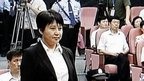
The state news agency Xinhua said the wife of former top politician Bo Xilai had apologised for what she described as the “tragedy” of Mr Heywood’s death.
She said she would “accept and calmly face any sentence”, the agency added.
Ms Gu was accused of poisoning Mr Heywood with cyanide last November, at her one-day trial on Thursday.
Her aide, Zhang Xiaojun, also admitted his involvement in the murder and said he wanted to apologise to Mr Heywood’s relatives, Xinhua reported in a detailed account of Thursday’s proceedings in court.”
via BBC News – Bo Xilai scandal: Gu ‘admits Neil Heywood murder’.
Incidentally, many Chinese news items use the name Bogu Kailai. That is because of the convention that the wife adopts the husband’s surname and prefixes her surname with his. See: https://chindia-alert.org/2012/04/05/deciphering-chinese-names/
See also:
- https://chindia-alert.org/2012/08/09/bo-xilai-scandal-gu-kailai-on-trial-for-neil-heywood-death/
- https://chindia-alert.org/2012/04/14/china-ejects-bo-from-elite-ranks-wife-suspected-of-murder/
Related articles
- Gu Kailai charged with murder of British businessman in China (guardian.co.uk)
09/08/2012
* Bo Xilai scandal: Gu Kailai on trial for Neil Heywood death
BBC News: “The first day of the trial of the wife of former high-flying Chinese lawmaker Bo Xilai on charges of murdering UK businessman Neil Heywood has ended.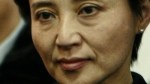
Gu Kailai is accused of poisoning Mr Heywood in 2011 in Chongqing, where her husband was the Communist party head.
State media has called the case against her and an aide “substantial”.
The country is preparing to install a new generation of leaders, and Bo Xilai had once been seen as a strong contender for one of the top jobs.
He was sacked in March and is currently under investigation for unspecified “disciplinary violations”.
The BBC’s John Sudworth says some Chinese leaders are said to welcome the demise of such an openly ambitious colleague, but the case still needs careful handling for fear it might taint the Communist Party itself.”
via BBC News – Bo Xilai scandal: Gu Kailai on trial for Neil Heywood death.
Related articles
- Bo Xilai’s son defends mother (edition.cnn.com)
- China To Allow British Diplomats To Attend Trial Of Bo Xilai’s Wife For Neil Heywood Murder (freeinternetpress.com)

 CHINDIA ALERT: You'll be living in their world, very soon