New Scientist: “TWENTY years ago this week, the United Nations’ Earth Summit closed in Rio de Janeiro having forged landmark agreements on climate change and biodiversity. Next week, delegates from around the world will meet again in Rio for a new Conference on Sustainable Development, dubbed Rio+20. How far have things advanced in the interim?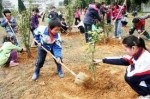
On the face of it, the picture is dispiriting. Annual global carbon dioxide emissions have risen by over 50 per cent, and the demise of the Kyoto protocol has halted co-ordinated action on climate change. And while the Convention on Biological Diversity is still in force, it has not prevented rampant habitat destruction.
With global co-operation proving hard to secure, progress now depends heavily on the unilateral actions of individual countries. The US tops the priority list, just as it did at the original Earth Summit – but it has been joined there by China. The Asian giant’s extraordinary economic growth has come at enormous environmental cost: it is now among the world’s largest polluters, and its natural resources have been massively exploited in recent years.
Despite this, China’s appetite for resources still falls well short of the west’s on a per capita basis, and its people do not generally enjoy the prosperity, health and life satisfaction common to the world’s richest billion inhabitants. It has become the received wisdom that nothing approaching global parity can possibly be achieved without utterly gutting the planet. The implication? That the lives of 6 billion of the world’s residents are, and must remain, “nasty, brutish and short”.
We now have a first sense that this picture is not true to life. Much discussion revolves around GDP, but this is a poor measure of sustainable development. Pick a metric that emphasises citizen well-being in combination with the environment, such as the Happy Planet Index, and the pecking order is turned on its head, with countries such as Costa Rica topping the league (see “What is wealth on a happy planet?”).
Such measures are for the moment informal. But the World Bank has for some time been plugging away at its own tweaked index, which would offset the environmental damage caused by a nation’s industry against its productivity. It has been slow going, due to political resistance and the difficulties of pricing up “natural capital”.
This is where China’s role becomes most surprising – and promising. It is setting out on a huge green experiment that could provide lessons far afield (see “China leads the march for the green economy”). Even as its economy booms, it is sharply reducing its “carbon intensity” – CO2 emissions per unit of GDP – and deploying new economic models to price natural resources.
Such models are routinely scorned in the west as the products of ivory-towered wishful thinking, and their adoption deemed unthinkably risky. Yet China, acting largely out of economic self-interest, and perhaps with a longer-term vision than beleaguered western democracies can muster, is forging ahead.
All this does not expiate China from its environmental sins. But its experiment offers the west scope to learn from its experience. Our representatives at Rio+20 should pay close attention.”
via All eyes on China’s green leap forward – opinion – 14 June 2012 – New Scientist.


 CHINDIA ALERT: You'll be living in their world, very soon