Posts tagged ‘Central Party School of the Communist Party of China’

04/11/2015

Are Chinese ‘Too Rational’ for a Second Child? Interview With Mei Fong – China Real Time Report – WSJ

China’s announcement last week that it will let all couples have two children ended one of the most contentious birth restrictions in history–the one-child policy.
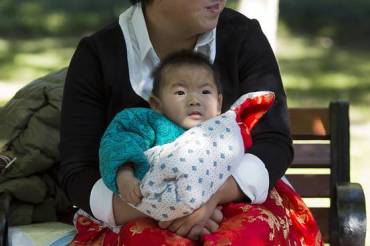
Implemented in 1980 to rein in explosive population growth during the Mao Zedong era, the one-child policy and its enforcement had myriad consequences, including forced abortions and sterilization. It placed the burden of elderly care on single children and fueled a gender imbalance. Some researchers also say a new generation of only children – or “little emperors” — are more pessimistic and less competitive than older generations with siblings. Now, the Chinese government is shifting course to offset the effects of a rapidly aging population and to avert labor shortages.

China Real Time spoke to Mei Fong, author of the book “One Child: The Past and Future of China’s Most Radical Experiment” and a former Wall Street Journal reporter, about the one-child policy and the unwinding of it. The book will be published in hardcover in January, but a digital edition was released Tuesday, Nov. 3. Below are edited excerpts of the interview: Mei Fong

Many couples say that despite changes in the policy, they will not have two children. What can the government do to promote births?

There was a recent Internet survey [on Chinese website Sina of 180,000 respondents who were asked if they wanted a second child] saying that 43% of people don’t want children. But there’s a difference of what people say and what they will do. A lot of people ideally want to have two so that they can have both a boy and a girl. The problem is that the one-child policy wasn’t the sole reason people weren’t and aren’t having children. For urban residents, the idea of having just one has been ingrained in them. It’s a social and economic decision and it would take a major mind shift to think of anything else.

People consider it almost it irresponsible to divert resources from any child.

One of the things that demographer Cai Yong said that has always stuck in my mind is that people are too rational for the business of having children.

Who are the likely candidates to have more children?

It’s the rich ones who will add a child. Wealthy people have been traveling to the U.S. for fertility services and U.S. passports , though it’s unclear how many. I know of one couple in Shanghai who had three children by going to the U.S. Houghton Mifflin Harcourt

But it’s hard to make generalities about China. It’s a big place and we all know someone who has had a second child or third child.

Will that mean that a two-child policy will create a bigger upper class? And what will be the consequence? One of the things that the one-child policy has created already is an inequality gap. The spectrum hit the middle class, because the people above the middle class can afford to pay for it, while the ones below were often exempt. The one-child policy is adding to the class-struggle issues. It’s the rich people who have and will have bigger families. They’re the ones that can afford fertility treatment, because fertility is a major problem. They could always afford to pay the penalties [for having more than one child].

Several years ago, there was a study that said China’s single children, its little emperors,  were less competitive and less empathetic than those with siblings. Do you see that changing? I have some doubts about that because there have been many different studies on this. But certainly, they do seem to give themselves more pessimistic labeling, like diao si [roughly translated as loser], than others.

Source: Are Chinese ‘Too Rational’ for a Second Child? Interview With Mei Fong – China Real Time Report – WSJ

13/12/2013

China’s reformed govt assessment hailed as landmark |Politics |chinadaily.com.cn

China\’s official evaluation system has abandoned GDP-obsessed assessments and puts more emphasis on public well-being and the environment.

\”It\’s a historical turning point that shows solid steps to deepen reform,\” said Wang Yukai, professor with the Chinese Academy of Governance, who believes the new system will help CPC members do a better job.

Gross regional product and its growth will no longer be the main determinants of local administrators\’ success or failure, according to a circular on improving evaluation of local authorities, released on Monday.

The GDP growth has been the major index for assessing local performance for many years and has led to blind pursuit of growth by some local authorities at the cost of the environment and residents\’ livelihoods.

The document issued by the Organization Department of the Communist Party of China (CPC) Central Committee, gives greater emphasis to indices related to the waste of resources, environmental protection, excess capacity and production safety. Evaluation of scientific innovation, education, culture, employment, social insurance and health should all be encouraged, it said.

The new assessment regime will make use of indices of sustainable economic development, quality of life, social harmony and ecological protection, said Xie Chuntao, a professor at the Party School of the CPC Central Committee.

The circular echoes a key reform decision made by the CPC Central Committee last month, part of which vowed to improve the evaluation system.

via China’s reformed govt assessment hailed as landmark |Politics |chinadaily.com.cn.

11/12/2013

China Explores Smoking Ban in Effort to Reduce Tobacco-Related Deaths – China Real Time Report – WSJ

Chinese officials are exploring ways to curb smoking as deaths mount and medical costs rise, an effort that has generated one proposal to take apart the nation’s vast and politically connected government-run tobacco monopoly.

Within the next year, China’s legislators will accelerate efforts to enact a national regulation banning smoking in public places in China, said Yang Jie, deputy director of Tobacco Control Office for the Chinese Center for Disease Control and Prevention, at a news briefing on tobacco-related health problems in China. Mr. Yang said China’s State Council, the country’s cabinet, is currently planning the regulation and it is expected to be enacted next year.

“We can see what is happening in the rest of the world,” said Mr. Yang, suggesting that China is due to follow the smoking cessation trends of other countries.

The statement follows the release of a book by China’s Central Party School, an elite Chinese Communist Party think tank, in recent months urging officials to shake up China’s tobacco monopoly, which is responsible for tobacco production and sales and has the freedom to donate to schools and sell cigarette cartons without pictures of black lungs for warnings. Its authors call for higher tobacco taxes, halting government financing to tobacco companies and encouraging them to find alternative business models.

China’s State Tobacco Monopoly Administration wasn’t immediately available for comment. The tobacco industry pulled in 865 billion yuan ($142.5 billion) from taxes and profit in 2012, up 16% from a year earlier, according to the State Tobacco administration.

A farmer smokes in a cabbage field in Huaiyuan county, eastern Anhui province. Associated Press

China is the world’s largest consumer and producer of tobacco, home to more than 300 million smokers and 43% of the world’s cigarette production, according to the American Cancer Society and the World Lung Foundation. Tobacco is also a leading cause of death in China, causing 1.2 million deaths annually and expected to cause 3.5 million deaths annually by 2030, the groups said.

Nearly nine out of 10 Chinese children aged 5 and 6 are able to identify at least one cigarette brand, according to a recent study by Johns Hopkins University on the effects of tobacco marketing on children in low- and middle-income countries. “Rather than thinking ‘I’m going to be Superman,’ young boys are aspiring to smoke,” said Bernhard Schwartländer, the World Health Organization’s representative in China.

via China Explores Smoking Ban in Effort to Reduce Tobacco-Related Deaths – China Real Time Report – WSJ.

Law of Unintended Consequences

continuously updated blog about China & India

ChiaHou's Book Reviews

continuously updated blog about China & India

What's wrong with the world; and its economy

continuously updated blog about China & India