Posts tagged ‘China’

25/05/2016

China to replace direct coal combustion with electricity in new plan | Reuters

China will reduce the amount of coal burned directly in industrial furnaces and residential heating systems in order to tackle a major source of smog, the country’s energy regulator said on Wednesday.

The National Energy Administration (NEA) said in a joint announcement with other government bodies that around 700 million to 800 million tonnes of coal is burned directly in China every year, much of it in the countryside, where access to electricity is limited.

Directly burned coal amounts to about 20 percent of China’s total coal consumption volume, much higher than the 5 percent rate in Europe and the United States.

China will aim to replace direct burning with electricity, including renewable power as well as ultra-low emission coal-fired generators, the NEA said.

China currently relies on coal for around 64 percent of its total primary energy needs and for three-quarters of its total power generation. Emissions from the direct combustion of coal are around five times higher than those from coal-fired power plants, which are subject to strict anti-pollution regulations.

During the 2016-2020 period, China plans to raise electricity’s share of the country’s overall energy mix to 27 percent, up about 1.5 percentage points from now and raising total power consumption by around 450 billion kilowatt-hours a year, the NEA said.

Experts have estimated that China will need an additional 600 GW of coal-fired power capacity over the 2015-2030 period in order to replace direct coal combustion.

Source: China to replace direct coal combustion with electricity in new plan | Reuters

24/05/2016

China’s Middle Class Vents Over Growing List of Grievances – China Real Time Report – WSJ

The death here of a 29-year-old man in police custody—a new father and graduate of a prestigious Chinese university—has exposed growing anxieties in the country’s growing middle class, already shaken by a decelerating economy and a disparate series of high-profile incidents threatening their sense of stability.

As WSJ’s Te-Ping Chen reports:

Other wide-ranging targets of recent social-media attention include a violent string of attacks on doctors by embittered patients and their families, a demand that apartment owners in eastern China pay extra to secure the land on which their apartments were already built, confusing changes in college-entrance standards, and fatal chemical explosions wiping out homes.

Such disruptions have come as reminders that rising incomes or better education don’t automatically shield China’s expanding middle-class ranks from danger, whether physical or economic, in a society where the law can be arbitrarily enforced and justice is sometimes brutal.

“There’s a gap between expectation and reality,” said He Yunfeng, who heads Shanghai Normal University’s Institute of Knowledge and Value Sciences. “These kinds of incidents concentrated together have created a kind of panic.” Some critics have begun joking that the Chinese term for middle class— zhongchanjieji—would be better depicted by the term zhongcanjieji, or the “tragic middle class.”

Source: China’s Middle Class Vents Over Growing List of Grievances – China Real Time Report – WSJ

23/05/2016

Doubling down | The Economist

“A COLOSSAL roller-coaster” is how a senior engineer described it. He was talking about the railway that China plans to build from the lowlands of the south-west, across some of the world’s most forbidding terrain, into Tibet. Of all the country’s railway-building feats in recent years, this will be the most remarkable: a 1,600-kilometre (1,000-mile) track that will pass through snow-capped mountains in a region racked by earthquakes, with nearly half of it running through tunnels or over bridges. It will also be dogged all the way by controversy.

Chinese officials have dreamed of such a railway line for a century. In 1912, shortly after he took over as China’s first president, Sun Yat-sen called for a trans-Tibetan line, not least to help prevent Tibet from falling under the sway of Britain (which had already invaded Tibet from India a decade earlier). Mao Zedong revived the idea in the 1950s. In the years since, many exploratory surveys have been carried out.

But it is only after building the world’s second-longest railway network—including, in the past few years, by far the biggest high-speed one—that China’s government has felt ready to take on the challenge. It had a warm-up with the construction of the first railway into Tibet, which opened in 2006. That line, connecting Lhasa with Golmud in Qinghai province to the north (and extended two years ago from Lhasa to Tibet’s second city, Shigatse), was proclaimed to be a huge accomplishment. It included the highest-altitude stretch in the world, parts of it across permafrost. It required ingenious heat-regulating technology to keep the track from buckling. Advertisement: Replay Ad China further honed its skills with the opening of a high-speed line across the Tibetan plateau in 2014—though in Qinghai province, rather than in Tibet proper. But neither track had anything like the natural barriers that the Sichuan-Tibet line will face. It will be just under half as long again as the existing line to Tibet, but will take three times longer to build. The second line’s estimated cost of 105 billion yuan ($16 billion) is several times more than the first one. Lhasa is about 3,200 metres (10,500 feet) higher than Chengdu, yet by the time the track goes up and down on the way there—crossing 14 mountains, two of them higher than Mont Blanc, western Europe’s highest mountain—the cumulative ascent will be 14,000 metres. The existing road from Chengdu to Lhasa that follows the proposed route into Tibet is a narrow highway notable for the wreckage of lorries that have careered off it. Some Chinese drivers regard the navigation of Highway 318 as the ultimate proof of their vehicles’, and their own, endurance. Work on easier stretches of the railway line, closest to Lhasa and Chengdu respectively, began in 2014. Now the government appears to be getting ready for the tougher parts. A national three-year “plan of action”, adopted in March for major transport-infrastructure projects, mentions the most difficult stretch: a 1,000km link between Kangding in Sichuan and the Tibetan prefecture of Linzhi (Nyingchi in Tibetan). The plan says this should be “pushed forward” by 2018. It will involve 16 bridges to carry the track over the Yarlung Tsangpo river, known downstream as the Brahmaputra. Dai Bin of Southwest Jiaotong University in Chengdu says the Chengdu-Lhasa line could be finished by around 2030.

Source: Doubling down | The Economist

09/05/2016

How India’s River Row with China Shows The Growing Importance of Water Security – The Short Answer – WSJ

A river that flows through India, China, Bangladesh and Bhutan is churning up the issue of water security in a fast-developing region.

The river–which is called Brahmaputra in India–is a source of tension between India and China and how those two countries are managing it affects Bangladesh downstream, a new report by Washington-based nonprofit, CNA Analysis and Solutions says.

The report, titled “Water Resource Competition in the Brahmaputra River Basin: China, India, and Bangladesh,” recommends ways the countries can stop the issues from drifting out of control.

Here’s a brief rundown of the report.

Where does the river flow?

The river originates in China, where it is known as the Yarlung Tsangpo. It then flows through India and Bangladesh, before entering the Bay of Bengal. Part of the river’s basin is also in Bhutan. In India, it runs through six states in the country’s east and northeast covering a distance of about 570 miles. In parts of India, it is also known as the Siang and in Bangladesh, as the Jamuna. The river’s basin covers 580,000 square kilometers (224,000 square miles) through the four countries. The World Bank estimates that India and China occupy 50% and 34% of that area.

Why is the river important to China?

The river is strategically important for China, mainly for its hydropower potential. The report said China has already built one hydropower dam on the river and plans to raise four more. China is worried about India’splans to build hydroelectric dams in the northeastern state of Arunachal Pradesh, whose border is disputed by both countries. China worries that plans to build on the river could “strengthen India’s ‘actual control’ over the disputed region and complicate border negotiations,” the report said. This could amplify tensions between India and China.

And, to India?

For India the waterway is one of its seven major rivers and is of immense political significance, the report said. Upholding rights on the river isn’t only key to India to consolidate its existing control over land that is contested with China, but also to cater to its need to manage flooding and soil erosion in the country’s northeast.

What do the recommendations say?

The report recommends an increase in sharing of hydrological data by India and China. China does so during the flood season and it should consider offering “real-time, year-round river flow data to India,” the report says.

India should do the same. India should disclose how many dams it plans to build, the report said.

It also recommends an annual three-nation dialogue with participation from university and think-tank scholars from India, China and Bangladesh to discuss not just diplomatic, but scientific aspects of water-sharing, like potential ways to mitigate the effects of climate change.

Source: How India’s River Row with China Shows The Growing Importance of Water Security – The Short Answer – WSJ

26/04/2016

As China’s Economy Slows, Unrest Among Veterans Rises – China Real Time Report – WSJ

Over lunch in a Beijing backstreet, four Chinese veterans raised glasses to toast their reunion with fiery “baijiu” liquor.

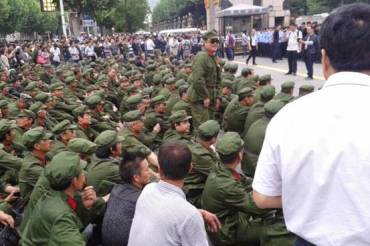
PLA veterans stage a sit-down protest outside government offices in Hubei province on May 4, 2015.

They’d not drunk together since they were in the same army unit, fighting skirmishes with Vietnamese forces in the aftermath of a 1979 border war.

Now in their 50s, they’d come here shortly before an annual parliament meeting in March to fight a different kind of battle – to demand the welfare support that they say was promised to them, and millions of other veterans, on leaving the armed forces years ago.

The four veterans, all from the southern province of Hunan, are an example of the problem facing President Xi Jinping as he prepares to lay off 300,000 out of 2.3 million troops in the biggest restructuring of the People’s Liberation Army, or PLA, since the 1950s.

China already has at least six million PLA veterans on state welfare, thousands of whom have staged well-organized protests in recent years over what they see as insufficient government support. Traditionally the government has offered subsidies to former soldiers and reserved slots for them at state-run companies, though many veterans say officials don’t follow through or that the perks aren’t enough to make ends meet.

Now, with an economic slowdown threatening to cause millions of state sector layoffs, prominent military figures have warned that veterans’ protests could escalate if the government can’t provide jobs or sufficient welfare support for the 300,000 being laid off.

One of the largest veterans’ protests was in June last year when several thousand, mostly veterans of China’s war with Vietnam, wearing uniforms and medals, protested outside offices of the Central Military Commission, which commands the armed forces and is headed by Mr. Xi.

A month earlier, there was another big veterans’ protest outside a Beijing courthouse. Smaller demonstrations occur frequently in other cities, according to experts who monitor them.

Many other veterans have tried to sue the government or lodge formal petitions, as the four in the restaurant did. Before lunch, they said, they’d submitted one at a nearby building that houses the petitions office of the Central Military Commission.

Officials there took the petition and scanned their identity cards, but gave them neither a receipt nor a reply, they said. “They just told us to go back where we came from,” said one of the four, a 54-year-old former worker in a coal-washing plant. “We got the feeling it was useless to go there.”

Source: As China’s Economy Slows, Unrest Among Veterans Rises – China Real Time Report – WSJ

26/04/2016

China Bans Some New Coal Power Plants – China Real Time Report – WSJ

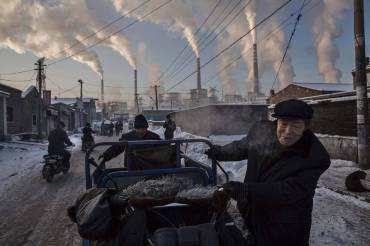
China Bans Some New Coal Power Plants A coal-fired power plant in Shanxi, China. Beijing has announced a ban on new coal plants in areas with surplus power supply.

Beijing has announced a ban on new coal plants in areas with surplus power supply.

China’s government is banning construction of new coal-fired power plants in areas with surplus power supply, a move that could weigh on already-struggling coal markets. As WSJ’s Brian Spegele reports:

The new measures outlined Monday by China’s top economic planner, the National Development and Reform Commission, underscore the central government’s deep concern with overcapacity across China’s economy, a result of weakening industrial demand as growth slows.

Beijing has previously said it aimed to curb thermal power overcapacity; analysts said the fact that it now came from an official NDRC communiqué was the clearest signal yet that it won’t tolerate new coal capacity in regions that already have excess supply.

Weaker demand for coal inside China could ultimately lead to higher exports, which would exacerbate the huge supplies of coal sloshing around global markets. The higher supplies could drive down global benchmark prices and hit the bottom lines of major U.S. and international coal producers.

The global commodities downturn has proven particularly tough on global coal companies. St. Louis-based Peabody Energy Corp. and Arch Coal Inc. are among the large U.S. miners to file for chapter 11 bankruptcy protections in recent months. The U.S. sector has shed 31,000 jobs since 2009.

Source: China Bans Some New Coal Power Plants – China Real Time Report – WSJ

01/04/2016

Beware the cult of Xi | The Economist

Xi Jinping is stronger than his predecessors. His power is damaging the country

“IF OUR party can’t even handle food-safety issues properly, and keeps on mishandling them, then people will ask whether we are fit to keep ruling China.” So Xi Jinping warned officials in 2013, a year after he became the country’s leader. It was a remarkable statement for the chief of a Communist Party that has always claimed to have the backing of “the people”. It suggested that Mr Xi understood how grievances about official incompetence and corruption risked boiling over. Mr Xi rounded up tens of thousands of erring officials, waging a war on corruption of an intensity not seen since the party came to power in 1949. Many thought he was right to do so.

Today, however, China is enduring its biggest public-health scandal in years. Tens of millions of dollars-worth of black-market, out-of-date and improperly stored vaccines have been sold to government health centres, which have in turn been making money by selling them to patients.

Mr Xi’s anti-graft war has often made little difference to ordinary people. Their life—and health—is still blighted by corruption. In recent days there have also been signs of discontent with Mr Xi among the elite: official media complaining openly about reporting restrictions, a prominent businessman attacking him on his microblog, a senior editor resigning in disgust.

Mr Xi has acquired more power than any Chinese leader since Mao Zedong. It was supposed to let him get things done. What is going wrong?

Credibility gap

In fairness, Mr Xi was bound to meet with hostility. Many officials are angry because he has ripped up the compact by which they have operated and which said that they could line their pockets, so long as corruption was not flagrant and they did their job well. But Mr Xi has also found that the pursuit of power is all-consuming: it does not leave room for much else. In three and a half years in charge, he has accumulated titles at an astonishing pace. He is not only party leader, head of state and commander-in-chief, but is also running reform, the security services and the economy. In effect, the party’s hallowed notion of “collective” leadership (see article) has been jettisoned.

Mr Xi is, one analyst says, “Chairman of Everything”. At the same time, he has flouted the party’s ban on personality cults, introduced in 1982 to prevent another episode of Maoist madness. Official media are filled with fawning over “Uncle Xi” and his wife, Peng Liyuan, a folk-singer whom flatterers call “Mama Peng”. A video, released in March, of a dance called “Uncle Xi in love with Mama Peng” has already been viewed over 300,000 times. There have been rumours recently that Mr Xi feels some of this has been going a bit far. Some of the most toadying videos, such as “The east is red again” (comparing Mr Xi to Mao), have been scrubbed from the internet. Many would take that as a sign that the personality cult is little more than harmless fun.

Mr Xi is no Mao, whose tyrannical nature and love of adulation were so great that he blithely led the country into the frenzy and violence of the Cultural Revolution. Although some older Chinese squirm at a style of politics so reminiscent of days long past, there is no suggestion that China is on the brink of another such horror.

More …

No liberal, Xi

More …

Source: Beware the cult of Xi | The Economist

18/03/2016

Deep in a pit | The Economist

COMMUNIST Party give us back our money”, “We want to live, we need to eat!” Such were the slogans daubed on banners that were displayed on March 12th during a protest by thousands of coal miners in the dingy streets of Shuangyashan, a city in Heilongjiang province near the border with Russia.

The demonstrators gathered outside the headquarters of Longmay, the largest mining company in the north-east and Heilongjiang’s biggest state-owned enterprise (SOE). They demanded wages which they said they had not received for at least two months. Some protesters blocked railway lines; others scuffled with police wearing riot gear. Internet censors deleted pictures of the unrest (such as the one shown) as they spread across social media.

The protest was one of the biggest by workers at an SOE for many years. It was an indication of the problems that China’s government will probably face as it seeks to cut excess capacity among SOEs like Longmay and reduce their enormous losses. In February the labour minister, Yin Weimin, said that 1.3m coal workers and 500,000 steel workers could lose their jobs over the next five years.

Other estimates say 3m-5m people may be thrown out of work in these industries as well as in aluminium production and glassmaking. That is far fewer than the tens of millions who lost their jobs during SOE restructuring in the late 1990s. But the economies of some cities, including Shuangyashan, are driven by a handful of large SOEs. In these, downsizing will be traumatic and possibly turbulent.

Labour unrest is rising everywhere as economic growth slows (see chart). Many firms, like Longmay, are reacting to financial distress by paying wages late or not at all. According to China Labour Bulletin, a Hong Kong-based NGO, there were 2,700 strikes last year, twice the number in 2014. In the two months leading up to China’s lunar new-year holiday in early February, there were over 1,000 strikes and protests, 90% of them related to the non-payment of wages. Three days after the protest in Shuangyashan, an almost equally large one began at Tonghua Steel in neighbouring Jilin province, also over wage arrears.

In Shuangyashan (its name, meaning Double Duck Mountains, refers to the shape of two nearby peaks), the authorities have tried to soothe the protesters by giving them overdue pay. Some mine workers say they have now begun receiving their salaries for January, and that they have been assured their pay packets for February will be coming soon. But the government remains nervous of further unrest. On March 15th police were still ubiquitous, on the streets of Shuangyashan as well as outside a nearby mine. In the city centre, a row of women who said the men in their families all worked in mines sat holding placards offering their services as cleaners or house painters. “We have no money to eat. What do they expect us to do?” said one woman angrily before being told by police to stop talking. A man who identified himself as a government official followed your correspondent everywhere.

The protests in Shuangyashan were particularly embarrassing for the party, occurring as they did during the 12-day annual session of China’s parliament, the National People’s Congress (NPC), which ended on March 16th. Every year during the NPC session, officials try even more strenuously than usual to prevent street unrest, lest it tarnish the image of political unity and national prosperity that they want the NPC to project (see article). Party bosses in Heilongjiang will get their knuckles rapped by leaders in Beijing for failing to anticipate this outbreak, which followed months of grumbling among Longmay’s workers about lay-offs and overdue pay. In September, the company said it would shed 100,000 of its 240,000 staff.

Source: Deep in a pit | The Economist

18/03/2016

Here comes the modern Chinese consumer – McKinsey & Co

Despite concerns about economic growth, the country’s consumers keep spending. Yet our latest survey reveals changes in what they’re buying and how they’re buying it.

Cooling economic growth, a depreciating currency, and a gyrating stock market are making political and business leaders concerned that China’s economic dream may be ending. Yet Chinese consumers remain upbeat. In fact, consumer confidence has been surprisingly resilient over the past few years as salaries have continued to rise and unemployment has stayed low.


However, our latest survey of Chinese consumers reveals significant change lurks beneath the surface. Reflecting 10,000 in-person interviews with people aged 18 to 56 across 44 cities, our 2016 China consumer report found that the days of broad-based market growth are coming to an end. Consumers are becoming more selective about where they spend their money, shifting from products to services and from mass to premium segments. They are seeking a more balanced life where health, family, and experiences take priority. The popularity of international travel is astounding among Chinese consumers, as is their adoption of trends such as mobile payments. And despite many similarities, consumer behavior can vary significantly among the country’s 22 city clusters.

In short, our latest research suggests we are witnessing the modernization of the Chinese consumer, and that will only make the market more challenging for consumer-goods companies. But for those able to get it right, the rewards may be substantial. In this article, we’ll examine the evolving behavior of Chinese consumers through three lenses: how willing they are to spend, what they are buying, and where they are buying.

How willing they are to spend

When asked about their expectations regarding future income, 55 percent of consumers we interviewed were confident their income would increase significantly over the next five years—just two percentage points lower than in 2012. (By comparison, just 32 percent of consumers in the United States and 30 percent in the United Kingdom agreed with the same statement in 2011.)

That’s not to say that Chinese consumers are unaware of the deteriorating condition of the economy. A growing number are seeking to save and invest, and we found differences in consumer confidence widening at a regional level. While confidence about income growth during the next five years rose to 70 percent in the Xiamen–Fuzhou city cluster, for example, it decreased to as little as 35 percent in Liao Central.

What they are buying

We found that consumers are generally becoming more selective about their spending. They are allocating more of their income to lifestyle services and experiences—over half plan to spend more on leisure and entertainment (the 50 percent surge in box-office receipts in the past year is just one indicator of that trend). At the same time, spending on food and beverages for home consumption is stagnating or even declining.

Chinese consumers are also increasingly trading up from mass products to premium products: we found that 50 percent now seek the best and most expensive offering, a significant increase over previous years. It’s no surprise that the growth of premium segments is outpacing that of the mass and value segments, and foreign brands still hold a leadership position in that premium market. What’s more, a rising proportion of Chinese consumers focus on a few brands, and some are becoming loyal to single brands. The number of consumers willing to switch to a brand outside their “short list” dropped sharply. In apparel, for instance, the number of consumers willing to consider a brand they hadn’t before dropped from about 40 percent in 2012 to just below 30 percent in 2015.

Becoming part of the closed set of the few brands that consumers consider, or even the one brand that consumers prefer, is increasingly challenging. Fewer consumers are open to new brands, and promotions are becoming less effective at encouraging consumers to consider them.

With a few notable exceptions, such as Huawei’s growing share of the premium-smartphone market, Chinese brands have not gained much traction in many premium segments, such as skincare, cars, sports, and fashion. That contrasts starkly with the mass segment of the market, where local brands are winning market share from foreign incumbents by offering a much stronger product proposition.

Where they are buying

Although China is the world’s largest e-commerce market—generating revenue of about 4 trillion renminbi ($615 billion) last year, around the same as Europe and the United States combined—and consumers increasingly purchase online, physical stores remain important. Consumers engage with brands both online and offline, and satisfaction with physical stores remains higher than with online ones. But the gap is narrowing, especially as satisfaction with hypermarkets declines.

One trend that is helping maintain interest in physical stores is “retailtainment.” Two-thirds of Chinese consumers say that shopping is the best way to spend time with family, an increase of 21 percent compared with three years ago. Malls—which combine shopping, dining, and entertainment experiences the entire family can enjoy—have benefited most from this trend, at the expense of big-box retail outlets such as department stores and hypermarkets.

Consumers also reinforce family ties through travel: 74 percent of consumers say it helps them to better connect with family, and 45 percent of international trips were taken with family in 2015, compared with 39 percent in 2012. More than 70 million Chinese consumers traveled overseas in 2015, making 1.5 trips on average, and shopping is integral to this experience. Some 80 percent of consumers have made overseas purchases, and nearly 30 percent actually base their choice of a travel destination on shopping opportunities. Among international travelers, around half of their watch and handbag purchases are made overseas, while apparel and cosmetics are the most frequently purchased categories.

Overall, Chinese consumers are adopting new products, services, and retail experiences at rates unseen in developed markets. To take one example, mobile-payment penetration in China went from zero in 2011 to 25 percent of the population in 2015. At the same time, there are still differences in how Chinese consumers in various regions spend. While new highways, high-speed-rail links, and mobile Internet access have strengthened connectivity between neighboring clusters over the past few years, we found that differences across the country’s 22 geographic clusters1have grown even more pronounced. For instance, 35 percent of consumers in the Shanghai city cluster have purchased apparel online in the past six months, compared with just 4 percent of consumers in the Chengdu city cluster.

The Chinese consumer is evolving. Gone are the days of indiscriminate spending on products. The focus is shifting to prioritizing premium products and living a more balanced, healthy, and family-centric life. Understanding and responding to these changes in spending habits will be decisive in determining the companies that win or lose, whether international or domestic competitors. And while scale, speed, and simplicity proved advantageous in the past 15 to 20 years, the changing shape of Chinese consumption seems sure to topple some giants of the past and elevate new champions. Which will your company be?

Source: http://www.mckinsey.com/Industries/Retail/Our-Insights/Here-comes-the-modern-Chinese-consumer?cid=other-eml-alt-mip-mck-oth-1603

05/03/2016

China lays out its vision to become a tech power | Reuters

China aims to become a world leader in advanced industries such as semiconductors and in the next generation of chip materials, robotics, aviation equipment and satellites, the government said in its blueprint for development between 2016 and 2020.

In its new draft five-year development plan unveiled on Saturday, Beijing also said it aims to use the internet to bolster a slowing economy and make the country a cyber power.

China aims to boost its R&D spending to 2.5 percent of gross domestic product for the five-year period, compared with 2.1 percent of GDP in 2011-to-2015.

Innovation is the primary driving force for the country’s development, Premier Li Keqiang said in a speech at the start of the annual full session of parliament.

China is hoping to marry its tech sector’s nimbleness and ability to gather and process mountains of data to make other, traditional areas of the economy more advanced and efficient, with an eye to shoring up its slowing economy and helping transition to a growth model that is driven more by services and consumption than by exports and investment.

This policy, known as “Internet Plus”, also applies to government, health care and education.

As technology has come to permeate every layer of Chinese business and society, controlling technology and using technology to exert control have become key priorities for the government.

China will implement its “cyber power strategy”, the five-year plan said, underscoring the weight Beijing gives to controlling the Internet, both for domestic national security and the aim of becoming a powerful voice in international governance of the web. China aims to increase Internet control capabilities, set up a network security review system, strengthen cyberspace control and promote a multilateral, democratic and transparent international Internet governance system, according to the plan.

Source: China lays out its vision to become a tech power | Reuters

Law of Unintended Consequences

continuously updated blog about China & India

ChiaHou's Book Reviews

continuously updated blog about China & India

What's wrong with the world; and its economy

continuously updated blog about China & India