Posts tagged ‘China’

30/12/2012

* China expands pollution monitoring to biggest cities

Reuters: “China plans to release hourly air pollution monitoring data in 74 of its biggest cities starting on New Year’s Day, state media said on Sunday, in a sign of increasing responsiveness to quality-of-life concerns among prosperous urban people.

Choking pollution and murky grey skies in Chinese cities is a top gripe among both Chinese and expatriates.

Microscopic pollutant particles in the air have killed about 8,600 people prematurely this year and cost $1 billion in economic losses in Beijing, Shanghai, Guangzhou and Xi’an, according to a study by Beijing University and Greenpeace that measured the pollutant levels of PM2.5, or particles smaller than 2.5 micrometers in diameter.

The new monitoring will include not only PM2.5, but also sulfur dioxide, nitrogen dioxide, ozone and carbon monoxide, the Xinhua news agency said, citing a Friday announcement by the Ministry of Environmental Protection.”

via China expands pollution monitoring to biggest cities | Reuters.


30/12/2012

* China’s transport improves, faces pressure: minister

Ever more infrastructure.

Xinhua: “Some 87,000 kilometers of new highways opened in China in 2012, marking a record-high year-on-year growth rate, a senior transport official said Saturday.

Minister of Transport Yang Chuantang said 11,000 km of the new highways are expressways. In addition to building new highways, China has also improved 194,000 km of rural roads this year, according to Yang.

“China’s transport sector has seen historic changes during the past decade,” said Yang, adding that the total length of highways in operation is expected to reach 4.1 million km by the end of this year.

However, Yang also said China’s transport capacity remains insufficient, considering the booming demand created by the country’s industrialization and urbanization.

To meet mounting demand, Yang said China will continue to intensify transport facility construction and try to make these facilities more durable and reliable.

China will also make efforts to improve transport facilities in rural areas as well as those in the country’s central and western regions, he said.

At the same time, China will improve road safety by taking measures to prevent serious transport accidents, Yang said.”

via China’s transport improves, faces pressure: minister – Xinhua | English.news.cn.

See also: https://chindia-alert.org/economic-factors/chinas-infrastructure/

30/12/2012

* Xinhua unveils top 10 domestic events of 2012

Xinhua News Agency on Saturday unveiled its list of the year’s 10 most attention-grabbing events in China.

“The events are as follows, in chronological order:

01 China cuts 2012 GDP growth target

At its annual session in March, the National People’s Congress, China’s parliament, adopted the government work report, in whichgrowth - Ind vs Ch the country lowered its GDP growth target to 7.5 percent this year after keeping it at around 8 percent for seven consecutive years. The change was made in the face of global turbulence and pressing domestic demand for economic restructuring.

02 Medical reform meets three-year target

The State Council in March issued an implementation plan for reforms in the health and medical care sector in the next three years. According to official statistics, as of the end of 2011 the basic medicare insurance system covered over 1.3 billion people in China, more than 95 percent of the total population, marking the realization of the previous three-year target for the 2009-2011 period to form a universal medicare system.


03 Bo Xilai under investigation; Wang Lijun convicted

The Central Committee of the Communist Party of China (CPC) on April 10 decided to suspend Bo Xilai’s membership in the CPC Bo & GuCentral Committee Political Bureau and the CPC Central Committee, as he was suspected of being involved in serious discipline violations in the cases of Wang Lijun and Bogu Kailai. The CPC Central Commission for Discipline Inspection put him under investigation. Bo was later expelled from the CPC and public office and the case was turned over to prosecutors for investigation.
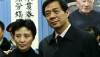
In August, Bogu Kailai was sentenced to death with a two-year reprieve for intentional homicide by the Hefei City Intermediate People’s Court in Anhui Province.

In September, Wang Lijun was sentenced to 15 years in prison for bending the law to selfish ends, defection, abuse of power and bribe-taking by the Chengdu City Intermediate People’s Court.

04 China vigorously protects maritime rights

SoChinaSeaIn response to some foreign countries’ actions infringing upon China’s maritime rights and interests in the South China Sea and East China Sea, China has vigorously launched campaigns to protect its legitimate rights.

Since April, China has dispatched government ships and planes to monitor Huangyan Island in the South China Sea.

Five months later, the Chinese government announced the base points and baselines of the territorial waters of the Diaoyu Islands and their affiliated islets and started continuous patrols in waters around the Diaoyu Islands.

In December, China reiterated its claims in the East China Sea by presenting to the UN Secretariat its Partial Submission Concerning the Outer Limits of the Continental Shelf beyond 200 Nautical Miles in the East China Sea.

05 China’s first female astronaut participates in successful manned space docking mission

In June, China sent three astronauts, including the country’s first female astronaut, Liu Yang, into space for the nation’s manned Liu Yang, China's first female astronaut, waves during a departure ceremony at Jiuquan Satellite Launch Center, Gansu province, June 16space docking mission.

The three astronauts successfully completed an automatic and a manual docking between the Shenzhou-9 spacecraft and the orbiting Tiangong-1 lab module in space before making a safe return to Earth.

06 Manned submersible sets new national dive record

Chinese submersible breaks 7,000m mark Also in June, China’s manned submersible, the Jiaolong, set a new national dive record after reaching 7,062 meters below sea level during its fifth dive in the Mariana Trench in the Pacific Ocean.


07 First aircraft carrier commissioned

In September, China’s first aircraft carrier, the Liaoning, was delivered to the People’s Liberation Army Navy and put into commission after years of refitting and sea trials. Last month, the country successfully conducted flight landing exercises on the aircraft carrier, where the home-grown J-15 fighter jet made its debut in a landing and take-off exercise.

08 New CPC leadership and new targets

Xi & LiThe CPC convened its 18th National Congress between Nov. 8 and 14, when the Party’s new leadership was elected, including Xi Jinping, who was elected general secretary of the CPC Central Committee. The congress also set new targets for the country such as efforts to complete the building of a moderately prosperous society in all respects.

09 Full coverage of pension scheme

The Ministry of Human Resources and Social Security announced in November that China’s urban and rural pension insurance systems covered 459 million people at the end of October and that as many as 125 million elderly people receive monthly pensions. The State Council had previously decided to make pension insurance available for everyone in urban and rural areas.

10 New CPC leadership rejects extravagance, bureaucracy
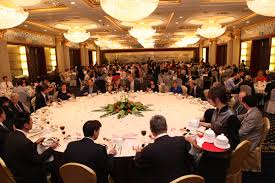
The newly-elected leadership of China’s ruling party has pledged to reject extravagance and reduce bureaucratic visits and meetings, in a bid to win the people’s trust and support.

In a meeting of the Political Bureau of the CPC Central Committee on Dec. 4, members vowed to shorten meetings and documents, reject bureaucratism in domestic and overseas visits, reduce road closures for official activities and support more practical content in news reports. The leaders also promised to take the lead in putting these requirements into practice.”

via Xinhua unveils top 10 domestic events of 2012 – Xinhua | English.news.cn.

30/12/2012

* Taiwan’s Fubon says to buy China bank stake for $1 billion

Another reason why China and Taiwan will try their utmost not to go to war.

Reuters: “Fubon Financial (2881.TW), one of the most aggressive Taiwanese financial firms expanding into the Chinese market, said on Thursday it will buy an 80 percent stake in China’s Firstsino Bank for 6.45 billion yuan ($1.03 billion).

Map of the Taiwan Strait

Map of the Taiwan Strait (Photo credit: Wikipedia)

The acquisition would be another sign that banking links across the Taiwan Straits are strengthening. Taiwan’s financial companies are keen to tap the huge mainland market as trade ties between the former political foes boom, helping them move beyond a saturated domestic market.

“It will help us build a complete platform in Greater China, paving the way to enter the fast-growing areas in China,” Fubon said in a statement, adding that the purchase is subject to regulatory approvals from both sides.”

via Taiwan’s Fubon says to buy China bank stake for $1 billion | Reuters.

30/12/2012

* Beijing to enact strict new food safety laws

Yet more reforms by the new government, this time in food safety.

Xinhua/Reuters: “Beijing will introduce tough new laws to punish firms that flout food safety laws, the official Xinhua news agency reported, a significant move in China’s struggle to get its abysmal food safety record under control.

The announcement follows a similar declaration by the city of Shanghai on Wednesday saying it would blacklist firms that flout food safety laws.

Under the new Beijing regulations, to take effect in April, firms caught producing or selling unsafe foods will be banned from operating in Beijing for life, according to a municipal food safety regulation passed on Thursday, the report said.

Employees found responsible for food safety problems and the executives of companies that commit food safety problems will not be allowed to work in the industry for five years after their firms’ licenses are revoked, the report said.

China’s food safety problems have proven difficult to eradicate even after repeated government campaigns to enforce standing laws and change attitudes at Chinese companies.

Frequent media reports refer to cooking oil being recycled from drains, carcinogens in milk, and fake eggs. In 2008, milk laced with the industrial chemical melamine killed at least six children and sickened nearly 300,000.

On Monday, Shanghai’s food safety authority said the level of antibiotics and steroids in Yum Brands Inc‘s KFC chicken was within official limits, but found a suspicious level of an antiviral drug in one of the eight samples tested.

Yum! Brands logo

Yum! Brands logo (Photo credit: Wikipedia)

Yum faced criticism last week from China’s state-owned broadcaster, which said Yum’s KFC chickens in China contained an excessive level of antibiotics.”

via Beijing to enact strict new food safety laws: Xinhua | Reuters.

See also:

30/12/2012

* China tightens loophole on hiring temporary workers

Further labour reform is being implemented. This set will make China more progressive than many western countries!

Reuters: “China amended its labor law on Friday to ensure that workers hired through contracting agents are offered the same conditions as full employees, a move meant to tighten a loophole used by many employers to maintain flexible staffing.

A worker welds steel bars at a construction site for a new train station in Ningbo, Zhejiang province, December 6, 2012. REUTERS/China Daily

Contracting agencies have taken off since China implemented the Labor Contract Law in 2008, which stipulates employers must pay workers’ health insurance and social security benefits and makes firing very difficult.

“Hiring via labor contracting agents should be arranged only for temporary, supplementary and backup jobs,” the amendment reads, according to the Xinhua news agency. It takes effect on July 1, 2013.

Contracted laborers now make up about a third of the workforce at many Chinese and multinational factories, and in some cases account for well over half.

Some foreign representative offices, all news bureaus and most embassies are required to hire Chinese staff through employment agencies, rather than directly.

Under the amendment, “temporary” refers to durations of under six months, while supplementary workers would replace staff who are on maternity or vacation leave, Kan He, vice chairman of the legislative affairs commission of the National People’s Congress standing committee, said at a press conference to introduce the legislation.

The main point is that contracting through agencies should not become the main channel for employment, he said, acknowledging that the definition of backup might differ by industry.

“In order to prevent abuse, the regulations control the total numbers and the proportion of workers that can be contracted through agencies and companies cannot expand either number or proportion at whim,” Kan said.

“The majority of workers at a company should be under regular labor contracts.”

Although in theory contracted or dispatch workers are paid the same, with benefits supplied by the agencies who are legally their direct employers, in practice many contracted workers, especially in manufacturing industries and state-owned enterprises, do not enjoy benefits and are paid less.

Employment agencies have been set up by local governments and even by companies themselves to keep an arms-length relationship with workers. Workers who are underpaid, fired or suffer injury often find it very difficult to pursue compensation through agencies.

China would increase inspections for violations, Kan said, including the practice of chopping a longer contract into several contracts of shorter duration to maintain the appearance of “temporary” work.”

via China tightens loophole on hiring temporary workers | Reuters.

30/12/2012

* Signs of Changes Taking Hold in Electronics Factories in China

Labour reforms, urged by major western firms whose products are outsourced to China are beginning to be felt.  However, one aspect, that of reduced overtime, is not welcome by many workers who would rather earn more even at the cost of leisure and health.

NY Times: “One day last summer, Pu Xiaolan was halfway through a shift inspecting iPad cases when she received a beige wooden chair with white stripes and a high, sturdy back.

At first, Ms. Pu wondered if someone had made a mistake. But when her bosses walked by, they just nodded curtly. So Ms. Pu gently sat down and leaned back. Her body relaxed.

The rumors were true.

When Ms. Pu was hired at this Foxconn plant a year earlier, she received a short, green plastic stool that left her unsupported back so sore that she could barely sleep at night. Eventually, she was promoted to a wooden chair, but the backrest was much too small to lean against. The managers of this 164,000-employee factory, she surmised, believed that comfort encouraged sloth.

But in March, unbeknown to Ms. Pu, a critical meeting had occurred between Foxconn’s top executives and a high-ranking Apple official. The companies had committed themselves to a series of wide-ranging reforms. Foxconn, China’s largest private employer, pledged to sharply curtail workers’ hours and significantly increase wages — reforms that, if fully carried out next year as planned, could create a ripple effect that benefits tens of millions of workers across the electronics industry, employment experts say.

Other reforms were more personal. Protective foam sprouted on low stairwell ceilings inside factories. Automatic shut-off devices appeared on whirring machines. Ms. Pu got her chair. This autumn, she even heard that some workers had received cushioned seats.

The changes also extend to California, where Apple is based. Apple, the electronics industry’s behemoth, in the last year has tripled its corporate social responsibility staff, has re-evaluated how it works with manufacturers, has asked competitors to help curb excessive overtime in China and has reached out to advocacy groups it once rebuffed.

Executives at companies like Hewlett-Packard and Intel say those shifts have convinced many electronics companies that they must also overhaul how they interact with foreign plants and workers — often at a cost to their bottom lines, though, analysts say, probably not so much as to affect consumer prices. As Apple and Foxconn became fodder for “Saturday Night Live” and questions during presidential debates, device designers and manufacturers concluded the industry’s reputation was at risk.

“The days of easy globalization are done,” said an Apple executive who, like many people interviewed for this article, requested anonymity because of confidentiality agreements. “We know that we have to get into the muck now.”

Even with these reforms, chronic problems remain. Many laborers still work illegal overtime and some employees’ safety remains at risk, according to interviews and reports published by advocacy organizations.

But the shifts under way in China may prove as transformative to global manufacturing as the iPhone was to consumer technology, say officials at over a dozen electronics companies, worker advocates and even longtime factory critics.

“This is on the front burner for everyone now,” said Gary Niekerk, a director of corporate social responsibility at Intel, which manufactures semiconductors in China. No one inside Intel “wants to end up in a factory that treats people badly, that ends up on the front page.”

The durability of many transformations, however, depends on where Apple, Foxconn and overseas workers go from here. Interviews with more than 70 Foxconn employees in multiple cities indicate a shift among the people on iPad and iPhone assembly lines. The once-anonymous millions assembling the world’s devices are drawing lessons from the changes occurring around them.

As summer turned to autumn and then winter, Ms. Pu began to sign up for Foxconn’s newly offered courses in knitting and sketching. At 25 and unmarried, she already felt old. But she decided that she should view her high-backed chair as a sign. China’s migrant workers are, in a sense, the nation’s boldest risk-takers, transforming entire industries by leaving their villages for far-off factories to power a manufacturing engine that spans the globe.

Ms. Pu had always felt brave, and as this year progressed and conditions inside her factory improved, she became convinced that a better life was within reach. Her parents had told her that she was free to choose any husband, as long as he was from Sichuan. Then she found someone who seemed ideal, except that he came from another province.

Reclining in her new seat, she decided to ignore her family’s demands, she said. The couple are seeing each other.

“There was a change this year,” she said. “I’m realizing my value.””

via Signs of Changes Taking Hold in Electronics Factories in China – NYTimes.com.

30/12/2012

* Corrupt Chinese Officials Draw Unusual Publicity

Yet more evidence that the new leadership is serious when declaring that corruption must be stopped.

NY Times: ““Something has shifted,” said Zhu Ruifeng, a Beijing journalist who has exposed more than a hundred cases of alleged corruption on his Web site, including the lurid exertions of Mr. Lei. “In the past, it might take 10 days for an official involved in a sex scandal to lose his job. This time he was gone in 66 hours.”

————————————————————————————

The Chinese have become largely inured to tales of voracious officials stockpiling luxury apartments, $30,000 Swiss watches or enough stolen cash to buy their mistress a Porsche.

But when images of a bulbous-faced Communist Party functionary in southwest China having sex with an 18-year-old girl spread on the Internet late last month, even the most jaded citizens took note — as did the local party watchdogs who ordered his dismissal.

These have been especially nerve-racking times for Chinese officials who cheat, steal and bribe. Since the local bureaucrat, Lei Zhengfu, became an unwilling celebrity here, a succession of others have been publicly exposed. And despite the usual cries of innocence, most have been removed from office while party investigators sort through their bedrooms and bank accounts.

In the weeks since the Communist Party elevated a new slate of top leaders, the state media, often fed by freelance vigilantes, have been serving up a head-spinning collection of scandals.

Highlights include a deputy district official in Shanxi Province who fathered 10 children with four wives; a prefecture chief from Yunnan with an opium habit who managed to accumulate 23 homes, including 6 in Australia; and a Hunan bureaucrat with $19 million in unexplained assets who once gave his young daughter $32,000 in cash for her birthday.

“The anticorruption storm has begun,” People’s Daily, the party mouthpiece, wrote on its Web site this month.

The flurry of revelations suggests that members of China’s new leadership may be more serious than their predecessors about trying to tame the cronyism, bribery and debauchery that afflict state-run companies and local governments, right down to the outwardly dowdy neighborhood committees that oversee sanitation. Efforts began just days after Xi Jinping, the newly appointed Communist Party chief and China’s incoming president, warned that failing to curb corruption could put the party’s grip on power at risk.””

via Corrupt Chinese Officials Draw Unusual Publicity – NYTimes.com.

30/12/2012

* Chinese state secrets revealed: Details of leaders’ families

Is this the first signs of China’s ‘glasnost’?

Straits Times: “China’s top two leaders have revealed photographs and details of their families, breaking a long-held taboo where such information is considered a state secret.

A picture taken in 1988 shows a young Mr Xi (above), then the secretary of the&nbsp;Ningde Prefecture Committee of the Communist Party, participating in farm work&nbsp;during a visit to the countryside in Fujian province. -- PHOTO: XINHUA<br />

In a surprise move, clearly aimed at boosting their public support, the official Xinhua news agency released previously unpublished photographs of Communist Party chief Xi Jinping and incoming premier Li Keqiang late on Sunday night.

It also carried lengthy profiles that chronicled their careers from early grassroots days up to their recent activities since taking over the helm of the Communist Party last month.

But what struck observers most was the information on the pair’s families, including what is believed to be the first mention in state media of the name of Mr Xi’s daughter.”

via Chinese state secrets revealed: Details of leaders’ families.

30/12/2012

* China Pledges Rural Reforms to Boost Incomes, Consumption

Another angle on narrowing the wealth gap.

Bloomberg: “China said it will better protect farmers’ land rights and boost rural incomes and public services to help narrow the divide with urban areas.

China Pledges Land Reforms to Boost Incomes as Wealth Gap Grows

A farmer works in a field in Pinggu, on the outskirts of Beijing. Photographer: Tomohiro Ohsumi/Bloomberg

The government will increase agricultural subsidies and ensure “reasonable returns” from planting crops, the official Xinhua news agency reported on Dec. 22, citing an annual work conference to set rural policy.

The goals, which include increasing rural incomes by at least as much as those in urban areas, reflect a new leadership’s focus on reforming the land system and addressing wealth disparities as it encourages migration into towns and cities to boost consumption. Li Keqiang, set to take over from Wen Jiabao as premier in March, is championing urbanization as a growth engine.

“A completely new policy approach is emerging under Li Keqiang,” said Yuan Gangming, a researcher in Beijing with the Chinese Academy of Social Sciences. “It’s about giving farmers a bigger share from land deals, it’s about changing local governments’ reliance on revenues from land, and it’s ultimately about a fairer system of sharing China’s economic growth.”

Yuan said he expects the government to be appointed in March to announce “a slew of policy initiatives” from changes to the household registration, or hukou, system to trading in land-use rights as part of Li’s urbanization drive.

The Shanghai Composite Index closed up 0.3 percent. Some Asian markets are closed today, while trading hours are restricted in some others.”

via China Pledges Rural Reforms to Boost Incomes, Consumption – Bloomberg.

Law of Unintended Consequences

continuously updated blog about China & India

ChiaHou's Book Reviews

continuously updated blog about China & India

What's wrong with the world; and its economy

continuously updated blog about China & India