Posts tagged ‘China’

05/03/2015

5 Takeaways From China’s State-of-the-Nation Speech – WSJ

With a state-of-the-nation speech, Chinese Premier Li Keqiang announced an era of slower growth, saying “China’s economic development has entered a new normal.” The nearly 100-minute speech inside Beijing’s Great Hall of the People on Thursday outlined the Chinese government priorities for the coming year. The overriding imperative: generating enough growth to keep people happy while the government guides a transition away from smokestack industries to services.   

1 China’s ‘new normal’ is slower, but not slow.

The lowered growth target of about 7% is the lowest in over a decade, but still — Chinese state media reminded — fast for a major economy. A willingness to see an economic free-fall after years of heady growth it isn’t. Mr. Li several times cited the need to keep the economy humming along. He said maintaining “medium-high-level growth” is crucial to boosting living standards, creating jobs and finding new growth drivers.

2 Is smaller better?

While China’s large and often unpopular state enterprises typically capture a large share of bank loans and other government support, Mr. Li gave more than a shout-out to small businesses. He promised to make it easier to start new businesses and encourage people to do so. It isn’t so much an ideological retreat from state control to the private sector. The reason, he said, is that China needs to create jobs and smaller businesses do that.

3 The government isn’t going away

For all the progress, China’s government still believes strongly in the state’s hand over the invisible hand. The deficit is being widened – to 2.3% of gross domestic product from 2.1% – to spend more money to create growth. Big infrastructure projects are still in vogue, with the government promising 800 billion yuan (about $127.6 billion) for new railways and a similar amount for water projects. One of President Xi Jinping’s pet projects, a bevy of cross-border infrastructure projects to bind neighboring economies to China’s orbit known as the new Silk Road, received three mentions.

4 What about the environment?

Expected to be a hot topic, the environment didn’t feature highly in government priorities. Last year, Mr. Li vowed to “declare war on pollution” in a bow to rising middle-class complaints about noxious air, especially in Beijing. A documentary by a former state TV reporter released last weekend went viral. Mr. Li’s speech, however, offered tinkering on already-laid plans. Energy intensity – a measure of energy used to create economic growth – is to be cut 3.1%, lower than last year’s 4.8% but enough to reach a long-term target.

5 China still has a long way to go.

For all China’s tremendous success in becoming an economic powerhouse, income gaps are wide and many people — especially in rural areas — struggle. These government reports are a good reminder of that. This year, Mr. Li said, 60 million more rural Chinese will get access to safe drinking water. Some 200,000 people live without electricity, though more will get it, he said. The social safety net the government has struggled to build out is still thin. The government’s raising pensions, but even so the lowest basic pension across urban and rural China will be 70 yuan a month, less than $12.

via 5 Takeaways From China’s State-of-the-Nation Speech – WSJ.

05/03/2015

Modi to ramp up help for Indian Ocean nations to counter China influence | Reuters

(Reuters) – Prime Minister Narendra Modi will offer island nations in the Indian Ocean a broad range of military and civilian assistance next week in a bid to wrest back some of the influence China has gained by spending billions of dollars in the region.

Sri Lanka's President Mithripala Sirisena (C) shakes hands with Indian Prime Minister Narendra Modi (R) as his wife Jayanthi Sirisena looks on during Sirisena's ceremonial reception at the forecourt of India's Rashtrapati Bhavan presidential palace in New Delhi February 16, 2015. Sirisena is on a four-day state visit to India. REUTERS/Adnan Abidi

Modi will make the pledges during a visit to Sri Lanka, the Maldives, Mauritius and Seychelles after decades of neglect by successive Indian governments. His trip to Sri Lanka will be the first in 28 years by an Indian prime minister.

China has built seaports, power plants and highways across the small island nations. Its navy has also made forays into the Indian Ocean, including when submarines docked last year in Sri Lanka, rattling New Delhi, which has an uneasy relationship with Beijing.

New Delhi is hoping to tie the islands into a closer security embrace, Indian officials said.

“India has a role as a net security provider in the Indian Ocean region,” said a defence official involved in preparations for Modi’s trip, which begins on March 10. “We are providing patrol ships, surveillance radars and ocean mapping for the island states.”

At the top of Modi’s agenda is Sri Lanka, the tear-shaped island off the southern coast of India where a new government, concerned at Beijing’s growing influence, is reviewing infrastructure contracts the previous administration awarded to China. It has also ruled out additional Chinese submarine visits in the near future.

Modi is expected to tighten defence and security cooperation and push for final approval for a 500 MW power plant to be built by India’s state-run National Thermal Power Corporation under a 2012 agreement in Trincomalee, a strategic port in eastern Sri Lanka, Indian officials said.

The two sides were also in talks to upgrade military training, a Sri Lankan government official said.

via Modi to ramp up help for Indian Ocean nations to counter China influence | Reuters.

04/03/2015

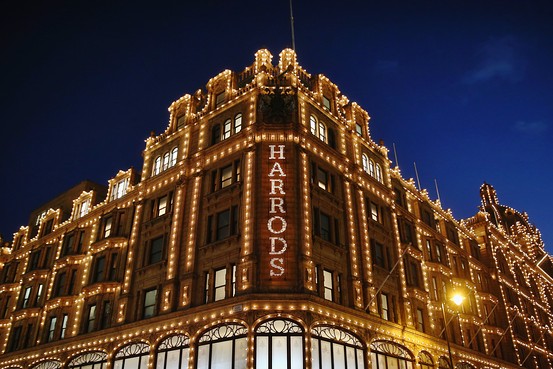
Harrods Hopes Prince William Hoopla in China Will Bring a Boost – China Real Time Report – WSJ

For every five pounds spent by a Chinese tourist in the United Kingdom, just over one quid is spent at upscale department store Harrods.

No wonder, then, that company managing director Michael Ward is in Shanghai this week, hoping the hoopla around Britain’s Prince William’s four-day visit to China will bring even more Chinese shoppers through Harrods’ doors.

“It’s a hugely important part of our business,” Mr. Ward told China Real Time Tuesday. He said such tourists would become increasingly important as outbound tourism from China takes off.

Hong Kong brokerage firm CLSA expects the total number of Chinese outbound travelers to hit 200 million annually in 2020—that’s around double last year’s figures.

Mr. Ward declined to share specific figures for Chinese tourists, but he said by nationality, they top the league of store visitors in terms of spending.

By contrast, Americans barely scraped into the top ten—far behind shoppers from countries such as Nigeria and Thailand, he said.

While Chinese tourists may top the list of spenders at high-end Harrods, a report issued last year by British bank Barclays saBCS -2.61%id Chinese tourists ranked tenth in terms of tourist spending in the U.K, spending around £550 million in 2013 (around $850 million),. Barclay’s forecasted that by 2017, Chinese tourists would have moved up to fifth place with annual total spending in the U.K. in excess of £1 billion.

Still, the chilling effects of China’s current economic woes are being felt in faraway Harrods of London. “This year we’ve seen a much slower takeup,” said Mr. Ward.

via Harrods Hopes Prince William Hoopla in China Will Bring a Boost – China Real Time Report – WSJ.

04/03/2015

Shaolin Monks Put Payment Down on First Foreign Temple – China Real Time Report – WSJ

China’s Shaolin Temple, known for its legendary martial arts, wants to replicate its ancient ways Down Under – and it is prepared to pay up to support its vision.

Abbot Shi Yongxin handed over a check of more than 4 million Australian dollars ($3.13 million) to Joanna Gash, mayor of Shoalhaven, in southeast Australia, clearing the outstanding payment on the sale of a slot of land, according to a statement posted on the coastal city government’s website late last month. The payment is part of an expected US$300 million investment in Australia to open a temple there, the Shaolin Temple’s first outside China.

The deal marks the latest move by Mr. Shi – sometimes called the CEO Monk in China – to extend and commercialize the legend of the ancient Chinese temple. The Shaolin brand, which is managed by the Shaolin Intangible Assets Management Co. Ltd., has set up more than 40 cultural institutions around the globe, Xinhua said.

Mr. Shi himself is a member of Chinese People’s Political Consultative Conference, a national political advisory group that is currently holding its once-a-year meeting in Beijing.

Mr. Shi told the official Xinhua News Agency that the construction of a Shaolin culture center has been kicked off in New South Wales of Australia and will likely be completed next year, Xinhua reported on Tuesday. A preliminary blueprint includes a Buddhist temple, a Kung Fu school, a medical center, a golf course as well as a resort hotel.

via Shaolin Monks Put Payment Down on First Foreign Temple – China Real Time Report – WSJ.

04/03/2015

China hopes novice environment chief will be breath of fresh air | Reuters

One year after “declaring war” on pollution, China has appointed an inexperienced outsider as its new environment minister tasked with breathing life into a massive clean-up campaign that even optimists say will take decades to complete.

A woman covers her nose and mouth with her scarf amid heavy haze, as she rides a bicycle at the Pudong financial area in Shanghai, February 12, 2015.  REUTERS/Aly Song

Beijing has vowed to reverse the damage done to its skies, rivers and soil during China’s three-decade dash for growth, putting its under-resourced environment ministry under pressure to deliver results.

Leading that drive will be Chen Jining, 51, an environmental scientist and president of China’s prestigious Tsinghua University, who was appointed the country’s Minister of Environmental Protection on Friday.

As China’s annual parliament opens this week, Chen will need to show an increasingly angry public that the environment remains one of the top priorities, while reassuring thousands of regional delegates that there is still room for economic growth.

via China hopes novice environment chief will be breath of fresh air | Reuters.

04/03/2015

Colombia detains China Cosco Shipping vessel over illegal arms | Reuters

Colombian authorities detained a vessel operated by China’s largest shipping group for illegally transporting thousands of cannon shells, about 100 tonnes of gunpowder and other materials used to make explosives, the attorney general’s office said.

The Da Dan Xia, operated by Cosco Shipping Co Ltd, was headed for Cuba when it was stopped on Saturday in the northern port of Cartagena, on the Caribbean coast, after the materials were detected during an inspection.

The cargo was listed in the records of the 28,451 deadweight-tonne ship as grain products. The captain of the Hong Kong-flagged vessel had been arrested, the attorney general’s office said.

China’s Foreign Ministry spokeswoman Hua Chunying said the ship was carrying ordinary military supplies to Cuba and was not in violation of any international obligations.

“It is completely normal military trade cooperation. At present, China is communicating with Colombia on this matter,” Hua said.

A Cosco Shipping official in the firm’s Guangzhou head office said the ship was operated by the company but added she was unaware of the incident. Cosco Shipping is part of the state-backed China Ocean Shipping Group Co (COSCO) conglomerate.

via Colombia detains China Cosco Shipping vessel over illegal arms | Reuters.

03/03/2015

Modi Eats 28-Rupee Lunch at the Parliament’s Canteen – India Real Time – WSJ

Last year President Xi ate at a local restaurant and caused a furore – https://chindia-alert.org/2013/12/31/tale-of-xis-dumplings-draws-crowd-society-chinadaily-com-cn/. 

Now it’s Prime Minister Modi’s turn to mix with the ‘common man’. though in this case it is with fellow parliamentarians.

“He may sometimes wear expensive, custom-made suits with his name stitched into the pinstripes but Indian Prime Minister Narendra Modi can also sit comfortably with the common man.

The leader of the world’s largest democracy surprised everyone Monday by showing up to eat lunch with the regular riff-raff of Parliament.

Around midday he sat down at canteen used by members of Parliament and dug in to a vegetarian lunch. While the canteen is inside India’s grand Parliament building, the prime minister’s meal was simple.

Not unlike what most Indians ate on Monday, Mr. Modi nibbled on some vegetables and dal with rice and chapati.

His dessert was a bit fancy though, a fruit salad.

“We were stunned,” said Madhu Sheel Kalra, the canteen’s supervisor, who has worked there for 20 years and never seen a Prime Minister stop by for a meal.

Ramashankar, the waiter who served Mr Modi at table number three, said it was one of the proudest moments of his life.

“I felt so happy,” said Mr.  Ramashankar, who goes by just one name.

Meanwhile a new factoid about India’s popular prime minister emerged: He’s not a practicing member of the clean-plate club.

“He didn’t finish everything but he enjoyed what he had,” said Ramashankar.

Mr. Modi paid the bill himself. The subsidized meal was only 28 rupees. That’s about half a dollar.

Waiters said he didn’t leave a tip–few parliamentarians do–but he left a nice comment in the guest book, in Sanskrit.

“Blessed are those who serve food,” he wrote.”

via Modi Eats 28-Rupee Lunch at the Parliament’s Canteen – India Real Time – WSJ.

03/03/2015

Sri Lankan doubts on loans, submarines seen as rebuff to Beijing | Reuters

If last week’s visit to Beijing by Sri Lankan Foreign Minister Mangala Samaraweera was meant to allay fears that the island nation’s new government was distancing itself from China, it failed.

China's Premier Li Keqiang (R) speaks with Sri Lanka's Foreign Minister Mangala Samaraweera during their meeting at the Zhongnanhai Leadership Compound in Beijing, February 27, 2015. REUTERS/Wu Hong/Pool

If anything, Samaraweera’s comments on the prospect of Chinese submarines using Sri Lanka as a stopover on long-distance westward missions and of bankrolling it through big loans underlined Colombo’s hardening position, experts said.

That would be welcomed by India, which, as Sri Lanka’s neighbour and traditional protector, had grown alarmed at its lurch towards China under the leadership of former president Mahinda Rajapaksa, ousted in a shock election defeat in January.

“Some people say the (Sri Lankan) government had put too many eggs in the China basket,” said Sinderpal Singh, an India expert at the National University of Singapore.

“It’s a symbol to say ‘we would like to recalibrate our policy to one equidistant between India and China’.”

During his trip, Samaraweera said he did not envisage any more visits by Chinese submarines in the near future.

India voiced concern in November when Rajapaksa’s government allowed a Chinese submarine and warship to dock in Colombo, seven weeks after another submarine called at the same port.

One of the submarine dockings coincided with a state visit by Japanese Prime Minister Shinzo Abe, himself wary of China’s increasingly assertive projection of naval power.

“…We will ensure that such incidents, from whatever quarters, do not happen during our tenure,” Samaraweera said of the potential diplomatic embarrassment.

Samaraweera made the remarks to the press and did not discuss warships or submarines during talks with Chinese officials, according to a member of the Sri Lankan delegation.

And while his comments do not preclude the future use of Sri Lankan facilities by Chinese submarines, they pointed to greater caution both in economic and military relations.

via Sri Lankan doubts on loans, submarines seen as rebuff to Beijing | Reuters.

03/03/2015

Marks & Spencer to close five Shanghai stores, Asia head quits | Reuters

British retailer Marks & Spencer (MKS.L) has decided to close five stores in the greater Shanghai region following a review of its plans for China that will nevertheless see it stick to a commitment to expand into the country’s other large cities.

Clothes are displayed on hangers in an M&S shop in northwest London July 8, 2014. REUTERS/Suzanne Plunkett

M&S also said on Monday that Bruce Findlay, its regional director for Asia, was quitting the firm after less than two years in the role to take up a position with another retailer.

The company entered China in 2008 with a store in Shanghai, and it now has 15 in the greater Shanghai region. But it has struggled to make a major impact in a country that it said on Monday remains one of its priority international markets along with India, Russia and the Middle East.

For the long term the group is in the process of evaluating potential local partners to expand in China, a path taken by other British retailers such as supermarkets group Tesco (TSCO.L) and home improvements firm Kingfisher (KGF.L).

Updating on its plans for the country following a review announced last April, M&S said it would continue to invest in its existing flagship store portfolio with the complete modernisation of its West Nanjing Road store in Shanghai in the autumn.

However, five of its supporting stores in the greater Shanghai region will close by August. Some 60 jobs will be effected. M&S also plans to reduce the size of its Shanghai head office.

M&S said it has a firm intent to enter other cities such as Beijing and Guangzhou over the next year, while further expansion online would enhance its brand across China.

via Marks & Spencer to close five Shanghai stores, Asia head quits | Reuters.

28/02/2015

China to spend 26 billion yuan to register rights ahead of rural reforms | South China Morning Post

China will spend about 26 billion yuan (HK$33 billion) to help identify and register the contractual rights over the nation’s arable land to pave the way for rural reforms.

Uygur farmers prepare potato beds in Xinjiang province. Photo: Reuters

More than 200 million rural households around the nation will be interviewed to help prepare the accurate record of farming rights.

Calling the task a “massive systematic project”, the Ministry of Agriculture said on Friday that clarifying land tenure and issuing certificates to farmers would form the basis of a series of expected reforms which aimed to help free up the rural land market.

Nearly 200,000 villages around the country – or one third of the total – have begun with the task, by aerial photography or site measurement, said MOA officials in a press conference.

Zhao Kun, a deputy inspector of the ministry’s rural economic system department, said local governments had appropriated a total of 8 billion yuan to carry out the job.

The central government has promised to provide 10 yuan for each mu of arable land – the Chinese unit of land area, which measures 666 square metres – a total of 18 billion yuan according to official data that states the mainland had 1.82 billion mu of farmland up to the end of 2011.

The Land Administration Law states that the ownership of rural land belongs to village collectives, with farmers given contractual rights to the land they farm for 30 years.

The central authorities decided to increase the security of land tenure in 2008. A directive issued that year said that contractual land management rights for farmers should “remain unchanged for a very long time”.

However, unlike urban home owners, rural residents do not yet hold any certification to prove their legal rights to their homes and farmland.

This makes it hard for them to transfer the land, which is forbidden by existing regulations but now being reformed in order to encourage larger scale farming and improve utilization efficiency of rural land.

Zhang Hongyu, head of the rural economic system department, said when farmers were given contractual rights of farmland in the first round of rural reform a few of decades ago, there were only rough estimates made about the size of their land plots owing to limitations over measuring methods at the time.

“Any related document the farmers previously had – either a contract or some other sort of certificate – showed different figures from what we are now finding,” he said.

Zhao said the project was not only a technical issue of measurement.

“It also involves interviews with each of the more than 200 million rural households [around the nation], which are really important for farmers as they need to know how big their plots are and where they’re located,” he said.

via China to spend 26 billion yuan to register rights ahead of rural reforms | South China Morning Post.

Law of Unintended Consequences

continuously updated blog about China & India

ChiaHou's Book Reviews

continuously updated blog about China & India

What's wrong with the world; and its economy

continuously updated blog about China & India