Posts tagged ‘China’

12/03/2014

Decoupling Happened: U.S. Stocks Soared, China’s Shrugged – Businessweek

The idea that emerging markets could keep growing smartly despite the collapse of the U.S. was something romanced quite a bit in recent years. Decoupling, as it’s called, was at least numerically possible. After all, China, Brazil, India, and Russia—the planet’s four biggest emerging economies, which chipped in two-fifths of global economic growth in the year leading up to Wall Street’s 2008 collapse—stood out as the least dependent on exports to America. Upwards of 95 percent of China’s double-digit growth was attributable to domestic demand.

Turns out a decoupling did transpire in the five years since peak meltdown—only it’s the U.S. market that seems to be doing fine while China founders. It’s a divergence of fortunes few would have predicted.

The benchmark Standard & Poor’s 500-stock index has produced a total return of 207 percent to touch a record high in the five years since the market set a low unseen since the 1990s. Citigroup is clocking U.S. shares at “euphoric” territory. By comparison, the MSCI Emerging Markets Index has returned 125 percent.

via Decoupling Happened: U.S. Stocks Soared, China’s Shrugged – Businessweek.

Enhanced by Zemanta
12/03/2014

China tries a new role in the missing plane saga—Asia’s policeman – Quartz

In the aftermath of the March 8 disappearance of a Malaysia Airlines plane with 239 people on board, 153 of them Chinese nationals, Beijing is flexing its muscles. The Chinese government has dispatched two warships, 10 satellites, over 50 marines to the South China Sea, and—although the Malaysian government didn’t formally invite them—a 13-member delegation to advise search and rescue efforts from Kuala Lumpur.

The assertive response marks a new stage in China’s ascension as a regional superpower, a role the country hasn’t fully embraced despite its expanding military and trade power in East Asia. While China has made claims over disputed territory (in the air, the sea, and in passports), it has rarely deployed its military and officials in such a public way.

+

On March 10, Chinese officials said they had “a responsibility to demand and urge the Malaysia side to step up search efforts…and provide relevant information to China correctly and in a timely manner.” In response, the Malaysian government re-issued its pledge to fly Chinese relatives of the passengers on board to Malaysia.

+

China’s show of strength may simply be an effort to show angry Chinese families that their government is actively pushing for answers and participating in, if not leading, search operations. Chinese officials have already been pelted with water bottles thrown by the frustrated relatives of passengers. But the crisis is also an occasion for Beijing to continue what has been a decade-long expansion (pdf) of militarily and diplomatic engagement in Southeast Asia, a region that’s traditionally been part of the United States’ realm of influence.

+

Some observers have hailed the last few days of cooperation between the countries more accustomed to arguing over islands and shoals as a hopeful sign for future negotiations. But it’s not likely that China’s stance toward its neighbors has softened much over that time.

+

Just last week, Chinese officials said that peace in the region could only be “maintained by strength.” Part of that strength, it seems, involves an aggressive Chinese response when disaster strikes.

via China tries a new role in the missing plane saga—Asia’s policeman – Quartz.

Enhanced by Zemanta
09/03/2014

* With legal reforms, China wants less interfering in cases, fewer death penalty crimes | Reuters

China has curtailed the power of the ruling Communist Party’s Political and Legal Committee, a secretive body overseeing the security services, to interfere in most legal cases, scholars with knowledge of the situation said – a significant reform at a time of public discontent over miscarriages of justice.

Zhou Qiang, President of China's Supreme People's Court, attends National People's Congress (NPC) in Beijing, March 7, 2013. REUTERS/Stringer

The move, which has not been made public by the party but has been announced in internal meetings, would clip the wings of the party’s highest authority on judicial and security matters.

Interference from the committee has led to many wrongful convictions, many of which have been widely reported in the press and even highlighted by President Xi Jinping as an issue that needs to be urgently addressed.

Part of a package of legal reforms, the move signals a willingness by Xi’s government to reform its court system as long as it doesn’t threaten the party’s overall control.

China’s highest court, the Supreme People’s Court, will delivers its work report to parliament on Monday, which could detail some of these reforms.

But the party would still have final say over politically sensitive cases such as those involving ethnic issues and senior politicians – like the disgraced former Chongqing party chief Bo Xilai, who was last year found guilty of bribery, corruption and abuse of power, and jailed for life – and would use the courts to convict citizens who challenge its authority.

via With legal reforms, China wants less interfering in cases, fewer death penalty crimes | Reuters.

Enhanced by Zemanta
07/03/2014

China, ASEAN to have talks on South China Sea – Xinhua | English.news.cn

China is willing to work with the Association of Southeast Asian Nations (ASEAN) to formulate a code of conduct (COC) for the South China Sea, Foreign Ministry spokesman Qin Gang said on Friday.

Flag of ASEAN

Flag of ASEAN (Photo credit: Wikipedia)

Qin’s comment came ahead of the 10th joint working group meeting between China and ASEAN on the implementation of the declaration on the conduct (DOC) of parties in the South China Sea. The meeting will be held on March 18 in Singapore.

“China is ready to work with ASEAN for comprehensive and effective implementation of DOC and steadily push forward consultations on COC,” Qin said.

Practical maritime cooperation will also be touched upon during the meeting, Qin said.

Qin called for favorable conditions for the implementation of DOC and formulation of COC to maintain peace and stability on the South China Sea.

China and ASEAN officials met last September in Suzhou, in east China’s Jiangsu Province, for the 6th China-ASEAN senior officials’ meeting and the 9th joint working group meeting on the implementation of DOC.

via China, ASEAN to have talks on South China Sea – Xinhua | English.news.cn.

Enhanced by Zemanta
07/03/2014

China’s restless West: The burden of empire | The Economist

After a brutal attack in China, the Communist Party needs to change its policies towards minorities

A GROUP of knife-wielding assailants, apparently Muslims from western China, caused mayhem and murder on March 1st in the south-western Chinese city of Kunming, stabbing 29 people to death at the railway station and injuring 140 others. The attack has shocked China. The crime against innocents is monstrous and unjustifiable, and has been rightly condemned by the Chinese government and by America. But as well as rounding up the culprits, the Communist Party must face up to an uncomfortable truth. Its policy for integrating the country’s restless western regions—a policy that mixes repression, development and Han-Chinese migration—is failing to persuade non-Han groups of the merits of Chinese rule.

The party says the attackers were “Xinjiang extremists”, by implication ethnic Uighurs, a Turkic people with ties to Central Asia who once formed the majority in the region of Xinjiang. The killers may have been radicalised abroad with notions of global jihad. Whatever the truth, there is no doubt that Uighurs are committing ever more desperate acts. Scarcely a week passes in Xinjiang without anti-government violence.

The party claims that Xinjiang has been part of China for 2,000 years. Yet for most of that time, the region has been on the fringe of China’s empire, or outside it altogether. An attempt to incorporate these lands began only with the Qing dynasty’s conquests in the mid-18th century. (The name Xinjiang, “new frontier”, was bestowed only in the 1880s.) During the chaos of the 1940s, Uighurs declared a short-lived independent state of East Turkestan. But from 1949 the Communists began integrating Xinjiang into China by force. Demobbed Chinese soldiers were sent to colonise arid lands, the state repression of Uighurs drawing heavily on the Soviet tactics for handling “nationalities”. Uighur resentment of the Han runs deep. The feeling is mutual. Many Chinese are openly racist towards Uighurs, and the government thinks them ungrateful. In 2009 hundreds of people were killed during street fighting between Uighurs and Han, who now make up two-fifths of Xinjiang’s population and control a disproportionate share of its wealth.

Identity crisis

The Kunming killers’ motives may never be known. But fears of militant Islamism arriving at the heart of China must not obscure the broader problem of Chinese oppression in Xinjiang. Recent crackdowns hit at the heart of Uighur identity: students are banned from fasting during Ramadan, religious teaching for children is restricted, and Uighur-language education is limited. Many Uighurs, like their neighbours in Tibet, fear that their culture will be extinguished. Xinjiang and Tibet (and Inner Mongolia) are still China’s colonies, their pacification under the Communist Party a continued imperial project. Were it not for the Dalai Lama’s restraining influence, violence in Tibet might be as bad as it is in Xinjiang. As it is, over 100 Tibetans have burned themselves to death in protest at Chinese rule.

There is a large military presence in China’s west. The government seems to believe that unless Uighurs and Tibetans are held in check by force, the western regions could break away. That is always a danger. But suppression, which leads to explosions of anger, may increase the risk, not mitigate it.

The only way forward is to show Uighurs (and Tibetans) how they can live peacefully and prosperously together within China. The first step is for the party to lift the bans on religious and cultural practices, give Uighurs and Tibetans more space to be themselves, and strive against prejudice in Chinese society. Economic development needs to be aimed at Uighur and Tibetan communities. Otherwise, there will be more violence and instability.

via China’s restless West: The burden of empire | The Economist.

Enhanced by Zemanta
07/03/2014

U.S. engine maker backed by Bill Gates forms second China venture | Reuters

The FAW subsidiary, First Auto Works Jingye Engine Company, is investing more than $200 million in the venture, BEM (Shanxi) Co, which aims to begin building an advanced engine designed by EcoMotors in 2015 in China’s Shanxi province.

Image representing EcoMotors as depicted in Cr...

Image via CrunchBase

FAW’s manufacturing partners in China include Volkswagen AG (VOWG_p.DE), Toyota Motor Corp (7203.T) and General Motors Co (GM.N).

It is the second China venture for EcoMotors, a suburban Detroit startup, which announced a similar deal last April with China’s Zhongding Power. The privately held Chinese firm plans to ramp up production this year in Anhui province, supplying engines for use in commercial and off-road vehicles.

Both China ventures will build EcoMotors’ OPOC engine, which is more compact than conventional gas and diesel engines of similar power. It is also said to be cheaper and to deliver higher fuel economy and fewer emissions.

via U.S. engine maker backed by Bill Gates forms second China venture | Reuters.

Enhanced by Zemanta
07/03/2014

BBC News – Chaori Solar in landmark Chinese bond default

Solar panel maker Shanghai Chaori Solar Energy Science & Technology has defaulted on interest payments owed on its bond, say media reports quoting the firm.

Solar panels

It is the first Chinese firm ever to default on its onshore corporate bonds.

On Tuesday, the firm warned it would be unable to make a 89.8 million yuan ($14.6m; £8.7m) interest payment on a one billion yuan bond issued in 2012.

The default is seen as a test case for the Chinese government.

Investors have assumed in the past that the Chinese government would bail out any Chinese corporation in danger of defaulting.

The move to allow Chaori to default signals a new stance.

“There’s never been a corporate bond default, [so] investors have been conditioned that there is no such thing as risk in China,” Leland Miller, president of research firm China Beige Book, told the BBC.

“The Chinese leadership is trying to break down this misunderstanding that everything is backstopped.”

Chaori Solar said it planned to pay 4 million yuan ($654,000) of the interest payment due on the billion yuan bond, which was taken out two years ago.

via BBC News – Chaori Solar in landmark Chinese bond default.

Enhanced by Zemanta
07/03/2014

Scientists discover world’s oldest cheese buried on mummies – People – News – The Independent

Scientists believe they may have found the world’s oldest cheese discovered among mummified bodies in China’s Taklamakan Desert, dating back as far as 1615 BC.

Embedded image permalink

Blocks of the cheese were found around the neck and chest of the Beauty of Xiaohe. Researchers believe the cheese may have been buried with the mummies so they could enjoy it in the afterlife.

The Xiaohe tomb complex was first discovered by Swedish archaeologist Folke Bergman in 1934. Full archaeological excavations were finally undertaken between 2002 and 2004 by the Cultural Relics and Archaeology Institute.

The Taklamakan Desert’s hot dry sand and arid land provides excellent conditions for mummification. The burial conditions also may have created a vacuum- like environment that would have helped to preserve the cheese, researchers said.

Researchers from the Max Planck Institute of Molecular Cell Biology and Genetics collected 13 samples of organic matter from ten tombs and mummies, including the Beauty of Xiaohe, in the Small River Cemetery Number 5.

Protein analysis performed in Dresden showed the organic material was a cheese made by robust, easily scalable kefir fermentation. Researcher Andrej Shevchenko told USA Today the team collected evidence to suggest skimmed ruminant milk was combined with bacteria and yeast used to make a kefir cheese.

“We not only identified the product as the earliest-known cheese, but we also have direct evidence of ancient technology,” he said.

“It’s the earliest known dairy practice that persists until present times in an almost unchanged way,” University of Chinese Academy of Sciences archaeologist Yimin Yang told Discovery News.

“The discovery moves the mysterious history of kefir as far as to the second millennium BC, making it the oldest known dairy fermentation method.”

via Scientists discover world’s oldest cheese buried on mummies – People – News – The Independent.

See also: http://www.curledup.com/geniusch.htm

Enhanced by Zemanta
06/03/2014

20 Clever Inventions Given to Us by the Incredible Indians!

annetbell's avatarTalesAlongTheWay

20 Clever Inventions You Probably Didn’t Know Were Made By Indians

FOLLOW @STORYPICKER

FEBRUARY 20, 2014

indian-inventions-cover
Indian inventions and discoveries have been instrumental in shaping the face of the current modern world. We picked up 20 such interesting findings out of a whole bunch that will make you go, “I didn’t know that”.

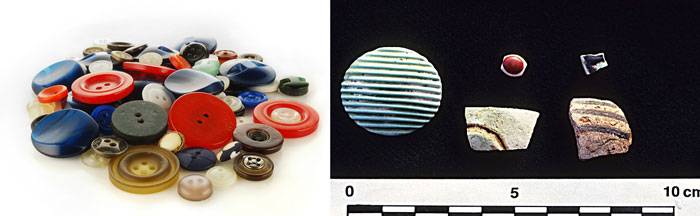
1. Buttons

buttons

image sources 12

Buttons were first used in Mohenjo-daro for ornamental purpose rather than for fastening. They were first used in the Indus Valley Civilization by 2000 BCE.

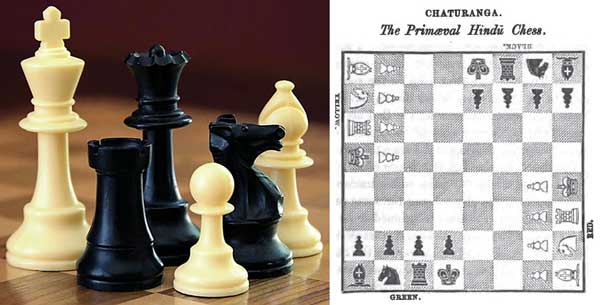
2. Chess

chess

image sources 12

Chess developed out of Chaturanga, which is an ancient strategy board game developed during the Gupta Empire in India around the 6th century AD. Now you know why Vishwanathan Anand is…

View original post 825 more words

06/03/2014

Opinion: China’s awkward banana slip – CNN.com

Editor’s note: Eric Liu is the founder of Citizen University and the author of several books, including “The Gardens of Democracy” and “The Accidental Asian.” He served as a White House speechwriter and policy adviser for President Bill Clinton. Follow him on Twitter @ericpliu The opinions expressed in this commentary are solely those of the author.

Watch this video

(CNN) — Have you heard about China’s banana slip?

A few days ago in Beijing, as Gary Locke wrapped up his tenure as United States ambassador to China, he was lambasted in a Chinese state media editorial. The piece called Locke a “guide dog.” It said he had stirred an “evil wind.” Worst of all, it called him a “banana.”

As in yellow on the outside and white on the inside. It’s a slur, akin to “Oreo” for African-Americans or “coconut” for Hispanics, used by people of a given ethnic group to judge another member of that group for being insufficiently, well, ethnic. The point of saying a person of color is “white inside” is to accuse him of being a race traitor, ashamed or in denial of his true heritage.

Eric Liu

In this case, the idea was that Locke, though of Chinese descent, wasn’t Chinese enough. Why? He couldn’t speak the language. Oh, and he apparently didn’t do the bidding of China’s leaders, choosing instead to go to Tibet, work with dissident human rights activists, point out smog levels in Beijing and generally represent the interests and values of the United States.

That’s what the editorialist meant when he called Locke a banana. Many Chinese citizens disavowed the slur, calling it an embarrassment. But what it revealed was that despite modernization and burgeoning wealth — or perhaps because of them — China still has a fragile identity. (And America still has some advantages.)

Let’s start with the fact that the editorial was published in an organ of state media. It got attention because in a country where the government controls the press, editorials are assumed to express the views of top national leaders. They may not, in fact. It’s quite possible this particular opinion writer was just an individual. But in the absence of a free press, who can really tell?

This is the price of propaganda: No one believes what you say, but they believe you meant to say it.

A second notable aspect of the banana rant was that it completely conflated ethnicity and nationality, and in a particularly Chinese way. The Han Chinese are the overwhelmingly dominant ethnic group of China, and their ethnocentrism frames Chinese political culture. (Just ask Tibetans.) It also fuels the nationalism behind China’s territorial disputes with Japan and other Asian nations.

So the premise of the banana comment was that someone of Chinese ethnicity, wherever he may live, should be considered Chinese to the core and therefore in the end loyal to the Chinese nation.

Of course, that’s a notion white Americans have often used to justify mistreatment of “indelibly alien” Chinese immigrants, whether during the era of Chinese exclusion in the late 19th century or the persecution of Wen Ho Lee at the turn of this one.

But it’s as wrong now as then and as wrong here as there. Even if Locke could speak perfect Mandarin, even if he could read the Chinese classics and write calligraphy, this Eagle Scout, child of public housing, prosecutor, state legislator, governor, Cabinet secretary and diplomat was made in America.

via Opinion: China’s awkward banana slip – CNN.com.

See also – https://chindia-alert.org/social-cultural-diff/uncanny-similarities/

Enhanced by Zemanta
Law of Unintended Consequences

continuously updated blog about China & India

ChiaHou's Book Reviews

continuously updated blog about China & India

What's wrong with the world; and its economy

continuously updated blog about China & India