Posts tagged ‘China’

23/06/2016

Foreign Direct Investment Into India Jumps 26%, U.N. Says – India Real Time – WSJ

India’s fast-growing economy attracted $44 billion in foreign direct investment in 2015, making it the 10th largest destination globally for such investment last year, according to United Nations figures released this week.

That represents a 26% increase in foreign investment in India over the year before, according to the U.N. Conference on Trade and Development, which published the data in its latest World Investment Report. Prime Minister Narendra Modi has touted the growing stream of overseas money entering India as a signal accomplishment of his two years in office.

The latest U.N. figures suggest in particular that the Modi government’s efforts to encourage more global companies to “Make in India” are reaping some success. Foreign investments worth $28.7 billion in so-called “greenfield” manufacturing projects, or those that start from scratch, were announced in India last year—more than double the $11 billion in investments that were announced in 2014. Electronics manufacturing saw an especially big boost, with $13.5 billion invested in such projects in 2015, compared with $1.1 billion the year before.

The Modi administration has made changes to keep the money coming. Last year it began allowing foreigners to own larger stakes in Indian companies in insurance, construction, mining, manufacturing and others. This week the government announced increases in foreign-investment limits in defense, retail, civil aviation, pharmaceuticals and grocery businesses. The changes, the official press release declared, make India “the most open economy in the world” for foreign direct investment.

Some experts doubt the latest rule changes will cause more money to flood in right away, though, given the degree to which Indian regulations remain vague and regulatory decision-making remains opaque.

India has risen steadily as a host of overseas investment since 2000, when the entirety of foreigners’ stakes in the economy was valued at $16 billion. The same figure last year was $282 billion.

In terms of yearly inflows, the country still ranks far behind mainland China, which lured $136 billion in foreign direct investment in 2015; Hong Kong, which attracted $175 billion; and Singapore, $65 billion. The U.S. was 2015’s top host of investment from abroad: $380 billion of it flowed into the world’s largest economy last year.

Among executives surveyed by the UNCTAD, 19% picked India as the most promising host country for investment over the next few years. Nearly half picked the U.S.; 21% chose China. But world-wide, the U.N. body expects foreign investment flows to dip by 10% to 15% this year. Its surveys indicate that multinational companies are skittish about volatile exchange rates, geopolitical uncertainty and mounting debt in developing countries.

Source: Foreign Direct Investment Into India Jumps 26%, U.N. Says – India Real Time – WSJ
22/06/2016

China’s newest space rocket, Long March 7, ready for blast-off | South China Morning Post

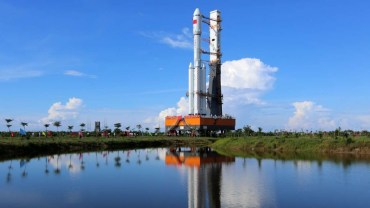
China’s latest Long March rocket arrived on the launch pad on Wednesday morning three days before it is due for blast-off on the maiden launch of both the rocket and the launch site.

At 8am on Wednesday the 600-tonnes Long March 7 rocket began a three-hour rail journey of several kilometres from the assembly complex to the launch site at Wenchang Satellite Launch Centre, China Central Television reported.

The Long March 7 will use new liquid fuel, which is environmentally friendly and costs only a fraction of the fuel used by its predecessor, LM-2.It will be carrying a test model of China’s next-generation manned spacecraft, together with several small satellites.

China’s second space lab to go into orbit this year as part of permanent manned space station by 2022

The rocket’s role in future will be to send up cargo ships to the Chinese space station.

If the weather turns bad on Saturday – which is not uncommon at the nation’s southernmost launch site on the tropical Hainan Island – the launch window will be able to remain open until Wednesday.

This launch will be different from others carried out by China because the public will be able to watch what happens in person on the mainland for the first time.

Eight designated “best spot” viewing areas covering 40 hectares around the launch site, including public parks and a private hotel beach, can accommodate about 25,000 spectators.

“This launch will open a new chapter in the history of Chinese space exploration,” a space scientist involved in the development of the new Long March rockets told the South China Morning Post.

“The blast of flames, rise of vapour, the chest-pounding noise and the trembling of the ground under people’s feet … it will be a life-changing experience for many people [watching],” the scientist said.

Source: China’s newest space rocket, Long March 7, ready for blast-off | South China Morning Post

22/06/2016

McDonald’s gets bids for China, HK stores sale in up to $3 billion deal – sources | Reuters

McDonald’s Corp (MCD.N) has received more than half a dozen bids for its China and Hong Kong stores, including offers from Beijing Tourism Group, Sanpower and ChemChina, in an auction that could fetch up to $3 billion, people familiar with the matter said.

Buyout firms including Bain Capital, TPG Capital [TPG.UL] and Carlyle Group (CG.O) too are participating in the auction with a view to teaming up with Chinese strategic bidders, they said.

The U.S. fast food company had announced in March it was reorganising its Asian operations by bringing in partners who would own the restaurants within a franchise business. Competitor Yum Brands (YUM.N) is also restructuring its China operations by spinning it off ahead of a likely IPO next year.

The planned sale of China units by McDonald’s and Yum indicates they are seeking local partners who could help ward off growing competition from domestic rivals and also better manage public perception in the wake of food-safety scares that hit the two fast-food giants in the last few years.

“Given the difficulties Western chains have had recently with public perception, local players have become a serious competitive threat,” said Elizabeth Friend, consumer foodservice analyst at Euromonitor International.

Oak Brook, Illinois-based McDonald’s has hired Morgan Stanley (MS.N) to run the sale of about 2,800 restaurants in China, Hong Kong and South Korea, Reuters previously reported. The sale in South Korea is being run separately and it was not known if the same parties have expressed interest in that sale, the people added.

As part of the deal, McDonald’s is offering a 20-year master franchise agreement to buyers, with an option to extend it by another 10 years.It has stipulated that private equity firms remain a minority partner in any bidding consortium, restrictions that discouraged some buyout funds from participating in the auction, the people added.

Among those who were preparing to place first-round bids ahead of the June 20 deadline were Beijing Capital Agribusiness Group, which is McDonald’s current China partner, and GreenTree Hospitality, the people added. It was not immediately clear if they made the bids.McDonald’s will now draw up a shortlist of bidders for the next round in the coming weeks.

Source: Exclusive: McDonald’s gets bids for China, HK stores sale in up to $3 billion deal – sources | Reuters

18/06/2016

India looks to China’s technology for making clouds rain|Government|chinadaily.com.cn

China is in talks with India on the transfer of cloud-seeding technology.In the first such engagement between the Asian giants, a team of scientists and officials from Beijing, Shanghai and East China’s Anhui province, were recently in Maharashtra to discuss weather conditions with the government of the western Indian state, parts of which have experienced severe droughts over the past two years.

line art drawing of cloud seeding.

line art drawing of cloud seeding. (Photo credit: Wikipedia)

The Chinese team’s days-long tour concluded on June 2.If the discussions are successful, Chinese experts would provide training to officials of the Indian Meteorological Department on their latest cloud-seeding technology, according to two sources with knowledge of the matter.

One of the sources had earlier described it as an “exploratory visit by the Chinese side to discuss with relevant Indian authorities how to go about it”.

The training is expected to be given on procedures to seed clouds successfully, the source said.

The training is aimed at inducing rain over Maharashtra’s Marathwada region in the summer of 2017 if needed, the source said.

While summer rains have arrived this year in India, the region has been traditionally vulnerable to drought.

The sources spoke to China Daily on condition of anonymity.

An official in the China Meteorological Administration said that arrangements are still in progress.

The development follows a meeting between Han Zheng, Shanghai’s top official, and Maharashtra chief minister Devendra Fadnavis, in the Indian state’s capital of Mumbai in early May.

Han, who is also a Communist Party of China Politburo member, had asked Fadnavis if China could do anything for drought relief in Maharashtra, one of the sources said.

Monsoons and temperatures nearing 50 C have triggered many agrarian crises in India, with poor farmers being hit the hardest.

Indian media said in April that the Maharashtra government would begin cloud-seeding experiments in June and continue through August – the period of summer monsoons.

China started to use cloud-seeding technology in 1958, and today has one of the most advanced systems in the world.

Source: India looks to China’s technology for making clouds rain|Government|chinadaily.com.cn

18/06/2016

The great crawl | The Economist

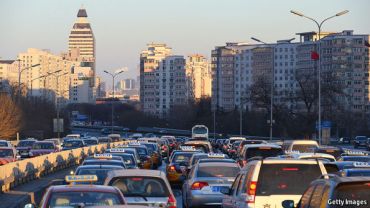
LATE last month a black-and-white photograph of a professor from Beijing Jiaotong University spread on social media. His image was edged by a black frame, like those displayed at funerals in China, and trimmed with white flowers of mourning. Though Mao Baohua is still very much alive, he had angered netizens enough to depict him as dead. His crime? To suggest that Beijing should follow the likes of London and Stockholm, by charging drivers 20-50 yuan ($3-7.50) to enter the capital’s busiest areas in the hope of easing traffic flow in the gridlocked city.

Most Chinese urbanites see buying a vehicle as a rite of passage: a symbol of wealth, status and autonomy, as it once was in America. Hence their outrage at any restraint on driving. Since car ownership is more concentrated among middle- and high-income earners in China than it is in richer countries, any attack on driving is, in effect, essentially aimed at the middle class, a group the Communist Party is keen to keep on side. That makes it hard to push through changes its members dislike.

Since 2009 officials in Beijing and the southern city of Guangzhou have repeatedly aired the idea of introducing congestion charges. Netizens have fought back, accusing their governments of being lazy, brutal and greedy. Many also gripe that the policy would be “unfair” because the fee would have less impact on the super-rich. Complaints about the inequality of congestion charging echo those made in London and other cities before they launched such schemes. But the party, nervous of being accused of straying from socialism, is particularly sensitive to accusations that it is favouring the wealthiest.

Because of such objections, city governments have not pushed their proposals very hard. But that is now changing in Beijing, where officials face a dilemma. Traffic jams in the city and appalling air pollution—30% of which comes from vehicle fumes, by official reckoning—may end up causing as much popular resentment as any surcharge. The local government is trying to work out how close it is to this tipping point. It is conducting surveys to “pressure test” how people would react to a congestion fee, says Yuan Yue of Horizon, China’s biggest polling company (the results will not be made public). It is likely that a concrete plan for a congestion charge will be announced soon. Beijing’s environmental and transport departments (not usual partners) are collaborating on a draft. State media have recently published a flurry of articles about this, not all in favour.

Public opinion is not the only challenge a congestion scheme faces. The urban planners who conceived Beijing’s layout, and that of other Chinese cities, never imagined that so many people would want to drive. The capital now has 3.6m privately owned cars: the number per 1,000 people in Beijing has increased an astonishing 21-fold since 2000, according to our sister company, the Economist Intelligence Unit (see chart).

On most days large tracts of the capital are now bumper to bumper amid a cacophony of car horns. Beijingers have the longest average commute of any city in China, according to data collected by Baidu, a Chinese search engine. The problem is not confined to Beijing. The capital has higher vehicle ownership than any other Chinese city, but car use is rising rapidly across the country. Many second- and third-tier cities are already clogged.

Beijing’s congestion scheme would be the first outside the rich world, where a handful of cities now charge drivers to enter a designated area. (Singapore has a different form of road pricing, with tolls on individual arterial roads.) Such measures have been credited with reductions in downtown car-use, improved traffic flow and greater use of public transport. They have also cut pollution, including emissions of the tiny PM2.5 particles that are particularly dangerous to health and abundant in Beijing’s air.

Transport planners reckon a congestion zone would have similar effects in Beijing, and complement existing attempts to restrict car use. In 2008, after Beijing staged the Olympic games, the city launched the current system whereby each car is banned from the urban core one workday per week, depending on the last digit of its licence plate. Beijing is now one of 11 Chinese cities with similar restrictions.

But some drivers choose to pay the 100 yuan fine, which is far higher than the congestion charge that Beijing is now mulling (around the sums suggested by Professor Mao). People also drive without plates, or buy second cars, to bypass the rules. In 2011 the capital introduced a lottery for obtaining new licence plates (six other cities do this). In Beijing the scheme has slowed the increase in car ownership, but not enough to cut congestion; some residents use vehicles registered elsewhere. Also in 2011 the capital raised parking fees, hoping to deter drivers. But people often park on pavements and traffic islands instead, usually with impunity.

Source: The great crawl | The Economist

18/06/2016

Study Finds China’s Ecosystems Have Become Healthier – China Real Time Report – WSJ

China’s skies may be toxic, and its rivers fetid and prone to sudden infestations of pig carcasses. But according to a new study, the country’s environmental battle has also been making quiet, measurable progress.

The paper, a collaboration between U.S. and Chinese researchers published in this week’s issue of Science, found that China’s ecosystems have become healthier and more resilient against such disasters as sandstorms and flooding. The authors partly credit what they describe as the world’s largest government-backed effort to restore natural habitats such as forests and grasslands, totaling some $150 billion in spending since 2000.

“In a more and more turbulent world, with climate change unfolding, it’s really crucial to measure these kinds of things,” says Gretchen Daily, a Stanford biology professor and a senior author on the paper.

The study didn’t examine air, water or soil quality, all deeply entrenched problems for the country.

Beijing’s investments in promoting better ecosystem protection were triggered after a spate of disasters in the 1990s. In particular, authors note, two decades after China started to liberalize its economy, rampant deforestation and soil erosion triggered devastating floods along the Yangtze River in 1998, killing thousands and causing some $36 billion in property damage.

The government subsequently embarked on an effort to try to forestall such environmental catastrophes. According to the study, in the decade following, carbon sequestration went up 23%, soil retention went up 13% and flood mitigation by 13%, with sandstorm prevention up by 6%.

The paper also involved authors from the Chinese Academy of Sciences and the University of Minnesota, among other institutions. Data was collected by remote sensing and a team of some 3,000 scientists across China, said Ms. Daily, who praised the “big-data” approach to tracking the quality of China’s ecosystems.

“The whole world is waking up to the need to invest in natural capital as the basis for green growth,” she said.

Reforestation was one particular bright spot, she said. Under the country’s founding father, Mao Zedong, China razed acres of forests to fuel steel-smelting furnaces. To reverse the trend–and combat creeping desertification in the country’s north — the country embarked on a project in 1978 to build a “Great Green Wall” of trees. Today, authorities say that 22% of the country is covered by forest, up 1.3 percentage points compared with 2008.

The authors note that the study has limits. While China has reported improving levels of air quality in the past year, urban residents still choke under regular “airpocalypses.” The majority of Chinese cities endure levels of smog that exceed both Chinese and World Health Organization health standards.

“You can plant trees till the end of time,” says Ms. Daily. “But they’ll never be enough to clean up the air.”

Source: Study Finds China’s Ecosystems Have Become Healthier – China Real Time Report – WSJ

16/06/2016

Reaping what they sow: Shaolin monks harvest wheat as a form of Zen practise | South China Morning Post

Monks at Shaolin Temple in Henan province have been harvesting wheat as a method to practice Buddhism, the China News Agency reported on Thursday.

The 1,400-year-old temple, famed as the birthplace of Chan (Zen) Buddhism and martial arts traditions, operates a farm of of about 70 hectares where they grow wheat, corn, vegetables and herbs.

During the wheat reaping season in June, groups of monks cut the crops, thrash the grain, bag it and carry it to the barn.

Farming is also a kind of self-cultivation,” said Shi Yanzi, the monk in charge of the farm. “We farm with the spirit of Zen, and plough and sow in our own mind too.

”Shaolin’s millennium-long tradition of farming was interrupted in the past decades, but was resumed by head abbot Shi Yongxin in recent years.

Shi believes producing food in the temple’s fields can also ensure food safety.

The Shaolin temple farm also opens to tourists to experience harvesting fresh vegetables or fruit.

Source: Reaping what they sow: Shaolin monks harvest wheat as a form of Zen practise | South China Morning Post

16/06/2016

Disney’s China fairytale begins with $5.5 billion park opening | Reuters

Walt Disney Co has opened the gates to its first theme park in China, prompting a rush from thousands of gathered Mickey Mouse enthusiasts to be the first to storm Treasure Cove, ride the Roaring Rapids or visit Disney’s tallest castle.

Disney’s largest overseas investment at $5.5 billion, the park is a bet on China’s middle class and booming domestic tourism. The U.S. firm hopes it will offset an otherwise lackluster international theme park business, better known for cash-burning sites such as Euro Disney.

“This is one of the proudest and most exciting moments in the history of the Walt Disney Company,” chief executive Bob Iger said at the official ribbon cutting ceremony on Thursday, where he was flanked by Chinese government officials.

Iger and Chinese Vice Premier Wang Yang read out letters of support from Barack Obama and President Xi Jinping.

Not everything has gone quite to plan though.The opening gala – meant to be a bonanza of fireworks, live music and dance – was rained off on Wednesday night, while at Disney’s park in Orlando, Florida, a young boy was grabbed by an alligator and killed.

Disney, though, sees China as its biggest opportunity since Walt Disney bought land in Florida in the 1960s for what is now Walt Disney World – the world’s most-visited theme park.

With that in mind, Main Street has been replaced by Mickey Avenue to reduce the feel of Americana while attractions include the Chinese-style Wandering Moon tea house, a Chinese Zodiac-themed garden and a Tarzan musical featuring Chinese acrobats.

Disney estimates 330 million people within a three-hour radius of Shanghai will be able to afford to come to the park: that includes Zhao Qiong, 36, who was one of the first visitors inside the park on Thursday with her 4-year-old daughter.”Since she was young, my little girl has always loved Disney princesses, so I wanted to bring her to the park to fulfill her dream,” she told Reuters.

Source: Disney’s China fairytale begins with $5.5 billion park opening | Reuters

16/06/2016

India Is Making Progress on Reducing Malnutrition But Now Has a Diabetes Problem – India Real Time – WSJ

While India has dramatically reduced its rate of child malnutrition, a new report points to the increasing burden of diabetes in the world’s second most populous country.

According to the 2016 Global Nutrition Report released Tuesday, India is reducing childhood stunting at double the rate it was a decade ago. Stunting, or low height for age, is caused by insufficient nutrient intake and frequent infections.

“That is highly significant given that India is home to more than one-third of the world’s stunting children,” the study said.

However, the country is facing a new health issue. India has a 9.5% prevalence of diabetes, putting it ahead of the U.K., with 7.8%, and the U.S., with 8.4%, the report showed.

Experts say the high sugar and trans-fat diet Indians consume are a key cause of the growing occurrence of diabetes, which is caused by a deficiency or inability of the body to effectively use insulin. Genetic factors and environmental influences exacerbate the issue.

In April, the WHO said that in India, more men die from diabetes than in any other country. The condition accounted for 2% of all deaths across age groups in India.

As a region, Asia has the highest prevalence of the condition, according to the Global Nutrition Report. Globally, one in 12 people have type 2 diabetes, the report said.“We must stem and tide,” Corinna Hawkes, co-chair of the Global Nutrition Report’s independent expert group said in a statement.

India also has a way to go to reduce stunting. India has the 18th highest prevalence, 38.7% among children under five, of 137 countries included in the Global Nutrition Report. That rate is down from 47.9% recorded a year earlier.

Indian states must set specific targets to help them meet global nutrition goals, while the federal government should devote $6 billion a year to combat nutrition, 13% more than it currently does, the report said.“At current rates of decline, India will achieve the current stunting rates of Ghana or Togo by 2030 and that of China by 2055,” the report said.

Source: India Is Making Progress on Reducing Malnutrition But Now Has a Diabetes Problem – India Real Time – WSJ

16/06/2016

In China, One Nail House Doesn’t Get Hammered – China Real Time Report – WSJ

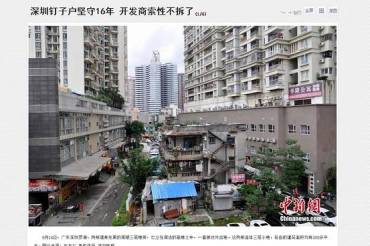
Standoffs between developers and property owners in China are usually grim affairs almost always ending the same way: demolition. One holdout in the southern city Shenzhen is scoring a rare–but perhaps mixed–victory after fending off the bulldozers for more than a dozen years.

Developer Shenzhen Xiafeilong Real Estate has given up knocking down a three-story building belonging to unidentified owners in the city’s Luohu district, according to state-owned China News Service.

Photographs online show the water-stained facade of the three-story building, juxtaposed against newer high-rise apartments that are more than 20-stories high.

Resistance by homeowners to development usually draws sympathy from ordinary Chinese, who often complain that local governments in their zeal for growth and revenues favor developers and ignore property rights. Holdouts like the Shenzhen building have become popular symbols of resistance, known as “nail houses”  because they stick out like nails from a flat surface, such as a razed construction site for example.

“The fact that the government decides you’re going to move and the price you’re going to accept as compensation results in nail houses. It’s a form of negotiation tactic, or sometimes, an act of civil disobedience,” said Michael Cole, a property market observer and founder of real estate website Mingtiandi.com.

Xiafeilong, the developer, couldn’t be reached for comment, nor could the owner or owners of the nail house, who weren’t identified in media reports or in a government statement on the matter.

The three-story building appears to be mostly for residential use, with a computer repair shop at a corner storefront, according to photos and media accounts. A female employee answering the phone at the computer repair shop said she wasn’t aware of any demolition plans or faced any pressure to move.

China News Service said the landlord and the developer spent years on legal battles after they couldn’t agree on compensation for the demolition in 2000.

Xiafeilong initially wanted to build a high-rise apartment and offered the owner an apartment in the new development as compensation, according to Shenzhen Business News. The owner demurred as he wanted cash compensation or another home in a nearby complex, the Shenzhen Business News said in a 2014 article.

In 2013, the space around the nail house became a car park for residents in the surrounding residential towers, China News Service said. The Shenzhen government’s Internet Information Office, in a posting on its official social media account, said the developer realized that the nail house “did not impact its main development, so it simply stopped asking.

”Unlike previous nail-house standoffs, support online was more mixed. Some praised the outcome. “This shows that Shenzhen is civilized, unlike other places,” said a web user on the comments section following pictures of the nail house hosted by Tencent Holdings.

Others, however, saw it as an example of the landlord’s bad timing or greed. Prices for apartments and land in Shenzhen have soared by more than 60% on a year-over-year basis in recent months.

“The nail-house owner has a heart which not content like a snake that wants to swallow an elephant,” said another web-user. “Why could other parties come to an agreement but not you?

”A hotpot restaurant owner in a nearby building said it’s a blow to the neighborhood. “It would be better to demolish the building and build something modern so that it can drive more economic development in the area. Right now it’s an eyesore,” said the shop owner, who declined to give his name.

The government’s Internet Information Office gave its own assessment, citing an unidentified–and perhaps fictitious–web user: “The owner of the nail-house weeps in the toilet.”

Source: In China, One Nail House Doesn’t Get Hammered – China Real Time Report – WSJ

Law of Unintended Consequences

continuously updated blog about China & India

ChiaHou's Book Reviews

continuously updated blog about China & India

What's wrong with the world; and its economy

continuously updated blog about China & India