Posts tagged ‘Chindiapedia’

06/04/2012

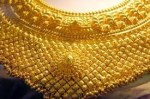
* Indian jewellers meet Sonia, demand duty roll back

The Hindu: “Agitating jewellers and bullion traders on Friday called on Congress president Sonia Gandhito press for their demand forSonia Gandhi in 2009.

removal of excise duty on unbranded jewellery. “We today met Sonia Gandhi and requested her to tell the government to roll back excise duty on unbranded jewellery, reduce customs duty and lower TDS on sale of jewellery,” All India Swarankar Sangh President Madhukar Chachad told reporters after the meeting. Ms. Gandhi, he said, “has assured us that she will forward our demands to Finance Minister Pranab Mukherjee for further action”.

Ahead of the meeting of jewellers with Ms. Gandhi, the Congress had asked the government to look into the demands of jewellers, who have been agitating for more than a fortnight. “Congress has asked the government to consider the demand of jewellers sympathetically,” AICC General Secretary and media department chief Janardhan Dwivedi said. Bullion traders and jewellers are protesting since the presentation of the Budget which had imposed excise duty on unbranded jewellery, raised customs duty on gold and proposed TDS requirement on sale of  on sale of jewellery.”

via The Hindu : News / National : Jewellers meet Sonia, demand duty roll back.

The purpose of the excise duty is to try and divert Indians from investing in ‘economically inactive’ gold into ‘proactive investiments’ such as stocks and shares or even property. If this works, India will stop being the world’s number 1 importer of gold and China will become number 1.

05/04/2012

# Deciphering Chinese names

Chiang Kaishek with Muslim General Ma Fushou a...

There are around 100 common Chinese surnames and, apart from possibly Ma (), there is no religious or regional clustering. The colloquial for ‘the public’ is lao bai xing, which literally means “old hundred surnames”. The surname Ma, more often than not, is used by Muslim Chinese; and is thought to be derived from the Prophet Mohammed.

Traditionally, for many centuries, most Chinese families followed the standard practice of using three mono-syllabic words for their names, such as Sun Yatsen, father of modern China.
Maybe surprisingly, Dr Sun is revered in both the Peoples’ Republic and Taiwan. Both have huge memorials to him. The photo courtesy –
http://hcyip.wordpress.com/tag/nanjing-massacre/ – is of the mainland memorial.

The first, Sun (), is the family or clan name. After all what is most important, your antecedents, of course rather than you yourself – back to the collective mindset of Chinese.

The second, Yat, is the ‘generation name’. It is given by the parents to each of the siblings. So, all of Yatsen’s brothers and sisters would have Yat plus another word as their name. And, indeed, all his paternal first cousins. In some families, the boys and girls may have variants of this name.

If the family is conforming to old traditions, then the middle name (the generation name) is taken from a poem specially composed for the family, with each generation taking a successive word from the poem. Typically, the poem will be about something noble and aspirational, such as: “World peace, national unity; Social harmony, family prosperity”. So, the first generation’s middle name will be world, the next peace and so forth. Of course, in most families, long before they reach the eighth generation, some successor would have thought to create his own couplet to be more modern and so the cycle restarts.

The third, sen, is the personal name and can be any word in the Chinese vocabulary. Having said that, some words are regarded as more masculine and others more feminine.

Just to confuse everyone, some families use the second name as the personal name and third as the generation name. So, for example, Sun Yatsen’s wife Madam Sun was named Soong Chingling and her two sisters were Soong Ailing and Soong Meiling. Although Sun and Soong sound similar, Soong is a differnt name altogether () incidentally, Meiling was Chiang Kaishek‘s wife, Madame Chiang.

Despite being a feudal society until recent times, women kept their names after marriage. So the wife of the disgraced leader Bo


Xilai is Gu Kailai; rarely – but confusingly – called Bogu Kailai.
In places like Singapore and Hong Kong sometimes married women, esp business women, would keep their maiden name along with the husband’s surname, making it four names. Sort of like the British ‘double-

barrelled‘ surnames such as the actress Helene Bonham Carter.

Most Chinese who live in Hong Kong, Singapore, Taiwan and other enclaves of Chinese emigrees tend to keep to the traditional way of naming.

Her Excellency Wu Yi, Vice Premier of the Peop...

But since the revolution in 1949 and especially since the Cultural Revolution in the 70s, many mainland Chinese have stopped using the generation name and use just one name after the surname such as Madame Wu Yi, retired senior leader who led China into the WTO and who managed the SARS crisis of early 2000s.

This causes huge problems for the authorities as, it is not uncommon, at roll call in school, several kids would raise their hands– for example – to Wang Ta (= Wang senior). The authorities are encouraging parents to revert to a middle name when naming their children.

04/04/2012

* Premier Wen Appeals to Shake Up Bank System

Wall Street Journal: “Chinese Premier Wen Jiabao told a national audience on Tuesday that Chinas state-controlled banks are a “monopoly” that must be broken up, in a blunt appeal for a shake-up of the creaky financial system of the worlds No. 2 economy.

温家宝

温家宝 (Photo credit: Wikipedia)

In an evening broadcast on state-run China National Radio, Mr. Wen told an audience of business leaders that Chinas tightly controlled banking system needs to change. “Let me be frank. Our banks earn profit too easily. Why? Because a small number of large banks have a monopoly,” said Mr. Wen, according to the transcript of the program on the broadcasters website. “To break the monopoly, we must allow private capital to flow into the finance sector.

Mr. Wen’s comments tap into a rich vein of popular anger against Chinas biggest banks that has been building in recent months online and in the media. The backlash was initially prompted by frustration at what has been perceived as banks’ payments of low interest rates on deposits and indiscriminate levying of fees. It has worsened in recent weeks as lenders posted record profits, even as the economy slows and some companies struggle to access credit.”

via Wen Appeals to Shake Up Bank System – WSJ.com.

So it’s not only Western, capitalist banks that are in people’s bad books!

03/04/2012

* Insight: Bullish China shops in industrial Germany

Reuters: “German businessman Norbert Scheuch was bowled over by his red-carpet treatment on a visit to China late last year and by how fast the country’s largest construction firm sealed the deal to buy his company. The head of Sany Heavy Industry, which is controlled by China’s richest man, Liang Wengen, personally gave Scheuch a tour of their plant and then had a top manager drive him to the airport and wait with him for his flight home. “Nobody would ever do that in Europe,” said Scheuch, CEO of concrete pump maker Putzmeister.

“The Chinese made it very clear from the beginning they wanted the company immediately,” he added. Barely a month later, Sany’s top negotiator Xiang Wenbo was in the offices of law firm Shearman Sterling in Frankfurt at 3 am to sign the deal to buy Putzmeister for 360 million euros ($472 million) after a nine-hour session with the notary.

The purchase, which gives Sany a technological edge over its rivals, illustrates how Chinese investors are becoming more savvy about foreign takeovers, not just to gain access to raw materials or patents but as an engine for growth. By keeping the German management in place after its acquisition and announcing that Putzmeister would become its new international distribution hub outside China for concrete machinery, Sany also defied the clichés about Chinese practices and assuaged local anxiety among employees. “I had to promise the Chinese solemnly that our management would stay on board,” Scheuch said.

Germany, Europe’s largest economy and home to many small and medium-sized companies famed for their technological know-how and exporting prowess, is especially attractive for cash-rich Chinese businesses looking to build a global profile. Some German and other European companies also look cheap to Chinese buyers after the euro zones sovereign debt crisis.”

Rest of long article is equally interesting.

via Insight: Bullish China shops in industrial Germany | Reuters.

Related articles:

03/04/2012

# Does a country’s national games mimic its mindset?

Chess Set (Shatranj in Iranian), glazed fritwa...

Chess Set (Shatranj in Iranian), glazed fritware, 12th century. New York Metropolitan Museum of Art. (Photo credit: Wikipedia)

I have a hypothesis that a country’s mindset mimics its national sports and games.

For instance, the Chinese and Japanese are keen on chess and Go. These are games of strategy and take a long-term view. Indians say they invented chess. In any case they do play it well. Perhaps not as good as the Russians. Wonder why the Russians lost the ‘cold war’?

The British play soccer – a very dynamic game, but also cricket which is one of strategy and patience. These games may explain the divergent behaviour of the British – colonial conqueror and commonwealth sustainer?

Americans love their football and baseball. Both are what I call start and stop games. You play a set of tactics and then regroup. I wonder if that explains the lack of clear success in wars like Iraq and Afghanistan?

The Middle East used to play a game from which polo was derived. Their game involved riding on horses and trying to capture and throw the head of a goat (or in medieval times, the head of a defeated enemy) into the opponents’ goal. Individual courage and devil-may-care ruled the tactics. Perhaps that means the West will never ‘win’ in Iraq and Afghanistan.

Don’t forget that Iran has both Middle East roots and also claim to have invented chess. The term ‘check mate’ comes from ‘shah mat‘ meaning the king is dead in Farsi.

What do you think of my hypothesis? What are India’s national games? Kabaddi? Hockey? Cricket? How do these explain the Indian mindset?

See also: 


02/04/2012

* Trade Groups: Foreign Firms Giving Up on India

Wall Street Journal: “A group of international trade and industry associations claiming to represent some 250,000 companies have written to Prime Minister Manmohan Singh strongly criticizing the proposal, tucked away in the budget, to tax transactions potentially as far back as 1962.

“This is now prompting a widespread reconsideration of the costs and benefits of investing in India,” the letter said, adding that confidence in doing business here has been undermined. Hello China, Brazil, and Indonesia in other words.

The controversial proposal, which would impose tax on the exchange of an Indian asset by two companies outside India, already has sparked howls of protest among foreign companies. It would reverse a recent Supreme Court ruling on the issue in favor of Vodafone Group PLC of the U.K. and be retroactive in its impact. It would potentially affect hundreds of corporate acquisitions. Many foreign companies say they now feel singled out for financial punishment as the government seeks to narrow its troublingly high fiscal deficit.”

via Trade Groups: Foreign Firms Giving Up on India – India Real Time – WSJ.

It seems that India has acquired the habit of shooting itself in the foot now and then. This is one of these occasions.

02/04/2012

* China to deepen reforms to drive growth: vice premier

Xinhua: “Chinese Vice Premier Li Keqiang said Monday that China will deepen reforms and opening-up to remove obstacles on its course to transfer growth mode and drive economic and social development.

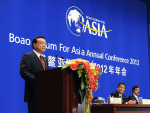
Li made the remarks when delivering a keynote speech at the opening ceremony of the Boao Forum for Asia Annual Conference 2012, which runs from Sunday to Tuesday in Boao, a scenic town in south China’s island province of Hainan. “Faced with the profound changes in international and domestic landscapes, we must let reforms and opening-up continue to lead the way in removing the institutional obstacles that hamper the shift of the growth model,” Li said. Noting that the country has entered a critical stage of reform, Li said China will deepen reform of the fiscal sector, taxation, finance, pricing, income distribution and enterprises.

The country will endeavor to make breakthroughs in key areas and key links, and bring into better play the markets role in resource allocation and advance institutional, technological and management innovation so as to increase the internal driving force and dynamism of development, Li said. Li said the country will adopt an even more proactive opening-up strategy and attach equal importance to export and import so as to boost balanced development of foreign trade and raise the level of an open economy. “China is dedicated to creating an open, transparent, fair, competitive and predictable marketplace and legal environment,” Li said, adding that more efforts will be made to step up intellectual rights protection to promote development of all enterprises in China during its course to transform growth mode.

More than 2,000 government, business and academic leaders from around the globe attended the meeting, which this year adopts the theme “Asia in the Changing World: Moving toward Sound and Sustainable Development.””

via China to deepen reforms to drive growth: vice premier – Xinhua | English.news.cn.

This declaration of reform by the Premier-to-be reaffirms the current Premier’s call for reform posted earlier. So this means the new leadership is fully behind the outgoing leadership.

Related post: https://chindia-alert.org/2012/03/14/premier-wen-says-china-needs-political-reform-warns-of-another-cultural-revolution-if-without/

29/03/2012

* BRICS flexing muscle – to set up joint bank, call for dialogue on Iran & Syria

Times of India: “Seeking to reinforce their growing economic heft with diplomatic clout, the BRICS grouping Thursday pitched for a bigger say in global governance institutions, including the UN and the IMF, and told the West that dialogue was the only way to resolve the Iranian nuclear issue and the Syria crisis.

Brazil, Russia, India, China and South Africa, which comprise nearly half the world’s population and a growing share of global GDP, signed two pacts to spur trade in their local currencies. They also agreed to set up a working group for a joint development bank to promote mutual investment in infrastructure.

Prime Minister Manmohan Singh of India and Presidents Hu Jintao China, Dmitry Medvedev Russia, Dilma Rousseff Brazil and Jacob Zuma South Africa ended the fourth BRICS summit by renewing the pitch for reforming global governance institutions and closer coordination on global issues.The five leaders stressed on the restructuring of the world order to accommodate emerging economies and developing countries and for promoting sustained and balanced global economic growth.”

via BRICS to set up joint bank, call for dialogue on Iran & Syria – The Times of India.

28/03/2012

* President Hu arrives in Delhi ahead of BRICS summit

The Hindu: “Chinese President Hu Jintao arrived in New Delhi Wednesday on a two-day visit to participate in the BRICSsummit

BRICS summit participants: Prime Minister of I...

BRICS summit participants: Prime Minister of India Manmohan Singh, President of Russia Dmitry Medvedev, President of China Hu Jintao, President of Brazil Dilma Rousseff, President of South Africa Jacob Zuma. (Photo credit: Wikipedia)

and to hold wide-ranging bilateral talks with Prime Minister Manmohan Singh.The Chinese President is accompanied by a high-profile delegation comprising Foreign Minister Yang Jiechi, State Councillor Dai Bingguo, senior ministers and business leaders.

Mr. Hu will meet Russian President Dmitry Medvedev on Wednesday before participating in the BRICS summit on Thursday. Mr. Hu, along with the presidents of Russia, Brazil and South Africa, will attend a banquet hosted by President Pratibha Patil in the evening.

Prime Minister Manmohan Singh will hold talks with the Chinese President on Thursday, on various issues including bridging the trade deficit and fast-tracking the new confidence-building measures. The two leaders are expected to declare 2012 as the year of India-China friendship and unveil initiatives to bolster cultural exchanges and people-to-people contacts.

India is expected is to raise the issue of huge imbalance in bilateral trade which has exceeded $70 billion, with the surplus heavily in China’s favour.”

via The Hindu : News / National : Hu arrives in Delhi ahead of BRICS summit.

28/03/2012

* Chinese Vice-Premier Li meets Apple CEO

China Daily: “Vice-Premier Li Keqiang said Tuesday that China will strengthen intellectual property rights protection and continue to transform its economy, when meeting CEO of Apple Tim Cook in Beijing.”To be more open to the outside is a condition for China to transform its economic development, expand domestic demands and conduct technological innovation,” Li said.

He said that trade and economic cooperation together are an “important cornerstone” for the cooperative partnership featuring mutual respect and reciprocity that China and the United States are endeavoring to establish.The vice-premier called on multinational companies to expand cooperation with China, actively participate in the development of the western part of China, pay more attention to caring for workers and share development opportunities with the Chinese side.

Cook said Apple will strengthen comprehensive cooperation with the Chinese side and conduct business in a law-abiding and honest manner.”

via Vice-Premier Li meets Apple CEO Tim Cook|Economy|chinadaily.com.cn.

Law of Unintended Consequences

continuously updated blog about China & India

ChiaHou's Book Reviews

continuously updated blog about China & India

What's wrong with the world; and its economy

continuously updated blog about China & India