Posts tagged ‘Chinese’

06/02/2013

* China Province to Stop Sending Dissidents to Camps

WSJ: “A Chinese province said it is suspending use of a harsh, gulag-like prison system commonly used around the country to stifle dissent, in the strongest signal yet that officials may be phasing out the widely criticized practice.

Workers in the Shayang Re-education Through La...

Workers in the Shayang Re-education Through Labor (Shayang Farm), a re-education through labor camp in Liaoning province. Photo part of the archives of the Laogai Museum, used with permission of the Laogai Research Foundation. (Photo credit: Wikipedia)

State media on Wednesday reported authorities in the southwestern Chinese province of Yunnan said they would immediately suspend a practice known as re-education through labor, or laojiao in Chinese. The camps allow local authorities to detain those suspected of wrongdoing for up to four years without an open trial. Human-rights groups allege those detained in re-education-through-labor camps are subjected to physical abuse.”

via China Province to Stop Sending Dissidents to Camps – WSJ.com.

03/02/2013

* Number one rule of Royalty, ladies – no spitting! The woman set to cure China of its bad manners by importing a touch of British class

Mail on Sunday: “The woman who wants to cure China of its bad manners by importing a touch of British class

Elegance, to a tea: Sara Jane Ho charges thousands to teach manners to Beijing women

It is still acceptable behaviour in China to spit on the street, blow your nose in your hand, slurp your soup and unashamedly push ahead in a queue.

Hong Kong born Sara Jane Ho was brought up in London and has imported British manners to Beijing with her school of etiquette. Ms Ho charges up to £10,000 to improve manners in China’s high society.

They buy more Bentleys than the British, fill their luxury homes with more Swarovski crystal than the Swiss, and spend more on Louis Vuitton and Versace than the French or the Italians. But one precious commodity has eluded the Chinese in their extraordinary rise from peasant nation to superpower: good manners.

Officials are so exasperated by the tendency to spit, shout, slurp and push in at queues that they have taken to pleading and cajoling. It is not long since Shanghai launched a ‘Seven Nos’ campaign: no spitting, no littering, no vandalism, no damaging greenery, no jaywalking, no smoking in public places and no swearing. It was a  dismal failure.

During the 2008 Beijing Olympics, a squad of 1,500 supervisors was sent out to discourage fighting at bus stops. Paper bags were handed out by volunteers in uniforms emblazoned with the Chinese characters for mucus.

But when a Beijing university set  up a ‘civic index’ to calculate the level of politeness, researchers concluded glumly that the city was still a long way off international norms and the index was quietly dropped.

Now, however, a school of etiquette is about to open in Beijing with classes based on the deportment of the British aristocracy – and the decorous behaviour of the Duchess of Cambridge.

Sara Jane Ho, a Hong Kong businesswoman who grew up in London, is offering lessons in being classy to an exclusive clientele for an appropriately princely sum: courses at her Institute Sarita, based in the five-star Park Hyatt Hotel in Beijing, cost from £2,000 to £10,000.

Dozens of society wives have signed up for lectures on how to use a knife and fork properly, how to peel a piece of fruit, how to greet a prospective mother-in-law, how to walk in heels and how to eat soup without slurping. High-powered bosses of Chinese state-owned companies are also hiring Sara Jane for lessons on how to conduct themselves at business meetings in Europe and America.

She says a subtle pro-British snobbery is driving the desire of wealthy Chinese to improve themselves socially: ‘There is an aura of mystery about European royalty that Chinese people can’t resist. Any aristocracy in China was wiped out, so the Chinese are fascinated by the idea of a royal dynasty that stretches back hundreds of years.’

via Number one rule of Royalty, ladies – no spitting! The woman set to cure China of its bad manners by importing a touch of British class | Mail Online.

23/01/2013

* Middle-class Chinese snap up overseas luxury

China Daily: “An increasing number of middle-class Chinese are buying luxury goods outside the Chinese mainland, with more overseas travel driving the trend, a KPMG report said on Tuesday.

Seventy-one percent of survey respondents ― middle-class mainland residents ― traveled overseas in 2012, compared with 53 percent in 2008. And 72 percent of them said they bought luxury items during such trips, with cosmetics, watches and handbags being the most popular items.

Brand recognition continues to rise as consumers become more discerning and seek experiential luxury as well as one-of-a-kind luxury brands and products. Respondents said they recognize 59 luxury brands, from 45 in survey conducted in 2010.

The report ― The Global Reach of China Luxury ― is based on a survey of 1,200 middle-class Chinese consumers in 24 cities. Market research firm TNS conducted the study.

Respondents were 20 to 44 years old, with a minimum household income of 7,500 yuan ($1,205) a month in tier-one cities and 5,500 yuan elsewhere.

Chinese consumers associate certain countries with particular products. For example, Switzerland is recognized for its luxury watches, while France scores highest for cosmetics and perfumes.”

via Middle-class Chinese snap up overseas luxury[1]|chinadaily.com.cn.

See also: http://unintend-conseq.blogspot.co.uk/2013/01/corruption-curbs-crimp-luxury-market.html

04/12/2012

To any thinking person, regardless of nationality, the Chinese unilateral claimed territorial waters (as shown by the red dotted line) look unreasonable. Furthermore, China has, up-till-now, maintained that force should come only after negotiations have failed. Compounding that, for a country who occasionally reminds the rest of the world about unequal treaties and ‘gunboat diplomacy‘, to threaten to board other nationality ships in what is disputed waters is not learning from its own history. This new ‘sabre rattling‘ is a great shame. given the high hopes everyone has for the new national leadership. Let’s hope this is a short term aberration that will soon be corrected.

13/11/2012

* Yuan to surpass Dollar

Inevitably the US dollar will gradually be on a par with the Chinese yuan. And then several decades down the line, it will be relegated to second place.

29/10/2012

* Under Chinese, a Greek Port Thrives

If only this phenomenon can be replicated across Greece and other Euro PIGS (Portugal, Italy, Greece, Spain) countries …

New York Times: “The captain gazed from his elegant office overlooking this port on the Aegean Sea and smiled as towering cranes plucked container after container from a giant ship while robotic transport vehicles fanned out to transfer the cargo to smaller vessels bound for the Mediterranean.

The cargo volume here is three times the level it was two years ago, before the captain, Fu Cheng Qiu, was put in charge by his employer, Cosco, a global shipping giant owned by the Chinese government.

In a 2010 deal that put 500 million euros ($647 million) into the coffers of Greece’s cash-starved government, Cosco leased half of the port of Piraeus and quickly converted a business that had languished as a Greek state-run enterprise into a hotbed of productivity.

The other half of the port is still run by Greece. And the fact that its business lags behind Cosco’s is emblematic of the entrenched labor rules and relatively high wages — for those lucky enough to still have jobs — that have stifled the country’s economic growth.

“Everyone here knows that you must be hard-working,” said Captain Fu, under whose watch the Chinese-run side of the port has lured new clients, high-volume traffic and bigger ships.

In many ways, the top-to-bottom overhaul that Cosco is imposing on Piraeus is what Greece as a whole must aspire to if it is ever to restore competitiveness to its recession-sapped economy, make a dent in its 24 percent unemployment rate and avoid being dependent on its European neighbors for years to come.

As the Greek government contemplates shedding state-owned assets to help pay down staggering debts, it might be tempting to consider leasing or even selling the rest of the port to China. But if the Cosco example is representative, the trade-offs — mainly a sharp reduction in labor costs and job protection rules — might be ones many Greeks would be loath to accept.

“Unionized labor will push back to keep the protection it has enjoyed,” said Vassilis Antoniades, the chief executive of Boston Consulting Group in Greece. But the Cosco investment, he said, “shows that under private management, Greek companies can be globally competitive.”

Captain Fu, for his part, says Greece has much to learn from companies like his.

“The Chinese want to make money with work,” he said. In his view, too many Europeans have pursued a comfortable, protected existence since the end of World War II. “They wanted a good life, more holidays and less work,” he said. “And they spent money before they had it. Now they have many debts.”

Greece’s troika of foreign lenders — the International Monetary Fund, the European Central Bank and the European Commission — has made similar arguments. Among other things, they are urging Prime Minister Antonis Samaras to end blanket protections for workers and unions and to require Greece itself to operate more like a productive modern business.

Besides the $647 million that put half of the port of Piraeus into Chinese hands, the Greek government is receiving more income from taxes as a result of the port’s pickup in business.

Other than a handful of Chinese managers, moreover, Cosco’s operation is providing around 1,000 jobs to Greek workers — compared with the 800 or so who work the dock that is still under Greek management.

On Cosco’s portion of the port, cargo traffic has more than doubled over the last year, to 1.05 million containers. And while profit margins are still razor thin — $6.47 million last year on sales of $94.2 million — that is mainly because the Chinese company is putting a lot of its money back into the port.

Cosco is spending more than $388 million to modernize its dock to handle up to 3.7 million containers in the next year, which would make it one of the world’s 10 largest ports. Beyond that, workers are also laying the foundations for a second Cosco pier.

The Greek-run side of the port, which endured a series of debilitating worker strikes in the three years before Cosco came to town, has been forced by the Chinese competition to seek its own path to modernization. Still, only about a third of its business consists of cargo handling; the rest is made up of more lucrative passenger traffic.

For years, the container terminal was a profitable operation. But Harilaos N. Psaraftis, a professor of maritime transport at the School of Naval Architecture and Marine Engineering in Athens, said it was inefficient “because worker relations were very cumbersome.”

The salaries of some workers reached $181,000 a year with overtime; Cosco is typically paying less than $23,300. On the Greek side of the port, union rules required that nine people work a gantry crane; Cosco uses a crew of four.

“It was just crazy,” recalled Mr. Psaraftis, who was the chief executive of the port from 1996 to 2002. “I told them, ‘If you keep this up, this thing will be privatized.’ But they didn’t listen.”

Since Cosco arrived, “competition has forced us to take initiatives to find better ways of working,” said Stavros Hatzakos, the general director of Piraeus Port Authority, which runs the Greek operation. “Employees think twice about strikes and labor action now,” he said. And the ones still on the job have taken salary reductions as part of the across-the-board wage cuts of 20 percent or more that the government has placed on public employees.

On the other side of the chain-link fence that separates the Chinese and Greek operations, Captain Fu said he would love for Cosco to run all of Piraeus if the government put it up for sale. That expansion would cement Chinese dominance of one of the most strategic shipping gateways to Southern Europe and the Balkans.

Such a move, though, might meet stiff opposition from Greek unions and officials at the Piraeus Port Authority, who criticize Cosco’s approach to labor.”

25/08/2012

* 37 criminal suspects in Angola sent back to China

China Daily: “A total of 37 suspects involved in violent crimes targeting Chinese in Angola of west Africa were sent back to China under police escort Saturday.

They arrived in Beijing by air on Saturday morning.

The suspects, all of Chinese nationality, were allegedly involved in kidnapping, robbery, blackmail, human trafficking and forcing women into prostitution, said the statement from the Ministry of Public Security.

Chinese police sent a special team to Angola and, with the cooperation of local police, they cracked 12 criminal organizations and 48 criminal cases, rescuing 14 Chinese victims, the statement said.

The victims also returned to China on the same flight.

It was the first time Chinese police launched a large-scale action against crimes targeting Chinese in Africa, setting a new example of cooperation with African police, said Liu Ancheng, head of the criminal division under the ministry, at the airport.

Early this year, the ministry received a request from Chinese Embassy to Angola to help curb violent crimes targeting nationals in the African state since last year.

During the visit of Angolan Minister of Interior Sebastiao Jose Antonio Martins to China in April, Chinese Minister of Public Security Meng Jianzhu reached an agreement with him on sending police to help solve the problem.

According to investigations, a number of Chinese nationals were involved in serious crimes and handed out extreme brutality such as beating, burning victims after pouring gasoline on them and burying victims alive, to extract ransoms. Some were found taking young women to Angola and forcing them into prostitution.

In August, more than 400 Angolan police officers and Chinese police teams launched a joint raid against the gangs and arrested the suspects.

Also, local police arrested 24 accomplices in Fujian and Anhui provinces.

Police are confident and capable of improving law enforcement cooperation with foreign counterparts and protecting the safety of its citizens abroad, Liu said.”

via 37 criminal suspects in Angola sent back to China[1]|chinadaily.com.cn.

31/07/2012

This post supports my view that the Chinese authorities are trying very hard to listen to the people.

16/04/2012

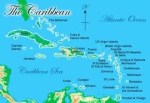
* US Alert as China’s Cash Buys Inroads in Caribbean

New York Times: “A brand new $35 million stadium opened here in the Bahamas a few weeks ago, a gift from the Chinese government. The tiny island nation of Dominica has received a grammar school, a renovated hospital and a sports stadium, also courtesy of the Chinese. Antigua and Barbuda got a power plant and a cricket stadium, and a new school is on its way. The prime minister of Trinidad and Tobago can thank Chinese contractors for the craftsmanship in her official residence.

China’s economic might has rolled up to America’s doorstep in the Caribbean, with a flurry of loans from state banks, investments by companies and outright gifts from the government in the form of new stadiums, roads, official buildings, ports and resorts in a region where the United States has long been a prime benefactor.

The Chinese have flexed their economic prowess in nearly every corner of the world. But planting a flag so close to the United States has generated intense vetting — and some raised eyebrows — among diplomats, economists and investors. “When you’ve got a new player in the hemisphere all of a sudden, it’s obviously something talked about at the highest level of governments,” said Kevin P. Gallagher, a Boston University professor who is an author of a recent report on Chinese financing, “The New Banks in Town.”

Most analysts do not see a security threat, noting that the Chinese are not building bases or forging any military ties that could invoke fears of another Cuban missile crisis. But they do see an emerging superpower securing economic inroads and political support from a bloc of developing countries with anemic budgets that once counted almost exclusively on the United States, Canada and Europe.

China announced late last year that it would lend $6.3 billion to Caribbean governments, adding considerably to the hundreds of millions of dollars in loans, grants and other forms of economic assistance it has already channeled there in the past decade. Unlike in Africa, South America and other parts of the world where China’s forays are largely driven by a search for commodities, its presence in the Caribbean derives mainly from long-term economic ventures, like tourism and loans, and potential new allies that are inexpensive to win over, analysts say.

American diplomatic cables released through WikiLeaks and published in the British newspaper The Guardian quoted diplomats as being increasingly worried about the Chinese presence here “less than 190 miles from the United States” and speculating on its purpose. One theory, according to a 2003 cable, suggested that China was lining up allies as “a strategic move” for the eventual end of the Castro era in Cuba, with which it has strong relations.

via U.S. Alert as China’s Cash Buys Inroads in Caribbean – NYTimes.com.

While the US is trying to encroach on China’s backyard with military alliances with Australia and other South Pacific nations, China is encroaching the US backyard too, but with stadiums, roads and other civilian projects.

05/04/2012

# Deciphering Chinese names

Chiang Kaishek with Muslim General Ma Fushou a...

There are around 100 common Chinese surnames and, apart from possibly Ma (), there is no religious or regional clustering. The colloquial for ‘the public’ is lao bai xing, which literally means “old hundred surnames”. The surname Ma, more often than not, is used by Muslim Chinese; and is thought to be derived from the Prophet Mohammed.

Traditionally, for many centuries, most Chinese families followed the standard practice of using three mono-syllabic words for their names, such as Sun Yatsen, father of modern China.
Maybe surprisingly, Dr Sun is revered in both the Peoples’ Republic and Taiwan. Both have huge memorials to him. The photo courtesy –
http://hcyip.wordpress.com/tag/nanjing-massacre/ – is of the mainland memorial.

The first, Sun (), is the family or clan name. After all what is most important, your antecedents, of course rather than you yourself – back to the collective mindset of Chinese.

The second, Yat, is the ‘generation name’. It is given by the parents to each of the siblings. So, all of Yatsen’s brothers and sisters would have Yat plus another word as their name. And, indeed, all his paternal first cousins. In some families, the boys and girls may have variants of this name.

If the family is conforming to old traditions, then the middle name (the generation name) is taken from a poem specially composed for the family, with each generation taking a successive word from the poem. Typically, the poem will be about something noble and aspirational, such as: “World peace, national unity; Social harmony, family prosperity”. So, the first generation’s middle name will be world, the next peace and so forth. Of course, in most families, long before they reach the eighth generation, some successor would have thought to create his own couplet to be more modern and so the cycle restarts.

The third, sen, is the personal name and can be any word in the Chinese vocabulary. Having said that, some words are regarded as more masculine and others more feminine.

Just to confuse everyone, some families use the second name as the personal name and third as the generation name. So, for example, Sun Yatsen’s wife Madam Sun was named Soong Chingling and her two sisters were Soong Ailing and Soong Meiling. Although Sun and Soong sound similar, Soong is a differnt name altogether () incidentally, Meiling was Chiang Kaishek‘s wife, Madame Chiang.

Despite being a feudal society until recent times, women kept their names after marriage. So the wife of the disgraced leader Bo


Xilai is Gu Kailai; rarely – but confusingly – called Bogu Kailai.
In places like Singapore and Hong Kong sometimes married women, esp business women, would keep their maiden name along with the husband’s surname, making it four names. Sort of like the British ‘double-

barrelled‘ surnames such as the actress Helene Bonham Carter.

Most Chinese who live in Hong Kong, Singapore, Taiwan and other enclaves of Chinese emigrees tend to keep to the traditional way of naming.

Her Excellency Wu Yi, Vice Premier of the Peop...

But since the revolution in 1949 and especially since the Cultural Revolution in the 70s, many mainland Chinese have stopped using the generation name and use just one name after the surname such as Madame Wu Yi, retired senior leader who led China into the WTO and who managed the SARS crisis of early 2000s.

This causes huge problems for the authorities as, it is not uncommon, at roll call in school, several kids would raise their hands– for example – to Wang Ta (= Wang senior). The authorities are encouraging parents to revert to a middle name when naming their children.

Law of Unintended Consequences

continuously updated blog about China & India

ChiaHou's Book Reviews

continuously updated blog about China & India

What's wrong with the world; and its economy

continuously updated blog about China & India