India’s announcement that it would ratify the 2015 global agreement on climate change increases the chances that the pact will go into effect this year.
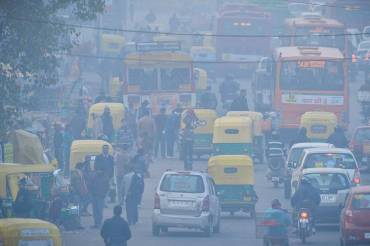
Source: What India’s Decision to Ratify Paris Climate-Change Pact Means – India Real Time – WSJ
continuously updated blog about China & India

You will be living in their world, very soon

Beware the Waking Dragon
India’s announcement that it would ratify the 2015 global agreement on climate change increases the chances that the pact will go into effect this year.
Source: What India’s Decision to Ratify Paris Climate-Change Pact Means – India Real Time – WSJ
Prime Minister Narendra Modi has slammed developed nations for questioning India over global warming despite it having the lowest per capita emission of gases and asserted that India will set the agenda for the Climate Change conference to be held in France in September.

“I am surprised that the world is scolding us even though our per capita gas emission is the lowest…,” he said while addressing a reception for the Indian community here last night.
Underlining that preservation of nature was in the customs and tradition of Indians which they have done for ages, Mr. Modi said, “The whole world is posing questions to us. Those who have destroyed climate are asking questions to us. If anybody has served the nature, it is Indians.”
He asserted that India is “not answerable to the world” and will tell them that “you destroyed nature.”
Underlining that India should lead the way to deal with climate change, the Prime Minister said, “India will set the agenda for the upcoming Conference of Parties (COP)” meeting to be held in Paris in September.
Referring to India’s traditional practices and traditions, Mr. Modi said it is the only country which has served the nature the most as Indians even treat even river as mother and worship trees.
“Treating the nature well comes naturally for Indians and they (developed nations) are teaching us,” he said.
The Prime Minster said the solutions to the “crisis” on account of global warming are in India’s traditions and customs.
“We should go out with confidence,” he said, asking the Indian diaspora to contribute in this regard.
At the same time, he said India also wants solutions to the global problem of climate change. In this regard, he spoke about his government’s initiatives to tap clean and renewable energy for generating 175 Gigawatts of electricity from it.
One Gigawatt is equal to 1,000 MW.
“Earlier, we did not go beyond Megawatts but in 10 months, we have at least started thinking of Gigawatts,” he said.
via India will set Climate Change conference agenda: Modi – The Hindu.
The Chinese central government on Friday approved a plan that maps out major climate change goals to be met by 2020.
The State Council, China’s cabinet, gave a green light to the plan, which was proposed by the National Development and Reform Commission (NDRC), the country’s economic planner. A statement released on the State Council’s website urged the NDRC to carry out the plan.
China has pledged to reduce its carbon emission intensity, namely emissions per unit of GDP, by 40 percent to 45 percent by 2020 from the 2005 level. It will also aim to bring the proportion of non-fossil fuels to about 15 percent of its total primary energy consumption.
Other targets include increasing forest coverage by 40 million hectares within the next five years.
The government will speed up efforts to establish a carbon emission permit market, under the plan, which also calls for deepened international cooperation under the principles of “common but differentiated responsibilities,” equity and respective capability.
The State Council said local governments and departments at all levels should recognize the significance and urgency in dealing with climate change and give higher priority to action on this issue.
China’s release of the action plan came just before a climate summit to be held at UN Headquarters in New York on Tuesday. Chinese Vice Premier Zhang Gaoli will attend.
Xie Zhenhua, deputy chief of the NDRC and the country’s top official on climate change, told a press conference that the plan was concrete action by China to participate in the global process to tackle climate change.
By the end of last year, China had reduced carbon dioxide emissions per unit of GDP by 28.56 percent from 2005, which was equivalent to saving the world 2.5 billion tonnes of carbon dioxide emissions, Xie said.
At the end of 2013, China’s consumption ratio of non-fossil energy to primary energy stood at 9.8 percent. Forest growing stock had increased by 1.3 trillion cubic meters from 2005 to two trillion cubic meters, seven years ahead of schedule, according to the official.
In the first nine months of 2014, China’s energy consumption per unit of GDP dropped by 4.2 percent year on year and carbon intensity was cut by about 5 percent, both representing the largest drops in years, he said.
As a developing country, China is the world’s largest greenhouse gas emitter. With the plan, the country has showed its confidence in achieving its green goals.
via China approves plan to combat climate change – China – Chinadaily.com.cn.
Is this a case of “Statistics, statistics and damned lies!”?
China continues to invest heavily in its environment. This is despite not formally singing up to varius global agreements.
China Daily: “The Chinese government allocated 46.2 billion yuan ($7.22 billion) from its central budget to the return-farmland-to-forests plan during 2008-2011, according to the National Development and Reform Commission (NDRC).
As of the end of 2006, around 9.3 million hectares of farmland had been converted to forests since the government launched a national campaign in 1999. Around 15 million hectares of hillside was closed to facilitate afforestation during the period, according to the NDRC.
Under the plan, farmers received grain and cash subsidies if they returned their farmlands to woodlands to combat soil erosion.
By 2006, some 124 million farmers had been subsidized and the ecological environment had seen significant improvements, the NDRC said.
The emphasis on boosting forest coverage came amid the country’s efforts to increase its “forest carbon sink capacity”. This means using forested areas to remove carbon dioxide from the atmosphere, thereby helping address global climate change.
China’s forest coverage reached 20.36 percent in 2010, up from 18.2 percent in 2005, and is expected to further increase to 21.66 percent by 2015.
via China spends heavily in afforestation efforts |Society |chinadaily.com.cn.
Global warming threatens China’s march to prosperity by reducing crops, shrinking rivers and unleashing more droughts and floods, says the Chinese government’s latest “Second National Assessment Report on Climate Change”.
China is the world’s second biggest economy after the US and the biggest emitter of greenhouse gas pollution, now ahead of the US.
Global warming caused and exacerbated by greenhouse gases from industry, transport and changing land-use poses a long-term threat to China’s prosperity, health and food production, says the report. With China’s economy likely to overtake the United States’ in 20 or 30 years, that has dire consequences.
http://www.reuters.com/article/2012/01/18/us-china-climate-idUSTRE80H06J20120118

continuously updated blog about China & India
continuously updated blog about China & India
continuously updated blog about China & India

 CHINDIA ALERT: You'll be living in their world, very soon