Posts tagged ‘Consumer protection’

21/10/2015

India’s Bharat Petroleum Wants to Use Gas Stations to Bring E-Commerce to Rural India – India Real Time – WSJ

Bharat Petroleum Corp. Ltd., India’s lumbering state-run fuel company, is planning use its nationwide network of 12,800 gas stations to deliver online retail to rural India.
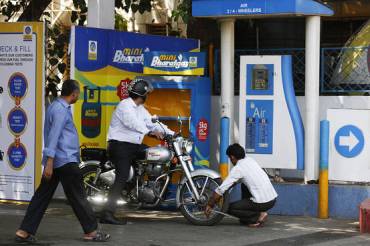
The oil refiner and retailer is hoping it can leverage its outlets and logistical staff across India to succeed as a latecomer to India’s ongoing online retail boom. It is upgrading its technology and logistics network to be able to sell farmers everything from fertilizer to smartphones.

The e-commerce push will begin December, with BPCL’s rural gas and cooking gas distributors starting to accept orders and payments online, said BPCL Chairman and Managing Director S. Varadarajan.  As early as next year, the company is also considering using its urban branches to sell and distribute groceries.

While the early movers in e-commerce in India such as Flipkart Internet Pvt. Ltd.’s flipkart.com, Jasper Infotech Pvt. Ltd.’s snapdeal.com and Amazon Seller Services Pvt. Ltd.’s amazon.in are still struggling to find cost-effective ways to reach the hundreds of millions of Indians who live outside the biggest cities, BPCL already has employees and properties throughout the country.

“About 30% of our retail outlets are in rural India,” Mr. Varadarajan said. Rural customers can shop online then “pick up stuff when they fill fuel at their local gas station.”

India’s state-run oil refiners are desperate to find new sources of revenues as the fall in oil price as well as increased competition from the private sector weigh on their sales.

BPCL’s retail ambitions are “a response to competition by improving margins,” said Deepak Mahurkar, head of PwC’s Oil & Gas Industry practice in India.

Analysts say that while BPCL does theoretically have unique access to much of India’s middle class, which uses its stations to refuel their cars and motorcycles, whether this traditionally slow-moving company can capture a corner of the rapidly-evolving online retail business remains to be seen.

BPCL has prime properties on the main streets and highways across the country, but few of its gas stations have the facilities or the staff to do more than pump gas. Many don’t even have running water in their bathrooms, much less the Internet connections, storage facilities and delivery technology a vibrant e-commerce company would require.

Diving into e-commerce would necessitate a big change in mindset for BPCL which is not used to worrying much about competition or consumers, said Anand Kumar Jaiswal, who heads the Centre for Retailing at IIM Ahmedabad, an Indian management school.

“I am really skeptical about it,” said Vishnu Kumar, an assistant vice president for research at Chennai-based broker Spark Capital Advisors (India) Pvt. Ltd.  “If I am a consumer I am not going to check with BPCL for a microwave.”

Even people within BPCL’s own network doubt the company can pull it off.

Sachin Shah, the manager of a company that delivers BPCL cooking gas cylinders to more than 20,000 customers in the southern city of Hyderabad, said the company will have to radically improve its logistics system to guaranteed delivery if it wants to sell more than gas cylinders and gas stoves

“If Bharat Petroleum doesn’t deliver, I will lose face,” he said.

BPCL’s Mr. Varadarajan said the company is confident it can deliver because it will use its best dealers and a new distribution system to get products to customers.

Source: India’s Bharat Petroleum Wants to Use Gas Stations to Bring E-Commerce to Rural India – India Real Time – WSJ

31/12/2014

China’s Fraudbusters Crack Down on Fake Goods – Businessweek

Xu Dajiang spends at least three days a week in supermarkets in China scrutinizing products. He’s not shopping for bargains; he’s looking for any sign of flaws—an expired sell-by date, a forbidden ingredient, an exaggerated claim on a package, or outright counterfeit.

Juts Do It

Earning a living as a professional fraudbuster, Xu is a consumer turned consumer protector, searching for any wrongdoing by local and multinational companies that can be used to file a claim with a retailer and collect damages. “There will always be manufacturers who treat the law with indifference and flout it no matter how much you tighten the regulations,” he says. “That’s when fraudbusters like me have a role to play.”

Fraudbusting is flourishing in China, thanks to continued food and product safety scandals and a revised consumer protection law enacted in March that increases compensation for those who buy damaged or fake goods. The law allows consumers to try to recoup as much as three times the cost of the original product or service purchased. They can file class actions for the first time. The law also carries stiffer penalties for businesses that mislead shoppers.

via China’s Fraudbusters Crack Down on Fake Goods – Businessweek.

15/03/2014

Consumers in China: The true meaning of san yao wu | The Economist

FIFTY-TWO years ago this week, John Kennedy gave a speech to Congress in which he argued that consumers “are the only important group in the economy who are not effectively organised, whose views are often not heard.” His eloquent plea for their protection led to the United Nations guidelines for consumer protection and to the annual celebration of World Consumer-Rights Day on March 15th.

Nowhere is that day marked with more gusto than in China, where it is known as san yao wu (three one five). Every year on that date, the national broadcaster airs a much-watched programme lauding consumer rights. It is also used as an excuse to bash successful foreign firms—Apple was last year’s main target—for small or imagined transgressions.

This year China will better honour Kennedy’s legacy. The television gala is still due to be broadcast this weekend, and corporate evildoers—internet firms are rumoured to be in the crosshairs this time—will probably be shamed again. But something more important will also happen. On March 15th a new consumer law, the biggest reform in this area in 20 years, comes into force. At face value, it appears to give a big boost to consumer protection. Retailers must take back goods within seven days; in the case of online purchases, consumers do not even have to offer a reason. Consumer data will be protected from misuse, and permission will have to be sought for any commercial use of them. Class-action lawsuits, hitherto rare in China, will become easier to file.

The motivations for the law seem sincere. The government is keen to shift the economy towards consumption-driven growth. Regulations protecting consumers should help, by bolstering their trust in merchants. Max Xin Gu of K&L Gates, a legal firm, also believes the law “is timed to come hand-in-hand with the anti-corruption campaign” launched by President Xi Jinping: both are meant to allow ordinary people to benefit from the rule of law.

James Feldkamp is the founder of Mingjian, a pioneering Chinese website offering independent product reviews (akin to America’s Consumer Reports or Britain’s Which?). He agrees that trust and transparency are key to boosting consumption. However, he worries about how the law will be implemented and enforced. Indeed it may leave consumers ill-protected even as it saddles firms with extra costs and complexity. For example, although parts of the law resemble the EU’s strict rules on data privacy, it has important gaps. Michael Tan of Taylor Wessing, another law firm, notes that it does not grant a “right to be forgotten” (by having firms expunge all record of a former customer). It leaves businesses in the dark on how exactly they can use customer data, and fails to impose on them a duty to ensure their accuracy.

via Consumers in China: The true meaning of san yao wu | The Economist.

Enhanced by Zemanta
25/10/2013

China overhauls consumer protection laws | Reuters

China‘s top legal body has strengthened consumer rights in the country after it revised the nation’s Consumer Protection Law on Friday, the first major overhaul in two decades.

Customers are seen at an Apple store in Beijing August 24, 2012. REUTERS/Jason Lee

The revisions increase consumer powers, add rules for the booming Internet shopping sector and stiffen punishments for businesses that mislead shoppers.

Chinese regulators have been cracking down on real or perceived corporate wrongdoing, with domestic and international infant formula makers and drugmakers particularly coming under the spotlight this year.

via China overhauls consumer protection laws | Reuters.

Law of Unintended Consequences

continuously updated blog about China & India

ChiaHou's Book Reviews

continuously updated blog about China & India

What's wrong with the world; and its economy

continuously updated blog about China & India