Posts tagged ‘Dalit’

05/10/2016

Why are millions of Indians marching in silence? – BBC News

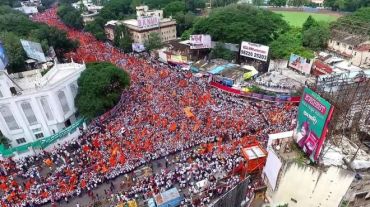
It is a unique protest: the silent marchers have no leaders; and they include the peasant and the professional. Women lead many of the marches; and politicians are not allowed to seize them. It is a sound of silence, says a commentator, that India can ill afford to ignore.

The protesters belong to the Maratha caste, one of India’s proudest – the warrior king Shivaji was one of them. Mostly farmers, they comprise more than a third of one of the population of Maharashtra, a relatively prosperous state, which is home, on one hand to Bollywood, thriving factories and farms and on the other, malnourished children and neglected tribespeople living in abject poverty.

Huge protests

The rape of a teenage Maratha girl allegedly by three low caste Dalit men triggered the silent marches in July. Then the protests expanded to include a demand for quotas in college seats and government jobs and a review of a 27-year-old federal law that protects Dalits and tribespeople from caste-related atrocities.

What is India’s caste system?

Why India’s farm communities are angryAfter more than 20 such rallies, the silent marchers – who call themselves the Maratha Revolutionary Silent Rallies – are expected to gather in the western Indian state capital, Mumbai, at the end of October. More than 10 million people are expected to participate in what could turn out to be one of largest protests in India in recent memory.

The upper-caste, largely land-owning Marathas have a handful of grumbles.

For one, they have turned their ire on the Dalits and tribespeople, alleging that the law to protect them has become a pretext to target the upper caste community, and lodge false cases against them. (The victims also get state compensation for as many as 47 offences against them.)

Image copyright VAISHALI GALIM

But this may not be an entirely truthful claim. Although dalits and tribespeople – India’s wretched of the earth – comprise 19% of Maharashtra’s population, but only 1% of the police complaints were filed by them last year, according to one report. Also the federal law was applicable in less than 40% of the complaints.

Social unrest

Clearly this disingenuous grievance masks a longer-standing demand: caste quotas in government jobs and seats in educational institutions. India’s Supreme Court has put a 50% cap on caste quotas, a limit that has already been reached in Maharashtra. Any concessions to the Marathas will mean that they will have to be officially labelled backward or less-privileged and the quotas will have to come at the expense of those for the less privileged castes. This could potentially trigger off bloody caste wars in the state.

The silent marchers of Maharashtra point to a host of structural infirmities afflicting India, which, if not resolved in time, could stoke widespread social unrest.

Growing inequity and decades of flagrant cronyism has meant that power and wealth continue to belong to a few.

The majority of colleges, cooperative banks and sugar factories in Maharashtra, for example, are owned by a clutch of politicians. According to one estimate, 3,000 families own more than 70% of all the farms in the state. The majority of the state’s 18 chief ministers have been Marathas. Half of its lawmakers belong to the community as well.
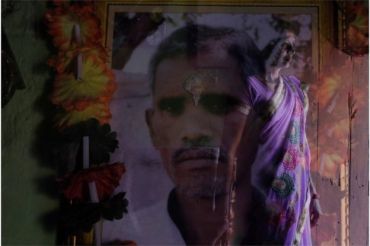
Image copyright MANSI THAPLIYAL Maratha farmers have taken their lives after they failed to repay debts

But caste and class don’t often coalesce in India, and the Marathas, like other upper caste communities have mixed fortunes: they are the educated elite and the rich farmers, but they are also the struggling small and landless farmers and farm workers. More than a third of Marathas are landless, according to one estimate.

It is the “lower and middle-rung Marathas who feel isolated, neglected, marginalised in the job market and denied opportunities in higher education,” in a fast-changing country, as commentator Kumar Ketkar points out in this perceptive essay on the ongoing protests.

The silent marches also shine a spotlight on its looming farm crisis as farmer incomes plummet due to expensive feedstuff, fertiliser, labour and erratic crop prices.

Frustration

Plot sizes have also shrunk, making farming unrewarding. Most of India’s farms are rain fed, and irregular weather changes are playing havoc with crops as rivers are drying up, and drought is common. Farmers are often left to fend for themselves and have no skills for jobs in India’s services-based economy. Aspiration is turning into frustration.

The Maratha protests also point to how India is veering towards what sociologist Andre Beteille called a “populist democracy” where social and political life are influenced by group identities and loyalties. “Problems arise when the loyalties of kinship and community are allowed to distort and override the demands of constitutional government,” wrote Professor Beteille.

Image copyright MANSI THAPLIYAL Farming is becoming an unrewarding profession

Many believe India’s quotas for seats and jobs are in a sordid mess of its own making.

It is indisputable that affirmative action is essential for communities like dalits and tribespeople who have been historically wronged. But extending it to other castes recklessly can distort matters.

How much burden of quotas can a state bear without being weakened irreparably? India needs jobs – and fast – and skills training if it has to avoid the social unrest that could blight a developing nation. Otherwise, the marchers of Maharashtra may not remain silent for long.

Source: Why are millions of Indians marching in silence? – BBC News
26/08/2016

The Economist explains: Why Kashmir is erupting again | The Economist

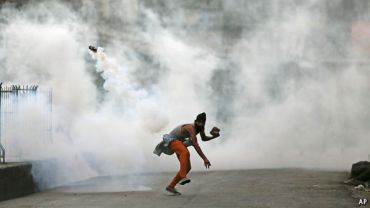
TODAY marks the 48th consecutive day of protests in Jammu & Kashmir, India’s only Muslim-majority state. Young Kashmiri men have been on the streets calling for independence from India and throwing stones at security forces. Indian security forces have responded with tear gas and shotguns that fire small-bore pellets instead of buckshot.

A strict curfew has also been imposed across the Kashmir valley, which includes Srinagar, the region’s largest city. So far, 66 civilians and two police officers have been killed in the violence. Why are Kashmiris protesting?

The region has been disputed since the partition of India and Pakistan in 1947. Both sides claim the territory and have fought three wars over it. Kashmir has been living under India’s Armed Forces (Special Powers) Act, which gives special powers to the army, since the eruption in 1990 of an armed insurgency that was covertly supported by Pakistan. Some 40,000 people have been killed since. Even in the relatively peaceful past decade, unrest has flared up, most notably in the summers of 2008 and 2010. The current protests started on July 9th after Indian security forces killed Burhan Wani, a young and charismatic Islamist militant. Resentment had been building for months. Kashmiris worried when Narendra Modi’s Hindu-nationalist Bharatiya Janata Party (BJP) came to power in 2014 that his national government would make life difficult for Muslims. At state elections later that year, the local Peoples Democratic Party formed a coalition with the BJP, leaving them feeling betrayed. Wani’s killing has mobilised a generation that had grown up under what it sees as an illegitimate Indian occupation.

The result has been a seven-week cycle of violent protests and retaliatory action by the police and paramilitary forces. Their supposedly non-lethal pellets have blinded dozens and injured hundreds. Shops and businesses have remained closed since the protests started, either under curfew orders or because of calls for strikes from separatist leaders. Many Kashmiris have not left their homes for weeks. Few expect the situation to improve any time soon, despite soothing words this week from Mr Modi and a visit to the region by India’s home minister.An obstacle to any lasting solution is India’s insistence on seeing Kashmir through the prism of its rivalry with Pakistan. The Indian government’s immediate reaction to this summer’s unrest was to accuse its neighbour of meddling. In fact, Wani was a home-grown insurgent; the young men on the streets are locals. Unemployment is widespread and economic opportunities are few. The state was also promised special status, guaranteeing autonomy, in India’s constitution. And many Kashmiris now want more: a survey in 2010 by Chatham House, a think-tank, found overwhelming support for independence. Kashmiris are at best ambivalent about their attachment to India. Until the government recognises their demands, the anger is unlikely to dissipate.

Source: The Economist explains: Why Kashmir is erupting again | The Economist

19/08/2016

Cowboys and Indians | The Economist

CLOSE your eyes and you could be in a farmyard: a docile heifer slurps a grassy lunch off your hand, mooing appreciatively. Now open your eyes to the relentless bustle of a huge city: the cow is tied to a lamp-post, cars swerve to avoid it and its keeper demands a few rupees for providing it with the snack.

Across Mumbai, an estimated 4,000 such cow-handlers, most of them women, offer passing Hindus a convenient way to please the gods. In a country where three-quarters of citizens hold cows to be sacred, they form part of an unusual bovine economy mixing business, politics and religion.India is home to some 200m cows and more than 100m water buffaloes. The distinction is crucial. India now rivals Brazil and Australia as the world’s biggest exporter of beef, earning around $4 billion a year. But the “beef” is nearly all buffalo; most of India’s 29 states now ban or restrict the slaughter of cows. With such strictures multiplying under the government of Narendra Modi, a Hindu nationalist, entrepreneurs have sought new ways to profit.

One promising line of business has been to become a gau rakshak, or cow protector. Some of these run charitably funded retirement homes for ageing cows, including rural, ranch-style facilities advertised on television. Other rakshaks have proven more concerned with punishing anyone suspected of harming cows or trading in their meat. Such vigilantes have gained notoriety in recent years as attacks on meat-eating Muslims or on lower-caste Hindus working in the leather trade have led to several deaths. A mob assaulted a group of Dalits (the castes formerly known as untouchables) last month in Mr Modi’s home state of Gujarat, thinking they had killed a cow. In fact they were skinning a carcass they had bought legitimately; Dalits traditionally dispose of dead cows.

More commonly, India’s less scrupulous cowboys simply demand protection money from people who handle cattle. An investigation by the Indian Express, a newspaper, found that cattle breeders in the northern state of Punjab were forced to pay some 200 rupees ($3) a cow to ensure that trucks transporting livestock could proceed unmolested. Under pressure from the rakshaks, the state government had also made it harder to get permits to transport cattle.

Earlier this month Mr Modi broke a long silence on the issue. Risking the ire of his Hindu-nationalist base, the prime minister blasted “fake” gau rakshaks for giving a good cause a bad name. If they really cared about cows, he said, they should stop attacking other people and instead stop cows that munch on rubbish from ingesting plastic, a leading cause of death.

In any case, vigilantism and the beef trade generate minuscule incomes compared with India’s $60 billion dairy industry. The country’s cows and buffaloes produce a fifth of all the world’s milk. As Indian incomes rise and consumers opt for costlier packaged brands, sales of dairy products are rising by 15% a year. But although a milk cow can generate anywhere from 400 to 1,100 rupees a day, this still leaves the question of what to do with male animals, as well as old and unproductive females.

Not all can be taken in by organised shelters. This makes the urban cow-petting business a useful retirement strategy. A good patch (outside a temple, say) can generate around 500 rupees a day from passers-by. Feed costs just 20 rupees a day, says Raju Gaaywala, a third-generation cow attendant whose surname, not coincidentally, translates as cow-handler.

He inherited his patch in Mulund, a northern suburb of Mumbai, when his father passed away in 1998. His latest cow, Lakshmi, cost him 4,000 rupees around three years ago and generates around 40 times that every year, enough to send his three children to English-language schools and, he hopes, to set them up in a different form of entrepreneurship.

The handlers fear their days may be limited. A nationwide cleanliness drive has targeted urban cow-handlers, who are in theory liable for fines of 10,000 rupees. In practice the resurgent Hindu sentiment under Mr Modi should help leave the cattle on the streets. It may kick up other opportunities, too. Shankar Lal, an ideological ally of the prime minister’s, in an interview with the Indian Express extolled the many health merits of cow dung. Spreading a bit on the back of a smartphone, as he does every week, apparently protects against harmful radiation. Usefully for Indian farmers, only local cows can be used, not Western breeds such as Holsteins or Jerseys, he warns: “Their dung and milk are nothing but poison.”

Source: Cowboys and Indians | The Economist

08/08/2016

India’s Controversial Cow Protection Group Conducts Cattle Census – India Real Time – WSJ

A group concerned about the safety of India’s cows has embarked on a controversial and ambitious mission this month: counting all the cattle in the state of West Bengal.

“Our aim is to save the cow mother,” said Subrata Gupta, president of the Bengal branch of Cow Development Cell, which used to be associated with Prime Minister Narendra Modi’s ruling Bharatiya Janata Party.

The group will use the data to protect the state’s cows, many of which are being illegally exported to Bangladesh and Pakistan for slaughter, said Mr. Gupta.

The status of cows — an animal deeply revered in Hinduism – is a divisive issue in the country. Critics say conservative Hindu groups, emboldened by the BJP’s power in New Delhi, are eating away at the country’s secular roots by trying to ban beef consumption.

Over the weekend Mr. Modi spoke out against self-styled vigilantes who say they are trying to protect cows. He urged state governments to punish them when they use cow protection as a rationalization for hate crimes.

Cow slaughter is already illegal in many Indian states–including Uttar Pradesh where a Muslim man was killed by a mob last year following rumors he had slaughtered a cow for food.

The eastern state of West Bengal, however, allows the killing of cows during the Islamic religious festival of Eid.

Around 6,000 volunteers from Mr. Gupta’s group are going door-to-door across state to record how many cows each household owns. The group wants to finish the survey before Sept. 12, when Muslims will celebrate Eid.

“Thousands of cows are being smuggled across India’s border into Bangladesh, where they will be slaughtered,” said Mr. Gupta of the Cow Development Cell which has groups apprehending cattle trucks, even though it has no legal authority to do so.

He said activists from the group freed about 40,000 animals last month.

The BJP recently broke ties with Mr. Gupta’s Cow Development Cell.

“It was an all-India decision that a separate cell for cow development is not needed,” said Dilip Ghosh, president of the BJP in West Bengal.

That hasn’t stopped Mr. Gupta and his army of self-styled cow protectors who say they will release the results of the cow census on Sept. 15.

Source: India’s Controversial Cow Protection Group Conducts Cattle Census – India Real Time – WSJ

21/06/2016

India’s suicide farmers’ widows face living death | Reuters

At the age of 24, Joshna Wandile and her two children were thrown out of the house she shared with her in-laws after her farmer husband hanged himself. He left a pile of debts after years of drought laid waste to his land.Wandile is not alone. More than 300,000 farmers have killed themselves in India over the last two decades, leaving their widows battling with the state, moneylenders, in-laws and their communities.

While widows in rural India are often ostracised and abused, farmer widows have it particularly tough, activists said ahead of International Widows’ Day on Thursday.”I had nothing when my husband died – he sold everything in the house, even the cooking vessels, to pay the creditors,” said Wandile who lives in Vidarbha in Maharashtra, among the worst affected by farmers’ suicides.

“I couldn’t even feel sad. I could only think: where will we live? How will I earn enough money? How will I keep us safe?” said Wandile, who was married at 17.

Maharashtra, which is struggling with its worst drought in four decades, accounted for more than half the 5,650 farmer suicides in India in 2014, according to official data. Some estimate last year’s toll exceeded 3,000.

“Bankruptcy or indebtedness” was the most common reason cited. Most were small farmers, with holdings of under two hectares.

There is little information on the families left behind who struggle to claim their right to the land they till and the house they live in, while battling archaic stigmas that dog their every step.

Source: India’s suicide farmers’ widows face living death | Reuters

14/04/2015

The Statesman: Let’s make India Ambedkar dreamt of: Modi

Prime Minister Narendra Modi on Tuesday paid tributes to to BR Ambedkar on his 124th birth anniversary, and said, “Let us pledge to dedicate ourselves to creating India that Ambedkar dreamt of…an India that will make him proud”.

title=

“I bow to Dr. Babasaheb Ambedkar on his birth anniversary – Jai Bhim,” the prime minister said in a message.

“Dr. Babasaheb Ambedkar is a yug purush (man of the era) who lives in the hearts and minds of crores of Indians. His life is characterised by unmatched determination and a firm commitment towards social justice. He made a mark as a bright lawyer, scholar, writer and intellectual who always spoke his mind,” Modi said.

He added: “Who can forget Dr. Ambedkar’s contribution in the making of our Constitution? He served the nation and the people tirelessly and selflessly.”

“Let us pledge to dedicate ourselves to creating the India that Dr. Ambedkar dreamt of…an India that will make him proud.”

via The Statesman: Let’s make India Ambedkar dreamt of: Modi.

06/08/2014

Scramble for Dalit votes is sparking increased communal violence in UP

The key force driving the increasing communal polarisation in Uttar Pradesh is the scramble for Dalit votes in an attempt to weaken the Bahujan Samaj Party and deter Muslims from rallying behind it.

This strategy was evolved, and implemented, during the last Lok Sabha elections. But the competition to woo Dalits has gathered momentum ahead of bypolls to 12 assembly seats, five of which are in the western section of the state, which is often billed as the “wild west” of the Hindi heartland.

As the Indian Express reported, more than 600 incidents of communal violence have taken place in the state since May.

The Bharatiya Janata Party’s stake in the bypolls, which have yet to be scheduled, is enormous. Eleven of the 12 constituencies here had BJP MLAs, all of whom were elected to the Lok Sabha, as was the party’s ally, Apna Dal leader Anupriya Patel. The results will help measure the durability of the Modi wave, and its possible impact on the UP assembly elections in early 2017.  The verdict from UP could well determine the chances of Prime Minister Narendra Modi winning a second successive term in the 2019 polls.

The need to cobble together an electoral majority is driving political parties to resort to communal mobilisation. Local disputes over land, civic amenities, and exploitative gender relations have been given a communal hue and magnified to portray a monolith Hindu community arrayed against the Muslims.

via Scroll.in – News. Politics. Culture..

10/04/2014

Govt declares holiday on B R Ambedkar’s birth anniversary – The Times of India

English: B. R. Ambedkar delivering a speech to...

English: B. R. Ambedkar delivering a speech to a rally at Yeola, Nasik, on 13 October 1935 (Photo credit: Wikipedia)

The Centre has declared a holiday on Monday on account of Dr B R Ambedkar‘s birth anniversary, giving about 50 lakh central government employees an extended weekend.

“It has been decided to declare Monday, the 14th April 2014, as a closed holiday on account of the birthday of Dr B R Ambedkar, for all central government offices including industrial establishments throughout India,” said an office memorandum issued by ministry of personnel.

April 14 is not a compulsory holiday for central government employees. “Every year, the Centre takes a call on whether or not to declare an off for its offices across the country,” a personnel ministry official said.

via Govt declares holiday on B R Ambedkar’s birth anniversary – The Times of India.

Enhanced by Zemanta
15/03/2014

Why caste still matters in India | The Economist

INDIA’S general election will take place before May. The front-runner to be the next prime minister is Narendra Modi of the Bharatiya Janata Party, currently chief minister of Gujarat. A former tea-seller, he has previously attacked leaders of the ruling Congress party as elitist, corrupt and out of touch. Now he is emphasising his humble caste origins. In a speech in January he said “high caste” Congress leaders were scared of taking on a rival from “a backward caste”. If Mr Modi does win, he would be the first prime minister drawn from the “other backward classes”, or OBC, group. He is not the only politician to see electoral advantage in bringing up the subject: caste still matters enormously to most Indians.

The country’s great, liberal constitution was supposed to end the millennia-old obsession with the idea that your place in life, including your occupation, is set at birth. It abolished “untouchability”—the practice whereby others in society exclude so-called untouchables, or Dalits, as polluting—which has now mostly disappeared from Indian society. Various laws forbid discrimination by caste. At the same time (it is somewhat contradictory) official schemes push “positive” discrimination by caste, reserving quotas of places in higher education, plus jobs in government, to help groups deemed backward or deprived. In turn, some politicians have excelled at appealing to voters by caste, promising them ever more goodies. For example Mayawati, formerly chief minister of Uttar Pradesh state (population: over 200m) and just possibly a future prime minister, leads a Dalit party. In another northern state, Bihar, parties jostle to build coalitions of caste groups. Everywhere voters can be swayed by the caste of candidates.

But don’t blame politicians alone. Strong social actors—such as leaders of “khap panchayats” (all-male, unelected village councils) or doughty family elders—do much more to keep caste-identity going. Consider marriages. In rural areas it can be fatal to disregard social rules and marry someone of a different, especially if lower caste. Haryana, a socially conservative state in north India, is notorious for frequent murders of young men and women who transgress. Even in town, caste is an important criterion when marriages are arranged. Look at matrimonial ads in any newspaper, or try registering for a dating site, and intricate details on caste and sub-caste are explicitly listed and sought (“Brahmin seeks Brahmin”, “Mahar looking for Mahar”) along with those on religion, education, qualifications, earning power and looks. Studies of such sites suggest that only a quarter of participants state that “caste is no bar”. Such attitudes also reflect the anxieties of parents, who are keen for children to marry within the same group, because marriages bring extended families intimately together.

As long as marriages are mostly within the same caste, therefore, don’t expect any law or public effort to wipe away the persistent obsession with it. That seems set to continue for a long time: a survey in 2005 found that only 11% of women in India had married outside their caste, for example. What is changing for the better, if too slowly, is the importance of caste in determining what jobs, wealth, education and other opportunities are available to an average person. No caste exists for a call-centre worker, computer programmer or English teacher, for example. The more of those jobs that are created, and the more people escape India’s repressive villages, the quicker progress can come.

via The Economist explains: Why caste still matters in India | The Economist.

Enhanced by Zemanta
Law of Unintended Consequences

continuously updated blog about China & India

ChiaHou's Book Reviews

continuously updated blog about China & India

What's wrong with the world; and its economy

continuously updated blog about China & India