Posts tagged ‘Delhi’

03/09/2014

Jaitley’s biggest tasks lie ahead: big-bang reforms and restructuring the Finance Ministry

The finance minister has had to tackle inflation, India’s stance in the WTO and easing regulatory hurdles. That was the easy part.

Even before the general election ended in May, it was clear that if the Narendra Modi-led Bharatiya Janata Party formed the government, Arun Jaitley would head one of the important ministries on Raisina Hill, the area of Lutyen’s Delhi that houses some of the most important government buildings.
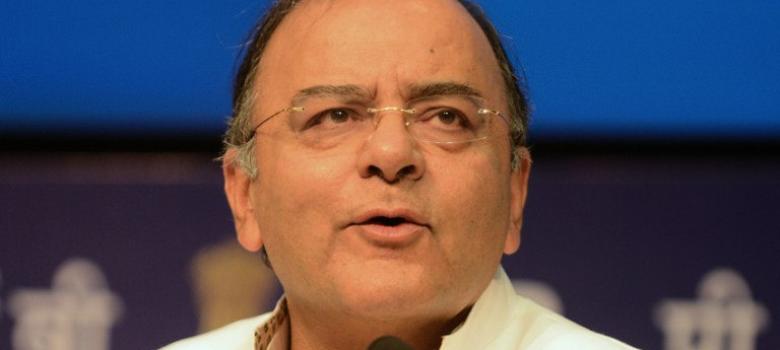
But Jaitley’s move to North Block, the part of the Hill housing the finance ministry, was not easy. Contesting his first Lok Sabha election, he lost the race in Amritsar to the Congress candidate by nearly one lakh votes, raising questions within the party about his eligibility to be granted a key ministry. Jaitley, who has also been given charge of the defence ministry, is a man with as many detractors as admirers in New Delhi and within his own party.

Often teased in Delhi circles as the only Congresswala in the BJP, Jaitley was seen by many as an obvious choice for the crucial portfolio of finance. He got the job because he has a shrewd strategic mind and knows how to work Delhi. In addition, the BJP needed someone who had the nerves to handle a ministry that was practically in the ICU despite valiant, though sometimes questionable, efforts by his predecessor and friend, the Congress’s P Chidambaram.

Both Prime Minister Narendra Modi and Jaitley had only a few days to present their first budget to a Parliament and nation that had been promised big-bang economic reforms. As Jaitley presented the Modi government’s first budget on July 12, many who had expected major reforms were left disappointed even though some praised it for pointing in the right direction.

As a member of the Federation of Indian Chambers of Commerce and Industry said, this was a “benefit of the doubt” budget because of the short period in which Jaitley and his team had to think things over. The real test will come in 2015.

Huge challenges

A change in government is not the only factor that drives ministerial reform. The bureaucracy also needs to endorse the new policies. In getting the bureaucracy on board, Jaitley’s team in North Block has faced plenty of challenges, such as the minister’s inability to address the thorny issue of retrospective taxation.

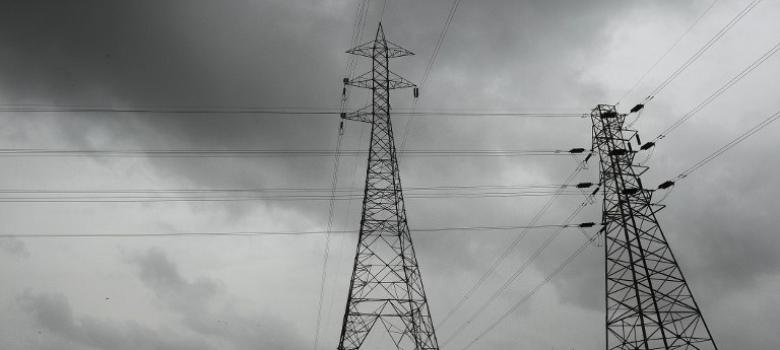
Other things that kept Jaitley busy as soon as he took over were controlling inflation, India’s stance on subsidies at the WTO and making it easier to do business by removing regulatory hurdles. But the enormity of reforms needed to transform the Indian economy and pushing its growth rate to more than 6% require willpower and the stomach to take politically unpopular measures, especially in sectors such as power.

“There are three or four sectors where we just cannot continue doing business as usual,” said Pratap Bhanu Mehta, president of the New Delhi-based Centre for Policy Research. “In areas such as energy we are too dependent on imports and on carbon-intensive energy sources. If we are not on an alternative energy path soon, which means low carbon and technologically efficient [forms], we could be out of the development game in 15 to 20 years.”

It is the support system for business that requires key changes. Foreign industry remains bullish on India but has made its displeasure known over the slow progress on issues such as foreign direct investment, land acquisition and retrospective taxation.

On the domestic front, many industrialists have asked for a revitalised subsidy regime, one in which the government gives subsidies wherever required instead of using them as a populist measure to get votes. At the same time, as a vital component of the global economy, India could find it increasingly difficult to persist with its subsidy regime even if it makes sense on the domestic front.

Back to the drawing board

Globalisation and climate change will become central to India’s economic story. The Asian Developmental Bank concluded in a recent report that South Asian economies such as India could lose 1.8% of their GDP by 2050 and 8.8% of their GDP by the end of the century to climate change.

via Scroll.in – News. Politics. Culture..

30/08/2014

The backup power in Indian apartments are funded in the name of a poor Indian farmer

In India’s urban areas, you can tell the interruption in power supply by an accompanying noise – a diesel genset whirring into life somewhere nearby, releasing plumes of dark smoke into the air. Power failure is so endemic in some areas that factories, call centres, hotels and apartment complexes all install large gensets to provide back-up power.

So much so, that the installed power generation capacity of diesel gensets in India has now exceeded 90,000 megawatts, or the equivalent of 36% of India’s total power generation capacity. This estimation by the power regulator, the Central Electricity Regulatory Commission, in fact takes into account only large units with over 100 kilo volt ampere. If smaller units in apartment complexes and household are taken into account, the figure could be much larger.

Policymakers thus far believed that the installed capacity of such units was just over 1,000 MWs, while in reality it was 90 times as much. And so there is no estimation of how much fuel is consumed by these gensets.

There should be. Because these gensets all consume subsidized diesel.

Fuel subsidies were a little under 2% of India’s GDP in 2011-12, according to IMF calculations. Diesel subsidies accounted for nearly half of it.

The rationale for subsidizing diesel is two-fold. Farmers use it to operate motor pumps to irrigate their farms. And second, cost of transporting essential goods and food needs to be kept down to rein in inflation.

Both these reasons are undermined by the situation on the ground and what researchers have shown.

Nearly 27% of diesel sold in India is consumed by vehicles, the economist Kirit Parikh estimated in 2013. All of these are not trucks transporting vegetables. Many are sports utility vehicles owned by the rich. Parikh estimated that an SUV owner received an annual subsidy of Rs50,000 on account of the diesel subsidy in the name of the poor.

Researchers at the thinktank Integrated Research and Action for Development showed in 2012 that a 10% increase in the price of diesel would only result in a 0.6% rise in consumption expenditure of the poorest 10% of people both in the rural and urban areas. A 4% rise in wholesale price index, which can be caused by fiscal deficit-fuelled inflation, can have a much greater impact, they found.

The government recently set up an expenditure reform commission to streamline spending and ensure better targeting of subsidies.

via Scroll.in – News. Politics. Culture..

26/08/2014

For young Indian urbanites, caste is no longer a marital consideration – but Mummy and Papa are

Caste and language are losing significance in urban India, at least as far as marriage is concerned, according to a survey of more than 400 single adults in Delhi, Mumbai and Bangalore. But other social traditions are not being forgotten: adults between the ages of 20 and 35 say the most important thing is that their partner respects elders and treats their spouse’s family just as they do their own.

More than half of the participants in the survey conducted by Floh, a forum for singles to meet and interact online and offline, said they would take the decision of whom to marry jointly with their parents. Only 22% believed that they could marry someone their parents did not entirely approve of. The respondents all came from similar socio-economic background, with at least an undergraduate degree and earning more than Rs 40,000 per month.

Floh founder Siddharth Mangharam believes that the survey shows that India treads its own path when it comes to social interactions. “We are not following some Western ideology, just 20 or 30 years behind,” he said.

Young urban Indians – and parents, who were also interviewed – seem to have unshakable faith in the idea that humans fall in love at first sight. When asked, 71% of single adults and 62% of parents said they were convinced the phenomenon existed. Most respondents’ main reason for being single was that they had not found the “right one”.

via Scroll.in – News. Politics. Culture..

20/08/2014

Why decades of India-Pakistan negotiations have not resulted in any real progress

It’s simple. Pakistan wants something India has, but can offer nothing in return that India desires.

It took less than three months for the candle of hope lit by Narendra Modi and Nawaz Sharif at the Indian prime minister’s inaugural ceremony in Delhi to be extinguished. India has cancelled foreign secretary-level talks scheduled to be held in Islamabad next week because Abdul Basit, the Pakistani High Commissioner, met a few separatist leaders. It’s not as if Basit did anything illegal or novel. Kashmir being the apple of discord between India and Pakistan, it is natural for Pakistan’s envoy to consult with secessionist Kashmiris before an important round of bilateral discussions. It has been done many times before. On this occasion, though, the Modi government threw a hissy fit, which is being spun by pliant commentators as a “tough approach”.

The extinguishing of hope was predictable, and followed directly from the mistake of inviting Nawaz Sharif to Delhi. The two prime ministers should have met only when they had something serious to decide upon, after the spadework for an agreement, however minor, had been completed. The euphoria of the inauguration handshake created expectations difficult to fulfill, considering the deeply entrenched and entirely incompatible views of the opposing sides.

The fact that Narendra Modi is no Atal Behari Vajpayee turned Mission Difficult into Mission Impossible. Vajpayee was committed to a legacy-defining vision of securing lasting peace with Pakistan. There was a tiny possibility that he might have accepted the sacrifices essential for it, and convinced his party and the nation to go along. In the reign of Modi, whose idea of India is the most aggressive of any leader since independence, such a sacrifice is inconceivable.

Give and take

Any successful negotiation requires give and take from both sides. The stumbling block to resolving the Kashmir issue is that Pakistan wants something India has, but can offer nothing in return that India desires. Although the official positions of the two sides indicate that each is in occupation of territory that rightfully belongs to the other, in reality India has no use for that part of Kashmir we call POK. Nor has anybody in POK expressed a will to secede from Pakistan and join India. In any conceivable deal, then, India can only lose territory. The abstract peace dividend doesn’t provide anything close to adequate compensation for this physical loss. Which is why India has negotiated in bad faith for decades.

In 1972, the two nations signed the Simla Agreement, resolving not to wage further wars, and to address speedily the issue of Kashmir. In 1999, through the Lahore Declaration, we agreed essentially to the same things, tacking on a promise not to nuke each other. But for over 40 years, through cycles of violent insurrection and relative calm, through dozens of horrific terrorist attacks and thousands of peaceful demonstrations, through periods of sectarian amity and passages of ethnic cleansing, India’s position on the issue hasn’t budged an inch, down to the proscription of any maps that show Pakistani Kashmir for what it really is.

Why would any Indian politician risk negotiating in earnest, when it is clear that Indians in general do not give a fig for what Kashmiris actually want? We are happy to let our security forces commit crimes shielded by the Armed Forces Special Powers Act. We are content to pour billions of rupees into defending an icy wasteland where our soldiers regularly die of exposure. We are barely moved by the discovery of unmarked graves in which thousands of Kashmiris were secretly and hastily buried.

via Scroll.in – News. Politics. Culture..

14/08/2014

War of Words Erupts Between India and Pakistan – India Real Time – WSJ

An all-to-familiar war of words has erupted between India and Pakistan, threatening to undo efforts to bridge the gap between the estranged neighbors, who have fought three wars since independence from Britain 67 years ago.

The latest rhetorical salvo was fired Wednesday by India’s foreign ministry, which said “mere denials or selective approaches toward terrorism” by Pakistan wouldn’t assuage Indian concerns about what it sees as backing from Islamabad for Islamic terror attacks on Indian soil.

This week’s bickering started when Indian Prime Minister Narendra Modi, on a visit to the disputed state of Jammu and Kashmir on Tuesday, said Pakistan, too weak to fight a conventional war, was using terror groups to wage a “proxy war against India.”

Pakistan’s Foreign Ministry the next day denounced Mr. Modi’s criticism as “baseless rhetoric.”

“It would be in the larger interest of the regional peace that instead of engaging in a blame game, the two countries should focus on resolving all issues through dialogue,” Pakistan’s foreign ministry said.

It wasn’t supposed to be like this. When Indian Prime Minister Narendra Modi invited his Pakistani counterpart, Nawaz Sharif to Delhi for his swearing-in ceremony, it ignited hope for better relations between the estranged neighbors.

The two countries’ foreign secretaries are scheduled to meet in Islamabad on Aug. 25 to “look at the way forward” in the bilateral relationship. But the current spat could cast a shadow over the meeting.

That poses a problem. Deep-rooted suspicion between India and Pakistan has stymied attempts at achieving greater economic integration and better connectivity in the region. Relations between India and Pakistan, a close ally of neighbouring China, also have a major impact on regional stability.

via War of Words Erupts Between India and Pakistan – India Real Time – WSJ.

13/08/2014

Class divide puts English to the test in India’s civil services

Indian students in recent weeks have protested the use of English in the country’s difficult civil service examinations. The students, usually from Hindi-speaking regions of India, say that the exams reflect a class divide: if you speak and write English well, you are seen as part of the educated, urban elite. If you do not, it’s because you are one of the disadvantaged, usually from smaller towns or villages.

English is a tricky subject in India. A language imposed by colonists who exploited the people and resources of the land for centuries, it also was the one language that people seeking independence from the British could use to speak to one another. It remains one of two official languages across India, though many people do not speak it well or at all. I spoke to some of the civil service aspirants who have complained about the language requirement and the structure of the exams, and learned about the role that they hope the exam will play in their lives.

Ashutosh Sharma is a 25-year-old psychology graduate from Basti district of Uttar Pradesh, who has been camping in Delhi’s Mukherjee Nagar neighbourhood for the past two years, hoping that he will crack the examination one day.

“The entire protest is presented as a language issue. It’s much more than that. It’s about how a group of elite people in the country want to govern the things. How they cannot digest that a villager, who doesn’t match their lavish lifestyle, rises to the ranks on the basis of his knowledge and hard work,” he said.

Ashutosh said he comes from a village, and is better acquainted with the problems the country faces in these places. “When I was in the village primary school, I remember that the teacher would hardly come to take classes. There was no accountability. As a district magistrate, I would know better how the problem can be fixed and I can deal with the problem regardless of whether I speak English or not.”

via India Insight.

07/08/2014

One lakh children go missing in India every year: Home ministry – The Times of India

On February 5, 2013, a Supreme Court bench, angry over 1.7 lakh missing children and the government’s apathy towards the issue, had remarked: “Nobody seems to care about missing children. This is the irony.”  (Ed note: 1 lakh = 100,000)

English: Children in Raisen district (Bhil tri...

English: Children in Raisen district (Bhil tribe), MP, India. Français : Enfants dans le district de Raisen (tribu Bhil), M.P., Inde. (Photo credit: Wikipedia)

Close to one and a half years later, government data show over 1.5 lakh more children have gone missing, and the situation remains the same with an average of 45% of them remaining untraced.

Data on missing children put out by the home ministry last month in Parliament show that over 3.25 lakh children went missing between 2011 and 2014 (till June) at an average of nearly 1 lakh children going missing every year.

Compare this to our trouble-torn neighbour Pakistan where according to official figures around 3,000 children go missing every year. If population is an issue, then one could look at China, the most populous nation, where official figures put the number of missing children at around 10,000 every year.

National Crime Records Bureau, in fact, deciphers missing children figures in India in terms of one child going missing in the country every eight minutes.

More worryingly, 55% per cent of those missing are girls and 45% of all missing children have remained untraceable as yet raising fears of them having been either killed or pushed into begging or prostitution rackets.

Maharashtra is one of the worst states in terms of missing children with over 50,000 having disappeared in the past three and half years. Madhya Pradesh, Delhi and Andhra Pradesh are distant competitors with all recording less than 25,000 missing children for the period.

Worryingly, however, all these states have more missing girls than boys. In Maharashtra, 10,000 more girls went missing than boys. In Andhra Pradesh, the number of girls missing (11,625) is almost double of boys (6,915). Similarly, Madhya Pradesh has over 15,000 girls missing compared to around 9,000 boys. Delhi, too, has more girls (10,581) missing compared to boys (9,367).

via One lakh children go missing in India every year: Home ministry – The Times of India.

29/07/2014

In Delhi, an unintended consequence of free parking: violent deaths

Rajender Bhatia was sitting in his ground floor apartment in central Delhi on Sunday morning when his neighbour turned up. Kartik, who lived on the second floor of the same building, had come to pick a bone with Bhatia about the parking situation around their building. The argument quickly escalated and, according to the police, a couple of other men also joined the fracas that turned into a proper scuffle.

Then suddenly the 55-year-old Bhatia collapsed, prompting the others to run away and his family to take him to the hospital. The doctors there declared Bhatia dead on arrival and a case was registered against Kartik and the other men, who have since been arrested and booked with culpable homicide not amounting to murder.

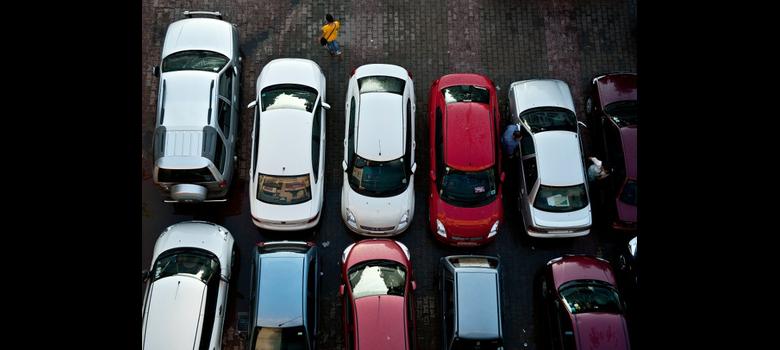
Bhatia, unfortunately, is not the first to have died in an argument over parking in Delhi: there have been seven other violent incidents related to it this year alone. And, considering the state of parking in the capital, it’s unlikely Bhatia’s case will be the last.

Police records suggest that 15 people have died in the capital over parking-related issues in the past five years, with many more incidents of violent clashes. Other than the capital’s generally high stress levels, which have given it the reputation of being particularly prone to violence and spats, the huge number of cars being added to the roads combined with limited space is mainly what is behind this unique category of crimes. It isn’t uncommon to see car tires being slashed or a parked car being keyed by angry residents who see it as a way to complain about parking.

via Scroll.in – News. Politics. Culture..

17/07/2014

Indian eatery run by murder convicts praised for politeness, hygiene – India Insight

As India’s capital baked under a heat wave this month, banker Gaurav Gupta sat down for lunch at a new air-conditioned restaurant, and was greeted by a smiling waiter who offered him chilled water and took his order — a traditional “thali” meal of flatbread, lentils, vegetables, rice and pickle.

Nothing unusual, except that the employee, like most of his co-workers, is a convicted murderer serving time in South Asia’s largest prison complex.

“Tihar Food Court” on Jail Road in west Delhi is part of a wide range of reform and rehabilitation initiatives undertaken at the Tihar prison. It opened in the first week of July on an “experimental basis” while waiting for formal clearances, and is located half a kilometre from the prisoners’ dormitories.

With a spacious interior lined with gleaming wooden tables and walls adorned with paintings by prisoners, the 50-seat restaurant is coming in for praise from customers, especially for being clean and for the polite behaviour of its employees, who were trained by the Delhi Institute of Hotel Management, an autonomous body under the state government.

“The food is average. But the hygiene factor is really good, very clean. And it’s a good thing they are employing prisoners,” said Gaurav Gupta.

via India Insight.

16/07/2014

Hope floats for Delhi’s e-rickshaws after minister’s backing – India Insight

The office of the New Arcana India e-rickshaw company is not easy to find. It is in a nondescript building nestled among other nondescript buildings in West Subhash Nagar, a middle-class neighbourhood of New Delhi.

If enthusiasm showed up on a map, it would be hard to miss the place. Inside on a recent Thursday, a meeting of Delhi’s Battery Rickshaw Welfare Association was in session. Steaming cups of tea were being handed out to members, mostly manufacturers of battery-operated rickshaws.

There are an estimated 100,000 such “e-rickshaws” working Delhi’s streets. Introduced in 2010 and operated by unlicensed drivers, they are a less environmentally harmful and cheap way to get around the city compared to traditional gas-powered autorickshaws and cars that are too expensive for many people to buy. They’re also easier on the operators than pulling a traditional rickshaw or riding a bicycle taxi. But transportation officials nearly made driving e-rickshaws illegal earlier this year in a bid to curb nightmarish traffic congestion and reckless driving.

via India Insight.

Law of Unintended Consequences

continuously updated blog about China & India

ChiaHou's Book Reviews

continuously updated blog about China & India

What's wrong with the world; and its economy

continuously updated blog about China & India