Posts tagged ‘Donald Trump’

01/12/2016

As Trump retreats, Xi Jinping moves to upgrade China’s global power play | South China Morning Post

With US president-elect Donald Trump threatening to build a wall on the Mexican border and force Asian allies to increase defence spending, Beijing is busy luring countries across the eastern hemisphere into its orbit.

President Xi Jinping, who is consolidating his power at home, is planning to host a big “One Belt, One Road” summit in China next year, sources close to the central government told the South China Morning Post, adding that the event would match, if not exceed, the scale of this year’s G20 summit in Hangzhou, which attracted about 30 state leaders.

China plans US$2 billion film studio and ‘One Belt, One Road’ theme park

At a time when established world powers are struggling with domestic problems, Xi sees a chance to push ahead with his oddly worded brainchild, a geopolitical push to extend Beijing’s influence to remote corners of the globe.

The belt and road initiative encompasses 65 countries including China, stretching through Southeast, South, Central and West Asia to the Middle East, Africa and East and Central Europe.

However, with globalisation facing increasing scrutiny and electoral scepticism in developed countries, it’s doubtful whether a one-party state with its own deep-rooted economic woes will be able to bind countries together through a programme viewed by critics as a Chinese plot to export its infrastructure and influence.

In addition, China’s shrinking foreign exchange reserves, the falling value of its currency and a tightening of central government control on big overseas investments have raised questions about whether there will be sufficient funds to grease China’s ambitions.

Hong Kong trade presence needed in ‘One Belt, One Road’ cities

The belt and road initiative was launched by Xi in 2013 as an attempt to boost connectivity between China and other countries along the ancient land-based and maritime Silk Roads through trade and infrastructure projects, including high-speed railway lines and energy pipelines. But the wave of populist, anti-globalisation reflected in Trump’s stunning victory in last month’s US presidential election has put its smooth implementation in doubt.

Previous Chinese infrastructure projects overseas, including energy- and resource-related ones in Africa, have triggered resentment in local communities, with Beijing accused of exploitation and failing to benefit local workers.

Even though an increasing number of key US allies, such as Canada and Britain, have joined the Beijing-led Asian Infrastructure Investment Bank (AIIB), set up as part of the belt and road initiative, mistrust over Beijing’s efforts to extend its geopolitical influence are mounting.

James McGregor, greater China chairman of APCO Worldwide, a public relations and consulting firm, said the level of cooperation between Beijing and the incoming Trump administration would be crucial in determining the success of the belt and road initiative.

One of Trump’s policy advisers, former CIA director James Woolsey, has described the current Obama administration’s opposition to the AIIB as a “strategic mistake”.

How One Belt, One Road is guiding China’s football strategy

“Through OBOR and various diplomatic initiatives, China is seeking to lead peacekeeping and economic development efforts in the region,” McGregor said, referring to the belt and road initiative. “But this will be very difficult if the US and China are not aligned and working together in the region to help provide security and promote peace.“

So if Trump pushes an agenda of confrontation with China in regard to trade and security arrangements in Asia, China will have a more difficult time managing its investments in Afghanistan and elsewhere in the region.”

But Professor Wang Yiwei, from the school of international studies at Renmin University in Beijing, said Trump’s protectionist agenda, most notably with his vow to withdraw the United States from the 12-nation Trans-Pacific Partnership (TPP) trade pact, would provide an opportunity for the belt and road initiative to “fill the gap in the market”.

“For a long time, countries around the world have been following America’s standards and development model. But now even the US itself has suffered from its system,” he said. “The US has not learned its lesson from the financial crisis – it has failed to adjust and reform its industries – and it is now blaming the problem on globalisation.”

Wang said that with the belt and road initiative, China was becoming more resistant to the risk posed by the incoming Trump administration and the anti-globalisation trend sweeping the West.“

[The belt and road initiative] is designed to counter the risk posed by the market in the West,” Wang said.

Long-term planning: China’s 21st century Silk Road strategy will take time to reap rewards

The decrease in America’s purchasing power in the wake of the financial crisis had caused the surplus production capacity in China, he said, and the belt and road initiative was a new way to boost China’s exports.

AIIB president Jin Liqun said in early November that the AIIB was “on track” to meet its big first-year targets, including lending US$1.2 billion by the end of this year. So far it has lent US$829 million to six projects in Pakistan, Tajikistan, Indonesia and Bangladesh.

China invested about US$14.8 billion in 49 countries of the 64 other countries along the Silk Road last year, or 12.6 per cent of the country’s total outbound investment, according to the Ministry of Commerce. The US and the European Union remain the top destinations for Chinese outbound investment, which totalled US$146 billion in the first 10 months of this year.

Whether Chinese companies will be as enthusiastic as they used to be about pouring money into overseas projects remains to be seen, with Beijing banning overseas investment deals of more than US$10 billion until September next year and cracking down on overseas mergers, acquisitions and real estate deals involving more than US$1 billion because of concerns about capital flight.

But economists, citing the unsustainability of a strong US dollar, uncertainty about Trump’s policies and China’s need to push ahead with economic reforms, said the restrictions were more of a short-term constraint than a permanent hurdle.

“Restricting outflows is a step back, but it will not alter China’s long-term direction of capital opening,” said Tim Condon, chief Asian economist at ING.

Professor Zhang Jiadong, a belt and road specialist at Shanghai’s Fudan University, said the impact of foreign exchange controls on the belt and road initiative would be limited.

“Forex controls will mainly affect the speed of approval, but will have little impact on infrastructure investments, which usually involve lengthy preparations for feasibility studies and financing arrangements,” he said.

State-owned enterprises, with their capital size and building expertise, are major participants in the initiative. Foreign exchange clearance is just one of many long regulatory procedures they have to navigate, and they usually needed approval from the state asset watchdog and financial backing from state-owned banks.

“Overall, OBOR investment represents only a small proportion [of their activities],” Zhang said.

Chen Fengying, an economist at the China Institute of Contemporary International Relations, said the foreign exchange regulator did not cover belt and road projects.

“Investment in OBOR countries is groundbreaking and needs more government support,” Chen said. “They should be encouraged, rather than regulated.”

The biggest difficulty faced by the belt and road initiative is the need to ease suspicions among countries such as India and Japan, another big investor in Asian development projects, about Beijing’s strategic intentions.

Foreign Minister Wang Yi told a forum in Beijing on Wednesday that China would be accommodative to the needs of different nations in pushing ahead with the belt and road initiative. The AIIB is regarded as a rival to the Japan-led Asian Development Bank and the US-headquartered International Monetary Fund.

Zhang Jianping, an expert on belt and road policy at the National Development and Reform Commission’s Institute for International Economic Research, said mistrust remained a hurdle for China.

“Just because the US withdrew from the TPP doesn’t necessarily mean that its economic power is in decline,” he said. “All the major global financial and investment standards and institutions are still led by the US and Europe. Any attempt by China to rewrite those rules is bound to meet scepticism from the West.”

Observers said investors’ top concerns were returns on investment and safety, and that made developed countries the top destination for market, technology and management expertise, rather than developing countries . They faced bottlenecks in terms of capital, talent and management expertise in belt and road investment, which usually involved labour-intensive manufacturing or resource projects.
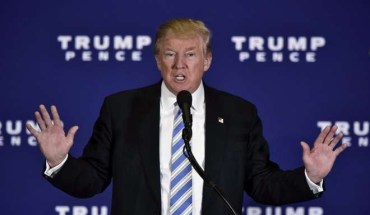
Beijing is pushing to build dozens of economic cooperation zones, which will be used to facilitate bilateral trade and investment and potentially draw more private firms. However, more government guidance in terms of policy and financing is needed to help private Chinese firms better integrate into economic development plans in other countries.

Liang Haiming, chief economist at the China Silk Road iValley Research Institute, said opportunities were opening up for China.

“The yuan’s depreciation against the US dollar will not affect China’s investment plans in OBOR countries,” he said. “The Chinese currency is actually strengthening against major Southeast Asian currencies.

“The capital flowing from emerging economies to the US will leave a good opportunity for Chinese capital to enter those countries.”

The Post’s annual China Conference in Hong Kong on Friday will bring business leaders and policy advisers together to share their latest insights on the business opportunities and challenges brought about by the belt and road strategy.

Source: As Trump retreats, Xi Jinping moves to upgrade China’s global power play | South China Morning Post
29/11/2016

How China Plans to Revamp Job Security – The Short Answer – Briefly – WSJ

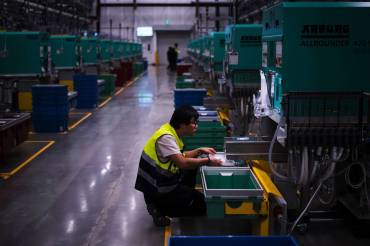
China’s leaders are preparing to loosen job-security regulations as part of efforts to keep businesses afloat amid slowing economic growth. Here is what you need to know.

What Is China’s Labor Contract Law?

A broad set of standards on employment practices that took effect in 2008 after an unusually lengthy debate to safeguard worker rights and boost job security. Some businesses blame it for inflating wages.What Is Happening?The labor ministry has been consulting academics, lawyers and businesses on ways to revise the law to make it easier for businesses to hire and fire workers. The focus is on regulations related to open-ended contracts and severance pay.

What Is at Stake?

The law’s most contentious regulations include one that gives employees the right to request an open-ended contract after 10 consecutive years at a company or two consecutive fixed-term contracts. Another contested provision states that laid-off workers are entitled to one month’s salary for every year of employment.

What Is Next?

Observers say the government may publish draft amendments for public comment next year. They would eventually go to the rubber-stamp parliament for approval.

Source: How China Plans to Revamp Job Security – The Short Answer – Briefly – WSJ

21/11/2016

A China-America romance? | The Economist

AFTER the wildest political upsets this year, here’s a prediction for next: China will deem its relations with America to be entering something of a golden period.

The prediction is no more outlandish than others that have recently come true. But is it madness? On the campaign trail, Donald Trump singled out China as the prime culprit ripping jobs and business out of the United States “like candy from a baby”. Mr Trump threatened a trade war. He promised that, on day one as president, he would label China a currency manipulator. He said he would slap a punitive tariff of 45% on Chinese imports. For good measure, he also promised to tear up the climate agreement that President Barack Obama signed with his counterpart, Xi Jinping, in September—a rare bright point in the bilateral relationship.Throw in, too, amid all the disarray inside Mr Trump’s transition team, the names being bandied about for those who will be in charge of dealings with China. They hardly reassure leaders in Beijing. Possibles for secretary of state, for instance, are Rudy Giuliani, New York’s former mayor, who has little experience of China, and John Bolton, a hawk who is actively hostile to it.

And yet China is starting to look on the bright side. Driving the growing optimism in Beijing is a calculation that, if Mr Trump is serious about jobs and growth at home, he will end up in favour of engagement and trade. Put simply, protectionism is inconsistent with “Make America Great Again”. From that it flows, or so Chinese officials hope, that Mr Trump’s campaign threats are mainly bluster. Yes, he is likely formally to label China a currency manipulator. But that will trigger investigations that will not be published until a year later. Even after that, there may be few immediate practical consequences.

What is more, China’s leaders may divine in Mr Trump someone in their mould—not delicate about democratic niceties and concerned above all about development and growth. Reporting on the first phone conversation earlier this week between Mr Xi and Mr Trump, the normally rabid Global Times, a newspaper in Beijing, was gushing. After Mr Xi urged co-operation, Mr Trump’s contribution to the phone call was “diplomatically impeccable”; it bolstered “optimism”, the paper said, in the two powers’ relationship over the next four years. Indeed, thanks to his “business and grass-roots angles”, and because he has not been “kidnapped by Washington’s political elites”, Mr Trump “is probably the very American leader who will make strides in reshaping major-power relations in a pragmatic manner.”

No doubt optimism among more hawkish Chinese is based upon calculations that Mr Trump’s administration will prove chaotic and incompetent, harming America first and playing to China’s advantage in the long game of America’s decline and China’s rise. “We may as well…see what chaos he can create,” the same newspaper was saying only a week ago. And Chinese leaders are delighted to see the back of Barack Obama. They hate his “pivot” to Asia. They are bitter that Mr Obama’s “zero-sum mindset” never allowed him to accept Mr Xi’s brilliant proposal in 2013 for a “new type of great-power relations” involving “win-win” co-operation. How could Mr Obama possibly think that the doctrine boils down to ceding hegemony in East Asia to China?

And so, it is not hard to imagine what gets discussed in the first meeting between the two leaders, after Mr Trump’s inauguration. In his victory speech, the builder-in-chief promised a lot of concrete-pouring: “highways, bridges, tunnels, airports, schools, hospitals”. Mr Xi will point out that he has a fair amount of expertise in construction, too. It comes from running a vast country with more than 12,000 miles (18,400km) of bullet-train track where America has none, and a dam at the Yangzi river’s Three Gorges which is nearly as tall as the Hoover Dam and six times its length. Mr Xi will offer money and expertise for the president-elect’s building efforts, emphasising that China’s help will generate American jobs. In return, it would be an easy goodwill gesture for Mr Trump to reverse Mr Obama’s opposition to American membership of the Chinese-led Asian Infrastructure Investment Bank, and to lend more support to Mr Xi’s “Belt and Road” plans for building infrastructure across Asia and Europe. Advisers to Mr Trump suggest that is already on the cards.

The other leadership transition

A honeymoon, then, that few predicted. China certainly wills it. A calm external environment is critical for Mr Xi right now. He is preparing to carry out a sweeping reshuffle of the party’s leadership in the coming year or so. His aim is to consolidate his own power and ensure that he will have control over the choice of his eventual successors. That will demand much of his attention.

But don’t expect the honeymoon to last. For one, China may well have underestimated the strength of Mr Trump’s mercantilist instincts. It may also have second thoughts should a sustained dollar rally complicate management of its own currency. And even though America’s panicked friends have been this week, as the New York Times put it, “blindly dialling in to Trump Tower to try to reach the soon-to-be-leader of the free world”, Trumpian assurances of support have been growing for the alliances that China resents but that have reinforced American power in East Asia since the second world war. (As The Economist went to press, Japan’s prime minister, Shinzo Abe, was about to become the first national leader to meet the president-elect; he will reassure Mr Trump that Japan is taking on a bigger role in defending itself.)

And then who knows what might roil the world’s most important relationship? No crisis has recently challenged the two countries’ leaders like the mid-air collision in 2001 of a Chinese fighter jet and an American spy plane. Yet some similar incident is all too thinkable in the crowded, and contested, South and East China Seas. Remember, it is not just Mr Trump who is wholly untested in a foreign-policy crisis of that scale. Mr Xi is, too.

Source: A China-America romance? | The Economist

10/11/2016

Theresa May promises ‘golden era’ in UK-Chinese relations – BBC News

Theresa May has promised to work for a “golden era” in the UK’s relations with China, as the country’s vice-premier visits London for talks.

Ma Kai‘s trip follows Mrs May’s decision after coming to power to delay approval of the part-Chinese-financed Hinkley Point C nuclear power plant.

The project was given the go-ahead, after China warned that “mutual trust” was needed between the countries.

Mr Ma is meeting Chancellor Philip Hammond to discuss investing in the UK.

Speaking before the eighth UK-China Economic and Financial Dialogue got under way, Mrs May said: “I’m determined that as we leave the European Union, we build a truly global Britain that is open for business.”

As we take the next step in this golden era of relations between the UK and China, I am excited about the opportunities for expanding trade and investment between our two countries.”

‘Mutual benefits’

There will be an announcement that the Chinese contractor CITIC Construction is to invest £200m in the first phase of the £1.7bn London Royal Albert Docks project, headed by the Chinese developer ABP.

Philip Hammond promises ‘constructive’ US talks

And the UK will in turn invest up to £40m in the Asian Infrastructure Investment Bank based in Beijing, for a fund to help developing countries to prepare infrastructure programmes.

Mr Hammond, who is hosting the Chinese delegation at London’s Lancaster House, said: “The mutual benefits are clear. China is the world’s second-largest economy. UK exports to China have grown rapidly and Britain is home to more Chinese investment than any other European country.”

US President-elect Donald Trump has said he wants to apply 45% tariff barriers to Chinese imports in an effort to protect free trade.

Mr Hammond told the BBC: “Britain’s always believed that the best way long-term to protect and promote prosperity is free markets and free trade.”

President Trump has just been elected by the American people. He will want to consult with his advisers, talk to officials and I’m sure we will have a very constructive dialogue, as we do with the Chinese, with the new American administration.”

He added: “It’s about getting the right balance in the global trading system, so that we can have the benefits of open markets, while being properly and appropriately protected.”

One of Mrs May’s first acts on becoming prime minister during the summer was to order a review of the project to build Hinkley Point C, in Somerset, part-financed by China.

Writing in the Financial Times in August, Liu Xiaoming, China’s ambassador to the UK, said: “If Britain’s openness is a condition for bilateral co-operation, then mutual trust is the very foundation on which this is built.”

Right now, the China-UK relationship is at a crucial historical juncture. Mutual trust should be treasured even more.”

The UK government approved Hinkley Point C in September, saying it had imposed “significant new safeguards” to protect national security.

Source: Theresa May promises ‘golden era’ in UK-Chinese relations – BBC News

10/11/2016

PM Modi heads to Japan to seal nuclear deal amid uncertainty over U.S. policy | Reuters

Prime Minister Narendra Modi headed to Japan on Thursday to seal a landmark nuclear energy pact and strengthen ties, as China’s regional influence grows and Donald Trump’s election throws U.S. policies across Asia into doubt.

India, Japan and the United States have been building security ties and holding three-way naval exercises, but Trump’s “America First” campaign promise has stirred concern about a reduced U.S. engagement in the region.

Such an approach by Washington could draw Modi and his Japanese counterpart Shinzo Abe even closer, said foreign policy commentator and former Indian ambassador M.K. Bhadrakumar.

Officials in New Delhi and Tokyo said a deal that will allow Japan to supply nuclear reactors, fuel and technology is ready for signing after six years of negotiations to find a way around Tokyo’s reservations about such an agreement with a country that has not signed the nuclear Non-Proliferation Treaty (NPT).

India says the NPT is discriminatory and it has concerns about nuclear-armed China as well as its long-time rival Pakistan.

Japan, the only country to have suffered a nuclear attack, has been seeking assurances from New Delhi that it would not conduct nuclear tests any more.

Indian foreign ministry spokesman Vikas Swarup said the two sides had reached a broad agreement on nuclear collaboration as early as last December and had since been trying to finalise the document.

A “legal, technical scrub” of the agreed text has now been done, he said, but added that he could not pre-judge the outcome of Modi’s summit talks with Abe over Friday and Saturday.

A Japanese ruling party lawmaker said the two sides will sign an agreement during Modi’s visit. A Japanese foreign ministry spokesman declined to comment.

JAPANESE AIRCRAFT ALSO DISCUSSED

The nuclear agreement with Japan follows a similar one with the United States in 2008 which gave India access to nuclear technology after decades of isolation.

That step was seen as the first big move to build India into a regional counterweight to China.

India hopes to lift ties with the United States to a new height, Modi said in a message to U.S. President-elect Donald Trump on Tuesday.

A final deal with Japan could also benefit U.S. firms.

India is in advanced negotiations with U.S.-based Westinghouse Electric, owned by Japan’s Toshiba, to build six nuclear reactors in southern India, part of New Delhi’s plan to ramp up nuclear capacity more than ten times by 2032.

“Japan is keen to put aside it’s staunch non-proliferation principles and engage with the lucrative Indian programme,” said Manpreet Sethi, nuclear affairs expert at the Centre for Air Power Studies, a New Delhi think-tank.

But the agreement will still have to be ratified by the Japanese parliament, she said.

Japan’s Yomiuri newspaper said the main accord will likely be accompanied by a separate document stipulating that Tokyo will suspend nuclear cooperation if India conducts a nuclear test. Initially, Japan wanted that inserted into the agreement itself, but India resisted, it said.India has declared a moratorium on such testing since its last explosions in 1998.

The two countries have also been trying to close a deal on the supply of amphibious rescue aircraft US-2 to the Indian navy, which would be one of Japan’s first sales of military equipment since Abe lifted a 50-year ban on arms exports.

India’s Defence Acquisitions Council met earlier this week to consider the purchase of 12 of the planes made by ShinMaywa Industries, but failed to reach a decision.

An Indian government source said opinion within the military was divided over whether to buy the aircraft when it was struggling to find resources to replace ageing and accident-prone submarines and address a shortage of helicopters.

A Japanese defence source said Japan was considering a cost reduction, which would mean a price cut for India as well as for the Japanese navy which it supplies. A US-2 currently costs about 13 billion yen ($123 million).

Source: PM Modi heads to Japan to seal nuclear deal amid uncertainty over U.S. policy | Reuters

10/11/2016

How the Trump Win Played Out in South Asia – India Real Time – WSJ

As Donald Trump was winning his first states in the U.S., South Asia was getting up to follow the results.In Pakistan, Javed Hassan, a former investment banker who previously worked in London and Hong Kong, got up early, at 4 a.m. local time (6 p.m. Tuesday ET), to watch election results come in at his home in the city of Karachi. On Whatsapp, he started trading messages with his son, Ali, a 20-year-old studying economics and politics at New York University.

The younger Mr. Hassan, Ali, watching TV with friends at his dorm at NYU, started his evening telling his worried father that there was no chance of a Trump victory.

“Trump won’t get enough votes in the north and the American people will not go for his racism,” he told his father.

The elder Mr. Hassan, however, was switching between CNN and BBC coverage and was seeing “long queues of white people” waiting to vote, he said, and seeing the state-by-state projections.

By 7 a.m. Pakistan time (9 p.m. Tuesday ET), father and son started to see the trends in states like Michigan.

“What really did it was when Hillary started losing in Wisconsin,” said Mr. Hassan, 51, who now runs a non-governmental organizational that provides vocational training across Pakistan. His son, enveloped in a New York bubble, with all his friends voting for Mrs. Clinton, could not see it coming, said Mr. Hassan.

Meanwhile in India, Sagar Chordia, executive director of Panchshil Realty, a real estate firm which this year built the country’s first Trump Towers in the western city of Pune, had gotten up at 5 a.m. (6.30 p.m. Tuesday ET) to watch the results on television.

Mr. Chordia said he tracked the Twitter and Facebook updates of Donald Trump Jr., who was instrumental in signing the deal with his company.

Mr. Chordia typically leaves for the office around 9 a.m. (10.30 p.m. Tuesday ET), but on Wednesday he stayed at home in Pune, glued to the TV for another hour or so, until Mr. Trump had garnered 220 electoral votes. “Now, I know he’s the winner,” he thought at the time.

Mr. Chordia said that once he got to the office, he found his staff were happy with the result, as many of them met Mr. Trump when he visited Pune in 2014. Then, Mr. Chordia said, he and his team threw a big party for Mr. Trump, with 800 guests.

He said Mr. Trump’s election is good for India, because the president elect has traveled to the country and has praised Indian Prime Minister Narendra Modi. “They really love India and they want to do more and more projects in this country,” he said of the Trumps.

In Mumbai, India, Alok Churiwala, a 48-year-old stock broker, was waiting for the benchmark stock index to open at 9.15 a.m. (10.45 p.m. Tuesday ET). Mr. Churiwala was tracking the election results on television, as well as Twitter and on his Whatsapp account.

He prepared for the market to open down, given that the Dow Jones futures were already trading lower, but he wasn’t ready for the 5% fall.“We were horrified when the markets opened,” he said.

At his morning meeting with dealers, Mr. Churiwala told his staff that clients should be kept from doing anything reckless. They were not to encourage clients to short the market, bet against it, or borrow for day trades.

As stocks swooned, he was swamped by clients calling to ask what was happening.

“Phones were ringing off the hook, because everybody was worried,” he said. “You’d think that this is apocalypse,” said Mr. Churiwala.

He skipped lunch.

He said one client who is based in the U.K. called. “What is it about Trump that is so horrifying for the market?” he said she asked him.

He said that he was neutral to both U.S. presidential candidates and he believed that Mr. Trump may not carry through on some drastic steps he had suggested on the campaign trail. “Politicians are known to make promises before elections when they want to woo voters,” he said.

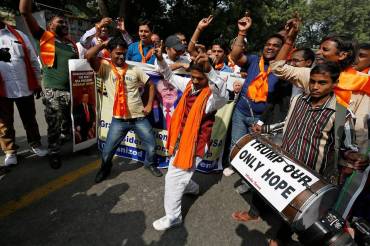
In India’s capital New Delhi, members of a small Hindu nationalist group were ready for the news of Mr. Trump’s win. They began gathering at 11 a.m. (12:30 a.m. Wednesday ET) to celebrate a Trump lead they were certain would result in a victory. The group, known as the Hindu Sena, or Hindu army, had hosted a prayer ritual for such an outcome a few months ago. It even held a birthday celebration for Mr. Trump in June.

A member of Hindu Sena celebrated Mr. Trump’s victory, in New Delhi, India, Nov. 9, 2016. PHOTO: CATHAL MCNAUGHTON/REUTERS

More than four dozen supporters gathered at a prominent square on Wednesday. They distributed Indian sweets to passers-by and beat traditional drums. Modifying a popular slogan from Indian Prime Minister Narendra Modi’s election campaign two years ago, they chanted in Hindi, “this time, a Trump government.”

Vishnu Gupta, who founded the group in 2011, said he’d sent out text messages at 7 p.m. (8:30 a.m. Tuesday ET) the previous day, asking supporters to watch the news closely and gather in the late morning. Mr. Gupta himself hadn’t slept all night, he said, glued to the television as Americans cast their ballots.

To Mr. Gupta, Mr. Trump, represents strong leadership against what he called Islamic terrorism, much like India’s Mr. Modi, he said. “Many people criticized Trump’s proposals to stop radical Muslims from entering the U.S. and mocked us for celebrating the man,” he said. “But today, we’ve come out ahead.”

Back in the U.S., the younger Mr. Hassan didn’t wait up for Trump’s victory speech. “Screw this,” he told his father in Pakistan and went to sleep at around midnight in New York.

The elder Mr. Hassan said that he was worried about his holdings on the local Karachi Stock Exchange, which plunged 2% early on Wednesday, before recovering.

Source: How the Trump Win Played Out in South Asia – India Real Time – WSJ

10/11/2016

Chinese Flag-Maker Flooded With Orders in Wake of Trump Win – China Real Time Report – WSJ

While China’s leaders weigh what to make of Donald Trump’s impending presidency, one manufacturer in the scenic city of Shaoxing has been enthusiastically carrying Mr. Trump’s banner.

Or, more accurately, he’s been printing, folding and shipping it.Yao Dandan is the owner of Shaoxing Jiahao Banner and Handicrafts Co. Ltd. Since election results suggesting a Trump victory began pouring in Wednesday morning, he says, he’s fielded a barrage of orders for Trump-themed flags.

The total number ordered as of Thursday morning: more than 40,000.

“I knew there would be demand for Trump flags after the election, so I made extra. But it’s not enough, so now I have to make more,” Mr. Yao said.The 30-year-old said that he’s been in the flag-making business for a decade and that Shaoxing’s factories specialize in making election banners. His factory has taken orders for close to half a million Trump banners in the past two months, he said.

Mr. Trump has taken heat for vowing tough restrictions on Chinese imports while over the years turning to China to source goods ranging from ties to steel, but there’s no evidence the next U.S. president purchased banners from Shaoxing. Mr. Yao said most of the orders he’s received came from Chinese clients living in the U.S.

Flags bound for the U.S. have to be higher quality than most, he said. He charges 2.5 yuan ($0.37) a piece for the smallest Trump banners, which his clients typically sell in the U.S. for between $1 or $2 (they sell for 5 yuan on e-commerce site Alibaba). The factory has produced every U.S. state flag, and earlier this year got multiple orders for Confederate flags.

What about orders for Hillary Clinton banners? Mr. Yao, who counts himself a Trump supporter, said he’s been asked but now refuses to make them because he believes Mrs. Clinton is unfair to China.

The news of Trump’s win was “a pleasant surprise,” he said. “It means I didn’t strive these past couple of months in vain.”

Asked about Mr. Trump’s vow to impose a 45% across-the-board tariff on Chinese goods, Mr. Yao confessed he wasn’t aware of that part of the property mogul’s platform but said he thought China’s government would make sure it wasn’t implemented.

The flag-maker said he’d never been to the U.S. but planned to remedy that soon.

“When things slow down, I’m going to go to the U.S. and have a look. At the very least I also contributed a little!” he said.

Source: Chinese Flag-Maker Flooded With Orders in Wake of Trump Win – China Real Time Report – WSJ

09/11/2016

Watching Trump Inch Towards Victory, With Cheers, in China – China Real Time Report – WSJ

As vote tallies came in late Tuesday night, it was Wednesday morning in China and inside the U.S. Embassy in Beijing, many Chinese watchers were celebrating the increasingly likely prospect of a Donald Trump win.

The event, intended to give Chinese locals the opportunity to experience a U.S. election, featured a mock vote and the opportunity for locals to pose with large cut-out photos of Mr. Trump and Democratic candidate Hillary Clinton, as well as remarks from U.S. Ambassador Max Baucus.

As he stood and watched the results roll in on a large overhead screen, Tian Junwu, a professor at the Beihang University School of Foreign Languages, said he was rooting for Mr. Trump’s victory.

“I’m a man. I don’t like a woman to be too strong,” said Mr. Tian. “She is too overbearing, like my wife. I think Trump is funny.”

Though the Republican candidate has threatened to slap a 45% tariff on Chinese goods, Mr. Tian said such a prospect wasn’t too alarming. “We [Chinese people] know now that candidates say one thing when they are running, but becoming a president is a different thing.”

Zhong Shaoliang, the Beijing representative of the industry group World Steel Association, said that the candidates seemed similar to him, but that he preferred Mr. Trump because he seemed more authentic. “He’s more American that way,” he said.

Still, he said that if he was American himself, he would see some perhaps worrying aspects at the prospect of a Trump win. “Hillary would be better for overall harmony. Trump will likely continue to further divide America up.”

As Florida was called for Mr. Trump, a pair of second-year college students studying English at the Beijing Language and Culture University said they were pleased.

“Clinton gives me kind of a sinister feeling, I’m kind of scared of her,” said Xu Xiayan, 19, who said she and her friends were paying more attention to the election this year, mostly for its entertainment value. “She’s good at pretending. Like when Trump is saying things and making her angry, she still maintains a slight smile.” Her friend agreed.Kang Xiaoguang, a professor at Renmin University’s China Institute for Philosophy and Social Innovation, said many of his friends were also cheering for Mr. Trump. “He’s saying things that people in America in their hearts might really feel — like about immigrants, about Muslims — but don’t dare say.” And from a foreign-policy perspective, he said, he thought Mr. Trump would be more likely to pull back on a global stage, including in places such as the South China Sea. “That way, China won’t have so much pressure on it,” he said.

“Also, some people feel the U.S. makes too much trouble for China, so if there’s a person making trouble in the U.S., they think Trump becoming president is a good thing,” he added.

Given the chance, he said, he might have cast his ballot for Mrs. Clinton, who he sees as steadier and easier to predict. A recent Pew survey found that Chinese respondents have a poor image of both presidential candidates, but viewed Mrs. Clinton slightly more favorably than her opponent.

Still, no matter what he does in office, Mr. Kang said he didn’t think that Trump’s impact would necessarily be too great. “America is a very mature system,” he said. It won’t be easily rocked by one person.”

Source: Watching Trump Inch Towards Victory, With Cheers, in China – China Real Time Report – WSJ

17/10/2016

China launches longest manned space mission | Reuters

China launched its longest manned space mission on Monday, sending two astronauts into orbit to spend a month aboard a space laboratory that is part of a broader plan to have a permanent manned space station in service around 2022.

The Shenzhou 11 blasted off on a Long March rocket at 7:30 am (2330 GMT) from the remote launch site in Jiuquan, in the Gobi desert, in images carried live on state television.

The astronauts will dock with the Tiangong 2 space laboratory, or “Heavenly Palace 2”, which was sent into space last month. It will be the longest stay in space by Chinese astronauts, state media reported.

Early on Monday, Fan Changlong, a vice chairman of China’s powerful Central Military Commission, met astronauts Jing Haipeng and Chen Dong and wished them well, state news agency Xinhua reported.

“You are going to travel in space to pursue the space dream of the Chinese nation,” Fan said.”With all the scientific and rigorous training, discreet preparation, and rich experience accumulated from previous missions, you will accomplish the glorious and tough task… We wish you success and look forward to your triumphant return.”

Shenzhou 11 is the third space voyage for Jing, who will command the mission and celebrate his 50th birthday in orbit.

In a manned space mission in 2013, three Chinese astronauts spent 15 days in orbit and docked with a space laboratory, the Tiangong 1.Advancing China’s space program is a priority for Beijing, with President Xi Jinping calling for the country to establish itself as a space power.

China insists its space program is for peaceful purposes.

Shenzhou 11, whose name translates as “Divine Vessel”, will also carry three experiments designed by Hong Kong middle school students and selected in a science competition, including one that will take silk worms into space.

The U.S. Defense Department has highlighted China’s increasing space capabilities, saying it was pursuing activities aimed at preventing other nations using space-based assets in a crisis.

China has been working to develop its space program for military, commercial and scientific purposes, but is still playing catch-up to established space powers the United States and Russia.

China’s Jade Rabbit moon rover landed on the moon in late 2013 to great national fanfare, but soon suffered severe technical difficulties.

The rover and the Chang’e 3 probe that carried it there were the first “soft landing” on the moon since 1976. Both the United States and the Soviet Union had accomplished the feat earlier.

China will launch a “core module” for its first space station some time around 2018, a senior official said in April, part of a plan for a permanent manned space station in service around 2022.

Source: China launches longest manned space mission | Reuters

24/08/2016

The perils of peace in China’s commodity industries | The Economist

WHEN the number of strikes plummets, something significant is usually going on. Strikes in China’s mining, iron and steel industries have fallen from more than 40 in January to four a month or fewer between May and August, according to China Labour Bulletin, an NGO based in Hong Kong. The explanation seems to be that China is backtracking on plans for the restructuring of state-owned firms in these sectors.

In February the government announced that it would redeploy 1.8m people, or 15% of the workforce, in the bloated and debt-laden coal, iron and steel industries. Just after that, a huge strike over unpaid wages by coal miners in the north-east dramatised the risks of trying to force through massive lay-offs and plant closures. So local officials have dragged their feet. According to the national planning authority, in the first seven months of the year provincial governments achieved only 38% of their full year’s targets for coal production cuts.

Fear of unrest is not the only explanation. Commodity prices have rebounded slightly this year, so local authorities are playing a game of chicken, keeping mines and factories open and hoping the neighbours will close theirs, so they themselves will be the ones to gain from higher prices. China itself is not benefiting.

Source: The perils of peace in China’s commodity industries | The Economist

Law of Unintended Consequences

continuously updated blog about China & India

ChiaHou's Book Reviews

continuously updated blog about China & India

What's wrong with the world; and its economy

continuously updated blog about China & India