Posts tagged ‘E-commerce’

03/10/2016

Furniture Retailing With Chinese Characteristics – China Real Time Report – WSJ

At the opening of Zaozuo’s first furniture store this month in Beijing, a shopper snoozed on a couch while others clambered onto wall-mounted shelves to take selfies perched in chairs.

Welcome to furniture retailing with Chinese characteristics.Online furniture startup Zaozuo Zaohua Zworks Ltd. opened the outlet in an upscale mall after hitting resistance from customers wary of buying bulky items without so much as a feel of the fabric, let alone a bit of shuteye.

Liu Yusi, a 33-year old human-resource executive living in Beijing, said the showroom is a good idea given that buying large pieces of furniture without a test drive can be a leap of faith, although she was a little disappointed there weren’t any beds on display. “Maybe the store is too small,” Ms. Liu said. “But I think a mattress is something you really need to lay on before you decide to buy.”

Zaozuo has tried to distinguish itself from competitors by letting customers vote on the design and style of furniture items at the prototype stage before they’re mass produced, a strategy it says reduces inventory and cuts cost. This is a Chinese adaptation of business models used by the likes of U.S. website Threadless.com — which conducts online polls of crowd-sourced T-shirt designs before producing winning entries – and by crowd-funding sites that have investors vote on ventures they’re willing to fund.

Zaozuo’s customers vote for the designs they’d like to buy. PHOTO: ZAOZUO, DON ARBOUR/THE WALL STREET JOURNAL

The approach has its skeptics. Guangdong Weiyuhua Furniture Co. says it thinks Zaozuo’s voting is a gimmick and questions whether selling furniture online is sustainable. “It targets a few rich people in cities like Beijing or Shanghai,” said company sales manager Li Songzhi. “Traditional furniture companies like ours have real stores all over China.”

With nearly 700 million online users, Chinese consumers are driving explosive growth in the e-commerce sector, undercutting traditional retailers and leaving new online ventures fighting for an edge. Zaozuo co-founders, Stanford business school graduates Shu Wei and Guan Zishan, say China’s struggling manufacturing sector needs a wakeup call as it battles rising debt and excess capacity.“

The old system is not working very well,” said Ms. Shu. “That was the starting point of our business model.”

One potential problem with the company’s voting system is possible voter fraud, says Travis Wu, China research director with consultancy Forrester Research Inc. “In China, everything is a bit tricky, and lots of people try to game the system,” Mr. Wu said. That could see designers tilt results toward their own models, for example, or allow competitors to steer Zaozuo into producing money-losing items, he said.

Another concern: with Zaozuo opening a showroom, it risks driving up costs and undercutting its advantage over traditional furniture makers. Mr. Guan says users must be registered before voting, the company watches carefully for unusual online activity and the new store is not a major investment.

Zaozuo, which attracted several thousand curious shoppers to its store launch on a recent weekend, sees itself inhabiting a competitive space between expensive designer brands and mass marketers like Sweden’s IKEA, a company that attracts its share of showroom lounge lizards. On any given weekend, entire families can be found snoozing on beds in Ikea’s massive showrooms, luxuriating in the air conditioning and enjoying the inexpensive food.

China’s fragmented furniture industry with around 5,000 large companies and combined revenue of 244.5 billion yuan [$37.3 billion] in 2015, up 16.1% increase from the previous year, is tradition-bound and due for a shakeup, say online companies. Internet furniture companies only command a tiny slice of the market but are growing rapidly. Privately held Zaozuo said sales are increasing by 40% annually although it has yet to break even. MZGF Furniture Studio Co., another online firm, said sales have been expanding by as much as 200% year on year in some months.

Zaozuo, which works with 50 Chinese factories and more than 80 European designers, has attracted $17.5 million in venture funding and hopes to eventually go public. Anna Fang, chief executive of venture capital group Zhen Fund, which has invested $1.3 million in Zaozuo, said prospects for the industry are promising but the startup may need to shorten delivery times, which range from three to 35 days. “Ikea can get furniture to you right away,” she added.At its store opening, Zaozuo said it tried to discourage shoppers from getting too comfortable on its furniture. “The customer might be comfortable, but the image is not that good for other customers who can’t feel the fabrics if someone’s sleeping on it,” said Mr. Guan. “Maybe they do it because they’re tired. Shopping can be very tiring.”

Source: Furniture Retailing With Chinese Characteristics – China Real Time Report – WSJ
13/08/2016

How Alibaba is Tapping India – The Numbers – WSJ

As its business matures at home, Chinese e-commerce giant Alibaba Group Holding Ltd. is looking to boost growth elsewhere in Asia — especially India, home to a nascent but fast-growing online shopping sector.

Here’s how — and why – it is targeting the world’s second-most-populous nation.

1.2 billion

The number of customers outside of China that Alibaba would like to reach, according to the company’s Chairman Jack Ma.

$127 billion

The projected value of India’s e-commerce market in 2025, up from $11.2 billion last year, according to Goldman Sachs Global Investment Research.

$500 million

The amount of money New Delhi, India-based e-commerce startup Snapdeal.com raised in a fundraising round led by Alibaba last year.

More than $500 million

The amount Alibaba and its affiliate Ant Financial Services Group last year paid for 40% of One97 Communications, the parent company of Noida, India-based online-payment and marketplace startup Paytm.

2 or more

Prominent executives Alibaba has hired in recent months who have experience in India’s e-commerce sector.

Source: How Alibaba is Tapping India – The Numbers – WSJ

21/10/2015

India’s Bharat Petroleum Wants to Use Gas Stations to Bring E-Commerce to Rural India – India Real Time – WSJ

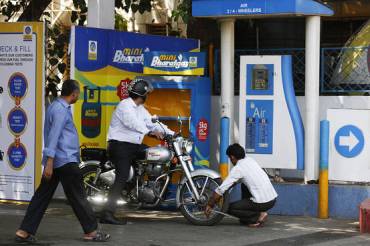
Bharat Petroleum Corp. Ltd., India’s lumbering state-run fuel company, is planning use its nationwide network of 12,800 gas stations to deliver online retail to rural India.

The oil refiner and retailer is hoping it can leverage its outlets and logistical staff across India to succeed as a latecomer to India’s ongoing online retail boom. It is upgrading its technology and logistics network to be able to sell farmers everything from fertilizer to smartphones.

The e-commerce push will begin December, with BPCL’s rural gas and cooking gas distributors starting to accept orders and payments online, said BPCL Chairman and Managing Director S. Varadarajan.  As early as next year, the company is also considering using its urban branches to sell and distribute groceries.

While the early movers in e-commerce in India such as Flipkart Internet Pvt. Ltd.’s flipkart.com, Jasper Infotech Pvt. Ltd.’s snapdeal.com and Amazon Seller Services Pvt. Ltd.’s amazon.in are still struggling to find cost-effective ways to reach the hundreds of millions of Indians who live outside the biggest cities, BPCL already has employees and properties throughout the country.

“About 30% of our retail outlets are in rural India,” Mr. Varadarajan said. Rural customers can shop online then “pick up stuff when they fill fuel at their local gas station.”

India’s state-run oil refiners are desperate to find new sources of revenues as the fall in oil price as well as increased competition from the private sector weigh on their sales.

BPCL’s retail ambitions are “a response to competition by improving margins,” said Deepak Mahurkar, head of PwC’s Oil & Gas Industry practice in India.

Analysts say that while BPCL does theoretically have unique access to much of India’s middle class, which uses its stations to refuel their cars and motorcycles, whether this traditionally slow-moving company can capture a corner of the rapidly-evolving online retail business remains to be seen.

BPCL has prime properties on the main streets and highways across the country, but few of its gas stations have the facilities or the staff to do more than pump gas. Many don’t even have running water in their bathrooms, much less the Internet connections, storage facilities and delivery technology a vibrant e-commerce company would require.

Diving into e-commerce would necessitate a big change in mindset for BPCL which is not used to worrying much about competition or consumers, said Anand Kumar Jaiswal, who heads the Centre for Retailing at IIM Ahmedabad, an Indian management school.

“I am really skeptical about it,” said Vishnu Kumar, an assistant vice president for research at Chennai-based broker Spark Capital Advisors (India) Pvt. Ltd.  “If I am a consumer I am not going to check with BPCL for a microwave.”

Even people within BPCL’s own network doubt the company can pull it off.

Sachin Shah, the manager of a company that delivers BPCL cooking gas cylinders to more than 20,000 customers in the southern city of Hyderabad, said the company will have to radically improve its logistics system to guaranteed delivery if it wants to sell more than gas cylinders and gas stoves

“If Bharat Petroleum doesn’t deliver, I will lose face,” he said.

BPCL’s Mr. Varadarajan said the company is confident it can deliver because it will use its best dealers and a new distribution system to get products to customers.

Source: India’s Bharat Petroleum Wants to Use Gas Stations to Bring E-Commerce to Rural India – India Real Time – WSJ

29/01/2015

China pledges to ‘regulate and revamp’ e-commerce sector amid Alibaba row | South China Morning Post

The Ministry of Commerce said it will boost regulation of China’s e-commerce sector amid the continuing row between Alibaba Group, over alleged sale of fake goods by its subsidiary Taobao.com, and the State Administration for Industry and Commerce (SAIC).

Alibaba's corporate headquarters in Hangzhou, Zhejiang province. Photo: Reuters

Shen Danyang, a spokesperson for the Ministry of Commerce, said on Thursday that the move was aimed at revamping the entire sector.

Last year, the ministry investigated more than 11,000 violations in the fast-growing e-commerce industry, and closed 3,400 websites, Shen said. The ministry would continue its campaign to build a safe and reliable market for consumers.

Online media company Sina reported on Thursday that a SAIC spokesperson denied they had received a formal complaint from Taobao.com against director Liu Hongliang, despite Taobao’s claim yesterday that they would do so.

An open letter was published on Taobao’s official Weibo account on Tuesday accusing SAIC director Liu of commissioning an “unfair” quality survey of goods sold on the platform, which resembles eBay of the US, and making public the results without giving online shop owners a chance to appeal.

Alibaba Group is due to release its quarterly earnings tonight.

via China pledges to ‘regulate and revamp’ e-commerce sector amid Alibaba row | South China Morning Post.

27/01/2015

Taobao cries foul over study’s claim that it sells fake, substandard goods | South China Morning Post

China’s largest online shopping platform Taobao.com has hit back at the results of an official quality survey that accused it of selling fake and substandard goods, saying that the poll’s sampling methods were questionable and its test standards unfair.

Taobao cries foul over study’s claim that it sells fake, substandard goods

More than 60 per cent of products randomly chosen from Taobao failed to meet China’s retail-goods standards, according to a recent survey commissioned by the state commercial regulator and conducted by the China Consumers’ Association.

In an open letter published on Taobao’s Weibo account, the e-commerce giant said the survey selected only 51 products out of the more than 1 billion that it had on sale.

It also said it was unfair of the State Administration of Industry and Commerce to compare the quality of goods sold on Taobao – whose platform comprises millions of e-commerce businesses operated by individual sellers – with those sold by self-operated retailers.

One of China’s major self-operated e-commerce businesses is Taobao’s major rival, Jingdong Mall. It is also the country’s second largest online shopping platform. The survey results showed that 90 per cent of Jingdong Mall’s products met official standards.

About 80 per cent of goods sold on Yihaodian, a Chinese online grocery business controlled by Walmart, met standards.

Taobao’s open letter, titled “Don’t “Don’t make unfair calls, Director Liu Hongliang. You’ve crossed the line”, was penned by an anonymous employee, Taobao said on Weibo.

The letter addressed State Administration for Industry and Commerce director Liu Hongliang, accusing him of making public the survey results without giving the online shop owners a chance to appeal. The move violated China’s regulations on quality surveys, it said.

“Director Liu, is it appropriate to make use of your public power [like this]? It’s easy to ruin [the reputation of] Taobao, but please don’t ruin the spirit of private entrepreneurs simply because [you are angry with] Taobao,” the letter said.

Chinese officials, including Premier Li Keqiang, have over the past year repeatedly voiced support for the country’s burgeoning private enterprises, especially those in the e-commerce sector.

At least 350 million people have shopped online in China, with each spending at least 3,000 yuan (HK$3,770), according to official statistics.

via Taobao cries foul over study’s claim that it sells fake, substandard goods | South China Morning Post.

17/06/2014

China’s Gray-Haired Set Could Boost Digital Shopping – China Real Time Report – WSJ

Online shopping in China isn’t just for the young, according to a new survey. That could be good news for an already quickly growing e-commerce industry that largely caters to the young.

While the bulk of online shoppers are still in their 20s and 30s, a survey published Tuesday by data provider Nielsen said the number of online consumers aged 55 or older grew 72% between 2012 and 2013. It cited data from Taobao, one of China’s largest shopping websites, which is owned by Alibaba Group, though it didn’t release the underlying figures.

“China could become the world’s most aged society by 2030,” said Tao Libao, a Nielsen official with responsibility for e-commerce, in a prepared statement. “The elderly online consumers deserve more attention from both current online retailers and brick-and-mortar retailers who are going to venture online.” People aged over 60 could be 30% of China’s population by 2030, Mr. Tao said.

They survey said they tend to be more careful shoppers, attracted by easy price comparisons and special discounts given that they often have less income than younger people.

“It’s cheaper to buy online,” said Zhang Jinnian, a Beijing shopper in her fifties who has been using the internet to shop for the past year. In that time she has bought clothes, shoes and a bicycle online. “It’s always more expensive in a store,” said Ms. Zhang, who declined to give her exact age.

via China’s Gray-Haired Set Could Boost Digital Shopping – China Real Time Report – WSJ.

25/02/2014

Indian E-Commerce to Become $8 Billion Industry – India Real Time – WSJ

The outlook for India’s economy may be gloomy for now, but one sector looks set to boom: online retail.

As more and more Indians use the internet, revenues of e-commerce companies could triple over the next three years to 504 billion rupees ($8.13 billion), according to Crisil Research, a unit of division of Mumbai-based ratings firm Crisil Ltd.

There are around 200 million internet users in India currently and the number could grow to 500 million by 2015, according to consulting firm McKinsey & Co.

Over the last few years, dozens of websites have been launched in India to sell everything from books and appliances, to baby care products and flight tickets.

Online retail companies earned revenues of around 139 billion rupees ($2.24 billion) in the financial year that ended on March 31, 2013, according to the Crisil report. Though this is just 0.5% of the total revenues of brick-and-mortar retail companies, online retail sales have been growing much faster.

Revenue of e-commerce firms grew by 56% annually between the financial year that ended March 31, 2008, and the year ended March 31, 2013, according to Crisil.

The scope for growth in this sector has already attracted a lot of interest from venture capital investors.

Earlier this month, online retailer Jabong.com raised around $100 million from CDC Group PLC, a U.K. government-backed private-equity fund-of-funds that invests in some emerging markets, according to The Economic Times.

Clothing and accessories-seller Myntra.com also raised $50 million, this month.

Foreign companies have also been looking to get a piece of the action in India. Amazon.com Inc. launched its India website in June.

via Report: Indian E-Commerce to Become $8 Billion Industry – India Real Time – WSJ.

Enhanced by Zemanta
14/02/2014

E-Commerce Gives a Lift to China’s Rural Farmers – Businessweek

A recent series of food safety scandals has created a hunger in China’s big cities for natural or traditionally grown food, absent buckets of fertilizer and pesticide. Two beneficiaries of this new market are Li Chengcai, 83, and his wife, 76-year-old Cheng Youfang, who grow white radishes in fields shadowed by the Yellow Mountain range. They get orders online from distant urban customers willing to pay more for flavorful, safe food.

E-Commerce Gives a Lift to China's Rural Farmers

The couple lives in Bishan, a village of 2,800 residents, in an old stone home on a narrow street lined with crumbling mansions. Rich merchants built the homes more than a century ago when the village, in southern Anhui province, was in its heyday. Many villagers, including their four daughters, have left for the cities. In 2011, China’s population was more than half urban for the first time. But Li and Cheng, who are illiterate and speak only their local dialect, say they have no plans to leave. Fortunately, a new opportunity has come to them—as it may to many more farmers in the next few years.

About a year ago, Zhang Yu, a 26-year-old “young village official”—that’s her actual title—knocked on Li’s door. In the summer of 2012, as national newspapers carried heated debates about genetically modified organisms and food safety, Zhang and a few other young colleagues had an idea. In their capacity as village officials they launched an account on Sina Weibo, a microblogging site, to post items about the fresh, traditionally grown produce of the Yellow Mountain region. Soon afterward they began an online store through Alibaba Group’s Taobao.com platform to connect local farmers with urban buyers. The first order, for 5 pounds of sweet corn, came from a resident of the wealthy port city of Dalian.

via E-Commerce Gives a Lift to China’s Rural Farmers – Businessweek.

Enhanced by Zemanta
Law of Unintended Consequences

continuously updated blog about China & India

ChiaHou's Book Reviews

continuously updated blog about China & India

What's wrong with the world; and its economy

continuously updated blog about China & India