Posts tagged ‘Economic growth’

01/11/2015

China Pessimism Is Overblown, IMF Says, Citing Booming Services Sector – China Real Time Report – WSJ

Recent Chinese economic data is stoking fear the world’s second largest economy is decelerating at pace that could pull the global economy into a recession. But the International Monetary Fund’s top Asia economist, Changyong Rhee, says such pessimism may be unwarranted.

A booming services sector—such as shipping and retail—is offsetting the collapse in manufacturing, he argues. Advertisement “We don’t think there’s enough evidence based on the manufacturing sector that there will be a hard landing,” Mr. Rhee said in an interview. “They definitely have a manufacturing slowdown, an overcapacity problem. But other parts of China are actually growing faster.” If Beijing relies too much on monetary policy to stimulate growth, it could fuel China’s economic problems rather than fix them, the IMF official cautioned. His warning came as the People’s Bank of China on Friday cut interest rates again in a bid to revive growth.

Old ways of measuring China’s economy—such as looking at electricity consumption—are outdated because they don’t accurately reflect the changing nature of growth, Mr. Rhee said. Services now account for more than 50% of the country’s economy and there is a good chance their contributions are being underestimated, he said. On first glance, China’s trade data appears to support worries about the economy. But digging a little deeper into the numbers may actually show the country’s move towards a growth model more reliant on consumer demand is already bearing fruit.

Although the value of imports has fallen, volumes tell a different story. By adjusting for the fall in commodity prices and the appreciation in the yuan, the IMF calculates imports actually grew in July by 2%. And while the amount of goods imported has declined, imports of services are in double digits.

China’s real-estate sector has also fomented concerns. But Mr. Rhee said there are signs property prices are stabilizing. That is not to say the IMF believes there is no cause for apprehension. Beijing fueled its stellar growth rate over the last two decades through cheap credit. Souring global growth prospects revealed a country vastly overinvested in manufacturing capacity, particularly by state-owned enterprises. The IMF estimates overinvestment totals nearly 25% of the country’s growth domestic product. That means government-owned firms will struggle to pay their loans on mountains of credit. “If they mismanage the financial market, then they could have a hard landing,” Mr. Rhee said.

Beijing is facing a daunting task. Winding down the amount of credit in the system too quickly could stall growth. But failure to cut corporate debt levels and deal with bad loans quickly could create a bigger credit crisis over the next couple of years. “One question is whether China can manage this transition with the current governance system,” the senior IMF official said. “That is a critical issue.” Beijing will need to ensure government agencies take greater responsibility for their respective areas of oversight and state-owned companies will need to have stronger budget constraints, he said. China’s recent market turmoil revealed a weak regulatory structure. And overhauling a political system that relied on state-owned firms to boost growth and enrich regions is also expected to be a challenge.

That’s why, even though the IMF is backing more stimulus by Beijing to prevent too much deceleration in the economy, fund officials are concerned the government may depend too much on the old system of juicing the economy through credit. Counting on monetary policy, rather than using the budget to stimulate the economy, could exacerbate the problem of overcapacity.

“If they rely on monetary policy too much, then they would continue the classic credit expansion,” Mr. Rhee said. Besides fueling bad investments by state-owned enterprises, it could also “drag on necessary structural and governance reforms.”

Source: China Pessimism Is Overblown, IMF Says, Citing Booming Services Sector – China Real Time Report – WSJ

20/10/2015

Survey Shows China Passes U.S. in Stuff Built – China Real Time Report – WSJ

China is the world’s No. 2 economy by most measures, but by one it has surpassed the U.S. China has overtaken the U.S. as the world’s wealthiest nation in terms of built assets in 2014, and is likely to double that of the U.S. by 2025, according to the Arcadis Global Built Asset Wealth Index.

The study compares 32 countries in terms of their buildings and infrastructure – homes, schools, roads, airports, power plants, malls, rail tracks  and other structures. In fact, China’s stock of built assets will exceed the next four economies combined in the next 10 years, according to the index.
The firm calculates the data at purchasing-power-parity rates, which adjusts the figures to account for differing costs in each country. That measure tends to boost the size of figures from developing countries. China has the largest stock of built assets at $47.6 trillion in 2014 and the U.S. came in second at $36.8 trillion, according to the study released Monday. In the last report, the U.S. was ahead at $39.7 trillion in 2012 compared to China’s $35.4 trillion. China’s rapid asset building came alongside soft investment in the U.S. to replace old machinery, equipment and buildings, the report said.

The index is billed as an alternative economic indicator to measure a country’s performance. the index quantifies the value of a country’s infrastructure as well as its public and private property.

Policymakers have been trying to direct the Chinese economy to rely more on consumer spending rather than investment. Still,  the pace of economic rebalancing has been slow, leading to softer growth despite some positive signs in China’s consumer sector.

The transition “is encountering difficulties, as the government has repeatedly used fiscal stimulus to try to meet its growth targets,” said the report. “The proportion of the economy accounted for by investment is falling only very slowly.  This keeps China’s built asset stock growing rapidly.”

China’s economy grew at 6.9% in the third quarter this year, falling below 7% for the first time since 2009. In the past two years, Beijing has been struggling to turn to more sustainable drivers of growth amid mounting concerns about manufacturing overcapacity and an oversupplied property market.

“There is also likely to be significant underutilization of assets in China given growth is so rapid and much asset creation is pre-emptive, also known as ‘build it and they will come,’” said the biennial report. Since 2000, China has invested $33 trillion in built assets, with its investment in infrastructure at 9% of GDP, dwarfing the U.S.’s current 2%said the report. In per capita terms, however, populous China appears far from being overbuilt.

China’s built asset wealth per person stood at $34,100, which ranks it No. 24 worldwide, unchanged from its previous ranking in 2012, according to the index. The latest figure is slightly less than a third of the U.S. per capita figure of $114,100. The countries at the top of this ranking are disproportionately made up of smaller nations by population or area, hence the density of built asset stock is much greater per resident, the report said.

Source: Survey Shows China Passes U.S. in Stuff Built – China Real Time Report – WSJ

12/09/2015

China’s top graft-buster breaks taboo by discussing Communist Party’s ‘legitimacy’ | South China Morning Post

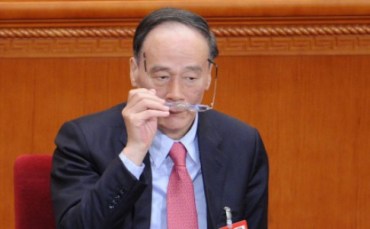
Open discussion by top graft-buster Wang Qishan about the legitimacy of the ruling Communist Party – a topic long deemed unquestionable – has raised the eyebrows of some commentators. Graft-buster Wang Qishan has raised some eyebrows with his comments on the Communist Party's 'legitimacy'. Photo: AFP

“The legitimacy of the Communist Party of China derives from history, and depends on whether it is supported by the will of the people; it is the people’s choice,” Wang said when meeting some 60 overseas attendants of the Party and World Dialogue 2015 in Beijing on Wednesday. ADVERTISING Analysts said the aberration was a step forward but some disagreed with Wang’s interpretation of “legitimacy”.

Zhang Lifan, a Beijing-based commentator, said Wang’s remarks reflected a shift of attitude in the party as a result of intensified social conflicts and increasing pressure from an underperforming economy.

“In the past, the issue was not allowed to be discussed, because the [party] thinks [its rule] is justified unquestionably. As the old saying goes, ‘political power grows out of the barrel of a gun’. They fought their way into the ruling position, instead of being elected into it,” Zhang said. [The Communist Party’s] legitimacy was maintained by relying on economic growth, but now economic growth is facing problemsZHANG LIFAN, COMMENTATOR

“Its legitimacy was maintained by relying on economic growth, but now economic growth is facing problems. In the past people thought [the party] could continue governing and did not have strong opposition to it because they still had money in their pocket. Now the size of their pockets have shrunk,” he said.

Zhang Ming , a political scientist with Renmin University, applauded Wang’s courage, but disagreed with his use of “legitimacy”. “You can’t talk about legitimacy merely from a historical perspective. How to let the people express their approval or disapproval [of the government]? The ballots are the most obvious way,” he said.

Steve Tsang, a senior fellow at the China Policy Institute of the University of Nottingham, said the “legitimacy” Wang mentioned did not mean democratic accountability.

“The will of the people, in China’s political reality, is collected and reorganised into something in line with what the party wants,” he said.

“Then [it] uses the powerful propaganda machinery to ensure the people embrace the newly reformulated views as their own.”

Source: China’s top graft-buster breaks taboo by discussing Communist Party’s ‘legitimacy’ | South China Morning Post

07/09/2015

India ranks low on inclusive growth, development in WEF report – The Hindu

Ranked in the bottom half of the 38 countries that make up our lower middle income bracket. India has been ranked very low, mostly in the bottom half, globally on most of the parameters for inclusive growth and development even as it fares much better internationally when it come to business and political ethics. India’s overall place in the Global Competitiveness Index 2014–2015 rankings is 71 out of 144 countries.

Growth and Development Report is the first inclusive report ever by World Economic Forum that assess countries’ efforts to foster economic growth that raises the living standards of entire societies.In a first of its kind global rankings, across different groups of countries in terms of their per capita income levels, the World Economic Forum (WEF) found that most countries are in fact missing major opportunities to reduce income inequality and same is the case with India. WEF said that the new study, which was conducted over the past two years, seeks to identify the various ways policymakers can drive economic growth and equity at the same time and assesses them on their relative success in implementing these measures. “Our message is unequivocally that leaders must pursue economic strategies that are at the same time pro-growth and pro-labour,” said the Geneva-based think tank known for its economic conclaves held in different parts of the world including in Davos, Switzerland and in India. India has mostly been ranked in the bottom half of the 38 countries that make up our lower middle income bracket.

Particularly disappointing is its position in terms of Fiscal Transfers, where it ranks 37th out of 38. It also ranks very low at 32nd for Tax Code and 36th for social protection. WEF said that another area that policymakers in India would need to prioritise improvement would be ‘Asset building and entrepreneurship’, in particular the Small business ownership, where India ranks bottom among its peers at 38th place. However, India does demonstrate ‘leadership’ in some areas, WEF said, while naming areas like corruption and rent where it comes 8th.

For business and political ethics, India ranks 12th, while it ranks 11th on the Financial intermediation of real economy investment pillar, which suggests that money invested in the economy generally gets directed towards productive uses. WEF said its first Inclusive Growth and Development Report present a new framework for assessing countries’ efforts to foster economic growth that raises the living standards of entire societies. “Around the world, no bigger policy challenge preoccupies political leaders than expanding social participation in the process and benefits of economic growth,” WEF said while releasing the report that covers 112 economies.

Source: India ranks low on inclusive growth, development in WEF report – The Hindu

26/08/2015

The World Struggles to Adjust to China’s ‘New Normal’ – China Real Time Report – WSJ

China’s leaders have warned their people they need to accommodate a “new normal” of economic growth far slower than the rate that propelled the economy into the world’s second-largest in the past two decades. As WSJ’s James T. Areddy and Lingling Wei report:

Now, the rest of the world also needs to get used to the new normal: a China in the midst of a tectonic shift in its giant economy that is rattling markets world-wide.

The slowdown deepening this year is part of a bumpy transition away from an era when smokestack industries, huge exports and massive infrastructure spending—underpinned by trillions in state-backed debt—powered China’s seemingly unstoppable rise. Today, debt has swelled to more than twice the size of the economy, and some of those industries, such as construction and steel, are reeling.

Instead of them, China is pushing services, consumer spending and private entrepreneurship as new drivers of growth that rely less on debt and more on the stock market for funding.

via The World Struggles to Adjust to China’s ‘New Normal’ – China Real Time Report – WSJ.

12/08/2015

ChemChina, Camfin to launch tender offer for rest of Pirelli | Reuters

An investment vehicle controlled by China National Chemical Corp (ChemChina) said it will launch a mandatory tender offer for remaining shares in Pirelli (PECI.MI) after on Tuesday taking control of the Italian tyremaker through a deal struck in March.

A Pirelli's tyre is pictured at the headquater in Milan, March 26, 2015. REUTERS/Giorgio Perottino

ChemChina in March agreed to become the majority owner of the world’s fifth-largest tyre manufacturer as part of a 7.3 billion euro ($8 billion) deal.

On Tuesday, Marco Polo Industrial Holding, a company created to facilitate the Chinese takeover, concluded its acquisition of a stake in Pirelli from Italian holding company Camfin, triggering the mandatory takeover bid.

A Camfin spokeswoman said the tender offer was expected to be launched in September.

State-owned ChemChina holds a 65 percent stake in Marco Polo, with the remainder in the hands of Camfin investors, who include Pirelli boss Marco Tronchetti Provera, Italian banks UniCredit (CRDI.MI) and Intesa Sanpaolo (ISP.MI), and Russia’s Rosneft (ROSN.MM).

The tender offer will be launched at 15 euros per share with the goal to acquire all of Pirelli’s share capital and de-list the tyremaker from Milan’s stock exchange. Marco Polo also decided to launch a voluntary tender offer on Pirelli’s savings shares.

In a separate statement, Tronchetti Provera, who will remain Pirelli’s chief executive, said Camfin would invest more than 1 billion euros in the tender offer and will keep a central role in the tyremaker’s future shareholder structure, along with ChemChina.

He reiterated the Chinese investment would boost the company’s international growth, particularly in the industrial tyre sector.

“In this segment, the integration with ChemChina will allow immediate growth in volumes and market share that Pirelli alone would have taken years to achieve,” he said.

via ChemChina, Camfin to launch tender offer for rest of Pirelli | Reuters.

20/05/2015

China Unveils Blueprint to Upgrade Manufacturing Sector – China Real Time Report – WSJ

China unveiled an ambitious plan to enhance the competitiveness of its manufacturing sector by encouraging innovation and raising efficiency in an effort to boost economic growth. As the WSJ reports:

The blueprint, titled “Made in China 2025,” comes as China’s factories are struggling with sluggish demand, increasing competition from other developing economies and a slowing domestic economy.

The manufacturing sector is facing new challenges: bigger constraints from the environment and resources, rising labor costs and a notable slowdown in investment and exports, the State Council, or cabinet, said on the main government website Tuesday.

“The key to creating a new driver of economic growth…lies in the manufacturing sector,” it said.

The government vowed to boost 10 high-technology industrial sectors including robotics, aerospace, new-energy vehicles and advanced transport.

via China Unveils Blueprint to Upgrade Manufacturing Sector – China Real Time Report – WSJ.

18/05/2015

India beats own target to contain fiscal and revenue deficits | Reuters

The government said on Sunday it managed to better its target for containing the fiscal and revenue deficits in the last financial year.

A money lender counts rupee currency notes at his shop in Ahmedabad, May 6, 2015. REUTERS/Amit Dave/Files

The fiscal target was 4 percent of gross domestic product for the year ending March 31, compared with a goal of 4.1 percent, the government said in a statement. The revenue target was 2.8 percent, compared with the aim of 2.9 percent.

Over the past year, Prime Minister Narendra Modi has taken a slew of measures to stabilize the economy and attract investment. But while inflation has cooled, in large measure due to the dramatic fall in global oil prices, recovery in India’s domestic demand-driven economy remains sluggish.

via India beats own target to contain fiscal and revenue deficits | Reuters.

07/05/2015

China pulls out stops to avoid lay-offs as economy cools | Reuters

As growth in China’s sagging economy looks on the verge of spilling below 7 percent, officials worried about a spike in unemployment are pulling out all the stops to avoid mass lay-offs.

State firms are encouraged to keep idle workers employed, subsidies and tax breaks are given to companies that do not fire their workers, and some businesses are even enticed into hiring despite the slackening economic growth.

The measures appear to be working for now, said a senior economist at the Development Research Center, a think-tank affiliated to China’s cabinet.

“There is no big problem in employment. They (top leaders) are more worried about financial risks and debt risks,” said the economist, who declined to be named.

But things could change quickly.

In one of the first signs of distress in China’s labor market, the Liaoning government said in April it had slashed its 2015 job creation target to 400,000 from 700,000, to reflect a “severe” employment trend.

That came in the wake of data that showed Liaoning, one of three rustbelt provinces in northeastern China, grew just 1.9 percent in the first three months of the year, the slowest of China’s 31 provinces and regions.

Disappearing job opportunities or a spike in unemployment are always a concern for China’s stability-obsessed government, especially with 7.5 million university graduates estimated to join the labor market this year.

via China pulls out stops to avoid lay-offs as economy cools | Reuters.

08/04/2015

Cabinet amends real estate bill to stamp out illegal practices | Reuters

The cabinet has amended a bill to regulate the real estate sector, protect home buyers and curb undeclared “black money” in property markets that costs the exchequer billions of dollars in lost taxable income.

Labourers work at the construction site of a residential building in Mumbai's central financial district April 6, 2015. REUTERS/Danish Siddiqui

The decision by Prime Minister Narendra Modi‘s government to amend the bill, which was submitted by the previous government in 2013 but not passed by the upper house, aims to boost investor confidence and stamp out illegal practices.

The new rules, applicable to residential and commercial developments, will make it mandatory for all projects and brokers to be registered with the real estate regulator who will oversee transactions and settle disputes.

“The bill seeks to ensure accountability and transparency, which will in turn enable the real estate sector to access capital and financial markets essential for its long-term growth,” the government said in a statement on Tuesday.

During recent years sluggish economic growth and delays in getting approvals stalled several real estate projects, leaving buyers waiting for their homes and developers holding high debt.

“This will be a game-changer for the sector,” Rajeev Talwar, executive director at DLF Ltd, India’s top real estate developer.

via Cabinet amends real estate bill to stamp out illegal practices | Reuters.

Law of Unintended Consequences

continuously updated blog about China & India

ChiaHou's Book Reviews

continuously updated blog about China & India

What's wrong with the world; and its economy

continuously updated blog about China & India