Posts tagged ‘economy’

31/08/2012

* India’s economic growth better than forecast

BBC News: “India’s economy grew faster than expected in the three months to the end of June, easing some fears about a sharp slowdown in Asia’s third-largest economy.

Growth was 5.5% in the April to June period from a year earlier. Most analysts had forecast a rate of 5.2%.

That compares with a 5.3% annual growth rate in the previous quarter.

However, there are concerns that a lack of reforms, slowing factory output and investment may hurt long-term growth.

“Whilst an upside surprise at 5.5%, the pace of growth is undeniably below potential and validates the need for the government to address sluggishness in investment and external sector activity,” said Radhika Rao an economist at Forecast Pte.”

via BBC News – India’s economic growth better than forecast.

12/08/2012

* VanceInfo, HiSoft to merge to create China outsourcing leader

Reuters: “VanceInfo Technologies Inc and smaller rival HiSoft Technology International Ltd agreed to merge to create what they said would be the largest China-based offshore IT services provider by revenue.

Hi-SOFT牛奶軟糖

Hi-SOFT牛奶軟糖 (Photo credit: SimonQ錫濛譙)

Image representing VanceInfo Technologies as d...

Image via CrunchBase

Shares of VanceInfo, with a market value of $444 million as of close on Thursday, fell as much as 13 percent on the New York Stock Exchange, while those of hiSoft, with a market value of $373 million, fell 7 percent on the Nasdaq on Friday.

VanceInfo and HiSoft shareholders will each own about 50 percent of a company, valued at about $875 million under the terms of the tax-free, all-stock deal, the companies said.

“I think it is good news for Vance, it might not be good news for hiSoft,” Roth Capital Partners analyst Kun Tao said.”

via VanceInfo, HiSoft to merge to create China outsourcing leader | Reuters.

09/08/2012

* China factory output growth at three-year low, spurs easing hopes

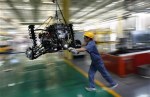
Reuters: “Annual growth in China’s factory output slowed to its weakest in more than three years in July, missing market forecasts and increasing expectations that Beijing will take further policy steps to support an economy that has been sliding for six straight quarters.

Official data released on Thursday also showed China’s annual consumer inflation fell to a 30-month low in July, suggesting that the central bank has ample scope to ease policy again after rate cuts in June and July to keep the economy on track to meet an official 2012 growth target of 7.5 percent.

China’s economy faces powerful headwinds as the euro zone debt crisis and a sluggish U.S. recovery keep global growth at a low ebb, the main factor that pushed China’s new export orders in July into their steepest fall in eight months.

“The government underestimated the pace of slowdown and there needs to be more aggressive stimulating policies,” said Alistair Thornton, an economist at IHS Global Insight in Beijing.

“The government has signaled that it’s taking a more aggressive line on stimulus measures … But it’s yet to feed into the real economy, which is why we are seeing such weak activities data for July.”

Hopes of further easing from China boosted riskier assets, with Asian shares rising to a three-month high and the commodity-sensitive Australian dollar testing a 4-1/2-month peak.

China’s industrial output growth slowed to 9.2 percent year-on-year in July, its weakest since May 2009, down from 9.5 percent in June and below the 9.8 percent forecast in a Reuters poll.

Annual growth in fixed-asset investment, in the likes of real estate, roads and bridges, came in at 20.4 in January-to-July, unchanged from the January-to-June period and just below the 20.5 percent forecast.

Growth of retail sales, the biggest driver of the economy’s expansion in the first quarter, eased to 13.1 percent, short of the forecast of 13.7 percent.”

via China factory output growth at three-year low, spurs easing hopes | Reuters.

09/08/2012

* China inflation rate dips to a 30-month low in July

BBC News: “China’s inflation dipped to a 30-month low in July, giving policymakers a bigger cushion to boost stimulus measures to spur economic growth.

Consumer prices rose by 1.8% in July, from a year earlier. That was down from a 2.2% growth rate in June and a 3% rise in May.

China has been looking to spur domestic consumption amid a slowing global demand for its exports.

China’s economy grew at its slowest pace in three years in second quarter.

The drop in prices of pork and meat and poultry products, which fell by 18.7% and 6.1% from a year earlier respectively, were the key drivers of the slowdown in the rate of inflation.

China’s economy grew at an annual rate of 7.6% in the April to June period, down from an 8.1% expansion in the previous three months.

There are fears that growth in the world’s second-largest economy may slow further in the coming months.

As a result, Beijing has taken various measures to spur growth.”

via BBC News – China inflation rate dips to a 30-month low in July.

06/08/2012

* Chinese Consumer Products Get More Competitive

WSJ: “Gone are the days when big multinationals in China could easily dominate every consumer segment from toothpaste to laundry detergent.

For years, companies such as Procter & Gamble Co. PG mainly had to worry about counterfeits, as their brands, such as Crest, were the hot items for the newly expanding consumer market.

That isn’t always the case anymore.

Take for instance a Chinese herbal toothpaste for whitening and sensitive gums. It sells for the equivalent of about $8.60, roughly double the price of Crest 3D White Vivid, one of P&G’s pricier brands. Yet the herbal toothpaste’s market share in China grew to 8.8% in 2011 from 1.1% five years ago, according to market research firm Euromonitor International. Over that same period, P&G’s market share in the toothpaste category fell to 19.7% from 20.8%. Toothpaste market share in China for Unilever NV, which sells the Zhonghua brand there, fell to 9.9% from 12%, according to Euromonitor. (In other markets, Unilever produces Close Up and Signal brand toothpastes.)

Industry insiders say losses of a point or two are small enough in the short term for foreign companies to manage. But the Chinese brand, made by Yunnan Baiyao Group Co., one of many local competitors gaining market share at the expense of foreign giants, is a sign of a changing consumer environment, some people say.

“P&G and Unilever will have to fight harder for shelf space and fight harder to differentiate from domestic brands that are now offering a wider range of products and features,” said Ben Cavender, a senior analyst at China Market Research Group.

Chinese companies like Yunnan Baiyao are gaining as they sharpen their branding.”

via Chinese Consumer Products Get More Competitive – WSJ.com.

15/07/2012

* Google Tries Something Retro – Made in the U.S.A.

NYTimes: “Etched into the base of Google’s new wireless home media player that was introduced on Wednesday is its most intriguing feature. On the underside of the Nexus Q is a simple inscription: “Designed and Manufactured in the U.S.A.”

The Google executives and engineers who decided to build the player here are engaged in an experiment in American manufacturing. “We’ve been absent for so long, we decided, ‘Why don’t we try it and see what happens?’ ” said Andy Rubin, the Google executive who leads the company’s Android mobile business.

Google is not saying a lot about its domestic manufacturing, declining even to disclose publicly where the factory is in Silicon Valley. It also is not saying much about the source of many of its parts in the United States. And Mr. Rubin said the company was not engaged in a crusade.

Still, the project will be closely watched by other electronics companies. It has become accepted wisdom that consumer electronics products can no longer be made in the United States. During the last decade, abundant low-cost Chinese labor and looser environmental regulations have virtually erased what was once a vibrant American industry.

Since the 1990s, one American company after another, including Hewlett-Packard, Dell and Apple, has become a design and marketing shell, with production shifted to contract manufacturers in Shenzhen and elsewhere in China.

Now that trend may be showing early signs of reversing.

It’s a trickle, but some American companies are again making products in the United States. While many of those companies have been small, like ET Water Systems, there have also been some highly visible moves by America’s largest consumer and industrial manufacturers. General Electric and Caterpillar, for example, have moved assembly operations back to the United States in the last year. (Airbus, a European company, is said to be near a deal to build jets in Alabama.)

There is no single reason for the change. Rising labor and energy costs have made manufacturing in China significantly more expensive; transportation costs have risen; companies have become increasingly aware of the risks of the theft of intellectual property when products are made in China; and in a business where time-to-market is a competitive advantage, it is easier for engineers to drive 10 minutes on the freeway to the factory than to fly for 16 hours.

That was true for ET Water Systems, a California company. “You need a collaboration that is real time,” said Pat McIntyre, chief executive of the maker of irrigation management systems, which recently moved its manufacturing operation from Dalian, China, to Silicon Valley. “We prefer local, frankly, because sending one of our people to China for two weeks at a time is challenging.”

Harold L. Sirkin, a managing director at Boston Consulting Group, said, “At 58 cents an hour, bringing manufacturing back was impossible, but at $3 to $6 an hour, where wages are today in coastal China, all of a sudden the equation changes.”

The firm reported in April that one-third of American companies with revenue greater than $1 billion were either planning or considering to move manufacturing back to the United States. Boston Consulting predicted that the reversal could bring two million to three million jobs back to this country.”

via Google Tries Something Retro – Made in the U.S.A. – NYTimes.com.

This cost difference is continuing to erode away as China has been increasing its basic wages by between 10-15% per annum for the last 10 years and intends to continue doing so in order to improve the standard of living of the working person thereby passing on the benefits of the improving GDP.

See also:

11/07/2012

* Socialist market economy turning point for China

Xinhua: “Good education, housing, medical care and insurance are within the reach of more Chinese since the adoption of a market economy, according to a Tuesday commentary in the People’s Daily, the flagship newspaper of the Communist Party of China (CPC).

The formation and improvement of China’s socialist market economy has reshaped the lives of 1.3 billion people and exerted an influence on the future of the whole world, wrote Ren Zhongping.

In the past 20 years, the most populous nation has become the world’s second-largest economy and has stood among middle-income countries in terms of its per capita gross domestic product, Ren said.

China turned itself from a seller’s market to a buyer’s market and became the world’s biggest exporter and a member of the World Trade Organization, Ren said.

At the beginning, China’s transformation faced many obstacles, including domestic prejudice and doubts of foreign countries, Ren said.

However, the “China miracle” surprised everyone, Ren wrote.

“It is said that everything happened in the past 20 years could not be planned in any plan,” Ren said.

Focusing on developing productivity, adhering to the common development of public-owned and private economies and integrating market allocation with the government regulation helped make China successful, Ren said.

However, the problems that have emerged after development are no smaller than those that existed before China’s prosperity, Ren said.

It’s imperative to enhance the quality of economic development, eliminate factors that hamper economic growth mode and smash the administrative monopoly so as to further free development of the private economy, Ren said.

The author called for a sound insurance system that can relieve social anxiety and narrow the income gap, as well as stark government reforms.

Unswerving reform is the only way to realize the goal of “establishing a sound social market economic system by 2020,” Ren said.

Changing China’s economic growth mode, promoting transformation of government functions and boosting equality in public services will allow China to shoulder a sea of challenges both now and in the future, Ren wrote.”

via Socialist market economy turning point for China: People’s Daily – Xinhua | English.news.cn.

A fair summary of the past 20 years and a good prognostication of the next twenty.

Related articles

10/07/2012

* New rule to rein in Chinese govt spending

China Daily: “Officials face removal from their posts if they are found overspending on vehicles, receptions and overseas trips, according to new regulation released on Monday.

The regulation issued by the State Council are the first legal documents that ask authorities above county level to include spending on the three items in budgets. The rules will take effect from Oct 1.

The regulation is the latest in a series of moves the central government has taken in recent years to promote transparency and fight abuse of taxpayers’ money amid public complaints.”

via New rule to rein in govt spending |Politics |chinadaily.com.cn.

More and more steps are being taken to rein in excesses of party cadres and officials. Is this because of the 10-year leadership change or a desire to be more retrained with the public becoming more aware and assertive?

See also:

24/06/2012

* Ikea Applies for Big Indian Investment

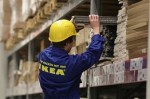
WSJ: “Swedish housewares giant IKEA Group asked India for permission to invest €1.5 billion ($1.9 billion) in the country to set up 25 retail stores in coming years, a commitment that provides some relief for New Delhi policy makers who have been trying to boost sagging foreign-investor sentiment.

IKEA’s foray into India, made possible by a policy change last year that allowed some retailers to own 100% of their Indian units, could help transform India’s largely unorganized, $500 billion retail sector. But the company will face significant challenges, including meeting the government’s mandate that it source 30% of inventory from local small-scale industries.

IKEA, which has 290 stores in 26 countries and is known for selling affordable, modern-looking furniture and housewares, said that if the Indian government approves its application it could have a significant effect on the country’s retail sector, “vastly improving availability of high-quality, low-price products not available in India.”

The company announced its decision after its chief executive, Mikael Ohlsson, met with Indian Commerce Minister Anand Sharma on Friday at a conference in St. Petersburg, Russia.”

via Ikea Applies for Big Indian Investment – WSJ.com.

See also: Consumerism grows in India

15/06/2012

* Deutsche Bank Makes Cross-Border Yuan Payment Under New China Central Bank Scheme

WSJ: “A pilot scheme intended to make it easier for companies to settle trade in the Chinese yuan officially kicked off Friday, with Deutsche Bank AG completing the first cross-border yuan payment transaction under the program.

The new program, launched by the Shanghai branch of the People’s Bank of China on a trial basis, aims to streamline the process for settling cross-border trade in the yuan by exempting qualified companies from submitting original trade documentation to support each payment. Information on the program has recently been circulated among banks in Shanghai, bankers said, though the central bank hasn’t yet made a public announcement on the initiative.

Deutsche Bank, one of the largest providers of liquidity to currency markets, executed the transaction on behalf of the China subsidiary of Huettenes-Albertus, a German manufacturer of foundry chemical products, under which the company paid a foreign supplier in yuan.

“In the past, settling trade in yuan has been both time-consuming and labor intensive,” said Beng-Hong Lee, Deutsche Bank’s head of foreign-exchange trading in China. “This is a big leap forward.”

The new scheme currently is limited to companies and banks operating in Shanghai. It follows the PBOC’s move in March, when the central bank expanded the use of yuan in trade settlement to exporters and importers across the country.

As China pushes ahead with its drive to spread global use of its currency, many analysts expect the yuan to account for a bigger share of international trade settlement. Beijing started to allow cross-border trade to be invoiced and paid for in its currency about three years ago, and since then, yuan-settled trade has grown to about 10% of China’s total trade. Some analysts have predicted that figure to grow to 3.7 trillion yuan ($587 billion) this year, or 15% of China’s total trade.”

via Deutsche Bank Makes Cross-Border Yuan Payment Under New China Central Bank Scheme – WSJ.com.

Another step in freeing the world economy from US $ domination.

Law of Unintended Consequences

continuously updated blog about China & India

ChiaHou's Book Reviews

continuously updated blog about China & India

What's wrong with the world; and its economy

continuously updated blog about China & India