

BBC News: “The story of Scottish athlete Eric Liddell – a devout Christian who refused to take part in an Olympic race because it took place on a Sunday – became famous after being told in the Oscar-winning film Chariots of Fire. But almost a century later, why is the athlete regarded as a hero in China?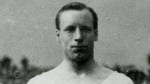
In the corner of a quiet Chinese courtyard, 5,000 miles from Scotland, stands a memorial in Isle of Mull granite. The stone commemorates Eric Liddell – one of Scotland’s greatest Olympians – who is buried nearby. The stone was gifted by Edinburgh University after a Scottish engineer, Charles Walker, rediscovered his grave in the Chinese city of Weifang.
Eric Liddell won a gold medal at the 1924 Olympics in Paris
Liddell, the son of Christian missionaries, had been born in China in 1902 and lived there until he was five when he returned to Britain to be educated. While he was at Edinburgh University, Liddell excelled at athletics and also played rugby for the Scottish national team – as well as being a noted evangelist preacher.
At the 1924 Olympics in Paris, he famously refused to run on a Sunday, ruling him out of the 100 metres race to which he was best suited. Instead, he took part in the 400 metres race and, against the odds, still won a gold medal.
Soon after his Olympic triumph, Liddell finished his studies and returned to China to become a missionary. As well as religious duties, he worked as a science and sports teacher at the Anglo/Chinese College in Tianjin.
After the Japanese invasion in 1937, Liddell carried on his missionary work even when it became dangerous to do so. Liddell’s wife and children left China for Canada in 1941 but he stayed to help in any way he could.
In 1943 he was interned at Weifang and he died of a brain tumour just months before the end of World War II, at the age of 43.
Liddell’s achievements are taught at the school on the site of the prison camp
The prisoner-of-war camp which held about 2,000 Westerners is now a place of learning for 2,000 Chinese teenagers. Every new pupil at the school is taught about the camp and Eric Liddell’s achievements on and off the track
“This part of history is a great treasure for our school,” said head teacher, Zhao Guixia.
“We can see the great value of humanity, especially in Eric Liddell’s stories.”
In the camp, Liddell was affectionately known as “Uncle Eric” because he spent most of his time teaching children, organising sports and helping others.
via BBC News – Chariots of Fire’s Eric Liddell is Chinese ‘hero’.
Related articles
- Olympic hero Eric Liddell’s secret: roast beef (scotsman.com)
- A Race Well Run: Olympian Eric Liddell (nancycreative.com)
- Eric Liddell exhibition for champion who wouldn’t run on Sundays (guardian.co.uk)
- Scottish News: Chariots of Fire runner Eric Liddell’s daughter hits out at modern ‘greed’ (dailyrecord.co.uk)
- New exhibition on Eric Liddell: Olympic athlete and missionary (nationalarchives.gov.uk)
- Eric Liddell (jesusnameaboveall.wordpress.com)
- Eric Liddell’s Olympic spirit to live on at university (scotsman.com)
- Chariots of Fire: history gets the runaround (guardian.co.uk)

 CHINDIA ALERT: You'll be living in their world, very soon