Posts tagged ‘Electricity generation’

19/11/2014

More nuclear plants and renewable energy under new development plan | South China Morning Post

China will boost oil exploration, use less coal and more natural gas, build more nuclear plants and develop renewable energy under a new seven-year development plan.

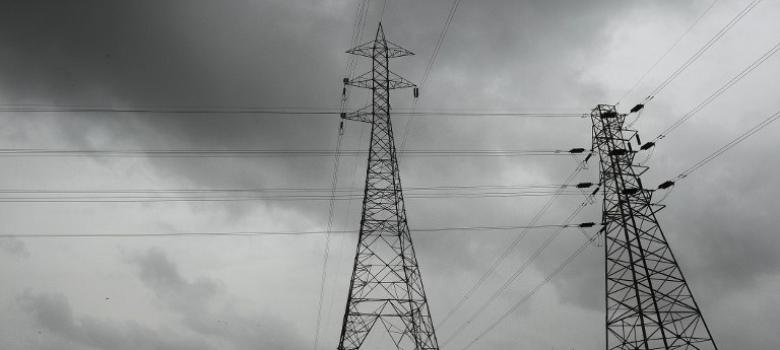
nuclear.jpg

The State Council’s newly released plans for 2014-2020 marks the latest attempt by policymakers to limit the nation’s appetite for energy. Reflecting its rapid industrialisation and economic growth, China has become a voracious consumer of energy, changing global energy markets and the geopolitics of energy security.

The document sets out five strategic tasks for the nation’s energy development. The first is to achieve greater energy independence by promoting clean and efficient use of coal, increasing domestic oil production, and developing renewable energy .

China plans to develop new and existing oilfields in nine regions where it has large proven reserves – including in the northwestern, central and northeastern provinces as well as offshore fields in the Bohai Gulf and the East and South China seas.

The plan also calls for boosting offshore oil exploration though improved exploration trace analysis, promoting deep-sea bidding from foreign corporations to develop offshore sites and greater research and development in deep-sea oil discovery technology and equipment.

The plan’s second task is to curb excessive energy consumption and implement energy-efficiency programmes in urban and rural areas. The third task builds on this goal by cutting the proportion of coal used in the nation’s energy production while using more natural gas, nuclear power and renewable energy. The plan calls for more nuclear plants to be built along the coast “at a suitable time” while also studying the feasibility of inland nuclear plants.

The fourth task is to expand international cooperation in energy, establish regional markets and participate in global energy governance. The fifth is to promote innovation in energy-related technology.

via More nuclear plants and renewable energy under new development plan | South China Morning Post.

07/11/2014

China’s Solar Power Push – Businessweek

As the world’s largest emitter of carbon, China has decided that one of the best ways to clean up its polluted air is through solar power. The country has led the world in solar installations for the last two years and will likely do so again in 2015. It’s on pace to reach 33 gigawatts of solar power capacity by the end of 2014, 42 times more than it had in 2010 and more than exists in Spain, Italy, and the U.K. combined, according to Bloomberg New Energy Finance. (The U.S. will have 20 gigawatts by the end of this year.)

Most of China’s solar power comes from sprawling utility-scale solar farms in the country’s rural west. Now the idea is to distribute solar panels in urban areas, putting them on top of office buildings and factories and connecting them to the grid without building miles of costly transmission lines. In 2015, BNEF estimates that China will add as much as 15 gigawatts of solar capacity, enough to power roughly 16 million homes. More than half of that increase will come from cheap panels installed on commercial buildings. If the 2015 projection holds, China will have installed twice as much solar power in factories and office towers in one year than currently exists in all of Australia, one of the world’s sunniest countries.
via China’s Solar Power Push – Businessweek.

30/08/2014

The backup power in Indian apartments are funded in the name of a poor Indian farmer

In India’s urban areas, you can tell the interruption in power supply by an accompanying noise – a diesel genset whirring into life somewhere nearby, releasing plumes of dark smoke into the air. Power failure is so endemic in some areas that factories, call centres, hotels and apartment complexes all install large gensets to provide back-up power.

So much so, that the installed power generation capacity of diesel gensets in India has now exceeded 90,000 megawatts, or the equivalent of 36% of India’s total power generation capacity. This estimation by the power regulator, the Central Electricity Regulatory Commission, in fact takes into account only large units with over 100 kilo volt ampere. If smaller units in apartment complexes and household are taken into account, the figure could be much larger.

Policymakers thus far believed that the installed capacity of such units was just over 1,000 MWs, while in reality it was 90 times as much. And so there is no estimation of how much fuel is consumed by these gensets.

There should be. Because these gensets all consume subsidized diesel.

Fuel subsidies were a little under 2% of India’s GDP in 2011-12, according to IMF calculations. Diesel subsidies accounted for nearly half of it.

The rationale for subsidizing diesel is two-fold. Farmers use it to operate motor pumps to irrigate their farms. And second, cost of transporting essential goods and food needs to be kept down to rein in inflation.

Both these reasons are undermined by the situation on the ground and what researchers have shown.

Nearly 27% of diesel sold in India is consumed by vehicles, the economist Kirit Parikh estimated in 2013. All of these are not trucks transporting vegetables. Many are sports utility vehicles owned by the rich. Parikh estimated that an SUV owner received an annual subsidy of Rs50,000 on account of the diesel subsidy in the name of the poor.

Researchers at the thinktank Integrated Research and Action for Development showed in 2012 that a 10% increase in the price of diesel would only result in a 0.6% rise in consumption expenditure of the poorest 10% of people both in the rural and urban areas. A 4% rise in wholesale price index, which can be caused by fiscal deficit-fuelled inflation, can have a much greater impact, they found.

The government recently set up an expenditure reform commission to streamline spending and ensure better targeting of subsidies.

via Scroll.in – News. Politics. Culture..

06/06/2014

India Fights Electricity Theft as Modi Pledges Energy Upgrade – Businessweek

Inspectors from billionaire Anil Ambani ’s electricity provider, BSES Rajdhani Power , entered a village near New Delhi on May 21, hunting for meters that were tampered with to show artificially low power consumption. Residents stoned and beat them with iron rods, a police report shows. Inspectors visiting a nearby village in 2012 were bound and urinated on, say two company officials who asked not to be identified, because the information isn’t public.

India Fights to Keep the Lights On

The attacks highlight how hard it is for India’s power industry to stem electricity theft, which is contributing to blackouts and costs $17 billion in lost revenue annually, according to calculations by Bloomberg. It’s a big challenge for new Prime Minister Narendra Modi , who has pledged to boost energy output. Billing rates “are too low, and theft is too high. If you look at the power losses, 80 percent is theft,” says Ratul Puri, chairman of Hindustan Powerprojects , a privately held power plant operator.

The government requires electricity distributors to sell power to consumers below cost. That forces them to borrow heavily to pay power-generation companies. Distributors that sell to consumers in Delhi state, including BSES, owed 141 billion rupees ($2.4 billion) to state-run power generators as of April 30, India’s Ministry of Power says. To help electricity retailers, the government has come up with a plan that shifts some of this debt to regional governments and eases payment terms on the rest.

via India Fights Electricity Theft as Modi Pledges Energy Upgrade – Businessweek.

Enhanced by Zemanta
23/11/2013

Green China? It Leads the World in Adding Renewable Electricity – Businessweek

China has earned a reputation as the world’s worst polluter. But if the International Energy Agency is right, the Asian nation is on course to set an example for the rest of the planet on the use of energy from renewable sources over the next quarter-century.

Power lines transmit electricity generated by the Three Gorges Hydropower Station at the Three Gorges Dam in Yichang, China, on July 22

According to the Paris-based agency’s World Energy Outlook, China will add more electricity generating capacity from renewable sources by 2035 than the U.S., Europe, and Japan combined. Hydro power and wind power will be the two main sources of China’s renewably sourced electricity, with solar photovoltaic cells coming in a distant third, according to the agency’s forecast. (Sorry, no link to the outlook: The IEA charges €120 ($162) for a paper copy.)

China is predicted to add more electricity generating capacity from renewable sources by 2035 than the U.S., Europe, and Japan combined.

These forecasts for China are from the agency’s central scenario, which assumes “cautious” implementation of policies that have been announced by governments but not put into effect as of mid-2013. The agency has two other scenarios, one assuming no new policies are enacted and another assuming drastic action against global warming that gives the world “a 50 percent chance of keeping to 2 degrees Celsius the long-term increase in average global temperature.”

From everything we’ve read in recent years about China’s insatiable thirst for energy, you might think the world’s No. 2 economy is going even bigger into coal than renewables, but that’s not the case, at least according to the IEA. The agency predicts that China’s share of global coal consumption will actually shrink a bit from 2011 to 2035.

China’s leadership has made energy a top priority. In 2011, the nation’s 12th Five-Year Plan set a goal of reducing energy consumption per unit of gross domestic product by 16 percent in the five years through 2015.

via Green China? It Leads the World in Adding Renewable Electricity – Businessweek.

See also: https://chindia-alert.org/economic-factors/greening-of-china/

25/01/2013

* Chinese engineers to repair Haryana power plant

Times of India: “Chinese engineers will repair the second unit of 300MW capacity of YamunaNagar power plant, which is non-functional since last year.

Map of India showing location of Haryana

Map of India showing location of Haryana (Photo credit: Wikipedia)

Haryana power minister Ajay Yadav said the plant, which is based on Chinese technology, is expected to be functional by February-end after it is repaired.

Yadav said 15 engineers from China will come to Haryana by month-end to resolve the problem cropped up at Yamuna Nagar power plant.

Engineers will remain here till power plant start running properly, he added.

The power plants at Yamuna Nagar and Khader (Hisar) were fitted with Chinese machinery.

Ajay Singh Yadav said Yamunanagar thermal power plant started functioning in 2008-09 but last year the plant stopped generating power because of fault in Chinese rotor which could not be repaired in India.”

via Chinese engineers to repair Haryana power plant – The Times of India.

28/10/2012

* Will ensure proper electricity supply: Power minister Jyotiraditya Scindia

Will the new minister be able to deliver? We shall see.

Times of India: “Newly appointed power minister Jyotiraditya Scindia today said that his priorities will be to ensure proper electricity supply in the country.

Scindia, a young Congress MP from Madhya Pradesh, has been appointed as minister of state (independent charge) for power.

“Priorities will be to ensure that there is proper electric supply. Both the government and private electric companies work in tandem for the united goal of country’s progress,” Scindia told PTI.

He takes over the reins of the Power Ministry at a time when the sector is grappling with acute fuel shortages besides environmental hurdles, which are also hurting electricity generation in the country.

“I will also try to ensure coordination with coal and environment ministries,” Scindia said.

“As the UPA government vision, I will try to make sure that the remote areas of the country gets power supply. I will try to ensure growth in the sector,” he noted.

via Will ensure proper electricity supply: Power minister Jyotiraditya Scindia – The Times of India.

See also: https://chindia-alert.org/2012/07/30/northern-india-hit-by-one-of-the-worst-power-breakdowns/

03/05/2012

* Frustrated With China, General Electric Turns Its Eye to Australia

WSJ: “For General Electric Co., Australia is the new China.

The original version of General Electric's cir...

The original version of General Electric’s circular logo and trademark. The trademark application was filed on July 24, 1899, and registered on September 18, 1900 (Photo credit: Wikipedia)

The continent of 22 million people is set to generate more revenue for the industrial conglomerate this year than will the Middle Kingdom, with 1.3 billion. The shift stems in part from Chief Executive Jeff Immelts shuffling of the company’s business lines to emphasize energy. But it also reflects a significant rethinking of China’s value for GE, which, after years of missed targets and slow growth in the country, has turned its attention to resource-rich locations that have friendlier rules for investing and fewer national champions as rivals.

GE isn’t giving up on China, where its annual sales have hovered at around $5 billion for much of the past half-decade. But the company is betting that the price of energy and minerals will remain strong—and that GE will have an easier time breaking into other markets to sell compressors, locomotives and power generators in countries that produce oil, gas and iron ore. The new approach elevates Canada, Peru, Mongolia and Australia into the circle of growth prospects once dominated by Brazil, Russia, India and China.”

via Frustrated With China, General Electric Turns Its Eye to Australia – WSJ.com.

Law of Unintended Consequences

continuously updated blog about China & India

ChiaHou's Book Reviews

continuously updated blog about China & India

What's wrong with the world; and its economy

continuously updated blog about China & India