Posts tagged ‘Eric Liddell’

21/08/2015

China’s love for Chariot’s Of Fire hero Eric Liddell

A clutch of elderly Chinese pensioners, three Canadian women in their 70s and 80s and a British film star gathered in the courtyard of a school in the obscure industrial town of Weifang on Monday to witness the unveiling of a statue of a running man.

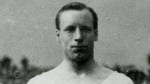
Statue of Scottish Olympic running hero Eric Liddel

The athlete immortalised in bronze in China is Eric Liddell, the legendary Olympian whose achievements were marked in the 1981 fi lm Chariots Of Fire.

The Canadians were there because Liddell was their father and the presence of the actor, Joseph Fiennes, was because he plays the Scottish sprinter in The Last Race, a new movie about his life to be released in March.

But why would the Chinese authorities be interested in venerating such a man? The truth is that Liddell is as much Chinese as he is Scottish.

Born in Tianjin in 1902 he went on to spend more than half his life in the country as an evangelical Christian missionary. And so while he is known as the Flying Scotsman in the UK in China he is remembered as the country’s first Olympic champion.

It is rare indeed that a person has the good fortune to meet a saint but he came as close to it as anyone I have ever known

Eight years before Beijing sent its first team to the Olympics, Liddell won a memorable gold medal in the 400m as part of the British team in the Paris Games of 1924. His victory was all the more poignant because he had been forced to pull out of his best event the 100m as soon as the timetable for the Games was announced.

Liddell, the son of Scottish missionaries, was such a devout Christian that he would not countenance breaking the Sabbath to take part in heats held on a Sunday. Aware this meant he wouldn’t be able to participate in the qualifying rounds for the sprint Liddell devoted all his energy to training for the 400m.

As he took to the starting blocks for the final a masseur with the American Olympic team is said to have slipped a piece of paper into his hand with the Book Of Samuel quotation: “Those who honour me I will honour.”

The fates were certainly on Liddell’s side that day.

He not only won but broke the existing Olympic and world records with a time of 47.6 seconds.

His sporting success did not divert him from his chosen course however and within a year he travelled to China to take up a posting as a missionary teacher in Tianjin’s Anglo-Chinese College, a school popular with the local elite.

The missionaries believed that by teaching Christian values to the children of the wealthy they might promote them later when they reached positions of influence.

Liddell also got involved in the sporting curriculum and even advised on the construction of Tianjin’s Minyuan Stadium.

He proposed an exact copy of the then football ground of Chelsea FC, said to have been his favourite running venue in the UK. He met and married a Canadian woman called Florence, also a child of missionaries, and they had daughters Patricia and Heather.

When Florence was pregnant with their third, war broke out and, with the Imperial Japanese Army sweeping through China, Liddell insisted she and the girls leave for Canada .

Typically Liddell refused to leave his beloved China in its hour of need and was interned and placed in a camp in Weifang, where he dedicated himself to the welfare of fellow inmates.

One of these, Langdon Gilkey, a 19-year-old American who went on to became a prominent theologian, said of Liddell: “Often I would see him bent over a chessboard or a model boat or directing some sort of square dance – absorbed, weary and interested, pouring all of himself into this effort to capture the imagination of penned-up youths.

“He was overflowing with good humour and love for life with enthusiasm and charm.

“It is rare indeed that a person has the good fortune to meet a saint but he came as close to it as anyone I have ever known.”

Liddell even turned down the opportunity to return to Britain after the prime minister Winston Churchill brokered a deal for his release. True to form Liddell arranged for a pregnant woman from the camp to take his place. His tireless efforts on behalf of both the children of the camp and the older generation took its toll to such an extent that in early 1945 he had to be admitted to the camp hospital.

A few days later he sat up in bed and wrote to his wife in Canada: “… was carrying too much responsibility… had slight nervous breakdown… much better after a month in hospital. Special love to you and the children, Eric”.

But in fact he was not much better. He had a brain tumour and within an hour of writing the note he was gone.

His friend and colleague Anne Buchan reported that he uttered the words, “It’s full surrender”, before lapsing into a coma from which he would never recover. He was just 43.

via China’s love for Chariot’s Of Fire hero Eric Liddell | History | News | Daily Express.

21/08/2015

China gets Chariots of Fire sequel up and running

The much-loved British film Chariots of Fire about the Scottish runner and missionary Eric Liddell is getting a sequel thanks to his many fans in China.

Ian Charleston as Eric Liddell in Chariots of Fire

Joseph Fiennes will play Riddell in a new movie filmed in China, co-written and directed by the Hong Kong director Stephen Shin with Canadian director Michael Parker.

It will be distributed by the Hong Kong-based Alibaba Pictures, who this morning also announced that they are to back the fifth Mission Impossible film.

Chariots of Fire, which won four Oscars in 1982, starred Ian Charleson as Liddell, a devout Christian who had to choose between his sport and religious beliefs at the 1924 Paris Olympics. Months before the Olympics took place, Liddell had to drop his plans to enter his preferred 100m race because the heats took place on a Sunday. Instead, he trained for the 400m and succeeded in taking the gold medal for Great Britain.

The Independent reports that the Chinese-born Liddell is regarded as a hero in China, partly for his sporting prowess but also for his actions in the Japanese internship camp where he died aged 43. Liddell was thought to have organised the smuggling of food in to prisoners.

Born in China to missionary parents, he returned to that country after his Olympic victory to continue his parents’ work. In 1934 he married fellow missionary Florence Mackenzie with whom he had three children.

Liddell remained in China after Japan invaded in 1937. In 1943, he was held in an internment camp in Weifang, and died of a brain tumour two years later, aged 43. In 2008, shortly before the Beijing Olympics, it was revealed that Winston Churchill had negotiated his release through a prisoner swap, which Liddell turned down so that a pregnant inmate could gain freedom instead.

China allows only 34 non-Chinese films to be shown in its mainland cinemas each year. Alibaba Pictures says that it “should” get such a release.

Such a focus on religion is unusual for a film in China, where the Communist government promotes atheism.

via China gets Chariots of Fire sequel up and running.

23/07/2012

* Chariots of Fire’s Eric Liddell is Chinese ‘hero’

BBC News: “The story of Scottish athlete Eric Liddell – a devout Christian who refused to take part in an Olympic race because it took place on a Sunday – became famous after being told in the Oscar-winning film Chariots of Fire. But almost a century later, why is the athlete regarded as a hero in China?

In the corner of a quiet Chinese courtyard, 5,000 miles from Scotland, stands a memorial in Isle of Mull granite. The stone commemorates Eric Liddell – one of Scotland’s greatest Olympians – who is buried nearby. The stone was gifted by Edinburgh University after a Scottish engineer, Charles Walker, rediscovered his grave in the Chinese city of Weifang.

Eric Liddell won a gold medal at the 1924 Olympics in Paris

Liddell, the son of Christian missionaries, had been born in China in 1902 and lived there until he was five when he returned to Britain to be educated. While he was at Edinburgh University, Liddell excelled at athletics and also played rugby for the Scottish national team – as well as being a noted evangelist preacher.

At the 1924 Olympics in Paris, he famously refused to run on a Sunday, ruling him out of the 100 metres race to which he was best suited. Instead, he took part in the 400 metres race and, against the odds, still won a gold medal.

Soon after his Olympic triumph, Liddell finished his studies and returned to China to become a missionary. As well as religious duties, he worked as a science and sports teacher at the Anglo/Chinese College in Tianjin.

After the Japanese invasion in 1937, Liddell carried on his missionary work even when it became dangerous to do so. Liddell’s wife and children left China for Canada in 1941 but he stayed to help in any way he could.

In 1943 he was interned at Weifang and he died of a brain tumour just months before the end of World War II, at the age of 43.

Liddell’s achievements are taught at the school on the site of the prison camp

The prisoner-of-war camp which held about 2,000 Westerners is now a place of learning for 2,000 Chinese teenagers. Every new pupil at the school is taught about the camp and Eric Liddell’s achievements on and off the track

“This part of history is a great treasure for our school,” said head teacher, Zhao Guixia.

“We can see the great value of humanity, especially in Eric Liddell’s stories.”

In the camp, Liddell was affectionately known as “Uncle Eric” because he spent most of his time teaching children, organising sports and helping others.

via BBC News – Chariots of Fire’s Eric Liddell is Chinese ‘hero’.

Law of Unintended Consequences

continuously updated blog about China & India

ChiaHou's Book Reviews

continuously updated blog about China & India

What's wrong with the world; and its economy

continuously updated blog about China & India