Posts tagged ‘European Union’

13/08/2016

Asia’s scramble for Africa | The Economist

IF THERE is a modern gateway from the east to Africa, it is arguably Addis Ababa’s airport. Passengers passing through its dusty terminals on their way to some far-flung capital will be surprised to find that getting an Ethiopian meal is remarkably difficult. Asian dumplings, however, are available at two different cafés. Signs marking the gates are in English, Amharic and Chinese, as are announcements.

Dozing gently on the beige loungers are untold numbers of young Chinese workers waiting for flights. They are part of a growing army of labourers, businessmen and engineers who can be seen directing the construction of roads, railways and ports across much of east Africa.

Concerns about China’s involvement in Africa are often overplayed. Accusations that it is buying up vast tracts of farmland, factories and mines, for instance, are blown out of proportion. Even so, its growing influence on the continent has nettled India and Japan, who are both boosting their engagement in response.

As with previous rounds of rivalry in Africa, such as during the cold war, at least some of this activity relates to access to bases and ports to control the sea. China’s involvement in Africa now includes a growing military presence. Thousands of Chinese soldiers have donned the UN’s blue helmets in Mali and South Sudan, where several have been killed trying to keep an imaginary peace. Chinese warships regularly visit African ports.

China maintains a naval squadron that escorts mostly Chinese-flagged vessels through the Gulf of Aden. But some diplomats fret that China has been using these patrols to give its navy practice in operating far from home, including in offensive actions. “You wouldn’t normally use submarines for counter-piracy patrols,” says one.

Patrolling for pirates has also given China an excuse to set up its first overseas base in Djibouti, next door to an existing American one. Yet the more alarmist worries about China—that it is planning to build naval bases in a “string of pearls” stretching from China to the Red Sea and as far as Namibia’s Walvis Bay on the Atlantic coast—have not materialised. The Walvis Bay rumour seems to be a red herring. China has used its ships and soldiers to protect its own citizens in Africa and the Middle East: in 2011 it evacuated 35,000 of them from Libya and last year one of its ships rescued 600 from Yemen. But its main naval focus remains the South China Sea.

Wary does it

Still, India is deeply suspicious of China’s presence in the Indian Ocean. A wide network of some 32 Indian radar stations and listening posts is being developed in the Seychelles, Madagascar and Mauritius, among other countries. This will enable India to monitor shipping across expanses of the ocean. It is also improving its ability to project power in waters it considers its own, and is arming friendly countries such as Mauritius. Among other things, India is building a naval and air base on Assumption Island, north of Madagascar and within easy reach of many of east Africa’s newly discovered offshore gasfields. “It’s the Indian Ocean, stupid,” quips one seasoned commentator in mimicry of Indian diplomats on its power projection. “They say it’s ‘our near abroad’.”

Japan has also been flexing its naval muscle but in a more limited manner. This month it pledged $120m in aid to boost counter-terrorism efforts in Africa. It has been a stalwart contributor to the multinational naval force policing the seas off Somalia’s coast. Sino-Japanese rivalry is fiercest in diplomacy and trade. Two prizes are on offer: access to natural resources and markets, and the continent’s 54 votes at the UN. Much of the effort to win the former was pioneered by Japan in the 1990s, when it helped build ports and railways. Akihiko Tanaka of the University of Tokyo, a former president of the Japan International Co-operation Agency, says that for years Japan’s aid to Africa was “qualitatively different” from that of other rich nations in part because it focused on infrastructure rather than the direct alleviation of poverty. “We were criticised a lot,” he says. “Now there is an almost unanimous view that you need to invest in infrastructure.”

Japan’s latest spending spree on infrastructure will speed economic growth on the continent; but there is a degree of one-upmanship and duplication. Japan recently handed over the keys to a new cargo terminal at Kenya’s main port in Mombasa. Meanwhile, a short hop down the coast at Bagamoyo, Tanzania is building east Africa’s biggest port—with Chinese cash.

On the diplomatic front both Japan and India are trying to make common cause with African states that want to reform the UN Security Council. They argue that Africa deserves permanent seats on it, as do they. China favours a permanent seat for an African country, and it doesn’t mind India having one. But in return it expects endorsement of its stand against Japan getting a seat.

Both Japan and China back up such diplomatic efforts with aid and, at least in China’s case, this seems to have helped win it friends. Countries that vote with China in the UN (for instance over Taiwan) usually get more cash from it, according to AidData, a project based at the College of William and Mary in Virginia.

China also makes African friends by selling arms. In the five years to 2015 it nearly doubled its share of weapons supplied to sub-Saharan Africa, from little more than a tenth of the total to almost a quarter, according to the Stockholm International Peace Research Institute, a think-tank. It has sold tanks and jets to Tanzania, armoured vehicles to Burundi and Cameroon, and missile launchers to Morocco, to name but a few. It also wins friends among the continent’s war criminals through its policy of “non-interference” in the internal affairs of other countries, for instance by opposing the International Criminal Court (ICC).

Japan, which until 2014 was prohibited by its constitution from selling weapons, and supports the ICC, has had a harder time. It has concentrated on dispensing aid and using soft power, such as awarding scholarships for study in Japan and free classes in akido and karate at its embassy in Nairobi. But even in this sphere it is outclassed by China, which has established some 46 Confucius Institutes in Africa to teach Chinese language and culture. China also flies thousands of Africa’s ruling-party officials, civil servants and trade unionists to attend political-training schools in China. This has worked so well in South Africa that the ruling African National Congress last year published a foreign-policy discussion document suggesting that China’s Communist Party “should be a guiding lodestar of our own struggle.”

Yet apart from South Africa, which has slavishly aligned itself with China (for instance by voting with it against a UN resolution to protect the right of people to hold peaceful protests), most African countries are good at playing off rivals against each other, says Alex Vines of Chatham House, a London think-tank. Many have diversified their diplomatic links by opening new embassies, including ones that cross previous divisions between rival powers in Africa. Countries including Burundi, Mauritania and Togo, that used to fall firmly within France’s sphere of influence have opened embassies in Britain. “This is a really great time for clever African countries to get really good deals,” says Mr Vines.

Source: Asia’s scramble for Africa | The Economist

12/08/2016

India’s ascent: Five opportunities for growth and transformation | McKinsey & Company

The country could create sustainable economic conditions in five ways, such as promoting acceptable living standards, improving the urban infrastructure, and unlocking the potential of women.

Twenty-five years ago, India embarked on a journey of economic liberalization, opening its doors to globalization and market forces. We, and the rest of the world, have watched as the investment and trade regime introduced in 1991 raised economic growth, increased consumer choice, and reduced poverty significantly.

Now, as uncertainties cloud the global economic picture, the International Monetary Fund has projected that India’s GDP will grow by 7.4 percent for 2016–17, making it the world’s fastest-growing large economy. India also compares favorably with other emerging markets in growth potential. (Exhibit 1).

The country offers an attractive long-term future powered largely by a consuming class that’s expected to more than triple, to 89 million households, by 2025.Exhibit 1

Liberalization has created new opportunities. The challenge for policy makers is to manage growth so that it creates the basis for sustainable economic performance. Although much work has been done, India’s transformation into a global economic force has yet to fully benefit all its citizens. There’s a massive unmet need for basic services, such as water and sanitation, energy, and health care, for example, while red tape makes it hard to do business. The government has begun to address many of these challenges, and the pace of change could accelerate in coming years as some initiatives gain scale.

From our vantage point, India has an exciting future. In the new McKinsey Global Institute report India’s ascent: Five opportunities for growth and transformation, we look at game-changing opportunities for the country’s economy and the implications for domestic businesses, multinational companies, and the government. The five areas we focus on by no means provide a comprehensive assessment of India’s prospects, but we believe they are among the most significant trends. Foreign and Indian businesses would do well to recognize these opportunities and reflect on how to exploit them.

1. From poverty to empowerment:

Acceptable living standards for allThe trickle-down effect of economic liberalization has lifted millions of Indians from indigence in the past two decades. The official poverty rate declined from 45 percent of the population in 1994 to 22 percent in 2012, but this statistic defines only the most dismal situations. By our broader measure of minimum acceptable living standards—spanning nutrition, water, sanitation, energy, housing, education, and healthcare—we find that 56 percent of Indians lacked the basics in 2012.

The country will need to address these gaps to achieve its potential. The task is certainly within India’s capacity, but policy makers will have to promote an agenda emphasizing job creation, growth-oriented investment, farm-sector productivity, and innovative social programs that help the people who actually need them. The private sector has a substantial role to play both in creating and providing effective basic services.

2. Sustainable urbanization:

Building India’s growth enginesBy 2025, MGI estimates, India will have 69 cities with a population of more than one million each. Economic growth will center on them, and the biggest infrastructure building will take place there. The output of Indian cities will come to resemble that of cities in middle-income nations (Exhibit 2).

In 2030, for example, Mumbai’s economy, a mammoth market of $245 billion in consumption, will be bigger than Malaysia’s today. The next four cities by market size will each have annual consumption of $80 billion to $175 billion by 2030.Exhibit 2To achieve sustainable growth, these cities will have to become more livable places, offering clean air and water, reliable utilities, and extensive green spaces. India’s urban transformation represents a huge opportunity for domestic and international businesses that can provide capital, technology, and planning know-how, as well as the goods and services urban consumers demand.

3. Manufacturing for India, in India

Although India’s manufacturing sector has lagged behind China’s, there will be substantial opportunities to invest in value-creating businesses and to create jobs. India’s appeal to potential investors will be more than just its low-cost labor: manufacturers there are building competitive businesses to tap into the large and growing local market. Further reforms and public infrastructure investments could make it easier for all types of manufacturing businesses—foreign and Indian alike—to achieve scale and efficiency.

4. Riding the digital wave:

Harnessing technology for India’s growthTwelve powerful technologies will benefit India, helping to raise productivity, improving efficiency across major sectors of the economy, and radically altering the provision of services such as education and healthcare. These technologies could add $550 billion to $1 trillion a year of economic value in 2025, according to our analysis, potentially creating millions of well-paying, productive jobs (including positions for people with moderate levels of formal education) and helping millions of Indians to enjoy a decent standard of living.

5. Unlocking the potential of Indian women: If not now, when?

Our research suggests that women now contribute only 17 percent of India’s GDP and make up just 24 percent of the workforce, compared with 40 percent globally. In the coming decade, they will represent one of the largest potential economic forces in the country. If it matched the progress toward gender parity of the region’s fastest-improving country, we estimate that it could add $700 billion to its GDP in 2025. Movement toward closing the gender gap in education and in financial and digital inclusion has begun, but there is scope for further progress.


Public-sector efforts to address the five areas are under way. The government is attempting to improve the investment climate and accelerate job creation—India’s ranking on the World Economic Forum’s Global Competitiveness Report climbed to 55 in 2015–16, from 71 a year earlier. Officials are moving to make the government more efficient, using technology that can leapfrog traditional bottlenecks of a weak infrastructure. One billion Indian citizens, for example, are now registered under Aadhaar, the world’s largest digital-identity program and a potent platform for delivering benefits directly to the poor.

Realizing India’s promise will require national, state, and local leaders to adopt new approaches to governance and the provision of services. To meet the people’s aspirations, these officials will also need new capabilities. The requirements include private sector–style procurement and supply-chain expertise, deep technical skills for planning portfolios of infrastructure investments, and strong project-management capabilities to ensure that large capital projects finish on time and on budget. Training will be needed to help staff members use digital technologies to automate and reengineer processes, manage big data and advanced analytics, and improve interactions among citizens through digitized touchpoints, online-access platforms, portals, and messaging and payment platforms. The government could acquire these capabilities by adopting quality-oriented procurement policies and taking advantage of secondments from the private sector. For businesses, India represents a sizable market but will require a granular strategy and a locally focused operating model.

No single report can capture all the changes taking place in the country, but we have tried here to identify the most significant trends. Foreign and Indian businesses should consider how their strategies will be influenced by them. Policy makers should focus on helping all stakeholders to capitalize on them. By any measure, the challenge is daunting, but success could give a historic boost to India’s economy.

Download the full report on which this article is based, India’s ascent: Five opportunities for growth and transformation (PDF–4.0MB).

Source: India’s ascent: Five opportunities for growth and transformation | McKinsey & Company

01/08/2016

Didi, Uber said to merge in China in $35 billion deal | Reuters

Ride-hailing firm Uber is to merge its China operations with bigger rival Didi Chuxing, and hold a one-fifth stake in the new business, in a $35 billion deal to end bruising competition between the two, according to a source familiar with the matter.

A deal between the two – which have been spending heavily to gain market share and battling fiercely for passengers – could be announced as early as Monday, said the source, who declined to be identified because the deal is not yet public.

The new entity combines Didi’s most recent valuation of $28 billion and Uber China’s $7 billion valuation for the $35 billion market capitalization. Uber China investors will have a 20 percent stake in the new company, the source said.Uber did not offer any immediate comment. Didi could not be reached for comment.

“It makes huge sense, Uber faces an uphill task in China especially since Didi is multiple times larger by transaction value and city coverage,” said Hong Kong-based Richard Ji, co-founder of All-Stars Investment Ltd, which manages about $900 million and owns Didi stock.

“This will lead to favorable outcomes for both companies. The biggest benefit is cost savings, they no longer have to give out subsidies to drivers and passengers. It will give pricing power as the new entity will become the dominant player. That means profitability will come sooner than later,” he added.

Source: Didi, Uber said to merge in China in $35 billion deal | Reuters

27/06/2016

China city shuts down waste burning plant over protests | Reuters

A city in central China is shutting down a waste incineration project, it said, after thousands of people protested against the plant over fears it will damage the environment and residents’ health.

Photos posted on social media, which could not be verified by Reuters, showed dozens of riot police marching in the city of Xiantao, located in Hubei province in central China.

About 10,000 people protested in Xiantao on Sunday, the state-backed Global Times reported, citing a local resident, even after the local government said it planned to suspend the project on Sunday morning.

Another resident told Reuters by phone on Monday that the protests continued, and several protesters were injured in clashes with riot police.

“There are hundreds of police here because of the demonstrations,” said the resident, who declined to give his name because of the sensitivity of the matter.

The city government called on residents to refrain from taking “extreme actions” and spreading rumors in a statement on its official microblog.

Tens of thousands of “mass incidents” – the usual euphemism for protests – happen in China each year, spurred by grievances over issues such as corruption, pollution and illegal land grabs, unnerving the stability-obsessed ruling Communist Party.

Last June, thousands of people protested in Jinshan, about 60 km (37 miles) from China’s commercial hub of Shanghai, against plans to build a chemical plant in the district.

A Xiantao official said that the planned plant’s emissions of dioxin, a toxic compound, would have been in line with European Union standards, state media reported.

Source: China city shuts down waste burning plant over protests | Reuters

24/06/2016

Capturing China’s $5 trillion productivity opportunity | McKinsey & Company

It won’t be easy, but shifting to a productivity-led economy from one focused on investment could add trillions of dollars to the country’s growth by 2030.

After three decades of sizzling growth, China is now regarded by the World Bank as an upper-middle-income nation, and it’s on its way to being one of the world’s advanced economies. The investment-led growth model that underpinned this extraordinary progress has served China well. Yet some strains associated with that approach have become evident.

In 2015, the country’s GDP growth dipped to a 25-year low, corporate debt soared, foreign reserves fell by $500 billion, and the stock market dropped by nearly 50 percent. A long tail of poorly performing companies pulls down the average, although top-performing Chinese companies often have returns comparable with those of top US companies in their industries. More than 80 percent of economic profit comes from financial services—a distorted economy. Speculation that China could be on track for a financial crisis has been on the rise.

The nation faces an important choice: whether to continue with its old model and raise the risk of a hard landing for the economy, or to shift gears. A new McKinsey Global Institute report, China’s choice: Capturing the $5 trillion productivity opportunity, finds that a new approach centered on productivity could generate 36 trillion renminbi ($5.6 trillion) of additional GDP by 2030, compared with continuing the investment-led path. Household income could rise by 33 trillion renminbi ($5.1 trillion).

Pursuing a new economic model

China has the capacity to manage the decisive shift to a productivity-led model. Its government can pull fiscal and monetary levers, such as raising sovereign debt and securing additional financing on the basis of 123 trillion renminbi in state-owned assets. China has a vibrant private sector, earning three times the returns on assets of state-owned enterprises. There are now 116 million middle-class and affluent households (with annual disposable income of at least $21,000 per year), compared with just 2 million such households in 2000. And the country is ripe for a productivity revolution. Labor productivity is 15 to 30 percent of the average in countries that are part of the Organisation for Economic Co-operation and Development (OECD).

A new productivity-led model would enable China to create more sustainable jobs, reinforcing the rise of the consuming middle class and accelerating progress toward being a full-fledged advanced economy. Such a shift will require China to steer investment away from overbuilt industries to businesses that have the potential to raise productivity and create new jobs. Weak competitors would need to be allowed to fail rather than drag down profitability in major sectors. Consumers would have more access to services and opportunities to participate in the economy.

Making this transition is an urgent imperative. The longer China continues to accumulate debt to support near-term goals for GDP growth, the greater the risks of a hard landing. We estimate that the nonperforming-loan ratio in 2015 was already at about 7 percent, well above the reported 1.7 percent. If no visible progress is made to curb lending to poorly performing companies, and if the performance of Chinese companies overall continues to deteriorate, we estimate that the nonperforming-loan ratio could rise to 15 percent. This would trigger a substantial impairment of banks’ capital and require replenishing equity by as much as 8.2 trillion renminbi ($1.3 trillion) in 2019. In other words, every year of delay could raise the potential cost by more than 2 trillion renminbi ($310 billion). Although such an escalation would not lead to a systemic banking crisis, a liquidity crunch among corporate borrowers and waning confidence of investors and consumers during the recovery phase would have a significant negative impact on growth.

Our report identifies five major opportunities to raise productivity by 2030:

  • unleashing more than 39 trillion renminbi ($6 trillion) in consumption by serving middle-class consumers better
  • enabling new business processes through digitization
  • moving up the value chain through innovation, especially in R&D-intensive sectors, where profits are only about one-third of those of global leaders
  • improving business operations through lean techniques and higher energy efficiency, for instance, which could deliver a 15 to 30 percent productivity boost
  • strengthening competitiveness by deepening global connections, potentially raising productivity by 10 to 15 percent

Capturing these opportunities requires sweeping change to institutions. China needs to open up more sectors to competition, enable corporate restructuring, and further develop its capital markets. It needs to raise the skills of the labor force to fill its talent gap and to sustain labor mobility. The government will need to manage conflicts among many stakeholders, as well as shift governance and incentives that rewarded a single-minded focus on rising GDP, even as it modernizes its own processes.

Source: Capturing China’s $5 trillion productivity opportunity | McKinsey & Company

23/06/2016

Foreign Direct Investment Into India Jumps 26%, U.N. Says – India Real Time – WSJ

India’s fast-growing economy attracted $44 billion in foreign direct investment in 2015, making it the 10th largest destination globally for such investment last year, according to United Nations figures released this week.

That represents a 26% increase in foreign investment in India over the year before, according to the U.N. Conference on Trade and Development, which published the data in its latest World Investment Report. Prime Minister Narendra Modi has touted the growing stream of overseas money entering India as a signal accomplishment of his two years in office.

The latest U.N. figures suggest in particular that the Modi government’s efforts to encourage more global companies to “Make in India” are reaping some success. Foreign investments worth $28.7 billion in so-called “greenfield” manufacturing projects, or those that start from scratch, were announced in India last year—more than double the $11 billion in investments that were announced in 2014. Electronics manufacturing saw an especially big boost, with $13.5 billion invested in such projects in 2015, compared with $1.1 billion the year before.

The Modi administration has made changes to keep the money coming. Last year it began allowing foreigners to own larger stakes in Indian companies in insurance, construction, mining, manufacturing and others. This week the government announced increases in foreign-investment limits in defense, retail, civil aviation, pharmaceuticals and grocery businesses. The changes, the official press release declared, make India “the most open economy in the world” for foreign direct investment.

Some experts doubt the latest rule changes will cause more money to flood in right away, though, given the degree to which Indian regulations remain vague and regulatory decision-making remains opaque.

India has risen steadily as a host of overseas investment since 2000, when the entirety of foreigners’ stakes in the economy was valued at $16 billion. The same figure last year was $282 billion.

In terms of yearly inflows, the country still ranks far behind mainland China, which lured $136 billion in foreign direct investment in 2015; Hong Kong, which attracted $175 billion; and Singapore, $65 billion. The U.S. was 2015’s top host of investment from abroad: $380 billion of it flowed into the world’s largest economy last year.

Among executives surveyed by the UNCTAD, 19% picked India as the most promising host country for investment over the next few years. Nearly half picked the U.S.; 21% chose China. But world-wide, the U.N. body expects foreign investment flows to dip by 10% to 15% this year. Its surveys indicate that multinational companies are skittish about volatile exchange rates, geopolitical uncertainty and mounting debt in developing countries.

Source: Foreign Direct Investment Into India Jumps 26%, U.N. Says – India Real Time – WSJ

10/06/2016

China now rivals US and Europe as growth engine for Asian exports | South China Morning Post

China is now an equal or even bigger driver of export growth in neighbouring economies than the US and EU combined, marking a significant shift in the economic pecking order since the 2008 global financial crisis.

That’s according to research by Deutsche Bank AG economists who weighed up the influence of the US and China over the rest of Asia through the prism of export growth, as well as the currency and bond markets.China committed to free trade, market reforms, says senior official

In Taiwan and Indonesia, for example, the growth of China’s gross domestic product (GDP) dominates the US and European Union’s as a source of export demand. In other economies, the trading giants are equally important.

“This is noticeably different from the pre-crisis years when China was much less important –- bordering on irrelevance – as an engine of growth in the region,” Deutsche analysts led by Asia-Pacific chief economist Michael Spencer wrote in a note.

After a rocky start to the year, China has been aided in its growth prospects by a record surge in credit in the first quarter. Key indicators for May are expected to show that the economy is continuing to find its footing and growth is on track to hit the Communist Party’s goal of 6.5 per cent to 7 per cent for 2016.

The International Monetary Fund in April upgraded its China growth forecasts by 0.2 percentage point for this year and next, following signs of “resilient domestic demand” and growth in services that offset weakness in manufacturing.

China needs market-driven interest rate system to help yuan become global currency: economists

Beyond the pace of GDP growth, China’s currency gyrations are also increasingly important across the region. While the dollar still drives volatility in most Asian currencies, the yuan is as least as important for fluctuations in the Malaysian ringgit and South Korean won and is growing in significance for other exchange rates, except the Philippines peso.

“Asia is far from being a ‘yuan bloc’, but idiosyncratic shocks to the yuan cannot be ignored,” according to the Deutsche analysts.

The People’s Bank of China (PBOC) surprised traders this week by setting the reference rate at weaker-than-expected levels, helping send the currency to its biggest declines in four months versus a trade-weighted basket that includes the yen and the euro. The rate’s fixing had become more predictable since early February after the PBOC pledged greater transparency and the yuan increasingly tracked moves in the dollar against major currencies. That was after a sudden weakening of the yuan in January fuelled fears of a devaluation and triggered global market turmoil. During the subsequent three months, the central bank adopted a more market-based system to set the rate and said the basket would play a bigger role.

China cooling imports are sending a huge chill across the global economy

But the US still dominates in the bond markets, and moves in Treasury yields continue to steer Asian bond trading. And even if Asia central banks don’t match rate tightening by the US Federal Reserve, financial conditions in the region may tighten if US yields increase.

“We find only weak evidence that fluctuations in Chinese yields have any impact on other countries’ bond markets,” the analysts said.

Source: China now rivals US and Europe as growth engine for Asian exports | South China Morning Post

24/02/2016

U.S. Design Company Redesigns the Cycle Rickshaw to Make it ‘Sexy’ – India Real Time – WSJ

It is not quite reinventing the wheel, but one company is trying to overhaul an old-fashioned form of public transport–the cycle rickshaw.

Funded by the Asian Development Bank, Colorado-based Catapult Design has produced a new, flashy design for the vehicle — ubiquitous in Indian and other South Asian cities — that includes electrical assistance and gears for tricky hills.

Cycle rickshaws, or pedicabs, in South Asia provide backbreaking but vital work for the drivers who pedal passengers often on short “last mile” trips from other forms of transport to their final destination.

Dhaka, Bangladesh’s capital, has half a million cycle rickshaws alone, Bradley Schroeder, who is leading the $340,000 project to develop an open-source design of the pedicab, said. But the design hasn’t improved much in 40 years.

The ADB will spend $150,000 on manufacturing 60 prototype vehicles and testing them in Nepal’s capital Kathmandu, and Lumbini, a tourism hotspot in the Himalayan nation and the birthplace of Buddha, over the coming months.

Half of the new rickshaws will be pedal-only, and the rest will have built-in electrical assistance provided by a lithium-ion battery, the company said.

Most rickshaws are currently made from tubular steel and if they have electrical assistance, it is provided by a heavy car battery, Mr. Schroeder said. Exposed parts of the rickshaw’s mechanics mean that clothes such as saris can become caught and cause accidents.

The new design is made from stainless steel and the mechanics are fully enclosed and include gears. The lithium batteries are more lightweight and the electrics comply with European Union standards, he added. The vinyl cover on the rickshaw provides protection from the elements.

“We wanted to make the body very sexy,” Mr. Schroeder said. The designers talked about adding seatbelts but decided against it since the the speeds were so low.

The new cabs are more expensive – they will cost $750, compared with about $400 for an average rickshaw. That cost, Mr. Schroeder says, is a result of the reduced weight and the addition of smartphone vehicle-hailing and driver-evaluation technologies as well as touch screens that can deliver tour guides to passengers.

“Weight is everything in the pedicab industry,” Mr. Schroeder wrote in an emailed response. The lighter model will mean that the pedicab will have a top speed of 15.5 miles an hour, but, Mr. Schroeder wrote, “essentially the vehicle will go as fast as the wallah (driver) can pedal and since the vehicle is lighter and now has gears, the wallah should be able to go faster.”

The drivers of the rickshaws for the trial in Nepal will be taken from the existing pool of the cities’ rickshaw chauffeurs, Mr. Schroeder said.

His team spent several months interviewing drivers, owners and garages. “There are a lot of questions, it’s not always easy. But over time we win them over and they are happy,” he said.

“They live on the fringes of society and are very concerned about making money every day,” he said. “They can see their industry is in decline.’

But although the cycle rickshaw is steeped in tradition, its drivers aren’t resistant to change.

“If you show them a 3-D printed model of the design, they’re blown away,” Mr. Schroeder said.

After the trial, Mr. Schroeder hopes a bicycle, motorcycle or auto company picks up the unpatented design and uses it to manufacture the product.

Source: U.S. Design Company Redesigns the Cycle Rickshaw to Make it ‘Sexy’ – India Real Time – WSJ

21/12/2015

Shifting barriers | The Economist

THE pillars of social control are flaking at the edges.

First came the relaxation in October of draconian family-planning restrictions. Now it is the turn of the household-registration, or hukou, system, which determines whether a person may enjoy subsidised public services in urban areas—rural hukou holders are excluded. On December 12th the government announced what state media trumpeted as the biggest shake-up in decades of the hukou policy, which has aggravated a huge social divide in China’s cities and curbed the free flow of labour.

The pernicious impact of the system, however, will long persist. As with the adjustment to the decades-old family-planning policy (now all couples will be allowed to have two children), the latest changes to the hukou system follow years of half-hearted tinkering. They will allow migrant workers to apply for special residency permits which provide some of the benefits of an urban hukou (a booklet proving household registration is pictured above).

If an urban hukou is like an internal passport, the residency permit is like a green card. Under the arrangements, migrants will be able to apply for a permit if they have lived in a city for six months, and can show either an employment contract or a tenancy agreement. The document will allow access to state health care where the migrants live, and permit their children to go to local state schools up to the age of 15. It will also make other bureaucratic things easier, like buying a car. Such reforms have already been tried in some cities. They will now be rolled out nationwide.

For those who meet the requirements, the changes will bring two main benefits. They should allow some of the 70m children who have been left behind to attend school in their native villages to join their migrant parents. And it will allow migrants to use urban services without losing the main benefit of their rural hukou: the right to farm a plot of land. According to a survey in 2010 by the Chinese Academy of Social Sciences, 90% of migrants did not want to change their registration status because they feared losing this right.

Source: Shifting barriers | The Economist

21/10/2015

India’s Bharat Petroleum Wants to Use Gas Stations to Bring E-Commerce to Rural India – India Real Time – WSJ

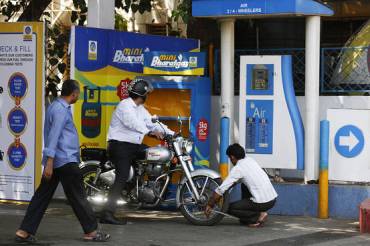
Bharat Petroleum Corp. Ltd., India’s lumbering state-run fuel company, is planning use its nationwide network of 12,800 gas stations to deliver online retail to rural India.

The oil refiner and retailer is hoping it can leverage its outlets and logistical staff across India to succeed as a latecomer to India’s ongoing online retail boom. It is upgrading its technology and logistics network to be able to sell farmers everything from fertilizer to smartphones.

The e-commerce push will begin December, with BPCL’s rural gas and cooking gas distributors starting to accept orders and payments online, said BPCL Chairman and Managing Director S. Varadarajan.  As early as next year, the company is also considering using its urban branches to sell and distribute groceries.

While the early movers in e-commerce in India such as Flipkart Internet Pvt. Ltd.’s flipkart.com, Jasper Infotech Pvt. Ltd.’s snapdeal.com and Amazon Seller Services Pvt. Ltd.’s amazon.in are still struggling to find cost-effective ways to reach the hundreds of millions of Indians who live outside the biggest cities, BPCL already has employees and properties throughout the country.

“About 30% of our retail outlets are in rural India,” Mr. Varadarajan said. Rural customers can shop online then “pick up stuff when they fill fuel at their local gas station.”

India’s state-run oil refiners are desperate to find new sources of revenues as the fall in oil price as well as increased competition from the private sector weigh on their sales.

BPCL’s retail ambitions are “a response to competition by improving margins,” said Deepak Mahurkar, head of PwC’s Oil & Gas Industry practice in India.

Analysts say that while BPCL does theoretically have unique access to much of India’s middle class, which uses its stations to refuel their cars and motorcycles, whether this traditionally slow-moving company can capture a corner of the rapidly-evolving online retail business remains to be seen.

BPCL has prime properties on the main streets and highways across the country, but few of its gas stations have the facilities or the staff to do more than pump gas. Many don’t even have running water in their bathrooms, much less the Internet connections, storage facilities and delivery technology a vibrant e-commerce company would require.

Diving into e-commerce would necessitate a big change in mindset for BPCL which is not used to worrying much about competition or consumers, said Anand Kumar Jaiswal, who heads the Centre for Retailing at IIM Ahmedabad, an Indian management school.

“I am really skeptical about it,” said Vishnu Kumar, an assistant vice president for research at Chennai-based broker Spark Capital Advisors (India) Pvt. Ltd.  “If I am a consumer I am not going to check with BPCL for a microwave.”

Even people within BPCL’s own network doubt the company can pull it off.

Sachin Shah, the manager of a company that delivers BPCL cooking gas cylinders to more than 20,000 customers in the southern city of Hyderabad, said the company will have to radically improve its logistics system to guaranteed delivery if it wants to sell more than gas cylinders and gas stoves

“If Bharat Petroleum doesn’t deliver, I will lose face,” he said.

BPCL’s Mr. Varadarajan said the company is confident it can deliver because it will use its best dealers and a new distribution system to get products to customers.

Source: India’s Bharat Petroleum Wants to Use Gas Stations to Bring E-Commerce to Rural India – India Real Time – WSJ

Law of Unintended Consequences

continuously updated blog about China & India

ChiaHou's Book Reviews

continuously updated blog about China & India

What's wrong with the world; and its economy

continuously updated blog about China & India