Posts tagged ‘Hong Kong’

14/02/2013

* Claims China is world’s No 1 trading economy are nonsense

SCMP: “The high import and export numbers are distorted by domestic firms fiddling taxes and the country’s heavy involvement in processing trade

scm_biz_tom_holland_14-02.art_2.jpg

Mainland imports of goods from the mainland via Hong Kong (left) and foreign value-added content of China’s exports

If you believe the media reports, China passed another milestone last year, overtaking the United States to become the world’s biggest trading economy.

According to data from Beijing’s customs officers, China’s total imports and exports of goods reached US$3.87 trillion in 2012.

In contrast, figures from the US Commerce Department show that America’s international goods trade was worth just US$3.82 trillion.

Hooray! China beats the US by US$50 billion.

Except there’s a problem: the figures are nonsense.

The most obvious way they are wrong is because China’s import and export numbers are heavily distorted by domestic companies fiddling their taxes.

Under mainland regulations, exporters of electronic gadgets and other widgetry can claim a value-added tax rebate worth 17 per cent of the goods’ value.

What’s more, under the Closer Economic Partnership Arrangement, no tariffs are charged on goods imported into the mainland from Hong Kong, provided the importer claims a relatively small component of value was added in the city.

As a result, mainland companies ship huge quantities of goods to Hong Kong, where their value is marked up by around 20 per cent before they are re-imported back into the mainland.

With this dodge, the scammers not only get their tax rebate when they export. By over-invoicing the re-imports, they get to circumvent the mainland’s capital controls and ship money offshore, either to invest in international markets (or Hong Kong’s properties) or to round-trip back into the mainland as foreign direct investment, which qualifies them for yet more tax breaks.

Figures from the Hong Kong government show the city was responsible for re-exporting some US$116 billion worth of stuff from the mainland back to the mainland last year, a 13 per cent increase over the year before (see the first chart).

If we assume the mainland importers claimed that 17 per cent of the value of their purchases was added in Hong Kong, which is in line with the Trade Development Council’s figures, then we can estimate that the value of the mainland’s total goods trade – both exports and imports – last year was exaggerated by some US$212 billion.

As a result, it looks very much as if China still lags some US$160 billion behind the US in terms of its international trade in goods, with just US$3.66 trillion of combined imports and exports in 2012, compared with America’s US$3.82 trillion.

But even those figures are dubious. That’s because much of China’s international commerce consists of processing trade. High-value components from developed economies get imported, bolted together by low-paid workers in China’s factories, and then re-exported to their final markets.

As a result, China’s contribution to the total value of the goods it exports is low by international standards.

Infamously, one 2011 study estimated that China’s share of the value added in a made-in-Shenzhen iPad with a US retail price of US$499 was just US$8.

Overall, according to the trade in value added database compiled by the Organisation for Economic Co-operation and Development, the foreign value-added share of China’s exports amounted to 26 per cent of their face value in 2009. For US exports, the proportion was 11 per cent.

That makes a huge difference to the raw trade numbers. In 2009, the foreign value-added content of China’s exports was worth almost US$400 billion, compared with US$160 billion for US exports (see the second chart).

Adjust the gross trade numbers to allow for this difference, and it soon becomes apparent that China is still a long way from becoming the world’s largest trading economy in any meaningful sense, despite what last week’s headlines may have claimed.”

via Claims China is world’s No 1 trading economy are nonsense | South China Morning Post.


See also: https://chindia-alert.org/2013/02/12/6166/

03/02/2013

* Number one rule of Royalty, ladies – no spitting! The woman set to cure China of its bad manners by importing a touch of British class

Mail on Sunday: “The woman who wants to cure China of its bad manners by importing a touch of British class

Elegance, to a tea: Sara Jane Ho charges thousands to teach manners to Beijing women

It is still acceptable behaviour in China to spit on the street, blow your nose in your hand, slurp your soup and unashamedly push ahead in a queue.

Hong Kong born Sara Jane Ho was brought up in London and has imported British manners to Beijing with her school of etiquette. Ms Ho charges up to £10,000 to improve manners in China’s high society.

They buy more Bentleys than the British, fill their luxury homes with more Swarovski crystal than the Swiss, and spend more on Louis Vuitton and Versace than the French or the Italians. But one precious commodity has eluded the Chinese in their extraordinary rise from peasant nation to superpower: good manners.

Officials are so exasperated by the tendency to spit, shout, slurp and push in at queues that they have taken to pleading and cajoling. It is not long since Shanghai launched a ‘Seven Nos’ campaign: no spitting, no littering, no vandalism, no damaging greenery, no jaywalking, no smoking in public places and no swearing. It was a  dismal failure.

During the 2008 Beijing Olympics, a squad of 1,500 supervisors was sent out to discourage fighting at bus stops. Paper bags were handed out by volunteers in uniforms emblazoned with the Chinese characters for mucus.

But when a Beijing university set  up a ‘civic index’ to calculate the level of politeness, researchers concluded glumly that the city was still a long way off international norms and the index was quietly dropped.

Now, however, a school of etiquette is about to open in Beijing with classes based on the deportment of the British aristocracy – and the decorous behaviour of the Duchess of Cambridge.

Sara Jane Ho, a Hong Kong businesswoman who grew up in London, is offering lessons in being classy to an exclusive clientele for an appropriately princely sum: courses at her Institute Sarita, based in the five-star Park Hyatt Hotel in Beijing, cost from £2,000 to £10,000.

Dozens of society wives have signed up for lectures on how to use a knife and fork properly, how to peel a piece of fruit, how to greet a prospective mother-in-law, how to walk in heels and how to eat soup without slurping. High-powered bosses of Chinese state-owned companies are also hiring Sara Jane for lessons on how to conduct themselves at business meetings in Europe and America.

She says a subtle pro-British snobbery is driving the desire of wealthy Chinese to improve themselves socially: ‘There is an aura of mystery about European royalty that Chinese people can’t resist. Any aristocracy in China was wiped out, so the Chinese are fascinated by the idea of a royal dynasty that stretches back hundreds of years.’

via Number one rule of Royalty, ladies – no spitting! The woman set to cure China of its bad manners by importing a touch of British class | Mail Online.

23/01/2013

* Middle-class Chinese snap up overseas luxury

China Daily: “An increasing number of middle-class Chinese are buying luxury goods outside the Chinese mainland, with more overseas travel driving the trend, a KPMG report said on Tuesday.

Seventy-one percent of survey respondents ― middle-class mainland residents ― traveled overseas in 2012, compared with 53 percent in 2008. And 72 percent of them said they bought luxury items during such trips, with cosmetics, watches and handbags being the most popular items.

Brand recognition continues to rise as consumers become more discerning and seek experiential luxury as well as one-of-a-kind luxury brands and products. Respondents said they recognize 59 luxury brands, from 45 in survey conducted in 2010.

The report ― The Global Reach of China Luxury ― is based on a survey of 1,200 middle-class Chinese consumers in 24 cities. Market research firm TNS conducted the study.

Respondents were 20 to 44 years old, with a minimum household income of 7,500 yuan ($1,205) a month in tier-one cities and 5,500 yuan elsewhere.

Chinese consumers associate certain countries with particular products. For example, Switzerland is recognized for its luxury watches, while France scores highest for cosmetics and perfumes.”

via Middle-class Chinese snap up overseas luxury[1]|chinadaily.com.cn.

See also: http://unintend-conseq.blogspot.co.uk/2013/01/corruption-curbs-crimp-luxury-market.html

22/01/2013

* Chinese student in France sick of buying luxury goods for other people

SCMP: “Li Yuandong, 23, remembers buying 10 Burberry scarfs, two Burberry handbags, two Louis Vuitton handbags and some luxury perfumes in one day in Paris without blinking an eye.

px096_3238_7.jpg

“Then I blew my ‘millionaire’ identity by hopping on a crowded subway train heading home”, wrote Li, a Chinese graduate student studying engineering in France on his blog.

Li’s post went viral on China’s social media, including Sina Weibo, China’s popular twitter-like service.

In a humorous tone, Li wrote about his side job of buying luxury goods for friends in China, and complained the burden was growing too heavy.

“I became so popular after moving to France,” said Li in his post. “Suddenly everyone wanted to talk to me.”

But the conversations all ended with the same question: “Can you buy me a Louis Vuitton”?

“My bank upgraded me to VIP after seeing the amount of money sent by friends in China,“ he said, “I would easily spend 10,000 euros in a month on hand bags.””

via Chinese student in France sick of buying luxury goods for other people | South China Morning Post.

22/01/2013

* Asian Buyers Snap Up Half of New London Homes

WSJ: “If you’ve just moved into a newly built apartment in central London, don’t be perplexed if your neighbors speak mostly Chinese.

Market-cooling measures in Asia have helped fuel interest in London’s real estate market—long a popular destination for property buyers on the prowl, says property consultancy Knight Frank. Last year, overseas buyers spent $3.5 billion on apartments undergoing construction in central London, up 22% from the year earlier.

Together, buyers from Singapore and Hong Kong snapped up nearly 40% of all such apartments in central London. Adding in buyers from Malaysia and mainland China, Asian buyers accounted for roughly half of all purchases. By comparison, U.K. buyers made up just 27% of all purchases of apartments under construction, according to Knight Frank’s latest figures. Such figures were generally consistent with those seen in 2011.

Among overseas buyers, more than two-thirds bought for investment purposes, says Knight Frank, while another third said they were motivated to buy for a child enrolled at a local university.”

via Asian Buyers Snap Up Half of New London Homes – China Real Time Report – WSJ.

29/09/2012

* All that glitters is sold

China Daily: “With the rapid development of China’s economy, Chinese consumers’ appetite for jewellery has continued to grow, resulting in consistent sales growth in the domestic market.

All that glitters is sold

In 2011, spending in China’s retail jewellery market reached 40 billion yuan ($6.3 billion), making it the world’s largest consumer market for platinum and jade, and the second-largest diamond jewellery consumer after the US. But in addition to being one of the world’s largest jewellery consumers, China has gradually emerged as a competitive jewellery maker in the international market.

In fewer than 20 years, China’s jewellery industry has grown rapidly, and Shenzhen, a booming city in South China’s Guangdong province, has played a crucial role in leading this industry.

Thanks to the influence of Hong Kong’s industry, the past two decades have seen Shenzhen evolve into China’s jewellery capital. Since the 1990s, the city has been acknowledged as China’s biggest jewellery manufacturing base and trade distribution center.

According to the Gems and Jewellery Trade Association of Shenzhen, more than 2,000 jewellery companies now call the city home, and their annual output value of more than 50 billion yuan accounts for more than 70 percent of China’s overall jewellery production. In fact, the sales revenue of Shenzhen’s jewellery enterprises is not just ranked first in terms of domestic market share, it makes up about one-third of China’s total.

But jewellers in Shenzhen are no longer content to remain the largest outsourcing base for brands from Hong Kong or other parts of the world. They are trying to reshape old business models by investing heavily in branding their own independently designed products, aspiring to upgrade Shenzhen from an international hub of original equipment manufacturers to the birthplace of famous jewellery brands.

Some jewellers in Shenzhen have taken the lead in brand-building campaign. One of the most successful is Chow Tai Seng Jewelry Co Ltd, a large jewellery producer based in the city.

Established in 1966, Chow Tai Seng Jewelry is now one of the largest diamond-jewellery retailers and wholesalers in China. It currently has the largest jewellery chain in the country, with more than 2,000 shops in more than 300 Chinese cities.

The company posted sales revenue of 13 billion yuan (US$2 billion) in 2011, accounting for 7.1 percent of the market. Zhou Zongwen, board chairman of Chow Tai Seng Jewelry, said sales this year are expected to increase by about 30 percent over the previous year, and the company will maintain this robust growth momentum in the next few years.”

via All that glitters is sold |Economy |chinadaily.com.cn.

See also:

17/09/2012

* For Beijing, expansion is not a big deal, it’s lots of them

The Times: “China’s slowing economy has failed to dent its global ambitions, with an increasingly hungry dragon scouring the globe for higher-value corporate deals, according to new research.

It made 177 outbound acquisitions worth a combined $63.1 billion last year, five times more than in 2005, the study by Mergermarket and Squire Sanders, the law firm, found. Deals are also growing in value, with the planned $15.1 billion takeover of Nexen, the Canadian oil sands explorer, by the state-owned CNOOC set to be China’s biggest-ever foreign acquisition, if it goes ahead.

Next month China will release its third-quarter GDP data, with some economists suggesting that growth could fall below the 7.6 per cent it brushed in the second quarter, despite assurances from Beijing that the economy would stabilise in the second half.

Natural resources and energy, the sectors most critical to China’s future growth, continue to dominate purchases, accounting for almost one in three M&A targets between 2011 and the year to date. Almost all these buyers are state-owned companies making investments at the behest of the Government.

Mao Tong, a Hong Kong-based partner at Squire Sanders, said: “We are seeing companies becoming more interested in making a strategic play, rather than just adding to their portfolio. These are big deals designed to position them in a global context.

“Even if the Chinese economy slows sharply, I think this will continue for a while. China is still the world’s most important manufacturing base, using huge amounts of iron ore, for example.”

China is eager to deploy its $3 trillion of foreign exchange reserves, mainly held in dollars, to counter the gradual depreciation of the currency and put its national wealth to good use. Yet the number of private sector deals is also expected to increase as the Government encourages state-owned banks to step up lending to the corporate sector.Britain is the favoured destination for Chinese dealmaking in Western Europe, accounting for a third of deals and two thirds of all outbound investment to the region, thanks to its reputation for transparency and a large number of Russian and Central Asian resources companies, Mr Mao suggested.

China has shown an increasing taste for European luxury brands, such as Shandong Heavy Industry’s buyout of the Italian yacht group Ferretti this year. Recent British brands going East include Weetabix, bought by the Shanghai dairy group Bright Food, and the $7.8 billion buyout of Northumbrian Water by Cheung Kong Infrastructure, a Hong Kong group chaired by Li Ka-shing.

The Dragon Index, a quarterly measure of China’s overseas direct investment by the private equity firm A Capital, which was released last week, hit an historic high in the second quarter, with ODI said to grow by 67 per cent between April and June on the previous quarter, to $24 billion.

André Loesekrug-Pietri, founder of A Capital, said: “State-owned enterprises remain the dominant force behind China’s ODI, with 90 per cent of the total deal value in the second quarter 2012.”

European companies accounted for 95 per cent of all non-resources deals in the quarter, the figures suggested. China’s share of US deals has slowed this year, owing to the sensitive political climate before the presidential election.”

via For Beijing, expansion is not a big deal, it’s lots of them | The Times.

See also: https://chindia-alert.org/2012/02/13/pattern-of-chinese-overseas-investments/

07/08/2012

* In China’s Power Nexus, a Tale of Redemption

WSJ: “Liu Minghui’s battle to clear his name and save his business, a fight that pitted him against some of the most powerful forces in China, began the day of his company’s Christmas party in 2010.China Gas

Mr. Liu was set to leave his 18th-floor office in Shenzhen to cross the nearby border to Hong Kong for the party when plainclothes Public Security Bureau officers arrested him on suspicion of stealing money from the company he ran and co-founded, China Gas Holdings Ltd.

The former managing director spent nearly the next year in a Chinese jail, during which time he was forced to leave his executive and board roles at the company while remaining a substantial shareholder. He emerged from detention in time to see one of the country’s biggest companies launch a hostile offer for China Gas, the first by a state-owned business against a privately controlled company.

Now Mr. Liu’s comeback is nearly complete. He has been exonerated in the embezzlement case and is poised to win his fight with state-owned energy giant China Petroleum & Chemical Corp., or Sinopec, and its partner, ENN Energy Holdings Ltd. The bidding consortium on Monday extended the deadline for the US$2.15 billion offer until early September, saying the bid is still waiting regulatory approval. But with the stock trading at a 22% premium to the offer price of 3.50 Hong Kong dollars a share, the group seems unlikely to attract the shareholder support needed to take control.

The case highlights the harsh nature of business in China, where the legal system is opaque and the fate of companies can be decided in Beijing. It remains unclear why Mr. Liu was arrested and then cleared, why Sinopec bid for his company and why a surprising group of white knights came to Mr. Liu’s rescue.”

via In China’s Power Nexus, a Tale of Redemption; Sinpec, China Gas, Liu Menghui – WSJ.com.

In the same issue of WSJ.com, this article shows the positive (though still opaque) side of Chinese criminal justice and another the opposite: https://chindia-alert.org/2012/08/07/chinese-criminal-procedure-at-its-worst/

14/06/2012

* Actress Sues Publications Over Bo Allegations

NY Times: “One of China’s most famous actresses has filed a libel suit against two prominent Hong Kong news organizations over articles saying she was paid to have sex with Bo Xilai, the deposed Communist Party official.

The actress, Zhang Ziyi, sued Apple Daily, a well-known tabloid newspaper, and Next Magazine Publishing, both of which are owned by Next Media. Executives at the companies have declined to comment. Apple Daily reported this spring that Ms. Zhang made $110 million by sleeping with Mr. Bo and other officials in recent years; the article said she was introduced to Mr. Bo by Xu Ming, a tycoon who has been detained in the Bo investigation. Mr. Bo, a former Politburo member, is being investigated for abuse of power.”

via China – Actress Sues Publications Over Bo Allegations – NYTimes.com.

19/05/2012

* Rich in kindness

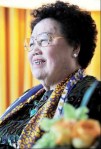
China Daily: “Billionaire behind major philanthropic projects says there’s always more to do.

Entrepreneur and philanthropist Chan Laiwa, also known as Chen Lihua, is no stranger to lists of the world’s richest people, from Forbes to Hurun. But the self-made billionaire finds there is “so much” beyond wealth. “While wealth does come through our hard work and efforts, it is not the ultimate goal and is not above everything,” Chan, 71, says in her Manhattan hotel room the day before she was honored at an April gala as one of Time magazine’s 100 Most Influential People for 2012.

Such sentiments might seem standard from any rich person concerned with public image, but Chan in person – sincere, humble and thoughtful – makes people around her feel at ease. She impresses most with her passion for art, particularly of sandalwood, a medium she has loved since she was a girl. Born into a family of Manchu, the ethnic group that led Chinas last imperial dynasty, the Qing 1644-1911, Chan spent most of her childhood in the Summer Palace in Beijing. She is a descendant of a noble Manchu family of the Yellow Banner Clan, some members of which were ministers of state under the Qing emperor.

Chan’s childhood home was furnished with red sandalwood, a material used in the emperors’ palace in bygone times. “As I grew older, I felt the need to preserve this important part of Chinese culture,” recalls Chan, who opened a furniture factory in the 1980s and began making old-style pieces modeled after those from Beijing’s Palace Museum, more widely known as the Forbidden City.

In 1999, Chan fulfilled a childhood dream by investing in a $16 million red sandalwood museum in the capital. The thousands of treasures displayed there include a scale model of a corner tower in the Forbidden City, a reproduction of the memorial gateway carved with 320 dragons from Longquan Temple in Shanxi province, and a number of intricate furniture pieces and sculptures.

She made her fortune in the 1990s through a series of real estate ventures involving her Fu Wah International Group, the Hong Kong company fashioned out of Chan’s furniture store. The businesswoman later moved to Beijing for more opportunities. Chan was recently voted among Time magazines 100 Most Influential People in the World for 2012.

via Rich in kindness|People|chinadaily.com.cn.

Law of Unintended Consequences

continuously updated blog about China & India

ChiaHou's Book Reviews

continuously updated blog about China & India

What's wrong with the world; and its economy

continuously updated blog about China & India