Posts tagged ‘Hong Kong’

02/10/2014

Hong Kong’s protests: A tough test for China’s leaders | The Economist

IT IS a most unusual sight on Chinese soil, and most unsettling for leaders in Beijing. On September 28th and 29th tens of thousands of demonstrators surrounded government offices and filled major thoroughfares around Hong Kong, braving rounds of tear gas from riot police to call for democracy and demand the resignation of Leung Chun-ying, the territory’s Beijing-backed chief executive. One image broadcast and shared around the world, of a lone protester holding his umbrella aloft in a cloud of tear gas (pictured above), has given the non-violent protests a poetic echo of “tank man” from the crackdown at Tiananmen Square in 1989.

Umbrella man

It also captures precisely what Communist Party leaders in Beijing fear from Hong Kong and its special status under the “one country, two systems” arrangement it has enjoyed since the territory’s handover from Britain in 1997. Not only are its people willing (and allowed by law) to challenge their government openly, but they also could become an inspiration for protests elsewhere in China. The spread of news and images of the protests has been blocked or heavily censored on the mainland, but as the protests carry on, the risk of contagion rises. In that sense this marks one of the most difficult tests of Chinese rule since Tiananmen.

Compounding the difficulty is the lack of a middle ground. The protesters’ main demand is that the people of Hong Kong be allowed to vote for any candidate of their choosing in elections for the post of chief executive in 2017 (the first in which citizens would have such a vote). President Xi Jinping has made clear he will have nothing resembling full Western democracy within China’s borders. The current election plan, put forward by the central government on August 31st, gives the central government an effective veto over nominees to ensure that Hong Kong remains firmly under its control.

Several protest movements have converged to challenge that control. Until recently the best-known movement had been Occupy Central with Love and Peace, which is modelled on Occupy Wall Street and named after an important business district at the heart of Hong Kong. But even Occupy’s leaders wondered whether they could muster meaningful numbers.

The biggest drivers of these protests have been university students and secondary school students, thousands of whom boycotted classes last week. On the evening of September 26th the leader of the secondary school students, 17-year-old Joshua Wong of Scholarism, was arrested—a move that, along with the use of pepper spray by police, was credited with swelling the popularity of the protests over the weekend (Mr Wong was released on Sunday). In the early hours of September 28th Benny Tai, one of the leaders of Occupy Central, announced that its protest, which had been scheduled for October 1st, China’s national day holiday, would begin immediately.

Mr Leung has shown no sign of bending. On the afternoon of September 28th, at a press conference held inside the government headquarters while thousands of protesters surrounded the building, Mr Leung repeated his endorsement of the election plan. It calls for chief executive candidates to be screened by a committee stacked with Communist Party supporters (he was elected by a similar committee in 2012, collecting 689 votes along with the derisive nickname “689”). Mr Leung acknowledged that the plan may not have been the “ideal” that some wanted, but he called it progress nonetheless. He said it had given Hong Kong citizens the “universal suffrage” they had been promised. Mr Leung said he welcomed “rational” dialogue but that the government would be “resolute” in dealing with the “unlawful” demonstrations. Asked whether the Chinese army would ever be used, Mr Leung expressed his confidence in the police. The tear gas canisters began flying shortly afterward, surprising protesters who exclaimed variations of “are you kidding?” and “shame on you”. Many donned goggles and unfurled umbrellas to protect themselves against the gas, while some raised their hands and yelled, “don’t shoot”. The protests did not become violent, but they grew and spread to other areas. The calls for Mr Leung’s resignation became louder.

via Hong Kong’s protests: A tough test for China’s leaders | The Economist.

01/10/2014

Hong Kong democracy protesters and officials mark uneasy National Day | Reuters

Thousands of pro-democracy protesters thronged the streets of Hong Kong on Wednesday, some of them jeering National Day celebrations, as demonstrations spread to a new area of the city, ratcheting up pressure on the pro-Beijing government.

Protesters sit under umbrellas at a main street at Mongkok shopping district after thousand of protesters blocked the road in Hong Kong October 1, 2014.  REUTERS/Tyrone Siu

There was little sign of momentum flagging on the fifth day of the student-led protest, whose aim has been to occupy sections of the city, including around the Central financial district, in anger at a Chinese decision to limit voters’ choices in a 2017 leadership election.

Many had feared police would use force to move crowds before Wednesday’s start to celebrations marking the anniversary of the Communist Party’s foundation of the People’s Republic of China in 1949. Those fears proved unfounded.

The crowds have brought large sections of the Asian financial hub to a standstill, disrupting businesses from banks to jewelers. There were no reports of trouble by mid-afternoon on Wednesday, but witnesses said the number of protesters was swelling.

Riot police used tear gas, pepper spray and baton charges at the weekend to try to quell the unrest but tensions have eased since then as both sides appeared prepared to wait it out, at least for now.

Protests spread from four main areas to Tsim Sha Tsui, a shopping area popular with mainland Chinese visitors on the other side of the harbor. It would usually do roaring trade during the annual National Day holiday.

Underlining nervousness among some activists that provocation on National Day could spark violence, protest leaders urged crowds not to disturb the flag-raising ceremony on the Victoria Harbour waterfront.

Proceedings went ahead peacefully, although scores of students who ringed the ceremony at Bauhinia Square overlooking the harbor booed as the national anthem was played.

via Hong Kong democracy protesters and officials mark uneasy National Day | Reuters.

17/09/2014

Is China Ready to Step Up and Invest in India? – India Real Time – WSJ

While Chinese companies have been great at peddling their products in India, they have been surprisingly reluctant to invest here. China has invested less in India than even Poland, Malaysia or Canada have.

President Xi Jinping’s three-day visit to India starting Wednesday is likely to include some massive pledges to try to remedy this imbalance.

When Prime Minister Narendra Modi visited Japan recently, Japan pledged to invest $35 billion in India. President Xi is expected to try to eclipse Japan’s promises, possibly pledging $100 billion in investment according to some local reports. His meetings with Mr. Modi are predicted to lay the groundwork for a wave of Chinese money to build industrial parks and bullet trains.

Annual trade between India and China has galloped to $66 billion from $3 billion 14 years ago, something that underscores the rise of Beijing as the global manufacturing hub and India’s growing appetite for everything from phones to machinery from China.

While the trade relationship between the two countries has bloomed, foreign direct investment from China has not. According to Indian government statistics, the country has received a total of around $400 million from China in investment in the last 14 years. Even if you add the $1.2 billion of direct investment India received from Hong Kong, China is still well behind the $22 billion in foreign direct investment from the United Kingdom, $17 billion from Japan, $13 billion from the Netherlands and $1.9 billion from Spain.

It’s not that China doesn’t invest abroad. According to data from United Nations Conference on Trade and Development, China was the third biggest source of foreign direct investment last year, having invested more than $100 billion in other countries. In the seven years to 2012, it invested more than $25 billion in the 10 members of the Association of Southeast Asian Nations alone.

Chinese investment has tended to focus on the resources sector to power its economy. Much of it has gone into getting control of oil, natural gas and coal in Africa, Australia, Indonesia and elsewhere. India has not attracted much of this investment as it is a net importer of resources and has a heavily regulated energy sector, said Rajiv Biswas, economist for IHS.

“China wants to increase investment in India and wants Chinese companies on the ground there,” Mr. Biswas said. “Most of it will be in manufacturing and infrastructure space.”

Chinese companies may also be looking to move some of their manufacturing to India as they struggle with rising wages at home, said Ajay Sahai, director general and chief executive at Federation of India Export Organization.

If India can’t find better ways to fix its trade imbalance with China, New Delhi may want to increase taxes on some imports such as auto-components and pharmaceuticals to encourage Chinese companies to set up factories in India, he said.

“This will not only raise Chinese investment in India but also help in fixing the trade imbalance,” said Mr. Sahai.

via Is China Ready to Step Up and Invest in India? – India Real Time – WSJ.

16/09/2014

Almost Half of China’s Rich Want to Emigrate – Businessweek

Even as the number of Chinese millionaires grows, the number of those aiming to leave China is getting ever larger.

A shopper at Lee Gardens mall in the Causeway Bay district of Hong Kong

About half of China’s wealthy are considering moving to a new country within five years, says a just-released report by U.K.-based bank Barclays. The survey of more than 2,000 individuals around the world, all with personal wealth over $1.5 million, showed Chinese are more eager to emigrate than the very well-off in any other region.

Forty-seven percent of rich Chinese planned to move abroad in the next half-decade. That compared with 23 percent in Singapore and 16 percent in Hong Kong. One-fifth of rich Brits intended to emigrate, while only 6 percent of Americans and 5 percent of Indians had that plan, reported the South China Morning Post today, citing the report.

Not surprisingly, given China’s high-pressure, exam-based school system, bettering children’s education and improving their future job prospects were named as the main reasons to emigrate by 78 percent of respondents. A better economic situation was mentioned by 73 percent, while health care and social services were cited by 18 percent; the U.S. and Europe were the favored destinations.

“The reality is that most ultra-high net worth individuals in China are probably making money in China right now,” noted Liam Bailey, head of residential research at London brokerage Knight Frank, in the report. “So, for business reasons, they need to be relatively close. That might prevent some of them going further afield.”

via Almost Half of China’s Rich Want to Emigrate – Businessweek.

11/09/2014

Can Jack Ma’s Alibaba Fortune Jump-Start Chinese Philanthropy? – Businessweek

Harvard just announced its largest-ever donation: a $350 million unrestricted gift to its School of Public Health. The donor is Hong Kong-based Morningside Foundation, led by two brothers who earned their fortunes in real estate, private equity, and venture capital. One brother, Gerald Chan, earned a graduate degree from Harvard. The school will be renamed in honor of their late father as the Harvard T.H. Chan School of Public Health.

Jack Ma on July 15

Greater China is home to 358 billionaires (including 64 Hong Kong billionaires), according to the 2014 Hurun Global Rich List. Yet with a few exceptions—including the Harvard gift and Chinese tech titans’ recent fondness for the ice bucket challenge—a culture of domestic philanthropy has been relatively slow to take root. Bill Gates and Warren Buffet hosted a lavish 2010 dinner in Beijing intended to encourage the Chinese elite to embrace philanthropy, but several tycoons snubbed the Americans’ invitations and declined to open their wallets.

Now, at last, China has a powerful homegrown evangelist for philanthropy: Jack Ma. As co-founder and executive chairman of Alibaba Group, which filed paperwork last week to raise as much as  $21.2 billion in an initial public offering on the New York Stock Exchange, he is one of China’s most respected and closely watched tycoons—and he’s publicly embracing a culture of giving.

Ma joined Alibaba co-founder Joe Tsai earlier this year in establishing a personal philanthropic trust to be “funded by share options granted by Alibaba … for approximately two percent (2%) of Alibaba’s equity,” according to a statement. The trust will focus on the “environment, medicine, education, and culture.” In Ma’s words, “Alibaba was founded 15 years ago with a mission ‘to make it easy to do business anywhere’ and a set of principles and values that emphasize our responsibility to society. Giving back to society is deeply embedded in Alibaba’s culture.”

The total value of the fund will depend on the performance of Alibaba’s upcoming IPO. If the company is valued at $120 billion, or more, the charitable trust will be worth at least $2.4 billion.

via Can Jack Ma’s Alibaba Fortune Jump-Start Chinese Philanthropy? – Businessweek.

04/09/2014

Democracy for Hong Kong: Unyielding | The Economist

PRO-DEMOCRACY activists announced the start of a “new era of civil disobedience” on the night of August 31st, after China’s top legislature laid down restrictive guidelines on the kind of elections that are allowed in Hong Kong, a semi-autonomous territory. Officials in Beijing had promised to allow the election of Hong Kong’s next leader, in 2017, through universal suffrage. With the announcement China has clarified that there is a catch, a big one: the government sees itself as being under no obligation to allow open nominations for the election’s candidates. Before the announcement, Chen Zuoer, one of the officials who helped negotiate Hong Kong’s handover to mainland China back in 1997, had warned that “blood will be shed” if their opponents refuse to back down.

In a show of defiance, an alliance of activists who support fully open elections held a rally on Sunday night to declare that it would launch waves of protests, culminating in the occupation of the city’s main financial district. Their movement has been many months in the making; they call it “Occupy Central with Love and Peace”. It was first proposed nearly two years ago by Benny Tai, an associate law professor at the University of Hong Kong, in anticipation of a disappointing official interpretation of “universal suffrage”—just like the one that the central government has now given them.

Police arrested at least 22 people during protests that began on Sunday night and carried through Monday morning. The student-union president at the Chinese University of Hong Kong has announced a strike; students there will have a rally of their own on September 4th around a replica of the “Goddess of Democracy” statue that became famous for its appearance in Tiananmen Square in 1989. Other universities are expected to see strikes of their own announced in the next few days.

Many of the participants at Sunday’s rally despair at convincing the bureaucrats in Beijing to change their position—but they feel they need to put up a fight anyway. “Normal protests are no longer useful,” in the words of Agnes Chow Ting, a student protester. She led a failed attempt after the rally to “ambush” a delegation of officials from the central government.

Such actions may attract international attention but indeed, they are less than likely to sway decision-makers in Beijing. Li Fei, a deputy secretary-general of the National People’s Congress Standing Committee, told local politicians on September 1st that the committee believes Hong Kong’s police will be capable of handling any disturbance that might be caused by “a small group of people seeking to undermine Hong Kong”, as he characterises the Occupy movement.

Hong Kong’s current chief executive, Leung Chun-ying, was picked for the role in 2012 by a 1,200-member “election committee”. A reliable majority of that committee were Hong Kongers who will ever be glad to demonstrate loyalty to their counterparts in Beijing.

via Democracy for Hong Kong: Unyielding | The Economist.

26/08/2014

China Says Celebs Have to Actually Try the Products They Endorse – China Real Time Report – WSJ

Celebrities who endorse ads for products they don’t try may need to start being a guinea pig in China.

On Monday, an updated draft of the Central Party’s advertisement law submitted to lawmakers said that celebrities who are paid to be spokespeople for products, should try the product before they represent it, according to state media. The goods and services celebrities endorse need to be “based on facts,” the draft says.

False endorsements have been a big problem in China and across Asia. In 2006, Hong Kong actress Carina Lau was sued after she endorsed a luxury Japanese skincare cream, which she said could reduce wrinkles by 50% after a month of use. Later, it was discovered that the cream contained harmful chemicals, including toxic metals chromium and neodymium, and that some consumers had adverse reactions to the cream. (The Japanese skincare brand, SK-II, was fined 200,000 yuan, or about $32,500, for false advertising.)

More recently, Jackie Chan endorsed one of Bawang International’s anti-hair loss herbal shampoos. After a Hong Kong-based magazine revealed that the shampoo contained a substance that may cause cancer, Mr. Chan responded. “I have always been very careful with what products I endorse. But there are some media who are specifically gunning for me and a few other artistes, I am not sure why, as though it is better that we all just died.” .(For its part, Bawang said its products had passed quality tests and that many shampoos and cleaning products contain small traces of carcinogens.)

The revision comes on the heels of last year’s revised Law on Protection of the Rights and Interests of Consumers, which states that celebrities who appear in misleading commercials, and the media that broadcast the ads, are legally liable.

Monday’s updated law reinforces celebs’ legal liability and says their “illegal income” can be confiscated if they stump for false advertising. They could also face hefty fines.

But it isn’t exactly clear how the law will be enforced or whether the government can actually monitor whether celebrities actually try out the products they promote.

via China Says Celebs Have to Actually Try the Products They Endorse – China Real Time Report – WSJ.

21/08/2014

Bosses at China’s state-owned enterprises face pay cuts of up to 50pc | South China Morning Post

Officials in charge of China’s state-owned enterprises face pay cuts of up to 50 per cent and new job descriptions under a reform plan approved by President Xi Jinping.

_pek0804_44499767.jpg

Xi said at a meeting on Monday that China needed to speed up reform targeting the salaries of top executives at SOEs. He also approved a seven-year overhaul of their management structure.

Sources say the reform plan involves two steps.

The first is to cut the salaries of top executives at major SOEs, particularly those in finance and banking. Some may have to take a 50 per cent pay cut.

The second step is to gradually change their job responsibilities. The government-appointed officials will probably join the board of directors. The day-to-day operations will be handled by senior managers recruited from outside, with salaries in line with international standards.

The new model will be similar to that of the MTR Corporation in Hong Kong. As the major shareholder, the Hong Kong government appoints three representatives to the board of directors to ensure the firm follows its policy direction. The day-to-day operations, however, are run by top managers hired through an open recruitment process.

The reform is to address public discontent over the ambiguous status of top SOE managers, particularly those in charge of the so-called central enterprises directly under the State Council. Most of these top executives carry a vice-ministerial or ministerial-level ranking that comes with perks and privileges. At the same time, they are paid like top Western business executives and earn many times more than their fellow officials.

There has been criticism that the high salaries are unwarranted because many SOEs operate as monopolies or near-monopolies.

An executive of an energy industry SOE said the head of a central enterprise in his field could make one million yuan (HK$1.26 million) a year. Those working for banking and finance central enterprises could earn more.

Jiang Jianqing, the chairman of the Industrial and Commercial Bank of China, was paid nearly two million yuan in 2013. In comparison, the annual salary of some ministry-level party cadres is about 200,000 yuan. Yet some top executives point to their counterparts in the West and complain their incomes are too low.

via Bosses at China’s state-owned enterprises face pay cuts of up to 50pc | South China Morning Post.

14/08/2014

Chinese Buyers Are Driving a Boom in Australian Real Estate – China Real Time Report – WSJ

Australian house prices are rising quickly and demand from China is increasingly driving the boom, according to a report by Hong Kong-based brokerage CLSA.

The report, based on interviews with 50 industry participants in Australia, including major realtors, finds Chinese are now “driving the residential property market Down Under” adding that the “phenomenal investment” will continue for at least three more years.

CLSA says China is now the top source of foreign-capital investment in Australian real estate and anecdotal evidence indicates that foreign investment from China has continued to increase in 2014, having slowly accelerated over the last 5 years. The stock brokerage did not attempt to put a value on the investment.

CLSA said good education and a clean environment were driving demand from China.

“Australia offers both and we see no reason why its fundamental appeal will diminish,” it added.

There are currently only limited curbs on foreign buying of Australian property. Any newly built Australian property can be bought by foreigners . The purchase of existing properties needs the approval of Australia’s Foreign Investment Review Board.

Government data this week showed house prices nationally grew by 10% in the year-to-June 30, with Sydney prices racing at 15% over the same period.

The issue of Chinese investment in Australian housing investment has prompted concern among Australians about the potential to be frozen out of the housing market, especially the highly desirable inner city markets of Sydney and Melbourne.

A government investigation into the issue of foreign investment in Australian property is underway and will report its recommendations in October.  One of the limitations of the debate over the issue is that there is not reliable data on how much money is coming into property from overseas.

Australia’s central bank has been watching the rise in house prices but has so far downplayed the role Chinese money has had on prices growth. If house prices continue to climb, the reserve Bank of Australia might have to raise interest rates at a time when the economy is weak and unemployment at more than decade highs.

via Chinese Buyers Are Driving a Boom in Australian Real Estate – China Real Time Report – WSJ.

05/08/2014

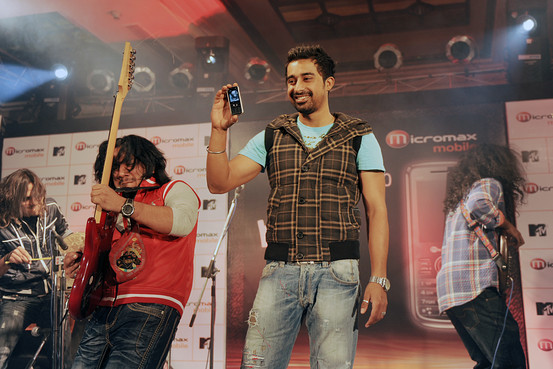
Samsung Loses Top Spot to Micromax in India – India Real Time – WSJ

Samsung Electronics Co.005930.SE -0.08% was dethroned as the top cellphone seller in India last quarter as local rival, Micromax Informatics Ltd., undercut and outsold the Korean company for the first time in Asia’s third-largest economy.

Micromax which was launched only five years ago, has taken the pole position in the Indian market—the second largest in the world in terms of handset sales—by undercutting the prices of Samsung and other international brands.

In the April-through-June quarter Micromax’s market share reached 17% of the Indian market compared to Samsung’s 14%, according to Counterpoint Technology Market Research, a research and consulting company based in Hong Kong.

Samsung, the world’s largest cellphone company by sales, is facing tough competition from Micromax and other Indian handset sellers. The South Korean company lost its top spot in terms of handset volumes as it has shifted its focus to smartphones and away from the less-expensive feature phones, said Neil Shah an analyst at Counterpoint.

Micromax has been more successful than most at targeting the Indian consumer. In the past five years it has come out of nowhere by investing heavily in advertising, distribution and developing a portfolio of relatively inexpensive handsets for Indians.

Samsung may be trying to claw back some of its market share. The company, last week, added three more smartphones to its “affordable” category of handsets priced below 10,000 rupees.

via Samsung Loses Top Spot to Micromax in India – India Real Time – WSJ.

Law of Unintended Consequences

continuously updated blog about China & India

ChiaHou's Book Reviews

continuously updated blog about China & India

What's wrong with the world; and its economy

continuously updated blog about China & India