Posts tagged ‘India–Pakistan relations’

27/07/2016

Why India’s Lack of Toilets Is Hurting Its Children’s Development – India Real Time – WSJ

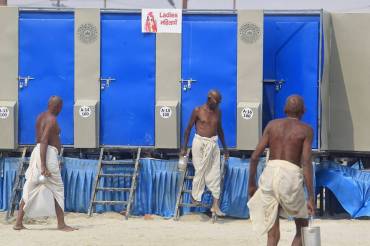
India’s lack of toilets and poor access to sanitation are holding back its children, causing stunted growth and curbing their development, a new report says.

Is India Winning the Fight Against Childhood Malnutrition?

Why Is Indian Children’s Growth So Stunted? It’s Not Why You ThinkT

he country has more than 48 million under fives with impaired growth, the largest number in the world, the report from London-based international development charity WaterAid said.

India also has 774 million people without access to adequate sanitation, and 76 million without safe water, the report said.

Children who are stunted because of malnutrition tend to be shorter and lag behind their peers cognitively. Poor access to clean water, sanitation and hygiene cause diarrhea and expose children to other intestinal infections during the crucial first two years of life.

Around 140,000 under-fives die in India every year because of diarrhea and other diseases caused by lack of access to these basic services, the report said.

Indian Prime Minister Narendra Modi has said in the past that he would rather build toilets than temples — setting a goal for every home in the country to have a place to go to the bathroom by 2019. But the program has suffered challenges: some Indians prefer to relieve themselves outdoors.

India is making some progress, however. The report said the percentage of its children who were stunted reduced from 48% in 2006 to 39% in 2014, the year Mr. Modi came to power.

Pakistan, India’s closest neighbor, ranked third with more than 9.8 million children who are stunted, according to the WaterAid study.

Source: Why India’s Lack of Toilets Is Hurting Its Children’s Development – India Real Time – WSJ

20/02/2016

Pathankot Attack: Pakistan Begins Formal Police Investigation – India Real Time – WSJ

Pakistan has launched a formal police investigation into the alleged involvement of Pakistan-based militants in a deadly attack on an Indian air force base last month, senior government and police officials said Friday.

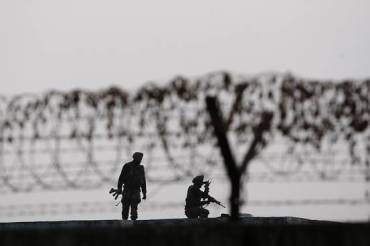
Six heavily-armed militants attacked the Pathankot air force base on Jan. 2, sparking a battle with Indian forces that lasted more than 40 hours, killed seven Indian security personnel and threatened to dismantle a tentative improvement in relations between Islamabad and New Delhi.

India suspected Pakistan-based Jaish-e-Mohammad, a U.S.-designated foreign terrorist group, was behind the Pathankot attack, and demanded Pakistan take action against the perpetrators.

Source: Pathankot Attack: Pakistan Begins Formal Police Investigation – India Real Time – WSJ

29/07/2015

Why the Punjab Police Station Attack Was Waiting to Happen – India Real Time – WSJ

Six people were killed and at least seven injured in the Indian province of Punjab on Monday after gunmen dressed in military uniforms opened fire at a bus station and later turned their weapons on a police post.

According to Indian officials, security forces killed three of the attackers; three police officers also were killed in the violence in Gurdaspur district, which is close to the Pakistani border. The death toll could have been much higher; five bombs were reportedly found on train tracks nearby.

Many Indians and South Asia analysts, myself included, have feared for some time an eruption of the sort of violence that unfolded Monday. Reasons include:

* With most international troops out of Afghanistan, numerous militants that had been fighting foreign forces in Afghanistan could be looking for new targets—and might see ones in neighboring India.

* There was a resurgence in 2014 of anti-India militant leaders who had been quiet in recent years. These include Masood Azhar, head of the Jaish-e-Mohammed group, whose voice was heard in a recorded broadcast last year at an anti-India rally in Pakistan. Mr. Azhar had threatened to assassinate Narendra Modi if he became prime minister.

* The India-Pakistan relationship is at one of its lowest points in years. The Pakistani military controls its country’s relations with India, and army leaders are fundamentally opposed to the idea of peace with New Delhi. Mr. Modi’s conservative, Hindu nationalist government sees no reason to pursue full-fledged talks with Pakistan’s civilian government, which is more sympathetic to reconciliation but lacks the power to pursue it. This fraught environment offers useful pretexts for attacks.

It is not yet clear who staged Monday’s assault; some Indian officials have alleged the involvement of Lashkar-e-Taiba, the Pakistani anti-India group responsible for the 2008 terror strikes on Mumbai. Lashkar-e-Taiba is known to have ties to the Pakistani security establishment. Notably, Islamabad has condemned the attack—a goodwill gesture made with the knowledge that, whoever staged the attack, someone in India would invariably accuse Pakistan.

Although Punjab province is close to the tense Kashmir region, terror attacks are unusual in Punjab. In decades past, it has been a hotbed of separatist—and at times violent—activity led by Indian Sikhs, though this movement—which many Indian commentators believe is supported by Pakistan’s intelligence service—has been quiet in recent years (grievances of the past, however, remain entrenched, I was told repeatedly while in Punjab last year). Some Indian commentators have questioned whether Monday’s attack marks a “revival” of the movement. Others wonder if Pakistani terrorists are simply opening new fronts beyond Kashmir.

If India concludes that the attack originated in Pakistan, the subcontinent could be in for some very turbulent times. Mr. Modi is not likely to be as restrained in the face of Pakistani provocations as his predecessor Manmohan Singh was.

Whoever was behind the attack, Monday’s death toll reminds us that amid talk of al Qaeda affiliates and Islamic State wreaking havoc across the Middle East and North Africa, South Asia’s subcontinent remains a dangerous–and nuclear-armed—place.

via Why the Punjab Police Station Attack Was Waiting to Happen – India Real Time – WSJ.

12/07/2015

5 Takeaways from Modi and Sharif’s Meet in Ufa – WSJ

Little more than a photo opportunity was expected to come out of the meeting between India’s Narendra Modi and Pakistan’s Nawaz Sharif on Friday.

So, when the two rival nations put out a joint statement after their leaders held long-delayed talks in the Russian city of Ufa, some political commentators were caught by surprise.

Almost a year after his country called off talks with Pakistan, Mr. Modi accepted an invitation to visit Islamabad in 2016 for the upcoming Saarc summit.

Describing Friday’s meeting on the sidelines of the Shanghai Cooperation Organization summit as a “constructive engagement,” India’s foreign ministry, along with its counterpart in Islamabad, highlighted steps the two sides agreed to take on “issues of bilateral and regional interests.”

Here are five takeaways from the statement.

1 Tackling Terrorism

The current national security advisors of the two nations, will meet to “discuss all issues connected to terrorism,” said the statement. It didn’t give a timeline for the meeting between India’s Ajit Doval and Pakistan’s Sartaj Aziz.

India has on several occasions blamed Pakistan for supporting terrorism, a claim Islamabad has repeatedly denied. Last year, after eight soldiers died in a militant attack on an Indian army camp in the northern state of Jammu and Kashmir, Indian Home Minister Rajnath Singh blamed Islamabad for “sheltering” terrorists. “If Pakistan can’t stop these attacks, let it take India’s help,” he said.

2 Military Meeting

The two sides also said meetings will take place between the heads of India’s Border Security Force and the Pakistan Rangers, followed by discussions between the director generals of military operations from both countries. Mr. Singh said in a statement Friday that this would “help in stabilizing the situation” at the border between India and Pakistan.

The border has recently seen a spate of violence with cross-border firing from both sides, forcing thousands of local people from their homes.

3 Freeing Fishermen

A decision on the release of Indian and Pakistani fishermen in custody in both countries, along with the return of their boats, can be expected in 15 days, according to the statement. Pakistan’s foreign ministry said as of July 1 that there were 355 Indian fishermen in Pakistani jails and 27 Pakistani fishermen in Indian jails. The statement did not go as far as to say they would be released however.

4 Religious Tourism

The neighbors agreed to establish a “mechanism for facilitating religious tourism” between the two countries.

5 Mumbai Terror Attack

Six months after Zakiur Rehman Lakhvi, the alleged mastermind of the devastating attack on Mumbai that killed 166 people in 2008, was freed from prison in Pakistan, the two sides announced a decision to “discuss ways and means to expedite the Mumbai case trial, including additional information like providing voice samples.” India alleges that the attackers were backed by Pakistan’s military and intelligence agencies—a charge that Pakistan denies.

via 5 Takeaways from Modi and Sharif’s Meet in Ufa – WSJ.

06/07/2015

Rivals Pakistan, India to start process of joining China security bloc | Reuters

Nuclear-armed rivals Pakistan and India will start the process of joining a security bloc led by China and Russia at a summit in Russia later this week, a senior Chinese diplomat said on Monday, the first time the grouping has expanded since it was set up in 2001.

Photo

The Shanghai Cooperation Organisation (SCO) groups China, Russia and the former Soviet republics of Tajikistan, Uzbekistan, Kazakhstan and Kyrgyzstan, while India, Pakistan, Iran, Afghanistan and Mongolia are observers.

“As the influence of the SCO’s development has expanded, more and more countries in the region have brought up joining the SCO,” Chinese Vice Foreign Minister Cheng Guoping told a news briefing.”India and Pakistan’s admission to the SCO will play an important role in the SCO’s development. It will play a constructive role in pushing for the improvement of their bilateral relations.”

India and Pakistan have fought three wars since 1947, two of them over the divided Muslim-majority region of Kashmir which they both claim in full but rule in part. Pakistan also believes India is supporting separatists in resource-rich Baluchistan province, as well as militants fighting the state.

India applied to join the regional security grouping last year and SCO foreign ministers gave a positive recommendation when they met in June. “We await further developments,” said Sujata Mehta, a senior foreign ministry official.

Prime Minister Narendra Modi will be in Moscow for a summit of the BRICS group of emerging markets and both he and his Pakistani counterpart, Nawaz Sharif, will attend a special SCO “outreach” session as part of the gathering.

Pakistan’s application is being considered, said foreign ministry spokesman Qazi Khalilullah. “We hope they will support us for full membership,” he added.

The grouping was originally formed to fight threats posed by radical Islam and drug trafficking from neighboring Afghanistan.

Cheng said the summit, to be attended by Chinese President Xi Jinping, would also discuss security in Afghanistan.

Beijing says separatist groups in the far western region of Xinjiang, home to the Muslim Uighur minority, seek to form their own state, called East Turkestan, and have links with militants in Central Asia, as well as Pakistan and Afghanistan.

China says Uighur militants, operating as the East Turkestan Islamic Movement (ETIM), have also been working with Islamic State.

“It can be said that ETIM certainly has links with the Islamic State, and has participated in relevant terrorist activities. China is paying close attention to this, and will have security cooperation with relevant countries,” Cheng said.

via Rivals Pakistan, India to start process of joining China security bloc | Reuters.

26/05/2015

The Top 10 Misses of Narendra Modi’s First Year – India Real Time – WSJ

While Prime Minister Narendra Modi has had some major wins—including opening new sectors up to more foreign investment and raising India’s global profile as outlined in this accompanying post about Mr. Modi’s triumphs—he has also had some surprising losses.

Here are 10 that stood out:

Delhi Defeat: Mr. Modi’s Bharatiya Janata Party made big bets on the Delhi elections in February and lost almost every seat to the upstart Aam Aadmi Party. The small but high-profile local poll proved that the BJP was not invincible. Sambit Patra, a spokesman for the party admitted that the BJP had misread Delhi voters and has learned from its mistakes.

The War on Tax Terrorism: Mr. Modi came to power promising to stop the tax harassment of corporations. The decisions not to appeal tax cases against Vodafone Group PLC and Royal Dutch Shell PLC were a step in the right direction. Some foreign investors though were then slapped with huge surprise back tax bills making everyone question whether anything has changed. India’s ruling party has said it is working hard to clarify tax laws but it cannot erase cases that had been brought before they came to power.

Minority Concerns: While there has not been anything close to nationwide backlash against minority groups that many had feared, critics say the prime minister has not yet gone far enough to calm the concerns of minority communities. Some worry that people within the BJP and others with Hindu-nationalist leanings seem emboldened by the rise of Mr. Modi’s party, making them more likely to speak out and act out against Muslims, Christians and other non-Hindu communities. Mr. Modi has strongly condemned intolerance and reprimanded BJP members for controversial comments. The party says it represents all Indians and it cannot be responsible for every fringe group that makes trouble. “No one should be scared of anybody, the government supports every community,” said the BJP’s Mr. Patra.

No Big Bang: Two budgets down and still no sign of the big bang economic reforms optimists had expected from Mr. Modi. The changes he has promoted have been more incremental while attempts at some unpopular changes have been blocked in Parliament. He’s unveiled many promising campaigns to do everything from building more toilets and “smart cities” to promoting manufacturing and yoga. However, it’s too early to decide whether his campaigns represent a revolution in thinking or just rhetoric. The BJP spokesman said the party will continue to push for reform.

Paltry Profits: GDP growth has accelerated and inflation has plunged under Mr. Modi, but the Modi magic is not trickling down to the bottom line. For the fiscal year ended Mar. 31, many of India’s largest companies are expected to announce their weakest profit growth in more than five years.

Visa Glitches: On his many trips abroad, Prime Minister Modi expanded the number of countries eligible for so-called visa-on-arrival privileges. Travelers said the new visas ended up causing a lot of confusion forcing the government to rename them, more accurately, e-visas. There was a similar muddle about new rules combining the PIO and OCI visas held by people of Indian origin around the world. The change, which was meant to make it easier for people with Indian heritage to stay in India, ended up causing some angst about whether their right to remain was about to run out.

WTO Battle: One of Mr. Modi’s government’s first global moves was to reject a World Trade Organization agreement set in Bali. India had agreed to abide by the agreement before the BJP came to power but changed its mind, saying it needed more protection for its farmers. With few other countries backing its position, India eventually backed down. The Bali deal, which will simplify customs procedures world-wide, is now moving ahead; both India and the countries that pressured it to accept the agreement claim not to have blinked.

Crackdown: While Mr. Modi has been in charge, India has restricted funding of non-government organizations, including Greenpeace. It blocked the broadcasting of a BBC documentary about the 2012 gang rape of a woman on a Delhi bus. New Delhi also stopped Al-Jazeera from broadcasting in India for five days for mislabeling India’s disputed border with Pakistan.

Government officials said the government was not trying to silence critics. In the case of the non-government organization funding, officials said they were just enforcing foreign exchange laws. A court said the ban on the BBC documentary was to avoid law and order problems. Meanwhile the Al-Jazeera blackout was punishment for showing maps with “parts of Indian territory inside Pakistan,” an official of India’s Information and Broadcasting Ministry said at the time.

This Outfit: When the prime minister greeted U.S. President Barack Obama wearing this dapper suit in January, many applauded his bold choice of subliminal advertising; others called it an embarrassing display of gauche narcissism.

Mr. Modi hugs President Barack Obama while wearing a pinstripe suit with his name in the stitching. AFP/Getty

This Solo: As with most of his international trips, Mr. Modi was not shy about putting on the local attire during a recent visit to Mongolia. He should have considered ending his tryst with Mongolian culture at that though as his attempt at playing an instrument called the Yoochin—for more than two minutes—was painful to watch.

via The Top 10 Misses of Narendra Modi’s First Year – India Real Time – WSJ.

27/11/2014

China looms over South Asian summit in the Himalayas | Reuters

When eight South Asian leaders gather for a summit in Kathmandu on Wednesday, they will meet in a conference center donated by China to its cash-strapped Himalayan neighbor Nepal 27 years ago.

Prime Minister Narendra Modi watches a guard of honour upon his arrival for the 18th South Asian Association for Regional Cooperation (SAARC) summit in Kathmandu November 25, 2014. REUTERS/Navesh Chitrakar

In the decades since it built the modernist brick and glass hall, China has massively stepped up its presence in South Asia, supplying ports, power stations and weapons.

China’s advance has been aided by bickering between India and Pakistan that stymies almost all attempts at integration in a region that is home to a fifth of the world’s population but has barely any shared roads, fuel pipes or power lines.

India’s Prime Minister Narendra Modi has not welcomed Beijing’s renewed suggestion its status be raised from “observer” in the South Asian Association for Regional Cooperation (SAARC), in which India is presently the only major power.

SAARC summits bring together leaders from Afghanistan, Bangladesh, Bhutan, India, the Maldives, Nepal, Pakistan and Sri Lanka.

Modi’s hope of using the group as a counterweight to China is unlikely to gain traction at the two-day Kathmandu meeting, with officials saying Pakistan is blocking deals to increase transport and energy connections.

Pakistan mooted the idea of upgrading China’s and South Korea’s status in the organization at a meeting of SAARC foreign ministers on Tuesday. It was quickly rebuffed by India.

via China looms over South Asian summit in the Himalayas | Reuters.

30/09/2013

India and Pakistan Agree to Take Steps to Ease Tension – WSJ.com

India and Pakistan have agreed to take steps to reduce tension on the disputed part of their border, in a much-anticipated meeting that senior officials said made advances in the tense relations between these nuclear-armed neighbors.

image

Indian Prime Minister Manmohan Singh and his Pakistani counterpart Nawaz Sharif met in New York on Sunday on the sidelines of the United Nations General Assembly. The talks went better than expected, officials from both sides said.

A series of deadly events in the weeks leading to the discussions had heightened tensions in the countries’ already-fraught relationship.

Washington believes normalizing relations between India and Pakistan would help stabilize the region, as the hostility between the two countries feeds a detrimental competition for influence in Afghanistan. And Islamabad‘s concern over its eastern border with India prevents it from dealing with the al Qaeda-influenced militant groups that menace its northwest.

“There is clearly a desire from both sides to have a much better relationship,” said India’s national security adviser, Shivshankar Menon, briefing reporters after the meeting. “We have actually achieved a new stage; we do have some understanding on how to move forward.”

Earlier Pakistan Extends Olive Branch to India. Mr. Sharif, who came to power in June and has a history of pursuing peace with India, had asked for the meeting.

For his part, Mr. Singh has a record of defying hawks at home to reach out to Pakistan. But how far he can go is limited by elections his party faces in India next year. Any supposed softness on Pakistan will be exploited by his conservative opponents.

via India and Pakistan Agree to Take Steps to Ease Tension – WSJ.com.

See also: https://chindia-alert.org/political-factors/indian-tensions/

Law of Unintended Consequences

continuously updated blog about China & India

ChiaHou's Book Reviews

continuously updated blog about China & India

What's wrong with the world; and its economy

continuously updated blog about China & India