Chindia Alert: You’ll be Living in their World Very Soon
aims to alert you to the threats and opportunities that China and India present. China and India require serious attention; case of ‘hidden dragon and crouching tiger’.
Without this attention, governments, businesses and, indeed, individuals may find themselves at a great disadvantage sooner rather than later.
The POSTs (front webpages) are mainly 'cuttings' from reliable sources, updated continuously.
The PAGEs (see Tabs, above) attempt to make the information more meaningful by putting some structure to the information we have researched and assembled since 2006.
Modi government claims progress in fulfilling election vow to crack down on ‘black money’
A four-month amnesty for tax evaders in India has resulted in the declaration of hidden assets worth nearly $10bn, the government has said, as it seeks to fulfil an election pledge to crack down on illicit “black money”.
The Income Declaration Scheme, which ran from June through September, allowed citizens to report assets previously undeclared to the tax authorities, without risk of prosecution. A charge of 45 per cent was to be levied on the assets declared under the scheme — one of the most conspicuous initiatives in Prime Minister Narendra Modi’s drive to tackle widespread corruption that is seen as a significant drag on the economy.
Arun Jaitley, finance minister, told reporters at the weekend that assets worth Rs652.5bn ($9.8bn) had been declared under the scheme, implying a boost to government revenue of Rs294bn. The amnesty attracted 64,275 declarations, with the average amount declared standing at Rs10.2m. Mr Jaitley cited this to rebut prior fears that the initiative might not elicit a response from wealthy Indians.
New Delhi had not publicly stated a revenue target, but some media reports had said officials were aiming to uncover about Rs1tn in previously undeclared assets.
The initiative followed a similar one launched in 1997 that yielded revenue of Rs97.6bn, but Mr Jaitley said that the latest drive was firmer in its treatment of evaders, arguing that the previous effort had allowed them to make payments based on unduly low valuations of their assets.$9.8bnA
mount of assets declared under India’s four-month tax amnesty
Only about 4 per cent of Indian adults pay income tax, according to the government’s latest economic survey. While the annual income of most Indians is below the Rs250,000 threshold beyond which income tax is due, the slender income tax base also reflects the extent of economic activity that occurs through informal transactions beyond the oversight of tax officials. Such activity amounts to about 20 per cent of gross domestic product, according to a recent report by analysts at Ambit Institutional Equities. That report argued that heightened official scrutiny of domestic transactions had encouraged tax evaders to keep money in cash, hitting demand for formal banking services as well as for property and gold — asset classes commonly used to launder money. Liases Foras, a property research company, estimated in 2014 that 30 to 40 per cent of Indian real estate transactions involved an illicit cash payment.
Firm progress in reducing tax evasion would boost the credibility of Mr Modi’s government, which made this a key part of its 2014 election manifesto. $343bnEstimated amount of assets Indians sent abroad illicitly between 2002 and 2011Central to the drive has been the pursuit of funds concealed in offshore accounts, of which Mr Modi pledged before his election “to bring back every rupee … and use it for the welfare of the poor”.
The US-based group Global Financial Integrity has estimated that Indians sent $343bn of assets abroad illicitly between 2002 and 2011.Last year India’s parliament passed a law imposing criminal penalties for the illicit concealment of overseas assets. This year the government scrapped a treaty with Mauritius under which investments from the island state were exempted from capital gains tax: an arrangement that had been criticised for allowing wealthy Indians to “round-trip” illicit funds back into the country.
It has been a year since a Muslim man in northern India was lynched over rumours that his family had slaughtered a cow and eaten beef.
Hindus consider cows to be sacred, and for many, eating beef is taboo. The slaughter of cows is also banned in many Indian states.But Mohammad Akhlaq’s death sparked widespread outrage and contributed to changing the social and political discourse of the country. The BBC’s Ayeshea Perera looks at some of the most significant things that happened in India following his death.
The ‘intolerance’ furore
Image copyright AFP: The government began to be haunted by allegations of intolerance
Perhaps the largest fallout of Mohammad Akhlaq’s death in Uttar Pradesh state was the accusation of “intolerance” that began to haunt Prime Minister Narendra Modi’s ruling Hindu nationalist BJP.
Critics of the BJP have often accused it of being Hindu majoritarian in its outlook and of being hostile to ethnic and religious minorities, particularly Muslims. And this incident only strengthened those voices.
The fact that Mr Modi did not immediately condemn the incident, choosing to remain silent even as state party leaders jumped to the defence of the accused, caused even more anger.
It prompted an unprecedented movement by writers and poets who had been celebrated by the government – they started returning their prestigious Sahitya Akademi awards to protest at intolerance in India. More than 40 writers from all across the country returned their awards and were soon joined by a group of film makers who said they would not be “guilty of flattening diversity” in the country.
Leading writer Nayantara Sehgal, a niece of India’s first prime minister Jawaharlal Nehru, wrote that “… India’s culture of diversity and debate is now under vicious assault… The prime minister remains silent about this reign of terror. We must assume he dare not alienate evil-doers who support his ideology.
“But “intolerance” was not limited to returning awards – it found its way into popular discourse as well. Bollywood superstar Amir Khan also created a furore when he expressed concern over the “growing intolerance” in India. He was later joined by fellow star Shah Rukh Khan who said he “respected” people returning awards to protest against intolerance.
Later, the arrest of a student leader from India’s prestigious Jawarhalal Nehru University on sedition charges over a rally condemning the hanging of a man convicted of attacking the Indian parliament also sparked cries of “intolerance” on a massive scale.
The BJP loses Bihar
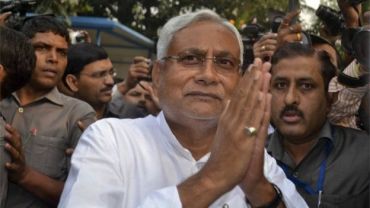
Image copyright AP: Nitish Kumar led an alliance which defeated PM Narendra Modi’s BJP in the Bihar polls
A second outcome that can be linked back to the Dadri killing is that the BJP went on to lose state elections in the neighbouring northern state of Bihar – a poll it was widely expected to win.Incumbent chief minister Nitish Kumar, who was on his second term, had already suffered a crushing defeat to Mr Modi’s party in the 2014 parliamentary elections, and another “Modi wave” was expected to sweep the state elections as well.
But in a masterstroke, Mr Kumar and his allies positioned themselves as a “secular” alliance, in direct opposition to the “communal” BJP.
The fact that Mr Modi and BJP party chief Amit Shah raised the sensitive issue of cow slaughter and consumption of beef during election rallies in the state also did not seem to help.
When Mr Kumar’s party won, it was called a “historic verdict” and hailed as proof that running a poll campaign along religious and ethnic lines would not bring results.
The rise of cow protection vigilante groups
Image copyright MANSI THAPLIYAL: These self styled cow protectors created headlines after they lay in wait for and then badly beat up a number of truck drivers transporting cattle for slaughter
The death of Mr Akhlaq seemed to put new focus on “cow protection” groups who took it upon themselves to ensure that cattle would not be slaughtered or consumed.
Mostly members of militant Hindu groups like the Bajrang Dal, Vishwa Hindu Parishad (World Hindu Council) and Shiv Sena, these self-styled cow protectors created headlines after they lay in wait for and then beat up a number of truck drivers transporting cattle for slaughter.
In another attack, two Muslim woman were beaten up after they were accused of carrying beef. And most significantly, in an incident which led to massive caste unrest, four low-caste Dalit men trying to skin a dead cow were thrashed by vigilantes in the western state of Gujarat.A video of the incident went viral and led to huge protests and an uproar in parliament.
After again being accused of silence, Mr Modi used a radio address almost a full month later to criticise vigilante attacks, saying such people made him “angry”, and any attacks must be investigated.
Eating as an act of defiance
Beef fry is an essential part of the diet in south India’s Kerala stateThe right to eat beef became another huge talking point in
India is one of the largest producers of coal in the world and more than half of its commercial energy needs are met by coal.
But unregulated mining has caused serious health and environmental issues, and led to growing conflicts between elephants and humans.
In the coal-rich central state of Chhattisgarh, for example, fly ash has caused respiratory problems and serious illnesses like tuberculosis among people, but their troubles don’t end there.
Forests are being cleared for coal mining and wild elephants are entering villages in search of food and attacking people.
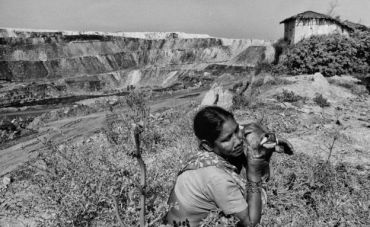
Photojournalist Subrata Biswas has documented the fallout of India’s dependence on coal.
“As thousands of acres of forest land are destroyed to mining, foraging elephants attracted by the crops in the fields often enter villages, resulting in an alarmingly high number of human-elephant conflict situations,” says Biswas.
Officials estimate elephants have been responsible for 8,657 incidents of property damage and 99,152 incidents of crop damage in Chhattisgarh between 2005 and 2014.
Image copyrightSUBRATA BISWAS
“We were sleeping when the elephants broke into our room. Somehow we managed to escape but I fractured my left leg when a large part of the wall fell on my leg. My husband saved my life,” says Rujri Khalkho, 70, whose home was damaged by a herd of wild elephants almost a year ago.
A compensation of 10,000 rupees ($149; £114) has not been enough to repair her house or pay for her medical care.
Image copyrightSUBRATA BISWAS
Deaths of elephants due to electrocution have become common in the state.In Dharamjaigarh, the most affected area, officials have recorded 30 elephant and 75 human deaths so far.
Image copyrightSUBRATA BISWAS
In 2009, Kanti Bai Sau, 40, lost her home and farm to an open-cast coal mine.
She was promised compensation of 200,000 rupees ($2,980; £2,290) and a job to a family member, but received neither. Her son died last year of respiratory complications.
“There is no fresh air to breath, fresh water to drink. Coal has usurped everything here.”
Image copyrightSUBRATA BISWAS
“We lived next to this mine for almost 10 years and watched helplessly as our wells went dry, forests disappeared and fields become unproductive,” says Girja Bai Chauhan.
“We have lost almost eight acres of our fields to the mine and authorities haven’t fulfilled a single promise they made while acquiring land. They sent us into a dark future and unhealthy environment to live and breathe in.”
Image copyrightSUBRATA BISWAS
Pipelines carry fly ash slurry from a local thermal power power plant in Korba to a fly ash pond.
Environment activists say that every year approximately 50 million tonnes of fly ash is generated by power plants in Chhattishgarh but not even the half of this amount have been reutilized to reduce the pollution from fly ash.
Fly ash is known to contain trace elements such as arsenic, barium and mercury among others, and unlined ponds like this could be polluting groundwater by leaching.
Image copyrightSUBRATA BISWAS
“The ash is everywhere. When the wind blows, everything is coated with a layer of white grey ash. The road, ponds, our houses, sometimes even our spectacles get coated with a fine layer of the ash,” says Biswas.
Image copyrightSUBRATA BISWAS
Rohit Rathia, 55, suffers from tuberculosis.He lives in a village next to an open cast mine where lung diseases such as coal workers’ pneumoconiosis (CWP), silicosis and tuberculosis have become common ailments.
China’s state planner has punished hundreds of coal and steel companies by forcing them to close or cut output for violating environmental and safety regulations, the latest effort to crack down on the country’s heavily polluting industries.
The National Development and Reform Commission (NDRC) forced two steel companies to shut completely, 29 firms to halt production and another 23 to curb output, it said in a statement on Thursday. The closures and curbs followed a nationwide inspection of more than 1,000 steel makers in the world’s top producer.
Among more than 4,600 coal mines inspected, the NDRC has revoked safety certificates for 28 coal mines and forced another 286 coal mines to halt production, it added.
The planner did not identify or name the companies, or give details on how the companies broke the rules and how long the penalties will be in place.
Beyond the safety and environment rules, the NDRC also listed other infractions such as violations of energy consumption rules or quality standards.
The statement reflects the government’s continued push to force ageing mills and mines to comply with tough new pollution rules by meeting emission standards and installing appropriate monitoring equipment.
China’s unwieldy coal and steel industries are considered two of the biggest sources of pollution in the country.
The government is targeting coal output cuts of 500 million tonnes in the next three to five years.
India’s announcement that it would ratify the 2015 global agreement on climate change increases the chances that the pact will go into effect this year.
TO MANY Indians, their country’s strategic position looks alarming. Its two biggest neighbours are China and Pakistan. It has fought wars with both, and border issues still fester. Both are nuclear-armed, and are allies with one another to boot. China, a rising superpower with five times India’s GDP, is quietly encroaching on India’s traditional sphere of influence, tying a “string of pearls” of alliances around the subcontinent. Relatively weak but safe behind its nuclear shield, Pakistan harbours Islamist guerrillas who have repeatedly struck Indian targets; regional security wonks have long feared that another such incident might spark a conflagration.
So when four heavily armed infiltrators attacked an Indian army base on September 18th, killing 18 soldiers before being shot dead themselves, jitters inevitably spread. The base nestles in mountains close to the “line of control”, as the border between the Indian and Pakistani-administered parts of the disputed territory of Kashmir is known. Indian officials reflexively blamed Pakistan; politicians and pundits vied in demanding a punchy response. “Every Pakistan post through which infiltration takes place should be reduced to rubble by artillery fire,” blustered a retired brigadier who now mans a think-tank in New Delhi, India’s capital.
Yet despite electoral promises to be tough on Pakistan, the Hindu-nationalist government of Narendra Modi has trodden as softly as its predecessors. On September 21st it summoned Pakistan’s envoy for a wrist-slap, citing evidence that the attackers had indeed slipped across the border, and noting that India has stopped 17 such incursions since the beginning of the year. Much to the chagrin of India’s armchair warriors, such polite reprimands are likely to be the limit of India’s response.
There are good reasons for this. India gains diplomatic stature by behaving more responsibly than Pakistan. It is keenly aware of the danger of nuclear escalation, and of the risks of brinkmanship to its economy. Indian intelligence agencies also understand that they face an unusual adversary in Pakistan: such is its political frailty that any Indian belligerence tends to strengthen exactly the elements in Pakistan’s power structure that are most inimical to India’s own interests.
But there is another, less obvious reason for reticence. India is not as strong militarily as the numbers might suggest. Puzzlingly, given how its international ambitions are growing along with its economy, and how alarming its strategic position looks, India has proved strangely unable to build serious military muscle.
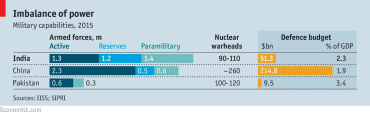
India’s armed forces look good on paper. It fields the world’s second-biggest standing army, after China, with long fighting experience in a variety of terrains and situations (see chart).
It has topped the list of global arms importers since 2010, sucking in a formidable array of top-of-the-line weaponry, including Russian warplanes, Israeli missiles, American transport aircraft and French submarines. State-owned Indian firms churn out some impressive gear, too, including fighter jets, cruise missiles and the 40,000-tonne aircraft-carrier under construction in a shipyard in Kochi, in the south of the country.
Yet there are serious chinks in India’s armour. Much of its weaponry is, in fact, outdated or ill maintained. “Our air defence is in a shocking state,” says Ajai Shukla, a commentator on military affairs. “What’s in place is mostly 1970s vintage, and it may take ten years to install the fancy new gear.” On paper, India’s air force is the world’s fourth largest, with around 2,000 aircraft in service. But an internal report seen in 2014 by IHS Jane’s, a defence publication, revealed that only 60% were typically fit to fly. A report earlier this year by a government accounting agency estimated that the “serviceability” of the 45 MiG 29K jets that are the pride of the Indian navy’s air arm ranged between 16% and 38%. They were intended to fly from the carrier currently under construction, which was ordered more than 15 years ago and was meant to have been launched in 2010. According to the government’s auditors the ship, after some 1,150 modifications, now looks unlikely to sail before 2023.
Such delays are far from unusual. India’s army, for instance, has been seeking a new standard assault rifle since 1982; torn between demands for local production and the temptation of fancy imports, and between doctrines calling for heavier firepower or more versatility, it has flip-flopped ever since. India’s air force has spent 16 years perusing fighter aircraft to replace ageing Soviet-era models. By demanding over-ambitious specifications, bargain prices, hard-to-meet local-content quotas and so on, it has left foreign manufacturers “banging heads against the wall”, in the words of one Indian military analyst. Four years ago France appeared to have clinched a deal to sell 126 of its Rafale fighters. The order has since been whittled to 36, but is at least about to be finalised.
India’s military is also scandal-prone. Corruption has been a problem in the past, and observers rightly wonder how guerrillas manage to penetrate heavily guarded bases repeatedly. Lately the Indian public has been treated to legal battles between generals over promotions, loud disputes over pay and orders for officers to lose weight. In July a military transport plane vanished into the Bay of Bengal with 29 people aboard; no trace of it has been found. In August an Australian newspaper leaked extensive technical details of India’s new French submarines.
The deeper problem with India’s military is structural. The three services are each reasonably competent, say security experts; the trouble is that they function as separate fiefdoms. “No service talks to the others, and the civilians in the Ministry of Defence don’t talk to them,” says Mr Shukla. Bizarrely, there are no military men inside the ministry at all. Like India’s other ministries, defence is run by rotating civil servants and political appointees more focused on ballot boxes than ballistics. “They seem to think a general practitioner can perform surgery,” says Abhijit Iyer-Mitra, who has worked as a consultant for the ministry. Despite their growing brawn, India’s armed forces still lack a brain.
India signed a deal to buy 36 Rafalefighter jets from France on Friday for around $8.7 billion, the country’s first major acquisition of combat planes in two decades and a boost for Prime Minister Narendra Modi‘s plan to rebuild an ageing fleet.
The air force is down to 33 squadrons, against its requirement of 45 to face both China, with which it has a festering border dispute, and nuclear-armed rival Pakistan.
India’s defence ministry said it would confirm the exact price later on Friday, but a ministry official said it was 7.8 billion euros ($8.7 billion).
Air force officials have warned for years about a major capability gap opening up with China and Pakistan without new state-of-the-art planes, as India’s outdated and largely Russian-made fleet retires and production of a locally made plane was delayed.
India had originally awarded Dassault with an order for 126 Rafales in 2012 after the twin-engine fourth-generation fighter beat rivals in a decade-long selection process, but subsequent talks collapsed.
Modi, who has vowed to modernise India’s armed forces with a $150 billion spending spree, personally intervened in April 2015 to agree on the smaller order of 36 and give the air force a near-term boost as he weighed options for a more fundamental overhaul.
The first ready-to-fly Rafales are expected to arrive by 2019 and India is set to have all 36 within six years.
Dassault Aviation said in a statement it welcomed the contract signing.
On Monday afternoon, a school bus was stopped in the Banashankari area in southern Bangalore. Three drunk men got into the bus and asked aloud: “Which child belongs to Karnataka and and which child belongs to Tamil Nadu?”
The 15-odd students, aged between 10 and 14, were stunned. Their school had asked them to leave early because the situation was tense, with violence and arson breaking out in many parts of the city.
“Luckily the driver handled it tactfully. He told the intruders that everyone was a native of Bangalore and that their families supported Karnataka on [water sharing with] Cauvery,” said a parent, not wanting to be identified.
Battle for access
By dusk, dark smoke had filled the Bangalore skies. Some 35 buses had been set on fire by protesters, just because the buses belonged to a travel agency whose owner is Tamil.
Is India facing its worst-ever water crisis?
India to ‘divert rivers’ to tackle droughtEarlier this month India’s Supreme Court ruled that Karnataka must release 12,000 cubic feet of water per second to Tamil Nadu from the Cauvery river until 20 September. Both states say they urgently need the water for irrigation and a battle about access to it has raged for decades.
Karnataka says water levels in Cauvery have declined because of insufficient rainfall
India’s water war
The Cauvery originates in Karnataka and flows through Tamil Nadu before joining the Bay of Bengal.
The dispute over its waters originated in the 19th Century during the British rule between the then Madras presidency (modern day Tamil Nadu) and the province of Mysore (now Karnataka).
Karnataka and Tamil Nadu have both argued that they need the water for millions of farmers in the region.
The Cauvery river water tribunal was set up in 1990 after the failure of several rounds of talks between the two states.
Dozens of meetings have been held to find a settlement to the century-old dispute.
In 2007, the tribunal ruled Tamil Nadu state would get 419bn cubic feet of water a year. Karnataka would get only 270bn.
Karnataka says water levels in the Cauvery have declined because of insufficient rainfall – 42% of the 3,598 irrigation tanks in the state are dry – and that it cannot therefore share water with Tamil Nadu. So Tamil Nadu went to the top court demanding 50,000 cubic feet of water per second.
When the Supreme Court on 2 September asked Karnataka to “live and let live”, the state softened and offered to release 10,000 cubic feet of water per second to Tamil Nadu every day for five days.
On 5 September however, the top court ordered Karnataka to release 15,000 cubic feet of water per second for 10 days. This ruling was later modified to 12,000 cubic feet of water per second until 20 September.
This would mean that nearly a quarter of the water now available in the Cauvery basin will flow into Tamil Nadu.
A truck from neighbouring Tamil Nadu set on fire in Bangalore
Tamil Nadu says it badly needs the river water for irrigation. Drought-hit Karnataka argues that most of the river water is now needed for drinking water supplies in Bangalore and some other cities, leaving no water for irrigation at all.
But even farmers in Tamil Nadu are unhappy with their share.P Ayyakannu, president of the local South Indian Rivers Interlinking Farmers Association, called it “akin to giving pigeon feed to an elephant”.
Rising violenceFeeling let down by the top court’s order, Karnataka is boiling.
The main city of Bangalore is the worst affected: the violence in the technology hub forced the closure of many offices and much of the public transport system. Police have imposed an emergency law that prohibits public gatherings, and more than 15,000 officers have been deployed across the city.
One person was killed when police opened fire on protesters on Monday evening. Buses and trucks bearing Tamil Nadu number plates have been attacked and set on fire. Schools and colleges are closing early and many businesses are shut.
A group of activists belonging to a fringe pro-Karnataka group assaulted an engineering student because he had ridiculed Kannada film stars for supporting the strike on Friday, by posting memes on Facebook. The student was hunted down and forced to apologise.
Across the border, in Tamil Nadu, petrol bombs were hurled at a popular restaurant owned by a resident of Karnataka in Chennai while the driver of a vehicle with Karnataka number plates was slapped and ordered to say “Cauvery belongs to Tamil Nadu”.
The latest violence brings back memories of the anti-Tamil riots in Bangalore in 1991 over the same issue.
Then, some 200,000 Tamils were reported to have left the city, after incidents of violence and arson targeting them.
There was a proposal in 2013 to set up a panel comprising representatives from the two warring states to resolve disputes over river water sharing.
But successive governments have dragged their feet on this, and the two leaders – Karnataka chief minister Siddaramaiah and his counterpart in Tamil Nadu, Jayaram Jayalalitha – have not reached out to each other to resolve the crisis. And with Delhi reduced to being a reluctant referee, the onus has fallen on the Supreme Court to crack the whip.
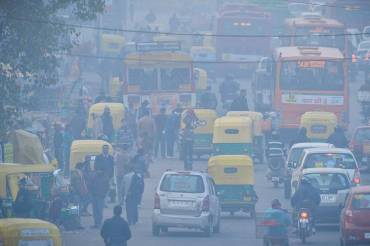
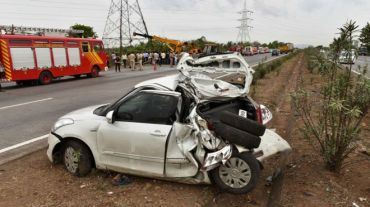
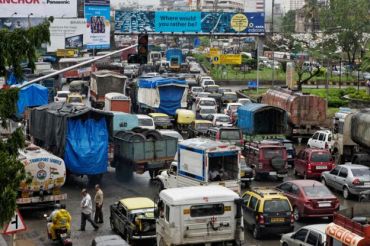
For a crash course in India’s car-crash culture, go to Mumbai. There are more accidents here than any other Indian city. You’ll witness a dangerous mix of pedestrians, scooters, cars, buses and lorries jostling through choked junctions. Many ignore both signals and the traffic police.Officers can do little about such rampant law-breaking.
“We can catch a maximum of two offenders at a time – maximum,” one shouts at me above the horns and revving engines at one particularly busy junction. “The rest,” he says flicking his wrist, “just go. There are no consequences.”
Mumbai: “A dangerous mix of pedestrians, scooters, cars, buses and lorries”
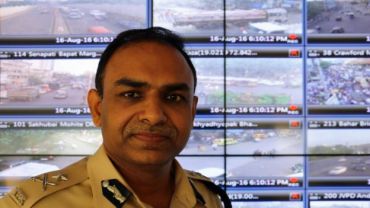
Mumbai’s commissioner of traffic police, Milind Bharambe, says this will soon end. From his cool office, flanked by monitors with live CCTV feeds of notorious accident spots, he explains how cameras will enforce the law electronically, targeting those who speed and run red lights. Combine that with the recent introduction of stiff new fines and within six months, he promises “a sea change” in driver behaviour.
Milind Bharambe, Mumbai’s commissioner of traffic police
But bad driving and weak enforcement are only part of the problem. Another aspect of it is the rapidly growing number of vehicles – a new one joins the chaos every 10 seconds. It adds up to almost 9,000 new vehicles a day, or more than three million a year.
This means that the streets are increasingly choked. It’s almost impossible to leave a safe distance between vehicles, and when space does open up, frustrated drivers often respond by putting their foot down.
Neal Razzall presents Fixing India’s Car Crash Capital on Crossing Continents, at 11:00 BST on Radio 4 – catch up on BBC iPlayer Radio
The problem is perhaps most acute in Mumbai, which is surrounded by water on three sides and has little room to grow. Officials here have in the past responded to the crush of cars by tearing out pavements to make room for more.”The government still thinks the major issue is ‘How do we move people in cars faster and quicker?'” says Binoy Mascarenhas from the pedestrian advocacy movement, Equal Streets. In reality, he says most journeys are local and, in theory, can be done on foot.
Pavements are often non-existent on Mumbai roads
In theory. He grew up in Mumbai, and used to walk to school. His daughter now goes to school in a car because it’s too dangerous to walk. Pavements, where they exist, are often in such a poor state people have to walk on the roads. No wonder then that pedestrians account for 60% of road deaths in Mumbai.
There are dangers outside the city, too.
India’s first expressway, between the cities of Mumbai and Pune, opened in 2002. It has three wide lanes and room to move at high speed – a relief after the congestion of the city. But drive it with one of India’s few professional crash investigators, Ravi Shankar, and a quiet terror settles in. He’s studied thousands of crashes on this road and can point to dangers all around.
“There are small, man-made engineering problems that are actually killing people,” he says. Instead of rumble strips to warn drivers they’re at the road’s edge, there are black and yellow curb stones embedded into the concrete. Hit one of those, Shankar says, and your car can flip over. Then there are cliffs with no barriers, and guard-rails with tapered ends, which, he says, can send cars into the sky “like a rocket launcher”.
Things like this are happening all the time. The expressway is just 94km (58 miles) long but about 150 people die on it every year.
“That’s serious. That’s a very bad number,” Shankar says.
He and his colleagues at JD Research have identified more than 2,000 spots on the expressway where relatively simple engineering fixes, from better barriers to clearer signs, could save lives.Jump media playerMedia player helpOut of media player. Press enter to return or tab to continue.
“Road engineers are not serious about this problem,” Shankar says. “So we keep fighting with them on this point. How many deaths are you going to wait for, until you really understand that this is a serious concern?”
In this context, Prime Minister Narendra Modi‘s plan for the biggest expansion of roads in Indian history is unnerving. In the next few years he wants to pave a distance greater than the circumference of the earth and there’s a particular push to build highways and expressways.
Piyush Tewari, CEO of the safety charity Save Life India, says without putting the country on a “war footing”, including a complete overhaul of road safety legislation and a modern road-building code, Modi’s new roads will only add to the number of dead.
“Road crash deaths will increase at the rate of one death for every 2km of new road that is constructed. That’s the average death rate on Indian highways – one death every 2km, annually. So if we don’t fix any of this, if we’re constructing 100,000km of highways, 50,000 deaths is what the average maths tells us will be added to the total,” he says.
Image copyrightROLEX AWARDS/JESS HOFFMANImage captionPiyush Tewari believes the planned new roads could lead only to more fatalities
Modi’s government insists the new roads will be safer. “We are improving the road engineering; we are improving the traffic signal system; we are making crash barriers”, transportation minister, Nitin Gadkari, tells me.
There is progress in other areas too. When Mumbai’s commissioner of traffic police predicts a “sea change” in driver behaviour he is partly putting his faith in a new motor vehicle bill, now before parliament, which if passed would increase fines, toughen vehicle registration requirements and mandate road-worthiness tests for transport vehicles.
And earlier this year, a Good Samaritan Act came into effect which ended the crazy situation whereby people who helped crash victims could be held liable for the costs of treating them or even accused by police of causing the crash in the first place. That alone, campaigners say, will save thousands of lives.
More from the Magazine
When a road accident occurs, bystanders will usually try to help the injured, or at least call for help. In India it’s different. In a country with some of the world’s most dangerous roads, victims are all too often left to fend for themselves.
Save Life India estimates that half of all road deaths are the result of treatable injuries. That means 75,000 lives could be saved every year just with better medical care.
One man trying to save some of those lives is Mumbai neurosurgeon Dr Aadil Chagla, who is working with volunteers to build a series of clinics along Highway 66, south of Mumbai – many of them in rural areas – to prevent victims having to be driven for hours to the city.
The first is more than half-built. It looks out over rice paddies and lush hills, but Dr Chagla estimates it will be treating victims from “one or two crashes a day, every day”.
“If I can have an ambulance service and trauma centres every 50 to 100km run by the locals it would make huge difference to this entire highway – with or without government support,” he says.
Image captionDr Chagla’s as-yet-unopened clinic to treat victims of road accidents
Since Dr Chagla started practising in the 1980s, the number killed on India’s roads has increased by 300%.
“I waited all this time and nothing has really come through so it’s important that I should do something about it,” he says.
So if transportation minister Nitin Gadkari is to make good on his promise to cut road deaths from 150,000 to 75,000 per year in two years, it will be thanks in part to the efforts of volunteers.
The state corporation that owns the Mumbai-Pune Expressway, meanwhile, says it will reduce deaths to zero – yes, zero – by 2020. It has accepted the list of essential improvements identified by crash investigator Ravi Shankar and authorised them to be made and then audited by Save Life India.
But there’s a snag, which suggests India is not yet on a “war footing” when it comes to safety.
The state government owns the road, but a private company runs it in exchange for collecting tolls. The two sides dispute who should make the safety upgrades. The official in charge of the expressway says the work will be done, even if it requires litigation to recover the costs.
While the dispute drags on, 100,000 vehicles use the expressway every day in its current, dangerous state. In the past week, it claimed six more lives.
The two nuclear-armed neighbours have been moving to gradually ease long-existing tensions between them.
Leaders of Asia’s two giants pledged last year to cool a festering border dispute, which dates back to a brief border war in 1962, though the disagreement remains unresolved.
Meeting on the sidelines of the G20 summit in the eastern Chinese city of Hangzhou, Xi said relations had maintained a steady, healthy momentum, and should continue to increase mutual understanding and trust.
“We ought to respect and give consideration to each other’s concerns, and use constructive methods to appropriately handle questions on which there are disputes,” Xi said, in comments carried by China’s Foreign Ministry.
“China is willing to work hard with India the maintain the hard-won good position of Sino-India relations,” Xi added.
China’s Defence Ministry said last month that it hoped India could put more efforts into regional peace and stability rather than the opposite, in response to Indian plans to put advanced cruise missiles along the disputed border with China.
Indian military officials say the plan is to equip regiments deployed on the China border with the BrahMos missile, made by an Indo-Russian joint venture, as part of ongoing efforts to build up military and civilian infrastructure capabilities there.
China lays claim to more than 90,000 sq km (35,000 sq miles) ruled by New Delhi in the eastern sector of the Himalayas. India says China occupies 38,000 sq km (14,600 sq miles) of its territory on the Aksai Chin plateau in the west.
India is also suspicious of China’s support for its arch-rival, Pakistan.Modi arrived in China from Vietnam, which is involved in its own dispute with China over the South China Sea, where he offered Vietnam a credit line of half a billion dollars for defence cooperation.Modi’s government has ordered BrahMos Aerospace, which produces the BrahMos missiles, to accelerate sales to a list of five countries topped by Vietnam, according to a government note viewed by Reuters and previously unreported.













 CHINDIA ALERT: You'll be living in their world, very soon