Posts tagged ‘India’

19/10/2014

India’s big manufacturing push: Time to make in India? | The Economist

NO ONE doubts that Narendra Modi, India’s prime minister (pictured), is a capable speaker. On September 25th he called together hundreds of diplomats, business leaders, journalists, ministers and others to a swanky hall in Delhi to launch his latest marketing push. The event was broadcast live across India and to diplomatic missions abroad. A remarkable cast of industrial heavyweights were called on to show support, including Cyrus Mistry of Tata Sons, Reliance’s nervy-sounding boss, Mukesh Ambani, the chairman of Wipro, Azim Premji, the chairman of Aditya Birla Group, Kumar Mangalam Birla, and the chairman of ITC Limited, Yogesh Chander Deveshwar.

Over the course of two hours these business cheerleaders, along with ministers and then Mr Modi himself, took turns to explain why it would be a great thing if industrial production, in particular labour-intensive manufacturing, could blossom in India. They are absolutely right. India needs to create lots of jobs—perhaps 1m additional ones a month—if it is to employ its booming population. One speaker suggested 90m manufacturing jobs could be created in India over the next decade. Mr Premji set out how Wipro—better known for IT—has five manufacturing units in India (they make hydraulic cylinders) and overall relied on a broad network of 1,200 Indian suppliers, meaning lots  of jobs created indirectly.

Mr Birla spoke of a new high-end aluminium manufacturing site in Odisha (formerly Orissa) which now does quality work for the firm that used to be done in a British factory. A representative from Lockheed Martin, an American defence firm, explained how its factory near to Hyderabad makes component parts for its global production of the massive C130-J Hercules plane. A stronger manufacturing sector could help in a host of other ways, suggested speakers, linking India into global supply chains, boosting exports, helping to reduce the current-account deficit and so on. Mr Ambani concluded that India’s economy could boom in the long run, at a sustained rate of 8-10%, growing quicker than China, if only the right conditions were created.

All this looks and sounds attractive. So, too, do a flash new website that Mr Modi inaugurated, a new symbol—a lion made up of cog-wheels—and some new brochures that set out how India is a bit more welcoming to manufacturers. But was the exercise anything more than a PR event? As one cynical member of the audience grumbled, it seemed to be a big palaver for the launch of a few marketing tools.

What has actually changed in India as Mr Modi pushes manufacturing? First, discount the worst gush from business leaders. The likes of Mr Ambani and Mr Deveshwar may be embarrassed to be reminded of how sycophantic they were in Mr Modi’s presence. Mr Ambani waffled on about being “blessed with a leader”, the “unique leadership quality of a prime minister, a man who dreams and he does”, who has apparently motivated a billion Indians to “dream and do”. Mr Deveshwar was even more craven, thanking “the Almighty” for the leadership “given to us” in Mr Modi, for “your astuteness, your wisdom…Sir, I’m profoundly inspired by the boldness of your vision and the simplicity with which you have communicated.” Mr Modi sat stony-faced as they fawned. But he probably agrees with the implied message: that most of what it takes to boost manufacturing in India is strong leadership from him, as he showed when he was chief minister of Gujarat. Indeed, when he spoke, he referred back to his success in Gujarat, saying that with the same civil servants and resources as the rest of the country, he had produced striking industrial successes. He expects more of the same in the country as a whole.

Sadly, leadership alone will not do it. Matters are more complicated than that. Mr Modi, endearingly, admitted in his speech “I am not a big economist” while urging investors not to think of India only as a big emerging market, but also as a place for production. As he suggests, achieving that requires progress in a host of areas. He spoke of an urgent need for skills development as far too many of India’s youngsters are poorly prepared for globally competitive work (though that is a huge mission, since it means fixing a rotten school and university system) and identifying 21 clusters for industrial development. He spelt out how infrastructure would improve (but not where massive capital to fund that will come from). Laudably, he emphasised the need to make India a far easier place to do business by scrapping red-tape and oppressive rules, mentioning a recent meeting he had with the World Bank to discuss India’s awful ranking—134th—on its annual “ease of doing business” assessment. Mr Modi thinks India should aim to be ranked much higher, quickly, in the top 50 countries.

via India’s big manufacturing push: Time to make in India? | The Economist.

19/10/2014

Jayaram Jayalalithaa Granted Bail – India Real Time – WSJ

India’s Supreme Court Friday granted bail to Jayaram Jayalalithaa, the influential leader of one of India’s biggest regional parties, as she appeals her conviction nearly three weeks after she was sentenced to four years in jail for corruption.

In September, a court in Bangalore found Ms. Jayalalithaa and three of her aides guilty of having accumulated wealth beyond their known sources of income.

On Friday, the Supreme Court granted her “conditional bail on grounds that she is unwell and needs to rest at home,” her party’s spokesman Aspire K. Swaminathan told The Wall Street Journal in an interview.

After a case that lasted close to two decades, Ms. Jayalalithaa had to step down immediately from her position as chief minister of the southern state of Tamil Nadu after the September verdict. Her party – the All India Anna Dravida Munnetra Kazhagam– quickly named O. Paneerselvam as her successor as chief minister, she remains the leader of the party and has been in jail in Bangalore since Sept. 27.

Ms. Jayalalithaa denied wrongdoing and appealed for bail in the Karnataka High Court earlier this month on health grounds. But the court rejected her bail plea saying there was no reason to suspend her conviction.

Subramanian Swamy, a petitioner in the case against Ms. Jayalalithaa and a leader in Prime Minister Narendra Modi’s Bharatiya Janata Party said the top court has asked Ms. Jayalalithaa to submit her appeal within two months in the Karnataka High Court, “failing which her bail would be cancelled.”

via Jayaram Jayalalithaa Granted Bail – India Real Time – WSJ.

19/10/2014

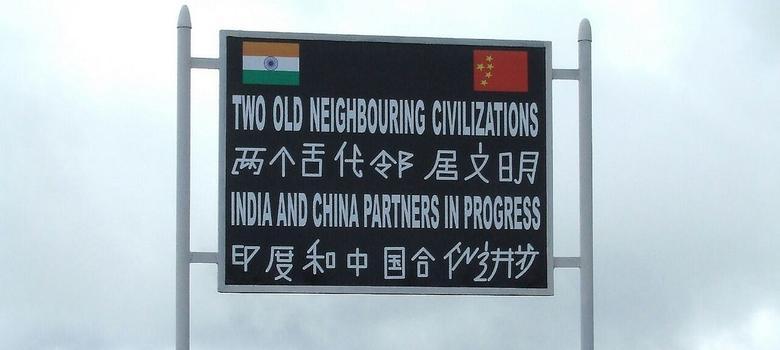
After border row, India, China plan counter-terror drills to build trust | Reuters

India, which under Prime Minister Narendra Modi has struck an assertive national security posture, also agreed to China’s request to move next month’s exercises away from the border with Pakistan with which China shares a close relationship.

The manoeuvres will come just weeks after thousands of Indian and Chinese soldiers confronted each other on their de facto border in the western Himalayas, accusing each other of building roads and observations posts in disputed territory.

“The exercises are a confidence-building measure, it is in everyone’s interest,” Jayadeva Ranade, the China specialist on India’s National Security Advisory Board, told Reuters.

“It doesn’t mean anyone is conceding anything.”

The row in the Chumar sector of the Ladakh region erupted just as China’s President Xi Jinping was visiting New Delhi for his first summit with Modi since the Indian leader’s election in May. The leaders of the Asian giants aim to ramp up commercial ties.

India sees the anti-terrorism collaboration with China as a way to highlight the threat they both face from Islamist militants in Pakistan.

It had arranged for the Chinese to practise mock assaults in Bhatinda, about 110 km (70 miles) from the Pakistan border.

via After border row, India, China plan counter-terror drills to build trust | Reuters.

02/10/2014

India launches campaign to boost manufacturing – Businessweek

India’s prime minister has launched a campaign to entice investment and promote the country as the world’s next cheap labor economy.


Embed from Getty Images

The “Make in India” campaign is as much a slick marketing campaign as it is a promise to streamline bureaucracy and make India investor friendly.

Prime Minister Narendra Modi said at a launch event Thursday that “the whole world is ready to come here.”

India’s 1.2 billion people are anxious to see the economy expand and create more jobs. Some 13 million Indians become old enough each year to join the workforce.

Modi has been promoting India as the next manufacturing powerhouse. That’s a title long held by China, which is now growing wealthier and pushing toward becoming a consumer economy.

via India launches campaign to boost manufacturing – Businessweek.

02/10/2014

Facebook’s Mark Zuckerberg to Meet Modi in India – India Real Time – WSJ

Mark Zuckerberg, the founder of Facebook, will visit India next week to meet Prime Minister Narendra Modi and take part in a summit to find ways to get more people online–and probably signed up for his website.

India has around 200 million Internet users, a tiny fraction of its 1.2 billion population, and just over half of them have Facebook profiles. Mr. Modi is one of India’s most social-media savvy politicians and used Facebook and Twitter TWTR -3.04% heavily during his campaign ahead of elections which took place in April and May. But Internet use in general in India is still a minority affair with only 15% of the population online.

A report by McKinsey published Wednesday ahead of the internet.org summit which begins next Thursday said that between 2012 and 2013, the number of Internet users in India grew 22% compared to 9% growth in China and 7% increase in the U.S. over the same period. Over half (59%) of Internet users in India use mobile phones rather than computers to get online.

But, like Egypt, Indonesia, the Philippines and Thailand, India faces infrastructure challenges to getting more people online, the report said.

Almost half (45%) of the huge rural population has no access to electricity and further up the chain, the country is only in the early stages of deploying 3G networks.

There are some bright spots on the horizon for Internet usage in India however. The report says that India’s huge young population–around one in three people is currently aged under 15–will push the country online.

“We expect this younger age segment to be a significant driver of Internet adoption in developing countries, given their generally greater familiarity with technology and willingness to adopt it,” the report said.

via Facebook’s Mark Zuckerberg to Meet Modi in India – India Real Time – WSJ.

02/10/2014

Amazon to sell packaged food and beverages in India – Economic Times | Reuters

Online retailer Amazon.com Inc plans to sell packaged food and beverages in India from mid-October, the Economic Times reported, citing a person familiar with the matter.


Embed from Getty Images

Amazon, which has already started accepting bookings for Coco-Cola Zero – the beverage’s low-calorie variant, will eventually start selling fresh food in India, the ET said. (bit.ly/1BAIAtJ)

Amazon is already in talks with brands like Kelloggs and Cornitos, the paper said.

Amazon India did not immediately respond to a request for comment.

Amazon, which opened its Indian website last June, has drawn up the battle lines by slashing prices, launching same-day delivery, adding new product categories and embarking on a high-voltage advertisement campaign.

In July, Amazon said it will invest a further $2 billion in India after the country’s largest e-tailer Flipkart attracted $1 billion of fresh funds, raising the stakes in a nascent but fast-growing e-commerce sector.

via Amazon to sell packaged food and beverages in India – Economic Times | Reuters.

01/10/2014

US, India to collaborate on Mars exploration – The Hindu

India and the U.S., after sending their own respective spacecraft into Mars’ orbit, have now agreed to cooperate on future explorations of the Red Planet, which America said will yield “tangible benefits” to both the countries and the world at large.

NASA chief Charles Bolden.

The agreement in this regard was signed by NASA Administrator Charles Bolden and K. Radhakrishnan, Chairman of the Indian Space Research Organization (ISRO) in Toronto on Tuesday on the sidelines of the International Astronautical Congress.

The two sides signed a charter that establishes a NASA-ISRO Mars Working Group to investigate enhanced cooperation between the two countries in Mars exploration.

They also signed an international agreement that defines how the two agencies will work together on the NASA-ISRO Synthetic Aperture Radar (NISAR) mission, targeted to launch in 2020.

“The signing of these two documents reflects the strong commitment NASA and ISRO have to advancing science and improving life on Earth,” said NASA Administrator Charles Bolden.

“This partnership will yield tangible benefits to both our countries and the world,” Mr. Bolden said.

The joint Mars Working Group will seek to identify and implement scientific, programmatic and technological goals the two agencies have in common regarding Mars exploration.

The group will meet once a year to plan cooperative activities, including potential NASA-ISRO cooperation on future missions to Mars, it said.

NASA’s Mars Atmosphere and Volatile EvolutioN (MAVEN) spacecraft arrived at Mars September 21. MAVEN is the first spacecraft dedicated to exploring the tenuous upper atmosphere of Mars.

ISRO’s Mars Orbiter Mission (MOM), India’s first spacecraft launched to the Red Planet, arrived on September 23 to study the Martian surface and atmosphere and demonstrate technologies needed for interplanetary missions.

One of the working group’s objectives will be to explore potential coordinated observations and science analysis between MAVEN and MOM, as well as other current and future Mars missions.

“NASA and Indian scientists have a long history of collaboration in space science,” said John Grunsfeld, NASA associate administrator for science.

“These new agreements between NASA and ISRO in Earth science and Mars exploration will significantly strengthen our ties and the science that we will be able to produce as a result,” he added.

According to a NASA statement, the joint NISAR Earth-observing mission will make global measurements of the causes and consequences of land surface changes.

Potential areas of research include ecosystem disturbances, ice sheet collapse and natural hazards.

The NISAR mission is optimised to measure subtle changes of the Earth’s surface associated with motions of the crust and ice surfaces.

NISAR will improve our understanding of key impacts of climate change and advance our knowledge of natural hazards, he said.

“NISAR will be the first satellite mission to use two different radar frequencies (L-band and S-band) to measure changes in our planet’s surface less than a centimetre across. This allows the mission to observe a wide range of changes, from the flow rates of glaciers and ice sheets to the dynamics of earthquakes and volcanoes,” it said.

Under the terms of the new agreement, NASA will provide the mission’s L-band synthetic aperture radar (SAR), a high-rate communication subsystem for science data, GPS receivers, a solid state recorder, and a payload data subsystem.

ISRO will provide the spacecraft bus, an S-band SAR, and the launch vehicle and associated launch services.

NASA and ISRO have been cooperating under the terms of a framework agreement signed in 2008.

This cooperation includes a variety of activities in space sciences such as two NASA payloads — the Mini-Synthetic Aperture Radar (Mini-SAR) and the Moon Mineralogy Mapper — on ISRO’s Chandrayaan-1 mission to the moon in 2008.

During the operational phase of this mission, the Mini-SAR instrument detected ice deposits near the moon’s northern pole, it said.

via US, India to collaborate on Mars exploration – The Hindu.

30/09/2014

Obama-Modi Meeting Offers Chance to Reset U.S.-India Ties – Businessweek

President Barack Obama and Indian Prime Minister Narendra Modi’s meetings in Washington give the two leaders to chance to reinvigorate an economic relationship that both see crucial to growth and security.

Indian Prime Minister Narendra Modi

The two days of talks, which began with a private dinner for Modi at the White House last night, are pivotal, U.S. officials said ahead of the summit. In addition to Obama’s sessions with Modi, Vice President Joe Biden and Secretary of State John Kerry will host today a luncheon for the Indian leader.

This is the first time Obama and Modi have met, and it also is Modi’s first visit to the U.S. since he was denied a visa in 2005 over anti-Muslim riots in his state of Gujarat three years earlier. Modi won a landslide election win in May, and the U.S. is seeking to repair relations while India is wooing foreign investors to revive its economy.

“The U.S. is eagerly trying to move forward with Modi in order to put the past behind them,” Milan Vaishnav, an associate in the South Asia program at the Carnegie Endowment for International Peace in Washington, said in a phone interview. “The two sides have a foundation in terms of a bilateral government-to-government relationship and a people-to-people relationship to build on. In terms of a leader-to-leader relationship, this is almost like starting anew.”

via Obama-Modi Meeting Offers Chance to Reset U.S.-India Ties – Businessweek.

30/09/2014

India Plans to Clean Up for Gandhi’s Birthday – India Real Time – WSJ

On Sunday, India’s Prime Minister Narendra Modi told a crowd at Madison Square Garden that cleaning up India was his priority.

Mahatma Gandhi never compromised on cleanliness. He gave us freedom. We should give him a clean India,” said Mr. Modi.

To honor Gandhi on the anniversary of his birth on Oct. 2, Mr. Modi earlier this month announced the launch of the Swachh Bharat, or Clean India, Mission. “I myself will set out with a broom and contribute towards this pious task” on Thursday, said Mr. Modi in an official statement. Previously called the Nirmal Bharat Abhiyan, the program will be restructured into two separate programs for urban and rural India.

Sanitation is one of the most pressing challenges India faces: almost 600 million people defecate in the open in the country.

The movement aims to “create a Clean India” by 2019 to commemorate the 150th anniversary of Gandhi’s birth. It’s an ambitious initiative, but viewed as critical to sustainable development in a country that has long ignored the most basic needs of many of its people.

As Oct. 2 draws nearer, millions of people across the country are joining daily the cleanliness drives organized by government departments, nonprofits and local community centers.

But the federal government will carry out the lion’s share of the work. Here’s what it has pledged:

The urban component is expected to cost 620 billion rupees (around $10.1 billion) over 5 years, and includes plans to eliminate open defecation, convert insanitary toilets into pour-flush ones and eradicate manual scavenging.

Manual scavenging — the practice of scraping feces out of primitive dry latrines or collecting waste from fields where villagers relieve themselves — has been illegal for decades but still persists in Indian regions lacking indoor plumbing.

In urban areas, 10 million households will be provided with around half a million public and community toilets and waste management facilities.

In rural India, 1,340 billion rupees (around $21.7 billion) has been pledged to construct around 110 million toilets across the country, said India’s rural development minister in a statement.

That’s a lot of new toilets, which if built could help prevent water-borne diseases like diarrhea, which kills almost 100,000 Indian children each year.

More toilets could also make women in India safer — in June, two teenage girls were assaulted in the northern state of Uttar Pradesh when, lacking toilets, they had gone outside to relieve themselves in the privacy of the darkness.

Mr. Modi has also directed state governments to ensure that all schools have separate toilets for boys and girls by Aug. 2015, according to a government of India press release. Many girls in India quit school when they reach puberty because of a lack of functioning toilets on the premises.

via India Plans to Clean Up for Gandhi’s Birthday – India Real Time – WSJ.

30/09/2014

Stand-off continues, Chinese army refuses to withdraw from Chumar


The standoff between the Indian Army and their Chinese counterparts continued on Monday at the Chumar sector in eastern Ladakh, along the Line of Actual Control. At one of the eight spots in the Chumar sector, the Indian Army made a tactical retreat in the face of a heavy Chinese presence. Despite diplomatic interventions on Monday, both sides continue to hold their tactical positions against each other. The standoff has continued primarily because of China’s unwillingness to stop its road-building exercise to the Line of Actual Control and India’s refusal to demolish structures built in the area to shelter troops.

via Scroll.in – News. Politics. Culture..

Law of Unintended Consequences

continuously updated blog about China & India

ChiaHou's Book Reviews

continuously updated blog about China & India

What's wrong with the world; and its economy

continuously updated blog about China & India