Posts tagged ‘India’

02/09/2016

Jobs elusive as India clings to fastest-growing economy tag | Reuters

It’s been two years since India emerged as the world’s fastest-growing major economy, but the rapid expansion has done little to improve the lot of Ashok Kumar.

Parked up and sitting on the kerb, the 25-year-old truck driver is going nowhere fast. He is the sole breadwinner for the 13 people in his extended family and his monthly salary is stuck at $150.

With new, better-paid jobs hard to come by, Kumar lacks options. He fears becoming unemployed like his elder brother, who recently returned to their village in Uttar Pradesh after months of searching in vain for work.

Data out on Wednesday showed India’s economic growth slowed to 7.1 percent in the quarter to June, a 15-month low. That is faster than other major economies, but not fast enough to create enough new jobs to absorb all the one million people who join the workforce every month.

A government survey found that job creation fell by more than two-thirds in 2015. Analysts at HDFC Bank estimate that for every percentage point the economy grows, employment now adds just 0.15 of a percentage point – down from 0.39 in 2000.

It’s a major challenge for Prime Minister Narendra Modi, who has promised to create 250 million jobs over the next decade.

“For one job, there are at least 20 candidates,” said Kumar. “If you want the job, you can’t afford to bargain.”

Nearly two-thirds of India’s 1.3 billion people are under 35 years old. This rising demographic “bulge” will create the largest working-age population in the world. At the same time China, which has long curbed family size, will age as a society.

Whether this so-called demographic dividend will translate into the kind of economic gains seen in Japan and Korea, or lead to upheavals, depends on India’s ability to generate jobs.

Yet, despite average annual growth of 6.5 percent between 1991 and 2013, India added less than half the jobs needed to absorb new job seekers.

MORE WORKERS, FEWER JOBS

Under Modi, India has opened up further to foreign investment, hoping to generate more manufacturing jobs. A loan scheme for small businesses has been set up and there are plans for a $1.5 billion fund for startups.

Modi has also launched a programme to train over 4 million people in different skills in six years.Pronab Sen, country director for the International Growth Centre, a British-backed think tank, said such measures were “laudable”, but they aimed at boosting supply when more demand was needed.

“India has become a demand-starved economy,” Sen said. “If there is no demand, there will be no incentive to produce more which, in turn, will mean no new jobs.”

The level of desperation for work is staggering. In August, nearly half a million people, including post-graduates, applied for 1,778 jobs as sweepers in the city of Kanpur.

This was not a one-off. Last year, in Uttar Pradesh, 2.3 million people sought 368 low-level government jobs that required a primary education and ability to ride a bicycle.

Competition for such jobs has become fiercer as the public sector’s share in formal employment is declining.

Two years of drought has caused distress in farming, while the construction business has suffered a prolonged downturn – making work scarcer in the two sectors that employ the bulk of India’s unskilled workforce.

Satellite cities around the capital, like Greater Noida were, until recently, bustling with construction activity.

Now, Greater Noida’s skyline is dotted with half-built, abandoned, high-rises. Cranes and diggers stand idle.

In Delhi and the surrounding National Capital Region, housing starts fell 41 percent year-on-year in the first half of the year, according to consultancy Knight Frank. Across India, starts were down 9 percent from a year earlier.

Bhuwan Mahato, a contractor who supplies workers to construction projects around Noida, says demand for labour is down by at least 25 percent.

“I wish I hadn’t joined this business,” said Mahato, a 30-year-old migrant from the state of Bihar. “But, truthfully, there are no other opportunities, either.”

Source: Jobs elusive as India clings to fastest-growing economy tag | Reuters
02/09/2016

Crime Capital: Why Delhi Is by Far India’s Most Dangerous City – India Real Time – WSJ

Delhi is India’s biggest megacity, home of the country’s central government and, according to new police data, way ahead of the competition in the quest to claim the title as the country’s capital of crime.

The National Crime Records Bureau released its statistics for 2015 on Tuesday and Delhi left everyone else in the dust.Around 25% of the nearly 670,000 crimes recorded in India’s 53 largest cities were committed in Delhi last year, even though the megacity only accounts for around 10% of their combined populations.

The financial capital Mumbai was a distant second, recording only about 6% of the crimes. Tech hub Bangalore claimed about 5% of the crimes and Chennai looked to be the safest of the top five major metros, accounting for only 2% of the crimes.

This is not because Delhi–home of more than 16 million souls–has the largest population. Even on a per capita basis, the capital shined when it came to crime.

Last year it brought home the gold in theft and insulting the modesty of women, beating all the other cities with populations of more than 1 million,  according to the bureau’s data. In rape, only Jodhpur was worse. In the murder category, it was the bloodiest of the five major metros and well above average.

Delhi police attribute the high rate of crime in the city to their hard work. More and more cases are being registered every year as the force cracks down, said Taj Hassan, spokesman for the Delhi police.

“Delhi, being the national capital, witnesses a lot of law and order problems because people from all states live here,” he said. “The law and order situation is under control.”

More than previous years and in other cities, people are now being “encouraged to come forward and report” every incident of crime. “Not even a single complaint goes unnoticed,” he said.

There was, however, one area of hope.Surprisingly Delhi-ites were relatively law-abiding last year when it came to injuries caused by rash driving and road rage. Maybe the city’s notorious traffic is keeping cars from going fast enough to cause injury.

Maybe the city’s police force is too busy tracking down violent criminals to deal with bad drivers.

Source: Crime Capital: Why Delhi Is by Far India’s Most Dangerous City – India Real Time – WSJ

01/09/2016

India’s richest man unveils telecoms venture with free calls, cut-price data | Reuters

India’s Reliance Industries unveiled its new telecom network on Thursday, touting free calls and rock-bottom data prices that sent shares of established telecom players into a nosedive on fears of an all-out price war.

Reliance’s Chairman Mukesh Ambani, India’s richest man, told shareholders at the energy giant’s annual shareholder meet that services on the new network, dubbed Jio, would be available for free until Dec. 31 as it continues network tests. He did not say when the services would be launched commercially.

Reliance, one of India’s biggest business houses which gets most of its revenue from its sprawling oil and gas business, has in the recent years expanded into more consumer-facing markets such as retail and telecom as growth in its core business slows.

The company, which secured telecom airwaves in 2010, has so far invested more than $20 billion on building a nationwide network, and has pledged to offer affordable services to price-conscious Indian customers.

Ambani, who was interrupted by repeated rounds of applause as he took shareholders through Jio’s ambitious rollout plans, free countrywide roaming offering and more, vowed to “transform India from a high-priced data market to one with the lowest data rates anywhere in the world.

“Jio could make Reliance a big provider of telecoms and internet services across India – a nation of one billion mobile phone subscribers – and is a key plank of Ambani’s future strategy even though the business is unlikely to add significantly to consolidated profit any time soon.

Jio will effectively price one gigabyte of data at about 50 rupees for some users, about one-fifth of what rivals charge, Ambani said. Data charges will fall even further for heavier users, he said.

Ambani set a target of 100 million customers for Reliance Jio “in the shortest possible time”, without specifying.

Shares in India’s No. 1 wireless carrier Bharti Airtel Ltd dropped 6.3 percent on Thursday, while smaller rival Idea Cellular fell 10.5 percent, on fears that Jio’s aggressive rates will trigger a price war in the sector.

The incumbents have already started lowering data prices ahead of Jio’s entry.

Still, a telecom analyst, who declined to be named, said Jio would face challenges in luring low-spending phone users to its network.

Jio’s cheapest plan starts at 149 rupees and offers just 0.3 gigabytes of data and the company’s next plan up costs 499 rupees, while a majority of India’s phone users who still have basic phones spend less than 200 rupees a month on telecommunications services.

“It is definitely aggressive and will hurt the incumbents,” he said. “But it’s not like it’s going to push everyone else out of the market.”

($1 = 66.9475 Indian rupees)

Source: India’s richest man unveils telecoms venture with free calls, cut-price data | Reuters

01/09/2016

Indian manufacturing growth at 13-month high in August | Reuters

Indian factory activity expanded at its fastest pace since mid-2015 in August, helped by surging new orders, while only modest price increases should give the central bank scope to ease policy further, a survey showed.

The data will cheer policymakers after an official report on Wednesday showed Indian annual economic growth slowed in the April-June quarter to 7.1 percent, short of expectations for 7.6 percent in a Reuters poll.

The Nikkei/Markit Manufacturing Purchasing Managers Index rose to 52.6 in August from July’s 51.8, marking its eighth month above the 50 level that separates growth from contraction.

“Manufacturing PMI data show that the positive momentum seen at the beginning of the second semester has been carried over into August, with expansion rates for new work, buying levels and production accelerating further,” said Pollyanna De Lima, economist at survey compiler Markit.

The new orders sub-index, which takes into account both domestic and external demand, was 54.8 in August – its highest since December 2014 and indicating robust demand for Indian manufactured goods.

That pushed factories to increase production and the output sub-index climbed to a 12-month peak in August.But price growth lost momentum last month, with raw material costs increasing at their weakest rate in six months and output prices barely rising at all, suggesting consumer inflation could cool in coming months.

“In light of these numbers, the Reserve Bank of India has scope to loosen monetary policy in the upcoming meeting to further support economic growth in India,” De Lima said.On Oct. 4, the RBI is due to announce its first policy decision under newly-appointed governor Urjit Patel, who economists expect to broadly follow in outgoing chief Raghuram Rajan‘s footsteps.

Economists in a Reuters poll last month predicted the RBI would cut the repo rate by 25 basis points to 6.25 percent in the final three months of the year.

They see little steam left in the RBI’s current easing cycle, in which the policy repo rate has come down by 150 basis points since January 2015, to its lowest in more than five years.Consumer inflation in India was 6.07 percent in July, well above the RBI’s March 2017 medium-term target of 5 percent.

Source: Indian manufacturing growth at 13-month high in August | Reuters

26/08/2016

The Economist explains: Why Kashmir is erupting again | The Economist

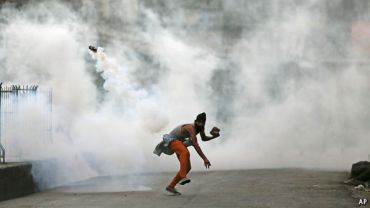
TODAY marks the 48th consecutive day of protests in Jammu & Kashmir, India’s only Muslim-majority state. Young Kashmiri men have been on the streets calling for independence from India and throwing stones at security forces. Indian security forces have responded with tear gas and shotguns that fire small-bore pellets instead of buckshot.

A strict curfew has also been imposed across the Kashmir valley, which includes Srinagar, the region’s largest city. So far, 66 civilians and two police officers have been killed in the violence. Why are Kashmiris protesting?

The region has been disputed since the partition of India and Pakistan in 1947. Both sides claim the territory and have fought three wars over it. Kashmir has been living under India’s Armed Forces (Special Powers) Act, which gives special powers to the army, since the eruption in 1990 of an armed insurgency that was covertly supported by Pakistan. Some 40,000 people have been killed since. Even in the relatively peaceful past decade, unrest has flared up, most notably in the summers of 2008 and 2010. The current protests started on July 9th after Indian security forces killed Burhan Wani, a young and charismatic Islamist militant. Resentment had been building for months. Kashmiris worried when Narendra Modi’s Hindu-nationalist Bharatiya Janata Party (BJP) came to power in 2014 that his national government would make life difficult for Muslims. At state elections later that year, the local Peoples Democratic Party formed a coalition with the BJP, leaving them feeling betrayed. Wani’s killing has mobilised a generation that had grown up under what it sees as an illegitimate Indian occupation.

The result has been a seven-week cycle of violent protests and retaliatory action by the police and paramilitary forces. Their supposedly non-lethal pellets have blinded dozens and injured hundreds. Shops and businesses have remained closed since the protests started, either under curfew orders or because of calls for strikes from separatist leaders. Many Kashmiris have not left their homes for weeks. Few expect the situation to improve any time soon, despite soothing words this week from Mr Modi and a visit to the region by India’s home minister.An obstacle to any lasting solution is India’s insistence on seeing Kashmir through the prism of its rivalry with Pakistan. The Indian government’s immediate reaction to this summer’s unrest was to accuse its neighbour of meddling. In fact, Wani was a home-grown insurgent; the young men on the streets are locals. Unemployment is widespread and economic opportunities are few. The state was also promised special status, guaranteeing autonomy, in India’s constitution. And many Kashmiris now want more: a survey in 2010 by Chatham House, a think-tank, found overwhelming support for independence. Kashmiris are at best ambivalent about their attachment to India. Until the government recognises their demands, the anger is unlikely to dissipate.

Source: The Economist explains: Why Kashmir is erupting again | The Economist

25/08/2016

Indian Company Earnings are at Last Showing Some Signs of Recovery – India Real Time – WSJ

India Inc. is finally starting to report the kind of growth one would expect from companies in the world’s fastest-growing large economy.

India’s biggest companies have been stuck in a rut for the last two years even though the country surpassed even China in terms of gross domestic product growth and it voters picked a prime minister who pledged to boost business.

Last quarters’ earnings suggested things may at last be looking up.In the three months ended June, the net profit of companies in the benchmark index, the S&P BSE Sensex, rose 7% compared to a year earlier. While a few companies still haven’t announced results yet, so far it looks like the highest growth for Sensex companies in two years.

Take out the earnings at banks–which are being hurt as the Reserve Bank of India forced them to write off more soured loans–and the profit picture is even prettier. Profit at the non-financial Sensex companies jumped 15% during the quarter, according to data from broker Motilal Oswal Securities Ltd.

While the outlook on global demand is gloomy, hurting exporters and software companies, local demand is strong and getting stronger.

Workers at an IKEA carpet-making facility in Bhadohi, India, August 26, 2015. PHOTO: VIVEK SINGH FOR THE WALL STREET JOURNAL

“The earnings growth mostly came from companies focused on domestic demand rather than companies relying on global markets,” said Vivek Mahajan, head of research at Aditya Birla Money.

Companies selling products to people in India can expect even more demand later this year as above-average monsoon rains bolster farmers’ incomes and government employees receive a massive wage hike, he said.

Sectors such as cement, consumer goods, and auto makers are going to be big beneficiaries of the rising consumer demand.

Source: Indian Company Earnings are at Last Showing Some Signs of Recovery – India Real Time – WSJ

19/08/2016

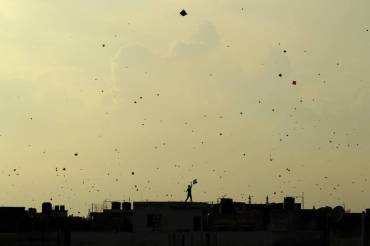
Why is Kite Flying a Deadly Hobby in India? – India Real Time – WSJ

India’s capital has banned killer kite string after three people died this week from injuries and accidents caused by string that has been fortified for kite fights.

The weeks around India’s Independence Day—Aug. 15—are peak kite flying and fighting season. Kids and adults fly kites high in the air and try to maneuver them so their lines cut those of other kites as part of a traditional and usually harmless competition.

To better their chances of surviving longer and cutting competitors, many people use extra strong string and nylon lines and even lines encrusted with ground glass. When those sharp lines fall across roads they are a hazard to two-wheeler riders who can’t see them. Hitting one of the lines at high speed can knock bikers off their vehicles and slit their throats.

While there are injuries and deaths caused by kite strings every year, this year was particularly tragic as two of the victims were under the age of five.

A three-year-old girl died, while traveling in a car Monday with her head sticking out of the sun roof. She sustained a neck injury and was taken to a hospital where she died, said Vijay Singh, deputy police commissioner for northwest Delhi.

In another incident the same day in west Delhi, a four-year-old boy died also while looking out of a sun roof and becoming entangled with a string hanging from a tree. He was taken to a hospital and died, Pushpendra Kumar, deputy police commissioner for west Delhi said.

Also Monday, a man traveling in west Delhi on a motorbike became entangled with a kite string and crashed his motorbike, sustaining head injuries. He was also declared dead at hospital, Mr. Kumar said.

Chandraker Bharti, Delhi’s secretary of environment and forests, on Tuesday banned the sale, production, storage and supply of kite flying thread “that is sharp or made sharp such as being laced with glass, metal or other sharp objects.”

Source: Why is Kite Flying a Deadly Hobby in India? – India Real Time – WSJ

19/08/2016

Cowboys and Indians | The Economist

CLOSE your eyes and you could be in a farmyard: a docile heifer slurps a grassy lunch off your hand, mooing appreciatively. Now open your eyes to the relentless bustle of a huge city: the cow is tied to a lamp-post, cars swerve to avoid it and its keeper demands a few rupees for providing it with the snack.

Across Mumbai, an estimated 4,000 such cow-handlers, most of them women, offer passing Hindus a convenient way to please the gods. In a country where three-quarters of citizens hold cows to be sacred, they form part of an unusual bovine economy mixing business, politics and religion.India is home to some 200m cows and more than 100m water buffaloes. The distinction is crucial. India now rivals Brazil and Australia as the world’s biggest exporter of beef, earning around $4 billion a year. But the “beef” is nearly all buffalo; most of India’s 29 states now ban or restrict the slaughter of cows. With such strictures multiplying under the government of Narendra Modi, a Hindu nationalist, entrepreneurs have sought new ways to profit.

One promising line of business has been to become a gau rakshak, or cow protector. Some of these run charitably funded retirement homes for ageing cows, including rural, ranch-style facilities advertised on television. Other rakshaks have proven more concerned with punishing anyone suspected of harming cows or trading in their meat. Such vigilantes have gained notoriety in recent years as attacks on meat-eating Muslims or on lower-caste Hindus working in the leather trade have led to several deaths. A mob assaulted a group of Dalits (the castes formerly known as untouchables) last month in Mr Modi’s home state of Gujarat, thinking they had killed a cow. In fact they were skinning a carcass they had bought legitimately; Dalits traditionally dispose of dead cows.

More commonly, India’s less scrupulous cowboys simply demand protection money from people who handle cattle. An investigation by the Indian Express, a newspaper, found that cattle breeders in the northern state of Punjab were forced to pay some 200 rupees ($3) a cow to ensure that trucks transporting livestock could proceed unmolested. Under pressure from the rakshaks, the state government had also made it harder to get permits to transport cattle.

Earlier this month Mr Modi broke a long silence on the issue. Risking the ire of his Hindu-nationalist base, the prime minister blasted “fake” gau rakshaks for giving a good cause a bad name. If they really cared about cows, he said, they should stop attacking other people and instead stop cows that munch on rubbish from ingesting plastic, a leading cause of death.

In any case, vigilantism and the beef trade generate minuscule incomes compared with India’s $60 billion dairy industry. The country’s cows and buffaloes produce a fifth of all the world’s milk. As Indian incomes rise and consumers opt for costlier packaged brands, sales of dairy products are rising by 15% a year. But although a milk cow can generate anywhere from 400 to 1,100 rupees a day, this still leaves the question of what to do with male animals, as well as old and unproductive females.

Not all can be taken in by organised shelters. This makes the urban cow-petting business a useful retirement strategy. A good patch (outside a temple, say) can generate around 500 rupees a day from passers-by. Feed costs just 20 rupees a day, says Raju Gaaywala, a third-generation cow attendant whose surname, not coincidentally, translates as cow-handler.

He inherited his patch in Mulund, a northern suburb of Mumbai, when his father passed away in 1998. His latest cow, Lakshmi, cost him 4,000 rupees around three years ago and generates around 40 times that every year, enough to send his three children to English-language schools and, he hopes, to set them up in a different form of entrepreneurship.

The handlers fear their days may be limited. A nationwide cleanliness drive has targeted urban cow-handlers, who are in theory liable for fines of 10,000 rupees. In practice the resurgent Hindu sentiment under Mr Modi should help leave the cattle on the streets. It may kick up other opportunities, too. Shankar Lal, an ideological ally of the prime minister’s, in an interview with the Indian Express extolled the many health merits of cow dung. Spreading a bit on the back of a smartphone, as he does every week, apparently protects against harmful radiation. Usefully for Indian farmers, only local cows can be used, not Western breeds such as Holsteins or Jerseys, he warns: “Their dung and milk are nothing but poison.”

Source: Cowboys and Indians | The Economist

18/08/2016

India ready for Pakistan talks; U.N. alarmed by Kashmir violence | Reuters

India is ready to send its top diplomat to Pakistan for talks focused on fighting cross-border terrorism, sources at foreign ministry said on Wednesday, after a spike in tension in the disputed northernmost region of Kashmir.

Foreign Secretary Subrahmanyam Jaishankar was willing to attend talks on the invitation of his Pakistani counterpart, the sources said, stressing cross-border terrorism was central to the situation in Jammu and Kashmir state.

The olive branch comes after 40 days of violent protests in Indian-ruled Kashmir set off by the killing by security forces of a field commander of Pakistan-based Islamic militant group Hizbul Mujahideen who enjoyed wide support.

At least 64 people have died and thousands injured in clashes with security forces, denounced by Pakistan, which also claims the right to rule Jammu & Kashmir in a territorial dispute that dates back to partition in 1947.

The Indian sources, who declined to be identified, made it clear, however, that India “rejects in their entirety the self-serving allegations regarding the situation in J&K, which is an integral part of India.”Jammu and Kashmir (J&K) is the name of India’s only Muslim-majority state that includes the disputed Kashmir region.

A spokesman for Pakistan’s foreign ministry declined to comment late on Wednesday, saying the government was preparing a response to the proposed Indian visit.

A U.N. human rights official expressed “deep regret” at the failure of both the Indian and Pakistani authorities to grant access to the separate parts of Kashmir that each run to investigate allegations of serious human rights violations.

U.N. High Commissioner for Human Rights Zeid Ra’ad Al Hussein said in a statement issued in Geneva it was unfortunate that sincere attempts by the United Nations to independently assess the facts in relation to reports of human rights violations had failed.

“Without access, we can only fear the worst,” said Zeid.

The nuclear-armed neighbours, which have fought three wars since independence in 1947, both claim Kashmir in full but rule it in part.

In the latest violence on Wednesday, militants killed three members of the security forces when they ambushed an army convoy and then fired on a police jeep that came to the scene.

In a worrying escalation the previous day, security forces fired live rounds at a crowd of stone-throwing protesters in Baramulla district, killing five and wounding 10.

Earlier, police and troops trying to control crowds had resorted to the use of shotguns, whose pellets are meant to incapacitate but not kill.

But residents of Kashmir say the shotguns have inflicted severe injuries and even blinded hundreds of people including bystanders.

Prime Minister Narendra Modi ratcheted up tensions in his annual Independence Day speech on Monday, accusing Pakistan of glorifying terrorism.

In a tit-for-tat escalation in the war of words between the neighbours, Modi said he had received messages of support from leaders in restive regions of Pakistan, in particular the troubled southwestern province of Baluchistan.

India accuses Muslim Pakistan of supporting Kashmiri fighters while Pakistan accuses India of meddling in Pakistani trouble spots, in particular of helping separatists fighting the Pakistani state in resource-rich Baluchistan.

Both sides deny the accusations.

Source: India ready for Pakistan talks; U.N. alarmed by Kashmir violence | Reuters

13/08/2016

How Alibaba is Tapping India – The Numbers – WSJ

As its business matures at home, Chinese e-commerce giant Alibaba Group Holding Ltd. is looking to boost growth elsewhere in Asia — especially India, home to a nascent but fast-growing online shopping sector.

Here’s how — and why – it is targeting the world’s second-most-populous nation.

1.2 billion

The number of customers outside of China that Alibaba would like to reach, according to the company’s Chairman Jack Ma.

$127 billion

The projected value of India’s e-commerce market in 2025, up from $11.2 billion last year, according to Goldman Sachs Global Investment Research.

$500 million

The amount of money New Delhi, India-based e-commerce startup Snapdeal.com raised in a fundraising round led by Alibaba last year.

More than $500 million

The amount Alibaba and its affiliate Ant Financial Services Group last year paid for 40% of One97 Communications, the parent company of Noida, India-based online-payment and marketplace startup Paytm.

2 or more

Prominent executives Alibaba has hired in recent months who have experience in India’s e-commerce sector.

Source: How Alibaba is Tapping India – The Numbers – WSJ

Law of Unintended Consequences

continuously updated blog about China & India

ChiaHou's Book Reviews

continuously updated blog about China & India

What's wrong with the world; and its economy

continuously updated blog about China & India