Posts tagged ‘India’

21/03/2014

India’s Diesel Fuel Subsidy Breeds Toxic Air Pollution – Businessweek

Molecular biologist George Easow’s move to India to start a clinical diagnostics business lasted just three weeks before he decided to give up and return to the U.K. Within days of the family’s move to New Delhi, his 7-month-old daughter, Fiona, was wheezing and gasping for air because of smog. “She could hardly breathe,” says her father.

India's Diesel Cars Are Proving Lethal

Fiona was kept indoors and put on medication. Nothing worked. “We had to make a call,” Easow says, adding that her symptoms disappeared once they were back in the U.K. and haven’t returned. For the 16.8 million residents of India’s capital, the wheezing continues. The bad news is, it’s going to get worse.

Cities across India suffer from some of the poorest air quality in the world. The problem is so severe that it’s costing the country 1.1 trillion rupees ($18 billion) annually in the shortened life spans of productive members of the urban population, according to a June World Bank report.

STORY: Who Has Dirtier Air: China or India?

While Beijing and Shanghai air pollution caused by coal-burning factories are well known, Delhi residents suffer even more by some measures, though the main source of the smog is cars and trucks running on cheap diesel. Indian government subsidies for the fuel add up to $15 billion a year. Farmers and truckers, both big voting blocs, rely on cheap diesel.

India’s diesel-powered vehicles pump out exhaust gases with 10 times the carcinogenic particles found in gasoline exhaust. The result: Delhi’s air on average last year was laced with double the toxic particles per cubic meter reported in Beijing, leading to respiratory diseases, lung cancer, and heart attacks. “I have no doubt, 100 percent, that diesel exhaust is contributing to a rise in asthma, respiratory illnesses, and hospitalizations,” says Dr. T.K. Joshi, director of Delhi’s Centre for Occupational and Environmental Health at Maulana Azad Medical College.

via India’s Diesel Fuel Subsidy Breeds Toxic Air Pollution – Businessweek.

Enhanced by Zemanta
21/03/2014

BBC News – Megadams: Battle on the Brahmaputra

China and India have their eye on the energy potential of the vast Brahmaputra river. Will a new wave of “megadams” bring power to the people – or put millions at risk? The BBC World Service environment reporter Navin Singh Khadka reports from Assam, India.

map

On the banks of the Brahmaputra it is hard to get a sense of where the river starts and ends. It begins far away as a Tibetan mountain stream. On the floodplains of Assam, though, its waters spread as far as the eye can see, merging with the horizon and the sky.

From here it continues through north-eastern India into Bangladesh, where it joins with the Ganges to form a mighty river delta.

For centuries the Brahmaputra has nourished the land, and fed and watered the people on its banks.

Today, though, India and China’s growing economies mean the river is increasingly seen as a source of energy. Both countries are planning major dams on long stretches of the river.

In Assam the plans are being greeted with scepticism and some fear.

The fear is that dams upstream could give China great power over their lives. And many in Assam worry whether China has honourable intentions.

Brahmaputra voices: What next for their river?

Brahmaputra stories: The businessman, the activist, the expert and the official

After a landslide in China in 2000, the river was blocked for several days, unknown to those downstream.

When the water forced its way past the blockage Assam faced an oncoming torrent. There was no advance warning. There are concerns this could happen more frequently.

Some also believe that China may divert water to its parched north – as it has done with other southern rivers.

India’s central government says China has given them assurances about the new Tibetan dams.

“Our foreign ministry has checked with China and we have been told that the flow will not be affected, and we will make sure that the people’s lives are not affected by the dams,” Paban Singh Ghatowar, minister for the development of north-eastern India, told the BBC.

By engaging in a race to dam the Brahmaputra as quickly as possible, China and India will cause cumulative environmental impacts beyond the limits of the river’s ecosystem”

Peter Bosshard

International Rivers Network

Do massive dams ever make sense?

Beijing says the dams it is building on the Tibetan stretch of the river will ease power shortages for people in that region.

“All new projects will go through scientific planning and feasibility studies and the impact to both upstream and downstream will be fully considered,” China’s foreign ministry told the BBC.

It said three new dams at Dagu, Jiacha, and Jeixu were small-scale projects: “They will not affect flood control or the ecological environment of downstream areas,” the foreign ministry said.

Despite the statements, there is no official water-sharing deal between India and China – just an agreement to share monsoon flood data.

via BBC News – Megadams: Battle on the Brahmaputra.

Enhanced by Zemanta
17/03/2014

India’s arms imports almost three times of China, Pak: SIPRI report – The Times of India

India’s continuing abject failure to build a robust defence industrial base (DIB) has come to into focus once again, with an international thinktank holding its arms imports are now almost three times as high as those of the second and third largest arms importers, China and Pakistan.

C-130J Super Hercules showing scimitar propell...

C-130J Super Hercules showing scimitar propellers with raked tips (Photo credit: Wikipedia)

As per the latest data on international arms transfers released by Stockholm International Peace Research Institute (SIPRI), the volume of Indian imports of major weapons rose by 111% between 2004-08 and 2009-13, and its share of the volume of international arms imports increased from 7% to 14%.

The major suppliers of arms to India in 2009-13 were Russia (accounting for 75% of imports) and the US (7%), which for the first time became the second largest arms supplier to India, said SIPRI. As earlier reported by TOI, the US has already bagged defence deals close to $10 billion over the last decade in the lucrative Indian defence market, with the latest being the $1.01 billion one for six additional C-130J “Super Hercules” aircraft.

via India’s arms imports almost three times of China, Pak: SIPRI report – The Times of India.

Enhanced by Zemanta
15/03/2014

Fighting corruption in India: A bad boom | The Economist

IN THE early hours of February 20th 2010 Uday Vir Singh, an Indian forestry officer, bluffed his way past a private militia guarding a dusty port called Belekeri. For months suspicious-looking convoys of trucks had been thundering across India to the port’s quays on the country’s west coast, just south of the Goan beach where the super-spy mayhem which opened “The Bourne Supremacy” was filmed.

Mr Singh is no more a Jason Bourne than the next entomologist—he has a doctorate on metamorphosis in insects—and the infiltration he mounted with a few colleagues led to no gunplay. But it did uncover a massive scam, with hundreds of officials and politicians in the state of Karnataka in the pockets of an illegal mining mafia that, over five years, had made profits of $2 billion or more shipping illegal iron ore to China.

Such scandals have rocked Asia’s third-largest economy in the past decade. A lot of transactions that put public resources into private hands—allocations of radio spectrum, for example, and of credit from state banks—have come under suspicion. Of the ten biggest family firms by sales, seven have faced controversies. The brash new tycoons who came of age during the boom years of 2003-10 are under a cloud, too. Before he became boss of the central bank last year, Raghuram Rajan worried publicly that India could start looking like an oligarchy along the lines seen in Russia: “too many people have got too rich based on their proximity to the government.”

via Fighting corruption in India: A bad boom | The Economist.

Enhanced by Zemanta
15/03/2014

Why caste still matters in India | The Economist

INDIA’S general election will take place before May. The front-runner to be the next prime minister is Narendra Modi of the Bharatiya Janata Party, currently chief minister of Gujarat. A former tea-seller, he has previously attacked leaders of the ruling Congress party as elitist, corrupt and out of touch. Now he is emphasising his humble caste origins. In a speech in January he said “high caste” Congress leaders were scared of taking on a rival from “a backward caste”. If Mr Modi does win, he would be the first prime minister drawn from the “other backward classes”, or OBC, group. He is not the only politician to see electoral advantage in bringing up the subject: caste still matters enormously to most Indians.

The country’s great, liberal constitution was supposed to end the millennia-old obsession with the idea that your place in life, including your occupation, is set at birth. It abolished “untouchability”—the practice whereby others in society exclude so-called untouchables, or Dalits, as polluting—which has now mostly disappeared from Indian society. Various laws forbid discrimination by caste. At the same time (it is somewhat contradictory) official schemes push “positive” discrimination by caste, reserving quotas of places in higher education, plus jobs in government, to help groups deemed backward or deprived. In turn, some politicians have excelled at appealing to voters by caste, promising them ever more goodies. For example Mayawati, formerly chief minister of Uttar Pradesh state (population: over 200m) and just possibly a future prime minister, leads a Dalit party. In another northern state, Bihar, parties jostle to build coalitions of caste groups. Everywhere voters can be swayed by the caste of candidates.

But don’t blame politicians alone. Strong social actors—such as leaders of “khap panchayats” (all-male, unelected village councils) or doughty family elders—do much more to keep caste-identity going. Consider marriages. In rural areas it can be fatal to disregard social rules and marry someone of a different, especially if lower caste. Haryana, a socially conservative state in north India, is notorious for frequent murders of young men and women who transgress. Even in town, caste is an important criterion when marriages are arranged. Look at matrimonial ads in any newspaper, or try registering for a dating site, and intricate details on caste and sub-caste are explicitly listed and sought (“Brahmin seeks Brahmin”, “Mahar looking for Mahar”) along with those on religion, education, qualifications, earning power and looks. Studies of such sites suggest that only a quarter of participants state that “caste is no bar”. Such attitudes also reflect the anxieties of parents, who are keen for children to marry within the same group, because marriages bring extended families intimately together.

As long as marriages are mostly within the same caste, therefore, don’t expect any law or public effort to wipe away the persistent obsession with it. That seems set to continue for a long time: a survey in 2005 found that only 11% of women in India had married outside their caste, for example. What is changing for the better, if too slowly, is the importance of caste in determining what jobs, wealth, education and other opportunities are available to an average person. No caste exists for a call-centre worker, computer programmer or English teacher, for example. The more of those jobs that are created, and the more people escape India’s repressive villages, the quicker progress can come.

via The Economist explains: Why caste still matters in India | The Economist.

Enhanced by Zemanta
12/03/2014

Police: Rebels kill 18 soldiers in central India – Businessweek

Police say Maoist rebels have killed 18 paramilitary soldiers in an ambush in central India.

Mukesh Gupta said rebels ambushed a paramilitary camp on Tuesday in a remote and dense forest in Chattisgarh state.

The police said the rebels surrounded the camp and opened fire, killing 18 instantly. Several others were injured in the attack in the Jiram Ghati area in southern Chattisgarh.

The rebels, who say they are inspired by Chinese revolutionary leader Mao Zedong, have been fighting for more than three decades in several Indian states, demanding land and jobs for agricultural laborers and the poor.

via Police: Rebels kill 18 soldiers in central India – Businessweek.

Enhanced by Zemanta
12/03/2014

Decoupling Happened: U.S. Stocks Soared, China’s Shrugged – Businessweek

The idea that emerging markets could keep growing smartly despite the collapse of the U.S. was something romanced quite a bit in recent years. Decoupling, as it’s called, was at least numerically possible. After all, China, Brazil, India, and Russia—the planet’s four biggest emerging economies, which chipped in two-fifths of global economic growth in the year leading up to Wall Street’s 2008 collapse—stood out as the least dependent on exports to America. Upwards of 95 percent of China’s double-digit growth was attributable to domestic demand.

Turns out a decoupling did transpire in the five years since peak meltdown—only it’s the U.S. market that seems to be doing fine while China founders. It’s a divergence of fortunes few would have predicted.

The benchmark Standard & Poor’s 500-stock index has produced a total return of 207 percent to touch a record high in the five years since the market set a low unseen since the 1990s. Citigroup is clocking U.S. shares at “euphoric” territory. By comparison, the MSCI Emerging Markets Index has returned 125 percent.

via Decoupling Happened: U.S. Stocks Soared, China’s Shrugged – Businessweek.

Enhanced by Zemanta
07/03/2014

India’s anti-graft party takes aim at Modi’s economic model | Reuters

Indian opposition politician Narendra Modi, who leads opinion polls ahead of next month’s general election, faces pressure from a small anti-graft party attacking his economic model on his home turf, the thriving state of Gujarat.

Arvind Kejriwal and friends

Arvind Kejriwal and friends (Photo credit: vm2827)

The pro-business leader has presided over rapid economic growth during more than 12 years as the chief minister of the coastal state, and slashed red tape to attract companies such as Ford, Maruti Suzuki and Tata Motors.

Now, Modi promises to replicate his state’s development model nationwide if he becomes prime minister.

But Arvind Kejriwal, the leader of the Aam Aadmi Party, on Friday said small businessesin the state were being shuttered, public schools and health services were in poor shape and claims of regular supplies of electricity were not true.

“What is your development model?” Kejriwal asked as he tore into the heart of Modi’s campaign, saying that 400,000 of the state’s farmers who had applied for electricity connections years ago had yet to receive them.

“If you haven’t even given a connection, how will you give them electricity?”

India’s western state of Gujarat has been hailed for rapid measures to develop infrastructure and provide stable power supply, but critics often say it lags behind other states in social development.

“What we’ve seen in the last two days is quite shocking,” Kejriwal told reporters at a meeting on the edge of the state’s commercial capital of Ahmedabad.

Kejriwal, who was denied an audience with Modi, questioned the Gujarat chief minister’s claims on farm growth, job creation and clean governance, and suggested he was too close to big business.

He was on a tour to study conditions in Gujarat, as part of his party’s first national campaign since bursting onto the political scene with a stunning victory in Delhi’s local election in December.

via India’s anti-graft party takes aim at Modi’s economic model | Reuters.

Enhanced by Zemanta
06/03/2014

20 Clever Inventions Given to Us by the Incredible Indians!

annetbell's avatarTalesAlongTheWay

20 Clever Inventions You Probably Didn’t Know Were Made By Indians

FOLLOW @STORYPICKER

FEBRUARY 20, 2014

indian-inventions-cover
Indian inventions and discoveries have been instrumental in shaping the face of the current modern world. We picked up 20 such interesting findings out of a whole bunch that will make you go, “I didn’t know that”.

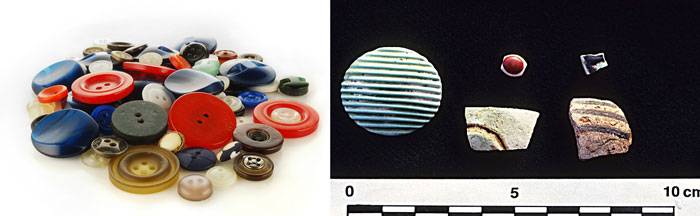
1. Buttons

buttons

image sources 12

Buttons were first used in Mohenjo-daro for ornamental purpose rather than for fastening. They were first used in the Indus Valley Civilization by 2000 BCE.

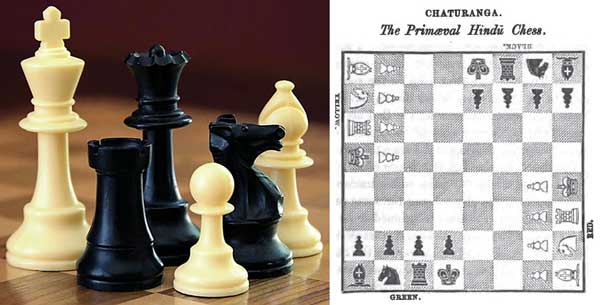
2. Chess

chess

image sources 12

Chess developed out of Chaturanga, which is an ancient strategy board game developed during the Gupta Empire in India around the 6th century AD. Now you know why Vishwanathan Anand is…

View original post 825 more words

06/03/2014

Refiners Eye Better Oil Deal Terms on U.S. Boom: Corporate India – Businessweek

India, Asia’s second-biggest energy user, is in talks with Saudi Arabia and Kuwait for better terms on oil contracts as surging U.S. output frees up supplies.

Hindustan Petroleum Gas Cylinder

Hindustan Petroleum Corp. (HPCL), India’s third-largest state refiner, is seeking to at least double the interest-free credit period for crude purchases from Saudi Arabia and Kuwait to 60 days, B.K. Namdeo, the company’s refineries director, said in Mumbai. Mangalore Refinery & Petrochemicals Ltd. (MRPL) wants price discounts for agreeing to contracts that are more than 10 years long, according to Managing Director P.P. Upadhya.

“Discussions are going on, and we expect the extended credit period to be reflected in the new contracts from April 1,” Namdeo said. “There is a surplus in the market, and India should take full advantage of the situation.”

via Refiners Eye Better Oil Deal Terms on U.S. Boom: Corporate India – Businessweek.

Enhanced by Zemanta
Law of Unintended Consequences

continuously updated blog about China & India

ChiaHou's Book Reviews

continuously updated blog about China & India

What's wrong with the world; and its economy

continuously updated blog about China & India