Posts tagged ‘India’

27/07/2016

China’s Fosun to sign agreement for $1.4 billion Gland Pharma buy – paper | Reuters

Shanghai Fosun Pharmaceutical (Group) Co (2196.HK) will sign a definitive agreement on Wednesday to buy a controlling stake in India’s Gland Pharma in a $1.4 billion deal, the Economic Times newspaper reported, citing a source with direct knowledge.

In May, Shanghai Fosun had made a non-binding proposal to buy Gland Pharma, which is backed by KKR & Co (KKR.N), to boost its drug manufacturing and research and development capacity.

Fosun did not immediately comment, when contacted by Reuters. Gland Pharma made no immediate comment on the report.

The paper said KKR declined to comment.

Source: China’s Fosun to sign agreement for $1.4 billion Gland Pharma buy – paper | Reuters

27/07/2016

Parliament passes controversial child labour bill | Reuters

Parliament on Tuesday approved a controversial law that would allow children to work for family businesses, despite widespread concern by the United Nations and other rights advocates that it will push more children into labour.

A week after the bill was passed by the Rajya Sabha, the Lok Sabha approved the measure that brings a raft of changes to a three-decade-old child labour prohibition law. The bill now goes for the President’s assent before becoming law.

The U.N. Children’s Agency (UNICEF) as well as many others have raised alarm over two particular amendments – permitting children to work for their families and reducing the number of banned professions for adolescents.

A 2015 report by the International Labour Organization (ILO) put the number of child workers in India ages 5 to 17 at 5.7 million, out of 168 million globally.

More than half of India’s child workers are employed in agriculture and more than a quarter in manufacturing – embroidering clothes, weaving carpets or making match sticks. Children also work in restaurants, shops and hotels and as domestic workers.The new legislation extends a ban on child labour under 14 to all sectors. Previously, only 18 hazardous occupations and 65 processes such as mining, gem cutting and cement manufacturing were outlawed.

It also stiffens penalties for those employing children, doubling jail terms to two years and increasing fines to 50,000 rupees ($740) from 20,000 rupees ($300).

While child rights groups have welcomed such changes, there has been concern over other amendments proposed by Prime Minister Narendra Modi‘s government.

For example, children will be allowed to work in family businesses, outside of school hours and during holidays, and in entertainment and sports if it does not affect their education.

Also, children 15 to 18 will be permitted to work, except in mines and industries where they would be exposed to inflammable substances and hazardous processes.

The government says the exemptions aim to strike a balance between education and India’s economic reality, in which parents rely on children to help with farming or artisanal work to fight poverty or pass on a family trade.

“The purpose of this very act is that we should be able to practically implement it,” Labour and Employment Minister Bandaru Dattatreya told parliament. “That’s why we are giving some exemptions.”UNICEF had urged India to exclude family work from the proposed law and include an “exhaustive list” of hazardous occupations.

“To strengthen the Bill and provide a protective legal framework for children, UNICEF India strongly recommends the removal of ‘children helping in family enterprises’,” it said in a statement on Monday.

“This will protect children from being exploited in invisible forms of work, from trafficking and from boys and girls dropping out of school due to long hours of work,” it said.

Source: Parliament passes controversial child labour bill | Reuters

27/07/2016

India orders 4 more maritime spy planes from Boeing worth $1 billion | Reuters

India has signed a pact with Boeing Co for purchasing four maritime spy planes at an estimated $1 billion, defence and industry sources said, aiming to bolster the navy as it tries to check China’s presence in the Indian Ocean.

India has already deployed eight of these long-range P-8I aircraft to track submarine movements in the Indian Ocean and on Wednesday exercised an option for more planes, a defence ministry source said.

“It has been signed,” the source familiar with the matter told Reuters. An industry source confirmed the contract, saying it was a follow-on order signed in New Delhi early on Wednesday.

Source: India orders 4 more maritime spy planes from Boeing worth $1 billion | Reuters

27/07/2016

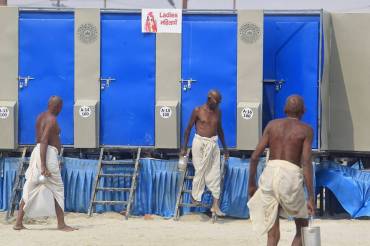
Why India’s Lack of Toilets Is Hurting Its Children’s Development – India Real Time – WSJ

India’s lack of toilets and poor access to sanitation are holding back its children, causing stunted growth and curbing their development, a new report says.

Is India Winning the Fight Against Childhood Malnutrition?

Why Is Indian Children’s Growth So Stunted? It’s Not Why You ThinkT

he country has more than 48 million under fives with impaired growth, the largest number in the world, the report from London-based international development charity WaterAid said.

India also has 774 million people without access to adequate sanitation, and 76 million without safe water, the report said.

Children who are stunted because of malnutrition tend to be shorter and lag behind their peers cognitively. Poor access to clean water, sanitation and hygiene cause diarrhea and expose children to other intestinal infections during the crucial first two years of life.

Around 140,000 under-fives die in India every year because of diarrhea and other diseases caused by lack of access to these basic services, the report said.

Indian Prime Minister Narendra Modi has said in the past that he would rather build toilets than temples — setting a goal for every home in the country to have a place to go to the bathroom by 2019. But the program has suffered challenges: some Indians prefer to relieve themselves outdoors.

India is making some progress, however. The report said the percentage of its children who were stunted reduced from 48% in 2006 to 39% in 2014, the year Mr. Modi came to power.

Pakistan, India’s closest neighbor, ranked third with more than 9.8 million children who are stunted, according to the WaterAid study.

Source: Why India’s Lack of Toilets Is Hurting Its Children’s Development – India Real Time – WSJ

25/07/2016

Ways India Has Changed Since Liberalization 25 Years Ago – WSJ

Twenty-five years ago this week, India unshackled private industry and embraced foreign investment, ending four decades of socialist self-reliance and making a major bid to reclaim its place as an economic power.

The finance minister at the time, Manmohan Singh, had a keen sense of the moment’s place in history. Presenting the budget before Parliament on July 24, 1991, he framed the new economic policies as a means of eliminating “the scourge of poverty, ignorance and disease,” and of realizing the full potential of the Indian people. In the famous closing flourish of his speech, he invoked Victor Hugo: “No power on Earth can stop an idea whose time has come.”

But even Mr. Singh, who later served a decade as the country’s prime minister, could not have foreseen all the changes that this set of ideas would bring about.

1 Economic Liftoff

By every measure, India has grown more economically prosperous. National output last year was nearly five times what it was in 1991. Indians sell more to the world, and enjoy more of the outside world’s products and services, know-how and technology. A country that was once a byword for famine is today one of the planet’s biggest exporters of rice, cotton and other agricultural products.Not all sections of Indian society have risen as much as others: The country is still home to more of the world’s poorest people than any other nation. And much of the growth has been in the informal economy, where companies don’t pay taxes or have access to large-scale finance, and where workers don’t receive benefits or protection from unfair treatment. That suggests the deterrents to doing business above-board, such as government regulations and enforcement, are still too many.ANUPAM

2 People Power

Indians are living longer, and fewer are dying at or shortly after birth. More are literate, more receive schooling and more go to college. Still, the nation badly lags its neighbors on many of these human indicators. Women fare worse than men. And despite recent government sanitation campaigns, more people in India have cellphones than have access to decent toilets, according to the United Nations.

3 Consumer Explosion

In 1991, Indians had two television channels to choose from, and both of them were produced by Doordarshan, the state broadcaster. In much else, too, from sweets to cosmetics to butter, autarky meant the choices for the average consumer were very limited. Today’s riot of options makes pre-liberalization India seem, as the writer Mukul Kesavan wrote recently, like “another country.

4 Car Crazy

It isn’t quite true that Indians had only one car available to them, the Hindustan Motors Ltd. Ambassador, before 1991. But their options have certainly multiplied since then. Almost every major international maker has tried to enter the market; not all have succeeded. The industry in India churned out nearly 24 million vehicles in the year that ended in March.

5 A Flailing State

Over the last quarter-century, as India’s economy has grown more complex, it has arguably loped ahead of the government’s capacity to manage it and provide essential services. That’s why the Harvard economist Lant Pritchett in 2009 called India a “flailing state”: The top institutions of government are sound, but they don’t deliver reliably on the ground.Public health facilities are understaffed and underfunded. Schoolteachers don’t show up for their own classes. Unlike in 1991, “India’s problem is not what the state does wrong now,” says Manish Sabharwal, chairman of TeamLease Services Ltd., a Bangalore-based staffing company. “It is what the state does not do.”

Source: Ways India Has Changed Since Liberalization 25 Years Ago – WSJ

01/07/2016

India factory growth at 3-month high in June on strong demand | Reuters

Indian manufacturing activity edged up to a three-month high in June, driven by stronger demand, but firms barely raised prices, a private survey showed, leaving the door open for another rate cut by the central bank this year.

The Nikkei/Markit Manufacturing Purchasing Managers’ Index (PMI) rose to 51.7 in June from May’s 50.7, its sixth month above the 50 mark that separates growth from contraction after it fell below that level in December for the first time in more than two years.

“The domestic market continues to be the main growth driver, as the Indian economic upturn provides a steady stream of new business,” said Pollyanna De Lima, economist at Markit.

“There were also signs of an improvement in overseas markets, as new foreign orders rose. However, it looks as if lackluster global demand remains a headwind for Indian manufacturers.

“While retail inflation hit a near two-year high in May, the survey’s output prices sub-index fell to a three-month low of 50.1 in June versus 50.5 the previous month, as input costs rose at a weaker pace.

There was also broadly no change to manufacturing employment in India during June, the survey showed.

“This lack of inflationary pressures provides the Reserve Bank of India (RBI) with further leeway to boost economic growth through cutting its benchmark rate,” said De Lima.

According to a Reuters poll, RBI Governor Raghuram Rajan could deliver another rate cut before his term ends in September. After cutting rates in April, he has left the key interest rate unchanged at a five-year low of 6.50 percent.

However, at the June policy meeting he signalled another rate cut later in the year if monsoon rains were sufficient enough to dampen upward pressure on food prices.

Rains are expected to be above average this year which could keep prices in control and give the government room to focus on key economic reforms in tandem with low interest rates.

Source: India factory growth at 3-month high in June on strong demand | Reuters

30/06/2016

India to get over $1 billion from World Bank for Modi’s solar goals | Reuters

The World Bank said on Thursday it would lend India more than $1 billion for its huge solar energy programme, after Prime Minister Narendra Modi sought climate change funds from its visiting head.

Modi is banking on India’s 300 days a year of sunshine to generate power and help fight climate change rather than committing to emission cuts like China.

The World Bank loan is the global lender’s biggest solar aid for any country and comes as India has set a goal of raising its solar capacity nearly 30 times to 100 gigawatts by 2020 and is attracting mega investment proposals from top companies and institutions.

“Prime Minister Modi’s personal commitment toward renewable energy, particularly solar, is the driving force behind these investments,” World Bank President Jim Yong Kim said in a statement released after he met Modi. “The World Bank Group will do all it can to help India meet its ambitious targets, especially around scaling up solar energy.

“India is the largest client of the World Bank, which lent it around $4.8 billion between 2015 and 2016.

Modi’s office said he told Kim about the need for climate change financing for countries like India that are “consciously choosing to follow an environmentally sustainable path”.

India wants the share of non-fossil fuel in total installed power capacity to jump to 40 percent by 2030 from 30 percent currently, but there are challenges including weak finances of state distribution companies forced to sell subsidised power, difficulties hooking up solar projects to grids, and access to affordable capital.

Still India reckons its renewable energy industry could generate business opportunities worth $160 billion this decade, making it a lucrative market that has already attracted big global players such as Japan’s Softbank Corp, Taiwan’s Foxconn, First Solar, Trina Solar Ltd and Finland’s state-controlled utility Fortum Oyj.

German development bank KFW has already agreed to offer India low-interest loans of around 1 billion euro over the next five years to fund roof-mounted solar panels, and the construction of solar energy farms and self-contained solar power facilities not connected to the grid.

Source: India to get over $1 billion from World Bank for Modi’s solar goals | Reuters

29/06/2016

India approves rise in salaries, pension for govt employees – govt source | Reuters

India’s cabinet on Wednesday approved a proposal to revise up salaries and pensions for government employees, an official, privy to the decision, told reporters.

The official declined to be named or identified as he was not authorised to speak to the media.

The move is estimated to benefit nearly 10 million government employees.

Details were not immediately available ahead of a government briefing later.

Source: India approves rise in salaries, pension for govt employees – govt source | Reuters

27/06/2016

For single women in Maharashtra, owning land can be the difference between life and death | Reuters

Rajshree Gungoo, a chatty 27-year-old with a quick smile, speaks up at a gathering of about 40 women discussing the challenges facing single women in Maharashtra.”It’s very difficult. I don’t have a husband, I don’t have a son, even my father doesn’t want me,” she says, her voice breaking. “I am alone and powerless to do anything.”

She breaks off, using the end of her saree to wipe her tears. Around her, others nod and mutter.

In drought-hit Marathwada, the state’s poorest region, there is an unusually high number of single women. Some were widowed after their farmer husbands committed suicide because of debt; others were abandoned because they didn’t produce a son, while some were left behind when their husbands left to search for work.

Alone and without financial support, the women and their children are usually thrown out of home by their in-laws, denied ownership of the land they worked on and any compensation from the government.

They are also taunted and harassed by communities who believe a woman is nothing without a man.

“In this country, single women are the most vulnerable category – they are neglected by the government, by society, even their own family,” said Vishwanth Todkar, secretary at Paryay, a charity that works with marginalised communities.

“Every day, every hour is a struggle for them – to get a home, get land, even their identity cards, which are in the name of the father or the husband. They face humiliations constantly,” he said.

Source: For single women in Maharashtra, owning land can be the difference between life and death | Reuters

27/06/2016

This Is What Happens to Your Clothes When You Donate Them in the West – India Real Time – WSJ

As heaps of castoff clothes from the U.S. cascade down a conveyor belt, rows of sari-clad women frantically sort the garments by type—T-shirts in one barrel, women’s jeans in another. They pluck out sweatpants, underwear, sweaters, coats, and even furs.

The jumble is part of the thousands of tons of used clothing that arrive each month in this western Indian port, a hub in the vast global network that purchases secondhand clothes in rich countries and resells them throughout the developing world.

“I don’t understand why people throw away all these clothes,” says one of the sorters, as she sits on a warehouse floor during a break. “Maybe they don’t have time to wash them.

”In fact, the glut springs from the rise of fast fashion, which has flooded the world with inexpensive clothing, often produced in some of the same low-wage countries where it later ends up sold in market stalls or reprocessed into goods like blankets or pillow stuffing.

To some, this a virtuous circle, minimizing waste while providing jobs and a source of low-cost clothes for the poor. Even retailers such as Hennes & Mauritz AB and others have gotten into the act, collecting worn apparel to recycle. Since it began collecting used clothing at its stores in 2013, H&M has recycled more than 20,000 tons of it.

Source: This Is What Happens to Your Clothes When You Donate Them in the West – India Real Time – WSJ

Law of Unintended Consequences

continuously updated blog about China & India

ChiaHou's Book Reviews

continuously updated blog about China & India

What's wrong with the world; and its economy

continuously updated blog about China & India