Posts tagged ‘India’

04/06/2016

Dam completion signifies growing Indian influence in Afghanistan | Reuters

Prime Minister Narendra Modi visited Afghanistan on Saturday to mark the completion of a nearly $300 million hydroelectric dam project, the latest symbol of Indian investment in its South Asian neighbour.

The dam, originally built in western Herat province in 1976 before being damaged during the civil wars of the 1990s, was rebuilt by some 1,500 Indian and Afghan engineers, according to the Indian Ministry of External Affairs.

“It is symbol of our friendship and would usher in hope, light up homes, nourish the fertile fields of Heart and bring prosperity to the people of the region,” Modi said in a social media post as he departed for Afghanistan, the first stop on a five-country trip.

Afghan President Ashraf Ghani has nurtured closer ties with India in the past year as relations with Pakistan have deteriorated in the face of continued insurgent attacks and border tensions.

Afghanistan has walked a fine line as it accepts Indian aid, with Pakistan historically wary of any Indian influence in Afghanistan.

Salma Dam is another big step in deepening and broadening the relationship between Afghanistan and India,” Ghani said in a post on Twitter.

At more than 100 metres (330 feet) high and 540 metres (1,770 feet) wide, the dam is designed to generate 42 megawatts of power and help irrigate 75,000 hectares of land, according to Modi.

India has poured more than $1 billion into Afghanistan reconstruction projects and humanitarian aid, making it one of the largest donors to the war-torn country.

A new national assembly building in Kabul and major power line and road construction have been among the main projects funded by India.

Source: Dam completion signifies growing Indian influence in Afghanistan | Reuters

03/06/2016

India May Have Won the Battle With Food Inflation Before the First Drop of Monsoon Rain – India Real Time – WSJ

Around this time every year, farmers and economists look to India’s skies, hoping for the arrival of the monsoon rains.

Late and less rain hurts crops and triggers inflation, goes the traditional worry, so every day of delay or deficit in downpours threatens to derail the country’s fragile growth.

The problem with this annual, rational worry, however, is that it’s just, plain wrong.

Good and bad monsoons in recent years have had limited effect on growth or even on food inflation, according to a report this week from Nomura. What is much more important in determining how fast food prices rise, the report says, is the minimum support prices New Delhi sets for certain crucial commodities.

So instead of looking to the skies, central bankers and other inflation fighters should be looking to New Delhi.

This year the monsoon is predicted to be above normal but much more importantly, the weather over the capital is looking promising. On Thursday, India’s weather department upheld its monsoon forecast and said it expects rainfall to be 106% of the long-term average.

On Wednesday the government announced the minimum support prices for the most basic Indian staples–dal and rice—and capped the increases at less than 10%. In some years when the government looked to help farmers it has ratcheted up the prices more than 15%, triggering inflation.

Source: India May Have Won the Battle With Food Inflation Before the First Drop of Monsoon Rain – India Real Time – WSJ

27/05/2016

Southern comfort | The Economist

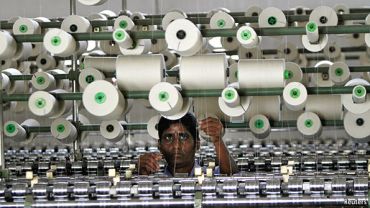
MAHATMA GANDHI would not have enjoyed Texfair 2016 in Coimbatore in the southern state of Tamil Nadu. The man hated machines and factories, and promoted Indian independence by urging every household to spin its own cotton yarn. But on display at the textile fair were bobbins, rollers, waste balers, quality-control sensors and much, much more.

Indeed, India is vying with China to be the world’s biggest producer of yarn, with over 45m spindles twirling around the clock. But what is striking about the trade fair is how so much of the modern wizardry on show is made not in better-known industrial centres around the world but in Coimbatore itself, a city of just 1.6m some 500 kilometres (310 miles) south-west of Chennai, the Tamil Nadu capital. In this section Pull the other one Taliban reshuffled Southern comfort Reprints Related topics Bharatiya Janata Party Tamil Nadu Kerala India

The fast-growing city is an inelegant sprawl stretching into groves of coconut palms. It teems with technical institutes, bustling factories and civic spirit. Earnest and ambitious, Coimbatore evokes the American Midwest of a century ago. A regional manufacturers’ group that was founded in 1933 during Gandhi’s homespun campaign has now designed, built and marketed a hand-held, battery-operated cotton picker that it claims is six times more efficient than human fingers.

Gandhi would have been appalled. But the gadget says something about the quiet success of parts of India’s deep south. Mill owners worry that with day wages in Tamil Nadu and neighbouring Kerala to the west now far higher than those in northern India, local cotton may grow uncompetitive. Tea planters in the hills west of Coimbatore are already squeezed. One landowner, in Kerala’s Wayanad region, where silver oaks shade trim ranks of tea bushes, says that his pickers get 300 rupees (about $4.50) a day, nearly three times the wage in Darjeeling in India’s north.

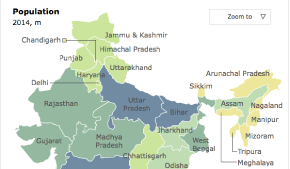
It may not sound like much, but it is also more than the average Indian earns. And as a whole, GDP per person in Tamil Nadu and Kerala is 68% and 41% higher respectively than the national average of $1,390 a year. With the south’s booming new industries, better education and higher wages contrasted with declining industries in the north and east, India is undergoing a shift a bit like the American one from the rustbelt to the sunbelt in the 1980s. Kerala shares in this new industrialisation less than Tamil Nadu, but that is balanced by another source of prosperity: remittances from abroad. As many as one in ten of Kerala’s 35m people work in the rich Arab countries of the Persian Gulf. Their remittances boost local incomes, property prices and demand for better schools. Kerala, under leftist governments for the past six decades, already has India’s best state education and its highest literacy rate. Its school district has again topped nationwide exams for 17-year-olds, followed by Chennai region, covering the rest of southern India.

Yet India’s deep south has not transmuted growing prosperity into greater political clout. It remains largely aloof from broader political trends, including a slugging match between the Bharatiya Janata Party (BJP), in office nationally under Narendra Modi, the prime minister, and Congress, the once-dominant centre-left party that worships Gandhi. In elections across four Indian states that wrapped up on May 19th, attention elsewhere focused largely on the fortunes of those two parties. The BJP’s capture from Congress of Assam in the north-east was seen as a big boost for Mr Modi. Congress’s failure to take any state was seen as a sign of decay.

Source: Southern comfort | The Economist

27/05/2016

Why It Could Be a While Before Apple Can Open Stores in India – India Real Time – WSJ

India’s finance ministry has rejected a government-panel recommendation to exempt Apple Inc. from local sourcing requirements, two government officials said, in a decision that could effectively block the technology company’s plan to open its own retail stores in the country.

“We are sticking to the old policy,“ said one of the officials. “We want local sourcing for job creation. You can’t have a situation where people view India only as a market. Let them start doing some manufacturing here.”

An Apple spokeswoman didn’t immediately respond to a request for comment.

India is a crucial market for Apple as it holds huge sales potential. Like China, which for years fueled the Cupertino, Calif., company’s growth, India is a large, developing economy in which more people can afford its high-end gadgets every year.

India wants to use the company’s interest in its market to attract investment and create the manufacturing facilities and jobs the country needs to sustain long-term growth.

Source: Why It Could Be a While Before Apple Can Open Stores in India – India Real Time – WSJ

24/05/2016

Unholy woes | The Economist

AT THE dawn of time Lord Vishnu made gods and demons join in churning the milky oceans to extract an elixir of eternal life. After cheating the demons of their share, Vishnu spilled four drops of the precious nectar. Where they fell sprang up sacred rivers whose waters wash away sins, now sites for mass Hindu pilgrimages called Kumbh Mela.

For a lunar month every 12 years it falls to Ujjain, a town in the central Indian state of Madhya Pradesh, to host the Kumbh Mela by the revered Shipra, whose waters meander north into the mighty Ganges and eventually eastward to the Bay of Bengal. By the time the full moon reappears on May 21st tens of millions of bathers, among them thousands of bearded ascetics known as sadhus (pictured), will have worshipped on Ujjain’s teeming riverbanks.

What few are aware of is that the water is no longer the Shipra’s. Urbanisation, rising demand and two years of severe drought have shrivelled the sacred river. Its natural state at this time of year, before the monsoon, would be a dismal sequence of puddles dirtied by industrial and human waste. But the government of Madhya Pradesh, determined to preserve the pilgrimage, has built a massive pipeline diverting into the Shipra the abundant waters of the Narmada river, which spills westward into the Arabian Sea. Giant pumps are sucking some 5,000 litres a second from a canal fed by the Narmada, lifting it by 350 metres and carrying it nearly 50 kilometres to pour into the Shipra’s headwaters. To ensure clean water for the festival, the Shipra’s smaller tributaries have been blocked or diverted, and purifying ozone is being injected into the reconstituted waters in Ujjain itself.

The pilgrims and merchants of Ujjain are happy. But down in the Narmada valley there is little cheer. “They are wasting water on sadhus…while our farms go dry,” says Rameshwar Sitole, a farmer in the hamlet of Kithud. Since March the canal, which feeds his 2.5 hectares of maize and okra along with the farms of 12 other hamlets, has been bone dry. Mr Sitole’s crops have withered and died: a loss, he reckons, of some 50,000 rupees ($750). The government insists the water will return once Ujjain’s pilgrimage ends, but he is not so sure. “They turn it on when we protest, and then take it away again,” Mr Sitole shrugs. Meanwhile, over the hills, industrial users near Ujjain are lobbying loudly to exploit the fancy new water sources.

Poor monsoons are not unusual, but the back-to-back shortfalls, linked to the El Niño effect, which India has experienced in the past two years are very rare. Ten out of 29 states, with a population of some 330m, have been badly hit, with the worst-affected areas in the centre of the country. India is suffering its gravest water shortage since independence, says Himanshu Thakkar, a water expert in Delhi, the capital. Every day brings news of exhausted rivers and wells, destitute farmers migrating to the cities or even committing suicide, water trains being dispatched to parched regions—and of leopards venturing into towns in search of a drink.

The central government has responded with make-work programmes for afflicted areas, emergency shipments of water, and many promises. In February Narendra Modi, the prime minister, pledged to double farm incomes by 2022. Other ministers speak of massive irrigation projects, and have dusted off an ambitious water-diversion scheme for parched regions that is priced at $165 billion and involves no fewer than 37 links between rivers. Most links would be via canals—some 15,000km of artificial waterways in all.

Source: Unholy woes | The Economist

09/05/2016

How India’s River Row with China Shows The Growing Importance of Water Security – The Short Answer – WSJ

A river that flows through India, China, Bangladesh and Bhutan is churning up the issue of water security in a fast-developing region.

The river–which is called Brahmaputra in India–is a source of tension between India and China and how those two countries are managing it affects Bangladesh downstream, a new report by Washington-based nonprofit, CNA Analysis and Solutions says.

The report, titled “Water Resource Competition in the Brahmaputra River Basin: China, India, and Bangladesh,” recommends ways the countries can stop the issues from drifting out of control.

Here’s a brief rundown of the report.

Where does the river flow?

The river originates in China, where it is known as the Yarlung Tsangpo. It then flows through India and Bangladesh, before entering the Bay of Bengal. Part of the river’s basin is also in Bhutan. In India, it runs through six states in the country’s east and northeast covering a distance of about 570 miles. In parts of India, it is also known as the Siang and in Bangladesh, as the Jamuna. The river’s basin covers 580,000 square kilometers (224,000 square miles) through the four countries. The World Bank estimates that India and China occupy 50% and 34% of that area.

Why is the river important to China?

The river is strategically important for China, mainly for its hydropower potential. The report said China has already built one hydropower dam on the river and plans to raise four more. China is worried about India’splans to build hydroelectric dams in the northeastern state of Arunachal Pradesh, whose border is disputed by both countries. China worries that plans to build on the river could “strengthen India’s ‘actual control’ over the disputed region and complicate border negotiations,” the report said. This could amplify tensions between India and China.

And, to India?

For India the waterway is one of its seven major rivers and is of immense political significance, the report said. Upholding rights on the river isn’t only key to India to consolidate its existing control over land that is contested with China, but also to cater to its need to manage flooding and soil erosion in the country’s northeast.

What do the recommendations say?

The report recommends an increase in sharing of hydrological data by India and China. China does so during the flood season and it should consider offering “real-time, year-round river flow data to India,” the report says.

India should do the same. India should disclose how many dams it plans to build, the report said.

It also recommends an annual three-nation dialogue with participation from university and think-tank scholars from India, China and Bangladesh to discuss not just diplomatic, but scientific aspects of water-sharing, like potential ways to mitigate the effects of climate change.

Source: How India’s River Row with China Shows The Growing Importance of Water Security – The Short Answer – WSJ

18/03/2016

We’re not gonna take it | The Economist

DELHI found itself under siege last month. Young men blocked roads and canals that feed people and water into the city. They looted, set fires and dragged women out of cars to rape them. The protesters, from a relatively privileged group of land-owning peasants called Jats, were agitating to be included in India’s list of “other backward classes”, which guarantees university places and government jobs.

Faced with dry taps, Narendra Modi’s government was eventually forced to concede to the demand.

This is the fury to which Somini Sengupta refers in the subtitle of her sharply observed study of India’s young, “The End of Karma: Hope and Fury Among India’s Young”. The median age in India is 27. Every month between 2011 and 2030, nearly 1m Indians will turn 18. Those coming of age this month were born well after the country started opening up its markets in 1991; they have spent their formative years in a world of optimism and rapid economic growth. But Ms Sengupta calls India “a democracy that makes promises it has no intention of keeping”. Advertisement

By 2030 the majority of Indians will be of working age. This could be what economists call a “demographic dividend”, creating a high worker-to-dependent ratio—or it could be a time bomb. India is producing nowhere near enough jobs for the tens of millions of young people joining the workforce every year.

The argument running through Ms Sengupta’s book, made of seven richly detailed portraits of young Indians, is both simple and beguiling. For centuries Indians born into wretched circumstances have accepted their lot as karma—punishment for misdeeds in past lives. This belief explains the persistence of the caste system, and the remarkable fact that a country that is home to one in three of the world’s poor has not come apart at the seams. But young people no longer accept karma, argues Ms Sengupta. Ideas of aspiration and free will have entered the Indian consciousness. Young Indians today demand the right to shape their own futures. If fury is in ample supply, so is hope.

Yet at every step the young are thwarted. It starts in the womb. A traditional preference for boys means that India has one of the most skewed sex ratios in the world: 1.13 boys for every girl, second only to China. (The ratio in America is 1.05.) One in three children under five is underweight. Nearly two-thirds of food meant for early-childhood feeding programmes is pilfered. A rare bright spot is education: in 2013, 96% of primary-school-age children were enrolled. But here, too, India fails its young. By the age of ten, only 60% of students can complete work at the level of a five-year-old. More than half cannot subtract.

Source: We’re not gonna take it | The Economist

05/03/2016

China lays out its vision to become a tech power | Reuters

China aims to become a world leader in advanced industries such as semiconductors and in the next generation of chip materials, robotics, aviation equipment and satellites, the government said in its blueprint for development between 2016 and 2020.

In its new draft five-year development plan unveiled on Saturday, Beijing also said it aims to use the internet to bolster a slowing economy and make the country a cyber power.

China aims to boost its R&D spending to 2.5 percent of gross domestic product for the five-year period, compared with 2.1 percent of GDP in 2011-to-2015.

Innovation is the primary driving force for the country’s development, Premier Li Keqiang said in a speech at the start of the annual full session of parliament.

China is hoping to marry its tech sector’s nimbleness and ability to gather and process mountains of data to make other, traditional areas of the economy more advanced and efficient, with an eye to shoring up its slowing economy and helping transition to a growth model that is driven more by services and consumption than by exports and investment.

This policy, known as “Internet Plus”, also applies to government, health care and education.

As technology has come to permeate every layer of Chinese business and society, controlling technology and using technology to exert control have become key priorities for the government.

China will implement its “cyber power strategy”, the five-year plan said, underscoring the weight Beijing gives to controlling the Internet, both for domestic national security and the aim of becoming a powerful voice in international governance of the web. China aims to increase Internet control capabilities, set up a network security review system, strengthen cyberspace control and promote a multilateral, democratic and transparent international Internet governance system, according to the plan.

Source: China lays out its vision to become a tech power | Reuters

28/02/2016

Delhi Chief Minister Arvind Kejriwal’s visit to Punjab — Kejriwal vows to curb mining mafia in Punjab – The Hindu

Alleging that a “mining mafia” in Punjab was extorting money from owners of stone crushing units, Aam Aadmi Party chief Arvind Kejriwal on Sunday vowed to put an end to the menace “within 24 hours” if his party comes to power in the 2017 Assembly election.

Delhi Chief Minister Arvind Kejriwal addresses the people at Dhilwan in Punjab on Sunday.

“I am shocked to know that legal crusher owners have to pay ‘goonda tax or jizya’ to the mining mafia in Punjab. I vow that within 24 hours of AAP’s coming into power, this will be curbed in the state,” Mr. Kejriwal, who is on a five-day tour of Punjab to reach out to voters ahead of the Assembly elections, said at a rally here.

Members of the business community, including owners of crushing units, on Sunday met Mr. Kejriwal and alleged that no action was being taken against the extortionists. They also claimed that false cases were being registered against them.

Mr. Kejriwal said once voted to power, AAP would set up a commission to review such cases and take action against officials who had lodged them.

Reacting to reports of a large number of posters which had sprung up in Jalandhar questioning his governance record, the Delhi Chief Minister hit out at the Akali Dal saying they had ruined the state during their 10-year rule.

“People know who has ruined his state for about 10 years and who is a failed CM,” he said.

Mr. Kejriwal also claimed that no government could have achieved in 65 years what his government had accomplished in one year in Delhi.

“What we have done in our one year rule in Delhi, I challenge that no state government could have done in the last 65 years. I am confident if Delhi goes to polls today, other parties will not be able to win even a single seat,” he said.

He also met people from different walks of life, including industrialists, advocates, shopkeepers and members of the Christian community.

Earlier, BJP workers led by district president Suresh Bhatia and Municipal Council president Naresh Mahajan, tried to gherao Mr. Kejriwal at Gandhi Chowk, but were stopped by police who resorted to mild lathi-charge, in which one person was injured.

Around 80 protesters were detained later released after the Delhi Chief Minister left, police said.

Earlier in the day, Mr. Kejriwal visited the Golden Temple and Durgiana Mandir in Amritsar.

Talking to media in Amritsar on Saturday night, he said he met various associations of traders who were not “happy” with the ruling government in Punjab because of “rampant corruption” in government departments. Moreover the state government had failed to “support” traders, he alleged.

Source: Delhi Chief Minister Arvind Kejriwal’s visit to Punjab — Kejriwal vows to curb mining mafia in Punjab – The Hindu

24/02/2016

U.S. Design Company Redesigns the Cycle Rickshaw to Make it ‘Sexy’ – India Real Time – WSJ

It is not quite reinventing the wheel, but one company is trying to overhaul an old-fashioned form of public transport–the cycle rickshaw.

Funded by the Asian Development Bank, Colorado-based Catapult Design has produced a new, flashy design for the vehicle — ubiquitous in Indian and other South Asian cities — that includes electrical assistance and gears for tricky hills.

Cycle rickshaws, or pedicabs, in South Asia provide backbreaking but vital work for the drivers who pedal passengers often on short “last mile” trips from other forms of transport to their final destination.

Dhaka, Bangladesh’s capital, has half a million cycle rickshaws alone, Bradley Schroeder, who is leading the $340,000 project to develop an open-source design of the pedicab, said. But the design hasn’t improved much in 40 years.

The ADB will spend $150,000 on manufacturing 60 prototype vehicles and testing them in Nepal’s capital Kathmandu, and Lumbini, a tourism hotspot in the Himalayan nation and the birthplace of Buddha, over the coming months.

Half of the new rickshaws will be pedal-only, and the rest will have built-in electrical assistance provided by a lithium-ion battery, the company said.

Most rickshaws are currently made from tubular steel and if they have electrical assistance, it is provided by a heavy car battery, Mr. Schroeder said. Exposed parts of the rickshaw’s mechanics mean that clothes such as saris can become caught and cause accidents.

The new design is made from stainless steel and the mechanics are fully enclosed and include gears. The lithium batteries are more lightweight and the electrics comply with European Union standards, he added. The vinyl cover on the rickshaw provides protection from the elements.

“We wanted to make the body very sexy,” Mr. Schroeder said. The designers talked about adding seatbelts but decided against it since the the speeds were so low.

The new cabs are more expensive – they will cost $750, compared with about $400 for an average rickshaw. That cost, Mr. Schroeder says, is a result of the reduced weight and the addition of smartphone vehicle-hailing and driver-evaluation technologies as well as touch screens that can deliver tour guides to passengers.

“Weight is everything in the pedicab industry,” Mr. Schroeder wrote in an emailed response. The lighter model will mean that the pedicab will have a top speed of 15.5 miles an hour, but, Mr. Schroeder wrote, “essentially the vehicle will go as fast as the wallah (driver) can pedal and since the vehicle is lighter and now has gears, the wallah should be able to go faster.”

The drivers of the rickshaws for the trial in Nepal will be taken from the existing pool of the cities’ rickshaw chauffeurs, Mr. Schroeder said.

His team spent several months interviewing drivers, owners and garages. “There are a lot of questions, it’s not always easy. But over time we win them over and they are happy,” he said.

“They live on the fringes of society and are very concerned about making money every day,” he said. “They can see their industry is in decline.’

But although the cycle rickshaw is steeped in tradition, its drivers aren’t resistant to change.

“If you show them a 3-D printed model of the design, they’re blown away,” Mr. Schroeder said.

After the trial, Mr. Schroeder hopes a bicycle, motorcycle or auto company picks up the unpatented design and uses it to manufacture the product.

Source: U.S. Design Company Redesigns the Cycle Rickshaw to Make it ‘Sexy’ – India Real Time – WSJ

Law of Unintended Consequences

continuously updated blog about China & India

ChiaHou's Book Reviews

continuously updated blog about China & India

What's wrong with the world; and its economy

continuously updated blog about China & India