Chindia Alert: You’ll be Living in their World Very Soon
aims to alert you to the threats and opportunities that China and India present. China and India require serious attention; case of ‘hidden dragon and crouching tiger’.
Without this attention, governments, businesses and, indeed, individuals may find themselves at a great disadvantage sooner rather than later.
The POSTs (front webpages) are mainly 'cuttings' from reliable sources, updated continuously.
The PAGEs (see Tabs, above) attempt to make the information more meaningful by putting some structure to the information we have researched and assembled since 2006.
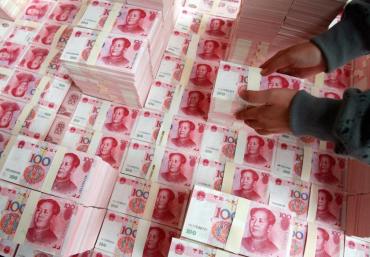
China’s yuan joins the International Monetary Fund’s basket of reserve currencies on Saturday in a milestone for the government’s campaign for recognition as a global economic power.
The yuan joins the U.S. dollar, the euro, the yen and British pound in the IMF’s special drawing rights (SDR) basket, which determines currencies that countries can receive as part of IMF loans. It marks the first time a new currency has been added since the euro was launched in 1999.The IMF is adding the yuan, also known as the renminbi, or “people’s money”, on the same day that the Communist Party celebrates the founding of the People’s Republic of China in 1949.
“The inclusion into the SDR is a milestone in the internationalization of the renminbi, and is an affirmation of the success of China’s economic development and results of the reform and opening up of the financial sector,” the People’s Bank of China said in a statement.
China will use this opportunity to further deepen economic reforms and open up the sector to promote global growth, the central bank added.
The IMF announced last year that it would add the yuan to the basket, so actual inclusion is not expected to impact financial markets. But it puts Beijing’s often opaque economic and foreign exchange policy in the international spotlight as some central banks add yuan assets to their official reserves.
Critics argue that the move is largely symbolic and the yuan does not fully meet IMF reserve currency criteria of being freely usable, or widely used to settle trade or widely traded in financial markets. U.S. Republican presidential nominee Donald Trump has said he will formally label China a currency manipulator if he wins November’s election.
China stunned investors by devaluing the currency last year and the yuan has since weakened to near six-year lows, adding to worries about already feeble global growth.
Some China watchers also fear that Beijing’s commitment to further market opening and financial sector reforms will fade after its diplomatic success, despite repeated reassurances from Beijing it will continue with the process.
U.S. Treasury Secretary Jack Lew said on Thursday the yuan was “quite a ways” from true global reserve currency status. The new IMF status recognizes the “enormous” change in China in the last 10 years that had made the yuan more open, but Beijing still had work to do to make its currency and its economy more market-driven, he said. “Being part of the SDR basket at the IMF is quite a ways away from being a global reserve currency,” he said.
Capital Economics said inclusion of the currency in the IMF’s SDR basket will have minimal impact on foreign demand for yuan assets, so “offers little support” for the currency.“
If anything, the risk is that official intervention to keep the renminbi stable ahead of its inclusion will subsequently be paired back, allowing for renewed deprecation,” it said in a research note.
The IMF on Friday fixed the relative amounts of the five currencies in the basket for five years, based on their average exchange rates over the past three months.
What a contrast! See pair of articles – this on on China, the other on India, both from WSJ.
Recent stability in the Chinese economy masks deep-seated problems that threaten to rattle global markets in advance of a leadership change next year, according to a survey.
Ignoring these risks is shortsighted, said authors of the China Beige Book International, a quarterly survey that tracks the world’s second-largest economy.Data from the group’s third-quarter survey of 3,100 Chinese firms and 160 bankers point to some potential problems. New growth engines intended to shift the economy away from investment toward consumption-led growth are increasingly wobbly as corporate cash flow is squeezed and Beijing doubles down on traditional engines to stabilize output, the China Beige Book says.
“I’d find it earth-shatteringly surprising if we don’t have a significant problem between now and China’s leadership change” in the fall of 2017 when the 19th Party Congress convenes, said Leland Miller, China Beige Book’s president. “This is not a stable economy. It’s one that twists and turns and happens to end up at the same spot. There are real problems below the surface.”
Growth in China’s service industry, a cornerstone of its planned transition to a new and more sustainable economic model, weakened during the third quarter as financial services, private healthcare, telecommunications, media and other subsectors flagged, the group’s data showed. In retail, the apparel, luxury goods and food sectors slowed, it said, as online retailers continued to cannibalize brick-and-mortar sales.
Despite Beijing’s pledge to reduce excess Industrial capacity and pare debt, China remains heavily dependent on government spending to power traditional debt-fueled growth engines, the group said. Much of the economic momentum during the third quarter came from infrastructure, manufacturing, commodities and real estate and many of these sectors are in danger of losing momentum, it said.
While property sales remained strong in major cities, cash flow in the sector tightened and borrowing increased, a sign that investors should “think about getting off this train sooner rather than later,” the China Beige Book said.
“Deteriorating corporate finances and a rebalancing reversal seem a high price to pay for a quarter’s worth of stability,” the group added.
Economic and monetary authorities didn’t respond to requests for comment.
China roiled global markets last year when stocks plunged and Beijing intervened to prop them up. A few months later, it introduced a new currency system in which the yuan fell against the dollar, fueling concern that this would launch a destabilizing round of currency depreciations among rival trading nations. State spending and easy money policies since then have settled investor nerves.
China is expected to report third-quarter economic growth of around 6.7% next month, the level it posted in both the first and second quarters. Gauges such as industrial production and fixed-asset investment have been surprisingly robust over the past month.The trigger for another potential market jolt in the next few quarters could be the release of particularly weak Chinese service or retail data coinciding with a Federal Reserve interest rate rise or another global event, Mr. Miller said. “Right now, the markets are lulled to sleep,” he said. “People become used to the stable China narrative until they start looking more closely into the data.”
A report released Tuesday by the International Monetary Fund said China can reduce the negative impact on the global economy of its shift to slower but more sustainable growth by ending its use of targets to artificially prop up growth and by communicating its intentions clearly.
Other economists say they expect the Chinese economy to remain relative stable through the once-in-five-year leadership change, which is expected to be in October or November of 2017, as long as Beijing continues stimulating the economy enough to avoid a drop in growth. “I don’t think there’s going to be a crisis next year,” said Julian Evans-Pritchard, an economist with Capital Economics Pte. “But they often take their foot off the pedal too much, then tend to panic again and put it back on, creating a lag.”
The Bank for International Settlements warned last week that mounting leverage raises the risk of a financial crisis in China. The nation’s total debt, led by rising corporate obligations, is on target to reach 253% of gross domestic product by the end of 2016, a doubling over the past eight years, according to credit ratings agency Fitch Ratings Inc.
Third quarter China Beige Book data also pointed to areas of strength. The job market remains strong. The manufacturing outlook improved with new domestic and international factory orders picking up and deflationary pressure on industry ebbing.“It was not a disaster of a quarter,” Mr. Miller said. “But it’s a lot more negative than people think.”
Indian factory activity expanded at its fastest pace since mid-2015 in August, helped by surging new orders, while only modest price increases should give the central bank scope to ease policy further, a survey showed.
The data will cheer policymakers after an official report on Wednesday showed Indian annual economic growth slowed in the April-June quarter to 7.1 percent, short of expectations for 7.6 percent in a Reuters poll.
The Nikkei/Markit Manufacturing Purchasing Managers Index rose to 52.6 in August from July’s 51.8, marking its eighth month above the 50 level that separates growth from contraction.
“Manufacturing PMI data show that the positive momentum seen at the beginning of the second semester has been carried over into August, with expansion rates for new work, buying levels and production accelerating further,” said Pollyanna De Lima, economist at survey compiler Markit.
The new orders sub-index, which takes into account both domestic and external demand, was 54.8 in August – its highest since December 2014 and indicating robust demand for Indian manufactured goods.
That pushed factories to increase production and the output sub-index climbed to a 12-month peak in August.But price growth lost momentum last month, with raw material costs increasing at their weakest rate in six months and output prices barely rising at all, suggesting consumer inflation could cool in coming months.
“In light of these numbers, the Reserve Bank of India has scope to loosen monetary policy in the upcoming meeting to further support economic growth in India,” De Lima said.On Oct. 4, the RBI is due to announce its first policy decision under newly-appointed governor Urjit Patel, who economists expect to broadly follow in outgoing chief Raghuram Rajan‘s footsteps.
Economists in a Reuters poll last month predicted the RBI would cut the repo rate by 25 basis points to 6.25 percent in the final three months of the year.
They see little steam left in the RBI’s current easing cycle, in which the policy repo rate has come down by 150 basis points since January 2015, to its lowest in more than five years.Consumer inflation in India was 6.07 percent in July, well above the RBI’s March 2017 medium-term target of 5 percent.
The country could create sustainable economic conditions in five ways, such as promoting acceptable living standards, improving the urban infrastructure, and unlocking the potential of women.
Twenty-five years ago, India embarked on a journey of economic liberalization, opening its doors to globalization and market forces. We, and the rest of the world, have watched as the investment and trade regime introduced in 1991 raised economic growth, increased consumer choice, and reduced poverty significantly.
Now, as uncertainties cloud the global economic picture, the International Monetary Fund has projected that India’s GDP will grow by 7.4 percent for 2016–17, making it the world’s fastest-growing large economy. India also compares favorably with other emerging markets in growth potential. (Exhibit 1).
The country offers an attractive long-term future powered largely by a consuming class that’s expected to more than triple, to 89 million households, by 2025.Exhibit 1
Liberalization has created new opportunities. The challenge for policy makers is to manage growth so that it creates the basis for sustainable economic performance. Although much work has been done, India’s transformation into a global economic force has yet to fully benefit all its citizens. There’s a massive unmet need for basic services, such as water and sanitation, energy, and health care, for example, while red tape makes it hard to do business. The government has begun to address many of these challenges, and the pace of change could accelerate in coming years as some initiatives gain scale.
From our vantage point, India has an exciting future. In the new McKinsey Global Institute report India’s ascent: Five opportunities for growth and transformation, we look at game-changing opportunities for the country’s economy and the implications for domestic businesses, multinational companies, and the government. The five areas we focus on by no means provide a comprehensive assessment of India’s prospects, but we believe they are among the most significant trends. Foreign and Indian businesses would do well to recognize these opportunities and reflect on how to exploit them.
1. From poverty to empowerment:
Acceptable living standards for allThe trickle-down effect of economic liberalization has lifted millions of Indians from indigence in the past two decades. The official poverty rate declined from 45 percent of the population in 1994 to 22 percent in 2012, but this statistic defines only the most dismal situations. By our broader measure of minimum acceptable living standards—spanning nutrition, water, sanitation, energy, housing, education, and healthcare—we find that 56 percent of Indians lacked the basics in 2012.
The country will need to address these gaps to achieve its potential. The task is certainly within India’s capacity, but policy makers will have to promote an agenda emphasizing job creation, growth-oriented investment, farm-sector productivity, and innovative social programs that help the people who actually need them. The private sector has a substantial role to play both in creating and providing effective basic services.
2. Sustainable urbanization:
Building India’s growth enginesBy 2025, MGI estimates, India will have 69 cities with a population of more than one million each. Economic growth will center on them, and the biggest infrastructure building will take place there. The output of Indian cities will come to resemble that of cities in middle-income nations (Exhibit 2).
In 2030, for example, Mumbai’s economy, a mammoth market of $245 billion in consumption, will be bigger than Malaysia’s today. The next four cities by market size will each have annual consumption of $80 billion to $175 billion by 2030.Exhibit 2To achieve sustainable growth, these cities will have to become more livable places, offering clean air and water, reliable utilities, and extensive green spaces. India’s urban transformation represents a huge opportunity for domestic and international businesses that can provide capital, technology, and planning know-how, as well as the goods and services urban consumers demand.
3. Manufacturing for India, in India
Although India’s manufacturing sector has lagged behind China’s, there will be substantial opportunities to invest in value-creating businesses and to create jobs. India’s appeal to potential investors will be more than just its low-cost labor: manufacturers there are building competitive businesses to tap into the large and growing local market. Further reforms and public infrastructure investments could make it easier for all types of manufacturing businesses—foreign and Indian alike—to achieve scale and efficiency.
4. Riding the digital wave:
Harnessing technology for India’s growthTwelve powerful technologies will benefit India, helping to raise productivity, improving efficiency across major sectors of the economy, and radically altering the provision of services such as education and healthcare. These technologies could add $550 billion to $1 trillion a year of economic value in 2025, according to our analysis, potentially creating millions of well-paying, productive jobs (including positions for people with moderate levels of formal education) and helping millions of Indians to enjoy a decent standard of living.
5. Unlocking the potential of Indian women: If not now, when?
Our research suggests that women now contribute only 17 percent of India’s GDP and make up just 24 percent of the workforce, compared with 40 percent globally. In the coming decade, they will represent one of the largest potential economic forces in the country. If it matched the progress toward gender parity of the region’s fastest-improving country, we estimate that it could add $700 billion to its GDP in 2025. Movement toward closing the gender gap in education and in financial and digital inclusion has begun, but there is scope for further progress.
Public-sector efforts to address the five areas are under way. The government is attempting to improve the investment climate and accelerate job creation—India’s ranking on the World Economic Forum’s Global Competitiveness Report climbed to 55 in 2015–16, from 71 a year earlier. Officials are moving to make the government more efficient, using technology that can leapfrog traditional bottlenecks of a weak infrastructure. One billion Indian citizens, for example, are now registered under Aadhaar, the world’s largest digital-identity program and a potent platform for delivering benefits directly to the poor.
Realizing India’s promise will require national, state, and local leaders to adopt new approaches to governance and the provision of services. To meet the people’s aspirations, these officials will also need new capabilities. The requirements include private sector–style procurement and supply-chain expertise, deep technical skills for planning portfolios of infrastructure investments, and strong project-management capabilities to ensure that large capital projects finish on time and on budget. Training will be needed to help staff members use digital technologies to automate and reengineer processes, manage big data and advanced analytics, and improve interactions among citizens through digitized touchpoints, online-access platforms, portals, and messaging and payment platforms. The government could acquire these capabilities by adopting quality-oriented procurement policies and taking advantage of secondments from the private sector. For businesses, India represents a sizable market but will require a granular strategy and a locally focused operating model.
No single report can capture all the changes taking place in the country, but we have tried here to identify the most significant trends. Foreign and Indian businesses should consider how their strategies will be influenced by them. Policy makers should focus on helping all stakeholders to capitalize on them. By any measure, the challenge is daunting, but success could give a historic boost to India’s economy.
Indian manufacturing activity edged up to a three-month high in June, driven by stronger demand, but firms barely raised prices, a private survey showed, leaving the door open for another rate cut by the central bank this year.
The Nikkei/Markit Manufacturing Purchasing Managers’ Index (PMI) rose to 51.7 in June from May’s 50.7, its sixth month above the 50 mark that separates growth from contraction after it fell below that level in December for the first time in more than two years.
“The domestic market continues to be the main growth driver, as the Indian economic upturn provides a steady stream of new business,” said Pollyanna De Lima, economist at Markit.
“There were also signs of an improvement in overseas markets, as new foreign orders rose. However, it looks as if lackluster global demand remains a headwind for Indian manufacturers.
“While retail inflation hit a near two-year high in May, the survey’s output prices sub-index fell to a three-month low of 50.1 in June versus 50.5 the previous month, as input costs rose at a weaker pace.
There was also broadly no change to manufacturing employment in India during June, the survey showed.
“This lack of inflationary pressures provides the Reserve Bank of India (RBI) with further leeway to boost economic growth through cutting its benchmark rate,” said De Lima.
According to a Reuters poll, RBI GovernorRaghuram Rajan could deliver another rate cut before his term ends in September. After cutting rates in April, he has left the key interest rate unchanged at a five-year low of 6.50 percent.
However, at the June policy meeting he signalled another rate cut later in the year if monsoon rains were sufficient enough to dampen upward pressure on food prices.
Rains are expected to be above average this year which could keep prices in control and give the government room to focus on key economic reforms in tandem with low interest rates.
Recent Chinese economic data is stoking fear the world’s second largest economy is decelerating at pace that could pull the global economy into a recession. But the International Monetary Fund’s top Asia economist, Changyong Rhee, says such pessimism may be unwarranted.
A booming services sector—such as shipping and retail—is offsetting the collapse in manufacturing, he argues. Advertisement “We don’t think there’s enough evidence based on the manufacturing sector that there will be a hard landing,” Mr. Rhee said in an interview. “They definitely have a manufacturing slowdown, an overcapacity problem. But other parts of China are actually growing faster.” If Beijing relies too much on monetary policy to stimulate growth, it could fuel China’s economic problems rather than fix them, the IMF official cautioned. His warning came as the People’s Bank of China on Friday cut interest rates again in a bid to revive growth.
Old ways of measuring China’s economy—such as looking at electricity consumption—are outdated because they don’t accurately reflect the changing nature of growth, Mr. Rhee said. Services now account for more than 50% of the country’s economy and there is a good chance their contributions are being underestimated, he said. On first glance, China’s trade data appears to support worries about the economy. But digging a little deeper into the numbers may actually show the country’s move towards a growth model more reliant on consumer demand is already bearing fruit.
Although the value of imports has fallen, volumes tell a different story. By adjusting for the fall in commodity prices and the appreciation in the yuan, the IMF calculates imports actually grew in July by 2%. And while the amount of goods imported has declined, imports of services are in double digits.
China’s real-estate sector has also fomented concerns. But Mr. Rhee said there are signs property prices are stabilizing. That is not to say the IMF believes there is no cause for apprehension. Beijing fueled its stellar growth rate over the last two decades through cheap credit. Souring global growth prospects revealed a country vastly overinvested in manufacturing capacity, particularly by state-owned enterprises. The IMF estimates overinvestment totals nearly 25% of the country’s growth domestic product. That means government-owned firms will struggle to pay their loans on mountains of credit. “If they mismanage the financial market, then they could have a hard landing,” Mr. Rhee said.
Beijing is facing a daunting task. Winding down the amount of credit in the system too quickly could stall growth. But failure to cut corporate debt levels and deal with bad loans quickly could create a bigger credit crisis over the next couple of years. “One question is whether China can manage this transition with the current governance system,” the senior IMF official said. “That is a critical issue.” Beijing will need to ensure government agencies take greater responsibility for their respective areas of oversight and state-owned companies will need to have stronger budget constraints, he said. China’s recent market turmoil revealed a weak regulatory structure. And overhauling a political system that relied on state-owned firms to boost growth and enrich regions is also expected to be a challenge.
That’s why, even though the IMF is backing more stimulus by Beijing to prevent too much deceleration in the economy, fund officials are concerned the government may depend too much on the old system of juicing the economy through credit. Counting on monetary policy, rather than using the budget to stimulate the economy, could exacerbate the problem of overcapacity.
“If they rely on monetary policy too much, then they would continue the classic credit expansion,” Mr. Rhee said. Besides fueling bad investments by state-owned enterprises, it could also “drag on necessary structural and governance reforms.”
China’s stock-market routs and economic deceleration are widely cited as the major trigger for the latest round of global market volatility. But what if the dominant narrative about China—that the world’s No. 2 economy is on the verge of falling off a cliff—is wrong?
It would mean the global market turmoil hitting equities, commodities and currencies is an overreaction. “We may have seen overshooting,” said Hung Tran, executive managing director of global capital markets at the Institute of International Finance, an industry group representing around 500 of the world’s largest banks, funds and other financial institutions. Even the head of the International Monetary Fund indicated as much earlier this week.
One of the chief problems is that it’s difficult to gauge China’s black-box economy. The country’s true growth is a guessing game given a number of statistical factors. That’s why growth forecasts show a range spanning several percentage points. Lombard Street Research, for example, estimates the economy will only expand by 3.7% this year, nearly half Beijing’s official growth forecast. Even if China’s economy is healthier than many now fear, uncertainty is oxygen for market volatility.
More clarity from Beijing about growth prospects and crisis-management plans would likely prove fruitful. That’s why the U.S. plans to press Chinese officials for greater details on their policy plans at a meeting of finance ministers and central bankers from the Group of 20 largest economies late this week. Here are some of the arguments that might moderate market fears:
• China’s stock market valuation is a bad indicator of Chinese growth. “Investors should not get carried away by the collapse of the Shanghai Composite Index,” warns Melanie Debono from Capital Economics in note to clients, “not least because its performance often bears little relation to that of the economy, primarily due to wild swings in its valuation.” The market run-up in advance of the selloff was out of step with reality, says Nick Lardy, a China expert at the Peterson Institute for International Economics. That’s why he says there’s likely more to come in the Chinese market correction. Even after the rout, “The market was still trading at 39 times earnings. Give me a break, it’s still too high.”
• The devaluation of the renminbi likely isn’t Beijing scrambling to save the economy through competitive devaluation. Beijing’s depreciation was likely more about addressing a key concern for the International Monetary Fund as it considers whether to include the Chinese yuan in its basket of currencies that comprise its lending reserves than it was about reviving economic growth by juicing exports. On Aug. 11, Beijing changed the way it values the yuan, allowing markets to play a greater role in the exchange rate. Market pressure has long been for depreciation, so allowing the currency to be more market-determined would, in the near-term, naturally see the yuan move lower. Against a basket of global currencies, the yuan has appreciated over the last year by nearly 15%, accounting for inflation. That’s despite Beijing intervening for months to prevent the yuan from losing value. “So the fact that the yuan came down 3% to 4% is not going to make much difference,” said Ted Truman, a former top international finance official at the U.S. Treasury and the Federal Reserve.
• GDP growth may not be nearly as bad as suspected. Economists such as Clare Howarth at Oxford Economics say that beyond official industrial production figures, data on car and cell phones sales are jacking up the risk that China’s growth stalls. But “critics are really overlooking the fact that the growth model has changed in China,” Lardy says. “The service sector is now the driver of growth. So the fact that industrial growth has slowed down quite a bit does not mean, as it would have meant 10 years ago, that the economy is falling off a cliff.” Based on electricity consumption, “I just don’t see any signs that the Chinese economy is experiencing a hard landing,” says Torsten Sløk, Deutsche Bank’s chief international economist. Joe Hockey, treasurer for an economy that is intimately tied to China, Australia, says market reactions have been overblown. “We’re confident about our understanding of the Chinese economy and we see over time huge opportunities for growth,” Mr. Hockey told the Journal.
• Rather than regressing to policies of old, China’s government has actually been showing signs of moving ahead with market reforms.
China’s leaders have warned their people they need to accommodate a “new normal” of economic growth far slower than the rate that propelled the economy into the world’s second-largest in the past two decades. As WSJ’s James T. Areddy and Lingling Wei report:
Now, the rest of the world also needs to get used to the new normal: a China in the midst of a tectonic shift in its giant economy that is rattling markets world-wide.
The slowdown deepening this year is part of a bumpy transition away from an era when smokestack industries, huge exports and massive infrastructure spending—underpinned by trillions in state-backed debt—powered China’s seemingly unstoppable rise. Today, debt has swelled to more than twice the size of the economy, and some of those industries, such as construction and steel, are reeling.
Instead of them, China is pushing services, consumer spending and private entrepreneurship as new drivers of growth that rely less on debt and more on the stock market for funding.
China devalued the yuan by nearly 2% on Tuesday in a surprise move that shook markets around the world and appeared to be a response to sharply weaker exports and plummeting factory prices in a softening economy. The central bank described its action as a new way of setting the daily parity or reference rate – a rate it sets for the currency against the dollar – to better reflect market rates. (The markets get a chance to trade the currency around that rate, but not by much. The yuan can go up or down only 2% from that crucial central rate.)
So far this year, the parity rate has hardly budged against the dollar even though the latter has been rising steadily against other currencies. That has made China’s exports more expensive in many markets just as the world’s second largest economy is slowing. The People’s Bank of China says it will now pay more attention to the market levels when it sets its parity rate. It also called the move a “one-time fix.”
Economists are hotly debating the significance of the move, in part because it seems to be speaking to many different audiences. It will help the struggling export sector, which has stalled amid weak global demand. Exports in July, for example, sank more than 8% and they were down nearly 1% for the first seven months of the year.
At the same time, it was essential for the People’s Bank of China not to alarm domestic and foreign investors to avoid triggering a wave of capital outflows. Investors tend to dump a weakening currency and move their assets into other currencies. Thus, the PBOC said the move was a one-time reform effort to bring the yuan more in line with the markets.
Finally, the central bank may also have had the International Monetary Fund in its sights. The yuan is up for possible inclusion in international agency’s Special Drawing Rights, a basket of currencies that serves as a global reserve. Too big a move might have damaged Beijing’s case that the yuan is a suitable candidate for addition to that basket of currencies, analysts said.
The continuing crisis is viewed, locally and globally, as a test of China’s control over the economy. The “Beijing put”—a perception that Chinese economy and markets are backstopped by the government—is under threat. That perception has underpinned the widespread belief that Chinese growth won’t fall much below 7%, because that is the government’s desired target and Beijing is omnipotent.
…
But if Beijing can’t stop the market’s tumble, there could be a sudden shift in the perception of exactly how far economic growth might fall under the weight of too much debt. If that floor crumbles and the Chinese economy spirals downward, it will make the drama surrounding Greece feel like a sideshow. China has been the largest contributor to global growth this decade; Greece’s economy is about the size as that of Bangladesh or Vietnam.




 Liberalization has created new opportunities. The challenge for policy makers is to manage growth so that it creates the basis for sustainable economic performance. Although much work has been done, India’s transformation into a global economic force has yet to fully benefit all its citizens. There’s a massive unmet need for basic services, such as water and sanitation, energy, and health care, for example, while red tape makes it hard to do business. The government has begun to address many of these challenges, and the pace of change could accelerate in coming years as some initiatives gain scale.
 In 2030, for example, Mumbai’s economy, a mammoth market of $245 billion in consumption, will be bigger than Malaysia’s today. The next four cities by market size will each have annual consumption of $80 billion to $175 billion by 2030.Exhibit 2To achieve sustainable growth, these cities will have to become more livable places, offering clean air and water, reliable utilities, and extensive green spaces. India’s urban transformation represents a huge opportunity for domestic and international businesses that can provide capital, technology, and planning know-how, as well as the goods and services urban consumers demand.
 A booming services sector—such as shipping and retail—is offsetting the collapse in manufacturing, he argues. Advertisement “We don’t think there’s enough evidence based on the manufacturing sector that there will be a hard landing,” Mr. Rhee said in an interview. “They definitely have a manufacturing slowdown, an overcapacity problem. But other parts of China are actually growing faster.” If


 CHINDIA ALERT: You'll be living in their world, very soon