Posts tagged ‘Iraq’

08/07/2015

The Brics Are Harming Each Other’s Trade, and India Is Largely to Blame – India Real Time – WSJ

Like most families, the Brics bloc isn’t as happy as it looks from the outside.

Brazil, Russia, India, China and South Africa, whose leaders begin a two-day summit today in Russia, are responsible for a growing share of the world’s trade-distorting policies but an even larger portion of trade-liberalizing ones, a new report finds.

However, the temporary nature of some of the market-opening measures means that overall these countries are still discriminating significantly against their trade partners—many of which are fellow emerging markets.

The finding, documented by the Global Trade Alert project of the London-based Centre for Economic Policy Research, highlights some of the awkward contradictions in the effort to unite the Brics.

“On the one hand, the Brics have sought to bolster trade between themselves with more generous credit lines for exporters and the like,” writes the report’s author, Simon Evenett, a professor of economics at the University of St. Gallen, Switzerland. “On the other hand, the Brics are responsible for a third of the instances of the harm to each other’s commercial interests. This cannot make sense.”

Global Trade Alert monitors trade-distorting moves such as tariffs, investment restrictions, “buy local” requirements for public procurement and export-promotion tools such as tax incentives and trade finance. GTA says its dataset includes more than 4,500 trade-related policies enacted globally since the financial crisis, more than double the number tracked by the World Trade Organization.

The GTA database documents three major spikes in protectionism since 2008. Over that period, the Brics governments have implemented a total of 1,451 policies that favor domestic commercial interests over foreign ones, or 32% of such measures world-wide. The Brics countries have since unwound just a fifth of these, suggesting that protectionist walls weren’t raised merely as temporary crisis-fighting measures. The Brics account for 17% of world trade.

Within the bloc, India stands out as an offender. According to GTA, the country is second only to the European Union both in the number of discriminatory measures imposed since November 2008—452 against the EU’s 604—and in the number of product categories affected by such measures—1,174 against the EU’s 1,220, both out of a possible 1,229.

Rich-country protectionism is still alive and kicking, the report shows. Of the 2,733 economic policies that harmed at least one Brics member, a fifth came from a member of the G-7 group of nations—the U.S., Canada, Japan, Germany, France, U.K. and Italy—or Australia. Nearly a third, however, came from fellow Brics nations.

All told, a greater share of G-7 policies were discriminatory, but the Brics’ protectionism affected a broader range of products. China was the most-common victim, with 2,153 foreign measures hitting its commercial interests.

The Brics also account for an increasing share of reforms world-wide to lower obstacles to foreign firms and investors, the report finds. But 28% of these liberalizations have already lapsed, compared to the global average of 15%.

Some economists say developing countries, in order to kick-start industrialization, need to shield and nurture local firms until they’re ready to compete on world markets. But Mr. Evenett argues that condoning “special and differential treatment” for poor countries doesn’t straightforwardly protect them against rich countries’ discrimination—it also provides cover for developing countries to step on other developing countries’ toes. China is the only one of the Brics whose exports haven’t stagnated over the past four years.

Hence, “a less selective approach to tackling crisis-era protectionism would seem to be in order,” Mr. Evenett writes. “The frequency with which Brics commercial interests are harmed by beggar-thy-neighbor interests ought to make the Brics champions of the monitoring of protectionism by international organizations.”

via The Brics Are Harming Each Other’s Trade, and India Is Largely to Blame – India Real Time – WSJ.
04/03/2015

Harrods Hopes Prince William Hoopla in China Will Bring a Boost – China Real Time Report – WSJ

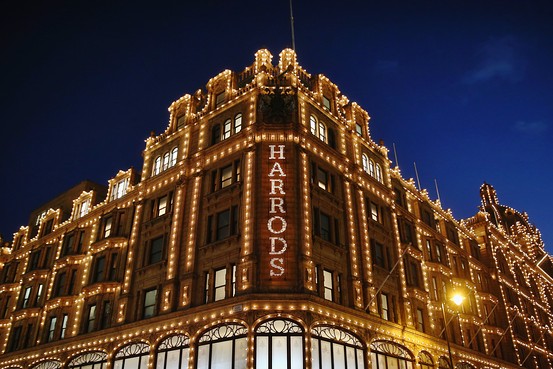
For every five pounds spent by a Chinese tourist in the United Kingdom, just over one quid is spent at upscale department store Harrods.

No wonder, then, that company managing director Michael Ward is in Shanghai this week, hoping the hoopla around Britain’s Prince William’s four-day visit to China will bring even more Chinese shoppers through Harrods’ doors.

“It’s a hugely important part of our business,” Mr. Ward told China Real Time Tuesday. He said such tourists would become increasingly important as outbound tourism from China takes off.

Hong Kong brokerage firm CLSA expects the total number of Chinese outbound travelers to hit 200 million annually in 2020—that’s around double last year’s figures.

Mr. Ward declined to share specific figures for Chinese tourists, but he said by nationality, they top the league of store visitors in terms of spending.

By contrast, Americans barely scraped into the top ten—far behind shoppers from countries such as Nigeria and Thailand, he said.

While Chinese tourists may top the list of spenders at high-end Harrods, a report issued last year by British bank Barclays saBCS -2.61%id Chinese tourists ranked tenth in terms of tourist spending in the U.K, spending around £550 million in 2013 (around $850 million),. Barclay’s forecasted that by 2017, Chinese tourists would have moved up to fifth place with annual total spending in the U.K. in excess of £1 billion.

Still, the chilling effects of China’s current economic woes are being felt in faraway Harrods of London. “This year we’ve seen a much slower takeup,” said Mr. Ward.

via Harrods Hopes Prince William Hoopla in China Will Bring a Boost – China Real Time Report – WSJ.

19/02/2014

India is 4th most dangerous country for journalists in 2013: Report – The Times of India

One hundred and thirty-four journalists and media support staff were killed while on reporting assignments last year, with India fourth on the list of countries with the most number of deaths, the London-based International News Safety Institute (INSI) said on Tuesday.

Most of those killed were targeted deliberately.

Of these, 65 died covering armed conflicts – primarily in Syria, where 20 were killed, and Iraq, where the death total was 16 – while 51 were killed in peacetime covering issues like crime and corruption, and 18 died in accidents.

After Syria and Iraq, cited by the institute as the most dangerous countries for journalists last year, came Philippines with 14 deaths, India with 13 and Pakistan with 9.

via India is 4th most dangerous country for journalists in 2013: Report – The Times of India.

Enhanced by Zemanta
18/06/2013

China: Iraq oil production booming, Venezuela lagging

After all that effort it seems that the US is helping China with Iraqi oil. Thank goodness it has fracking to bolster its own supplies.

04/06/2013

Iraq War Paying Off — for China

The New American: “Remember those assurances that the Iraq War would pay for itself, once those oil revenues began gushing forth from a liberated Iraq? Well, a decade later, the Iraq War is paying off after all — for China.

Iraq War Paying Off — for China

“We lost out,” said Michael Makovsky, a former Defense Department official in the Bush administration. “The Chinese had nothing to do with the war,” he told the New York Times, “but from an economic standpoint they are benefiting from it, and our Fifth Fleet and air forces are helping to assure their supply.”

China is the biggest customer of Iraq’s oil, buying nearly 1.5 million barrels a day, close to half the oil Iraq produces, the Times reported. Beijing is looking to increase that share as it bids for a stake now owned by Exxon Mobil in one of Iraq’s largest oil fields.

“The Chinese are the biggest beneficiary of this post-Saddam oil boom in Iraq,” said Denise Natali, a Middle East expert at the National Defense University in Washington. “They need energy, and they want to get into the market.”

With an estimated 143.1 billion barrels in extractable oil reserves, Iraq is the second largest exporter of oil among the Organization of the Petroleum Exporting Countries (OPEC), trailing only Saudi Arabia. China has recently become the world’s biggest importer of oil and is investing in oil and gas fields around the world, having spent $12 billion in that effort in 2011, according to the U.S. Energy Department. More than half of China’s oil imports come from the Middle East, even while the West’s economic sanctions against Iran over that nation’s nuclear program have reduced the amount of oil available from that source.

Iraq was already one of the world’s leading exporters of oil before the U.S.-led sanctions against the Saddam Hussein regime over violations of UN resolutions crippled the nation’s economy, including its oil industry. Part of the rationale given for the invasion and “regime change” in Baghdad, in addition to Saddam’s alleged “weapons of mass destruction,” was to revive the oil industry to pre-sanction levels or higher. The WMD were never found, but the increased production of oil in Iraq, much of it pumped by Chinese workers, has added to the world supply, offsetting the effect of reduced exports from Iran. U.S.-led sanctions against Iran are based on claims the nation’s nuclear program is aimed at developing nuclear weapons, though all 16 U.S. intelligence agencies have reported no evidence that the Tehran government has made that decision.

China National Petroleum is looking to expand its production in Iraq with its bid for a 60-percent share, now held by Exxon Mobil in a large oil field in southern Iraq. The U.S.-based company has so far refused to sell, but China National recently said it would be interested in forming a partnership with the American oil giant. Exxon Mobil may be forced to divest, the Times reported, because of its oil interests in Iraqi Kurdistan. The Kurds are said to offer more generous terms than the Baghdad government, which is reportedly unhappy with companies making separate deals in the semi-autonomous Kurdish region.

The Chinese companies aggressively seek new contracts with Baghdad and are willing to accept lower profits to get them. “We don’t have any problems with them,” an Iraqi Oil Ministry official said, “They are very cooperative. There’s a big difference: the Chinese companies are state companies, while Exxon or BP or Shell are different.”

One big difference is that the American companies are profit-making enterprises. The state-owned Chinese firms don’t answer to shareholders, pay dividends, or necessarily make a profit. As a result they can make higher bids than their Western rivals as they strive to secure a steady and expanding supply of oil for their nation’s growing and energy-hungry economy.

Despite the violence and turmoil that has continued to plague Iraq since the 2011 departure of the combat units of the United States and its coalition partners, China has bet heavily on a steady supply of oil from the post-Saddam regime. In the desert near the Iran-Iraq border, China has built its own airport to fly workers in to Iraq’s oil fields. Chinese officials expect to have direct flights going from Beijing and Shanghai to Baghdad in the near future.

The Chinese have also done their homework on the language and culture of the nation where they have invested so much in the future of their energy supplies. “Chinese executives impress their hosts not just by speaking Arabic, but Iraqi-accented Arabic,” the Times reports. And they don’t interfere in local or national affairs. “They are practical people,” an Iraqi oil official said. “They don’t have anything to do with politics or religion. They just work and eat and sleep.”

A boom in American domestic oil and gas production in newly discovered shale fields, meanwhile, has reduced U.S. dependence on Middle East oil. Perhaps it will reduce as well the political temptation to conjure up reasons to go to war in that part of the world. The American people might be more than a little reluctant to back another war to make the Middle East safe for Chinese oil supplies.”

via Iraq War Paying Off — for China.

03/04/2012

# Does a country’s national games mimic its mindset?

Chess Set (Shatranj in Iranian), glazed fritwa...

Chess Set (Shatranj in Iranian), glazed fritware, 12th century. New York Metropolitan Museum of Art. (Photo credit: Wikipedia)

I have a hypothesis that a country’s mindset mimics its national sports and games.

For instance, the Chinese and Japanese are keen on chess and Go. These are games of strategy and take a long-term view. Indians say they invented chess. In any case they do play it well. Perhaps not as good as the Russians. Wonder why the Russians lost the ‘cold war’?

The British play soccer – a very dynamic game, but also cricket which is one of strategy and patience. These games may explain the divergent behaviour of the British – colonial conqueror and commonwealth sustainer?

Americans love their football and baseball. Both are what I call start and stop games. You play a set of tactics and then regroup. I wonder if that explains the lack of clear success in wars like Iraq and Afghanistan?

The Middle East used to play a game from which polo was derived. Their game involved riding on horses and trying to capture and throw the head of a goat (or in medieval times, the head of a defeated enemy) into the opponents’ goal. Individual courage and devil-may-care ruled the tactics. Perhaps that means the West will never ‘win’ in Iraq and Afghanistan.

Don’t forget that Iran has both Middle East roots and also claim to have invented chess. The term ‘check mate’ comes from ‘shah mat‘ meaning the king is dead in Farsi.

What do you think of my hypothesis? What are India’s national games? Kabaddi? Hockey? Cricket? How do these explain the Indian mindset?

See also: 


Law of Unintended Consequences

continuously updated blog about China & India

ChiaHou's Book Reviews

continuously updated blog about China & India

What's wrong with the world; and its economy

continuously updated blog about China & India