Posts tagged ‘Jaitley’

28/02/2015

What the Budget Means for Regular Indians – India Real Time – WSJ

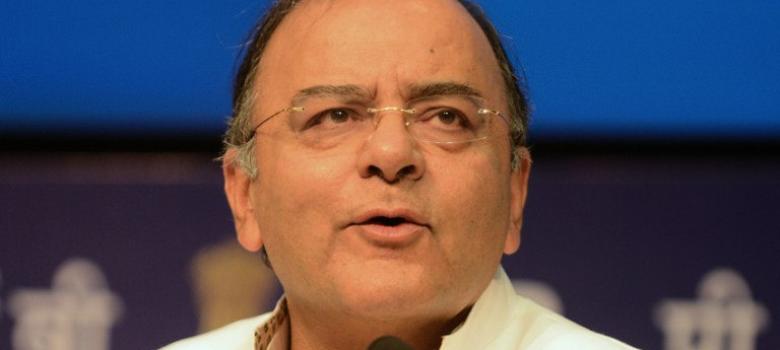
The Modi government’s budget offered some sops for middle-class tax payers and a series of steps aimed at boosting social security for the country’s poor.

Tax Breaks on Health Insurance, Travel: Individuals will be allowed to deduct up to 25,000 rupees ($400) annually in health-insurance premiums from their taxes. That is an increase from the current 15,000-rupee deduction. For people 60 years or older, the deduction will be 30,000 rupees.

Mr. Jaitley also proposed increasing the amount of transportation expenses individuals can deduct to 1,600 rupees a month, up from 800 rupees a month now.

Pension Deduction: Individuals can now claim an additional tax deduction of up to 50,000 rupees ($800) if they put the money in the government’s New Pension Scheme. “This will enable India to become a pensioned society instead of a pensionless society,” said Mr. Jaitley.

Social Security programs: In a bid to provide a social safety net, Mr. Jaitley said the state will provide accidental death insurance of 200,000 rupees for a premium of just one rupee a month. State insurers will also offer policies covering natural and accidental death for 330 rupees a year.

Though available to all, the relatively small size of the insurance cover implies these will likely be used mostly by the poor.

The government will also encourage individuals to set up pension accounts under a new program. For individuals who open such an account by Dec. 31, the government will match individual contributions up to 1,000 rupees a year, for five years.

Tax-Free bonds:  Mr. Jaitley plans to allow government agencies and others to issue tax-free infrastructure bonds to fund roads, railways and irrigation. Details weren’t disclosed but typically interest on such bonds is tax free.

Service Tax: Now for the bad news: your restaurant and phone bills will soon go up, because the government will raise the service tax to 14% from 12.4%. Individuals indirectly pay this tax on a wide range of services, including on insurance premiums, hotel bills and electricity bills.

Gold Bonds: Since Indians won’t give up their love for gold, Mr. Jaitley tried to come up with ways to at least get it out of people’s homes and into banks. He introduced a plan that he said would make it easier for people keep gold in a bank, earn interest on it and borrow against it.

Mr. Jaitley also proposed a “Sovereign Gold Bond” that would act as an alternate to owning physical gold. These bonds would have a fixed rate of interest and “be redeemable in cash in terms of the face value of the gold,” he said.

Unaccounted-for Money: Mr. Jaitley said the government would introduce more stringent requirements for people to declare assets held overseas and make it harder for people to buy real-estate with cash in an effort to tax evasion.

via What the Budget Means for Regular Indians – India Real Time – WSJ.
03/09/2014

Jaitley’s biggest tasks lie ahead: big-bang reforms and restructuring the Finance Ministry

The finance minister has had to tackle inflation, India’s stance in the WTO and easing regulatory hurdles. That was the easy part.

Even before the general election ended in May, it was clear that if the Narendra Modi-led Bharatiya Janata Party formed the government, Arun Jaitley would head one of the important ministries on Raisina Hill, the area of Lutyen’s Delhi that houses some of the most important government buildings.

But Jaitley’s move to North Block, the part of the Hill housing the finance ministry, was not easy. Contesting his first Lok Sabha election, he lost the race in Amritsar to the Congress candidate by nearly one lakh votes, raising questions within the party about his eligibility to be granted a key ministry. Jaitley, who has also been given charge of the defence ministry, is a man with as many detractors as admirers in New Delhi and within his own party.

Often teased in Delhi circles as the only Congresswala in the BJP, Jaitley was seen by many as an obvious choice for the crucial portfolio of finance. He got the job because he has a shrewd strategic mind and knows how to work Delhi. In addition, the BJP needed someone who had the nerves to handle a ministry that was practically in the ICU despite valiant, though sometimes questionable, efforts by his predecessor and friend, the Congress’s P Chidambaram.

Both Prime Minister Narendra Modi and Jaitley had only a few days to present their first budget to a Parliament and nation that had been promised big-bang economic reforms. As Jaitley presented the Modi government’s first budget on July 12, many who had expected major reforms were left disappointed even though some praised it for pointing in the right direction.

As a member of the Federation of Indian Chambers of Commerce and Industry said, this was a “benefit of the doubt” budget because of the short period in which Jaitley and his team had to think things over. The real test will come in 2015.

Huge challenges

A change in government is not the only factor that drives ministerial reform. The bureaucracy also needs to endorse the new policies. In getting the bureaucracy on board, Jaitley’s team in North Block has faced plenty of challenges, such as the minister’s inability to address the thorny issue of retrospective taxation.

Other things that kept Jaitley busy as soon as he took over were controlling inflation, India’s stance on subsidies at the WTO and making it easier to do business by removing regulatory hurdles. But the enormity of reforms needed to transform the Indian economy and pushing its growth rate to more than 6% require willpower and the stomach to take politically unpopular measures, especially in sectors such as power.

“There are three or four sectors where we just cannot continue doing business as usual,” said Pratap Bhanu Mehta, president of the New Delhi-based Centre for Policy Research. “In areas such as energy we are too dependent on imports and on carbon-intensive energy sources. If we are not on an alternative energy path soon, which means low carbon and technologically efficient [forms], we could be out of the development game in 15 to 20 years.”

It is the support system for business that requires key changes. Foreign industry remains bullish on India but has made its displeasure known over the slow progress on issues such as foreign direct investment, land acquisition and retrospective taxation.

On the domestic front, many industrialists have asked for a revitalised subsidy regime, one in which the government gives subsidies wherever required instead of using them as a populist measure to get votes. At the same time, as a vital component of the global economy, India could find it increasingly difficult to persist with its subsidy regime even if it makes sense on the domestic front.

Back to the drawing board

Globalisation and climate change will become central to India’s economic story. The Asian Developmental Bank concluded in a recent report that South Asian economies such as India could lose 1.8% of their GDP by 2050 and 8.8% of their GDP by the end of the century to climate change.

via Scroll.in – News. Politics. Culture..

11/07/2014

India to Spend $2.2 Billion on Water Supplies, Ganges – Businessweek

Prime Minister Narendra Modi’s new government today pledged 131 billion rupees ($2.2 billion) in spending on water projects to improve supplies and the condition of the Ganges, India’s largest river.

Ganges .. India

Ganges .. India (Photo credit: Nick Kenrick .)

Asia’s third-biggest economy will develop watersheds, build more pumping stations and start to clean the Ganga, blighted by raw sewage along much of its 2,525-kilometer (1,570-mile) route, as India endures a year of “unpredictable” monsoons, Finance Minister Arun Jaitley said.

The government will use 36 billion rupees to improve drinking supplies for about 20,000 villages and small towns affected by arsenic and fluoride contamination, Jaitley told Parliament in the minister’s annual budget speech. About 21.42 billion rupees will be spent on watershed development and 20.37 billion rupees on Ganga upgrades. About 42 billion rupees will go to developing inland waterways in the plan.

via India to Spend $2.2 Billion on Water Supplies, Ganges – Businessweek.

Law of Unintended Consequences

continuously updated blog about China & India

ChiaHou's Book Reviews

continuously updated blog about China & India

What's wrong with the world; and its economy

continuously updated blog about China & India