Posts tagged ‘Kashmir’

20/08/2014

Why decades of India-Pakistan negotiations have not resulted in any real progress

It’s simple. Pakistan wants something India has, but can offer nothing in return that India desires.

It took less than three months for the candle of hope lit by Narendra Modi and Nawaz Sharif at the Indian prime minister’s inaugural ceremony in Delhi to be extinguished. India has cancelled foreign secretary-level talks scheduled to be held in Islamabad next week because Abdul Basit, the Pakistani High Commissioner, met a few separatist leaders. It’s not as if Basit did anything illegal or novel. Kashmir being the apple of discord between India and Pakistan, it is natural for Pakistan’s envoy to consult with secessionist Kashmiris before an important round of bilateral discussions. It has been done many times before. On this occasion, though, the Modi government threw a hissy fit, which is being spun by pliant commentators as a “tough approach”.
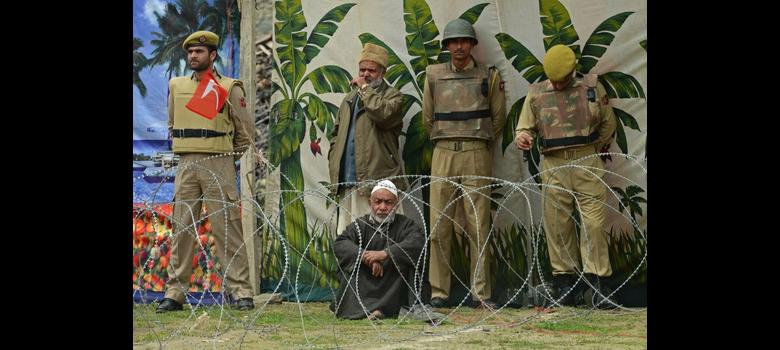
The extinguishing of hope was predictable, and followed directly from the mistake of inviting Nawaz Sharif to Delhi. The two prime ministers should have met only when they had something serious to decide upon, after the spadework for an agreement, however minor, had been completed. The euphoria of the inauguration handshake created expectations difficult to fulfill, considering the deeply entrenched and entirely incompatible views of the opposing sides.

The fact that Narendra Modi is no Atal Behari Vajpayee turned Mission Difficult into Mission Impossible. Vajpayee was committed to a legacy-defining vision of securing lasting peace with Pakistan. There was a tiny possibility that he might have accepted the sacrifices essential for it, and convinced his party and the nation to go along. In the reign of Modi, whose idea of India is the most aggressive of any leader since independence, such a sacrifice is inconceivable.

Give and take

Any successful negotiation requires give and take from both sides. The stumbling block to resolving the Kashmir issue is that Pakistan wants something India has, but can offer nothing in return that India desires. Although the official positions of the two sides indicate that each is in occupation of territory that rightfully belongs to the other, in reality India has no use for that part of Kashmir we call POK. Nor has anybody in POK expressed a will to secede from Pakistan and join India. In any conceivable deal, then, India can only lose territory. The abstract peace dividend doesn’t provide anything close to adequate compensation for this physical loss. Which is why India has negotiated in bad faith for decades.

In 1972, the two nations signed the Simla Agreement, resolving not to wage further wars, and to address speedily the issue of Kashmir. In 1999, through the Lahore Declaration, we agreed essentially to the same things, tacking on a promise not to nuke each other. But for over 40 years, through cycles of violent insurrection and relative calm, through dozens of horrific terrorist attacks and thousands of peaceful demonstrations, through periods of sectarian amity and passages of ethnic cleansing, India’s position on the issue hasn’t budged an inch, down to the proscription of any maps that show Pakistani Kashmir for what it really is.

Why would any Indian politician risk negotiating in earnest, when it is clear that Indians in general do not give a fig for what Kashmiris actually want? We are happy to let our security forces commit crimes shielded by the Armed Forces Special Powers Act. We are content to pour billions of rupees into defending an icy wasteland where our soldiers regularly die of exposure. We are barely moved by the discovery of unmarked graves in which thousands of Kashmiris were secretly and hastily buried.

via Scroll.in – News. Politics. Culture..

14/08/2014

War of Words Erupts Between India and Pakistan – India Real Time – WSJ

An all-to-familiar war of words has erupted between India and Pakistan, threatening to undo efforts to bridge the gap between the estranged neighbors, who have fought three wars since independence from Britain 67 years ago.

The latest rhetorical salvo was fired Wednesday by India’s foreign ministry, which said “mere denials or selective approaches toward terrorism” by Pakistan wouldn’t assuage Indian concerns about what it sees as backing from Islamabad for Islamic terror attacks on Indian soil.

This week’s bickering started when Indian Prime Minister Narendra Modi, on a visit to the disputed state of Jammu and Kashmir on Tuesday, said Pakistan, too weak to fight a conventional war, was using terror groups to wage a “proxy war against India.”

Pakistan’s Foreign Ministry the next day denounced Mr. Modi’s criticism as “baseless rhetoric.”

“It would be in the larger interest of the regional peace that instead of engaging in a blame game, the two countries should focus on resolving all issues through dialogue,” Pakistan’s foreign ministry said.

It wasn’t supposed to be like this. When Indian Prime Minister Narendra Modi invited his Pakistani counterpart, Nawaz Sharif to Delhi for his swearing-in ceremony, it ignited hope for better relations between the estranged neighbors.

The two countries’ foreign secretaries are scheduled to meet in Islamabad on Aug. 25 to “look at the way forward” in the bilateral relationship. But the current spat could cast a shadow over the meeting.

That poses a problem. Deep-rooted suspicion between India and Pakistan has stymied attempts at achieving greater economic integration and better connectivity in the region. Relations between India and Pakistan, a close ally of neighbouring China, also have a major impact on regional stability.

via War of Words Erupts Between India and Pakistan – India Real Time – WSJ.

04/07/2014

BBC News – Indian PM Narendra Modi on maiden Kashmir visit

Prime Minister Narendra Modi is on his first visit to Indian-administered Kashmir amidst a protest shutdown called by separatist groups.

PM Modi flags off the first train from Katra

Mr Modi inaugurated a railway line in the Jammu region before travelling to Kashmir Valley to launch a hydro-power station and chair a security meeting.

Security is tight in the region and checkpoints have been set up to ensure the visit passes off peacefully.

Kashmir has been in the grip of an anti-India insurgency since 1989.

In recent years violence has abated from its peak in the 1990s, but the causes of the insurgency are still far from resolved.

Mr Modi arrived in Jammu on Friday morning from where he flew by a helicopter to Katra town where he flagged off a new train to Delhi.

Katra is the base camp for the Hindu pilgrimage centre of Vaishno Devi and the train will providing a direct link with Delhi.

Millions of pilgrims visit the shrine every year and railway officials say they expect the train will be popular with them.

Meanwhile, the Muslim-majority Kashmir Valley is shut down in response to calls from separatist groups to protest against Mr Modi’s visit.

In the state capital, Srinagar, shops, businesses, offices, schools and banks are closed and there is little traffic on the roads in most parts of the valley.

Mr Modi will later fly to Uri town in north Kashmir to inaugurate a hydro electrical project.

via BBC News – Indian PM Narendra Modi on maiden Kashmir visit.

25/05/2014

BBC News – Pakistan PM Sharif to go to Modi inauguration in India

Pakistan’s Prime Minister Nawaz Sharif is to attend the inauguration of Narendra Modi as Prime Minister of India on Monday. Narendra Modi (L), Nawaz Sharif (R)

It is the first time since the two countries won independence in 1947 that a prime minister from one state will attend such a ceremony in the other. The two nuclear-armed rivals have fought three wars in the past 60 years. Mr Modi is seen as a hardliner on national security issues. His BJP party advocates a tough stance on Pakistan. But correspondents say his huge election victory gives him a mandate to reach out to Pakistan in a way the previous administration could not.

Bilateral ties suffered badly in the wake of the 2008 attacks in the Indian city of Mumbai, when 166 people were killed by Pakistani gunmen. Relations improved slightly under outgoing PM Manmohan Singh, but there are still regular skirmishes on the disputed border in Kashmir.

Mr Singh was invited to Mr Sharif’s inauguration last year but did not attend.

via BBC News – Pakistan PM Sharif to go to Modi inauguration in India.

Enhanced by Zemanta
31/12/2013

BBC News – India country profile – Overview

The world\’s largest democracy and second most populous country emerged as a major power in the 1990s. It is militarily strong, has major cultural influence and a fast-growing and powerful economy.

Map of India

A nuclear-armed state, it carried out tests in the 1970s and again in the 1990s in defiance of world opinion. However, India is still tackling huge social, economic and environmental problems.

The vast and diverse Indian sub-continent – from the mountainous Afghan frontier to the jungles of Burma – was under foreign rule from the early 1800s until the demise of the British Raj in 1947.

The subsequent partition of the sub-continent – into present-day India and Pakistan – sowed the seeds for future conflict. There have been three wars between India and its arch-rival Pakistan since 1947, two of them over the disputed territory of Kashmir.

A peace process, which started in 2004, stayed on track despite tension over Kashmir and several high-profile bombings until the Mumbai attacks of November 2008, carried out by Islamist militants overwhelmingly from Pakistan and organised by the Pakistani movement Lashkar-e-Taiba. India announced that the process was on pause the following month.

Communal strife

With its many languages, cultures and religions, India is highly diverse. This is also reflected in its federal political system, whereby power is shared between the central government and 28 states.

However, communal, caste and regional tensions continue to haunt Indian politics, sometimes threatening its long-standing democratic and secular ethos.

In 1984 Prime Minister Indira Gandhi was gunned down by her Sikh bodyguards after ordering troops to flush out Sikh militants from the Golden Temple in Amritsar.

And in 1992, widespread Hindu-Muslim violence erupted after Hindu extremists demolished the Babri mosque at Ayodhya.

Economic progress

Independent India\’s first prime minister, Jawaharlal Nehru, dreamed of a socialist society and created a vast public infrastructure, much of which became a burden on the state.

From the late 1980s India began to open up to the outside world, encouraging economic reform and foreign investment. It is now courted by the world\’s leading economic and political powers, including its one-time foe China.

The country has a burgeoning urban middle class and has made great strides in fields such as information technology. Its large, skilled workforce makes it a popular choice for international companies seeking to outsource work.

But the vast mass of the rural population remains impoverished.

Their lives continue to be influenced by the ancient Hindu caste system, which assigns each person a place in the social hierarchy. Discrimination on the basis of caste is now illegal and various measures have been introduced to empower disadvantaged groups and give them easier access to opportunities – such as education and work.

Poverty alleviation and literacy campaigns are ongoing.

Nuclear tests carried out by India in May 1998 and similar tests by Pakistan just weeks later provoked international condemnation and concern over the stability of the region.

The US quickly imposed sanctions on India, but more recently the two countries have improved their ties, and even agreed to share nuclear technology.

India launches its own satellites and in 2008 sent its first spacecraft to the moon. It also boasts a massive cinema industry, the products of which are among the most widely-watched films in the world.

via BBC News – India country profile – Overview.

See also: https://chindia-alert.org/2013/12/31/bbc-news-china-country-profile-overview/

21/07/2013

Kashmir militants rebuild their lives as hopes of a lasting peace grow

The Observer: “Shabir Ahmed Dar has come home. His children play under the walnut trees where he once played. His father, white-bearded and thin now, watches them. The village of Degoom, the cluster of traditional brick-and-wood houses in Kashmir where Dar grew up, is still reached by a dirt road and hay is still hung from the branches of the soaring chinar trees to dry.

Shabir Ahmed Dar with one of his children

But Dar has changed, even if Degoom has not. It is 22 years since he left the village to steal over the “line of control” (LoC), the de facto border separating the Indian and Pakistani parts of this long-disputed former princely state high in the Himalayan foothills. Along with a dozen or so other teenagers, he hoped to take part in the insurgency which pitted groups of young Muslim Kashmiris enrolled in Islamist militant groups, and later extremists from Pakistan too, against Indian security forces.

“I went because everyone else was going. The situation was bad here. I had my beliefs, my dream for my homeland. I was very young,” he said, sitting in the room where he had slept as a child.

The conflict had only just begun when he left. Over the next two decades, an estimated 50,000 soldiers, policemen, militants and, above all, ordinary people were to die. Dar’s aim had been to “create a true Islamic society” in Kashmir. This could only be achieved by accession to Pakistan or independence, he believed.

But once across the LoC, even though he spent only a few months with the militant group he had set out to join and never took part in any fighting, he was unable to return. “I was stuck there. I made a new life. I married and found work. I didn’t think I would ever come back here,” Dar said.

But now the 36-year-old has finally come home, with his Pakistani-born wife and three children. He is one of 400 former militants who have taken advantage of a new “rehabilitation” policy launched by the youthful chief minister of the state, Omar Abdullah.

Dar’s father heard of the scheme and convinced his son to return last year. “I am an old man. I wanted to see my son and grandchildren before I die. I wanted him to have his share of our land,” said Dar senior, who is 70.

The scheme is an indication of the changes in this beautiful, battered land. In recent years, economic growth in India has begun to benefit Kashmir, the country’s only Muslim-majority state. At the same time, despite a series of spectacular attacks on security forces by militants in recent months, violence has fallen to its lowest levels since the insurgency broke out in the late 1980s. The two phenomena are connected, many observers say.

It is this relative calm that has allowed Dar and the others to return – and allows even some hardened veterans who have renounced violence to live unmolested. “A few years ago the [Indian intelligence] agencies would have shot this down because they would have seen it as another move to infiltrate [militants from Pakistan],” Abdullah, the chief minister, said.

The scheme is not, however, an amnesty. “If there are cases against them they will still be arrested [and] prosecuted … Largely this scheme has been taken up by those who have not carried out any acts of terrorism. Either they never came [across the LoC], or if they came we never knew about it,” Abdullah said.”

via Kashmir militants rebuild their lives as hopes of a lasting peace grow | World news | The Observer.

06/05/2013

* India and China ‘pull back troops’ in disputed border area

At last, common-sense prevails.

BBC: “India and China have started pulling back troops from disputed territory near the two countries’ de facto border, India’s foreign ministry says.

Map of Kashmir

Soldiers were said to have set up camps facing each other on the ill-defined frontier in Ladakh region last month.

The two sides held a series of talks to resolve the row and on Sunday, agreed to withdraw the troops.

The two countries dispute several Himalayan border areas and fought a brief war in 1962.

Tensions flare up from time to time. They have held numerous rounds of border talks, but all have been unsuccessful so far.

A spokesperson for India’s foreign ministry, Syed Akbaruddin, told the BBC that India and China had agreed to pull their troops back to positions they held prior to the current stand-off, which began last month.

Meetings between border commanders were being held to confirm the arrangement, he added.

Indian officials had accused Chinese troops of straying 10km (six miles) into Indian territory on 15 April and putting up tents in the Depsang valley in Ladakh, in eastern Kashmir.

China had denied reports of an incursion.

The pull-out comes days ahead of Indian Foreign Minister Salman Khurshid‘s visit to China, ahead of a scheduled visit by Chinese Premier Li Keqiang to India.

Mr Khurshid is visiting China on 9 May, ahead of Mr Li’s visit on 20 May for his first overseas trip.”

via BBC News – India and China ‘pull back troops’ in disputed border area.

Law of Unintended Consequences

continuously updated blog about China & India

ChiaHou's Book Reviews

continuously updated blog about China & India

What's wrong with the world; and its economy

continuously updated blog about China & India