Posts tagged ‘Mobile phone’

26/07/2016

Could India Become a Cashless Economy? – India Real Time – WSJ

Cash is set to lose currency in India, as an explosion in smartphone usage drives a digital payments boom, according to a new report.

By year 2020, nearly $500 billion worth of transactions in India will happen digitally, using online wallets and other digital-payment systems, 10 times the level currently, according to a report by Google India and The Boston Consulting Group.

Indians traditionally prefer to save and spend in cash, and a vast majority of the more-than 1.2 billion population doesn’t have a bank account.

Last year, 78% of all consumer payments in India were made by cash, whereas in developed countries like the U.S. and U.K., only 20% to 25% of such payments were made that way, the report said.

But the reliance on notes and coins in India is likely to diminish, as spending habits change and financial services reach more people, said the Google-BCG report. It expects cash-based consumer payments to fall to 40% to 45% by 2025.

A sharp increase in the use of mobile phones with internet connectivity will help drive the move to digital payments, said the report.

India has more than 1 billion mobile subscribers, a quarter of whom use smartphones, according to the report. By 2020, the number of smartphone users in the country will likely be 520 million, and the number of internet users 650 million, twice the number currently, according to the report.

Personal internet banking has become more popular in India over the past few years along with digital payment options that allow users to settle mobile phone, electricity and even taxi bills.

The recent spurt of growth has come from non-bank companies offering payment services. Cellphone companies like Airtel and Vodafone offer facilities to transfer money using phones, while “wallet” companies like One97 Communications’ Paytm unit, and MobiKwik, allow users to store money digitally and pay through their systems.

The next level of growth will come when local mom-and-pop grocery stores start accepting digital payments, said the report.However, there are plenty of consumers and merchants who still feel skeptical of digital payments, or find them too complicated, said the report. And others just don’t want to give up using cash, it added.

Source: Could India Become a Cashless Economy? – India Real Time – WSJ

15/09/2014

Chinese City Launches Special Lane for Cellphone Addicts – China Real Time Report – WSJ

If you’re tired of walking behind someone who’s trudging along as they text, has this Chinese city got the sidewalk for you.

Last week, the city of Chongqing unveiled a lane specially designated for people who want to walk as they use their cellphones. “Cellphones, walk in this lane at your own risk” is printed in the lane in white lettering. The adjoining lane reads “No cellphones.”

On Monday, Weibo users reacted to the news with a mixture of amusement and scorn. “It’s such a lazy design. Shouldn’t the cellphone lane be placed [farther from the road]? It is not practical at all,” wrote one user.

Another dismissed the innovation, writing, “It’s just another imitation of foreign inventions,” the user wrote, referring to a similar experiment launched in Washington, D.C., earlier this year. “Besides, it seems only to be serving as a tourist attraction,” the user wrote of the road, which is located in a Chongqing tourist area called “Foreign Street Park.”

Still another wondered whether the road would make anything safer. “Is the goal here to encourage still more people to use their cellphones while walking?”

via Chinese City Launches Special Lane for Cellphone Addicts – China Real Time Report – WSJ.

05/08/2014

Samsung Loses Top Spot to Micromax in India – India Real Time – WSJ

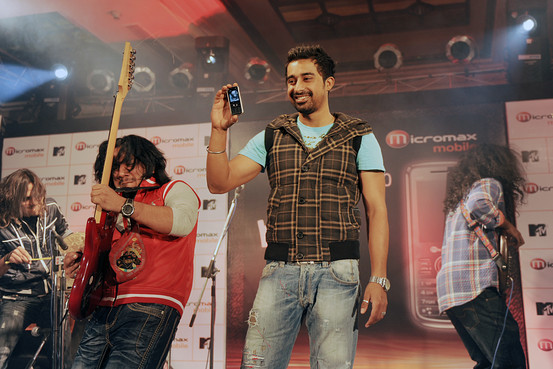
Samsung Electronics Co.005930.SE -0.08% was dethroned as the top cellphone seller in India last quarter as local rival, Micromax Informatics Ltd., undercut and outsold the Korean company for the first time in Asia’s third-largest economy.

Micromax which was launched only five years ago, has taken the pole position in the Indian market—the second largest in the world in terms of handset sales—by undercutting the prices of Samsung and other international brands.

In the April-through-June quarter Micromax’s market share reached 17% of the Indian market compared to Samsung’s 14%, according to Counterpoint Technology Market Research, a research and consulting company based in Hong Kong.

Samsung, the world’s largest cellphone company by sales, is facing tough competition from Micromax and other Indian handset sellers. The South Korean company lost its top spot in terms of handset volumes as it has shifted its focus to smartphones and away from the less-expensive feature phones, said Neil Shah an analyst at Counterpoint.

Micromax has been more successful than most at targeting the Indian consumer. In the past five years it has come out of nowhere by investing heavily in advertising, distribution and developing a portfolio of relatively inexpensive handsets for Indians.

Samsung may be trying to claw back some of its market share. The company, last week, added three more smartphones to its “affordable” category of handsets priced below 10,000 rupees.

via Samsung Loses Top Spot to Micromax in India – India Real Time – WSJ.

19/04/2014

India’s Mobile Marketers Try Phone Calls to Reach Rural Consumers – Businessweek

In many parts of the world, businesses relentlessly market to customers via their Web-connected smartphones, slipping pitches into everything from interactive games to graphics-laden productivity apps. Not so in rural India: To better reach the country’s 833 million villagers, Unilever (UL) is delivering free Bollywood music to their basic cell phones via old-fashioned phone calls.

In India, Mobile Ads Mean Phone Calls

Between the popular tunes and cheesy jokes presented during the 15-minute recorded programs served up by Unilever’s mobile phone music service, users listen to four product ads. Consumers are biting: In March, at least 2 million people subscribed to the free service available in two states, says Anaheeta Goenka, executive director of Lowe Lintas & Partners, the agency handling the campaign for the world’s second-biggest consumer company. The service expanded to Uttar Pradesh, India’s most populous state, on March 31.

Companies from Unilever to PepsiCo (PEP) to Mondelēz International (MDLZ) are turning to mobile campaigns to win over consumers who live in locales where cable television or even newspapers may have limited reach. In a country where most people don’t live in big cities and 88 percent of phones aren’t smart, the tuneful approach makes sense because rural spending growth now exceeds that of India’s urban centers. And mobile phone ads cost less and are more targeted than mass media campaigns on the subcontinent.

via India’s Mobile Marketers Try Phone Calls to Reach Rural Consumers – Businessweek.

Enhanced by Zemanta
06/03/2014

BBC News – India police use WhatsApp to trace missing boy

A missing 11-year-old boy in India has been found after he was spotted by a member of the public who received a WhatsApp alert sent out by police.

Police message on the missing boy

Police in the northern town of Bareilly say they used the instant messaging service to send out the boy’s photo to several mobile phones in the area.

A man travelling on a train, who had received the alert, recognised the boy sitting near him and called the police.

India has more than 900 million mobile users and WhatsApp is hugely popular.

The app, used by more than 400 million people globally every month, was bought by social networking site Facebook recently for $19bn (£12bn).

via BBC News – India police use WhatsApp to trace missing boy.

Enhanced by Zemanta
27/01/2013

* China’s mobile phone users reach 1.11 billion

China Daily: “The number of Chinese mobile phone users reached 1.11 billion as of the end of 2012, according to official data unveiled Thursday.

China's mobile phone users reach 1.11 billion

The Ministry of Industry and Information Technology (MIIT) said in a statement that mobile phone users represent 80 percent of all phones users in the country.

A farmer in Huojiatai village, Yongdeng county, Northwest China’s Gansu province, receives a text message on his phone from the local agricultural technician about growing vegetables, Jan 22, 2012. [Photo/Xinhua]

The number of mobile phones owned by every 100 people reached 82.6 by the end of 2012, up by nine from a year earlier, according to the statement.

Last year, the country recorded 125.9 million new mobile phone users, among whom 104.38 million were 3G mobile phone users, bringing the total number of 3G users to 232.8 million, the MIIT said.

The ministry said the number of Internet users rose by 51 million to 564 million people, among whom 74.5 percent, or 420 million people, surf the Internet with their mobile phones.

The Internet penetration rate reached 42.1 percent by the end of last year, up 3.8 percentage points from a year earlier.”

via China’s mobile phone users reach 1.11 billion |Economy |chinadaily.com.cn.

See also: https://chindia-alert.org/economic-factors/information-technology/

20/07/2012

* Rural Chinese get online as mobile overtakes desktop

BBC News: “Mobile phones are now the most common way for people to connect to the internet in China, a report has said.

For the first time, desktop computers are no longer the leading method for the country’s 538 million connected citizens to get online.

The report from the China Internet Network Information Center (CINIC) said over 50% of the year’s new internet users were from rural areas.

A fall in smartphone costs has been the key cause of growth, experts said. “Mobile phones are a cheaper and more convenient way to access the internet for [residents in] China’s vast rural areas and for the enormous migrant population,” said the report from the state-linked CINIC.

Mobile internet users now number 388 million, up almost 10% since the start of the year. “Mobile phone prices continued to drop,” the report said.

“The emergence of smartphones under 1,000 yuan [$157, £100] sharply lowered the threshold for using the devices and encouraged average mobile phone users to become mobile web surfers.”

The total number of those online has risen 5% since the end of last year, many of whom are very active in cyberspace.”

via BBC News – Rural Chinese get online as mobile overtakes desktop.

See also: https://chindia-alert.org/economic-factors/information-technology/

15/03/2012

* Indian census: Half of homes have phones but no toilets

extracted from BBC News: “Nearly half of India’s 1.2 billion people have no toilet at home, but more people own a mobile phone, according to the latest census data. Only 46.9% of the 246.6 million households have lavatories while 49.8% defecate in the open. The remaining 3.2% use public toilets.

Census 2011 data on houses, household amenities and assets reveal that 63.2% of homes have a telephone.

Analysts say the data show the complex contradictions of the Indian system. They say the census reveals a country where millions have access to cutting-edge technology and consumer goods but a larger number of poor who lack access to even basic facilities. …

“Cultural and traditional reasons and a lack of education are the prime reasons for this unhygienic practice. We have to do a lot in these fronts,” Registrar General and Census Commissioner C Chandramouli said while releasing the latest data.

The data also reveal that Indians now largely live in nuclear families with 70% of homes consisting of only one couple – a dramatic change in a country where joint families were always the norm.

The census figures also show changes in how people access information and entertainment. More than half the population – 53.2% – have a mobile phone. There has been a 16% rise in the number of homes with television sets, while the use of radios has declined by 15%. The data show that 47.2% of households have a television while only 19.9% have a radio.

And the reach of computers with internet access is still minuscule, with only 3.1% of the population connected.”

via BBC News – India census: Half of homes have phones but no toilets.

India has made some progress in 10 years. But nothing like China in the same period.

Related page: Indian economic & social tensions?

Law of Unintended Consequences

continuously updated blog about China & India

ChiaHou's Book Reviews

continuously updated blog about China & India

What's wrong with the world; and its economy

continuously updated blog about China & India