Posts tagged ‘Narendra Modi’

11/09/2014

India and China in wary dance as Xi Jinping prepares for South Asia trip | South China Morning Post

Xi Jinping will start his first South Asia tour with a visit to Beijing’s latest investment in Sri Lanka, a US$1.4-billion port city development to include a marina and a Formula One track – all just 250km from India’s coast.

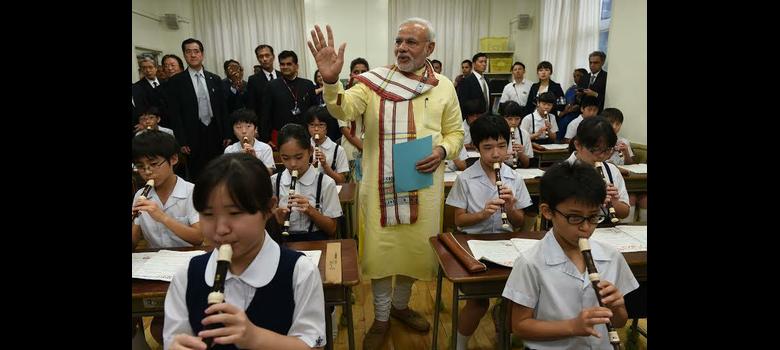
japan_denmark_tok332_45418663.jpg

The president’s trip to the site, next to a major Chinese-funded commercial port, will provide a vivid reminder of Beijing’s growing economic clout in India’s backyard ahead of his maiden visit to New Delhi next week.

Despite his hardline nationalist reputation, India’s Prime Minister Narendra Modi moved quickly to engage with traditional rival China after taking office in May, inviting Xi to India.

But he has also sought to stop India’s neighbours falling further into China’s embrace, choosing Bhutan and Nepal for his first foreign trips as prime minister and extending an olive branch of peace to arch-rival Pakistan.

That may not worry China too much. Modi’s close relationship with Tokyo, on the other hand, is likely to raise alarm bells in Beijing that analysts say he may be able to use to his advantage.

Indian Prime Minister Narendra Modi pictured in New Delhi earlier this month. Photo: EPA

Modi enjoys a particularly warm friendship with his Japanese counterpart Shinzo Abe, who welcomed him even as he was shunned by Western powers over claims he failed to stop deadly religious riots in Gujarat, the state he used to run.

Both India and Japan are wary of what many see as Beijing’s growing territorial assertiveness, and Washington is eager for them to step up their cooperation by way of counterweight to China.

“China is looking at India under Modi as a serious and credible partner as well as potential adversary.” POLITICAL ANALYST SHYAM SARAN

“China is concerned that we would get closer to Japan and to the US under Modi. They don’t want that to happen,” said Jayadeva Ranade, president of the Centre for China Analysis and Strategy in New Delhi.

via India and China in wary dance as Xi Jinping prepares for South Asia trip | South China Morning Post.

05/09/2014

Australia to sign uranium export deal with India – Businessweek


Embed from Getty Images

Australia’s Prime Minister Tony Abbott met with his Indian counterpart Friday on a two-day state visit during which they are expected to sign a deal to allow the export of Australian uranium to India for use in power generation.

The agreement is expected to be signed Friday evening. Australia, which has almost a third of the world’s known uranium reserves, imposes strict conditions on uranium exports and India’s failure to sign the Nuclear Non-proliferation Treaty had long been a barrier to a trade deal.

Australia and India have been negotiating a nuclear safeguards agreement with verification mechanisms since 2012, when a former Australian government agreed on civil nuclear energy cooperation with India that would eventually allow the export of Australian uranium to the energy-starved South Asian nation.

India faces chronic shortages of electricity and about 65 percent of its installed power generation capacity comes from burning fossil fuels including oil, coal and natural gas. India is eager to expand its nuclear power capacity.

Australia’s decision to sell uranium to India follows a civil nuclear agreement with the United States. The deal with the U.S. was signed in 2008 and allowed Washington to sell nuclear fuel and technology to India without it giving up its military nuclear program.

India is seeking a similar agreement with Japan. The two sides have claimed “significant progress” but failed to reach a last-minute agreement on safeguards sought by Tokyo when the Indian Prime Minister Narendra Modi was in Japan earlier this month.

via Australia to sign uranium export deal with India – Businessweek.

05/09/2014

Modi’s first 100 days looked more like Manmohan’s than Vajpayee’s

The new prime minister hasn’t faced a major crisis or unveiled a startlingly new policy.

For the last week, Indian newspapers, channels and websites have been plastered with evaluations of Narendra Modi’s first 100 days. From dedicating entire editions to the 100-day landmark to building complex timelines describing every policy announcement over the last three months (and even comparing what has been achieved to the Bharatiya Janata Party’s campaign promises), there has been so much content that it’s hard to arrive at a conclusion about whether Modi’s Prime Ministership has been good or bad.

That might be expected, considering the scale of the challenge that the new government has set for itself. Alternatively, it might also be surprising: many expected Modi Sarkar to be a hate-it-or-love-it administration, rather than one that would leave people with lukewarm feelings.

Another way to approach the question might be to try and figure out how Modi’s first 100 days will be remembered. The first few months of new governments can often set the tone for what is to come. In hindsight, the trends picked up in the first days are then grafted on to narratives that are applied to entire tenures.

A look back at previous prime ministers might give us an inkling of how this will play out.

via Scroll.in – News. Politics. Culture..

05/09/2014

Nawaz Sharif attempts mango diplomacy to placate Modi

Pakistan government keen on reigniting diplomatic ties with India

Pakistan Prime Minister Nawaz Sharif on Thursday sent a package of special mangoes from his country through “official channels” to his Indian counterpart Narendra Modi. This move is seen in Indian diplomatic circles as Pakistan’s initial attempt to rectify the damage caused by its High Commissioner Abdul Basit’s meetings with separatist leaders from Kashmir last month. In response to these meetings, India had cancelled foreign-secretary levels talks with Pakistan scheduled for August 25. Meanwhile, there is speculation that Modi and Sharif might conduct bilateral talks on the sidelines of the United Nations General Assembly summit in New York later this month.

via Scroll.in – News. Politics. Culture..

04/09/2014

India and Japan Are a Perfect Fit – India Real Time – WSJ

Indian Prime Minister Narendra Modi’s visit to Japan will generate headlines for the big deals that he does (or doesn’t) conclude with his Japanese counterpart Shinzo Abe. These include civil nuclear cooperation, high-speed rail construction and defense ties.

However, the bilateral relationship ultimately depends on thousands of smaller commercial deals. If the two leaders set the tone and clear away obstacles, the India-Japan partnership can become the driver of Asia’s growth. Mr Modi said on this visit that Japan and India bear a ‘huge responsibility’ to define the path of Asian growth in the 21st century.

The two powers are complementary on several levels, but primarily in the economic realm. Japan has the largest growth problem in the world while India has the largest development problem.

There is no clearer example of this than India’s need for new roads, railways and ports. The Reserve Bank of India has defined India’s key economic problem as a supply-side deficit; demand is abundant, at times rampant, but supply responses are reduced by the unavailability and cost of capital, alongside logistics bottlenecks. The result is higher inflation and lower growth.

Japan can provide the solution in the form of capital and technology. Tokyo is a partner in the $90 billion Delhi-Mumbai Industrial Corridor which will create new “smart cities,” seven of which have started construction. Some 100 more are planned nationwide. This initiative has already yielded the Delhi Metro, built under budget and within schedule with Japanese loans and rolling stock.

via India and Japan Are a Perfect Fit – India Real Time – WSJ.

03/09/2014

In Modi’s first 100 days, foreign ministry moves fastest on Raisina Hill

With her many visits abroad, External Affairs Minister Sushma Swaraj has been running the busiest ministry in the new government.

India’s new foreign minister, Sushma Swaraj, seems to be running the busiest ministry on Raisina Hill ─ the area of Lutyen’s Delhi that houses key government buildings ─ for the regime led by Prime Minister Narendra Modi.

Modi’s decision to invite all the heads of state in the South Asian Association for Regional Cooperation group to his swearing-in ceremony, widely hailed as a good and forward-thinking move, meant that Swaraj had to be on her toes from the get-go. In no time at all, Swaraj and Modi embarked on trips to neighbouring countries such as Bangladesh and Nepal, which an Indian head of state had not officially visited since 1997.

Swaraj has had her hands full, visiting neighbours such as Bangladesh and Myanmar in quick succession while overseeing the successful evacuation of hundreds of stranded Indian citizens from hotspots such as Iraq and Libya and formulating India’s position on the conflict between Israel and the Palestinian territory of Gaza. She has just returned from Vietnam and was set to go to Beijing for a trilateral meeting with the Chinese and Russian foreign ministers but the government called off her trip, perhaps in deference to the sensitivities of Japan, where Prime Minister Modi arrived on Sunday for a summit.

On Israel, despite the BJP’s highly favourable stance towards the country, India eventually stuck to its historical position by voting in favour of Palestine at the United Nations Human Rights Commission. Many BJP supporters questioned the government’s move, with some saying it was unable to break out of a Congress-era mindset.

The new order at the Ministry of External Affairs has a spring in its heels. From looking to invite all heads of state in the African Union to New Delhi to attracting mixed responses for allowing Modi to cancel talks with Pakistan after its high commissioner met Kashmiri separatist leaders from the Hurriyat Conference, the ministry has been hogging the limelight on Raisina Hill.

via Scroll.in – News. Politics. Culture..

03/09/2014

These photos show what Modi did in Japan when he wasn’t attending to business

All prime ministers enjoy spending time abroad, especially if it is while visiting a particularly friendly ally.

Prime Minister Narendra Modi isn’t exactly the jovial type. Sure, he peppers his speeches with a bit of light humour occasionally, but he doesn’t seem like the kind of person who would enjoy a comedy night on television. So what could possibly make him really happy? The same thing that makes heads of states happy all over the world: leaving their own countries to visit friendly allies.

And by any measure, it seems like Modi managed to have a blast in Japan (even if no nuclear deal was signed). Since he also happens to be the Selfie Era Prime Minister, every moment of this fun journey was documented and promptly tweeted by the prime minister’s official twitter account.

more photos from:  http://scroll.in/article/677092/These-photos-show-what-Modi-did-in-Japan-when-he-wasn’t-attending-to-business

03/09/2014

Jaitley’s biggest tasks lie ahead: big-bang reforms and restructuring the Finance Ministry

The finance minister has had to tackle inflation, India’s stance in the WTO and easing regulatory hurdles. That was the easy part.

Even before the general election ended in May, it was clear that if the Narendra Modi-led Bharatiya Janata Party formed the government, Arun Jaitley would head one of the important ministries on Raisina Hill, the area of Lutyen’s Delhi that houses some of the most important government buildings.

But Jaitley’s move to North Block, the part of the Hill housing the finance ministry, was not easy. Contesting his first Lok Sabha election, he lost the race in Amritsar to the Congress candidate by nearly one lakh votes, raising questions within the party about his eligibility to be granted a key ministry. Jaitley, who has also been given charge of the defence ministry, is a man with as many detractors as admirers in New Delhi and within his own party.

Often teased in Delhi circles as the only Congresswala in the BJP, Jaitley was seen by many as an obvious choice for the crucial portfolio of finance. He got the job because he has a shrewd strategic mind and knows how to work Delhi. In addition, the BJP needed someone who had the nerves to handle a ministry that was practically in the ICU despite valiant, though sometimes questionable, efforts by his predecessor and friend, the Congress’s P Chidambaram.

Both Prime Minister Narendra Modi and Jaitley had only a few days to present their first budget to a Parliament and nation that had been promised big-bang economic reforms. As Jaitley presented the Modi government’s first budget on July 12, many who had expected major reforms were left disappointed even though some praised it for pointing in the right direction.

As a member of the Federation of Indian Chambers of Commerce and Industry said, this was a “benefit of the doubt” budget because of the short period in which Jaitley and his team had to think things over. The real test will come in 2015.

Huge challenges

A change in government is not the only factor that drives ministerial reform. The bureaucracy also needs to endorse the new policies. In getting the bureaucracy on board, Jaitley’s team in North Block has faced plenty of challenges, such as the minister’s inability to address the thorny issue of retrospective taxation.

Other things that kept Jaitley busy as soon as he took over were controlling inflation, India’s stance on subsidies at the WTO and making it easier to do business by removing regulatory hurdles. But the enormity of reforms needed to transform the Indian economy and pushing its growth rate to more than 6% require willpower and the stomach to take politically unpopular measures, especially in sectors such as power.

“There are three or four sectors where we just cannot continue doing business as usual,” said Pratap Bhanu Mehta, president of the New Delhi-based Centre for Policy Research. “In areas such as energy we are too dependent on imports and on carbon-intensive energy sources. If we are not on an alternative energy path soon, which means low carbon and technologically efficient [forms], we could be out of the development game in 15 to 20 years.”

It is the support system for business that requires key changes. Foreign industry remains bullish on India but has made its displeasure known over the slow progress on issues such as foreign direct investment, land acquisition and retrospective taxation.

On the domestic front, many industrialists have asked for a revitalised subsidy regime, one in which the government gives subsidies wherever required instead of using them as a populist measure to get votes. At the same time, as a vital component of the global economy, India could find it increasingly difficult to persist with its subsidy regime even if it makes sense on the domestic front.

Back to the drawing board

Globalisation and climate change will become central to India’s economic story. The Asian Developmental Bank concluded in a recent report that South Asian economies such as India could lose 1.8% of their GDP by 2050 and 8.8% of their GDP by the end of the century to climate change.

via Scroll.in – News. Politics. Culture..

03/09/2014

Six ways in which Narendra Modi has changed Delhi

From: http://scroll.in/article/677239/Six-ways-in-which-Narendra-Modi-has-changed-Delhi

He’s undermined the hierarchy of the BJP, but bureaucrats are reporting to work on time.
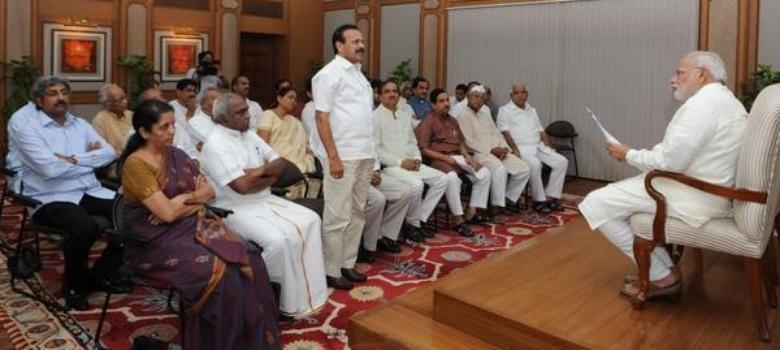
Narendra Modi’s first hundred days in power may not have brought big bang economic reforms or sweeping social initiatives, but the shift in dynamics across political, bureaucratic and corporate circles has been huge. Except for the period of the Emergency four decades ago, which turned everything upside down, never have the customary power equations of Lutyens Delhi become so redundant.

1. The Bharatiya Janata Party
The biggest impact of Modi’s arrival at the seat of power has been on his own party. The Bharatiya Janata Party today is looking like a punctured balloon. This was one of the few remaining political outfits in the country that still routinely practiced internal debate. After Modi’s victory, the hush among the BJP leadership has been deafening. The party is under Modi’s thumb and is now feeling the pressure of Amit Shah’s palm as well. Apart from the overwhelming presence of these two leaders, no one is quite sure about the hierarchy in the party. Party members don’t know whom to approach for what, since everybody else seems so powerless. There is surprisingly little triumphalism or celebratory swagger among BJP leaders in the aftermath of such an astounding electoral victory.

2. The council of ministers
In the beginning there was some envy about those who got plum ministerial positions. But a few of them, such as power minister Piyush Goel, and environment and information minister Prakash Javdekar, were reported to have been ticked off like schoolboys. As a result, a ministerial post does not look so inviting anymore. Individual ministers have never before been so devoid of the powers to dispense favours. In the past, some politicians were able to wrangle such favours even if they were in opposition. The ministers are instead driven to work relentlessly from early in the morning to late in the night, driving teams of sleepless bureaucrats, some of whom appear to have more direct access to the prime minister’s office than their political superiors. The word out is that Big Brother is watching and any sign of laxity will not go unpunished.

3. Parliament
There also appears to a conscious decision by the new prime minister to bypass conventional parliamentary processes for policymaking. Standing committees are yet to be set up. Such is the apathy to parliament that even seat allotments to different parties in the new Lok Sabha are yet to begin. Clearly, Modi does not have much inclination for parliamentary debate and review to make policies.

4. The bureaucracy
Significant changes in the corridors of power are also evident. The bureaucracy, from top to bottom, is still struggling to cope with the drastic departure from the slow pace of government. Office hours are not only being imposed in terms of punctuality, but can also get extended indefinitely.

5. India Inc
The relationship between corporate groups and the Modi government in the first hundred days has belied fears, particularly of liberal-left opinion makers, that it would be a willing instrument for crony capitalists. So far this has not been the case. It has become increasingly clear that the country’s largest industrial magnate Mukesh Ambani, who was supposed to be one of the main moneybags to bankroll the Modi campaign, is not calling the shots. Even Gautam Adani, known to have been personally close to Modi when he was Gujarat chief minister, has not been patronised. Power minister Piyush Goel was said to have been pulled up for publicly hobnobbing with the industrialist whose power company was also slapped with a clear energy cess in the budget.

This is not to suggest that the new prime minister has turned his back on industrialists. He has had individual meetings with a number of them including Cyrus Mistry of the Tata group, Anil Agarwal of Vedanta and Anil Ambani, although mysteriously not the latter’s elder brother, Mukesh. The message so far has been clear. The new government was ready to consider all proposals as long as they fit into the regime’s scheme of things, but would not be manipulated through fear or inducement on specific projects or policies. Ever since the new government came to power, the vast army of corporate lobbyists in Lutyens Delhi have been sitting idle.

6. Sycophants and cheerleaders
Finally, the most striking difference between the Modi regime and previous ones, is the way the new prime minister has spurned a long queue of sycophants and cheerleaders who had expected to be rewarded for their services to the Modi campaign. Quite a few of them are in the media, or experts who are hoping to be accommodated in think tanks now that they have been overlooked for plum government posts. The impression, however, is that the prime minister is adamant about horses for courses, and will only elevate someone he feels will be able to do the job.

Those close to Modi have assiduously cultivated the image of a prime minister who has his party leaders by the scruff of its neck, the bureaucracy on tenterhooks and business magnates at an arms distance – “a tough guy who does not dance”.

01/09/2014

Japan and India vow to boost strategic ties during summit | Reuters

Japan and India agreed on Monday to strengthen strategic ties as Asia’s second and third biggest economies keep a wary eye on a rising China, and said they would accelerate talks on the possible sale of an amphibious aircraft to India’s navy.

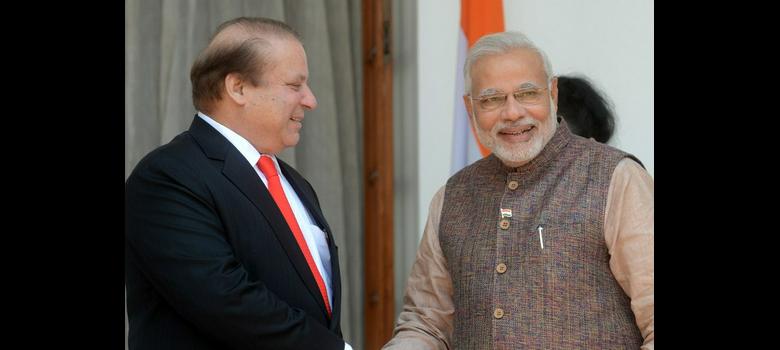
India's Prime Minister Narendra Modi (R) and Japan's Prime Minister Shinzo Abe shake hands before their talks at the state guest house in Tokyo September 1, 2014. REUTERS/Toru Hanai/Files

Japanese Prime Minister Shinzo Abe and his Indian counterpart Narendra Modi also agreed to speed up talks on a so-far elusive deal on nuclear energy cooperation, welcoming what they called “significant progress” in the negotiations.

“The two prime ministers reaffirmed the importance of defense relations between Japan and India in their strategic partnership and decided to upgrade and strengthen them,” Abe and Modi said in a statement after a summit in Tokyo.

Modi, on his first major foreign visit since a landslide election win in May, arrived on Saturday for a five-day trip aimed at capitalizing on a personal affinity with Abe to bolster security and business ties in the face of an assertive China.

In a sign of their warm ties, the two leaders greeted each other with a bear hug when they met on Saturday in Japan’s ancient capital of Kyoto for an informal dinner. Modi is one of three people that Abe follows on Twitter, while the Indian leader admires Abe’s brand of nationalist politics.

“The 21st century belongs to Asia … but how the 21st century will be depends on how strong and progressive India-Japan ties are,” Modi told Japanese and Indian business executives earlier in the day.

“The 18th century situation of expansionism is now visible,” Modi said, referring to incidents such as encroachment of others countries’ territories and intruding in other countries’ seas, in a veiled reference to China, with which India shares a long disputed border.

“Such expansionism would never benefit humanity in the 21st century,” he said.

Sino-Japanese ties have also been chilled by a row over disputed isles, feuds over the wartime past, and mutual mistrust over defense policies as China seeks a bigger regional role and Abe loosens the constraints of Japan’s post-war pacificism.

Abe is keen to expand Japan’s network of security partnerships with countries such as India and Australia to cope with the challenge presented by China.

via Japan and India vow to boost strategic ties during summit | Reuters.

Law of Unintended Consequences

continuously updated blog about China & India

ChiaHou's Book Reviews

continuously updated blog about China & India

What's wrong with the world; and its economy

continuously updated blog about China & India