Posts tagged ‘Narendra Modi’

01/09/2014

Independence for Intelligence Bureau, tackling Maoism are Home Ministry’s biggest challenges

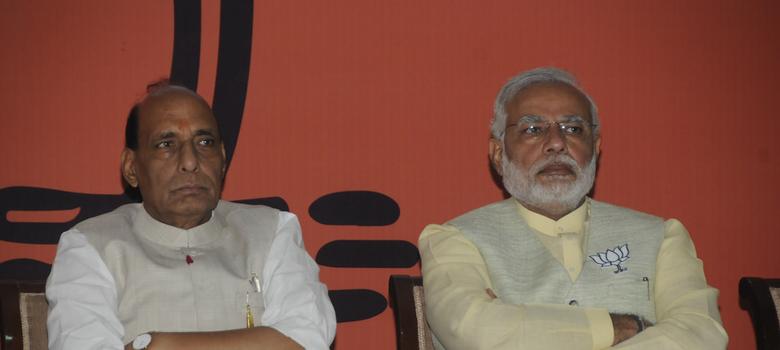
The Home Ministry is possibly the most crucial cabinet portfolio after the prime minister’s seat. Under Narendra Modi‘s leadership, veteran Bharatiya Janata Party stalwart Rajnath Singh bagged the coveted spot on Raisina Hill, an appointment that was widely predicted during post-poll speculation in the capital, New Delhi.

Singh played the part of Modi’s right-hand man for much of the former Gujarat chief minister’s gruelling campaign. But Singh did much more than help with Modi’s election trail; he was effectively Team Modi’s chief executive, managing the power games and personality clashes erupting in the party and, above all, placating the old guard’s resentment toward Modi’s popularity and apprehension about their status.

For many days after the BJP-led National Democratic Front swept the election, Singh said that he would be glad to continue as the party president and was not angling for a cabinet berth. Yet he got possibly the most important cabinet position, besides the prime minister’s, and accepted it with great alacrity.

But many people did advise him against moving to Raisina Hill’s North Block, where the ministry is located, and to stay on as the party president, a position they said was more powerful than a cabinet berth. But Singh has his own political ambitions and the cabinet berth certainly has greater national prestige.

Today, it’s unclear why exactly Modi’s right-hand man is in the government, especially after Singh’s outburst last week following reports that his son had been upbraided by the prime minister for allegedly accepting bribes in exchange for arranging police postings. The battle for that primacy is between Singh and Arun Jaitley, the finance minister who is doubling up as defence minister, both wily politicians who know how to navigate the BJP and its various spheres of influence.

via Scroll.in – News. Politics. Culture..

30/08/2014

India posts highest GDP growth figures in over two years

GDP up by 5.7 per cent in April-June quarter

India’s Gross Domestic Product increased by 5.7 per cent in the April-June quarter, up from 4.6% in the previous quarter. Growth in this quarter was the highest since March 2012, and it was sparked by a boost in the manufacturing and service sectors. However, economists said that this rebound could be temporary and stifled by poor monsoon rains and rising food inflation.

via Scroll.in – News. Politics. Culture..

26/08/2014

Top India court says coal allocations were illegal – Businessweek

India’s Supreme Court said Monday that all government allocations of coal reserves to private companies from 1993 to 2010 were conducted illegally, and it will hold a hearing to decide whether to cancel them.

More than 200 coal blocks, or areas of unmined reserves, were allocated during that period to companies for their use in power plants or steel or cement factories. The companies were allowed to sell excess coal on the open market, but the court said commercial sales from the reserves must be suspended until it makes its decision at a hearing on Sept. 1.

The court’s ruling extends beyond the initial case — dubbed “Coalgate” by the Indian media — in which the previous Congress party-led government was accused of costing the treasury hundreds of billions of dollars by selling or allocating about 155 coal blocks in 2004-09 without competitive bidding. A report by the country’s Comptroller and Auditor General leaked to the media in March 2012 estimated those losses to have been around $210 billion.

The scandal along with other high-profile cases of alleged corruption were seen as a key reason for the Congress party’s loss in this year’s elections to Prime Minister Narendra Modi‘s pro-business Bharatiya Janata Party.

The court said in its ruling Monday that between 1993 and 2010 there had been “no fair and transparent procedure” in the coal allocation process, “resulting in unfair distribution of the national wealth.”

“Common good and public interest have, thus, suffered heavily,” said the court, led by Chief Justice R.M. Lodha.

via Top India court says coal allocations were illegal – Businessweek.

20/08/2014

Why decades of India-Pakistan negotiations have not resulted in any real progress

It’s simple. Pakistan wants something India has, but can offer nothing in return that India desires.

It took less than three months for the candle of hope lit by Narendra Modi and Nawaz Sharif at the Indian prime minister’s inaugural ceremony in Delhi to be extinguished. India has cancelled foreign secretary-level talks scheduled to be held in Islamabad next week because Abdul Basit, the Pakistani High Commissioner, met a few separatist leaders. It’s not as if Basit did anything illegal or novel. Kashmir being the apple of discord between India and Pakistan, it is natural for Pakistan’s envoy to consult with secessionist Kashmiris before an important round of bilateral discussions. It has been done many times before. On this occasion, though, the Modi government threw a hissy fit, which is being spun by pliant commentators as a “tough approach”.

The extinguishing of hope was predictable, and followed directly from the mistake of inviting Nawaz Sharif to Delhi. The two prime ministers should have met only when they had something serious to decide upon, after the spadework for an agreement, however minor, had been completed. The euphoria of the inauguration handshake created expectations difficult to fulfill, considering the deeply entrenched and entirely incompatible views of the opposing sides.

The fact that Narendra Modi is no Atal Behari Vajpayee turned Mission Difficult into Mission Impossible. Vajpayee was committed to a legacy-defining vision of securing lasting peace with Pakistan. There was a tiny possibility that he might have accepted the sacrifices essential for it, and convinced his party and the nation to go along. In the reign of Modi, whose idea of India is the most aggressive of any leader since independence, such a sacrifice is inconceivable.

Give and take

Any successful negotiation requires give and take from both sides. The stumbling block to resolving the Kashmir issue is that Pakistan wants something India has, but can offer nothing in return that India desires. Although the official positions of the two sides indicate that each is in occupation of territory that rightfully belongs to the other, in reality India has no use for that part of Kashmir we call POK. Nor has anybody in POK expressed a will to secede from Pakistan and join India. In any conceivable deal, then, India can only lose territory. The abstract peace dividend doesn’t provide anything close to adequate compensation for this physical loss. Which is why India has negotiated in bad faith for decades.

In 1972, the two nations signed the Simla Agreement, resolving not to wage further wars, and to address speedily the issue of Kashmir. In 1999, through the Lahore Declaration, we agreed essentially to the same things, tacking on a promise not to nuke each other. But for over 40 years, through cycles of violent insurrection and relative calm, through dozens of horrific terrorist attacks and thousands of peaceful demonstrations, through periods of sectarian amity and passages of ethnic cleansing, India’s position on the issue hasn’t budged an inch, down to the proscription of any maps that show Pakistani Kashmir for what it really is.

Why would any Indian politician risk negotiating in earnest, when it is clear that Indians in general do not give a fig for what Kashmiris actually want? We are happy to let our security forces commit crimes shielded by the Armed Forces Special Powers Act. We are content to pour billions of rupees into defending an icy wasteland where our soldiers regularly die of exposure. We are barely moved by the discovery of unmarked graves in which thousands of Kashmiris were secretly and hastily buried.

via Scroll.in – News. Politics. Culture..

18/08/2014

Modi Sends India’s Soviet-Inspired Planning Commission Packing – India Real Time – WSJ

India’s prime minister used his inaugural Independence Day speech last Friday to cut off an arm of the country’s government that dates back nearly all the way to independence: the powerful, unloved and sometimes irrelevant-seeming Planning Commission.

The body was the creation of Jawaharlal Nehru, India’s first prime minister, who took from the experience of Japan and the Soviet Union the lesson that late-industrializing countries needed to use state intervention to transform their economies from the “commanding heights.” In the words of the 1950 cabinet resolution that created the commission: “The need for comprehensive planning based on a careful appraisal of resources and on an objective analysis of all the relevant economic factors has become imperative.”

Narendra Modi said on Friday that India could do better. The new prime minister said circumstances had changed since the commission’s creation. He said the federal government wasn’t the only driver of economic growth, and that state governments needed to be empowered to innovate. He promised the creation of a new institution that would serve as a platform for exchanging economic-policy ideas within government.

The announcement wasn’t unforeseen. The prime minister serves ex officio as the Planning Commission’s chairman. But Mr. Modi had spent his first months in office leaving the commission’s other full-time seats conspicuously unfilled. As a former chief minister of the western state of Gujarat, Mr. Modi was said at the time of his election this spring to have a strong interest in giving state governments more space to set budget priorities.

Killing the Planning Commission won’t entirely decentralize government spending in India. Federal tax revenue, according to the country’s constitution, is first distributed between the central and state governments by the Finance Commission. The Planning Commission then allocates spending to states along lines laid out in its Five-Year Plan for the economy.

That’s how it’s supposed to work, at least. Critics have accused the Planning Commission of gradually usurping the Finance Commission’s role as chief arbiter between the federal and state governments, all in the service of Five-Year Plans that are meticulously crafted but rarely achieved. The current plan, which covers 2012 to 2017, runs to three volumes and more than 1,000 pages. It covers all and sundry from boosting the manufacturing sector and increasing female literacy to promoting sports medicine and modernizing the powerloom sector.

The Five-Year Plans pervade policy making in India, at least in name if not always in effect. All federal expenditure is classified as either “plan” or “non-plan,” depending on whether it is undertaken in pursuit of the current Five-Year Plan. The Planning Commission occupies a monolithic grayish structure in New Delhi—Yojana Bhawan, or “Planning House”—just down the road from Parliament.

via Modi Sends India’s Soviet-Inspired Planning Commission Packing – India Real Time – WSJ.

15/08/2014

Modi Targets Bureaucrats, Manufacturing and Toilets in Independence-Day Speech – India Real Time – WSJ

In his first Independence Day speech Friday, Indian Prime Minister Narendra Modi listed the issues he plans to focus on as the leader of the world’s largest democracy: bickering bureaucrats, women’s rights, manufacturing jobs, trash and toilets.

“You might say Independence Day is an opportunity to talk about big ideas and make big declarations. But sometimes, when these declarations are not fulfilled, they plunge society into disappointment,”said Mr. Modi, who is the South Asian nation’s first prime minister born after India gained independence from Britain 67 years ago. “That’s why I’m talking about things we can achieve in our time.”

Mr. Modi’s Bharatiya Janata Party was propelled to power by Indians who, hungry for better jobs and a higher standard of living, grew frustrated with slowing growth under the previous Congress-led government. Since coming to power in May, Mr. Modi has made some cautious policy moves, disappointing some of his supporters who had expected immediate and bold change from his administration.

Addressing the nation from the ramparts of New Delhi’s regal Red Fort Friday, Mr. Modi said he plans to set the government in order and stop bureaucratic squabbling, underlining his focus on administrative processes rather than economic overhauls. As “an outsider” to New Delhi, he said, he has been shocked since taking office to find that “there were dozens of governments inside the government,” each with “its own fiefdom.”

“Departments are fighting each other, suing each other in the Supreme Court,” Mr. Modi said. “How can they move the country forward?”

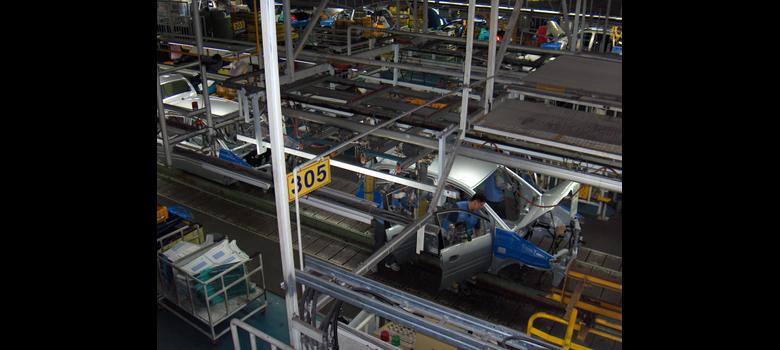
In his nearly hour-long speech delivered largely in Hindi, Mr. Modi reiterated his focus on making India a global manufacturing hub and export powerhouse.

Offering a new slogan in English, “Come, make in India,” Mr. Modi invited the world to come to India to manufacture.

“Sell anywhere in the world but make it here,” he said. “Electricals to electronics, chemicals to pharmaceuticals, automobiles to agro-products, paper or plastic, satellites or submarines — Come, make in India.”

Mr. Modi questioned why India needs to import “every little thing,” and urged the country’s youth to open factories and export goods.

Manufacturing makes up only around 15% of India’s gross domestic product as most of its rapid expansion over the last decades has come from the service sector. During spring elections the BJP said it planned to create millions of new jobs if elected. Economists say one of the best ways India can generate employment is through exports.

While India’s labor costs are among the lowest in the world, it has consistently failed to become an export powerhouse like China and Asia’s other largest economies.

Prime Minister Modi also announced initiatives aimed at modernizing India: a nationwide drive for cleanliness that would boost tourism, a program for parliamentarians to transform villages, one by one, into “model villages,” encouraging politicians and companies to build more toilets so people don’t have to use the outdoors and a push to open bank accounts for all Indians.

Mr. Modi also used his speech to address an issue the new opposition has been demanding discussion on: religious violence. A Hindu nationalist leader accused of not doing enough to stop communal violence in the state of Gujarat in 2002 when he was chief minister there, Mr. Modi Friday urged Indians to stop communal fighting. Just this week, opposition parties accused the BJP of polarizing Indians on religious lines and analysts have blamed Mr. Modi of not addressing recent tensions.

“Who benefits from this poison of communalism? It is an impediment to growth,” Mr. Modi said. “Let us choose peace instead and see how it propels our nation forward.”

via Modi Targets Bureaucrats, Manufacturing and Toilets in Independence-Day Speech – India Real Time – WSJ.

14/08/2014

War of Words Erupts Between India and Pakistan – India Real Time – WSJ

An all-to-familiar war of words has erupted between India and Pakistan, threatening to undo efforts to bridge the gap between the estranged neighbors, who have fought three wars since independence from Britain 67 years ago.

The latest rhetorical salvo was fired Wednesday by India’s foreign ministry, which said “mere denials or selective approaches toward terrorism” by Pakistan wouldn’t assuage Indian concerns about what it sees as backing from Islamabad for Islamic terror attacks on Indian soil.

This week’s bickering started when Indian Prime Minister Narendra Modi, on a visit to the disputed state of Jammu and Kashmir on Tuesday, said Pakistan, too weak to fight a conventional war, was using terror groups to wage a “proxy war against India.”

Pakistan’s Foreign Ministry the next day denounced Mr. Modi’s criticism as “baseless rhetoric.”

“It would be in the larger interest of the regional peace that instead of engaging in a blame game, the two countries should focus on resolving all issues through dialogue,” Pakistan’s foreign ministry said.

It wasn’t supposed to be like this. When Indian Prime Minister Narendra Modi invited his Pakistani counterpart, Nawaz Sharif to Delhi for his swearing-in ceremony, it ignited hope for better relations between the estranged neighbors.

The two countries’ foreign secretaries are scheduled to meet in Islamabad on Aug. 25 to “look at the way forward” in the bilateral relationship. But the current spat could cast a shadow over the meeting.

That poses a problem. Deep-rooted suspicion between India and Pakistan has stymied attempts at achieving greater economic integration and better connectivity in the region. Relations between India and Pakistan, a close ally of neighbouring China, also have a major impact on regional stability.

via War of Words Erupts Between India and Pakistan – India Real Time – WSJ.

10/08/2014

Modi has realised that India needs to be a regional power before it can be a global one

One of the many pet projects of those inclined more to the right has been turning the dream of “Akhand Bharat“, or Undivided India, into a reality. The Rashtriya Swayamsevak Sangh’s education saffroniser-in-chief, Dinanath Batra, has even written about the subject in his book Tejomay Bharat, which will now be stocked in Gujarat school libraries. “Undivided India is the truth, divided India is a lie,” Batra writes, referring to a vision of the nation that begins as far west as Afghanistan and goes all the way till Burma, including everything in between. “Division of India is unnatural and it can be united again,” Batra suggests.

Of course, no one in the government has spoken of Akhand Bharat and Prime Minister Narendra Modi has never clearly explained his understanding of the concept. There is no indication that the government intends to implement any policy that aims to reinstate this fanciful notion of what India once was and there is no reason to believe there will be.

But the concept could be a rubric by which to understand the Modi government’s approach to foreign policy, particularly in the neighbourhood. From the very get-go Modi announced his intention to reinvigorate ties with India’s neighbours by inviting to his swearing-in ceremony each of the leaders from the South Asian Association for Regional Cooperation — the primary multilateral forum for subcontinental nations.

Just two-and-a-half-months in, the PM has visited two of India’s neighbours, his foreign minister has visited four, and India is set to become part of multilateral organisations that will give it many more opportunities to project itself as a regional powerhouse. This is Akhand Bharat 2.0.

Regional power

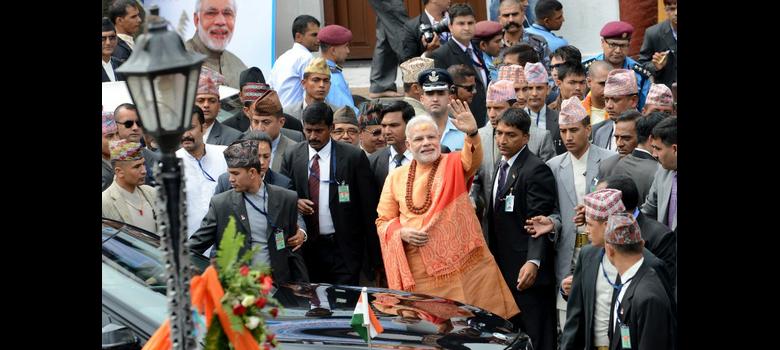
Foreign minister Sushma Swaraj is currently in Myanmar, the fourth neighbourhood country that she has visited in the last three months. But it was the trip made by Modi to Nepal that really sent a statement, since it was the first visit by an Indian prime minister to the country in 17 years. He received an enthusiastic reception.

“All governments that come to power in India feel that we must improve our relationship with the neighbourhood,” said Kanwal Sibal, a former foreign secretary. “But the difference is that, whereas in the past it remained at the level of rhetoric, in this case they are translating it into concrete initiatives. The fact that an Indian PM visited Nepal after 17 years is a testimony to the fact that, despite our professed position about needing a secure neighbourhood, we have actually neglected it… that is changing.”

That message was sent at the very beginning with the invitations handed out to each of the SAARC leaders for Modi’s swearing-in, all of which were accepted — with the exception of Bangladesh’s Sheikh Hasina, but only because she was on another diplomatic visit at the time. The sight of all the leaders in front of Rashtrapati Bhavan, and Modi dedicating his first day in office to bilateral talks with them, sent a very clear signal. The PM made his first foreign visit to Bhutan, a country deeply connected to India but not particularly important in terms of foreign policy.

“It shows that they understand that unless India is a dominant regional power, we can hardly be an extra-regional power or a world power,” said Manoj Joshi, a distinguished fellow at the Observer Research Foundation. “They seem to definitely be working on this understanding, especially because we are facing stiff competition from the Chinese when it comes to projecting power in the neighbourhood.”

Leading South Asia

It’s not just symbolism and rhetoric either. Modi’s visits to Bhutan and Nepal have been accompanied by important agreements, such as a $1 billion line of credit to Kathmandu, as well as the promise of further talks. Discussions with Bangladesh have also indicated progress on key stumbling blocks between the two nations. Modi has also spoken of using the SAARC framework to further cooperation in the neighbourhood. His suggestion of a SAARC space satellite, for example, while criticised by some as a gimmick, certainly sent a message that he is looking beyond the potential disputes towards projects that would allow the countries to work together.

“He has staked his leadership of the region, and this is important,” Sibal said. “There is a gesture to friendship in the neighbourhood, but he has also put across the message that India is leading the region. India is not going to neglect its neighbourhood, and it will take the lead in creating synergies that can benefit all.”

via Scroll.in – News. Politics. Culture..

07/08/2014

Rahul Gandhi Wakes Up to New Role as Rebel Leader – India Real Time – WSJ

There’s nothing particularly newsworthy about boisterous Indian lawmakers blocking debate on the floor of Parliament when they don’t get their way, unless one of the lawmakers is the usually-reticent Rahul Gandhi.

The typically uninvolved Parliamentary back-bencher and Congress party vice president made the front pages of Indian newspapers Thursday after he and others mobbed the desk of the lower house of Parliament’s speaker, demanding to be heard.

“Rip Van Winkle Rahul Finally Rises Out of Slumber,” read an Economic Times headline paired with a recent photograph of Mr. Gandhi nodding off during a parliamentary session.

Mr. Gandhi, who is part of a diminished Congress camp of 44 representatives in the 545-member Lok Sabha, also made a rare statement to reporters outside Parliament complaining that opposition parties were not being allowed to speak. He accused speaker Sumitra Mahajan of bias after she shot down a proposal to discuss recent communal violence.

“There is a mood in Parliament that only one man’s voice counts,” Mr. Gandhi said in an apparent reference to Prime Minister Narendra Modi.

On the campaign trail a few months ago, Mr. Gandhi had said a Modi-led government would polarize Indians and trigger religious unrest.

Mr. Gandhi’s outburst was described as “surprisingly belligerent” in the Times of India that also carried a front-page story about what they called his “new-found combativeness.”

The fourth-generation scion’s occasional public outbursts are closely covered by the national media. In October when he called an executive order by his own party’s government “complete nonsense,” his tantrum was reported, discussed and debated for days.

On Wednesday, television news channels questioned what may have prompted a reaction from a leader who in his decade-long career in Parliament has rarely engaged in debate or taken the lead on policy issues.

The governing Bharatiya Janata Party offered one theory.

Finance Minister Arun Jaitley said Mr. Gandhi’s show of aggression was a result of internal rumblings – a “palace coup” – in the beleaguered Congress that is struggling to bounce back after its worst ever electoral defeat in national elections.

The party’s dynastic leadership by president Sonia Gandhi and her son, Rahul, must be struggling and Mr. Gandhi’s actions Wednesday were an attempt “to show they are also capable of aggression,” Mr. Jaitley said.

Congress spokesman Randeep Singh Surjewala said there “wasn’t an iota of doubt or question” within his party on the Gandhis’ leadership. Some “disgruntled elements hankering for immediate power” had abandoned the Congress after the electoral defeat, Mr. Surjewala said, but added that his party had weathered numerous challenges in the past and, like before, would emerge stronger.

He said the Modi-led government couldn’t run away from a discussion on religious violence by making personal attacks against Congress or its leaders.

via Rahul Gandhi Wakes Up to New Role as Rebel Leader – India Real Time – WSJ.

Law of Unintended Consequences

continuously updated blog about China & India

ChiaHou's Book Reviews

continuously updated blog about China & India

What's wrong with the world; and its economy

continuously updated blog about China & India